 4140 Steel Wear Resistance: Hardness, Heat Treatment and Applications
📑 Table of Contents
🔍 1. How Good Is 4140 Steel Wear Resistance?
⚙️ 2. Why Does 4140 Steel Have Good Wear Resistance?
🔥 3. How Heat Treatment Changes 4140 Steel Wear Resistance
📊 4. 4140 Steel Hardness and Wear Resistance
🏭 5. Applications of 4140 Steel Where Wear Matters
🔄 6. 4140 Steel vs Other Steels for Wear Resistance
📦 7. Otai Special Steel Advantages
❓ 8. FAQ About 4140 Steel Wear Resistance
🔍 1. How Good Is 4140 Steel Wear Resistance?
4140 steel wear resistance is good for a medium-carbon chromium-molybdenum alloy steel, especially when the material receives suitable heat treatment. AISI 4140 combines strength, toughness, hardenability and moderate wear resistance, which makes it useful for heavily loaded mechanical components.
However, 4140 is not a dedicated wear-resistant steel. Its wear performance depends heavily on hardness, microstructure, contact pressure, lubrication, surface condition and the type of wear involved.
This distinction matters when selecting steel. A component that experiences occasional sliding wear may perform very well with 4140. A component exposed to severe abrasive wear may require a specialized tool steel, bearing steel or wear-resistant alloy instead.
The biggest advantage of 4140 is its balance. Engineers can increase hardness through quenching and tempering while maintaining useful toughness. This makes the grade attractive when a component must resist both mechanical loading and surface wear.
Is 4140 Steel Wear Resistant?
Yes, 4140 steel provides good wear resistance when its hardness and microstructure match the application. The chromium and molybdenum alloying system improves hardenability, while the carbon content allows the steel to achieve relatively high hardness after heat treatment.
A soft-annealed 4140 component will not provide the same wear resistance as a properly quenched and tempered component. Therefore, simply identifying the material as “4140” does not tell you its final wear performance.
| Condition | Typical Wear Resistance | Typical Characteristics |
|---|---|---|
| Annealed 4140 | Moderate to relatively low | Good machinability but lower hardness |
| Normalized 4140 | Moderate | Balanced strength and machinability |
| Quenched and Tempered 4140 | Good | Higher hardness, strength and wear resistance |
| Induction-Hardened 4140 | High at the surface | Hard surface with a tougher supporting core |
For this reason, buyers should specify the delivery condition and required hardness when wear resistance is an important design requirement.
⚙️ 2. Why Does 4140 Steel Have Good Wear Resistance?
Several factors contribute to 4140 steel wear resistance. The first is its chemical composition. AISI 4140 contains carbon, chromium and molybdenum, which work together to provide good hardenability and strength.
The second factor is heat treatment. 4140 can respond effectively to quenching and tempering. This allows manufacturers to select a hardness level suitable for the mechanical loads and wear conditions of the finished component.
The third factor is microstructure. A properly treated 4140 component can develop a strong tempered martensitic structure. This structure provides substantially better resistance to plastic deformation and surface damage than a soft ferritic-pearlitic structure.
Role of Carbon
Carbon provides the basic hardening potential of 4140. When the steel undergoes a suitable austenitizing and quenching process, carbon helps the material form martensite.
Higher hardness generally improves resistance to many forms of sliding and adhesive wear. However, excessive hardness without sufficient toughness can increase the risk of cracking or premature failure.
Role of Chromium
Chromium improves hardenability and contributes to strength and wear performance. It allows 4140 to develop useful hardness through a greater section thickness than many plain carbon steels.
This makes 4140 particularly useful for large shafts, pins and other components where the interior must also achieve adequate mechanical properties.
Role of Molybdenum
Molybdenum improves hardenability and helps maintain strength during heat treatment. It also reduces the risk of certain forms of temper embrittlement.
The combination of chromium and molybdenum is one reason why 4140 alloy steel wear resistance can outperform ordinary medium-carbon steel under demanding mechanical conditions.
Wear Resistance Is More Than Hardness
Hardness is important, but it does not completely determine wear performance. Two steels with similar hardness can show different wear behavior because of differences in microstructure, carbide distribution, toughness and surface condition.
For example, abrasive wear, adhesive wear and contact fatigue involve different failure mechanisms. Engineers should therefore consider the actual operating environment before selecting a steel solely according to hardness.
| Wear Mechanism | Typical Situation | Important Material Factor |
|---|---|---|
| Abrasive Wear | Hard particles or rough surfaces remove material | Hardness and microstructure |
| Adhesive Wear | Two metal surfaces slide against each other | Hardness, surface finish and lubrication |
| Contact Fatigue | Repeated rolling or contact stress | Strength, hardness and toughness |
| Impact Wear | Repeated shock or impact | Toughness and hardness balance |
🔥 3. How Heat Treatment Changes 4140 Steel Wear Resistance
Heat treatment has one of the strongest effects on 4140 steel wear resistance. The same chemical grade can show very different wear performance after annealing, normalizing, quenching and tempering.
For many demanding applications, manufacturers use a quenched-and-tempered condition. This process increases strength and hardness while preserving a useful level of toughness.
Quenching and Tempering
During quenching, 4140 is heated to the appropriate austenitizing temperature and then cooled rapidly. This produces a hard martensitic structure.
The as-quenched structure is very hard but can also contain high internal stresses. Tempering follows quenching to reduce those stresses and create a more stable combination of hardness, strength and toughness.
The selected tempering temperature directly affects the final hardness. A lower tempering temperature generally retains more hardness, while a higher tempering temperature normally produces greater toughness and lower hardness.
| Heat Treatment | Effect on Hardness | Effect on Wear Performance |
|---|---|---|
| Annealing | Lower | Suitable for machining rather than maximum wear resistance |
| Normalizing | Moderate | Balanced mechanical performance |
| Quenching | Very high | Excellent hardness but excessive brittleness without tempering |
| Quenching + Tempering | Adjustable | Excellent balance of hardness, strength and toughness |
| Induction Hardening | Very high at surface | Excellent surface wear resistance with a tougher core |
Induction Hardening of 4140
Induction hardening can significantly improve the surface performance of 4140. The process rapidly heats the surface to the hardening range and then quenches it.
The result is a hard surface layer supported by a tougher core. This structure works well for shafts, gears, pins, rollers and other components where surface wear occurs together with bending or impact loads.
Therefore, 4140 induction hardened wear resistance can be substantially higher than that of untreated 4140.
The final result depends on heating frequency, surface temperature, heating depth, quenching conditions and the required effective hardened depth. Manufacturers should validate these parameters for the specific component.
📊 4. 4140 Steel Hardness and Wear Resistance
Hardness provides a useful starting point when evaluating 4140 steel wear resistance. In general, increasing hardness improves resistance to surface deformation and many common wear mechanisms.
However, the relationship is not unlimited. A component that operates under heavy impact may need more toughness instead of maximum hardness. Engineers should therefore select the hardness according to the actual load and wear mechanism.
| Approximate Hardness Level | General Characteristic | Potential Application |
|---|---|---|
| Lower Hardness | Higher machinability and toughness | General structural components |
| Medium Hardness | Balanced strength and wear resistance | Shafts, pins and mechanical components |
| Higher Hardness | Improved surface wear resistance | Wear-loaded shafts, rollers and tooling components |
| Surface Hardened | Very hard working surface with tougher core | Contact and sliding wear applications |
For engineering projects, the target hardness should come from the component requirements rather than from a generic material table. Contact pressure, impact, lubrication and surface finish can all change the actual service life.
This is especially important when comparing 4140 wear resistance vs 4140 hardness. Hardness is one of the main contributors to wear resistance, but toughness remains essential for preventing cracking and impact failure.
🏭 5. Applications of 4140 Steel Where Wear Matters
The combination of strength, toughness and heat-treatable hardness makes 4140 steel wear resistance useful in many mechanical applications. Engineers often choose 4140 when a component faces both mechanical loading and surface wear.
Unlike dedicated wear plate, 4140 offers a broader performance balance. It can withstand substantial tensile and impact loads while providing useful resistance to sliding and contact wear after suitable heat treatment.
| Component | Wear Condition | Why 4140 Works |
|---|---|---|
| Shafts | Sliding, friction and contact wear | High strength and good heat-treatment response |
| Gears | Repeated contact and sliding | Good combination of hardness and toughness |
| Pins | Contact and abrasive wear | Can achieve high surface hardness |
| Rollers | Rolling and contact fatigue | High strength and adjustable hardness |
| Bushings and Mechanical Parts | Sliding friction | Suitable after appropriate surface treatment |
| Forged Components | Impact and mechanical wear | Good toughness and strength |
| Oil & Gas Components | Mechanical contact and demanding service | High strength and good hardenability |
4140 Steel for Shafts
Shafts provide a good example of where 4140 steel wear resistance becomes useful. A shaft may experience bearing contact, friction, keyway stress and repeated torque at the same time.
A steel that only provides high hardness may become too brittle for this environment. 4140 offers a better balance because engineers can adjust its hardness through heat treatment while retaining useful core toughness.
For heavily worn shaft surfaces, induction hardening can further improve performance. The manufacturer can create a hardened working layer while keeping the center of the shaft tougher.
4140 Steel for Gears
4140 can also work well for gears when the required combination of strength, toughness and wear resistance fits the application. However, gear manufacturers should compare 4140 with dedicated carburizing grades such as 8620 or 16MnCr5 when very high case hardness and contact fatigue resistance are the main requirements.
Therefore, the best steel depends on the gear design, tooth size, load, heat-treatment process and expected service life.
When Should You Choose Another Steel?
4140 is not the universal solution for wear. Severe abrasive applications may require a harder wear-resistant alloy or tool steel. For example, a component continuously exposed to hard mineral particles can require a material specifically designed for abrasion resistance.
Similarly, components requiring a very hard carburized surface may benefit more from a dedicated case-hardening grade. Engineers should therefore identify the dominant failure mechanism before selecting the material.
🔄 6. 4140 Steel vs Other Steels for Wear Resistance
Comparing 4140 steel wear resistance with other grades helps clarify where 4140 fits in the steel market. The following comparison focuses on typical engineering characteristics rather than claiming that one grade always performs better in every wear test.
4140 vs 1045 Steel
| Feature | 4140 | 1045 |
|---|---|---|
| Steel Type | Cr-Mo alloy steel | Medium-carbon steel |
| Hardenability | Higher | Lower |
| Heat Treatment Response | Excellent | Good |
| Wear Resistance | Generally better after suitable heat treatment | Moderate |
| Toughness | Generally higher | Moderate |
| Typical Applications | Shafts, gears, pins, heavy-duty components | Shafts, axles, bolts and general machinery |
The chromium and molybdenum content gives 4140 better hardenability than 1045. This advantage becomes particularly important for larger components where the required hardness must extend deeper into the section.
4140 vs 4340 Steel
| Feature | 4140 | 4340 |
|---|---|---|
| Main Alloying System | Chromium + molybdenum | Nickel + chromium + molybdenum |
| Hardenability | High | Very high |
| Strength Potential | High | Very high |
| Toughness | Good | Excellent at appropriate conditions |
| Wear Performance | Good after heat treatment | Excellent potential after appropriate heat treatment |
| Typical Use | Industrial machinery and general heavy-duty parts | Aerospace, highly stressed shafts and critical components |
4340 can provide exceptional strength and toughness, but that does not automatically mean it will outperform 4140 in every wear application. Surface hardness, microstructure and operating conditions remain critical.
4140 vs 8620 for Wear Resistance
| Feature | 4140 | 8620 |
|---|---|---|
| Steel Type | Quenched-and-tempered alloy steel | Case-hardening alloy steel |
| Carbon Content | Medium | Low |
| Main Treatment | Quenching + tempering | Carburizing + hardening + tempering |
| Surface Hardening | High with suitable treatment | Very high after carburizing |
| Core Toughness | Good | Good |
| Typical Application | Shafts, pins and heavy-duty components | Gears, pinions and transmission components |
If a component needs high hardness throughout a substantial section, 4140 can be a strong choice. If the design specifically requires a very hard wear-resistant case with a tough core, 8620 or another case-hardening grade may provide a more suitable solution.
This is an important distinction when evaluating 4140 steel wear resistance. Material selection should follow the component’s failure mode rather than a simple hardness ranking.
📦 7. Otai Special Steel Advantages
For international buyers, material performance is only one part of the purchasing decision. Reliable stock, dimensional flexibility, processing capability and inspection support can also affect the final project cost and delivery schedule.
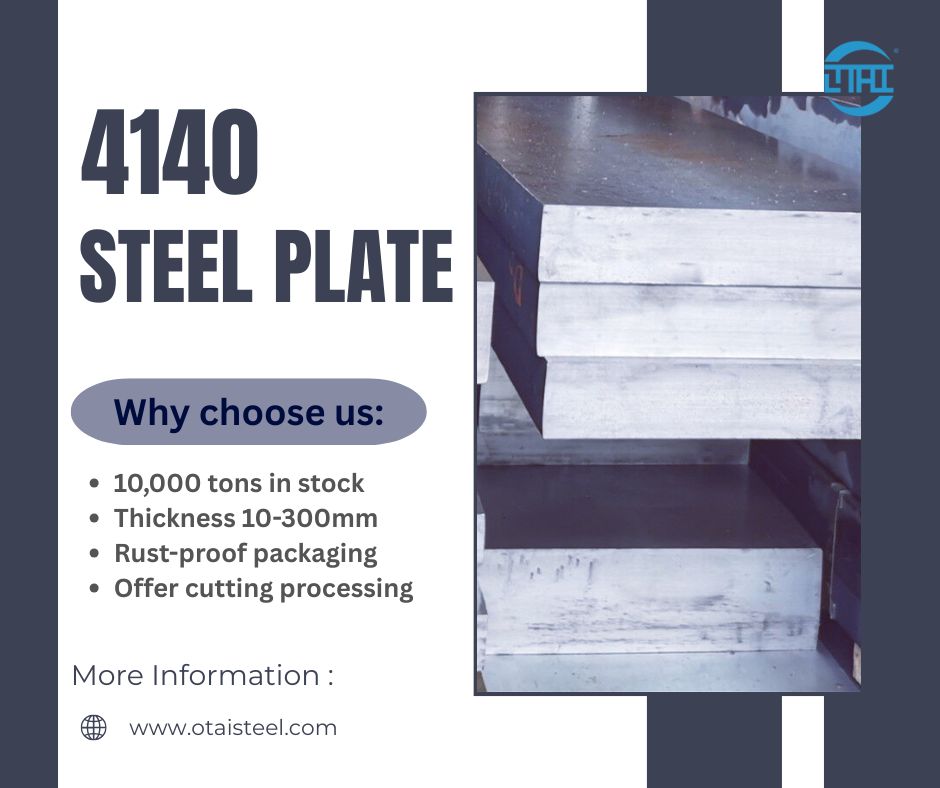
Otai Special Steel specializes in alloy steel supply and maintains substantial stock for 4140 products. We support customers who need standard plates as well as different dimensions for machining and fabrication projects.
Why Choose Otai for 4140 Steel?
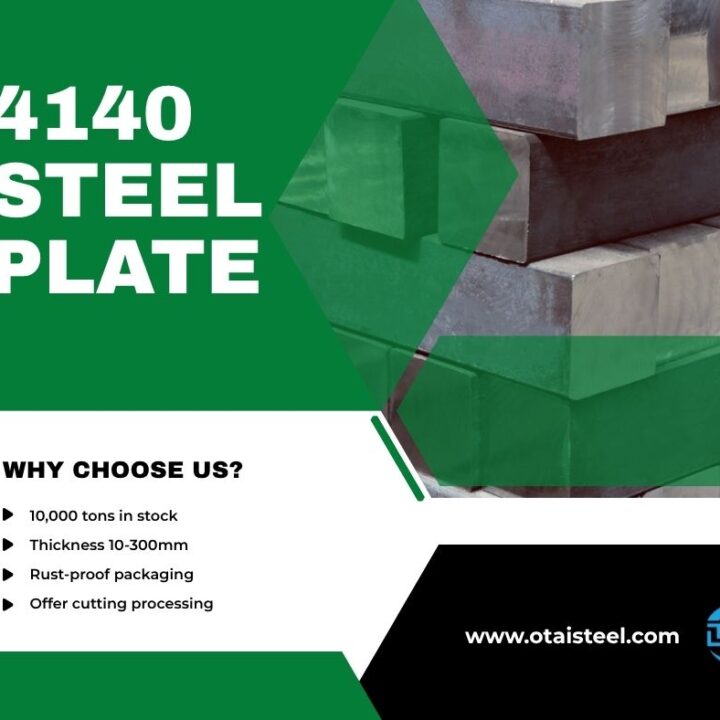
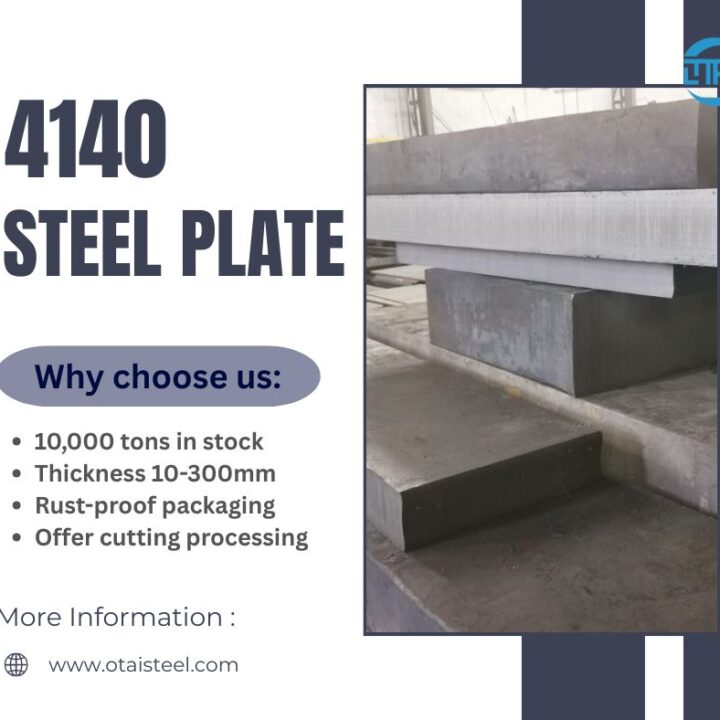
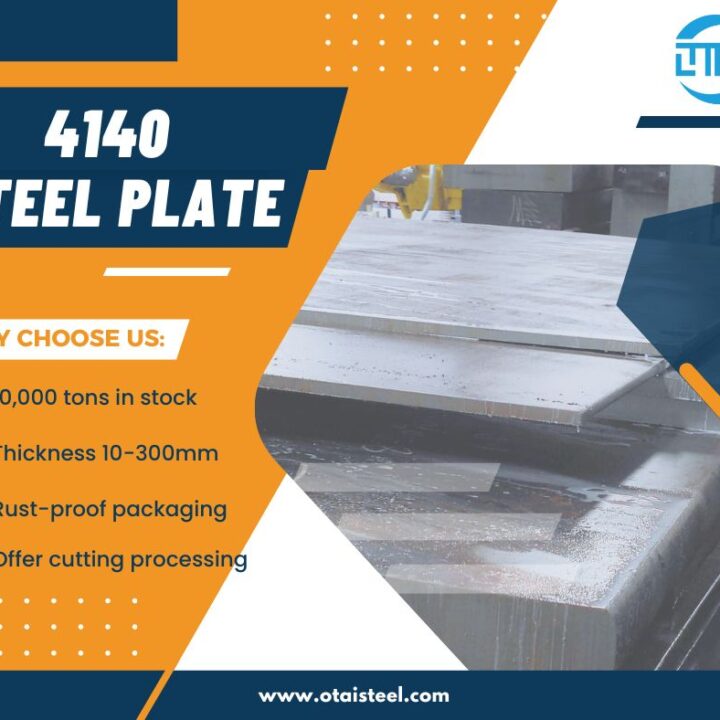
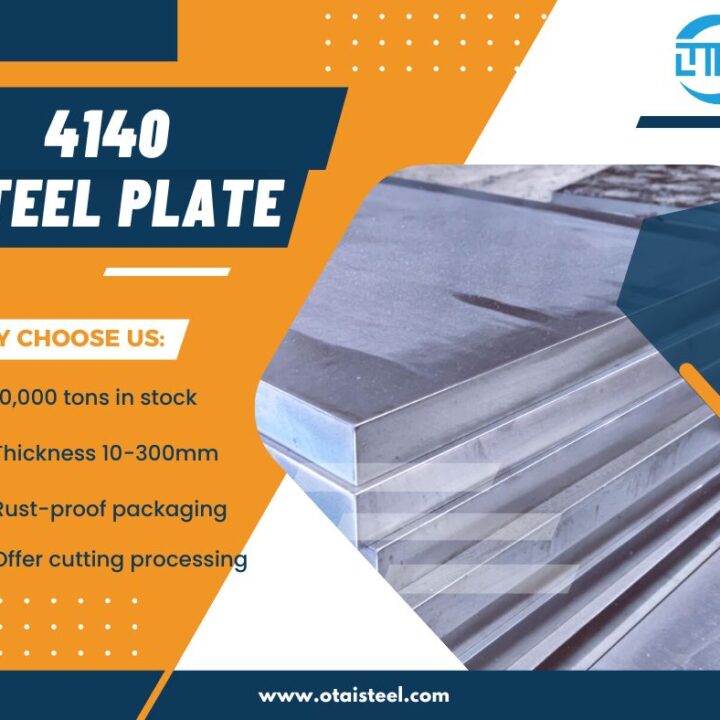
- 10,000 tons of regular inventory: Otai maintains approximately 10,000 tons of steel inventory, supporting customers who need stable supply and faster delivery.
- Different sizes in stock: We keep 4140 steel in different thicknesses and dimensions to provide more flexible purchasing options.
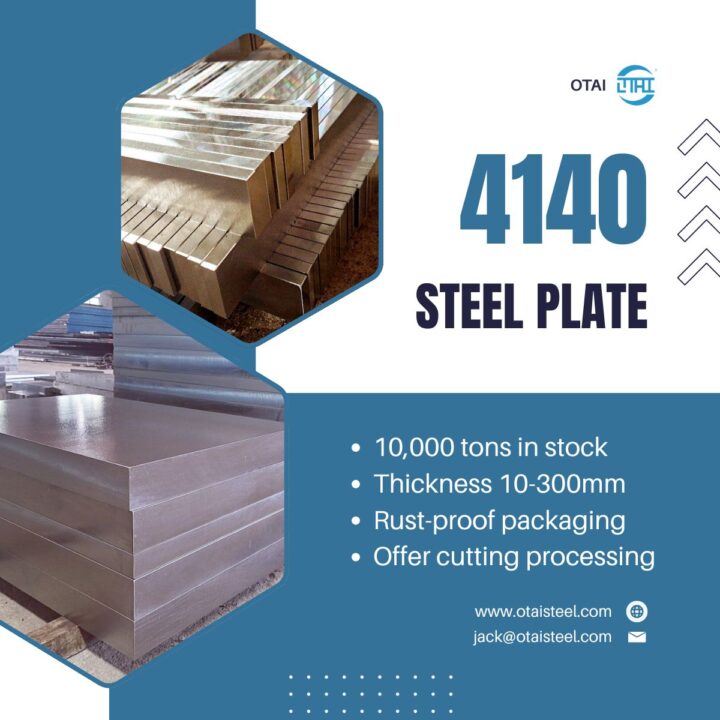
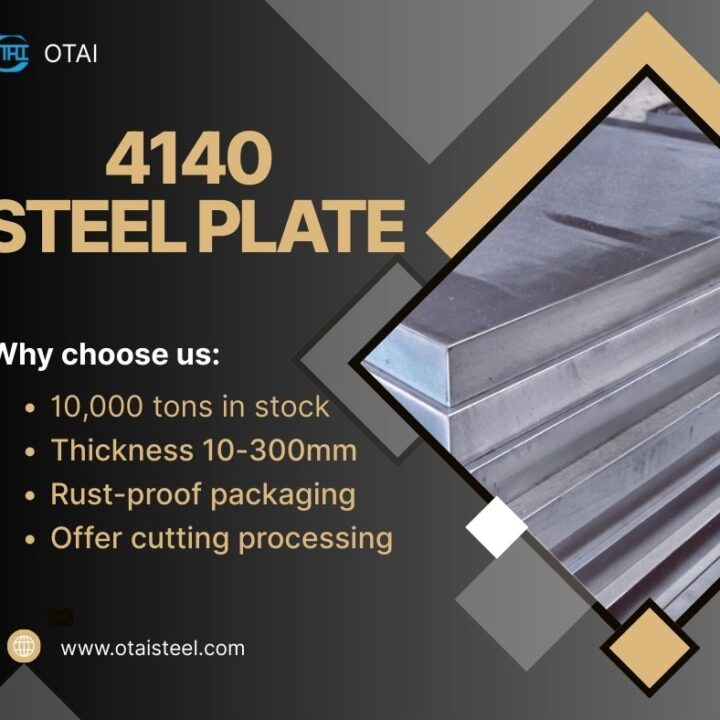
- Wide thickness range: 4140 steel plates can be supplied in thicknesses from approximately 10–300 mm, depending on stock and specification.
- Cutting and processing: We provide customized cutting according to customer drawings and dimensions.
- Heat treatment: Suitable heat-treatment services can be arranged according to application requirements.
- Quality inspection: Ultrasonic testing and third-party inspection can be arranged for projects that require additional quality verification.
- Anti-rust packaging: We provide anti-rust protection, steel strapping and wooden box packaging for international transportation.
❓ 8. FAQ
1. Is 4140 steel good for wear resistance?
Yes. 4140 provides good wear resistance for a heat-treatable alloy steel, particularly after quenching and tempering or surface hardening. However, it is not a dedicated abrasion-resistant steel, so the actual performance depends on hardness, microstructure and service conditions.
2. Does heat treatment improve 4140 steel wear resistance?
Yes. Heat treatment can significantly increase hardness and strength, which generally improves resistance to many wear mechanisms. Quenching and tempering provide a useful balance of hardness and toughness, while induction hardening can create a harder surface.
3. Is harder 4140 always more wear resistant?
Not necessarily. Higher hardness often improves resistance to sliding and abrasive wear, but excessive hardness can reduce toughness and increase cracking risk. Engineers should balance hardness with toughness and the actual wear mechanism.
4. Is 4140 better than 1045 for wear resistance?
4140 generally offers better hardenability and a higher heat-treatment potential than 1045. This can provide better wear performance when the two steels receive suitable treatment. However, the final result depends on hardness, microstructure and operating conditions.
5. Is 4140 suitable for severe abrasive wear?
It can work in moderate wear applications, but severe abrasive service may require a dedicated wear-resistant steel or tool steel. Before selecting 4140, engineers should identify whether abrasion, sliding, impact or contact fatigue dominates the component’s failure mode.