 16MnCr5 Cost per kg: Meaning, Price Factors and Market Overview
📑 Table of Contents
🔍 1. What Does 16MnCr5 Cost per kg Mean?
💰 2. Main Factors Affecting 16MnCr5 Cost per kg
📊 3. 16MnCr5 Steel Price Influencing Factors
🌍 4. Regional Market Differences of 16MnCr5 Price
⚙️ 5. How Steel Specifications Affect Cost per kg
🏭 6. How to Reduce 16MnCr5 Purchasing Cost
📦 7. Otai Special Steel Advantages
❓ 8. FAQ About 16MnCr5 Cost per kg
🔍 1. What Does 16MnCr5 Cost per kg Mean?
When customers search for 16MnCr5 cost per kg, they usually want to understand the purchasing expense of this carburizing steel grade for manufacturing projects.
16MnCr5 is a low-alloy case-hardening steel widely used for gears, shafts, sprockets and transmission components. Its cost per kilogram depends on many factors, including steel production costs, material specifications, quantity, processing requirements and market conditions.
Unlike standard carbon steels, 16MnCr5 contains alloying elements such as manganese and chromium. These elements improve hardenability and wear resistance, but they also influence the overall material cost.
Therefore, the 16MnCr5 steel price per kg is not determined only by the chemical composition. Buyers need to consider the complete supply chain from steel production to final delivery.
What Determines the Final Cost of 16MnCr5 Steel?
| Cost Factor | Influence on Material Cost |
|---|---|
| Raw material price | Affects the basic production cost of alloy steel |
| Alloy elements | Manganese and chromium increase material value |
| Steel specification | Size, thickness and tolerance affect processing requirements |
| Order quantity | Larger volumes usually improve purchasing efficiency |
| Processing services | Cutting, testing and heat treatment add additional value |
| Transportation | Shipping distance affects the final delivered cost |
Why Is 16MnCr5 More Expensive Than Common Carbon Steel?
The main reason is the alloy design. Compared with ordinary carbon steel, 16MnCr5 provides better performance after carburizing treatment.
- Chromium addition: Improves hardenability and wear resistance.
- Manganese addition: Enhances strength and toughness.
- Carburizing capability: Allows the material to achieve a hard surface with a tough core.
- Engineering performance: Provides longer service life in mechanical applications.
For industries producing high-load mechanical components, choosing a higher-performance material can reduce replacement frequency and maintenance costs.
This is why many engineers evaluate 16MnCr5 material cost together with service life, machining efficiency and final component performance.
💰 2. Main Factors Affecting 16MnCr5 Cost per kg
The cost of 16MnCr5 steel changes because several technical and commercial factors influence production and supply.
Understanding these factors helps buyers make better purchasing decisions and compare suppliers more effectively.
1. Steel Grade and Chemical Composition
The composition of 16MnCr5 directly affects its manufacturing cost. The addition of chromium and manganese requires controlled steelmaking processes to achieve stable quality.
| Element | Effect on Steel | Cost Influence |
|---|---|---|
| Carbon (C) | Controls carburizing performance | Requires accurate chemical control |
| Manganese (Mn) | Improves strength and hardenability | Adds alloying value |
| Chromium (Cr) | Improves wear resistance | Increases alloy steel cost |
2. Size and Specification Requirements
The physical dimensions of steel products strongly affect the 16MnCr5 steel plate cost.
Special thicknesses, tighter tolerances and customized dimensions may require additional processing steps.
| Specification Factor | Effect |
|---|---|
| Thickness | Different thickness ranges require different production control |
| Width and length | Customized sizes may increase cutting requirements |
| Tolerance | Precision requirements increase processing difficulty |
| Surface condition | Additional finishing processes may be required |
3. Delivery Condition
16MnCr5 can be supplied in different conditions depending on customer requirements.
| Condition | Description | Cost Impact |
|---|---|---|
| Rolled condition | Basic supplied material | Lower processing requirement |
| Annealed condition | Improved machinability | Additional heat treatment cost |
| Heat-treated condition | Specific mechanical properties | Higher processing value |
| Cut-to-size material | Customized dimensions | Additional cutting service |
Therefore, buyers searching for DIN 16MnCr5 steel price should always confirm the required specification instead of comparing only the basic material grade.
📊 3. 16MnCr5 Steel Price Influencing Factors
The final purchasing cost of 16MnCr5 depends on the complete supply process. A professional supplier considers material quality, processing requirements and delivery conditions together.
Main Factors Affecting 16MnCr5 Cost per kg
| Factor | Description |
|---|---|
| Steel mill production | Manufacturing technology and quality control affect base cost |
| Market demand | Supply and demand influence material availability |
| Order quantity | Large projects may reduce purchasing pressure |
| Inspection requirements | Additional testing improves reliability |
| Logistics | Transportation conditions affect delivered cost |
For engineering companies, the lowest material cost is not always the best choice. Stable quality, correct certification and reliable delivery can provide greater value during long-term production.
🌍 4. Regional Market Differences of 16MnCr5 Price
The 16MnCr5 cost per kg can vary significantly between different regions because steel markets, production capacity, logistics conditions and supply chains are different worldwide.
For international buyers, understanding these differences helps companies select suitable suppliers and optimize procurement decisions.
Although the chemical composition of 16MnCr5 follows international standards, the final purchasing cost can change depending on where the material is produced, processed and delivered.
Factors Creating Regional Price Differences
| Factor | Regional Impact |
|---|---|
| Steel production capacity | Regions with strong steel industries usually have more stable supply channels |
| Raw material availability | Local access to alloying elements affects production cost |
| Energy cost | Steel production requires significant energy consumption |
| Transportation distance | Shipping costs influence the final delivered material cost |
| Import regulations | Taxes, duties and customs procedures may affect total cost |
International Purchasing Considerations for 16MnCr5
When purchasing EN 10084 16MnCr5 steel internationally, buyers should evaluate more than the basic material cost.
- Material certification: Confirm whether the supplier provides inspection documents and chemical analysis reports.
- Production capability: Ensure the supplier can provide stable quality for repeated orders.
- Processing capability: Consider whether cutting and heat treatment services are available.
- Delivery reliability: Check stock availability and shipping experience.
A slightly higher material cost from a reliable supplier can often reduce hidden expenses caused by delays, quality issues and additional processing.
⚙️ 5. How Steel Specifications Affect Cost per kg
The specification of 16MnCr5 steel directly influences the final purchasing cost. Different sizes, tolerances, surface conditions and delivery requirements create different production and processing expenses.
For this reason, buyers searching for 16MnCr5 steel plate cost should define their technical requirements before making purchasing decisions.
Specification Factors Affecting 16MnCr5 Cost
| Specification | Influence on Cost |
|---|---|
| Thickness | Different thickness ranges require different production planning and inventory management |
| Dimensions | Standard sizes are usually easier to supply than customized sizes |
| Tolerance requirements | Higher precision increases machining and inspection requirements |
| Surface quality | Special surface finishing may require additional processes |
| Heat treatment condition | Additional thermal processing increases material value |
Effect of Stock Availability on Purchasing Cost
Stock availability is another important factor affecting purchasing efficiency.
When suppliers maintain regular inventory, customers can avoid long production waiting times and reduce the risk of purchasing delays.
| Supply Situation | Impact |
|---|---|
| Material available in stock | Faster delivery and easier project scheduling |
| Made-to-order production | Longer lead time but suitable for special requirements |
| Customized processing | Higher service value and additional processing cost |
Why Specification Confirmation Is Important
Before purchasing 16MnCr5, customers should confirm the following information:
- Steel standard, such as EN 10084 or DIN specification.
- Required thickness and dimensions.
- Delivery condition and hardness requirements.
- Testing and certification requirements.
- Required processing services.
Clear specifications help suppliers provide accurate solutions and prevent unnecessary cost increases caused by incorrect material selection.
🏭 6. How to Reduce 16MnCr5 Purchasing Cost
Reducing purchasing cost does not always mean selecting the cheapest material source. A better strategy is to optimize material selection, supplier cooperation and processing requirements.
For industrial buyers, the goal is to achieve the best balance between material performance, delivery reliability and total project cost.
Practical Ways to Optimize 16MnCr5 Purchasing
| Strategy | Benefit |
|---|---|
| Buy according to actual requirements | Avoid unnecessary specifications and processing costs |
| Choose standard sizes | Reduce additional cutting and machining expenses |
| Plan orders in advance | Improve delivery flexibility |
| Select reliable suppliers | Reduce quality risks and production interruptions |
| Combine multiple services | Reduce separate processing arrangements |
Why Supplier Selection Matters More Than Unit Cost
Many buyers focus only on the initial 16MnCr5 steel price per kg, but the real cost includes many additional factors:
- Material quality consistency.
- Inspection requirements.
- Delivery time.
- Processing accuracy.
- Production efficiency.
A reliable EN 10084 16MnCr5 steel supplier can help customers control the total purchasing cost by providing stable material quality and professional technical support.
Common Mistakes When Buying 16MnCr5 Steel
| Mistake | Possible Result |
|---|---|
| Choosing only by lowest price | Risk of inconsistent quality |
| Ignoring material standards | Incorrect material selection |
| Not confirming dimensions | Additional processing costs |
| Ignoring inspection requirements | Potential quality problems |
The best purchasing decision considers the complete value of the material instead of only the initial kilogram cost.
📦 7. Otai Special Steel Advantages
Otai Special Steel supplies 16MnCr5 1.7131 steel and other alloy steels for global customers who need stable quality, reliable delivery and professional processing services.
As an experienced special steel supplier, Otai focuses on providing suitable material solutions according to customers’ engineering requirements, production schedules and application conditions.
Why Choose Otai Special Steel?
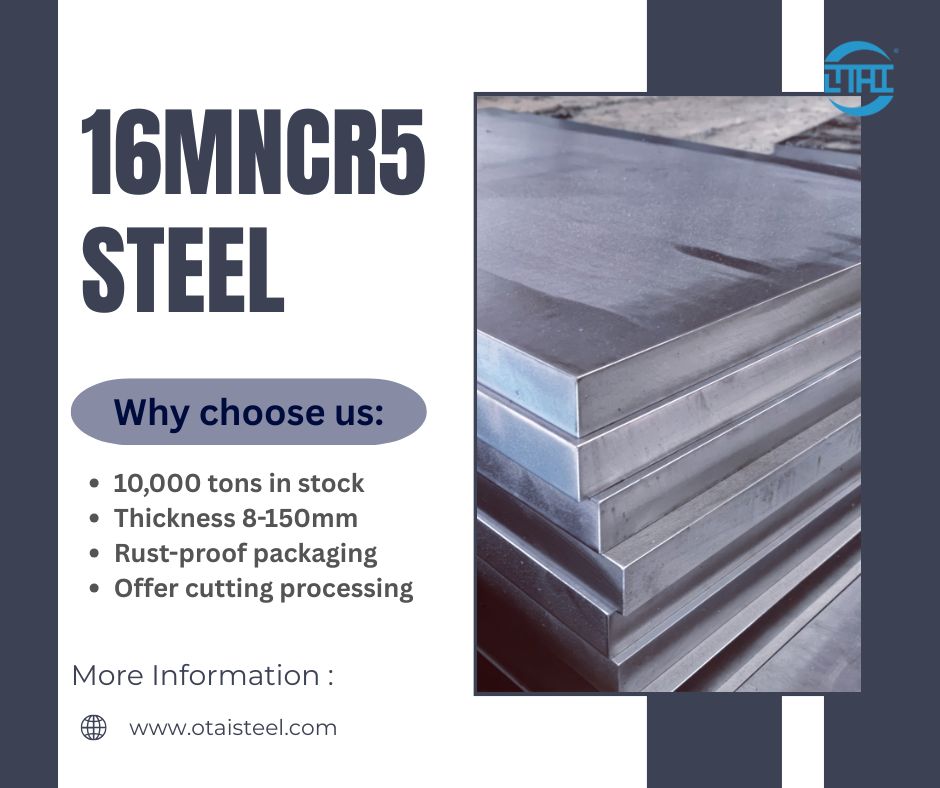
- Stable stock supply: Otai provides 8–150mm thickness plates available in stock to support customers with urgent requirements and continuous production needs.
- International standard materials: Supply 16MnCr5 1.7131 according to relevant European standards and customer technical requirements.
- Customized cutting service: Offer cutting and sizing services according to drawings, dimensions and project specifications.
- Heat treatment support: Provide support for carburizing, quenching, tempering and other heat treatment requirements.
- Quality inspection: Provide ultrasonic testing and third-party inspection services to ensure material reliability.
- Professional export service: Experienced in international steel supply with suitable packaging and transportation solutions.
- Protective packaging: Provide anti-rust packaging, steel strapping and wooden box packaging for overseas shipment.
When customers search for a reliable 16MnCr5 steel supplier, selecting a supplier with inventory, processing capability and quality control experience can help reduce the total purchasing cost.
❓ 8. FAQ About 16MnCr5 Cost per kg
1. What factors affect 16MnCr5 cost per kg?
The cost of 16MnCr5 depends on alloy composition, steel market conditions, dimensions, order quantity, processing requirements, inspection requirements and transportation factors.
2. Why is 16MnCr5 more expensive than ordinary carbon steel?
16MnCr5 contains alloying elements such as manganese and chromium, which improve hardenability, wear resistance and carburizing performance. These additional properties increase its material value.
3. Does the thickness affect 16MnCr5 steel price per kg?
Yes. Thickness, dimensions, tolerance and processing requirements can influence production difficulty, inventory management and final purchasing cost.
4. How can I reduce 16MnCr5 purchasing cost?
Buyers can optimize costs by selecting suitable specifications, planning orders early, choosing standard sizes, reducing unnecessary processing and working with reliable suppliers.
5. What should I confirm before purchasing 16MnCr5 steel?
Customers should confirm the steel standard, dimensions, delivery condition, inspection requirements, heat treatment needs and supplier capabilities before placing an order.