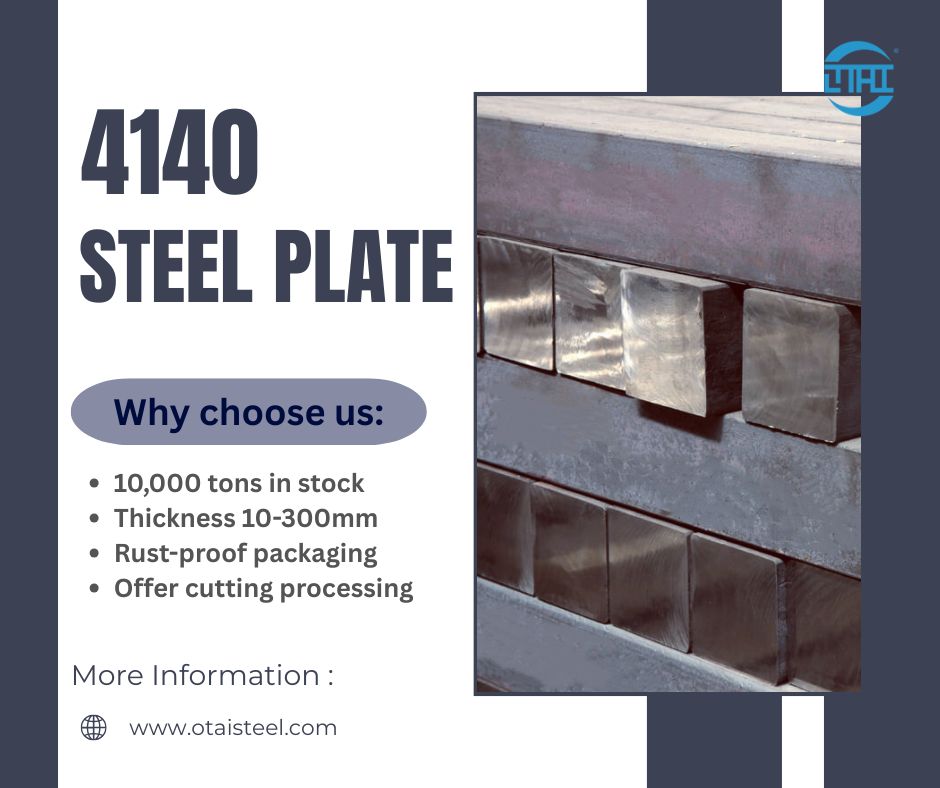
 4140 Steel UNS Number: Grade Identification and Basic Information
📑 Table of Contents
🔍 1. What Is the UNS Number for 4140 Steel?
⚙️ 2. Understanding 4140 Steel Grade Identification
📊 3. 4140 Steel Chemical Composition and Specifications
🔄 4. 4140 Steel Equivalent Grades Worldwide
🔥 5. Heat Treatment and Mechanical Properties of 4140 Steel
🏭 6. Applications of 4140 Steel UNS Number Grade
📦 7. Otai Special Steel Advantages
❓ 8. FAQ About 4140 Steel UNS Number
🔍 1. What Is the UNS Number for 4140 Steel?
When engineers and international buyers search for the 4140 steel UNS number, they are usually looking for the official identification system used to classify this popular chromium-molybdenum alloy steel.
The UNS system, which means Unified Numbering System, provides a standardized identification method for metals and alloys used in industries worldwide.
The UNS number for 4140 steel is G41400. This designation identifies the material as a chromium-molybdenum alloy steel with specific chemical composition requirements.
The 4140 steel UNS G41400 designation is commonly used in North America and international technical documents to distinguish this grade from other alloy steels with similar applications.
| Material Identification | Information |
|---|---|
| Common Grade Name | AISI 4140 / SAE 4140 |
| UNS Number | G41400 |
| Steel Type | Chromium-molybdenum alloy steel |
| Carbon Content | Approximately 0.40% |
| Main Alloy Elements | Chromium (Cr) and Molybdenum (Mo) |
| Main Feature | High strength, toughness and hardenability |
Why Is the UNS Number Important?
For steel suppliers, manufacturers and engineering companies, the UNS number provides a reliable way to identify materials across different countries and standards.
- Prevents material confusion: Different countries may use different naming systems.
- Improves international communication: Buyers and suppliers can confirm the same material grade.
- Supports technical documentation: Used in drawings, specifications and inspection reports.
- Helps material comparison: Makes it easier to compare equivalent alloy steels.
For example, a customer may search for AISI 4140, SAE 4140 or 4140 alloy steel specification. Although these names are common, the UNS designation provides another official reference for material identification.
⚙️ 2. Understanding 4140 Steel Grade Identification
4140 steel belongs to the family of low-alloy chromium-molybdenum steels. Understanding its designation helps engineers select the correct material for demanding mechanical applications.
Meaning of the 4140 Steel Designation
| Number | Meaning |
|---|---|
| 41 | Indicates chromium-molybdenum alloy steel family |
| 40 | Indicates approximate carbon content level (around 0.40%) |
The combination of chromium and molybdenum gives 4140 steel excellent hardenability compared with plain carbon steels.
This makes it suitable for components requiring high strength throughout the cross-section, especially after heat treatment.
Common Names of 4140 Steel
| Name | Usage |
|---|---|
| AISI 4140 | American Iron and Steel Institute designation |
| SAE 4140 | Society of Automotive Engineers designation |
| UNS G41400 | Unified Numbering System identification |
| 42CrMo4 | European equivalent grade (EN standard) |
Why Engineers Choose 4140 Steel
- High tensile strength: Suitable for heavy-duty components.
- Excellent toughness: Resists impact and shock loading.
- Good fatigue resistance: Performs well under repeated stress.
- Superior hardenability: Achieves deep hardness after heat treatment.
- Good machinability: Suitable for many manufacturing processes.
Because of these characteristics, SAE 4140 steel properties make it one of the most widely used alloy steels in mechanical engineering.
📊 3. 4140 Steel Chemical Composition and Specifications
The performance of 4140 steel comes from its carefully balanced alloy composition. Chromium improves hardenability and wear resistance, while molybdenum improves strength retention and toughness.
Chemical Composition of 4140 Steel
| Element | Typical Content (%) | Function |
|---|---|---|
| Carbon (C) | 0.38–0.43 | Provides strength and hardness potential |
| Silicon (Si) | 0.15–0.35 | Improves strength and deoxidation |
| Manganese (Mn) | 0.75–1.00 | Improves hardenability |
| Chromium (Cr) | 0.80–1.10 | Enhances wear resistance and toughness |
| Molybdenum (Mo) | 0.15–0.25 | Improves strength and heat resistance |
| Phosphorus (P) | ≤0.035 | Controlled for toughness |
| Sulfur (S) | ≤0.040 | Improves machinability |
Basic Specifications of 4140 Steel
| Property | Typical Value |
|---|---|
| Density | Approx. 7.85 g/cm³ |
| Elastic Modulus | Approx. 205 GPa |
| Tensile Strength | 655–1080 MPa (depending on condition) |
| Yield Strength | 415–950 MPa (depending on heat treatment) |
| Hardness | Approx. 197–269 HB in annealed condition |
The combination of alloying elements explains why 4140 alloy steel specification is widely accepted for high-performance mechanical components.
🔄 4. 4140 Steel Equivalent Grades Worldwide
When purchasing alloy steel internationally, customers often compare different standards to find the correct replacement material. The 4140 steel UNS number helps identify the grade, while equivalent standards make international communication easier.
4140 steel is recognized worldwide under different names, including AISI 4140, SAE 4140, UNS G41400 and several European and Japanese equivalents.
Although equivalent grades share similar chemical characteristics, engineers should always confirm the exact chemical composition, mechanical properties and delivery condition before substitution.
4140 Steel Equivalent Grades Comparison
| Standard | Equivalent Grade | Region | Description |
|---|---|---|---|
| AISI | 4140 | USA | Chromium-molybdenum alloy steel |
| SAE | 4140 | USA | Automotive and mechanical engineering grade |
| UNS | G41400 | International | Unified material identification number |
| EN | 42CrMo4 | Europe | Common European equivalent grade |
| Werkstoff | 1.7225 | Germany | German material number for 42CrMo4 |
| JIS | SCM440 | Japan | Chromium-molybdenum steel grade |
4140 vs 42CrMo4 Comparison
The most common international comparison is 4140 steel vs 42CrMo4. These two grades have similar alloy designs and are frequently used for similar applications.
| Feature | 4140 Steel | 42CrMo4 |
|---|---|---|
| Standard | AISI / SAE | EN / DIN |
| UNS Number | G41400 | Not applicable |
| Main Alloy | Cr-Mo | Cr-Mo |
| Carbon Content | Approx. 0.40% | Approx. 0.42% |
| Main Applications | Shafts, gears, tooling parts | Mechanical components and pressure parts |
Why Equivalent Grade Verification Matters
- Avoid incorrect substitution: Similar names do not always mean identical performance.
- Maintain mechanical performance: Heat treatment response depends on composition.
- Meet customer standards: Different industries may require specific specifications.
- Improve international purchasing: Clear identification reduces communication problems.
For global buyers searching for 4140 steel equivalent grade, confirming the UNS number, chemical composition and standard designation is the safest approach.
🔥 5. Heat Treatment and Mechanical Properties of 4140 Steel
Heat treatment significantly improves the performance of 4140 steel. The material can achieve excellent strength, hardness and toughness through processes such as quenching and tempering.
The combination of chromium and molybdenum allows 4140 steel to develop deep hardening characteristics, making it suitable for heavy-duty mechanical components.
Common Heat Treatment Processes for 4140 Steel
| Process | Typical Temperature | Purpose |
|---|---|---|
| Annealing | Approx. 800–850°C | Improve machinability and reduce internal stress |
| Normalizing | Approx. 870–900°C | Refine grain structure and improve strength |
| Quenching | Approx. 830–860°C | Increase hardness through martensitic transformation |
| Tempering | Approx. 400–650°C | Balance strength and toughness |
Mechanical Properties of Heat-Treated 4140 Steel
| Property | Typical Range |
|---|---|
| Tensile Strength | 655–1080 MPa |
| Yield Strength | 415–950 MPa |
| Elongation | 10–25% |
| Hardness | 197–352 HB depending on condition |
| Impact Toughness | Good resistance to shock loading |
Advantages of Heat-Treated 4140 Steel
- High strength: Suitable for components exposed to heavy loads.
- Excellent toughness: Reduces risk of sudden failure.
- Deep hardening ability: Maintains hardness in larger sections.
- Good fatigue resistance: Performs well under repeated stress.
- Versatile processing: Suitable for machining, forging and fabrication.
4140 Steel Mechanical Performance by Condition
| Condition | Main Characteristics | Typical Usage |
|---|---|---|
| Annealed | Soft structure, easier machining | Machining blanks |
| Normalized | Improved grain structure | General mechanical parts |
| Quenched and Tempered | High strength and toughness | Shafts, gears, heavy-duty components |
Because of these properties, SAE 4140 steel properties make this grade one of the most widely selected alloy steels for demanding engineering applications.
🏭 6. Applications of 4140 Steel UNS Number Grade
The material identified by UNS G41400 is widely used in industries requiring high strength, toughness and wear resistance.
Its excellent combination of mechanical properties allows manufacturers to use 4140 steel for both automotive and industrial applications.
Main Applications of 4140 Steel
| Industry | Components | Reason for Selection |
|---|---|---|
| Automotive | Drive shafts, axles, gears | High strength and fatigue resistance |
| Oil and Gas | Drill tools, couplings, shafts | Excellent toughness under stress |
| Machinery Manufacturing | Gears, bolts, rollers | Good wear resistance and machinability |
| Construction Equipment | Heavy-duty pins and shafts | Impact resistance |
| Tool Manufacturing | Fixtures and machine parts | High strength after heat treatment |
Why 4140 Steel Is Widely Used
- High load-bearing capability.
- Excellent combination of hardness and toughness.
- Good response to heat treatment.
- Reliable performance in harsh working environments.
- Available in various sizes and forms.
For companies selecting materials for mechanical components, understanding the 4140 steel UNS number helps ensure correct material identification and better engineering decisions.
📦 7. Otai Special Steel Advantages
Otai Special Steel supplies 4140 steel UNS G41400 and other alloy steel products for customers worldwide. With years of experience in special steel supply, Otai provides reliable material solutions for automotive, machinery and industrial applications.
From stock supply to customized processing, Otai helps customers select suitable materials according to technical requirements, production schedules and application conditions.
Why Choose Otai Special Steel?
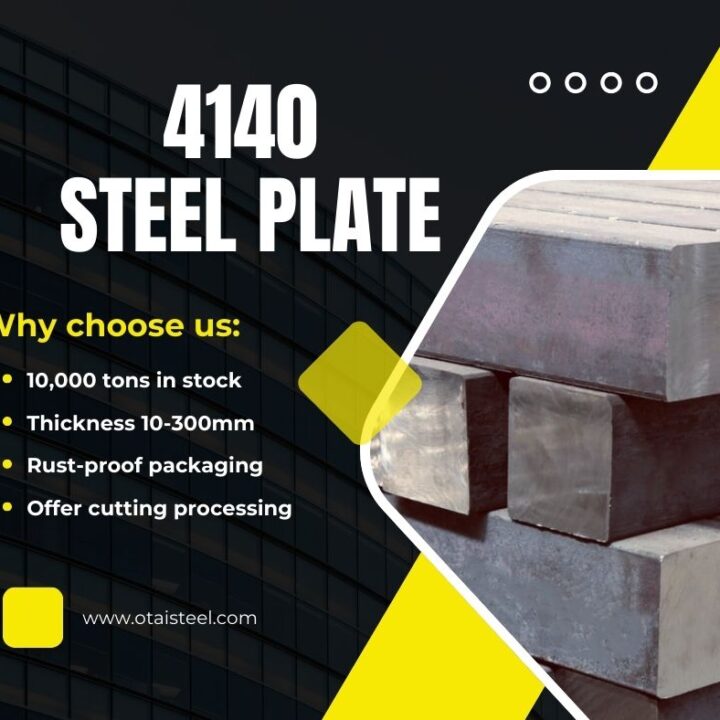
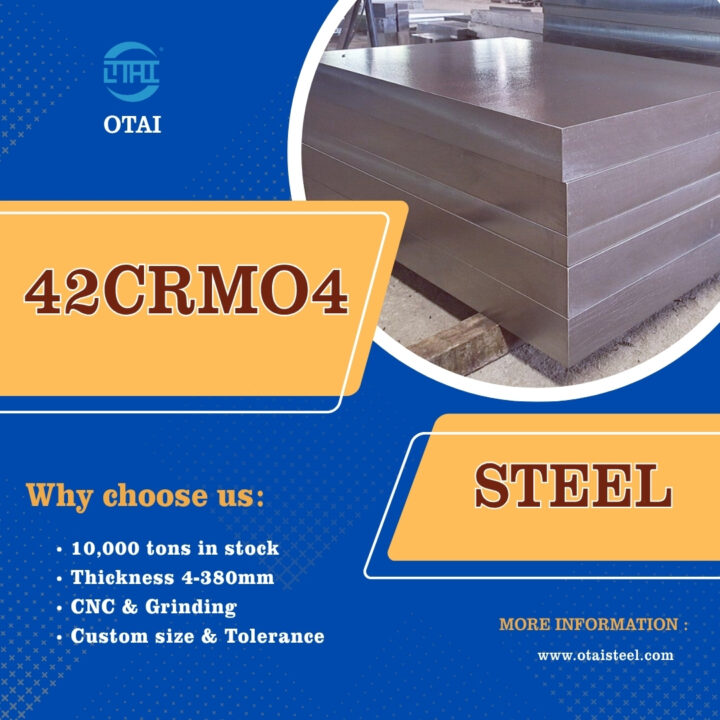
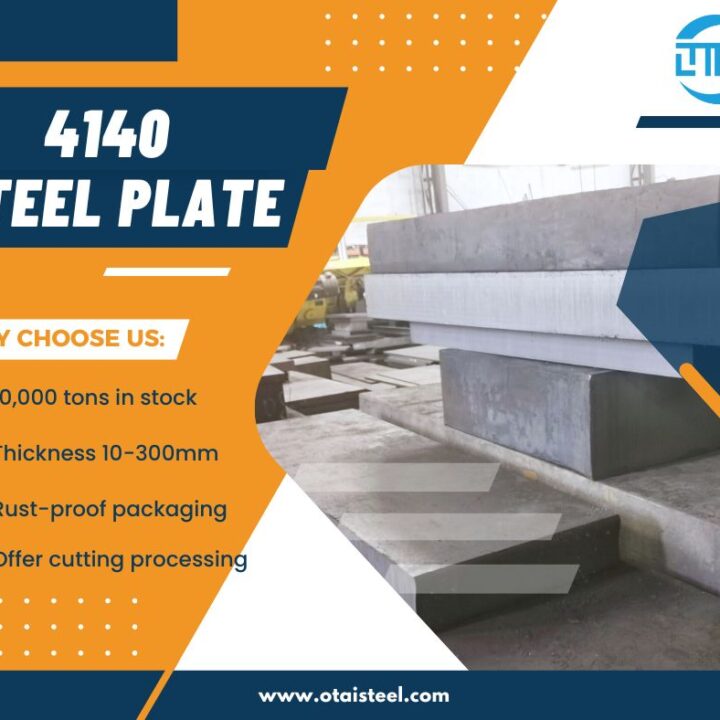
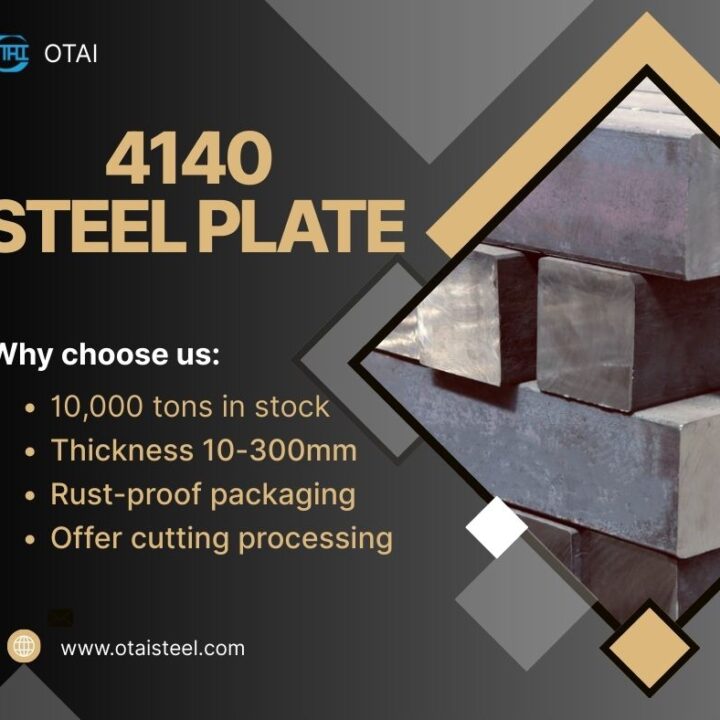
- Large inventory: Otai maintains 10,000 tons of alloy steel stock and provides different sizes of 4140 steel in stock to support fast delivery requirements.
- 4140 steel supply capability: Supply AISI 4140, SAE 4140 and 4140 steel UNS G41400 materials according to customer specifications.
- Customized cutting service: Provide cutting and machining preparation according to drawings and required dimensions.
- Heat treatment support: Support quenching, tempering and other heat treatment processes to meet mechanical performance requirements.
- Quality assurance: Provide ultrasonic testing and third-party inspection services to ensure material reliability.
- International export experience: Supply alloy steel products for global customers with professional packaging and logistics solutions.
- Protective packaging: Provide anti-rust packaging, steel strapping and wooden box packaging for overseas transportation.
When purchasing 4140 alloy steel specification materials, choosing an experienced supplier can help reduce quality risks and improve production efficiency.
❓ 8. FAQ About 4140 Steel UNS Number
1. What is the UNS number for 4140 steel?
The UNS number for 4140 steel is G41400. It is the official Unified Numbering System designation used to identify this chromium-molybdenum alloy steel grade.
2. Is UNS G41400 the same as AISI 4140?
Yes. UNS G41400 identifies the same basic alloy family as AISI 4140 and SAE 4140. The UNS system provides a standardized identification method for international material communication.
3. What are the main properties of SAE 4140 steel?
SAE 4140 steel offers high strength, good toughness, excellent hardenability and good fatigue resistance. It is widely used for shafts, gears, bolts and heavy-duty mechanical components.
4. What is the equivalent grade of 4140 steel?
Common equivalent grades include EN 42CrMo4, Werkstoff 1.7225 and JIS SCM440. However, customers should confirm chemical composition and specifications before replacement.
5. Why is the 4140 steel UNS number important for buyers?
The UNS number helps buyers and suppliers clearly identify the material grade, avoid confusion between similar steels and ensure the correct material is selected for engineering applications.