 Rockwell C Hardness of 4140 Steel: Hardness Values, Heat Treatment and Applications
📑 Table of Contents
🔍 1. What Is the Rockwell C Hardness of 4140 Steel?
🔥 2. 4140 Steel Hardness After Heat Treatment
📊 3. 4140 Steel Hardness Chart (HRC, HB, HV)
⚙️ 4. How Alloy Elements Affect 4140 Hardness
🛠️ 5. Relationship Between Hardness and Mechanical Properties
⚖️ 6. 4140 vs 4130 vs 4340 Hardness Comparison
🏭 7. Applications Based on 4140 Rockwell Hardness
📦 8. Otai Special Steel Advantages
❓ FAQ About 4140 Steel Hardness
🔍 1. What Is the Rockwell C Hardness of 4140 Steel?
When engineers search for rockwell c hardness of 4140 steel, they usually want to know the hardness value of this popular chromium-molybdenum alloy steel and how it changes after different heat treatments.
4140 steel is a medium-carbon alloy steel widely used for shafts, gears, bolts, tooling components and heavy-duty machine parts. Its hardness depends strongly on the material condition, including annealed, normalized, quenched, tempered or hardened states.
The Rockwell C hardness scale (HRC) is one of the most common methods for measuring hardened steel. It uses a diamond cone indenter and a specific test load to evaluate resistance against penetration.
For most industrial applications, the typical hardness range of 4140 steel is approximately 28–32 HRC in the pre-hardened condition. After quenching and tempering, the hardness can increase significantly depending on the selected heat treatment parameters.
The final 4140 steel hardness HRC value determines many important properties, including wear resistance, tensile strength, fatigue performance and machining behavior.
Typical Rockwell C Hardness of 4140 Steel
| Material Condition | Typical Hardness | Application Characteristics |
|---|---|---|
| Annealed 4140 Steel | Approx. 15–22 HRC | Soft condition with good machinability |
| Normalized 4140 Steel | Approx. 20–30 HRC | Improved strength and toughness |
| Pre-hardened 4140 Steel | Approx. 28–32 HRC | Common industrial supply condition |
| Quenched and Tempered 4140 | Approx. 40–50 HRC | High strength mechanical applications |
| Fully Hardened 4140 Steel | Can exceed 50 HRC | Maximum hardness applications |
What Does Rockwell C Hardness Mean for 4140 Steel?
The Rockwell C hardness value is not only a number. It represents the balance between strength, wear resistance and toughness of the material.
A higher HRC value usually means:
- Higher resistance to abrasion and surface damage.
- Higher yield strength and tensile strength.
- Better performance under heavy mechanical loads.
However, extremely high hardness may reduce toughness and increase the risk of cracking under impact conditions. Therefore, manufacturers usually select the proper hardness level according to the working environment.
Why Is 4140 Steel Popular in Engineering?
The reason AISI 4140 is widely used is its excellent combination of strength, toughness and heat treatment response. Compared with ordinary carbon steel, 4140 provides better hardenability because of chromium and molybdenum additions.
This allows engineers to achieve different hardness levels for different applications. For example, shafts may require toughness and fatigue resistance, while wear components may require higher surface hardness.
Therefore, understanding the AISI 4140 Rockwell hardness is important when selecting the correct material condition for production.
🔥 2. 4140 Steel Hardness After Heat Treatment
Heat treatment plays a major role in controlling the final hardness of 4140 steel. Through heating, cooling and tempering processes, manufacturers can adjust the internal microstructure and achieve the required mechanical performance.
The most common method for increasing hardness is quenching followed by tempering. This process creates a martensitic structure that provides high strength while maintaining acceptable toughness.
Common Heat Treatment Conditions of 4140 Steel
| Heat Treatment | Process Description | Expected Hardness |
|---|---|---|
| Annealing | Slow cooling after heating to soften the steel | 15–22 HRC |
| Normalizing | Air cooling after heating for improved structure | 20–30 HRC |
| Quenching | Rapid cooling to create martensite | 50+ HRC possible |
| Tempering | Controlled reheating to improve toughness | 40–50 HRC commonly used |
4140 Steel Hardness After Heat Treatment
The final hardness of 4140 steel after heat treatment depends on several factors:
- Heating temperature.
- Cooling method.
- Material thickness.
- Tempering temperature.
- Required mechanical properties.
For many industrial applications, quenched and tempered 4140 steel provides the best balance between hardness and toughness. It offers enough strength for heavy loads while maintaining resistance against impact failure.
This balanced performance explains why 4140 is widely selected for automotive parts, machinery components and oil field equipment.
📊 3. 4140 Steel Hardness Chart (HRC, HB, HV)
To fully understand the rockwell c hardness of 4140 steel, engineers often compare Rockwell C values with other hardness scales, such as Brinell hardness (HB) and Vickers hardness (HV).
Different industries use different hardness testing methods depending on component size, material condition and testing requirements. Rockwell C is commonly used for hardened alloy steels, while Brinell and Vickers methods are often applied during material inspection and laboratory testing.
The following values provide a general reference for 4140 steel hardness HRC conversion. Actual values may vary depending on chemical composition, heat treatment and testing conditions.
4140 Steel Hardness Conversion Chart
| Rockwell C (HRC) | Brinell (HB) | Vickers (HV) | Typical Condition |
|---|---|---|---|
| 20 HRC | Approx. 220 HB | Approx. 230 HV | Normalized condition |
| 30 HRC | Approx. 280 HB | Approx. 295 HV | Pre-hardened 4140 |
| 40 HRC | Approx. 375 HB | Approx. 390 HV | Quenched and tempered |
| 45 HRC | Approx. 420 HB | Approx. 450 HV | High strength condition |
| 50 HRC | Approx. 480 HB | Approx. 520 HV | Hardened condition |
Why Hardness Conversion Is Important
Material suppliers and manufacturers often receive different hardness requirements from customers. Some customers specify HRC, while others use HB or HV depending on their quality control system.
For example, a customer purchasing 4140 hardened steel hardness may request 45 HRC, while another inspection standard may require an equivalent Brinell or Vickers value.
Understanding these relationships helps engineers communicate material requirements more accurately and avoid incorrect material selection.
Factors Affecting Hardness Test Results
| Factor | Effect on Hardness Result |
|---|---|
| Heat treatment condition | Major influence on final hardness |
| Material thickness | Affects cooling speed during quenching |
| Testing surface quality | Rough surfaces may affect accuracy |
| Testing equipment | Calibration influences measurement reliability |
| Steel chemistry | Controls hardenability and microstructure |
⚙️ 4. How Alloy Elements Affect 4140 Hardness
The hardness performance of 4140 steel comes from its carefully balanced chemical composition. Unlike plain carbon steel, 4140 contains chromium and molybdenum, which significantly improve hardenability.
Understanding the relationship between alloy elements and hardness helps explain why AISI 4140 Rockwell hardness can reach higher levels after heat treatment.
Chemical Composition of 4140 Steel
| Element | Typical Content (%) | Effect on Hardness |
|---|---|---|
| Carbon (C) | 0.38–0.43 | Provides the foundation for hardness after quenching |
| Chromium (Cr) | 0.80–1.10 | Improves hardenability and wear resistance |
| Molybdenum (Mo) | 0.15–0.25 | Improves strength and deep hardening ability |
| Manganese (Mn) | 0.75–1.00 | Improves toughness and hardening response |
| Silicon (Si) | 0.15–0.35 | Supports strength improvement |
Carbon Content and 4140 Hardness
Carbon is the main element controlling hardness in steel. During quenching, carbon atoms help form martensite, which creates a strong and hard structure.
However, excessive carbon can reduce toughness. The carbon level in 4140 is carefully balanced to provide both hardness and mechanical reliability.
Chromium and Molybdenum Effects
Chromium improves resistance to wear and increases the depth at which hardness can be achieved. This is especially important for larger 4140 components where the core must also maintain strength.
Molybdenum reduces the risk of temper brittleness and improves high-temperature strength. Together, chromium and molybdenum make 4140 a highly versatile engineering steel.
Because of this alloy design, 4140 steel hardness after heat treatment can be adjusted for different industrial requirements.
🛠️ 5. Relationship Between Hardness and Mechanical Properties
The hardness level of 4140 steel directly influences many mechanical properties. When engineers select a specific HRC value, they are also controlling strength, wear resistance and machining performance.
A higher hardness level usually improves resistance to deformation and surface damage. However, the material must maintain enough toughness to avoid brittle failure.
Relationship Between 4140 Hardness and Performance
| Hardness Level | Mechanical Characteristics | Typical Applications |
|---|---|---|
| 20–30 HRC | Better machinability and moderate strength | Machined parts, general components |
| 30–40 HRC | Balanced strength and toughness | Shafts, gears, machinery parts |
| 40–50 HRC | High strength and improved wear resistance | Heavy-duty components |
| 50+ HRC | Maximum hardness but lower toughness | Wear-focused applications |
Hardness vs Tensile Strength
As hardness increases, tensile strength generally increases as well. This is why hardened 4140 steel is widely used for components exposed to high mechanical stress.
For example, a pre-hardened 4140 steel plate may provide excellent machinability, while a quenched and tempered condition provides much higher strength for demanding applications.
Hardness vs Wear Resistance
Wear resistance is one of the main reasons engineers choose higher hardness conditions. Components such as gears, shafts and industrial machine parts benefit from increased surface hardness because it reduces material loss during operation.
However, the correct hardness depends on the application. A component that experiences shock loads may require a slightly lower hardness level to maintain toughness.
Therefore, selecting the correct rockwell c hardness of 4140 steel requires balancing hardness, strength and toughness according to the working environment.
⚖️ 6. 4140 vs 4130 vs 4340 Steel Hardness Comparison
When selecting alloy steel for mechanical components, engineers often compare 4140 with similar chromium-molybdenum steels such as 4130 and 4340. Although these grades share some characteristics, their hardness capability and mechanical performance are different.
Understanding the difference between these materials helps manufacturers choose the correct steel grade based on strength requirements, component size and operating conditions.
The rockwell c hardness of 4140 steel is one of the reasons why it remains one of the most widely used engineering steels. It provides a strong balance between hardness, toughness and machinability.
4140 vs 4130 vs 4340 Hardness Comparison
| Property | 4140 Steel | 4130 Steel | 4340 Steel |
|---|---|---|---|
| Steel Type | Chromium-molybdenum alloy steel | Chromium-molybdenum alloy steel | Nickel-chromium-molybdenum alloy steel |
| Carbon Content | Approx. 0.40% | Approx. 0.30% | Approx. 0.40% |
| Typical Hardness Range | 28–50 HRC depending on treatment | 20–45 HRC depending on treatment | 35–55 HRC depending on treatment |
| Strength Level | High | Medium to high | Very high |
| Toughness | Excellent balance | Very good | Excellent for heavy loads |
| Main Advantage | Versatile performance and availability | Good weldability | Superior strength and fatigue resistance |
Why Choose 4140 Instead of 4130?
4140 contains higher carbon content than 4130, which allows it to achieve higher hardness after heat treatment. This makes it more suitable for applications requiring increased strength and wear resistance.
However, 4130 offers better weldability, making it popular in aerospace structures and welded fabrication projects.
Why Choose 4140 Instead of 4340?
4340 generally provides higher strength and toughness because of its nickel addition. It is often selected for extremely demanding applications such as aerospace landing gear and heavy-duty components.
However, 4140 provides a more economical solution for many industrial applications while still offering excellent hardness and mechanical performance.
For most general engineering applications, the balance of hardness and toughness makes 4140 one of the most practical alloy steels available.
🏭 7. Applications Based on 4140 Rockwell Hardness
The suitable application of 4140 steel depends greatly on its final hardness condition. Different industries select different HRC levels according to load, wear requirements and machining needs.
A properly selected 4140 hardened steel hardness level can significantly improve component service life and operating reliability.
4140 Steel Applications by Hardness Level
| Hardness Range | Typical Applications | Main Benefit |
|---|---|---|
| 20–30 HRC | General machine parts, shafts, structural components | Good machinability and toughness |
| 30–40 HRC | Gears, axles, connecting rods | Balanced strength and durability |
| 40–50 HRC | Heavy-duty shafts, molds, industrial equipment parts | High strength and wear resistance |
| 50+ HRC | Wear-resistant components and special tooling | Maximum surface hardness |
Common Industries Using 4140 Steel
- Automotive industry: crankshafts, axles, gears and high-strength fasteners.
- Oil and gas industry: drilling tools, shafts and pressure components.
- Heavy machinery: pins, rollers, gears and structural parts.
- Manufacturing industry: molds, tooling components and machine parts.
- Mining equipment: wear-resistant mechanical components.
The popularity of 4140 comes from its ability to provide different hardness levels through heat treatment. Manufacturers can select the right condition according to their specific requirements.
📦 8. Otai Special Steel Advantages for 4140 Steel Supply
For manufacturers purchasing 4140 steel, stable supply, consistent quality and professional service are essential. Material hardness and mechanical performance depend not only on chemical composition but also on steel quality and processing control.
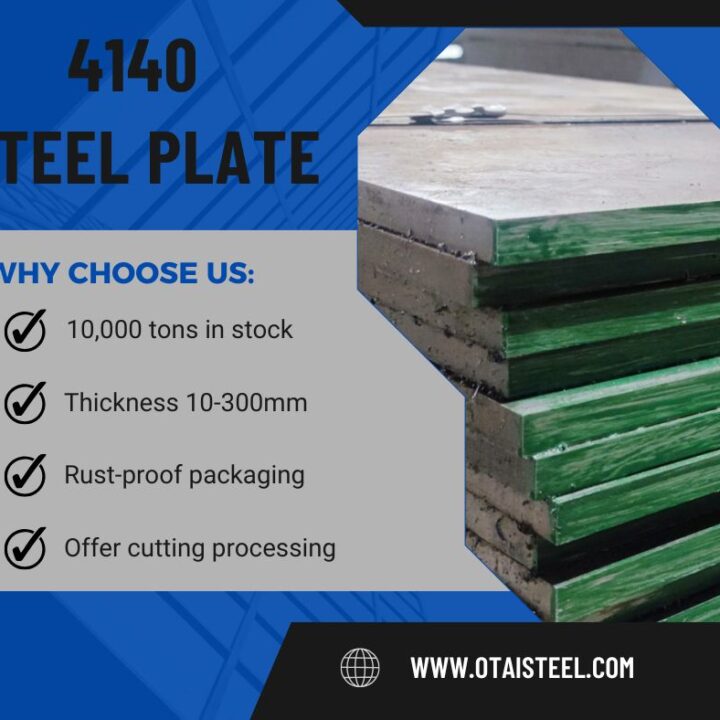
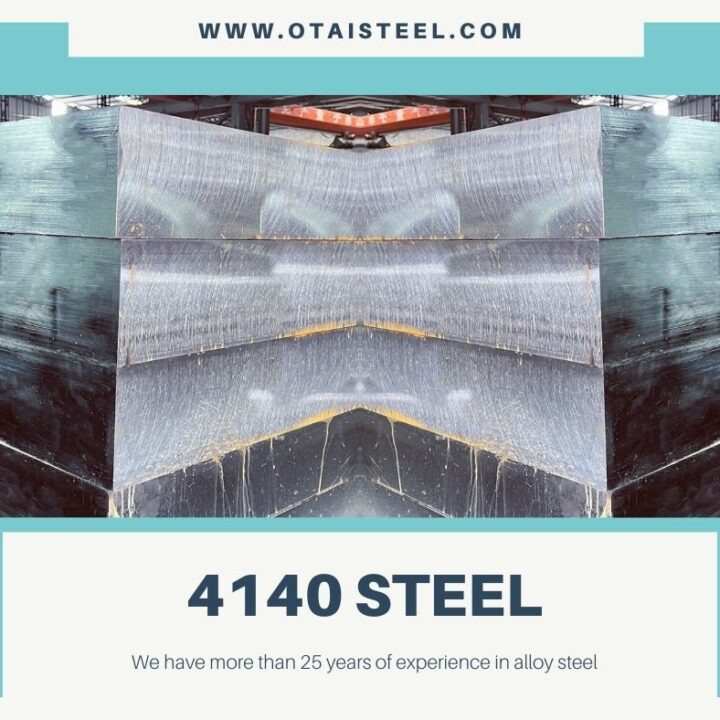
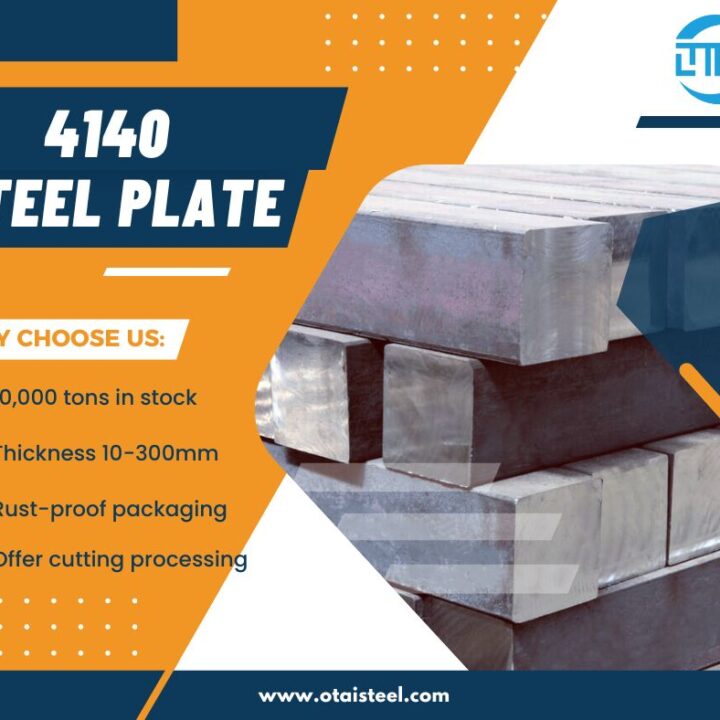
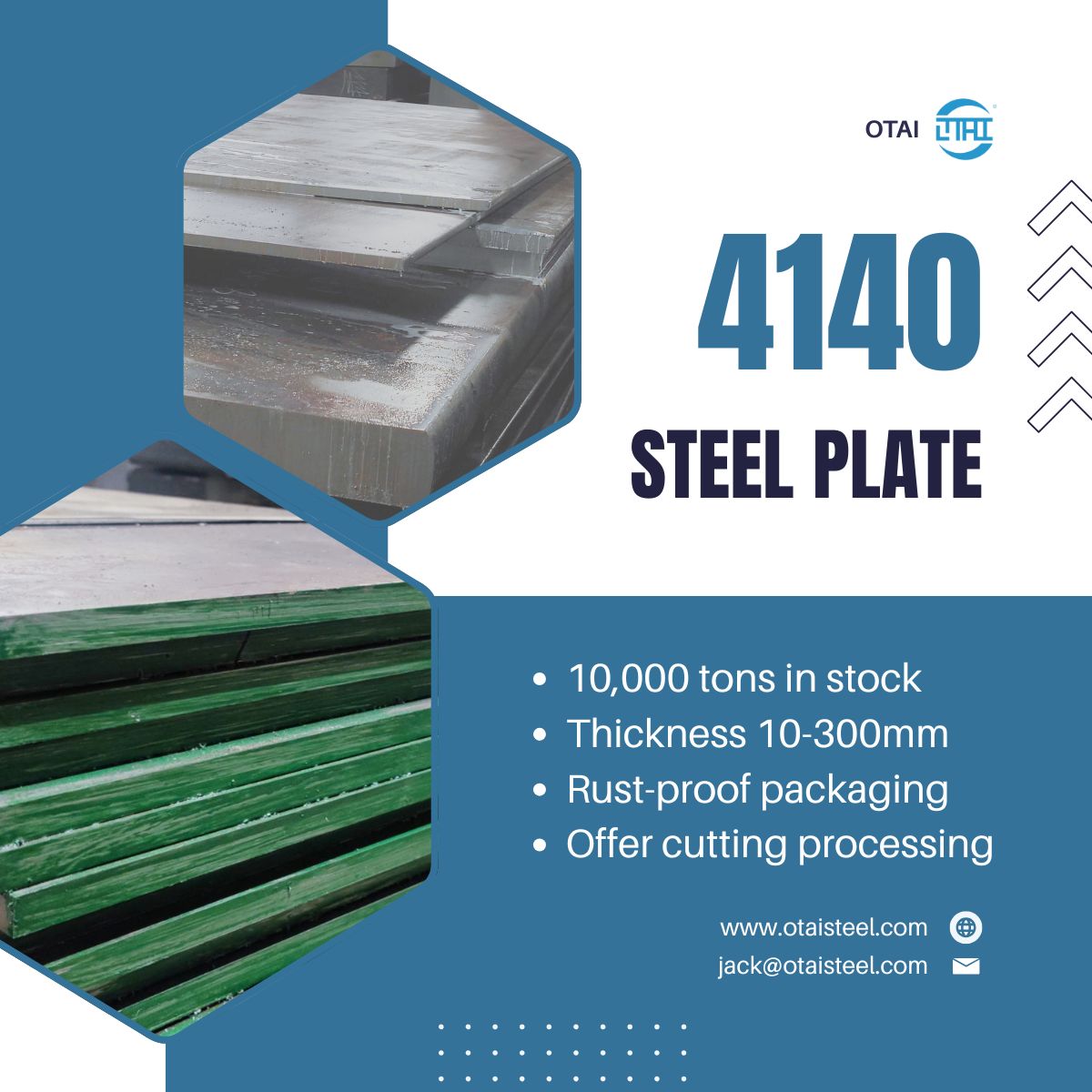
Otai Special Steel specializes in supplying 4140 alloy steel plates and provides material solutions for customers in automotive, machinery, tooling and industrial manufacturing fields.
Advantages of Otai Special Steel
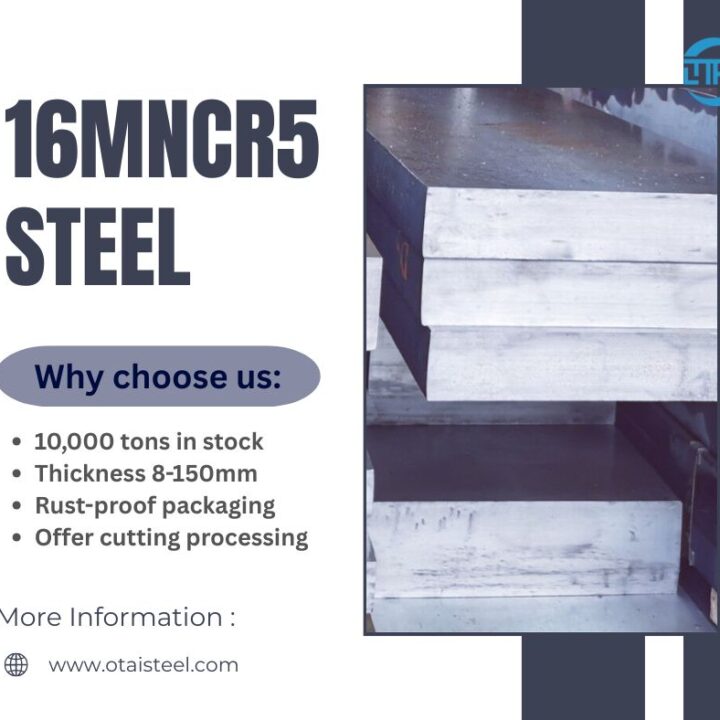
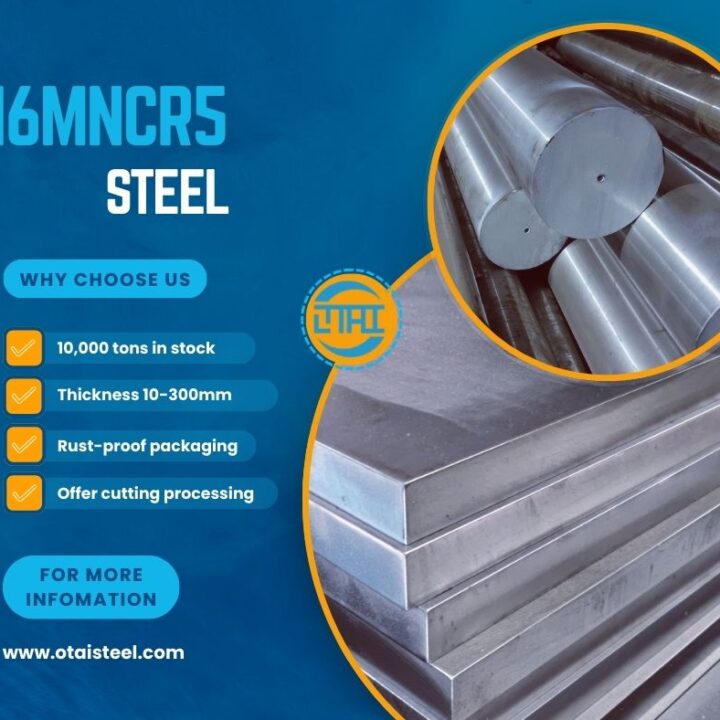
- Large inventory: Otai maintains approximately 10,000 tons of steel inventory and stocks different sizes of 4140 alloy steel plates to support urgent requirements.
- Different dimensions available: Various thicknesses and sizes are available to meet different machining and fabrication needs.
- Cutting and processing service: Customized cutting services help customers reduce preparation time before machining.
- Heat treatment support: Professional heat treatment solutions are available to achieve required hardness and mechanical properties.
- Quality inspection: Ultrasonic testing and third-party inspection services are available for material verification.
- Protective packaging: Anti-rust packaging, steel strapping and wooden box packaging ensure safer transportation.
With reliable stock availability and professional alloy steel experience, Otai helps customers obtain stable 4140 material solutions for demanding engineering applications.
❓ FAQ About Rockwell C Hardness of 4140 Steel
Q1: What is the Rockwell C hardness of 4140 steel?
The typical Rockwell C hardness of 4140 steel depends on the condition. Pre-hardened 4140 is commonly around 28–32 HRC, while quenched and tempered 4140 can reach approximately 40–50 HRC.
Q2: What is the hardness of hardened 4140 steel?
Hardened 4140 steel can achieve more than 50 HRC depending on heat treatment conditions, cooling method and component size.
Q3: Does heat treatment increase 4140 steel hardness?
Yes. Quenching and tempering significantly increase hardness by changing the steel microstructure and creating stronger martensitic structures.
Q4: Is 4140 harder than 4130 steel?
Generally, yes. Because 4140 contains more carbon, it can achieve higher hardness and strength after heat treatment compared with 4130.
Q5: Does Otai supply 4140 steel plates?
Yes. Otai supplies 4140 alloy steel plates with large inventory, different size options, cutting services, heat treatment support, ultrasonic testing and third-party inspection.