 16MnCr5 Steel Equivalent in USA: SAE Grades and ASTM Comparison
📑 Table of Contents
🔍 1. What Is the USA Equivalent of 16MnCr5 Steel?
⚖️ 2. 16MnCr5 Equivalent SAE and ASTM Grades
📊 3. 16MnCr5 vs SAE 8620 Steel Comparison
🔥 4. Why Is 16MnCr5 Replaced by SAE 8620 in the USA?
⚙️ 5. Chemical Composition and Mechanical Properties
🏭 6. Applications of 16MnCr5 Equivalent Materials
📦 7. Otai Special Steel Advantages
❓ FAQ About 16MnCr5 Equivalent in USA
🔍 1. What Is the USA Equivalent of 16MnCr5 Steel?
When engineers search for 16MnCr5 steel equivalent in USA, they usually want to identify an American steel grade with similar chemical composition, heat treatment performance and industrial applications.
16MnCr5 is a European case hardening alloy steel defined mainly by the EN standard. It belongs to the low-carbon chromium-manganese steel family and is widely used for gears, shafts and transmission components.
The main feature of 16MnCr5 is its excellent carburizing performance. After carburizing and hardening, the steel develops a hard wear-resistant surface while maintaining a tough internal core.
In the United States, engineers usually select SAE or AISI grades instead of EN grades. Therefore, there is no single identical replacement for 16MnCr5, but several American grades provide similar performance.
The most common comparisons include SAE 5115, SAE 5120 and SAE 8620. Among them, 16MnCr5 equivalent SAE grade selection depends on the application requirements, especially gear design, carburizing depth and mechanical properties.
Basic Information of 16MnCr5 Steel
| Item | Description |
|---|---|
| Steel Grade | 16MnCr5 |
| Standard | EN 10084 |
| Material Number | 1.7131 |
| Steel Type | Low carbon alloy case hardening steel |
| Main Alloy Elements | Manganese (Mn) and Chromium (Cr) |
| Main Application | Gears, shafts, transmission components |
Why Do Engineers Need 16MnCr5 Equivalent Grades?
International manufacturing projects often involve different material standards. A component designed in Europe may require replacement materials when produced in the USA.
Finding the correct equivalent steel helps manufacturers maintain:
- Similar carburizing performance.
- Comparable hardness after heat treatment.
- Reliable mechanical strength.
- Stable production quality.
- Compatible machining and processing methods.
However, engineers should understand that an equivalent grade does not always mean identical chemical composition. Before replacement, manufacturers should compare chemical analysis, mechanical properties and heat treatment requirements.
⚖️ 2. 16MnCr5 Equivalent SAE and ASTM Grades
The American steel system mainly uses SAE and AISI designations. When looking for a 16MnCr5 equivalent ASTM steel, engineers normally compare carburizing steels with similar carbon levels and alloying elements.
Among American grades, SAE 5115 is often considered one of the closest chemical equivalents. SAE 8620, however, is more commonly used in the USA because of its excellent carburizing performance and wide availability.
16MnCr5 Equivalent Materials in USA Standards
| Standard System | Grade | Relationship with 16MnCr5 |
|---|---|---|
| EN | 16MnCr5 | Original European carburizing steel |
| DIN | 16MnCr5 / 1.7131 | German material designation |
| SAE | 5115 | Closest chemical equivalent grade |
| AISI | 5120 | Similar chromium carburizing steel |
| SAE | 8620 | Common USA alternative for gears |
SAE 5115 as a 16MnCr5 Equivalent
SAE 5115 has a similar low-carbon chromium alloy design. It provides good carburizing characteristics and is suitable for components requiring a hardened surface and tough core.
Because of these similarities, many engineers consider SAE 5115 a practical alternative when searching for a DIN 16MnCr5 equivalent in USA.
SAE 8620 as a Common American Alternative
Although SAE 8620 is not an exact chemical match, it has become one of the most popular carburizing steels in the United States.
The addition of nickel improves toughness, while chromium and molybdenum enhance hardenability. This makes SAE 8620 highly suitable for gears and transmission components.
For this reason, many American manufacturers choose SAE 8620 when replacing 16MnCr5 in production environments.
📊 3. 16MnCr5 vs SAE 8620 Steel Comparison
When selecting a replacement material for European gear steel, engineers often compare 16MnCr5 vs SAE 8620 steel. Both grades belong to the carburizing steel family and are designed for applications that require a hard surface layer and a tough internal structure.
Although SAE 8620 is not an exact chemical replacement for 16MnCr5, it is one of the most widely accepted alternatives in the United States because of its availability and excellent performance in gear manufacturing.
The main difference between these two steels is the alloy design. 16MnCr5 mainly uses manganese and chromium, while SAE 8620 contains nickel, chromium and molybdenum, which improve toughness and hardenability.
16MnCr5 vs SAE 8620 Comparison Table
| Property | 16MnCr5 | SAE 8620 |
|---|---|---|
| Standard System | EN / DIN | SAE / AISI |
| Material Number | 1.7131 | Not applicable |
| Steel Type | Low carbon chromium-manganese steel | Nickel-chromium-molybdenum carburizing steel |
| Carbon Content | Approx. 0.14–0.19% | Approx. 0.18–0.23% |
| Main Alloy Elements | Mn + Cr | Ni + Cr + Mo |
| Carburizing Performance | Excellent | Excellent |
| Core Toughness | Good | Very good |
| Main Applications | Gears, shafts, transmission parts | Automotive gears, shafts, industrial components |
Chemical Composition Difference
The chemical composition difference is the most important factor when evaluating an equivalent steel grade.
| Element | 16MnCr5 (%) | SAE 8620 (%) | Function |
|---|---|---|---|
| Carbon (C) | 0.14–0.19 | 0.18–0.23 | Controls surface hardness after carburizing |
| Manganese (Mn) | 1.00–1.30 | 0.70–0.90 | Improves strength and hardenability |
| Chromium (Cr) | 0.80–1.10 | 0.40–0.60 | Improves wear resistance |
| Nickel (Ni) | Usually not added | 0.40–0.70 | Improves toughness |
| Molybdenum (Mo) | Usually not added | 0.15–0.25 | Improves hardenability |
Which Grade Performs Better for Gears?
Both 16MnCr5 and SAE 8620 are excellent gear steels. However, their advantages are slightly different.
- 16MnCr5: preferred for European automotive and machinery industries because of its excellent carburizing ability and stable performance.
- SAE 8620: preferred in the USA because nickel and molybdenum provide improved toughness and deeper hardening capability.
For small and medium-size gears, both grades can provide excellent results. For larger components requiring higher core toughness, SAE 8620 may provide additional advantages.
🔥 4. Why Is 16MnCr5 Replaced by SAE 8620 in the USA?
Many manufacturers searching for American equivalent of 16MnCr5 steel eventually select SAE 8620 instead of an exact chemical equivalent. This decision is mainly related to supply chains, industry standards and manufacturing experience.
1. Different Material Standards
European manufacturers commonly use EN and DIN standards, while American manufacturers usually specify SAE or AISI grades.
Because of this difference, engineers often convert European grades into American equivalents when purchasing raw materials or transferring production between countries.
2. SAE 8620 Has Strong Market Availability
SAE 8620 is widely produced and stocked in the USA. Many steel suppliers, machining companies and gear manufacturers already have experience processing this grade.
This makes SAE 8620 a practical choice when replacing 16MnCr5 for international projects.
3. Excellent Carburizing Performance
Both materials are designed for carburizing. During carburizing, the surface carbon content increases, creating a hard outer layer while keeping the core relatively soft and tough.
This structure is ideal for gears because the surface needs wear resistance while the core needs impact resistance.
4. Suitable for Automotive Applications
The automotive industry frequently uses carburizing steels for transmission gears, shafts and powertrain components.
SAE 8620 has become a common American choice because it meets many requirements originally covered by European grades such as 16MnCr5.
⚙️ 5. Chemical Composition and Mechanical Properties of 16MnCr5
Understanding the chemical composition and mechanical properties helps engineers decide whether a material can replace another grade.
The performance of 16MnCr5 equivalent in USA materials depends not only on chemical composition but also on heat treatment, carburizing depth and final application requirements.
Mechanical Properties of 16MnCr5 Steel
| Property | Typical Value |
|---|---|
| Tensile Strength | Approx. 800–1100 MPa after heat treatment |
| Yield Strength | Approx. 500–700 MPa |
| Elongation | Approx. 8–12% |
| Core Hardness | Approx. 30–45 HRC depending on treatment |
| Surface Hardness After Carburizing | Approx. 58–62 HRC |
Why Heat Treatment Matters
The final performance of 16MnCr5 depends strongly on carburizing and hardening processes.
A properly treated component can achieve:
- High surface hardness for wear resistance.
- Strong core toughness against impact loads.
- Longer service life under repeated stress.
- Better fatigue resistance for rotating components.
Therefore, selecting the correct equivalent grade requires considering the complete manufacturing process rather than only comparing chemical composition.
🏭 6. Applications of 16MnCr5 Equivalent Materials
The main reason engineers search for 16MnCr5 steel equivalent in USA is to find a suitable material for practical manufacturing applications. Both 16MnCr5 and its American alternatives, such as SAE 5115 and SAE 8620, are widely used in components that require a hard surface and strong internal toughness.
These steels are especially suitable for carburizing applications. During carburizing, carbon atoms diffuse into the surface layer of the steel. After hardening, the component obtains a wear-resistant surface while maintaining a tough core structure.
This combination makes carburizing steels ideal for gears, shafts and transmission components that operate under repeated loads and friction conditions.
Common Applications of 16MnCr5 Equivalent Steels
| Industry | Components | Material Requirement |
|---|---|---|
| Automotive Industry | Transmission gears, gear shafts, timing components | High surface hardness and fatigue resistance |
| Mechanical Engineering | Industrial gears, drive shafts, machine parts | Good toughness and wear resistance |
| Agricultural Machinery | Gearboxes, rotating components, shafts | Resistance to repeated loads |
| Construction Equipment | Pins, bushings and transmission parts | High strength and impact resistance |
| Power Transmission | Gear systems and mechanical drives | Long service life under friction |
16MnCr5 Equivalent for Gear Manufacturing
Gear manufacturing is one of the most common applications for 16MnCr5 and SAE 8620. A gear requires two different properties at the same time:
- A hard outer surface to resist wear and contact fatigue.
- A tough inner core to absorb impact loads.
This is why low-carbon alloy carburizing steels are widely selected for gears. The carburized surface can reach high hardness, while the core remains strong and resistant to cracking.
For European gear manufacturers, DIN 16MnCr5 remains a popular choice. For American production systems, SAE 8620 is often selected because it fits existing SAE specifications and supply chains.
Advantages of Using 16MnCr5 Equivalent Materials
- Excellent surface hardness after carburizing.
- Good resistance to wear and contact fatigue.
- Reliable performance in transmission systems.
- Suitable for precision machining.
- Long service life under heavy working conditions.
📦 7. Otai Special Steel Advantages for 16MnCr5 Steel Supply
For international buyers looking for DIN 16MnCr5 equivalent in USA solutions, material availability, quality control and processing capability are important factors.
Otai Special Steel supplies 16MnCr5 steel and related carburizing alloy steels for customers in automotive, machinery and industrial manufacturing industries.
Why Choose Otai Special Steel?
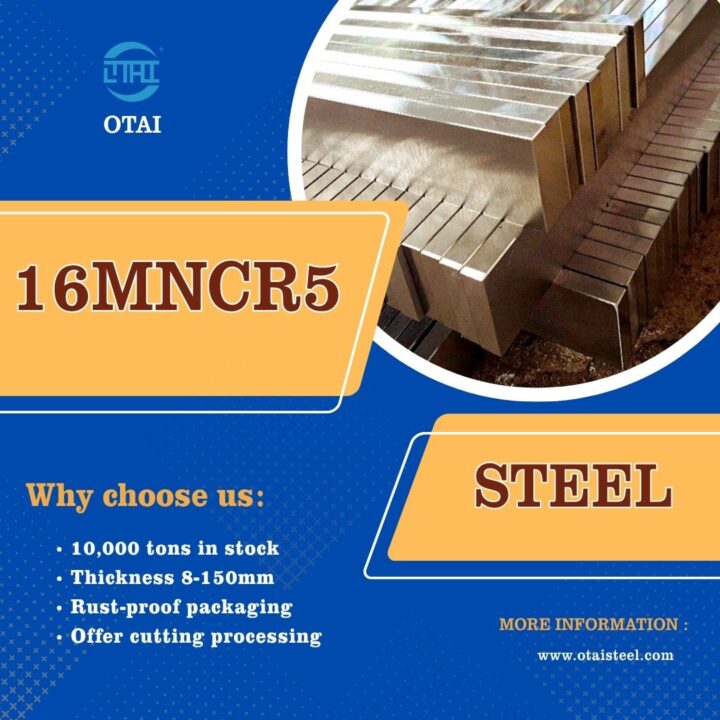
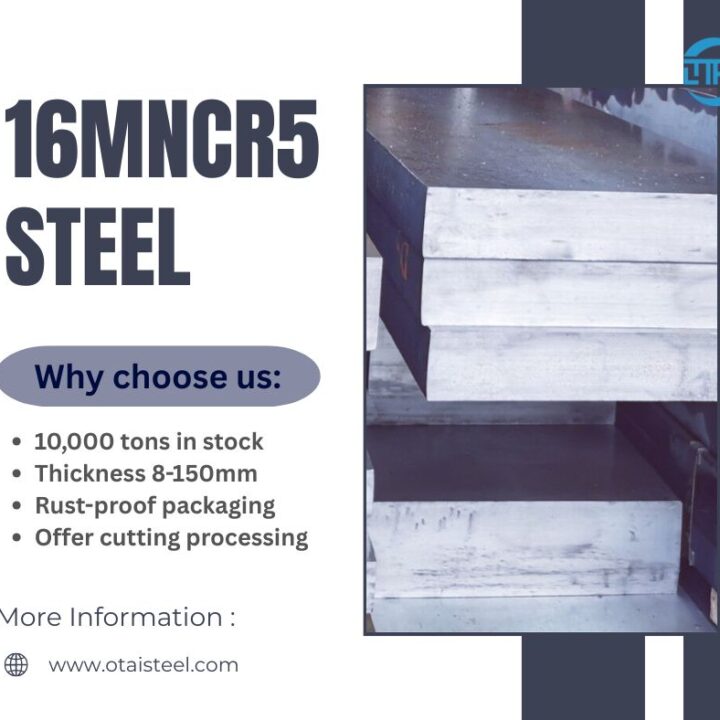
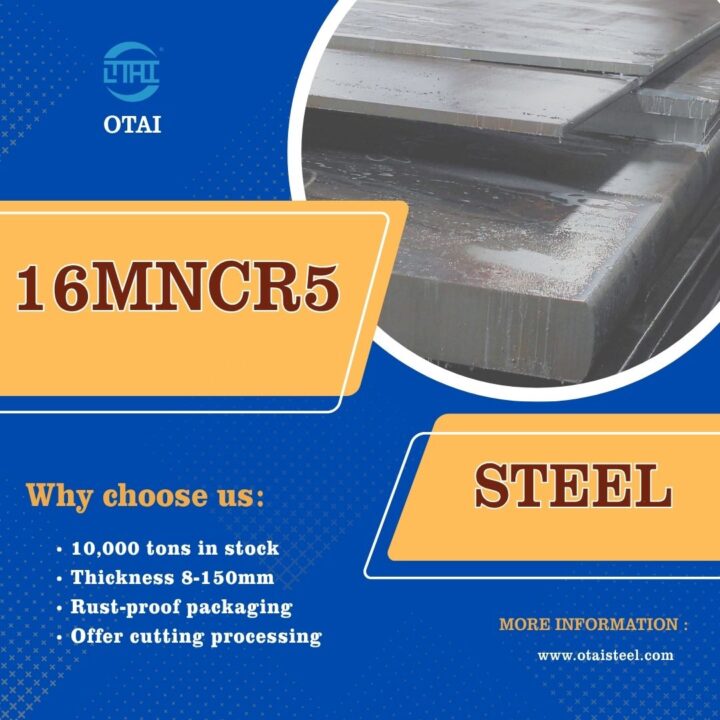
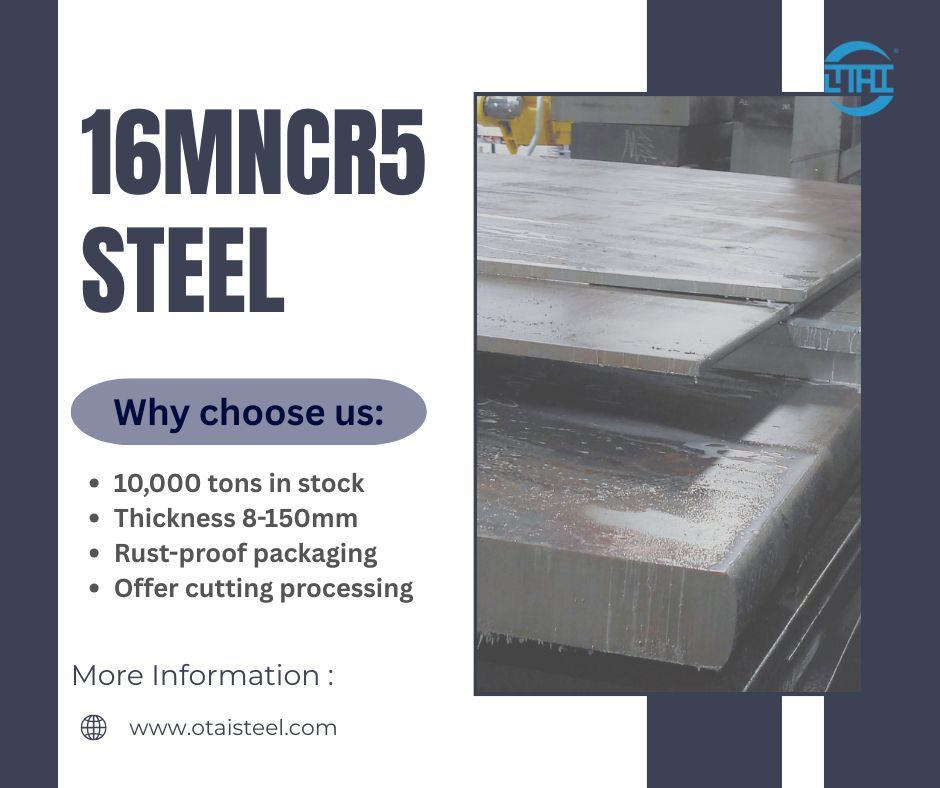
- Stable stock availability: Otai keeps 8–150mm thickness 16MnCr5 steel plates available in stock to support different machining and fabrication requirements.
- Various size options: Different dimensions are available to help customers reduce additional preparation time before production.
- Professional cutting service: Customized cutting according to customer drawings and processing requirements.
- Heat treatment support: Professional heat treatment solutions help customers achieve required hardness and mechanical properties.
- Quality inspection: Ultrasonic testing and third-party inspection services are available for material verification.
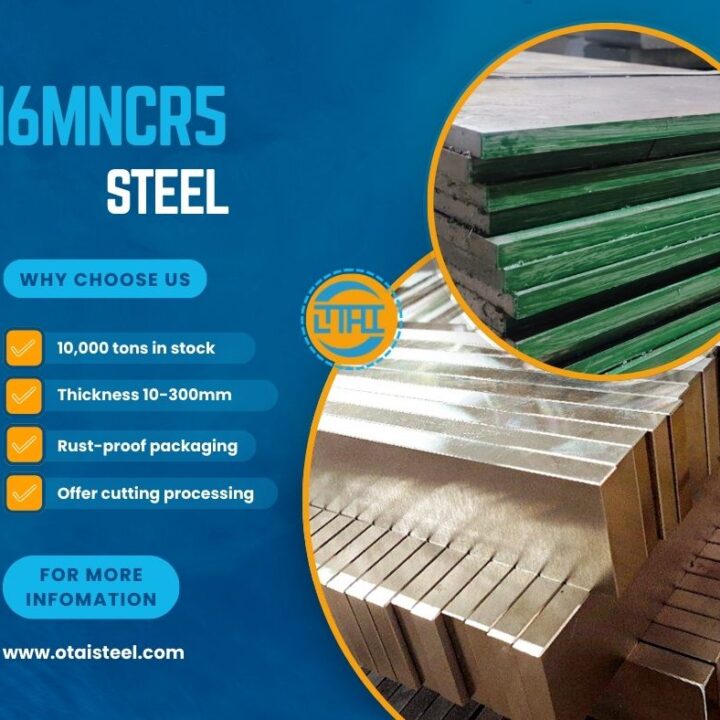
- Professional packaging: Anti-rust protection, steel strapping and wooden box packaging are provided for safer transportation.
With experience in special steel supply and international projects, Otai Special Steel helps customers select suitable carburizing steels and provides reliable material solutions for different manufacturing requirements.
❓ FAQ About 16MnCr5 Steel Equivalent in USA
1. What is the USA equivalent of 16MnCr5 steel?
The closest USA equivalents of 16MnCr5 include SAE 5115, SAE 5120 and SAE 8620. SAE 5115 is closer in chemical composition, while SAE 8620 is more commonly used in American gear manufacturing.
2. Is SAE 8620 the same as 16MnCr5?
No. SAE 8620 is not an identical chemical equivalent, but it provides similar carburizing performance and is widely used as an alternative because of its excellent toughness and availability.
3. What SAE grade replaces DIN 16MnCr5?
SAE 5115 is often considered the closest SAE equivalent, while SAE 8620 is a common practical replacement for industrial applications.
4. Is 16MnCr5 good for gears?
Yes. 16MnCr5 is an excellent gear steel because carburizing provides a hard wear-resistant surface while maintaining a tough core.
5. Does Otai supply 16MnCr5 steel?
Yes. Otai supplies 16MnCr5 steel plates with 8–150mm thickness available in stock, along with cutting service, heat treatment support, ultrasonic testing and third-party inspection.