 4140 Alloy Steel Corrosion Resistance: Rust Protection and Properties
📑 Table of Contents
🔍 1. Is 4140 Alloy Steel Corrosion Resistant?
⚙️ 2. Why Does 4140 Steel Rust?
📊 3. Factors Affecting 4140 Alloy Steel Corrosion Resistance
🛡️ 4. How to Improve 4140 Steel Rust Resistance?
🔥 5. 4140 Steel Corrosion Resistance After Heat Treatment
⚖️ 6. 4140 vs Stainless Steel Corrosion Resistance
🏭 7. Applications of 4140 Alloy Steel
📦 8. Otai Special Steel Advantages
❓ FAQ About 4140 Alloy Steel Corrosion Resistance
🔍 1. Is 4140 Alloy Steel Corrosion Resistant?
When engineers search for 4140 alloy steel corrosion resistance, they usually want to understand whether AISI 4140 can withstand moisture, outdoor environments and industrial conditions.
4140 alloy steel is a chromium-molybdenum (Cr-Mo) alloy steel known for its excellent strength, toughness and wear resistance. It is widely used for shafts, gears, bolts, hydraulic components and heavy machinery parts.
However, 4140 steel is not a stainless steel grade. Although chromium improves its oxidation resistance compared with plain carbon steel, the chromium content is not high enough to create a passive protective layer like stainless steel.
Therefore, is 4140 steel corrosion resistant? The answer is: yes, it has better corrosion performance than ordinary carbon steel, but it still requires protection in aggressive environments.
The corrosion behavior of 4140 depends on several factors, including surface condition, environmental exposure, heat treatment, coating methods and maintenance practices.
Basic Characteristics of 4140 Alloy Steel
| Property | Description |
|---|---|
| Steel Grade | AISI 4140 |
| Steel Type | Chromium-molybdenum alloy steel |
| Carbon Content | Approx. 0.38–0.43% |
| Main Alloy Elements | Chromium (Cr) and Molybdenum (Mo) |
| Main Advantages | High strength, toughness and fatigue resistance |
| Corrosion Performance | Moderate; requires protection in harsh environments |
Why Does Chromium Improve 4140 Corrosion Resistance?
Chromium is an important alloying element in 4140 steel. It improves hardenability and provides some improvement in oxidation resistance.
However, the chromium content in 4140 is much lower than stainless steel grades. Stainless steels usually contain more than 10.5% chromium, allowing them to form a stable passive oxide film.
4140 steel does not create the same level of passive protection. Therefore, moisture and oxygen can still react with iron on the surface and cause rust.
4140 Steel vs Stainless Steel Chromium Content
| Material | Chromium Content | Corrosion Performance |
|---|---|---|
| AISI 4140 | Approx. 0.80–1.10% | Moderate corrosion resistance |
| 304 Stainless Steel | Approx. 18–20% | Excellent corrosion resistance |
| 316 Stainless Steel | Approx. 16–18% | Excellent resistance in marine environments |
For mechanical applications where strength is more important than corrosion resistance, 4140 remains one of the most popular alloy steels worldwide.
⚙️ 2. Why Does 4140 Steel Rust?
Many customers ask: does 4140 steel rust? The answer is yes. Like most carbon alloy steels, 4140 can develop rust when exposed to water, oxygen and corrosive substances.
Rust occurs because iron in the steel reacts with oxygen and moisture, creating iron oxide on the surface.
The corrosion rate depends strongly on the working environment.
4140 Steel Corrosion Performance in Different Environments
| Environment | Corrosion Performance | Recommended Protection |
|---|---|---|
| Dry Indoor Environment | Good | Basic oil protection |
| Outdoor Environment | Moderate | Coating or painting recommended |
| High Humidity Area | Lower resistance | Anti-rust treatment required |
| Marine Environment | Poor without protection | Special coating required |
| Chemical Environment | Depends on chemicals | Professional corrosion protection needed |
Main Causes of 4140 Steel Corrosion
- Moisture exposure: Water accelerates electrochemical corrosion reactions.
- Salt environment: Chloride ions significantly increase corrosion speed.
- Surface damage: Scratches and machining marks can become corrosion starting points.
- Poor storage conditions: Long-term exposure without protection can cause rust formation.
Although 4140 steel does not have stainless-level corrosion resistance, proper protection methods can significantly extend service life.
📊 3. Factors Affecting 4140 Alloy Steel Corrosion Resistance
The corrosion performance of 4140 alloy steel is influenced by many factors. Although the alloy composition provides better protection than plain carbon steel, the actual service life depends heavily on the working environment and surface treatment.
Understanding these factors helps engineers choose the correct protection method and avoid premature failure of components.
1. Alloy Composition
The chemical composition of 4140 steel plays an important role in its corrosion behavior. Chromium improves oxidation resistance, while molybdenum improves strength and hardenability.
However, the chromium content is not high enough to provide stainless steel-level protection. Therefore, ASTM 4140 corrosion resistance remains moderate rather than excellent.
| Element | Approximate Content | Effect on Performance |
|---|---|---|
| Carbon (C) | 0.38–0.43% | Improves hardness and strength |
| Chromium (Cr) | 0.80–1.10% | Improves hardenability and oxidation resistance |
| Molybdenum (Mo) | 0.15–0.25% | Improves toughness and strength |
| Manganese (Mn) | 0.75–1.00% | Improves strength and machinability |
2. Surface Condition
The surface condition directly affects corrosion resistance. A smooth and clean surface provides better protection than a rough or damaged surface.
Machining marks, scratches and surface contamination can create areas where moisture accumulates. These locations often become the starting points of corrosion.
For this reason, manufacturers often apply surface treatments after machining to improve 4140 steel rust protection.
3. Environmental Exposure
The surrounding environment has a major influence on corrosion speed. A component used indoors may perform well for years, while the same material may require additional protection in coastal or chemical environments.
| Working Environment | Corrosion Risk | Recommended Solution |
|---|---|---|
| Indoor Machinery | Low | Oil coating or regular maintenance |
| Outdoor Equipment | Medium | Painting or protective coating |
| High Humidity Area | High | Anti-rust treatment required |
| Marine Environment | Very High | Special corrosion-resistant coating |
4. Heat Treatment Condition
Heat treatment changes the microstructure and mechanical properties of 4140 steel. Processes such as quenching and tempering improve strength, but they can also influence corrosion behavior.
A properly treated surface with good finishing generally provides better corrosion performance than a poorly processed surface.
🛡️ 4. How to Improve 4140 Steel Rust Resistance?
Because 4140 steel is not stainless steel, manufacturers usually use additional protection methods when corrosion resistance is important.
The right protection method depends on the operating environment, component size and required service life.
1. Anti-Rust Oil Protection
Applying protective oil is one of the simplest methods for preventing rust during storage and transportation.
This method is commonly used for steel plates, shafts and machined components before installation.
2. Black Oxide Treatment
Black oxide creates a thin protective oxide layer on the steel surface. It improves appearance and provides additional corrosion protection when combined with oil coating.
This method is commonly used for precision mechanical components and tools.
3. Phosphate Coating
Phosphate treatment improves surface protection and provides a better base for painting or lubrication.
It is widely used for gears, automotive components and machinery parts.
4. Painting and Industrial Coatings
For outdoor applications, protective coatings are one of the most effective ways to improve corrosion resistance.
Common coating systems include:
- Epoxy coating.
- Polyurethane coating.
- Zinc-rich coating.
- Industrial anti-corrosion paint.
5. Nitriding Treatment
Nitriding improves surface hardness and wear resistance. It can also provide some improvement in surface corrosion behavior because of the hardened compound layer.
This treatment is often used for hydraulic parts, shafts and high-load mechanical components.
Comparison of 4140 Steel Protection Methods
| Protection Method | Main Benefit | Typical Application |
|---|---|---|
| Anti-Rust Oil | Temporary protection | Storage and transportation |
| Black Oxide | Appearance and basic protection | Precision parts |
| Phosphate Coating | Improved coating adhesion | Gears and machinery |
| Painting | Long-term environmental protection | Outdoor equipment |
| Nitriding | Hard surface and improved durability | Shafts and hydraulic parts |
🔥 5. 4140 Steel Corrosion Resistance After Heat Treatment
Heat treatment is a key process that determines the final performance of 4140 alloy steel. Most 4140 components are supplied in quenched and tempered conditions because this provides an excellent balance of strength and toughness.
However, engineers should understand that heat treatment mainly improves mechanical properties rather than creating corrosion resistance.
Common Heat Treatment Conditions of 4140 Steel
| Condition | Characteristics | Corrosion Behavior |
|---|---|---|
| Annealed 4140 | Soft structure, easy machining | Requires normal surface protection |
| Normalized 4140 | Improved strength and uniform structure | Moderate corrosion performance |
| Quenched & Tempered 4140 | High strength and toughness | Requires coating in harsh environments |
| Nitrided 4140 | Hard surface layer | Improved surface durability |
Does Hardness Affect Corrosion Resistance?
Hardness itself does not directly determine corrosion resistance. A harder 4140 steel component may still rust if it is exposed to moisture and oxygen without protection.
However, heat treatment can improve surface quality and reduce mechanical damage, which may indirectly help reduce corrosion risks.
For applications requiring both high strength and better corrosion protection, manufacturers often combine heat treatment with coatings or surface treatments.
⚖️ 6. 4140 vs Stainless Steel Corrosion Resistance
When engineers evaluate 4140 alloy steel corrosion resistance, they often compare it with stainless steel because both materials are used in demanding industrial applications.
However, these two material families are designed for different priorities. 4140 alloy steel focuses on high strength, toughness and fatigue resistance, while stainless steel focuses on corrosion protection.
Choosing between them depends on the actual working environment, mechanical requirements and budget considerations.
4140 Steel vs Stainless Steel Comparison
| Property | 4140 Alloy Steel | Stainless Steel |
|---|---|---|
| Steel Type | Chromium-molybdenum alloy steel | Chromium alloy corrosion-resistant steel |
| Chromium Content | Approx. 0.80–1.10% | Usually above 10.5% |
| Corrosion Resistance | Moderate | Excellent |
| Strength | Very high | Medium to high |
| Toughness | Excellent | Good |
| Wear Resistance | Excellent | Good depending on grade |
| Cost | Lower | Usually higher |
| Main Applications | Shafts, gears, heavy machinery | Chemical equipment, food equipment, marine parts |
When Should You Choose 4140 Instead of Stainless Steel?
4140 alloy steel is usually selected when mechanical strength is more important than corrosion resistance.
Typical situations include:
- Heavy-load mechanical components.
- High-stress shafts and gears.
- Parts requiring excellent fatigue resistance.
- Components that will receive protective coating.
- Applications where strength-to-cost ratio is important.
When Is Stainless Steel Better?
Stainless steel is a better choice when the component must continuously resist corrosion without frequent maintenance.
Examples include:
- Marine equipment.
- Chemical processing systems.
- Food processing machinery.
- Medical equipment.
Therefore, 4140 and stainless steel are not direct competitors. They solve different engineering problems.
🏭 7. Applications of 4140 Alloy Steel
Although corrosion resistance is an important consideration, 4140 alloy steel remains one of the most popular engineering steels because of its excellent mechanical properties.
The combination of strength, toughness and wear resistance makes it suitable for many industries.
Common Applications of 4140 Alloy Steel
| Industry | Components | Why Use 4140? |
|---|---|---|
| Automotive | Axles, shafts, gears, fasteners | High strength and fatigue resistance |
| Oil & Gas | Drill components, couplings, heavy-duty parts | Excellent toughness under stress |
| Hydraulic Equipment | Piston rods, cylinders, pressure parts | Good wear resistance |
| Heavy Machinery | Shafts, pins, connecting components | High load capacity |
| Manufacturing Equipment | Tool holders, machine parts | Reliable mechanical performance |
Why Do Manufacturers Choose 4140 Steel?
The popularity of 4140 comes from its balanced properties:
- High tensile strength after heat treatment.
- Excellent impact toughness.
- Good machinability in annealed condition.
- Strong fatigue resistance.
- Suitable for welding with proper preheating procedures.
- Wide industrial availability.
For many engineering projects, improving corrosion protection through coatings is more practical than replacing 4140 with stainless steel.
📦 8. Otai Special Steel Advantages for 4140 Alloy Steel Supply
For customers searching for reliable 4140 alloy steel corrosion resistance solutions, material quality, stock availability and processing capability are important factors.
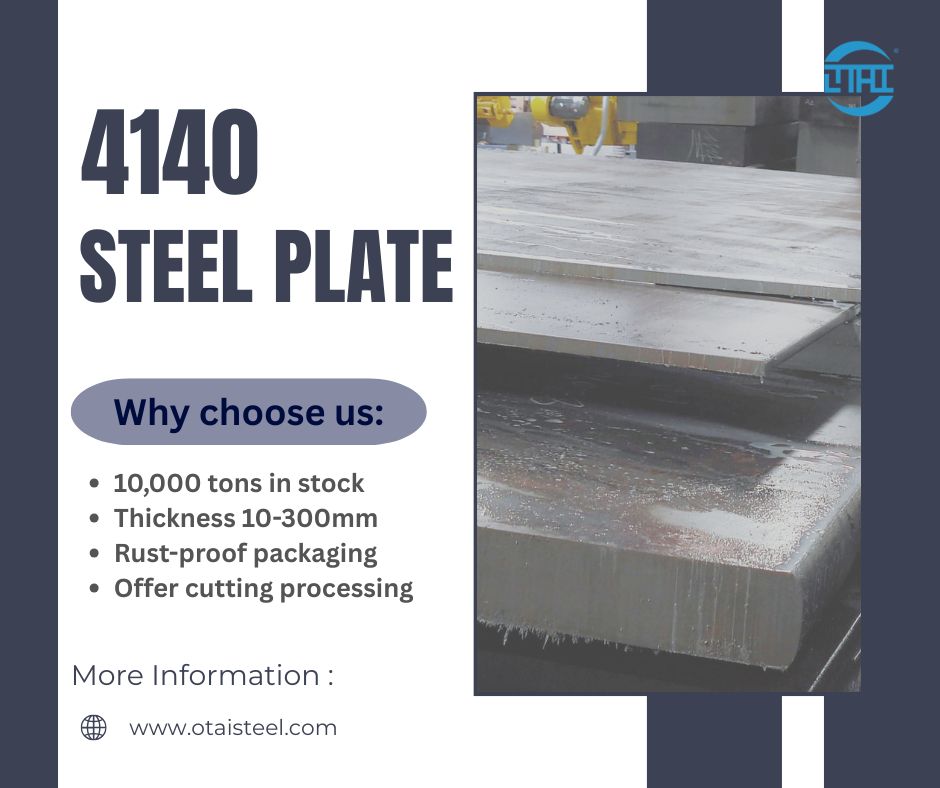
Otai Special Steel specializes in supplying 4140 alloy steel plates and other special steels for global customers in machinery, automotive and industrial manufacturing fields.
Why Choose Otai Special Steel?
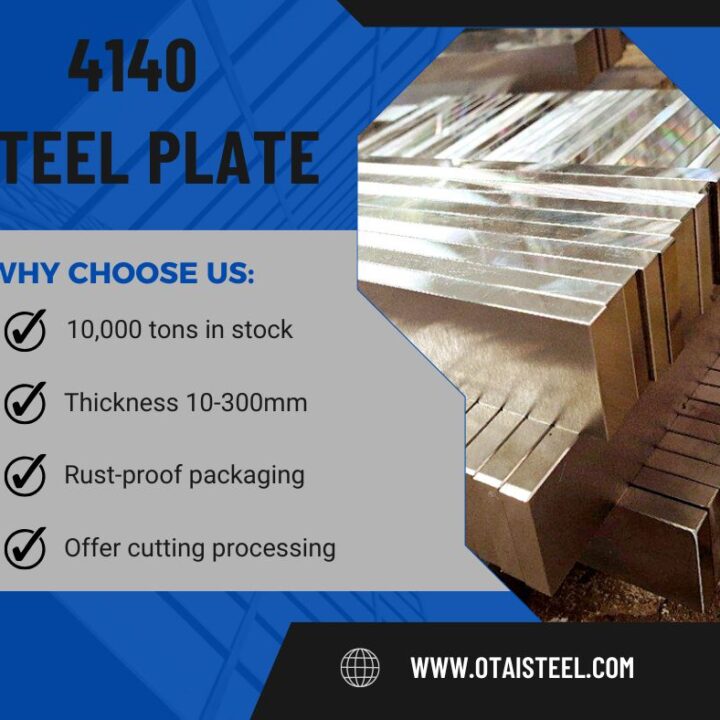
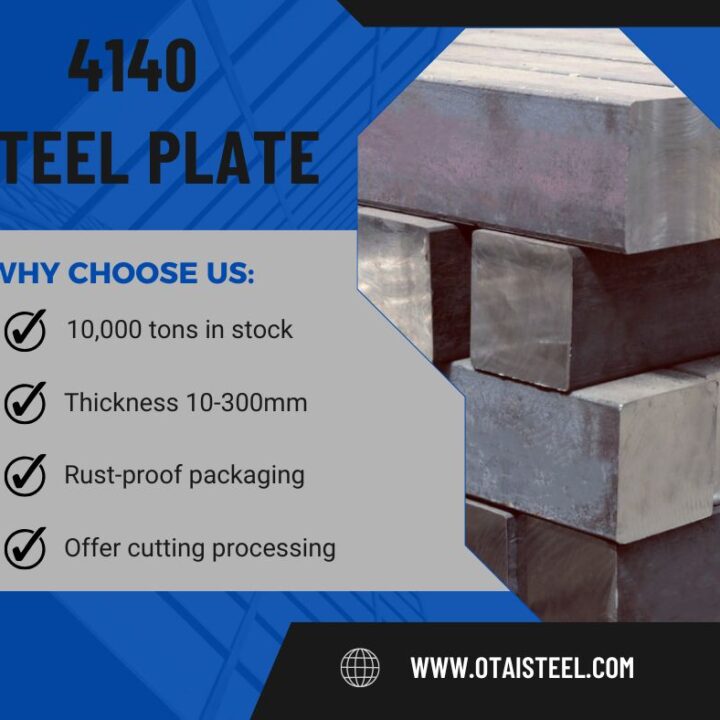
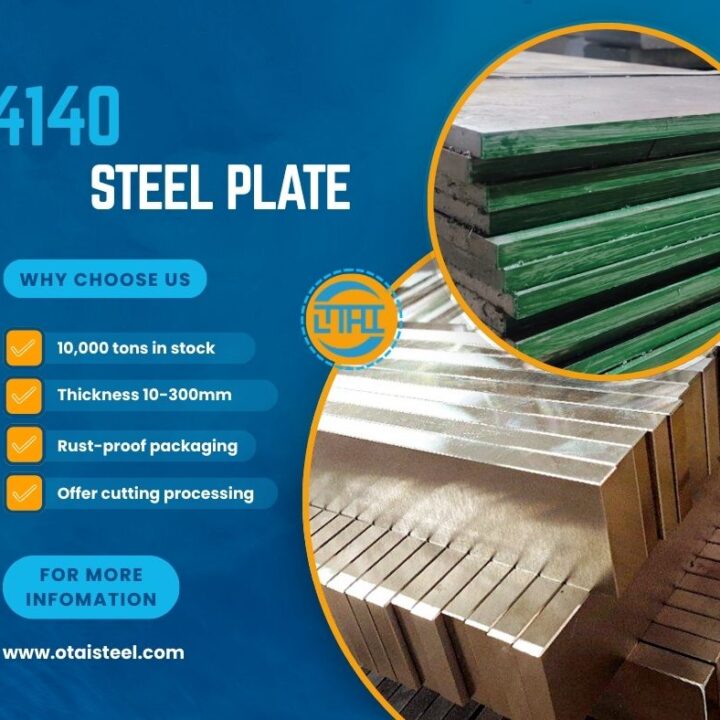
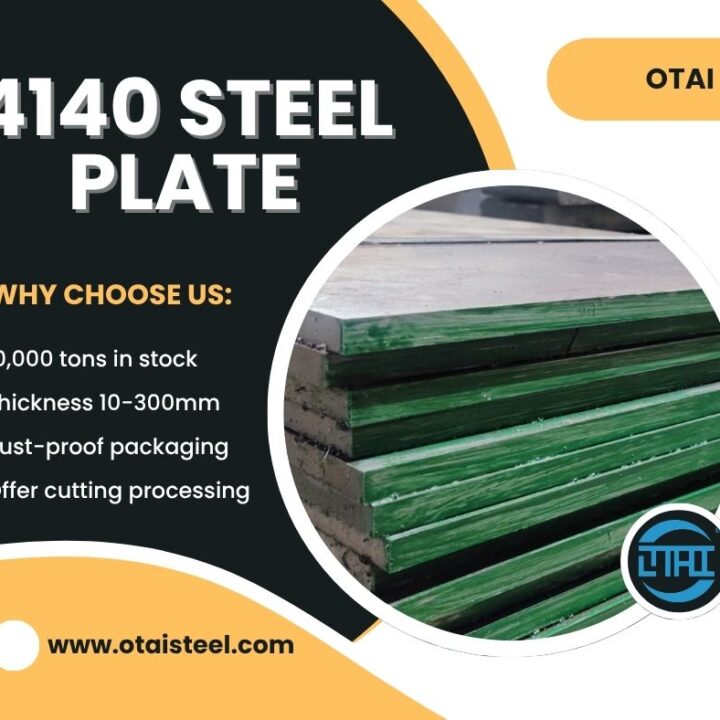
- Large inventory: Otai maintains approximately 10,000 tons of steel inventory and keeps different sizes of 4140 alloy steel plates in stock to support urgent manufacturing requirements.
- Wide size range: Customers can select suitable dimensions according to machining and fabrication needs.
- Cutting service: Professional cutting solutions help customers reduce additional processing time.
- Heat treatment support: Quenching and tempering services are available to achieve required mechanical properties.
- Quality inspection: Ultrasonic testing and third-party inspection services are provided for quality verification.
- Professional packaging: Anti-rust oil protection, steel strapping and wooden box packaging ensure safer international transportation.
With experience supplying special steel materials to international customers, Otai Special Steel helps buyers select suitable 4140 solutions based on strength, machining and corrosion protection requirements.
❓ FAQ
1. Is 4140 alloy steel corrosion resistant?
4140 alloy steel has moderate corrosion resistance because chromium improves oxidation resistance. However, it is not stainless steel and requires protection in humid or corrosive environments.
2. Does 4140 steel rust?
Yes. 4140 steel can rust when exposed to moisture, oxygen or salt environments. Proper coatings, oil protection and surface treatments can significantly reduce corrosion.
3. How can you improve 4140 steel rust resistance?
Common methods include anti-rust oil, black oxide treatment, phosphate coating, painting, electroplating and nitriding.
4. Is 4140 better than stainless steel?
It depends on the application. 4140 provides higher strength and toughness, while stainless steel provides better corrosion resistance.
5. Does Otai supply 4140 alloy steel?
Yes. Otai supplies 4140 alloy steel plates with approximately 10,000 tons inventory, different sizes in stock, cutting service, heat treatment support, ultrasonic testing and third-party inspection.