 How Much Does 4140 Steel Weight?
When customers search for how much does 4140 steel weight, they usually want to know the exact weight of a steel plate, round bar, or customized component before purchasing, machining, transportation, or cost calculation.
4140 alloy steel is widely used in engineering industries because of its excellent combination of strength, toughness, fatigue resistance, and wear performance. However, weight calculation is equally important because steel is normally purchased and transported according to weight.
📑 Table of Contents
🔍 1. What Determines the Weight of 4140 Steel?
📊 2. 4140 Steel Density and Basic Weight Formula
⚙️ 3. How to Calculate 4140 Steel Weight by Size
📏 4. 4140 Steel Plate Weight Calculation Table
🔩 5. 4140 Round Bar Weight Calculation and Common Sizes
🏭 6. Factors Affecting Actual 4140 Steel Weight
🌍 7. 4140 Steel Weight Comparison with Other Steel Grades
📌 8. Practical Guide for Buying 4140 Steel by Weight
🏭 Otai Special Steel Advantages
❓ FAQ – How Much Does 4140 Steel Weight
🔍 1. What Determines the Weight of 4140 Steel?
The weight of a 4140 steel product is determined by its volume and material density.
Whether you are calculating a steel plate, round bar, square bar, or machined component, the basic principle remains the same:
Weight = Volume × Density
The shape of the steel changes the volume calculation method, but the density remains almost constant.
| Factor | Influence on 4140 Steel Weight |
|---|---|
| Length | Longer material increases total weight |
| Width / Diameter | Larger cross-section increases volume |
| Thickness | Directly increases material weight |
| Density | Determines weight per unit volume |
| Shape | Changes volume calculation method |
For example, two pieces of 4140 steel may have the same density but completely different weights:
- A thin 4140 steel plate may weigh several kilograms.
- A large 4140 forged block may weigh several tons.
Therefore, when someone asks how much does 4140 steel weight, the answer depends on the exact dimensions.
A steel supplier usually needs the following information to calculate weight accurately:
- Material grade: 4140 alloy steel
- Product form: plate, bar, block, shaft, etc.
- Length
- Width or diameter
- Thickness
For industrial purchasing, accurate weight calculation helps customers estimate:
- Material cost
- Shipping cost
- Storage requirements
- Machining allowance
Understanding these factors allows buyers to select the correct amount of 4140 steel and avoid unnecessary material waste.
📊 2. 4140 Steel Density and Basic Weight Formula
The key value used in 4140 steel weight calculation is density.
The standard density of 4140 alloy steel is:
| Measurement System | 4140 Steel Density |
|---|---|
| Metric | Approximately 7.85 g/cm³ |
| SI Unit | 7850 kg/m³ |
| Imperial Unit | 0.284 lb/in³ |
Because alloying elements slightly change density, the actual value may vary slightly depending on steel composition, but 7.85 g/cm³ is commonly used for engineering calculations.
Metric Weight Formula
For steel plates and blocks:
Weight (kg) = Length (m) × Width (m) × Thickness (m) × 7850
Example:
A 4140 steel plate with:
- Length: 2 meters
- Width: 1 meter
- Thickness: 20 mm (0.02 m)
Calculation:
2 × 1 × 0.02 × 7850 = 314 kg
Therefore, the approximate weight is 314 kg.
Imperial Weight Formula
For inch-based calculations:
Weight (lb) = Volume (in³) × 0.284
Example:
A 4140 steel block:
- 10 inches × 10 inches × 5 inches
Volume:
10 × 10 × 5 = 500 in³
Weight:
500 × 0.284 = 142 lb
The block weighs approximately 142 pounds.
| Calculation Type | Formula |
|---|---|
| Plate Weight | Length × Width × Thickness × Density |
| Round Bar Weight | π × Radius² × Length × Density |
| Square Bar Weight | Side × Side × Length × Density |
| Custom Part Weight | 3D Volume × Density |
Using the correct density value makes it easier for engineers and purchasing departments to estimate material requirements accurately.
This is why 4140 steel density is one of the most important reference values when calculating steel weight.
⚙️ 3. How to Calculate 4140 Steel Weight by Size
Calculating 4140 steel weight per size is a common requirement for engineers, fabricators, and buyers.
Different steel shapes require different calculation methods, but the principle is always based on volume.
4140 Steel Plate Weight Calculation
For rectangular plates:
Weight = Length × Width × Thickness × 7.85
(When dimensions are measured in meters and weight is calculated in kilograms.)
| Plate Size | Approximate Weight |
|---|---|
| 10mm × 1000mm × 2000mm | 157 kg |
| 20mm × 1000mm × 2000mm | 314 kg |
| 30mm × 1500mm × 3000mm | 1,060 kg |
| 50mm × 2000mm × 4000mm | 3,140 kg |
4140 Round Bar Weight Calculation
For round bars, the cross-section is circular, so the formula is:
Weight = π × Radius² × Length × Density
| Round Bar Diameter | Weight per Meter |
|---|---|
| 50 mm | 15.4 kg/m |
| 80 mm | 39.5 kg/m |
| 100 mm | 61.7 kg/m |
| 150 mm | 138.7 kg/m |
These calculations help customers estimate transportation requirements and material costs before ordering.
For large industrial components, even small calculation errors can create significant differences in total weight.
Therefore, professional suppliers usually confirm dimensions and provide accurate weight information before shipment.
📏 4. 4140 Steel Plate Weight Calculation Table
For customers purchasing 4140 steel plate, calculating weight before ordering is important because alloy steel plates are usually sold and transported according to weight.
The weight of a 4140 steel plate depends on three main dimensions:
- Length
- Width
- Thickness
The basic formula is:
4140 Steel Plate Weight (kg) = Length (m) × Width (m) × Thickness (mm) × 7.85
For example:
A 4140 steel plate with dimensions:
- 2000mm length
- 1000mm width
- 30mm thickness
Calculation:
2 × 1 × 0.03 × 7850 = 471 kg
The approximate weight is 471 kg.
The following table shows common 4140 steel plate weight references.
| Thickness | Plate Size | Approximate Weight |
|---|---|---|
| 10 mm | 1000 × 2000 mm | 157 kg |
| 15 mm | 1500 × 3000 mm | 530 kg |
| 20 mm | 1500 × 3000 mm | 706 kg |
| 25 mm | 2000 × 4000 mm | 1,570 kg |
| 30 mm | 2000 × 4000 mm | 1,884 kg |
| 40 mm | 2000 × 4000 mm | 2,512 kg |
| 50 mm | 2000 × 4000 mm | 3,140 kg |
| 80 mm | 2000 × 4000 mm | 5,024 kg |
| 100 mm | 2000 × 4000 mm | 6,280 kg |
These values are theoretical calculations based on a density of 7.85 g/cm³.
The actual shipping weight may vary slightly because of:
- Thickness tolerance
- Cutting allowance
- Surface machining
- Actual plate dimensions
For industrial purchasing, accurate weight estimation helps customers arrange:
- Transportation capacity
- Warehouse space
- Material budget
- Machining plans
This is especially important for heavy 4140 alloy steel plates because one small difference in thickness can create hundreds of kilograms of weight variation.
🔩 5. 4140 Round Bar Weight Calculation and Common Sizes
Besides plates, 4140 round bar weight is another common calculation requirement in mechanical manufacturing.
4140 round bars are widely used for:
- Shafts
- Gears
- Axles
- Bolts
- High-strength machine components
The calculation formula for round bars is different from flat plates because the cross-section is circular.
Round Bar Weight (kg/m) = Diameter² × 0.00617
This simplified formula is commonly used for steel round bars.
| Diameter | Weight per Meter | Weight per 6 Meter Bar |
|---|---|---|
| 20 mm | 2.47 kg/m | 14.8 kg |
| 30 mm | 5.55 kg/m | 33.3 kg |
| 40 mm | 9.87 kg/m | 59.2 kg |
| 50 mm | 15.43 kg/m | 92.6 kg |
| 60 mm | 22.21 kg/m | 133.3 kg |
| 80 mm | 39.49 kg/m | 236.9 kg |
| 100 mm | 61.65 kg/m | 369.9 kg |
| 150 mm | 138.83 kg/m | 833.0 kg |
For example, if a customer purchases a 4140 round bar with:
- Diameter: 100mm
- Length: 6 meters
The estimated weight is:
61.65 × 6 = 369.9 kg
Therefore, one 100mm × 6000mm 4140 round bar weighs approximately 370 kg.
When calculating 4140 steel weight per foot, the same principle applies, but the unit changes from meters to feet.
| Diameter | Approximate Weight per Foot |
|---|---|
| 1 inch | 2.42 lb/ft |
| 2 inch | 9.67 lb/ft |
| 3 inch | 21.8 lb/ft |
| 4 inch | 38.7 lb/ft |
Knowing the correct round bar weight helps manufacturers estimate machining costs and transportation requirements.
For customized 4140 shafts or forged components, suppliers usually calculate weight according to the finished dimensions or raw material dimensions depending on the customer’s requirement.
🏭 6. Factors Affecting Actual 4140 Steel Weight
Although engineers can calculate theoretical weight using standard formulas, the actual weight of a 4140 steel product may be slightly different.
This difference is normal in industrial steel production because manufacturing processes involve tolerances and surface conditions.
| Factor | Effect on Actual Weight |
|---|---|
| Thickness Tolerance | Actual thickness may be slightly above or below nominal size |
| Length Tolerance | Cutting tolerance affects final weight |
| Machining | Material removal reduces final weight |
| Surface Condition | Scale, coating, or treatment may change weight slightly |
| Steel Density Variation | Small composition differences affect density |
1. Thickness Tolerance
Steel plates are manufactured according to specific standards, but actual thickness may have allowable deviations.
For example, a plate marked as 50mm thickness may measure slightly above or below this value depending on production standards.
Even a small thickness difference can significantly affect the weight of large plates.
2. Cutting and Processing
Many customers purchase 4140 steel with additional processing services.
Examples include:
- Cutting to required dimensions
- Milling
- Grinding
- Heat treatment
After processing, the final component weight may be lower than the original steel weight.
3. Heat Treatment Condition
Heat treatment changes the microstructure of 4140 steel but usually has very little influence on overall weight.
The main purpose of heat treatment is improving:
- Strength
- Hardness
- Toughness
- Fatigue resistance
Therefore, when customers calculate how much does 4140 steel weight, dimensions are usually much more important than heat treatment condition.
🌍 7. 4140 Steel Weight Comparison with Other Steel Grades
When calculating steel weight, many customers assume that different steel grades have significantly different weights. However, most engineering steels have very similar densities.
The main difference between 4140 steel and other grades is not the weight, but the mechanical properties, heat treatment performance, and application range.
The 4140 steel weight per cubic inch is approximately 0.284 lb/in³, which is close to many carbon and alloy steels.
| Steel Grade | Approximate Density | Weight Difference Compared with 4140 |
|---|---|---|
| 4140 Alloy Steel | 7.85 g/cm³ | Reference value |
| 1045 Carbon Steel | 7.85 g/cm³ | Almost the same |
| 4340 Alloy Steel | 7.85 g/cm³ | Almost the same |
| 8620 Gear Steel | 7.85 g/cm³ | Almost the same |
| 316 Stainless Steel | 8.00 g/cm³ | Slightly heavier |
For example, a 1000kg block made from 4140 steel and a 1000kg block made from 1045 steel will have almost identical dimensions.
However, their performance characteristics are different:
| Steel Grade | Main Advantage | Typical Applications |
|---|---|---|
| 4140 | High strength and toughness | Shafts, gears, machine parts |
| 1045 | Good machinability and moderate strength | General mechanical components |
| 4340 | Higher strength and fatigue resistance | Heavy-duty aerospace and industrial parts |
| 8620 | Excellent carburizing performance | Gears and transmission parts |
Therefore, when purchasing steel, buyers should not select material only according to weight.
The correct grade depends on:
- Required mechanical strength
- Operating environment
- Heat treatment requirements
- Machining process
- Component service life
Weight calculation tells customers how much material they need, while material selection determines whether the component can perform successfully.
📌 8. Practical Guide for Buying 4140 Steel by Weight
For industrial buyers, understanding how much does 4140 steel weight is useful when preparing purchase plans, but several other factors should also be considered.
Buying steel only by theoretical weight may create problems if the required dimensions, tolerances, or processing conditions are not confirmed.
| Purchasing Factor | Why It Matters |
|---|---|
| Steel Dimensions | Determines final weight and machining allowance |
| Material Standard | Ensures correct chemical and mechanical properties |
| Delivery Condition | Affects machining and heat treatment requirements |
| Testing Requirements | Ensures material reliability |
| Packaging Method | Protects steel during transportation |
Confirm Material Size Before Ordering
Customers should provide complete dimensions before requesting a weight quotation.
For example:
- 4140 steel plate: thickness × width × length
- 4140 round bar: diameter × length
- 4140 block: length × width × height
This information allows suppliers to calculate accurate theoretical weight and prepare transportation arrangements.
Consider Machining Allowance
Many industrial components require machining after receiving raw steel.
Therefore, customers often purchase slightly larger material dimensions to allow:
- Turning
- Milling
- Grinding
- Surface finishing
The initial steel weight may be higher than the final component weight.
Choose a Supplier with Stock Availability
For urgent projects, inventory availability is an important factor.
A supplier with ready stock can provide faster delivery and reduce production delays.
Professional suppliers can also provide:
- Material certificates
- Ultrasonic testing
- Cutting service
- Heat treatment support
- Customized packaging
Therefore, weight calculation should be combined with quality control and supply capability when purchasing 4140 steel.
🏭 Otai Special Steel Advantages
Otai Special Steel specializes in supplying 4140 alloy steel plates and other engineering steels for global industrial customers.
For customers searching for reliable 4140 steel weight calculation and material supply solutions, Otai provides both technical support and stable inventory.
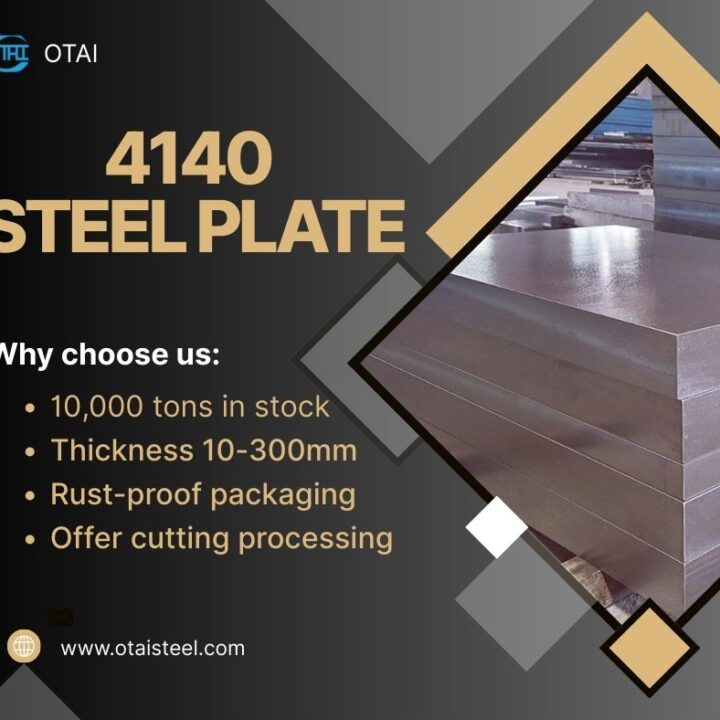
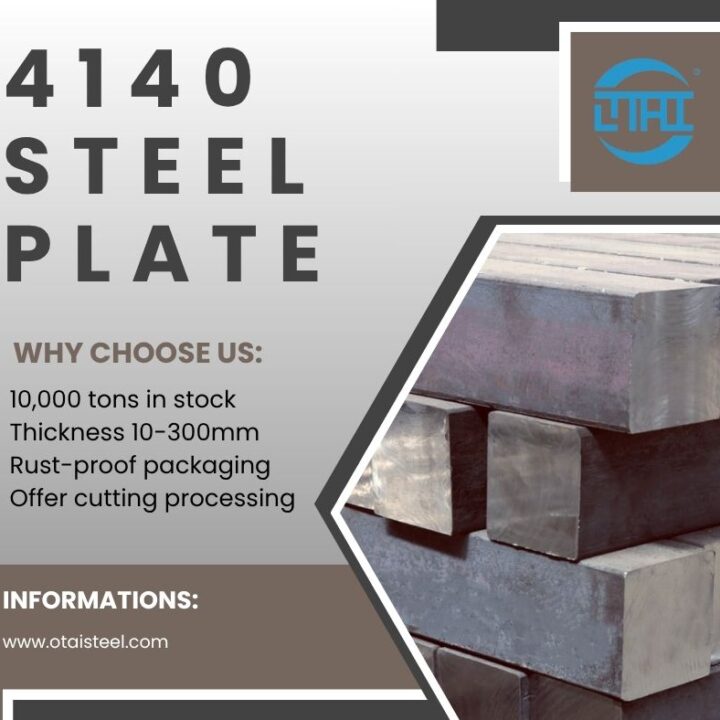
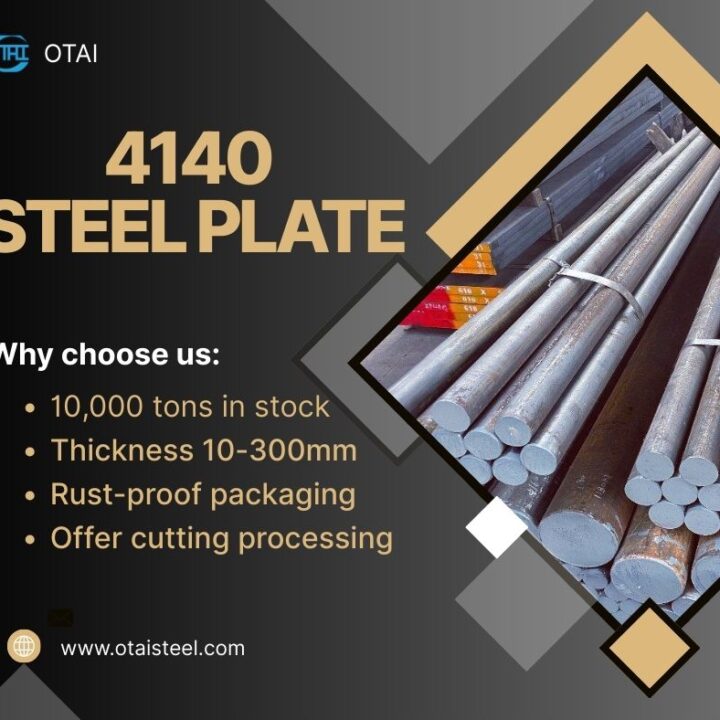
- Large inventory capability: Otai maintains approximately 10,000 tons of steel stock and keeps different sizes of 4140 steel plates available for customer requirements.
- Wide thickness range: Supplies 4140 steel plates with various thickness options to support machining and manufacturing projects.
- Professional cutting service: Provides customized cutting according to customer drawings and required dimensions, helping customers reduce material waste.
- Heat treatment support: Provides heat treatment solutions to improve hardness, strength, and mechanical performance.
- Quality assurance: Offers ultrasonic testing and third-party inspection services to ensure material reliability.
- International supply experience: Has supplied steel products to Fortune Global 500 companies and understands strict technical requirements.
- Export packaging service: Provides anti-rust packaging, steel strapping packaging, and wooden box packaging for international shipments.
With accurate weight calculation support and professional processing services, Otai helps customers purchase the right amount of 4140 steel for their applications.
❓ FAQ
Q1: How much does 4140 steel weight?
The weight of 4140 steel depends on its dimensions. The standard density is approximately 7.85 g/cm³ or 0.284 lb/in³.
Q2: What is the density of 4140 steel?
The typical density of 4140 alloy steel is about 7.85 g/cm³, which equals approximately 7850 kg/m³.
Q3: How do I calculate 4140 steel plate weight?
Use the formula: Length × Width × Thickness × Density. For metric calculation, multiply the volume in cubic meters by 7850.
Q4: How much does a 4140 steel plate weigh?
The weight depends on plate size. For example, a 20mm × 1000mm × 2000mm plate weighs approximately 314 kg.
Q5: How much does 4140 round bar weight per meter?
The weight depends on diameter. A 100mm diameter 4140 round bar weighs approximately 61.65 kg per meter.