 16MnCr5 Material Suppliers – How to Choose a Reliable Source for Quality Steel
Finding reliable 16MnCr5 material suppliers is a critical step for manufacturers, machine builders, automotive component producers, and industrial equipment companies. While 16MnCr5 is a widely recognized case-hardening steel grade, the quality of the supplied material can vary significantly depending on the supplier’s production capabilities, inventory management, heat treatment control, and quality assurance procedures.
Choosing the right supplier is not simply about obtaining the lowest price. It involves ensuring material consistency, certification compliance, stable delivery schedules, and technical support throughout the procurement process. For companies producing gears, shafts, pinions, bearings, and other wear-resistant components, selecting a dependable 16MnCr5 steel supplier can directly influence product performance and production efficiency.
📘 Understanding 16MnCr5 Steel
16MnCr5 is a low-carbon alloy carburizing steel specified in EN 10084. The material is widely used in industries requiring a hard wear-resistant surface combined with a tough and ductile core.
After carburizing, quenching, and tempering, 16MnCr5 develops excellent surface hardness while maintaining good impact resistance internally. This unique combination makes it one of the most popular engineering steels for power transmission components.
| Property | Typical Value |
|---|---|
| Steel Standard | EN 10084 |
| Steel Type | Case-hardening steel |
| Carbon Content | 0.14–0.19% |
| Main Alloying Elements | Chromium, Manganese |
| Typical Surface Hardness | 58–62 HRC |
🧪 Why Supplier Quality Matters
Many buyers assume that all 16MnCr5 materials are identical as long as they meet the standard. In reality, significant differences can exist between suppliers.
The manufacturing process affects cleanliness, microstructure, hardness uniformity, and mechanical performance. Poor-quality materials may contain excessive inclusions, segregation, or internal defects that only become visible during machining or service.
A professional 16MnCr5 alloy steel supplier should provide:
- Mill test certificates
- Chemical composition reports
- Ultrasonic testing results
- Heat treatment records
- Traceability documentation
- Third-party inspection support when required
These documents help ensure that the steel delivered matches the customer’s engineering requirements.
⚙️ Products Commonly Purchased from 16MnCr5 Material Suppliers
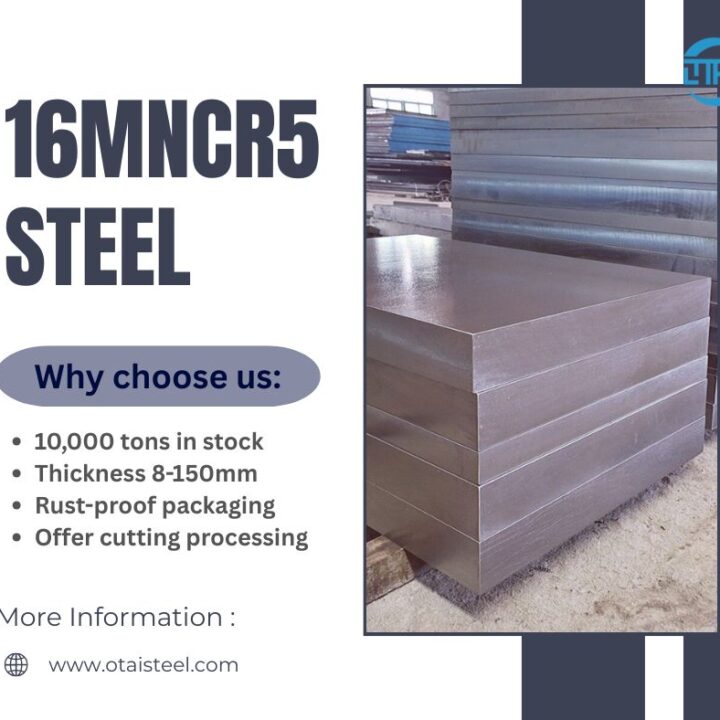
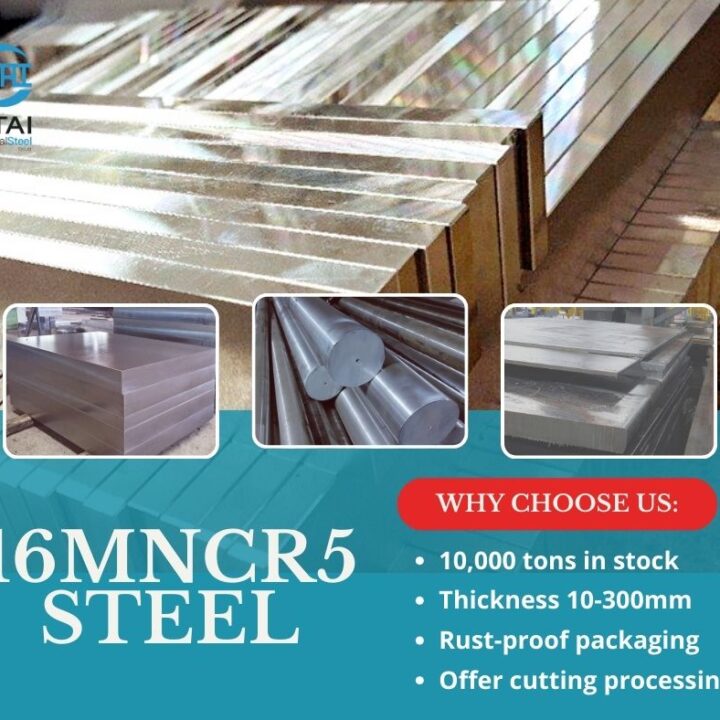
Professional 16MnCr5 steel stockists usually supply multiple product forms to accommodate different manufacturing processes.
| Product Form | Typical Applications |
|---|---|
| Round Bars | Shafts, gears, pinions |
| Steel Plates | Machined components and tooling |
| Forged Blocks | Large industrial machinery parts |
| Cut Pieces | Production-ready blanks |
Working with a supplier that offers multiple processing services can reduce lead times and manufacturing costs.
🏭 Industries That Depend on 16MnCr5 Steel
The popularity of 16MnCr5 comes from its excellent balance of hardness, wear resistance, and toughness.
Common industries include:
- Automotive manufacturing
- Agricultural machinery
- Construction equipment
- Industrial gear production
- Mining equipment
- Power transmission systems
- Mechanical engineering
For example, automotive transmission gears require a hard wear-resistant surface to handle continuous contact stress while maintaining a tough core to absorb shock loads. This combination makes 16MnCr5 a preferred choice.
🔍 How to Evaluate 16MnCr5 Material Suppliers
When selecting a 16MnCr5 engineering steel supplier, buyers should evaluate more than just pricing.
Important evaluation criteria include:
| Evaluation Factor | Importance |
|---|---|
| Inventory Availability | Ensures quick delivery |
| Material Certification | Verifies compliance |
| Processing Capability | Reduces machining costs |
| Quality Inspection | Improves reliability |
| Export Experience | Simplifies logistics |
Suppliers with substantial inventory can often respond faster to urgent project requirements and minimize production delays.
💡 Common Purchasing Challenges and Solutions
Many buyers encounter challenges when sourcing 16MnCr5 steel plate stock or round bars internationally.
Common issues include:
- Long lead times
- Inconsistent material quality
- Insufficient inspection reports
- Dimension tolerances outside specification
- Unexpected logistics delays
To avoid these problems, buyers should request inspection documentation before shipment and work with suppliers that maintain stable inventory levels.
It is also advisable to confirm whether the supplier can provide value-added services such as cutting, rough machining, heat treatment, and customized packaging.
🏆 Company Advantages – Otai Special Steel
- Professional supplier of 16MnCr5 engineering steel
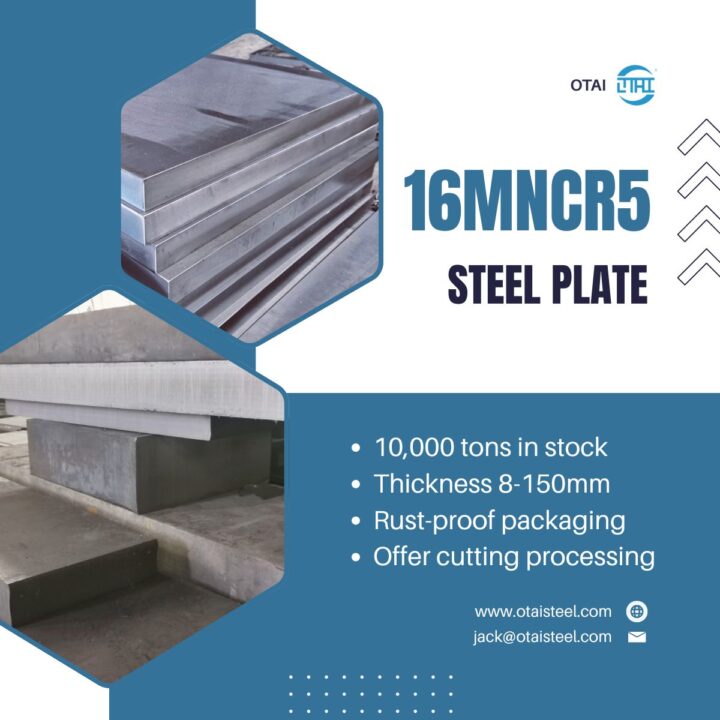
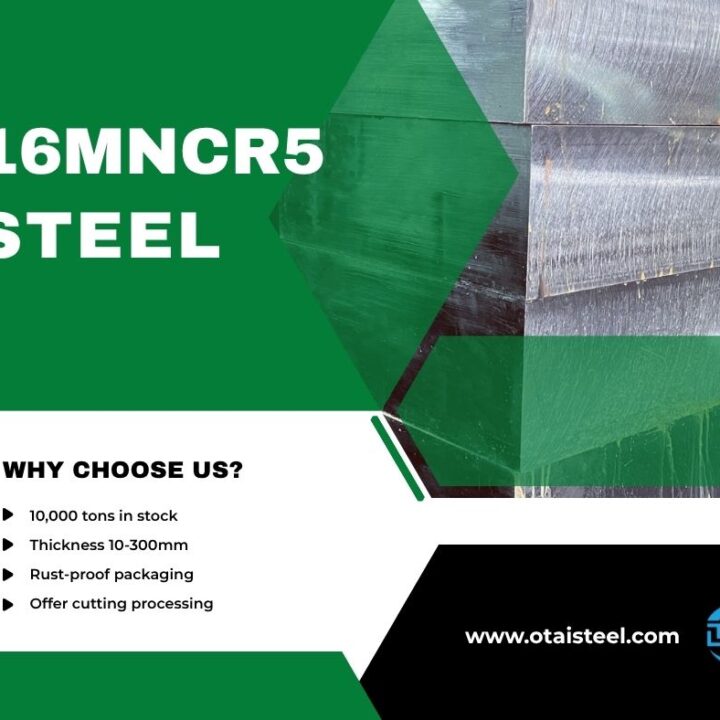
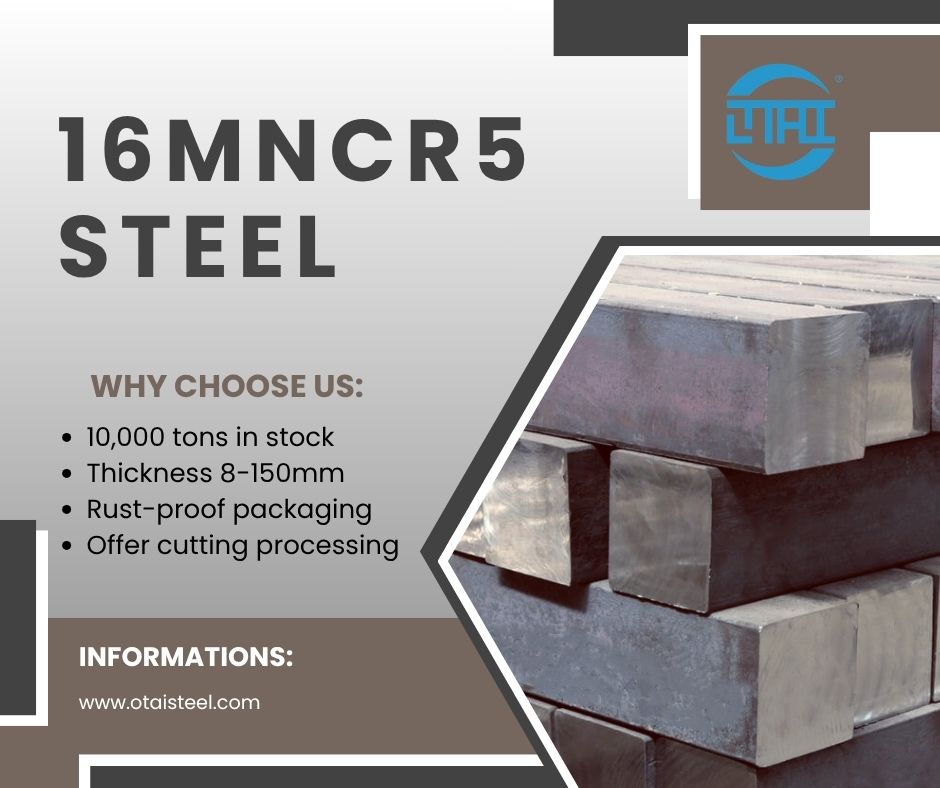
- Sufficient inventory with 8–150 mm thickness plates available in stock
- Large stock of plates, round bars, and forged blocks
- Cut-to-size processing services
- Heat treatment support available
- Ultrasonic testing and quality inspection services
- Third-party inspection support including SGS
- Export experience serving customers worldwide
- Stable supply chain and competitive pricing
- Fast response for urgent procurement projects
📌 FAQ
Q1: What is 16MnCr5 steel mainly used for?
A: It is mainly used for gears, shafts, pinions, bearings, and other carburized components requiring a hard surface and tough core.
Q2: Can 16MnCr5 be supplied as plate and round bar?
A: Yes. Most professional suppliers provide plates, round bars, forged blocks, and customized cut pieces.
Q3: What certifications should a supplier provide?
A: Mill test certificates, chemical composition reports, mechanical property reports, and inspection records are commonly requested.
Q4: Why is ultrasonic testing important?
A: UT inspection helps identify internal defects and improves material reliability for critical applications.
Q5: How do I choose a reliable 16MnCr5 material supplier?
A: Evaluate inventory capacity, quality control procedures, processing capabilities, certifications, and export experience rather than focusing solely on price.