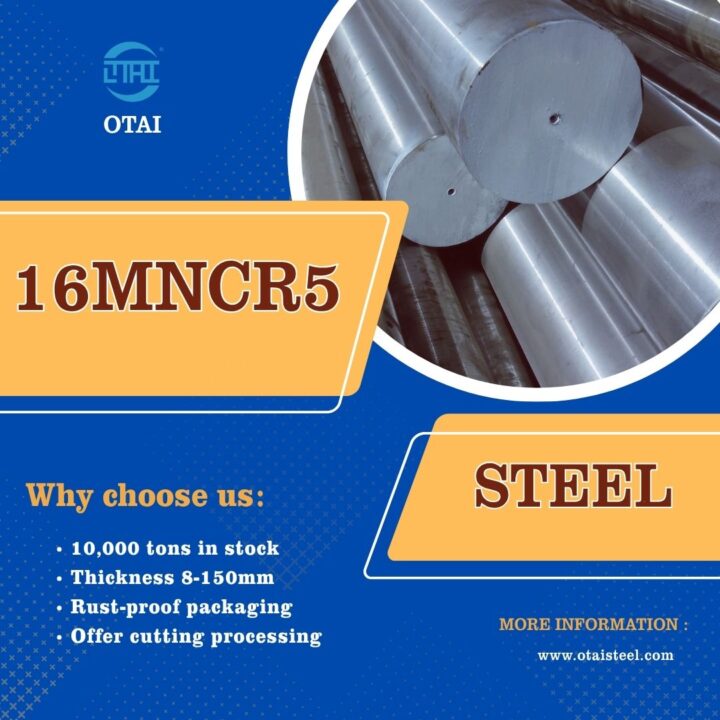
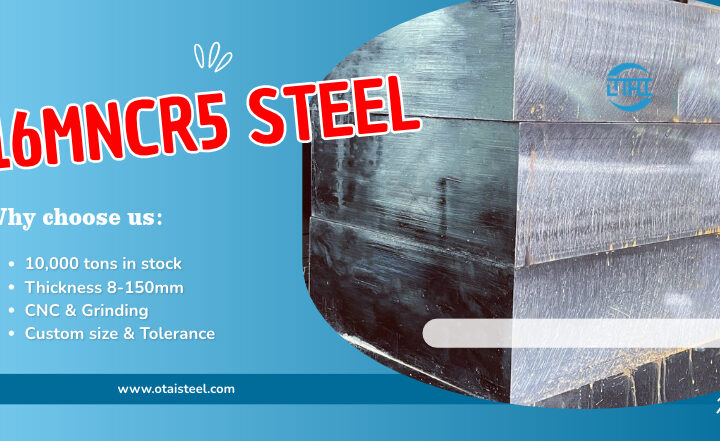
 16MnCr5 vs 16MnCrS5: Key Differences in Machinability, Properties, and Applications
🔍 Introduction
Understanding 16MnCr5 vs 16MnCrS5 is essential for engineers and buyers who need to balance machinability, strength, and performance in case hardening steels. While both grades belong to the same family and share similar base properties, a small difference in composition—specifically sulfur content—leads to noticeable changes in machining behavior and application suitability.
This article provides a detailed comparison of these two steels, including chemical composition, mechanical properties, heat treatment behavior, and practical use cases.
⚙️ Overview of 16MnCr5 and 16MnCrS5
Both materials are low-carbon alloy steels designed for carburizing applications.
16MnCr5:
- Standard case hardening steel
- Balanced strength and toughness
- Suitable for high-performance components
16MnCrS5:
- Modified version with added sulfur
- Improved machinability
- Slightly reduced toughness
The key distinction lies in sulfur addition.
🧪 Chemical Composition Comparison
The 16mncr5 vs 16mncrs5 chemical composition shows the primary difference.
| Element | 16MnCr5 (%) | 16MnCrS5 (%) |
|---|---|---|
| Carbon (C) | 0.14–0.19 | 0.14–0.19 |
| Manganese (Mn) | 1.0–1.3 | 1.0–1.3 |
| Chromium (Cr) | 0.8–1.1 | 0.8–1.1 |
| Sulfur (S) | ≤0.035 | 0.02–0.04 |
Insight:
The increased sulfur content in 16MnCrS5 improves machinability but affects toughness.
📊 Mechanical Properties Comparison
The 16mncr5 vs 16mncrs5 mechanical properties table highlights performance differences.
| Property | 16MnCr5 | 16MnCrS5 |
|---|---|---|
| Tensile Strength | 800–1100 MPa | 750–1050 MPa |
| Yield Strength | 500–800 MPa | 450–750 MPa |
| Surface Hardness (carburized) | 58–62 HRC | 58–62 HRC |
| Toughness | High | Moderate |
Conclusion:
Mechanical properties are similar, but 16MnCr5 offers slightly better toughness.
🛠️ Machinability Comparison
The 16mncr5 vs 16mncrs5 machinability comparison is the most significant difference.
16MnCr5:
- Good machinability
- Suitable for standard machining operations
16MnCrS5:
- Excellent machinability
- Reduced tool wear
- Better chip breaking
Why?
The 16mncrs5 sulfur content effect on steel creates inclusions that improve cutting performance.
🔥 Heat Treatment Differences
The 16mncr5 vs 16mncrs5 heat treatment differences are minimal.
Common Process:
- Carburizing: 880–950°C
- Quenching: oil
- Tempering: 150–200°C
Result:
- Both achieve high surface hardness
- Core strength remains similar
Insight:
Heat treatment response is nearly identical.
⚖️ Strength vs Machinability Trade-off
The difference between 16mncr5 and 16mncrs5 steel can be summarized:
- 16MnCr5 → better mechanical performance
- 16MnCrS5 → better machinability
Practical Trade-off:
Improved machinability comes at the cost of slightly reduced toughness.
🏭 Applications Comparison
The 16mncr5 vs 16mncrs5 applications vary depending on requirements.
16MnCr5 Applications:
- High-load gears
- Transmission shafts
- Automotive components
- Heavy-duty machinery
16MnCrS5 Applications:
- Mass-produced machined parts
- Components requiring high machining efficiency
- Automotive parts with moderate load
🧭 Which Is Better: 16MnCr5 or 16MnCrS5?
The question which is better 16mncr5 or 16mncrs5 depends on application.
Choose 16MnCr5 when:
- High toughness is required
- Components face heavy loads
- Fatigue resistance is critical
Choose 16MnCrS5 when:
- Machining efficiency is important
- Large production volumes are involved
- Slightly lower toughness is acceptable
🔬 Free Cutting Steel Advantages
The 16mncrs5 free cutting steel advantages include:
- Faster machining speeds
- Lower tool wear
- Reduced production cost
These benefits are valuable in high-volume manufacturing.
⚠️ Common Mistakes in Selection
- Choosing based only on cost
- Ignoring toughness requirements
- Overlooking machining needs
- Not considering production scale
Avoiding these ensures better material selection.
🏆 Company Advantages
At Otai Special Steel, we supply both 16MnCr5 and 16MnCrS5 with consistent quality:
- Over 10,000 tons of inventory available year-round
- Full size range from 6mm to 300mm
- Precision cutting and customized heat treatment services
- Strict quality control including ultrasonic testing (UT) and chemical analysis
- Support for third-party inspections such as SGS
- Extensive experience supplying global industrial clients
We help customers select the right material for optimal performance and efficiency.
❓ FAQ
1. What is the main difference between 16MnCr5 and 16MnCrS5?
The sulfur content in 16MnCrS5 improves machinability.
2. Which steel has better machinability?
16MnCrS5 offers better machining performance.
3. Which one is stronger?
16MnCr5 generally has slightly better toughness and strength.
4. Are heat treatments different?
No, both use similar carburizing processes.
5. When should I choose 16MnCrS5?
When machining efficiency and production speed are priorities.