 16MnCr5 Machinability: How Easily Can This Case Hardening Steel Be Machined?
The 16MnCr5 machinability characteristics make this steel a popular choice for gears, shafts, pinions, transmission components, and precision mechanical parts. Manufacturers widely use 16MnCr5 because it combines good machining performance in the annealed condition with excellent surface hardening capability after carburizing.
As a low-carbon chromium alloy carburizing steel, 16MnCr5 offers an excellent balance between machinability, strength, wear resistance, and toughness. Engineers often select this material when components require extensive machining before heat treatment.
Machinability directly affects:
- Tool life
- Cutting speed
- Surface finish quality
- Production efficiency
- Machining cost
- Dimensional accuracy
Understanding the machining behavior of 16MnCr5 helps manufacturers improve productivity while maintaining high-quality finished components.
🧪 Chemical Composition and Machinability
The alloy composition strongly influences the machinability of 16MnCr5 steel.
The relatively low carbon content improves cutting performance and reduces excessive tool wear during machining. Chromium and manganese increase hardenability but can also slightly increase machining difficulty compared to plain carbon steels.
| Element | Content (%) | Effect on Machinability |
|---|---|---|
| Carbon (C) | 0.14 – 0.19 | Improves cutting performance |
| Chromium (Cr) | 0.80 – 1.10 | Increases strength and wear resistance |
| Manganese (Mn) | 1.00 – 1.30 | Improves hardenability |
| Silicon (Si) | 0.17 – 0.37 | Enhances structural stability |
The balanced alloy composition allows the material to maintain good machinability while still achieving excellent hardness after carburizing and quenching.
📊 Machinability Rating of 16MnCr5 Steel
16MnCr5 steel offers moderate to good machinability compared to other alloy steels. Manufacturers commonly machine the material in the annealed or normalized condition before carburizing treatment.
The machinability rating typically ranges around 55–65% compared to free-cutting carbon steel rated at 100%.
| Material | Relative Machinability (%) |
|---|---|
| Free-Cutting Steel | 100% |
| AISI 1045 | 65 – 70% |
| 16MnCr5 | 55 – 65% |
| 4140 Steel | 50 – 60% |
Although the material machines more easily than many high-strength alloy steels, proper cutting parameters remain important for achieving good surface finish and tool life.
🔩 Machining Operations Suitable for 16MnCr5
Manufacturers use 16MnCr5 steel for many machining operations before carburizing and final hardening.
Common machining processes include:
- Turning
- Milling
- Drilling
- Tapping
- Grinding
- Gear cutting
- CNC machining
The steel provides stable cutting performance and good dimensional accuracy when properly machined.
| Machining Operation | Machining Performance |
|---|---|
| Turning | Good |
| Drilling | Good |
| Milling | Stable |
| Grinding | Excellent after heat treatment |
Gear manufacturers especially value this steel because it supports precision machining before carburizing while achieving outstanding wear resistance afterward.
🛠️ Recommended Cutting Tools and Parameters
Proper tool selection greatly improves machining efficiency and surface quality.
Manufacturers commonly use coated carbide tools for most machining operations because they provide good wear resistance and stable cutting performance.
Recommended tooling options include:
- Coated carbide inserts
- High-speed steel drills
- Carbide end mills
- CBN grinding tools for hardened surfaces
| Tool Type | Typical Application |
|---|---|
| Carbide Inserts | Turning and facing |
| HSS Drills | General drilling |
| Carbide End Mills | CNC milling |
| CBN Tools | Hard machining |
Optimized feed rates, spindle speeds, and coolant flow significantly improve machining stability and reduce tool wear.
🔥 Influence of Heat Treatment on Machinability
The heat treatment condition of 16MnCr5 steel strongly affects machining performance.
Manufacturers usually machine the material before carburizing because hardened surfaces become significantly more difficult to cut. The annealed condition offers the best balance between softness and dimensional stability.
| Heat Treatment Condition | Typical Hardness | Machinability |
|---|---|---|
| Annealed | 140 – 190 HB | Excellent |
| Normalized | 170 – 220 HB | Good |
| Carburized and Hardened | 58 – 62 HRC surface | Difficult |
After carburizing and quenching, grinding becomes the preferred finishing operation because conventional cutting tools experience rapid wear on hardened surfaces.
⚡ Surface Finish and Dimensional Accuracy
16MnCr5 steel supports excellent surface finish quality when machined with proper tooling and cutting conditions.
High dimensional accuracy is especially important for gears, splines, and transmission components where even small dimensional variations can affect operating performance.
Several factors influence final machining quality:
- Tool sharpness
- Cutting speed
- Feed rate
- Coolant quality
- Machine rigidity
- Heat treatment condition
| Machining Factor | Effect on Surface Quality |
|---|---|
| Sharp Carbide Tools | Improves surface smoothness |
| Stable Feed Rate | Reduces chatter marks |
| Coolant Application | Controls heat generation |
| Rigid Setup | Improves dimensional accuracy |
Precision machining becomes especially critical for automotive transmission systems and high-speed rotating components.
🚗 Industrial Applications Requiring Good Machinability
Many industries prefer 16MnCr5 because it combines reliable machining performance with excellent carburizing capability.
The steel is widely used in applications requiring extensive machining before heat treatment.
| Industry | Typical Components |
|---|---|
| Automotive | Transmission gears and shafts |
| Industrial Machinery | Pinions and couplings |
| Agricultural Equipment | Drive components |
| Heavy Engineering | Wear-resistant mechanical parts |
The material’s excellent combination of machinability and final hardness makes it one of the most widely used case-hardening steels in the global gear manufacturing industry.
⚠️ Common Machining Problems and Solutions
Improper machining parameters can reduce tool life and surface quality when machining 16MnCr5 steel.
Common machining problems include:
- Rapid tool wear
- Built-up edge formation
- Poor surface finish
- Dimensional inaccuracies
- Heat generation during cutting
| Problem | Possible Cause | Recommended Solution |
|---|---|---|
| Tool Wear | Excessive cutting speed | Reduce speed and improve cooling |
| Poor Finish | Worn cutting edge | Use sharper tooling |
| Dimensional Error | Machine vibration | Increase setup rigidity |
| Heat Damage | Insufficient coolant | Improve coolant flow |
Careful process optimization significantly improves machining efficiency and final component quality.
🏭 Company Advantages
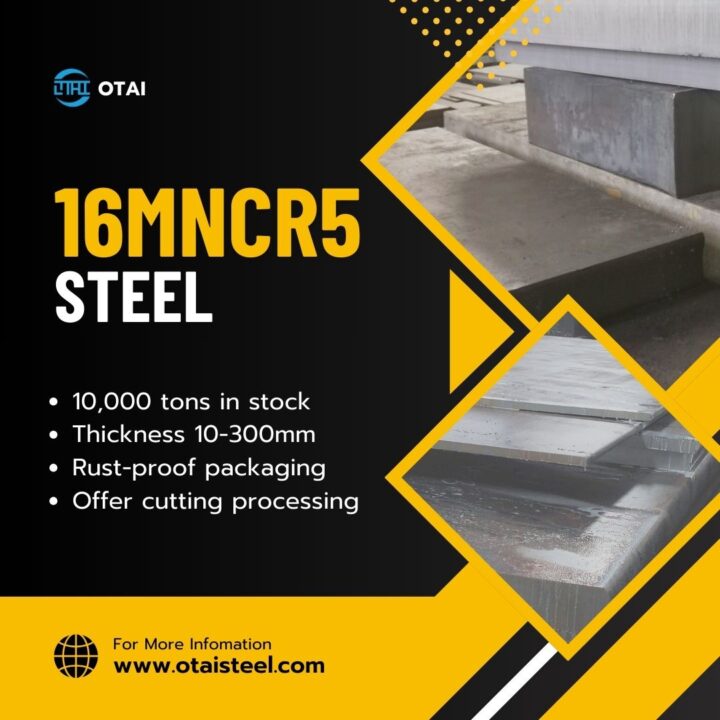
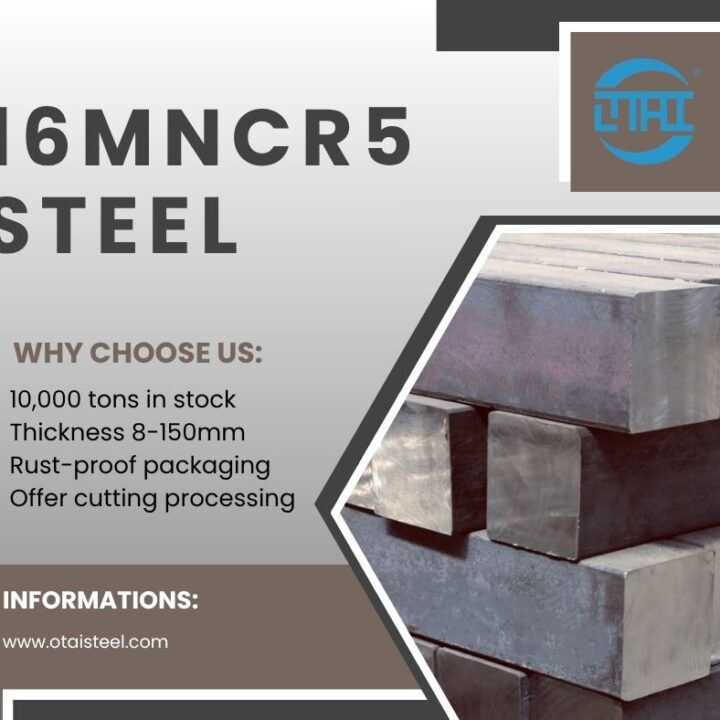
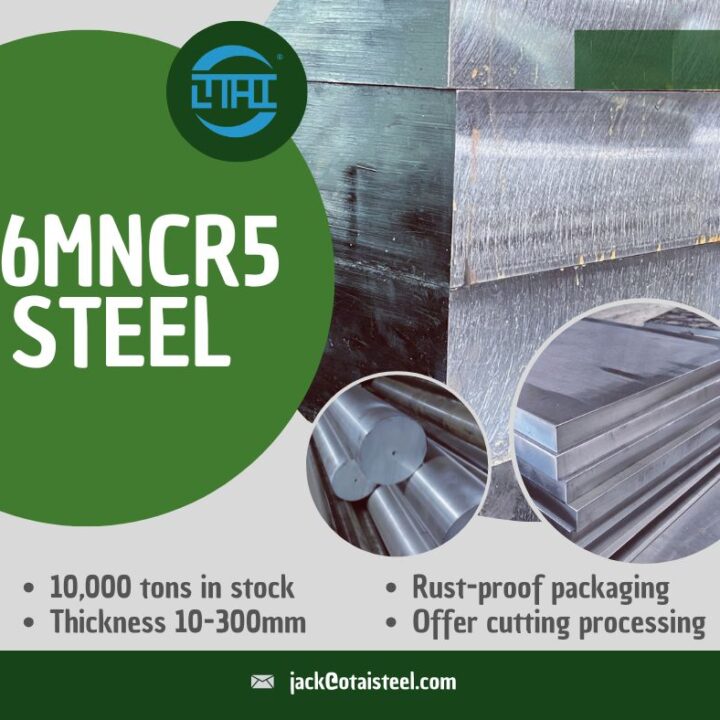
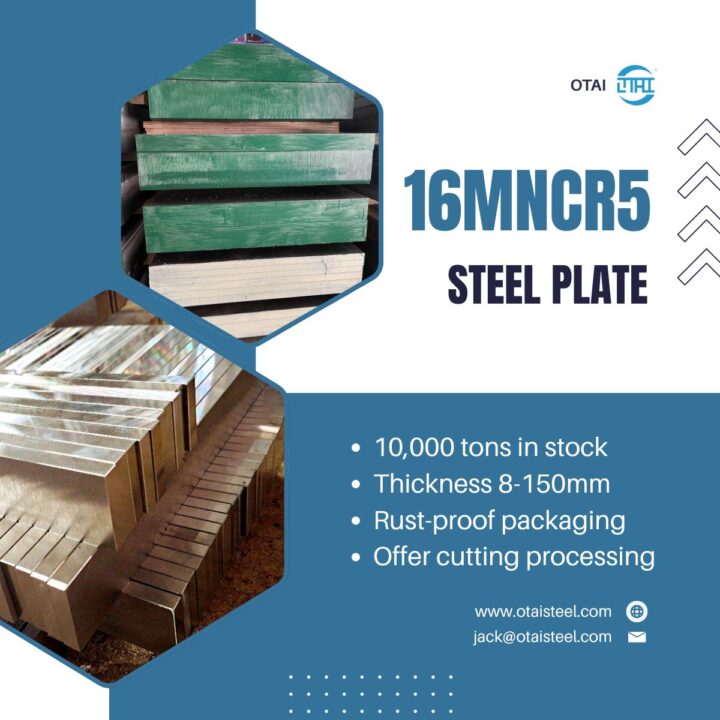
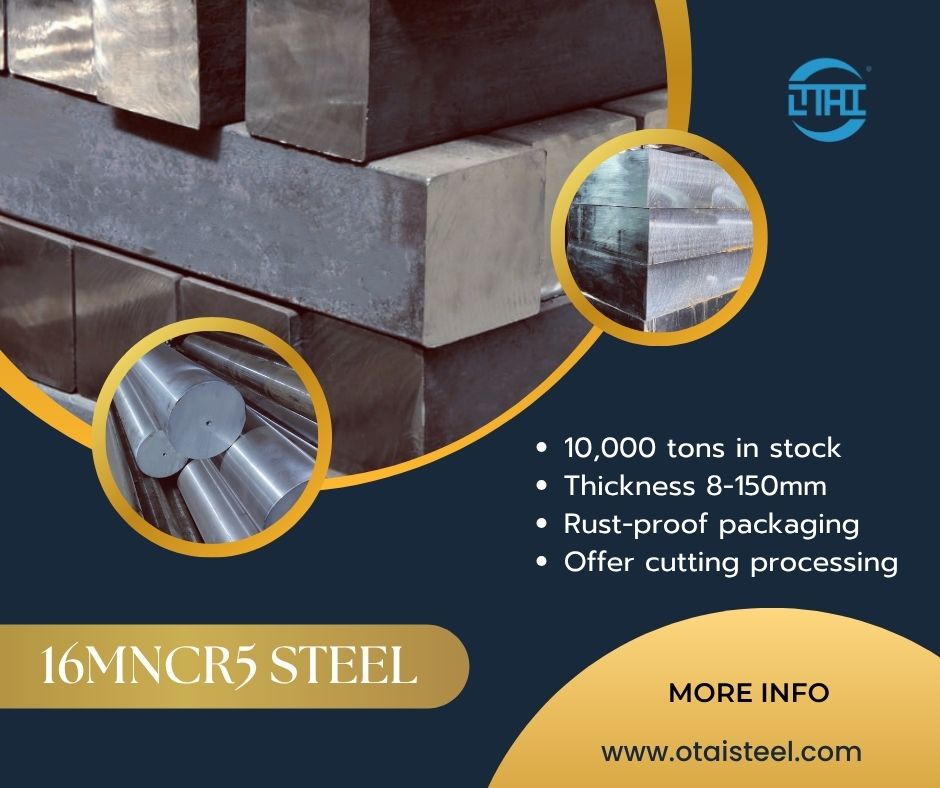
Otai Special Steel supplies high-quality 16MnCr5 steel materials for gear manufacturing, transmission systems, industrial machinery, and precision mechanical components.
- Large inventory and stable year-round supply
- 8–150mm thickness plates available in stock
- Custom cutting and machining services
- Heat treatment support including carburizing and quenching
- Ultrasonic testing (UT) support
- Chemical composition verification
- Third-party inspection support including SGS
- Professional export packaging and global logistics support
We provide reliable material quality, fast delivery, and technical assistance for customers worldwide.
❓ FAQ
Q1: Is 16MnCr5 easy to machine?
A1: Yes. 16MnCr5 offers good machinability in the annealed condition and is widely used for precision machining applications.
Q2: Why is 16MnCr5 usually machined before carburizing?
A2: Carburizing significantly increases surface hardness, making conventional machining much more difficult after heat treatment.
Q3: Which cutting tools are recommended for 16MnCr5?
A3: Coated carbide tools are commonly recommended because they provide excellent wear resistance and stable cutting performance.
Q4: Can 16MnCr5 achieve good surface finish quality?
A4: Yes. Proper tooling, coolant application, and machining parameters allow excellent surface finish and dimensional accuracy.
Q5: Which industries commonly use machined 16MnCr5 components?
A5: Automotive, industrial machinery, agricultural equipment, and heavy engineering industries widely use machined 16MnCr5 parts.