 AISI 4140 Steel Properties: Strength, Hardness and Industrial Applications
The AISI 4140 steel properties make this alloy steel one of the most widely used engineering materials in the global manufacturing industry. Engineers prefer AISI 4140 because it provides an excellent combination of strength, toughness, wear resistance, fatigue performance, and heat treatment capability.
AISI 4140 belongs to the chromium-molybdenum alloy steel family and is commonly supplied in annealed, normalized, pre-hardened, or quenched and tempered conditions. The material performs exceptionally well in demanding mechanical applications where components experience high stress, repeated loading, and severe wear conditions.
Manufacturers widely use AISI 4140 steel for:
- Gears and pinions
- Shafts and axles
- Oil and gas components
- Heavy-duty bolts
- Hydraulic machinery parts
- Aircraft and aerospace components
- Industrial tooling systems
The outstanding versatility of this alloy steel allows engineers to balance hardness, machinability, toughness, and strength according to different application requirements.
🧪 Chemical Composition of AISI 4140 Steel
The chemical composition of AISI 4140 steel directly influences its mechanical strength, hardenability, and wear resistance.
The chromium and molybdenum additions significantly improve heat treatment response and high-strength performance compared with plain carbon steels.
| Element | Typical Content (%) | Function |
|---|---|---|
| Carbon (C) | 0.38 – 0.43 | Improves strength and hardness |
| Chromium (Cr) | 0.80 – 1.10 | Enhances wear resistance and hardenability |
| Molybdenum (Mo) | 0.15 – 0.25 | Improves toughness and heat resistance |
| Manganese (Mn) | 0.75 – 1.00 | Increases strength and hardenability |
| Silicon (Si) | 0.15 – 0.35 | Improves structural stability |
This balanced alloy composition allows AISI 4140 steel to achieve excellent mechanical performance after heat treatment.
📊 Mechanical Properties of AISI 4140 Steel
AISI 4140 steel provides high tensile strength, good impact resistance, and excellent fatigue performance.
The exact mechanical properties depend on the heat treatment condition and section thickness.
| Property | Typical Value |
|---|---|
| Tensile Strength | 655 – 1080 MPa |
| Yield Strength | 415 – 930 MPa |
| Hardness | 197 – 320 HB |
| Elongation | 20 – 25% |
| Impact Toughness | Excellent |
The material maintains an excellent balance between strength and toughness, making it highly suitable for heavily loaded rotating components.
🔥 Heat Treatment Characteristics
One of the most important AISI 4140 steel properties is its excellent response to heat treatment.
The material can be quenched and tempered to achieve different hardness and strength levels depending on application requirements.
Common heat treatment processes include:
- Annealing
- Normalizing
- Quenching
- Tempering
- Induction hardening
| Heat Treatment Process | Typical Temperature |
|---|---|
| Annealing | 815 – 870°C |
| Normalizing | 870 – 925°C |
| Hardening | 830 – 870°C |
| Tempering | 200 – 700°C |
Proper tempering significantly improves toughness while maintaining high mechanical strength.
⚙️ Machinability and Weldability
AISI 4140 steel offers good machinability in the annealed or normalized condition.
Manufacturers commonly machine the material before final hardening to reduce tool wear and improve machining efficiency.
| Fabrication Property | Performance |
|---|---|
| Machinability | Good |
| Weldability | Moderate |
| Formability | Moderate |
| Grinding Performance | Good |
Preheating is usually recommended before welding to minimize cracking risk and residual stress formation.
🏭 Industrial Applications of AISI 4140 Steel
AISI 4140 steel is widely used in industries requiring high strength, excellent fatigue resistance, and reliable wear performance.
The material performs especially well in dynamic mechanical systems subjected to repeated stress and heavy loading conditions.
| Industry | Typical Components |
|---|---|
| Oil and Gas | Drill collars, tool joints, shafts |
| Automotive | Axles, gears, crankshafts |
| Aerospace | Landing gear components, structural parts |
| Heavy Machinery | Hydraulic shafts and rollers |
| Industrial Equipment | Bolts, couplings, spindles |
Its excellent toughness and hardenability make AISI 4140 one of the most versatile engineering alloy steels available today.
🔬 Microstructure and Performance Advantages
The microstructure of AISI 4140 steel changes significantly depending on the heat treatment condition.
Annealed material typically contains ferrite and pearlite, while quenched and tempered material develops tempered martensite, which greatly improves hardness and strength.
| Heat Treatment Condition | Typical Microstructure | Performance Benefit |
|---|---|---|
| Annealed | Ferrite + Pearlite | Improved machinability |
| Normalized | Fine Pearlite | Balanced strength and toughness |
| Quenched and Tempered | Tempered Martensite | High strength and wear resistance |
The tempered martensitic structure is particularly valuable for shafts, gears, and heavily loaded rotating machinery parts.
🌍 International Equivalent Grades
AISI 4140 steel has several international equivalent grades used across different standards worldwide.
| Standard | Equivalent Grade |
|---|---|
| DIN / EN | 42CrMo4 / 1.7225 |
| JIS | SCM440 |
| GB | 42CrMo |
| BS | 708M40 |
Although equivalent grades are similar, slight differences in chemical composition and heat treatment practices may affect final mechanical properties.
⚠️ Common Processing Challenges and Solutions
Manufacturers must carefully control machining and heat treatment parameters to achieve the best AISI 4140 steel properties.
Common processing challenges include:
- Distortion after quenching
- Surface cracking
- Excessive hardness variation
- Welding stress cracking
- Tool wear during machining
| Problem | Possible Cause | Recommended Solution |
|---|---|---|
| Distortion | Uneven quenching | Optimize cooling process |
| Cracking | Excessive internal stress | Use proper tempering |
| Tool Wear | High material hardness | Use coated carbide tooling |
| Weld Cracking | Lack of preheating | Apply preheat and PWHT |
Careful process control significantly improves final component quality, durability, and service life.
🏢 Company Advantages
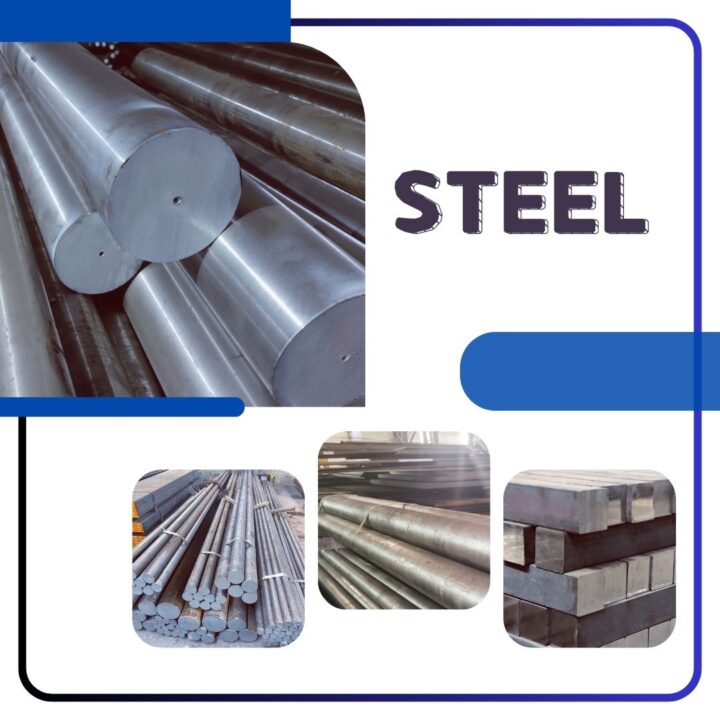
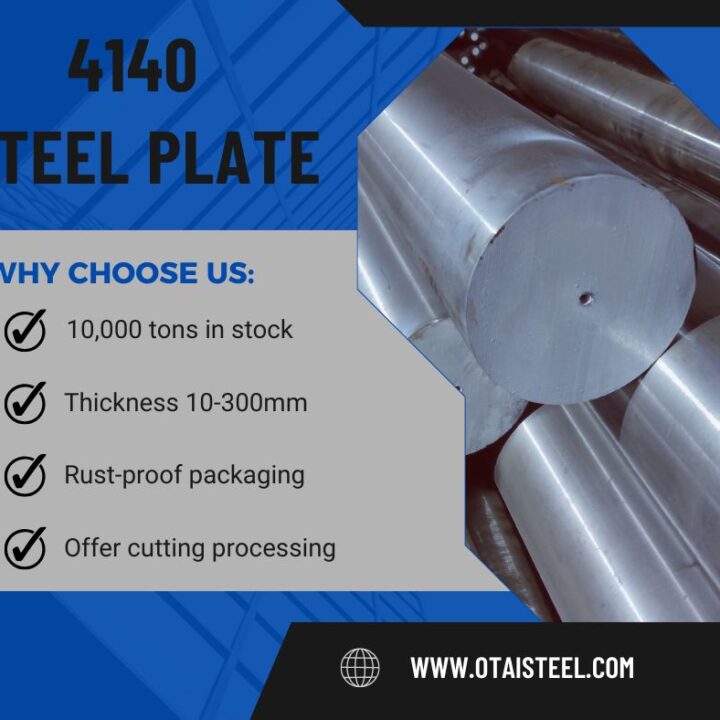
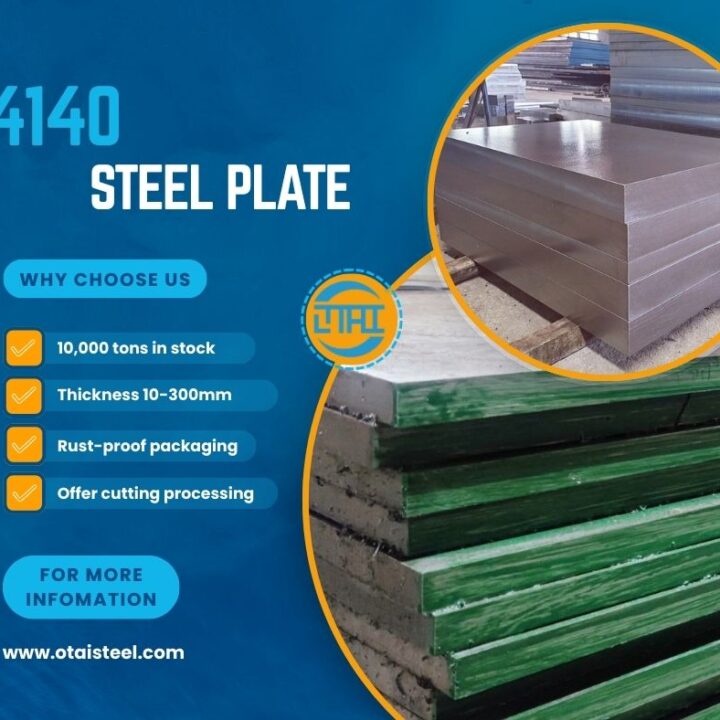
Otai Special Steel supplies premium-quality AISI 4140 alloy steel for industrial machinery, oil and gas equipment, aerospace systems, and heavy engineering applications.
- Large inventory and stable year-round supply
- Wide size range for plates, bars, and forged blocks
- Custom cutting and machining services
- Heat treatment support including quenching and tempering
- Ultrasonic testing (UT) support
- Chemical composition verification
- Third-party inspection support including SGS
- Professional export packaging and global logistics support
We provide reliable material quality, competitive pricing, and fast delivery for customers worldwide.
❓ FAQ
Q1: What type of steel is AISI 4140?
A1: AISI 4140 is a chromium-molybdenum alloy steel known for high strength, toughness, and excellent heat treatment capability.
Q2: Can AISI 4140 steel be heat treated?
A2: Yes. The material responds very well to quenching and tempering processes.
Q3: What hardness can AISI 4140 achieve?
A3: Depending on heat treatment, hardness can exceed 50 HRC in hardened conditions.
Q4: Is AISI 4140 suitable for gears and shafts?
A4: Yes. The material is widely used for high-strength gears, shafts, and rotating machinery components.
Q5: Is AISI 4140 easy to weld?
A5: The material has moderate weldability and usually requires preheating and post-weld heat treatment.