 4140 Steel Rockwell Hardness Chart: Understanding HRC Values After Heat Treatment
The 4140 steel Rockwell hardness chart is one of the most important references for engineers, machinists, and heat treatment specialists working with chromium-molybdenum alloy steel. Because 4140 steel responds exceptionally well to heat treatment, its hardness can vary significantly depending on the processing condition.
Manufacturers frequently use Rockwell hardness values to evaluate whether the steel can meet requirements for:
- Wear resistance
- Strength
- Toughness
- Fatigue performance
- Machinability
- Impact resistance
4140 steel is widely used in:
- Shafts
- Gears
- Bolts
- Hydraulic cylinders
- Oil & gas components
- Aerospace parts
- Heavy machinery systems
Understanding the relationship between heat treatment and Rockwell hardness helps engineers optimize material performance for different industrial applications.
🔍 What is Rockwell Hardness?
Rockwell hardness is a standardized method used to measure a material’s resistance to indentation. For hardened alloy steels such as 4140, the Rockwell C scale (HRC) is the most common measurement system.
The Rockwell hardness test determines how deeply an indenter penetrates the steel under a specified load. Higher HRC values indicate:
- Greater hardness
- Better wear resistance
- Higher strength
However, increasing hardness also tends to reduce ductility and machinability. Engineers therefore select hardness levels carefully depending on the application.
⚗️ Why 4140 Steel Responds Well to Heat Treatment
4140 steel contains chromium and molybdenum, which significantly improve hardenability and mechanical performance.
| Element | Typical Content (%) | Main Function |
|---|---|---|
| Carbon (C) | 0.38 – 0.43 | Increases hardness and strength |
| Chromium (Cr) | 0.80 – 1.10 | Improves wear resistance |
| Molybdenum (Mo) | 0.15 – 0.25 | Enhances toughness and heat resistance |
| Manganese (Mn) | 0.75 – 1.00 | Improves hardenability |
| Silicon (Si) | 0.15 – 0.35 | Adds strength |
These alloying elements allow 4140 steel to achieve a wide range of hardness levels after quenching and tempering.
📈 4140 Steel Rockwell Hardness Chart
The following chart shows typical Rockwell hardness values for 4140 steel under different heat treatment conditions.
| Heat Treatment Condition | Typical Hardness | Approximate HRC |
|---|---|---|
| Annealed | 197 – 229 HB | 10 – 20 HRC |
| Normalized | 20 – 25 HRC | 20 – 25 HRC |
| Pre-Hardened | 28 – 32 HRC | 28 – 32 HRC |
| Quenched & Tempered | 35 – 40 HRC | 35 – 40 HRC |
| High Strength Condition | 45 – 50 HRC | 45 – 50 HRC |
| Maximum Practical Hardness | 54 – 59 HRC | 54 – 59 HRC |
These values may vary depending on:
- Section thickness
- Quenching medium
- Tempering temperature
- Furnace uniformity
- Alloy consistency
Engineering Insight: Most industrial 4140 components operate between 28–40 HRC because this range provides an excellent balance between strength, toughness, and machinability.
🔥 Heat Treatment and Hardness Relationship
The hardness of 4140 steel changes dramatically depending on heat treatment parameters.
⚙️ Annealed 4140 Steel
Annealing softens the material and improves machinability.
| Parameter | Typical Value |
|---|---|
| Annealing Temperature | 815 – 870°C |
| Cooling Method | Furnace cooling |
| Typical Hardness | 10 – 20 HRC |
Benefits of Annealed Condition
- Easier machining
- Better formability
- Reduced internal stress
- Improved dimensional stability during processing
Manufacturers commonly machine large components in the annealed condition before final hardening.
⚙️ Quenched and Tempered 4140 Steel
Quenching creates a hard martensitic structure, while tempering adjusts toughness and final hardness.
| Tempering Temperature | Typical Hardness |
|---|---|
| 200°C | 50 – 55 HRC |
| 315°C | 45 – 50 HRC |
| 425°C | 40 – 45 HRC |
| 540°C | 32 – 38 HRC |
| 650°C | 28 – 32 HRC |
Lower tempering temperatures produce higher hardness, while higher temperatures improve toughness and ductility.
Practical Tip: Shafts and gears often use hardness around 32–38 HRC because this range provides good fatigue resistance without excessive brittleness.
⚙️ Microstructure and Hardness
The internal microstructure directly affects Rockwell hardness values.
| Microstructure | Typical Hardness Range | Characteristics |
|---|---|---|
| Ferrite + Pearlite | Low Hardness | Soft and machinable |
| Bainite | Medium Hardness | Tough and fatigue resistant |
| Martensite | High Hardness | Extremely strong and wear resistant |
| Tempered Martensite | Controlled Hardness | Balanced toughness and strength |
Proper heat treatment controls the formation of these structures to achieve the required mechanical properties.
🚗 Recommended Hardness for Common Applications
Different applications require different hardness levels.
| Application | Recommended Hardness |
|---|---|
| Hydraulic Shafts | 28 – 32 HRC |
| Transmission Gears | 35 – 45 HRC |
| Oil & Gas Tools | 32 – 40 HRC |
| High-Wear Components | 45 – 50 HRC |
| Aerospace Parts | 30 – 38 HRC |
Selecting the correct hardness helps prevent:
- Premature wear
- Brittle fracture
- Fatigue cracking
- Machining difficulties
⚖️ Hardness vs Toughness in 4140 Steel
One of the biggest advantages of 4140 steel is its ability to maintain good toughness even at relatively high hardness levels.
| Hardness Level | Main Advantage | Main Limitation |
|---|---|---|
| 20 – 30 HRC | Excellent machinability | Lower wear resistance |
| 30 – 40 HRC | Balanced performance | Moderate machining difficulty |
| 45 – 55 HRC | High wear resistance | Reduced toughness |
Engineers must balance hardness and toughness according to the working environment.
🔧 Factors Affecting Rockwell Hardness Results
Several factors can influence actual hardness measurements.
🔹 Section Thickness
Thicker sections cool more slowly during quenching, which may reduce final hardness in the center of the material.
🔹 Quenching Medium
| Medium | Cooling Speed | Hardness Effect |
|---|---|---|
| Water | Fast | Higher hardness but greater cracking risk |
| Oil | Moderate | Balanced hardness and toughness |
| Polymer | Controlled | Reduced distortion |
Oil quenching is commonly used for 4140 steel because it minimizes cracking and distortion.
🔹 Tempering Temperature
Higher tempering temperatures lower hardness but improve impact resistance and dimensional stability.
🌐 Equivalent Grades of 4140 Steel
Several international standards offer similar alloy steels.
| Standard | Equivalent Grade |
|---|---|
| DIN / EN | 42CrMo4 |
| JIS | SCM440 |
| GB | 42CrMo |
| BS | 708M40 |
These grades typically show similar Rockwell hardness behavior after proper heat treatment.
🏭 Company Advantages
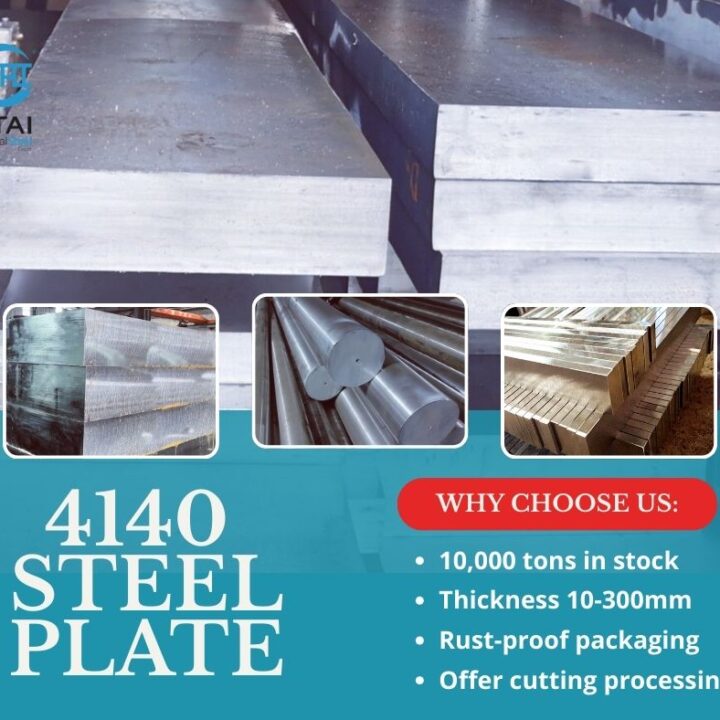
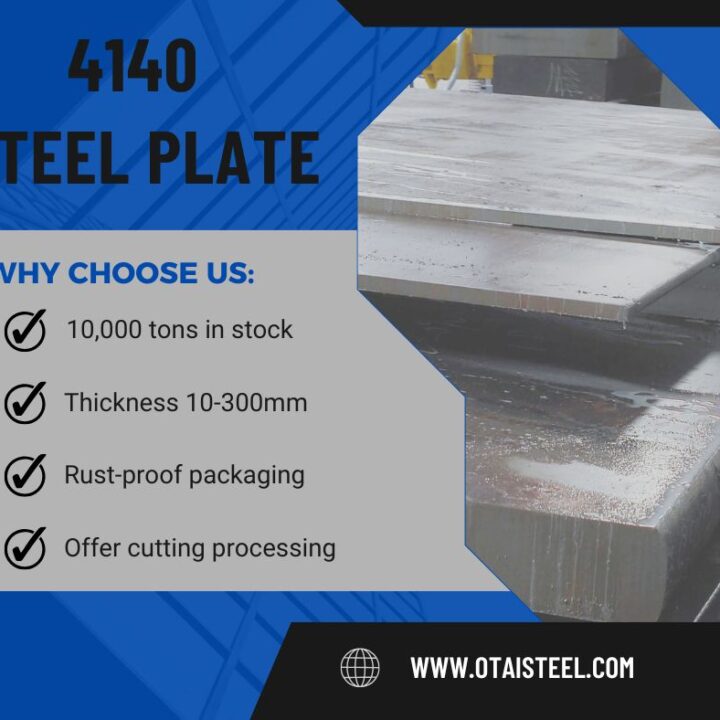
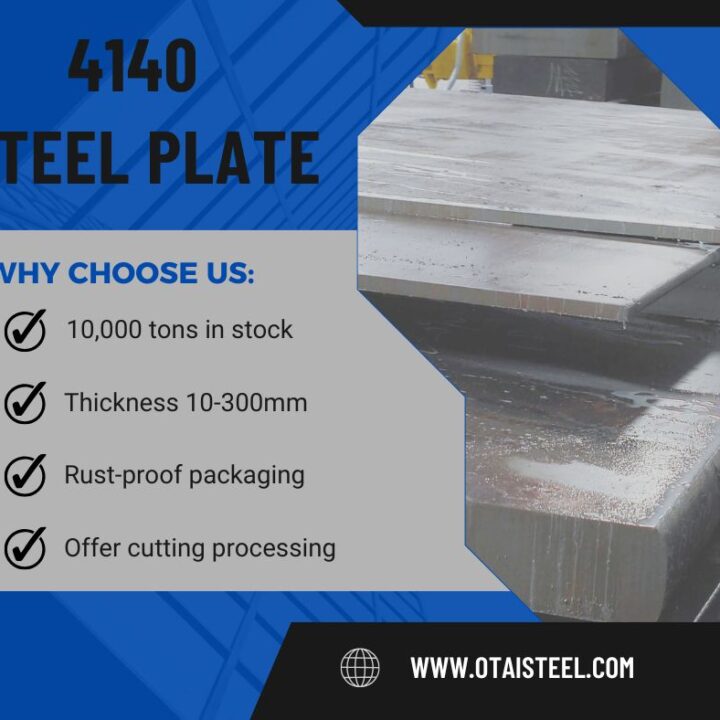
Otai Special Steel supplies premium-quality 4140 alloy steel for demanding engineering applications.
- Large inventory and stable supply
- Custom cutting and heat treatment services
- Ultrasonic testing (UT) and chemical composition verification
- Third-party inspection support (SGS)
- Professional export packaging and logistics support
We support customers in oil & gas, aerospace, industrial machinery, automotive, and heavy equipment industries with reliable material quality and technical assistance.
❓ FAQ
Q1: What is the typical Rockwell hardness of annealed 4140 steel?
A1: Annealed 4140 steel typically measures around 10–20 HRC.
Q2: What hardness is common for quenched and tempered 4140 steel?
A2: Most industrial applications use 4140 steel between 28–40 HRC.
Q3: Can 4140 steel reach 50 HRC?
A3: Yes. Proper quenching and low-temperature tempering can produce hardness around 50–55 HRC.
Q4: Why does tempering reduce hardness?
A4: Tempering relieves internal stress and modifies the martensitic structure, improving toughness while reducing hardness.
Q5: What hardness is best for gears and shafts?
A5: Many gears and shafts use 32–45 HRC because this range balances wear resistance and toughness effectively.