 16MnCr5 Steel Alternative: Comparing Equivalent Grades for Carburizing Applications
When engineers search for a 16MnCr5 steel alternative, they usually need a material that can provide similar performance in gear manufacturing, carburized components, transmission systems, and wear-resistant mechanical parts. Since 16MnCr5 is one of the most widely used case hardening steels in Europe, manufacturers around the world often compare it with equivalent grades from AISI, JIS, GB, and other international standards.
Choosing the correct alternative is important because even small differences in chemical composition can affect:
- Hardenability
- Surface hardness
- Core toughness
- Fatigue resistance
- Gear service life
- Heat treatment response
A suitable substitute should maintain the same balance between hard wear-resistant surfaces and tough internal structure that makes 16MnCr5 popular in demanding engineering applications.
🔍 What is 16MnCr5 Steel?
16MnCr5 is a low-carbon chromium-manganese alloy carburizing steel designed for components requiring:
- High surface hardness after carburizing
- Excellent fatigue resistance
- Good impact toughness
- Strong wear resistance
- Reliable dimensional stability
The steel is commonly used for:
- Gears
- Pinions
- Shafts
- Bushings
- Bearing sleeves
- Transmission parts
Its low carbon content keeps the core ductile, while carburizing creates a hardened outer layer capable of resisting severe surface wear.
⚗️ Chemical Composition of 16MnCr5
Understanding the composition helps engineers compare alternative materials more accurately.
| Element | Content (%) | Main Function |
|---|---|---|
| Carbon (C) | 0.14 – 0.19 | Supports carburized hardness |
| Silicon (Si) | 0.17 – 0.37 | Improves strength |
| Manganese (Mn) | 1.00 – 1.30 | Enhances hardenability |
| Chromium (Cr) | 0.80 – 1.10 | Improves wear resistance |
| Phosphorus (P) | ≤ 0.025 | Controlled impurity |
| Sulfur (S) | ≤ 0.035 | Improves machinability |
This composition gives the steel excellent carburizing performance while maintaining good machinability before heat treatment.
🌐 Common 16MnCr5 Steel Alternatives
Several international steel grades provide similar carburizing behavior and mechanical performance.
| Standard | Alternative Grade | Country/Region |
|---|---|---|
| AISI / SAE | SAE 5115 | United States |
| JIS | SCM420 | Japan |
| GB | 20CrMnTi | China |
| ISO | 18CrMo4 | International |
| DIN / EN | 16MnCr5 | Europe |
These materials are commonly used as substitutes depending on local standards and supply availability.
⚙️ SAE 5115 as a 16MnCr5 Alternative
SAE 5115 is one of the closest American equivalents to 16MnCr5.
Main Characteristics
- Good carburizing capability
- Excellent surface hardness
- Reliable fatigue resistance
- Good machinability
| Property | 16MnCr5 | SAE 5115 |
|---|---|---|
| Carbon Content | 0.14 – 0.19% | 0.13 – 0.18% |
| Chromium Content | 0.80 – 1.10% | 0.70 – 0.90% |
| Hardenability | Excellent | Good |
| Core Toughness | Excellent | Good |
SAE 5115 performs well in automotive gears and transmission components, although 16MnCr5 generally provides slightly better hardenability because of its alloy balance.
⚙️ SCM420 as a Japanese Alternative
SCM420 is a Japanese chromium-molybdenum carburizing steel often used for high-precision gear systems.
| Property | 16MnCr5 | SCM420 |
|---|---|---|
| Alloy System | Cr-Mn | Cr-Mo |
| Hardenability | Excellent | Very Good |
| Wear Resistance | Excellent | Excellent |
| Toughness | Excellent | Very Good |
Advantages of SCM420
- Improved high-temperature stability
- Good fatigue resistance
- Excellent precision gear performance
SCM420 is widely used in Japanese automotive and industrial transmission systems.
⚙️ 20CrMnTi as a Chinese Alternative
20CrMnTi is one of the most common Chinese carburizing steels used as a substitute for 16MnCr5.
| Property | 16MnCr5 | 20CrMnTi |
|---|---|---|
| Hardenability | Excellent | Excellent |
| Wear Resistance | Excellent | Excellent |
| Fatigue Resistance | Excellent | Excellent |
| Cost Efficiency | Good | Very Good |
Why 20CrMnTi is Popular
Manufacturers prefer 20CrMnTi because it offers:
- Good hardenability
- Excellent fatigue resistance
- Stable heat treatment response
- Competitive cost
It is widely used for automotive gears, shafts, and transmission systems.
🔥 Heat Treatment Considerations for Alternative Grades
Even when materials appear equivalent, heat treatment behavior can vary slightly.
Typical Carburizing Parameters
| Parameter | Typical Range |
|---|---|
| Carburizing Temperature | 880 – 980°C |
| Surface Hardness | 58 – 62 HRC |
| Case Depth | 0.8 – 1.5 mm |
Alternative steels should achieve similar:
- Surface hardness
- Hardened case depth
- Core toughness
- Fatigue strength
However, alloy differences may require adjustments in carburizing time or quenching conditions.
📊 Mechanical Property Comparison
The following table compares typical carburized mechanical properties.
| Property | 16MnCr5 | SAE 5115 | SCM420 | 20CrMnTi |
|---|---|---|---|---|
| Surface Hardness | 58–62 HRC | 58–61 HRC | 58–62 HRC | 58–62 HRC |
| Core Toughness | Excellent | Good | Very Good | Excellent |
| Fatigue Resistance | Excellent | Good | Very Good | Excellent |
| Wear Resistance | Excellent | Good | Excellent | Excellent |
This comparison shows why 16MnCr5 remains one of the most balanced carburizing steels for gear applications.
🚗 Applications of 16MnCr5 and Its Alternatives
These steels are commonly used in high-load mechanical systems.
| Industry | Components |
|---|---|
| Automotive | Transmission gears, pinions, shafts |
| Industrial Machinery | Gearboxes, reducers, couplings |
| Agricultural Equipment | Drive systems, axles |
| Heavy Equipment | Large gear assemblies |
🔹 Gear Manufacturing Example
A carburized gear manufactured from 16MnCr5 or its equivalent can achieve:
- High tooth surface hardness
- Excellent rolling contact fatigue resistance
- Long operational life under repeated torque loads
This significantly improves gearbox durability and reduces maintenance costs.
⚖️ Factors to Consider When Selecting an Alternative
Engineers should evaluate more than just chemical composition when selecting a replacement steel.
Important Selection Factors
| Factor | Importance |
|---|---|
| Hardenability | Controls heat treatment depth |
| Core Toughness | Prevents brittle fracture |
| Surface Hardness | Improves wear resistance |
| Machinability | Affects production efficiency |
| Local Availability | Impacts supply stability |
| Cost | Influences manufacturing budget |
A technically similar steel may still require process adjustments during machining or heat treatment.
🏭 Company Advantages
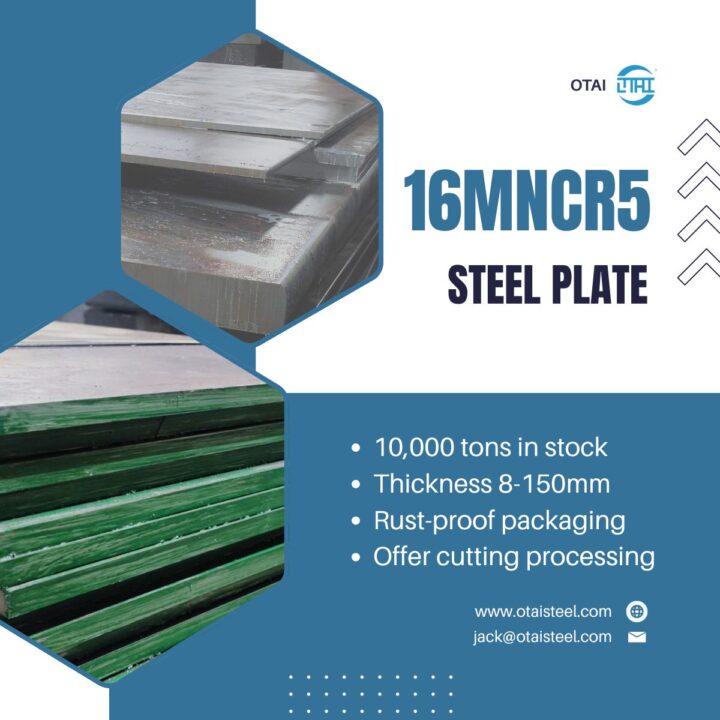
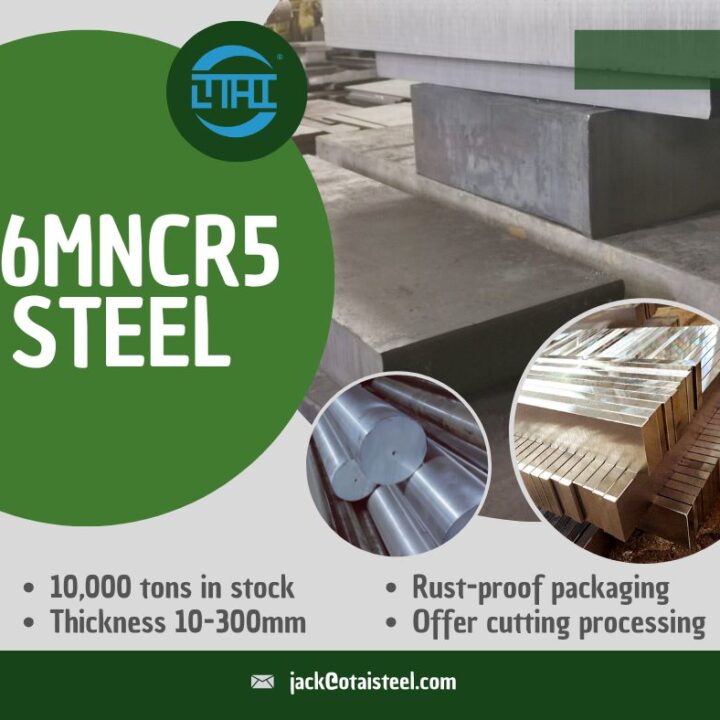
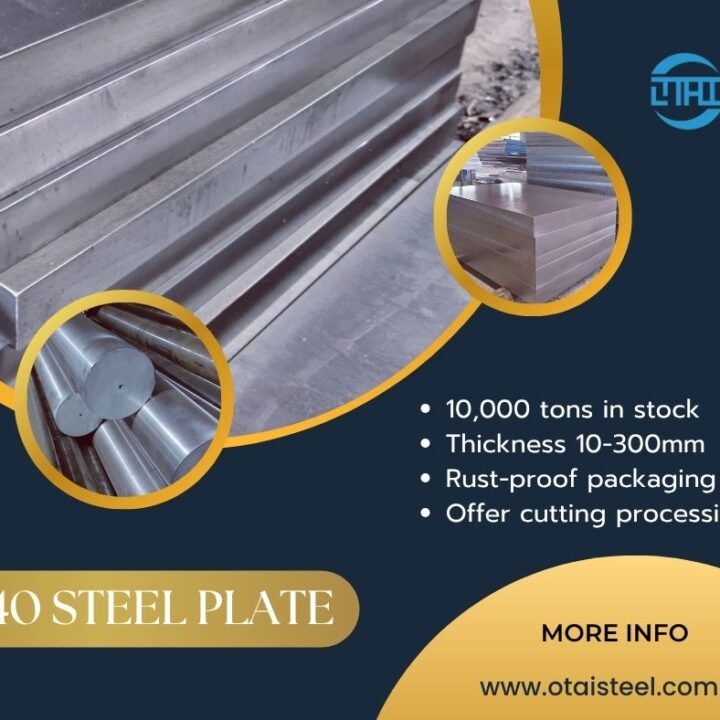
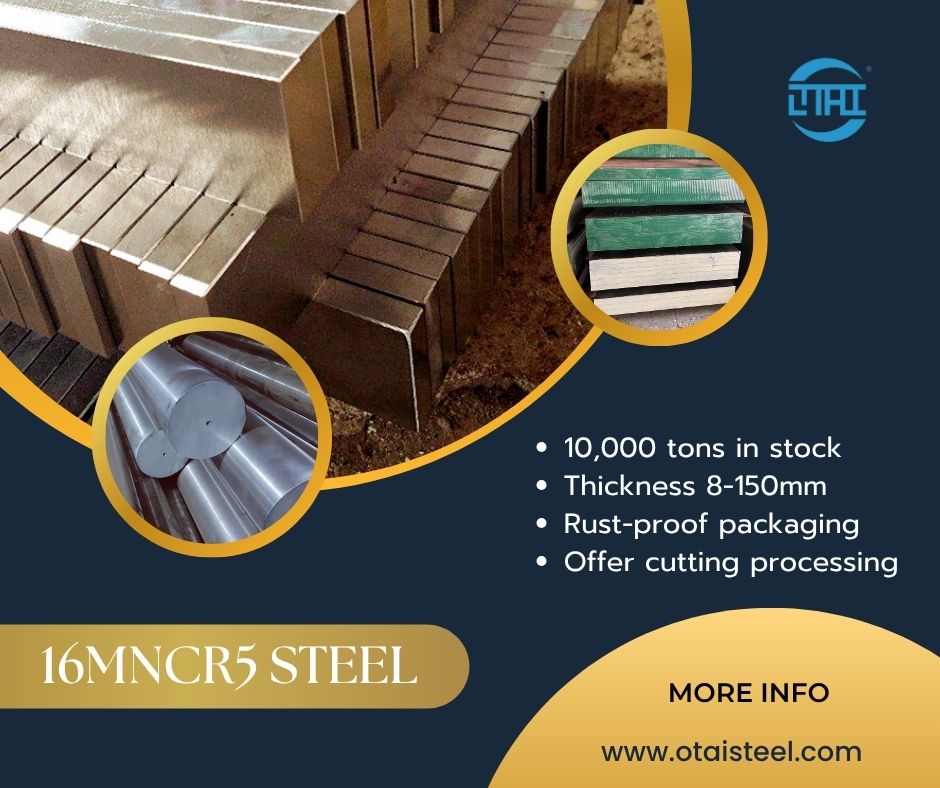
Otai Special Steel supplies high-quality 16MnCr5 steel and alternative carburizing grades for demanding engineering applications.
- Large inventory and stable supply
- 8–150mm thickness plates available in stock
- Custom cutting and heat treatment services
- Ultrasonic testing (UT) and chemical composition verification
- Third-party inspection support (SGS)
- Professional export packaging and logistics support
We support customers in automotive, industrial machinery, agricultural equipment, and heavy engineering industries with reliable material quality and technical assistance.
❓ FAQ
Q1: What is the closest alternative to 16MnCr5 steel?
A1: SAE 5115, SCM420, and 20CrMnTi are among the most commonly used alternatives.
Q2: Can 20CrMnTi replace 16MnCr5?
A2: Yes. 20CrMnTi provides similar carburizing performance and fatigue resistance in many applications.
Q3: Is SCM420 better than 16MnCr5?
A3: SCM420 offers excellent precision and fatigue performance, but 16MnCr5 often provides a slightly better balance of toughness and carburizing behavior.
Q4: What hardness can these alternative steels achieve after carburizing?
A4: Most equivalent grades can achieve approximately 58–62 HRC surface hardness after proper heat treatment.
Q5: Why is 16MnCr5 widely used for gears?
A5: Its carburized surface provides excellent wear resistance while the tough core prevents brittle failure under heavy loads.