 4140 Steel Wiki – Properties, Composition and Heat Treatment
Engineers, purchasing managers, manufacturers, and machinists often search for the term 4140 steel wiki when they look for a comprehensive overview of one of the world’s most widely used alloy steels. AISI 4140 is a chromium-molybdenum low-alloy steel. Engineers know it for its excellent balance of strength, toughness, hardenability, wear resistance, and machinability.
Because of its versatility, manufacturers use 4140 steel across numerous industries, including oil and gas, automotive, mining, construction equipment, power generation, and heavy machinery manufacturing. Unlike simple carbon steels, engineers can heat treat 4140 to achieve a wide range of mechanical properties, making it suitable for both high-strength structural applications and wear-resistant components.
This article serves as a practical encyclopedia-style reference covering 4140 steel properties, chemical composition, heat treatment, mechanical performance, equivalent grades, and real-world industrial applications.
📘 What Is 4140 Steel?
AISI 4140 is a medium-carbon chromium-molybdenum alloy steel defined under ASTM, SAE, and AISI standards. The addition of chromium and molybdenum improves hardenability, strength, fatigue resistance, and toughness compared with ordinary carbon steels.
One of the main advantages of 4140 steel is its ability to achieve excellent mechanical properties after quenching and tempering while still maintaining good machinability in the annealed condition.
| Property | Description |
|---|---|
| Steel Grade | AISI 4140 |
| Steel Type | Chromium-Molybdenum Alloy Steel |
| UNS Number | G41400 |
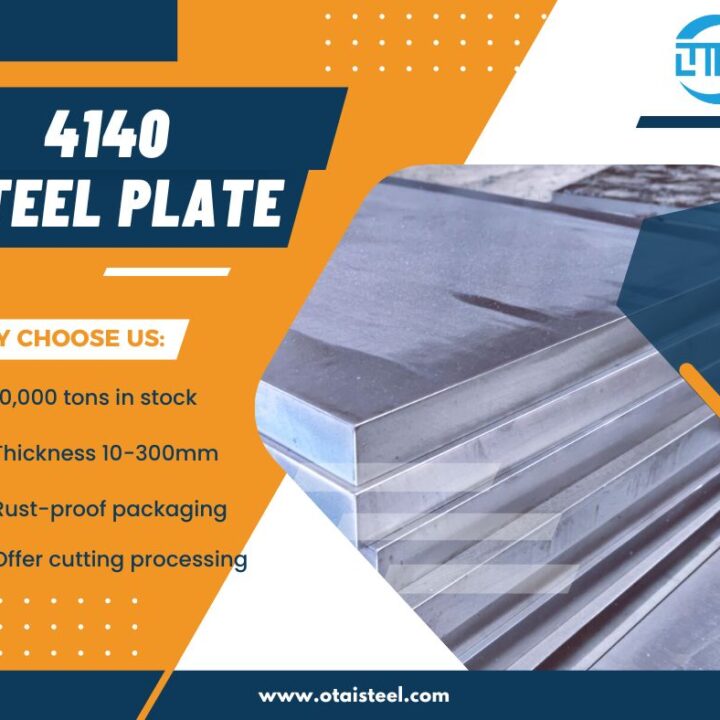
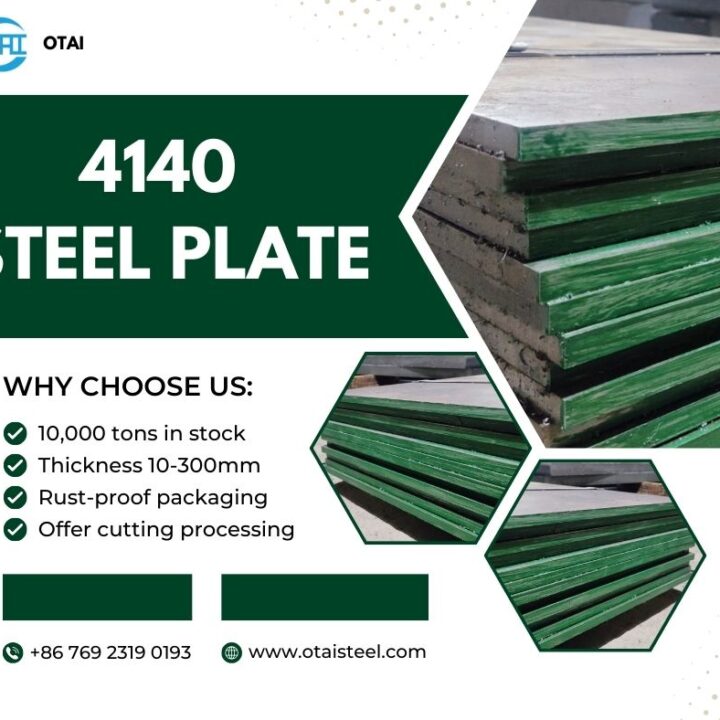
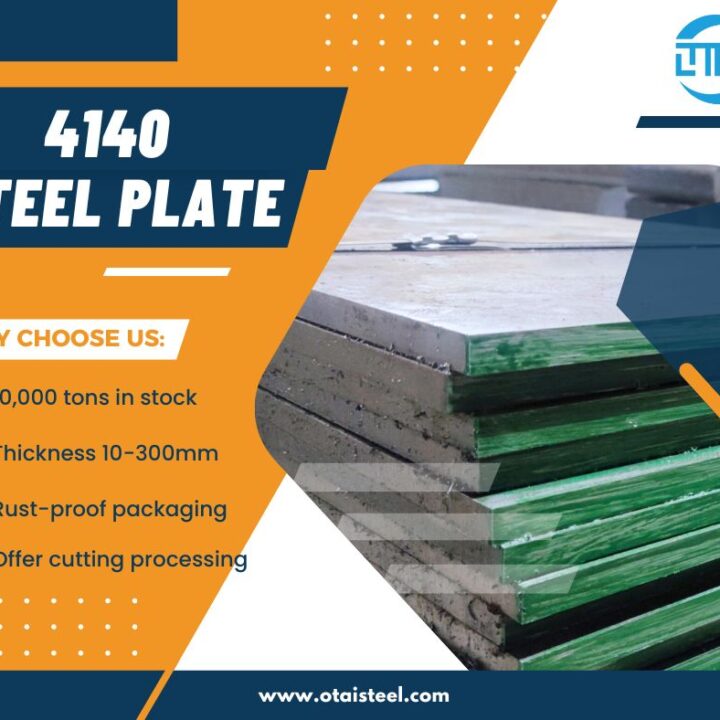
| Common Form | Plate, Round Bar, Forging, Block |
🧪 4140 Steel Chemical Composition
The mechanical performance of 4140 steel comes from its carefully balanced alloy composition.
| Element | Typical Content (%) |
|---|---|
| Carbon (C) | 0.38–0.43 |
| Manganese (Mn) | 0.75–1.00 |
| Silicon (Si) | 0.15–0.35 |
| Chromium (Cr) | 0.80–1.10 |
| Molybdenum (Mo) | 0.15–0.25 |
Chromium improves wear resistance and hardenability, while molybdenum enhances strength at elevated temperatures and reduces the risk of temper brittleness.
⚙️ 4140 Steel Mechanical Properties
The exact mechanical properties depend on heat treatment condition, section size, and manufacturing process.
| Property | Typical Value |
|---|---|
| Density | 7.85 g/cm³ |
| Yield Strength | 655–950 MPa |
| Tensile Strength | 950–1200 MPa |
| Elongation | 12–25% |
| Hardness | 197–340 HB |
These properties explain why 4140 is frequently chosen for heavily loaded shafts, gears, and structural components.
🔥 4140 Steel Heat Treatment
One of the most valuable characteristics of 4140 alloy steel composition is its excellent response to heat treatment.
Depending on the required performance, manufacturers may apply annealing, normalizing, quenching, tempering, or surface hardening treatments.
| Heat Treatment | Temperature Range | Purpose |
|---|---|---|
| Annealing | 815–870°C | Improve machinability |
| Normalizing | 870–925°C | Refine grain structure |
| Hardening | 830–870°C | Increase strength |
| Tempering | 200–650°C | Balance hardness and toughness |
Most industrial users purchase 4140 in the quenched and tempered condition because it provides the best combination of strength and toughness for demanding applications.
“`html
🔩 4140 Steel Hardness and Machinability
One of the reasons AISI 4140 remains popular across multiple industries is its ability to provide both good machinability and high mechanical strength. Unlike some highly alloyed steels that become difficult to process, 4140 can be machined efficiently in the annealed condition and then heat treated to achieve significantly higher strength levels.
The 4140 steel hardness varies according to its heat treatment condition.
| Condition | Typical Hardness |
|---|---|
| Annealed | 197–220 HB |
| Normalized | 220–255 HB |
| Pre-Hardened | 28–32 HRC |
| Quenched & Tempered | 28–45 HRC |
| Induction Hardened Surface | 50–58 HRC |
For many engineering projects, pre-hardened 4140 steel offers an ideal balance between machinability and performance, eliminating the need for additional heat treatment after machining.
The machinability of 4140 steel is approximately 65–70% of AISI 1212 free-cutting steel, making it suitable for turning, milling, drilling, boring, and grinding operations.
🌍 4140 Steel Equivalent Grades
Because 4140 is used worldwide, buyers frequently need to identify equivalent grades according to local standards.
| Country/Standard | Equivalent Grade |
|---|---|
| USA (AISI/SAE) | 4140 |
| Germany (DIN/EN) | 42CrMo4 |
| United Kingdom (BS) | 708M40 |
| Japan (JIS) | SCM440 |
| China (GB) | 42CrMo |
Although minor differences may exist in chemical composition limits, these grades generally provide comparable mechanical properties and applications.
When sourcing internationally, buyers should always verify both the standard and the required mechanical property requirements rather than relying solely on grade names.
🏭 Common Industrial Applications
The versatility of 4140 steel applications makes it one of the most widely used engineering materials in heavy industry.
Its combination of strength, toughness, and wear resistance allows manufacturers to use it in both dynamic and static load-bearing components.
| Industry | Typical Components |
|---|---|
| Oil & Gas | Drill collars, tool joints, shafts |
| Mining | Drive shafts, wear components |
| Automotive | Axles, crankshafts, transmission parts |
| Construction Equipment | Pins, cylinders, hydraulic components |
| Manufacturing | Tool holders, fixtures, machine parts |
| Power Generation | Rotating shafts and couplings |
Many of these components operate under repeated cyclic loading, making fatigue resistance a key material requirement. Properly heat-treated 4140 performs exceptionally well in these environments.
⚖️ Advantages of 4140 Compared with Carbon Steel
Many buyers compare 4140 with common carbon steels such as 1045 when selecting materials for mechanical components.
| Property | 4140 Steel | 1045 Steel |
|---|---|---|
| Hardenability | Excellent | Moderate |
| Strength | Higher | Lower |
| Fatigue Resistance | Excellent | Good |
| Wear Resistance | Better | Moderate |
| Cost | Higher | Lower |
Although 4140 typically costs more than carbon steel, the improved performance often results in longer service life, reduced maintenance, and lower total ownership costs.
🏆 Company Advantages – Otai Special Steel
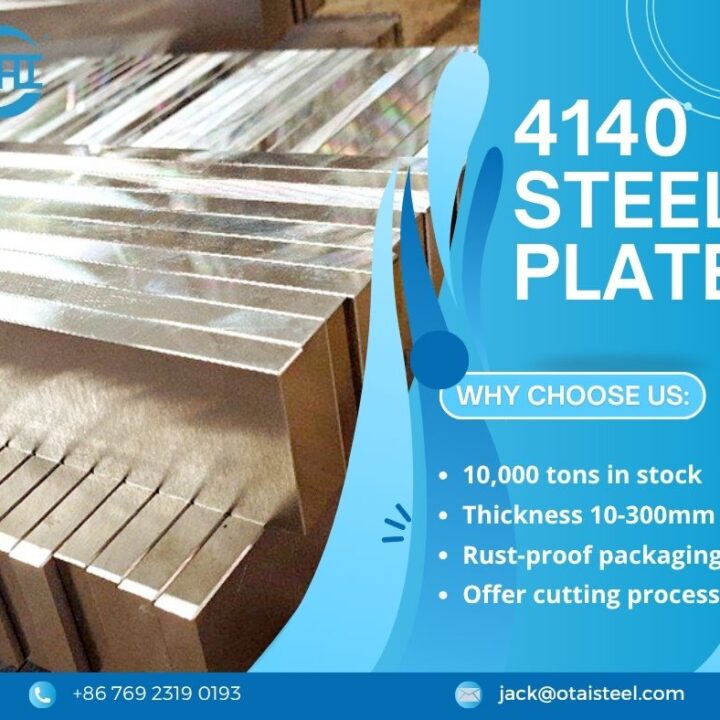
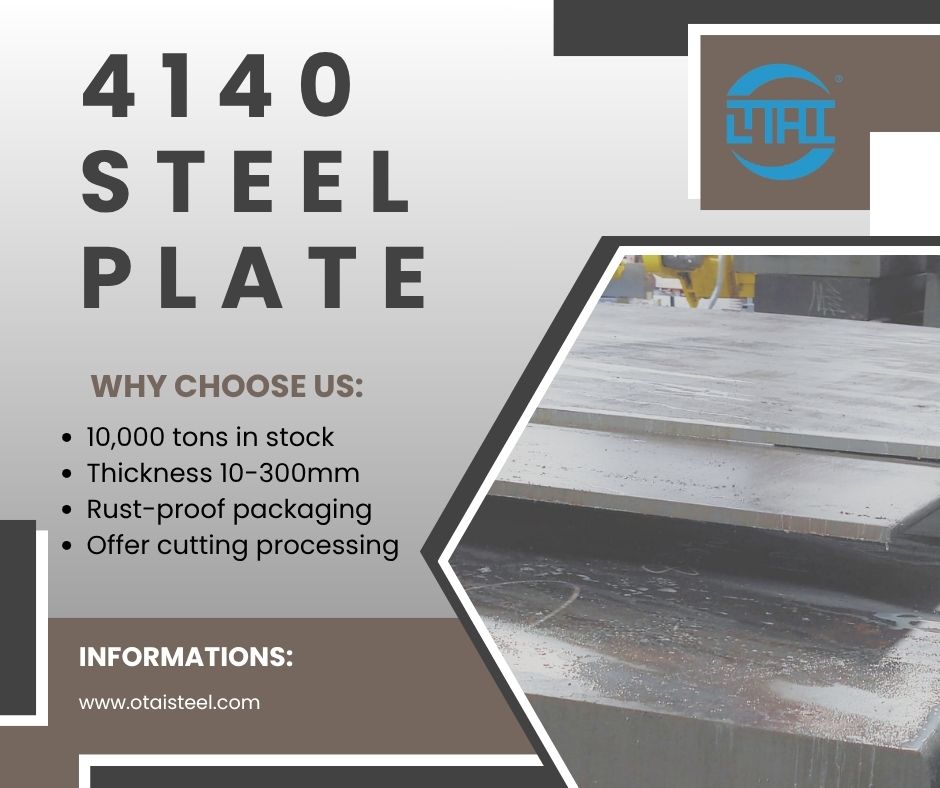
- Professional supplier of AISI 4140 alloy steel plates, bars, and forgings.
- More than 10,000 tons of inventory available year-round.
- Plate thickness range from 6 mm to 300 mm in stock.
- Custom cutting services according to customer drawings and dimensions.
- Heat treatment support including annealing, normalizing, quenching, and tempering.
- Ultrasonic testing (UT) available for internal quality verification.
- Chemical composition and mechanical property testing.
- Third-party inspection services including SGS.
- Stable export supply to global customers.
- Extensive experience serving major international industrial companies.
📌 FAQ
Q1: What type of steel is 4140?
A: 4140 is a chromium-molybdenum medium-carbon alloy steel known for its high strength and toughness.
Q2: Is 4140 steel heat treatable?
A: Yes. 4140 responds very well to quenching and tempering, allowing a wide range of hardness and strength levels.
Q3: What is the equivalent grade of 4140 steel?
A: Common equivalents include 42CrMo4 (EN/DIN), SCM440 (JIS), 42CrMo (GB), and 708M40 (BS).
Q4: What industries commonly use 4140 steel?
A: Oil and gas, mining, automotive, construction equipment, power generation, and general machinery manufacturing.
Q5: Why is 4140 preferred over carbon steel?
A: It provides better hardenability, strength, toughness, fatigue resistance, and wear resistance, making it suitable for demanding engineering applications.