 4140 Steel vs 5140: Composition, Strength, Hardness and Application Differences
📑 Table of Contents
🔍 1. What Are 4140 Steel and 5140 Steel?
📋 2. 4140 Steel vs 5140 Chemical Composition Comparison
⚙️ 3. Mechanical Properties Comparison of 4140 and 5140 Steel
🔥 4. Heat Treatment and Hardness Differences
📊 5. 4140 Steel vs 5140 Physical Properties Data Sheet
🛠️ 6. Machinability, Weldability and Manufacturing Performance
🏭 7. Applications: Which Steel Performs Better?
🔄 8. 4140 Steel vs 5140: How to Choose the Right Grade?
🔍 1. What Are 4140 Steel and 5140 Steel?
4140 steel and 5140 steel are both chromium alloy steels widely used in mechanical engineering applications. They offer good strength, hardness, and wear resistance after heat treatment.
However, the comparison of 4140 steel vs 5140 shows important differences in alloy composition, mechanical performance, toughness, and suitable applications.
4140 steel is a chromium-molybdenum alloy steel containing both chromium and molybdenum. This combination provides excellent strength, toughness, fatigue resistance, and hardenability. It is commonly selected for high-stress components such as shafts, gears, bolts, and heavy machinery parts.
5140 steel is a chromium alloy steel mainly containing chromium as the major alloying element. It provides good strength and hardness after heat treatment while offering a more economical solution for general mechanical applications.
| Feature | 4140 Steel | 5140 Steel |
|---|---|---|
| Steel Type | Chromium-molybdenum alloy steel | Chromium alloy steel |
| Main Alloy Elements | Chromium + molybdenum | Chromium |
| Strength Level | Higher | Medium to high |
| Toughness | Excellent | Good |
| Hardenability | Very good | Good |
| Typical Uses | Heavy-duty machinery and high-stress parts | General automotive and mechanical components |
The biggest difference between these two materials is molybdenum. In 4140 steel, molybdenum improves hardenability, high-temperature strength, and resistance to softening during operation.
5140 steel provides reliable performance for many applications, but 4140 is usually preferred when components require higher strength, better fatigue resistance, and more demanding service conditions.
Understanding these differences helps engineers select the correct grade instead of choosing materials only based on hardness or price.
📋 2. 4140 Steel vs 5140 Chemical Composition Comparison
Chemical composition determines the final properties of alloy steel. The different alloying elements in 4140 and 5140 directly influence strength, toughness, hardenability, and heat treatment response.
The following table shows the typical 4140 steel vs 5140 chemical composition.
| Element | 4140 Steel (%) | 5140 Steel (%) |
|---|---|---|
| Carbon (C) | 0.38–0.43 | 0.38–0.43 |
| Silicon (Si) | 0.15–0.35 | 0.15–0.35 |
| Manganese (Mn) | 0.75–1.00 | 0.70–0.90 |
| Chromium (Cr) | 0.80–1.10 | 0.70–1.00 |
| Molybdenum (Mo) | 0.15–0.25 | None |
| Phosphorus (P) | ≤0.035 | ≤0.035 |
| Sulfur (S) | ≤0.040 | ≤0.040 |
Molybdenum Advantage in 4140 Steel
The main chemical difference between 4140 and 5140 is molybdenum content.
Molybdenum improves the steel’s hardenability and allows deeper hardness penetration during heat treatment. It also improves resistance to tempering effects when the material works under elevated temperatures.
This is why AISI 4140 alloy steel properties are generally superior for high-load applications compared with standard chromium steel grades.
Chromium Role in Both Steels
Chromium improves hardness, wear resistance, and corrosion resistance. Both 4140 and 5140 contain chromium, which allows them to achieve good mechanical properties after quenching and tempering.
However, the additional molybdenum in 4140 provides a stronger overall performance balance.
⚙️ 3. Mechanical Properties Comparison of 4140 and 5140 Steel
Mechanical properties are the key factors when engineers compare alloy steels for real-world applications. Both 4140 and 5140 can achieve high strength after heat treatment, but 4140 usually provides better overall performance.
| Property | 4140 Steel | 5140 Steel |
|---|---|---|
| Tensile Strength | Approx. 850–1000 MPa | Approx. 750–950 MPa |
| Yield Strength | Approx. 650–850 MPa | Approx. 550–750 MPa |
| Hardness | Approx. 197–300 HB depending on condition | Approx. 180–280 HB depending on condition |
| Toughness | Excellent impact resistance | Good impact resistance |
| Fatigue Resistance | Excellent | Good |
| Wear Resistance | Very good | Good |
Strength Difference Between 4140 and 5140
4140 generally provides higher strength because molybdenum improves the steel structure after heat treatment. It maintains strength better under heavy loads and repeated stress.
Toughness Difference
For components exposed to impact loading, 4140 offers better toughness and fatigue resistance. This makes it suitable for demanding mechanical systems where unexpected loads may occur.
The 4140 and 5140 hardness comparison shows that both steels can achieve similar hardness ranges, but 4140 provides better overall mechanical balance.
🔥 4. Heat Treatment and Hardness Differences
Heat treatment is an important process that determines the final strength, hardness, toughness, and wear resistance of alloy steels. Both 4140 and 5140 respond well to quenching and tempering, but 4140 usually provides better hardening performance.
The main difference comes from molybdenum in 4140 steel. Molybdenum improves hardenability and allows the steel to achieve a more uniform hardness throughout thicker sections.
5140 steel can also achieve good hardness after heat treatment, but its hardening depth and resistance to temper softening are generally lower compared with 4140.
| Heat Treatment Process | 4140 Steel | 5140 Steel |
|---|---|---|
| Normalizing Temperature | Approx. 870–900°C | Approx. 850–900°C |
| Quenching Temperature | Approx. 830–870°C | Approx. 820–860°C |
| Tempering Temperature | Approx. 540–680°C | Approx. 500–650°C |
| Hardening Ability | Excellent | Good |
| Resistance to Tempering | Higher | Medium |
4140 Steel Heat Treatment Performance
4140 steel is widely used in quenched and tempered conditions because it provides an excellent combination of strength and toughness.
After heat treatment, 4140 maintains reliable mechanical performance even when components experience high stress, impact loads, and repeated cycles.
5140 Steel Heat Treatment Performance
5140 steel also achieves good strength after quenching and tempering. It is suitable for applications that require moderate strength and wear resistance without extremely demanding service conditions.
The difference between 4140 vs 5140 heat treatment mainly appears in hardenability, section size performance, and long-term load resistance.
📊 5. 4140 Steel vs 5140 Physical Properties Data Sheet
Physical properties affect machining behavior, thermal performance, dimensional stability, and component reliability. Since 4140 and 5140 have similar alloy structures, many physical properties are close, but performance differences appear during practical use.
| Physical Property | 4140 Steel | 5140 Steel |
|---|---|---|
| Density | Approx. 7.85 g/cm³ | Approx. 7.85 g/cm³ |
| Thermal Conductivity | Approx. 42–45 W/m·K | Approx. 40–45 W/m·K |
| Elastic Modulus | Approx. 205 GPa | Approx. 205 GPa |
| Thermal Expansion Coefficient | Approx. 12 ×10⁻⁶ /°C | Approx. 12 ×10⁻⁶ /°C |
| Melting Temperature | Approx. 1416°C | Approx. 1420°C |
| Specific Heat Capacity | Approx. 460 J/kg·K | Approx. 460 J/kg·K |
Thermal Performance Difference
The thermal conductivity difference between 4140 and 5140 is relatively small. However, 4140 performs better when components operate under higher mechanical stress and temperature changes.
The molybdenum addition in 4140 helps maintain strength after exposure to elevated temperatures, which is valuable for heavy-duty applications.
Therefore, engineers usually evaluate thermal properties together with strength requirements rather than considering thermal conductivity alone.
🛠️ 6. Machinability, Weldability and Manufacturing Performance
Manufacturing performance is another important factor when choosing between 4140 and 5140 steel. The best material depends on machining requirements, welding conditions, and final component performance.
| Factor | 4140 Steel | 5140 Steel |
|---|---|---|
| Machinability Before Heat Treatment | Good | Good |
| Machinability After Hardening | Difficult | Difficult |
| Weldability | Requires preheating and control | Better than 4140 |
| Forming Performance | Good | Good |
| Surface Treatment Compatibility | Excellent | Good |
4140 Machining Characteristics
4140 provides excellent mechanical performance but requires proper machining parameters because of its higher strength level.
Before heat treatment, 4140 can be machined effectively. After hardening, grinding or special cutting tools are usually required.
5140 Machining Characteristics
5140 has similar machining behavior but may provide slightly easier processing because of its simpler alloy system.
For general mechanical parts where extreme strength is not required, 5140 can provide a cost-effective solution.
The choice depends on whether the priority is maximum performance or manufacturing economy.
🏭 7. Applications: Which Steel Performs Better?
The application environment determines whether 4140 or 5140 is the better choice. Both materials are widely used in mechanical engineering, but 4140 is normally selected for more demanding applications.
| Application | 4140 Steel | 5140 Steel |
|---|---|---|
| Automotive Shafts | Excellent | Good |
| Gears | Suitable | Suitable |
| Heavy Machinery Parts | Excellent | Moderate |
| Bolts and Fasteners | Widely used | Common use |
| Industrial Components | High-load applications | General mechanical applications |
4140 Steel Applications
4140 steel is commonly used for:
- Heavy-duty shafts
- Gears and transmission components
- Hydraulic parts
- High-strength bolts
- Oil and gas equipment components
- Industrial machinery parts
Its excellent fatigue resistance and toughness make it suitable for components exposed to repeated stress.
5140 Steel Applications
5140 steel is commonly used for:
- Automotive components
- Axles
- Shafts
- General machinery parts
- Structural mechanical components
It provides reliable strength for applications where extreme performance is not necessary.
🔄 8. 4140 Steel vs 5140: How to Choose the Right Grade?
Choosing between 4140 and 5140 depends on strength requirements, working conditions, component size, and service life expectations.
| Requirement | Recommended Steel | Reason |
|---|---|---|
| High-load mechanical parts | 4140 | Higher strength and toughness |
| General automotive components | 5140 | Good performance and economy |
| Large-section components | 4140 | Better hardenability |
| Heavy impact conditions | 4140 | Better fatigue resistance |
| Cost-sensitive applications | 5140 | Suitable mechanical performance |
In simple terms, 4140 is the better choice when strength, toughness, and long service life are the priority. 5140 is a practical option for applications requiring good performance with a more economical alloy design.
The comparison of 4140 steel vs 5140 shows that both grades have their own advantages. The correct selection should always match the actual working conditions.
📦 9. Otai Special Steel Advantages
Otai Special Steel is a professional supplier specializing in 4140 alloy steel, chromium-molybdenum steel, alloy structural steel, and engineering materials. We provide reliable stock availability, customized processing services, and technical support for customers worldwide.
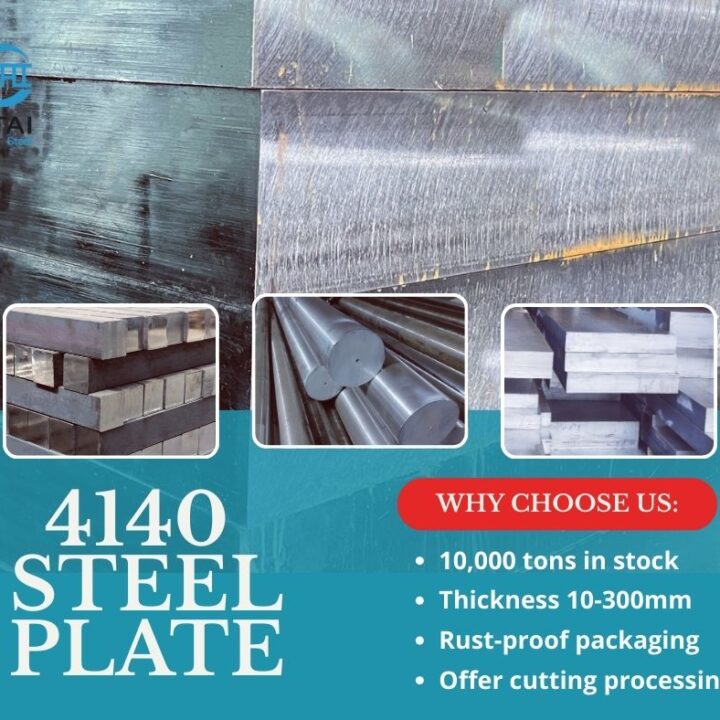
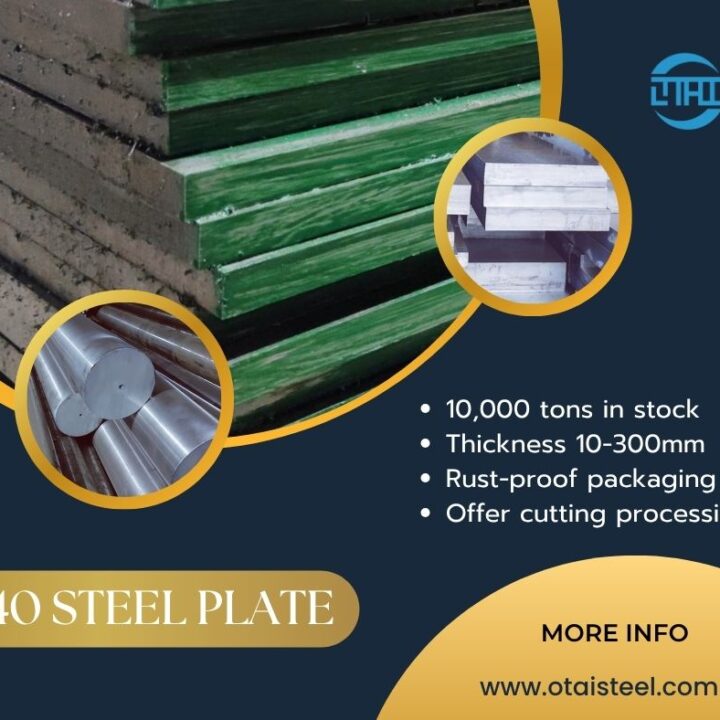
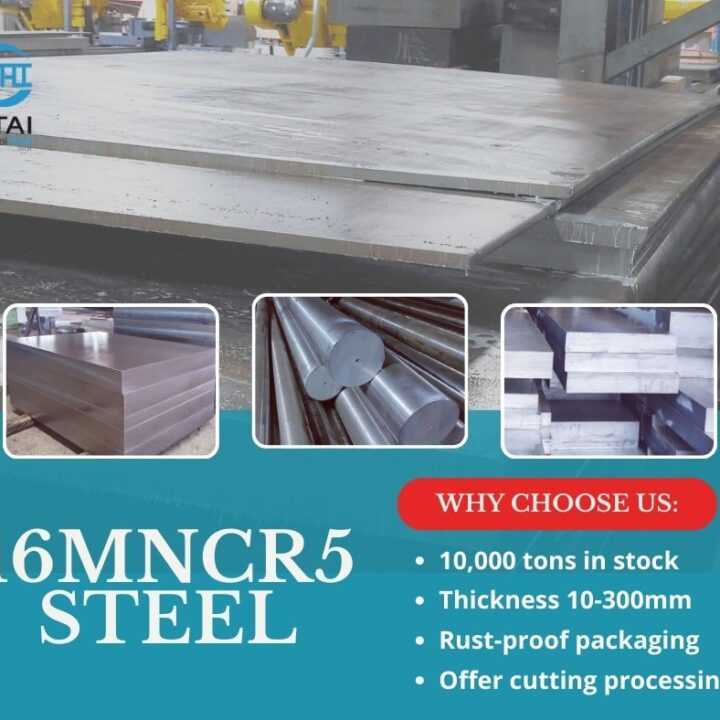
- 4140 steel round bar stock: Otai Special Steel provides 4140 steel round bars with diameters of 14–500mm available in stock for machining, forging, and industrial component manufacturing.
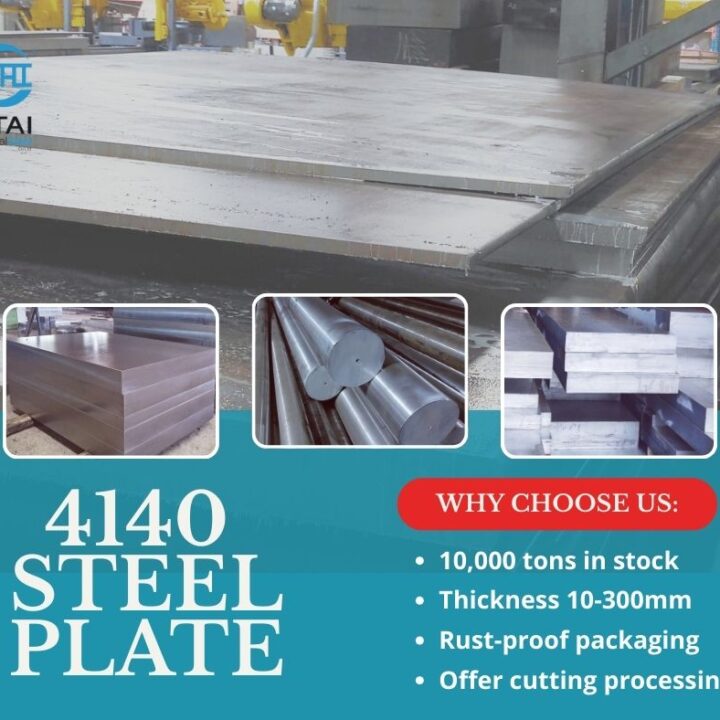
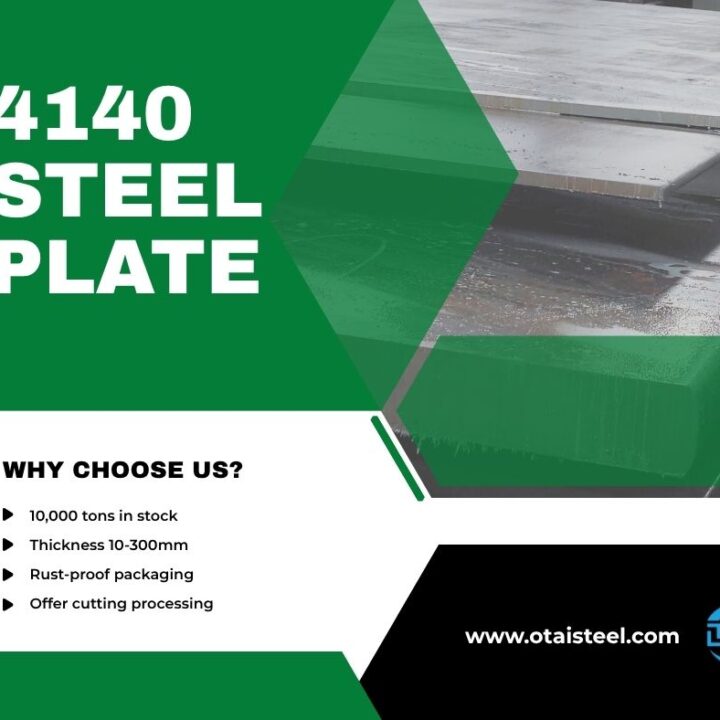
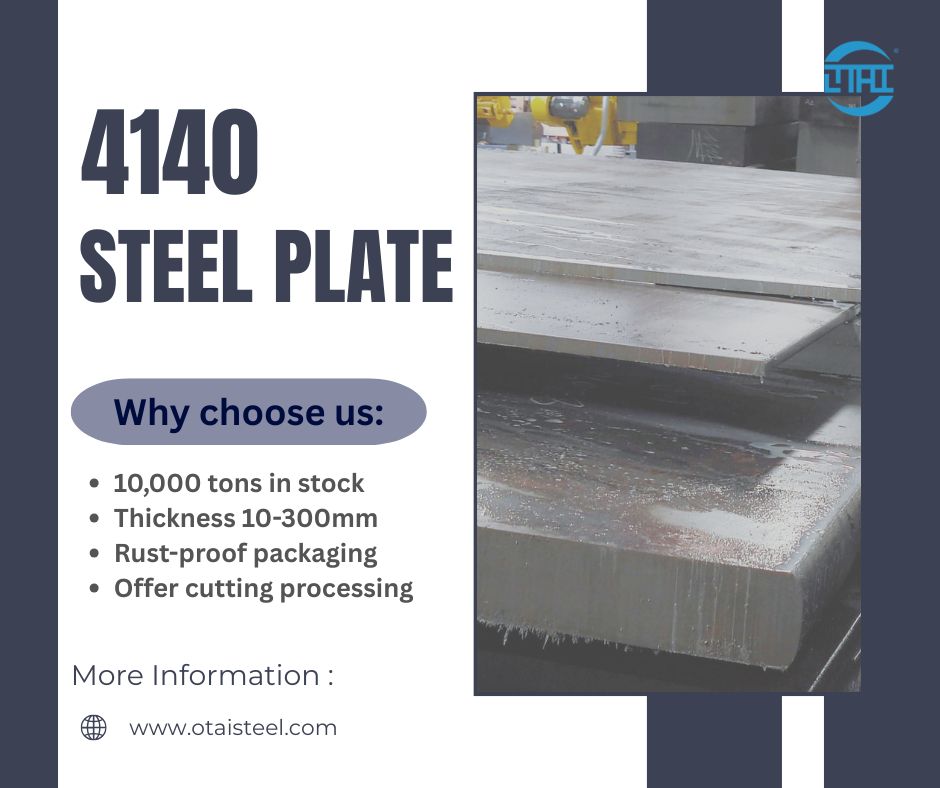
- 4140 steel plate stock: We supply 4140 steel plates with thicknesses of 13–200mm available in stock to meet different fabrication and heavy-duty application requirements.
- Stable material quality: We provide 4140 steel with controlled chemical composition, reliable mechanical properties, and complete quality documentation.
- Customized cutting service: Steel bars and plates can be processed according to customer drawings, dimensions, and production requirements.
- Heat treatment support: We provide technical assistance for quenching, tempering, normalizing, and other heat treatment processes.
- Professional inspection: Ultrasonic testing and third-party inspection services are available to ensure internal quality and material reliability.
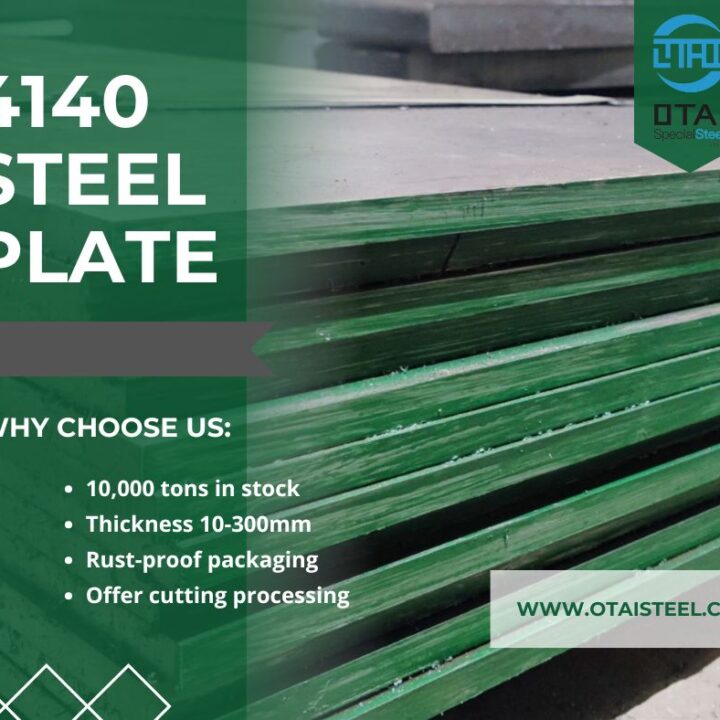
- Export packaging solutions: We provide anti-rust protection, steel strapping, and wooden box packaging for international transportation.
- Industry experience: Otai Special Steel has supplied alloy steel materials for automotive parts, machinery components, hydraulic equipment, and heavy engineering applications.
For customers comparing 4140 steel vs 5140, Otai Special Steel can provide technical data sheets, material certificates, inspection reports, and professional material selection recommendations.
Our team helps customers choose the correct steel grade according to strength requirements, heat treatment conditions, machining processes, and final applications.
❓ 10. FAQ About 4140 Steel vs 5140
1. What is the main difference between 4140 steel and 5140 steel?
The main difference is alloy composition. 4140 steel contains chromium and molybdenum, while 5140 steel mainly contains chromium. The molybdenum in 4140 improves hardenability, toughness, and high-stress performance.
2. Is 4140 steel stronger than 5140 steel?
Yes. In most heat-treated conditions, 4140 steel provides higher strength, better fatigue resistance, and improved toughness compared with 5140 steel. It is commonly selected for more demanding applications.
3. Can 5140 steel replace 4140 steel?
In some general mechanical applications, 5140 can replace 4140. However, for heavy loads, large-section components, or parts requiring excellent fatigue resistance, 4140 is usually the better choice.
4. Which steel has better heat treatment performance, 4140 or 5140?
4140 generally has better heat treatment performance because molybdenum improves hardenability and resistance to temper softening. It can achieve more uniform hardness in thicker sections.
5. Does Otai Special Steel supply 4140 steel products?
Yes. Otai Special Steel supplies 4140 steel round bars with diameters of 14–500mm available in stock and 4140 steel plates with thicknesses of 13–200mm available in stock. We also provide cutting service, heat treatment support, ultrasonic testing, third-party inspection, and export packaging.