4130 Steel Machining: Is Annealed Steel Easier to Machine?
📑 Table of Contents
- 🔍 Why Does Delivery Condition Matter When Machining 4130 Steel?
- ⚙️ Is Annealed 4130 Steel Easier to Machine?
- 📊 Annealed vs Normalized vs Quenched and Tempered 4130
- 🔧 How Does Hardness Affect Cutting Performance and Tool Wear?
- 🛠️ Which Machining Operations Benefit from Annealed 4130?
- 🌡️ How Does Heat Treatment Change Machining Requirements?
- 📏 How Should Manufacturers Control Dimensions and Surface Finish?
- 📋 What Should Buyers Specify When Purchasing 4130 Steel?
- 🏭 Company Advantages
- ❓ FAQ
4130 alloy steel is widely used for shafts, mechanical components, automotive parts, aircraft-related components, and welded structures. However, its machining performance depends on more than its chemical composition. The delivery condition, hardness, workpiece dimensions, cutting method, and final heat-treatment requirements all influence production efficiency.
For many machining operations, annealed 4130 steel is easier to machine than normalized or quenched and tempered material because its lower hardness generally reduces cutting resistance and tool wear. This makes annealed stock a practical starting point when a component requires substantial material removal before final heat treatment.
Nevertheless, annealed steel is not automatically the best purchasing choice for every component. Manufacturers must consider the final strength requirements, machining allowance, dimensional tolerances, and production sequence. This article explains how annealed 4130 behaves during machining and what buyers should evaluate before selecting the material condition.
🔍 Why Does Delivery Condition Matter When Machining 4130 Steel?
4130 chemistry does not tell the whole story
AISI 4130 is a chromium-molybdenum low-alloy steel. Its carbon content is typically around 0.30%, while chromium and molybdenum contribute to hardenability and strength after suitable heat treatment. These alloying elements make 4130 useful for components that need a combination of strength, toughness, and weldability.
However, two pieces of 4130 steel with similar chemical compositions may behave differently during machining. Their previous processing and heat-treatment conditions can produce different hardness levels and microstructures. Consequently, a machinist should not select cutting parameters based on the grade designation alone.
Delivery condition changes the machining workload
Suppliers may offer 4130 in annealed, normalized, hot-rolled, or quenched and tempered conditions, depending on the product form and applicable specification. Each condition has different characteristics.
For example, annealed material generally offers lower hardness and better machinability for operations that remove a large amount of material. By contrast, quenched and tempered material provides higher strength but may require more conservative cutting conditions and stronger tooling.
| Material factor | Machining influence | Buyer consideration |
|---|---|---|
| Hardness | Affects cutting resistance and tool wear | Confirm the required hardness range |
| Microstructure | Influences chip formation and cutting consistency | Specify the delivery condition |
| Section size | Can affect heat treatment uniformity and machining stability | Provide the finished component dimensions |
| Final heat treatment | May change hardness and dimensions after rough machining | Plan machining allowances in advance |
Therefore, procurement teams should communicate the intended machining and heat-treatment sequence before placing an order. A suitable delivery condition can reduce unnecessary machining time and help manufacturers control the final component quality.
⚙️ Is Annealed 4130 Steel Easier to Machine?
Why annealed material is a practical machining choice
Yes. Annealed 4130 is generally easier to machine than the same grade supplied in a harder quenched and tempered condition. Annealing softens the steel and changes its microstructure, making it more suitable for conventional turning, milling, drilling, boring, and other material-removal operations.
When a manufacturer needs to remove substantial material, the lower hardness of annealed stock can offer several advantages:
- Lower cutting resistance: The cutting tool generally needs less force to remove material than it would when machining harder 4130.
- Reduced tool wear: Under comparable cutting conditions, lower hardness can help extend tool life.
- More flexible machining: Conventional carbide tooling and suitable high-speed steel tools can handle many operations.
- Better preparation for heat treatment: Manufacturers can complete most rough machining before hardening the component.
- Potentially lower production costs: Easier material removal can reduce machining time and tooling consumption.
Does annealed mean effortless machining?
No. 4130 remains an alloy steel rather than a free-machining carbon steel. Its alloy content, toughness, and actual material condition still influence cutting behavior. Operators must select suitable tools, feeds, speeds, and coolant arrangements.
In addition, annealed material can produce continuous chips. Poor chip control may cause chips to wrap around the workpiece or cutting tool, damage the finished surface, and interrupt production. A suitable chip-breaker geometry and consistent feed help address this problem.
Machinists should also avoid assuming that every annealed 4130 product has the same hardness. Product form, section size, heat-treatment practice, and specification requirements can produce different results. Buyers should request the actual material test certificate (MTC) and confirm the relevant hardness or mechanical-property requirements.
When should buyers choose annealed stock?
Annealed 4130 is worth considering when the manufacturing process involves deep drilling, substantial turning, complex milling, or significant stock removal before a later heat-treatment operation. It is also a practical option when a manufacturer wants to machine the component close to its required geometry before final hardening.
However, if the finished component must retain a specified pre-hardened strength level and requires little machining, another delivery condition may be more suitable. The correct choice depends on the final engineering requirements rather than machinability alone.
📊 Annealed vs Normalized vs Quenched and Tempered 4130
How do the three conditions compare?
Annealed, normalized, and quenched and tempered 4130 are not interchangeable purchasing conditions. Although they share the same basic grade designation, their hardness, strength, and machining characteristics can differ considerably.
| Condition | General characteristics | Machining suitability | Typical production role |
|---|---|---|---|
| Annealed | Softer condition with relatively low hardness | Generally the easiest of these three to machine | Rough machining and substantial stock removal |
| Normalized | Air-cooled structure with a different strength and hardness balance | Usually machinable with suitable tooling | General fabrication and machining |
| Quenched and tempered | Higher strength and hardness, depending on the tempering condition | More demanding, especially at higher hardness | Components requiring specified strength and toughness |
Why hardness values need context
Reference data for 4130 often show annealed material around the mid-150 HB range, while normalized products may be harder. Quenched and tempered material can cover a much wider hardness range because the tempering temperature and target mechanical properties determine the final condition.
These figures are illustrative rather than universal acceptance limits. Actual hardness depends on the product specification, section size, heat-treatment process, and testing requirements. A buyer should not use a general online hardness value as a substitute for the supplier’s MTC or an agreed purchase specification.
Which condition should a manufacturer select?
For components requiring extensive machining before heat treatment, annealed 4130 is often a sensible starting point. Normalized material may suit general-purpose machining where the specified properties and available stock condition align with the production plan.
Quenched and tempered 4130 may be appropriate when the component requires a defined strength level at delivery. Nevertheless, machining a harder workpiece can increase cutting forces, tool wear, and production time. Manufacturers should compare the cost of machining in the supplied condition with the cost and risks of machining before final heat treatment.
The best decision balances machining efficiency with the final component’s mechanical requirements. A lower purchase price does not necessarily mean a lower finished-part cost if the material condition creates additional machining or finishing work.
🔧 How Does Hardness Affect Cutting Performance and Tool Wear?
Hardness and cutting resistance
Hardness is one of the most important factors affecting 4130 machining. As hardness increases, the cutting edge generally encounters greater resistance. Cutting forces and heat generation may also rise, depending on the cutting method and tool geometry.
For this reason, annealed 4130 usually allows more flexible machining conditions than a higher-hardness quenched and tempered product. However, hardness alone does not determine machinability. Microstructure, tool material, machine rigidity, workholding, and cutting parameters also matter.
How can manufacturers reduce tool wear?
Tool selection should match the operation and material condition. Coated carbide inserts are commonly used for production turning and milling. High-speed steel tools may also work for suitable drilling, tapping, or lower-volume operations when the cutting conditions allow.
Manufacturers can improve tool life through several practical measures:
- Use a cutting grade and edge geometry designed for alloy steel.
- Keep the tool overhang as short as practical to improve rigidity.
- Secure the workpiece firmly and minimize vibration.
- Maintain a consistent feed instead of allowing the tool to rub against the surface.
- Use suitable coolant or lubrication when the operation and tooling require it.
- Inspect cutting edges regularly and replace worn tools before they damage the workpiece.
How should cutting parameters be established?
There is no single cutting-speed or feed-rate setting that suits every 4130 machining operation. A suitable starting point depends on the actual hardness, tool manufacturer’s recommendations, insert grade, workpiece diameter, machine power, and cutting stability.
| Machining situation | Potential problem | Practical response |
|---|---|---|
| High cutting speed | Excessive cutting temperature and faster tool wear | Adjust speed to the insert and actual hardness |
| Very low feed | Rubbing, poor chip formation, and unnecessary heat | Maintain a suitable feed for the tool geometry |
| Weak workholding | Vibration, chatter, and inconsistent surface finish | Improve clamping and reduce tool overhang |
| Poor chip evacuation | Chip entanglement and surface damage | Use suitable chip-breakers and coolant delivery |
Manufacturers should run a controlled trial when changing material suppliers, delivery conditions, or cutting tools. Recording tool life, cycle time, surface finish, and dimensional results provides a more reliable basis for production decisions than relying on a general machinability rating.
🛠️ Which Machining Operations Benefit from Annealed 4130?
Turning and facing
Turning is common when producing shafts, pins, bushings, and cylindrical mechanical components. Annealed 4130 can make rough turning more manageable because the cutting tool removes material from a relatively softer workpiece.
During turning, operators should pay attention to chip formation, tool rigidity, and workpiece support. Long shafts may require additional support to prevent deflection. In addition, roughing and finishing passes should use suitable cutting conditions rather than relying on one setting for every stage.
Milling and drilling
Annealed material is also useful for milling pockets, slots, flat surfaces, and irregular profiles. A stable fixture and suitable carbide tooling help maintain dimensional consistency. For drilling, the correct drill geometry, feed, and coolant arrangement help control heat and remove chips from the hole.
Deep-hole drilling requires particular attention. If chips cannot leave the hole efficiently, they may damage the cutting edge or the internal surface. Manufacturers should choose a drilling method based on the hole diameter, depth, tolerance, and available machine capability.
Boring, threading, and finishing
Boring operations can bring internal diameters closer to their required dimensions after drilling or rough machining. Threading may use taps, thread mills, or single-point tools depending on the thread size, material condition, and production volume.
For precision components, manufacturers should separate rough machining from final finishing. This approach gives them an opportunity to remove material efficiently first, then correct dimensions after any required heat treatment or stress-relief operation.
| Operation | Why annealed 4130 can help | Important control |
|---|---|---|
| Turning | Facilitates substantial material removal | Chip control and shaft support |
| Milling | Supports machining of slots and complex profiles | Fixture rigidity and tool engagement |
| Drilling | Can reduce cutting resistance compared with harder conditions | Hole depth and chip evacuation |
| Boring | Allows internal dimensions to be refined | Tool deflection and bore accuracy |
| Threading | Can make thread cutting easier than in harder material | Thread tolerance and tool selection |
Ultimately, annealed 4130 is particularly useful when a component requires several machining stages. Manufacturers should still confirm the final material condition and inspect the finished features against the engineering drawing.
🌡️ How Does Heat Treatment Change Machining Requirements?
Rough machining before heat treatment
For many high-strength 4130 components, manufacturers perform most material removal while the steel is annealed or supplied in another relatively machinable condition. They then carry out the specified heat-treatment process to achieve the required mechanical properties.
This sequence can reduce the amount of cutting performed on harder material. It also allows manufacturers to prepare the component geometry before hardening. However, they should not machine every surface to its final dimension at this stage.
Why should manufacturers leave machining allowance?
Quenching and tempering can cause dimensional changes, distortion, and residual stresses. The extent depends on the component geometry, section thickness, material condition, heating and cooling practice, and fixture arrangement.
Therefore, manufacturers commonly leave an appropriate machining allowance on critical surfaces. After heat treatment, they can perform finish turning, grinding, or other precision operations to achieve the required dimensions and surface quality.
Finish machining after heat treatment
When the final hardness is higher than the initial machining condition, cutting tools may wear more quickly. Manufacturers should select tooling specifically for the resulting hardness and consider grinding where the tolerance or surface-finish requirement makes conventional cutting unsuitable.
Not every component needs the same sequence. Some parts require only rough machining before heat treatment, while others need semi-finishing and final grinding afterward. The engineering drawing and heat-treatment specification should determine the sequence.
| Production stage | Main objective | Key consideration |
|---|---|---|
| Material preparation | Select the correct 4130 grade, size, and condition | Verify MTC and incoming dimensions |
| Rough machining | Remove most excess material | Leave allowance on critical surfaces |
| Heat treatment | Achieve specified strength and hardness | Control distortion and verify properties |
| Finish machining | Meet final dimensions and surface requirements | Select suitable cutting or grinding methods |
| Final inspection | Confirm component conformity | Check dimensions, hardness, and surface quality |
Buyers should discuss this sequence with the machining and heat-treatment teams before selecting the raw material condition. Doing so helps prevent an avoidable situation in which the supplier delivers material that meets its grade designation but does not fit the manufacturer’s planned production route.
📏 How Should Manufacturers Control Dimensions and Surface Finish?
Start with the correct machining allowance
Machining allowance is the extra material left on a workpiece so that the manufacturer can remove it during later operations. For 4130 components that require heat treatment, the allowance should account for the expected dimensional changes and the amount of material needed for final finishing.
Manufacturers should not apply one universal allowance to every component. A short, symmetrical part may behave differently from a long shaft, a thin-walled component, or a part with uneven material distribution. Geometry and heat-treatment practice both influence distortion.
Control workholding and cutting stability
Even annealed 4130 can produce poor dimensional results if the workpiece moves or vibrates during machining. Long shafts may bend under cutting forces, while thin sections may deform under excessive clamping pressure.
To improve stability, manufacturers can use suitable supports, fixtures, and machining sequences. They should also avoid removing large amounts of material from only one side of a component when an unbalanced machining sequence could increase distortion.
Surface finish and inspection
Surface finish depends on tool geometry, feed rate, cutting speed, machine rigidity, vibration, and the condition of the cutting edge. A component may meet its dimensional requirements but still fail a surface-finish specification if the machining process produces chatter marks or tool marks.
For this reason, buyers should define critical surface requirements clearly. If a drawing specifies a particular roughness value, the manufacturer should agree on the measurement method and inspection locations before production.
- Confirm finished dimensions and tolerances for critical features.
- Identify surfaces that require grinding or another finishing process.
- Specify hardness testing locations when heat treatment is required.
- Check straightness, roundness, flatness, and concentricity where relevant.
- Agree on inspection records and acceptance criteria before production.
Clear requirements help suppliers, machining shops, and inspection teams work toward the same finished-part expectations. They also reduce the risk of disputes caused by unclear tolerances or unspecified surface conditions.
📋 What Should Buyers Specify When Purchasing 4130 Steel?
Define the grade and applicable standard
When requesting a quotation, buyers should identify AISI/SAE 4130 and the applicable product specification. The grade name alone may not fully define the required quality, product form, delivery condition, or testing requirements.
For international purchasing, the buyer should also confirm whether the order requires a particular ASTM, AMS, or other recognized specification. Similar grade designations do not automatically mean that every product standard or acceptance requirement is identical.
Specify the condition and machining purpose
If the component requires extensive machining, buyers should state whether annealed material is required. They should also explain whether the steel will undergo subsequent quenching and tempering, stress relief, welding, or another manufacturing process.
This information helps the supplier assess the requested material condition and determine whether the available product meets the intended use. If the buyer has a specific hardness range, it should appear in the purchase specification rather than remain an informal expectation.
Provide complete dimensions and inspection requirements
Buyers should provide the product form, thickness or diameter, width, length, quantity, and cutting tolerances. For plate orders, specify whether the supplier should deliver standard-size plates or cut pieces. If the machining shop needs a particular surface condition, include that requirement as well.
| RFQ item | Information to provide | Why it matters |
|---|---|---|
| Grade and standard | AISI/SAE 4130 and required specification | Establishes material and quality requirements |
| Delivery condition | Annealed, normalized, or another agreed condition | Influences machining and mechanical properties |
| Dimensions | Thickness, width, length, or diameter | Determines material suitability and cutting plan |
| Hardness | Required range and testing method, if applicable | Helps verify the specified delivery condition |
| Documentation | MTC, traceability, and agreed inspection records | Supports material verification and quality control |
| Processing | Cutting, machining, heat treatment, or grinding needs | Clarifies the supplier’s service scope |
Compare the total production cost, not only the steel price
A lower material price may not produce the lowest finished-component cost. Buyers should consider machining time, tool consumption, material yield, heat-treatment costs, finishing requirements, inspection, and delivery.
For example, annealed 4130 may cost more than another available delivery condition in a particular quotation, but its easier machining could offset part of that difference when the component requires substantial material removal. Conversely, a component needing minimal machining may benefit from a different supply condition.
When buyers share their drawings, required condition, and intended production sequence, suppliers can provide a more relevant quotation and help identify potential material or processing issues before production begins.
🏭 Company Advantages
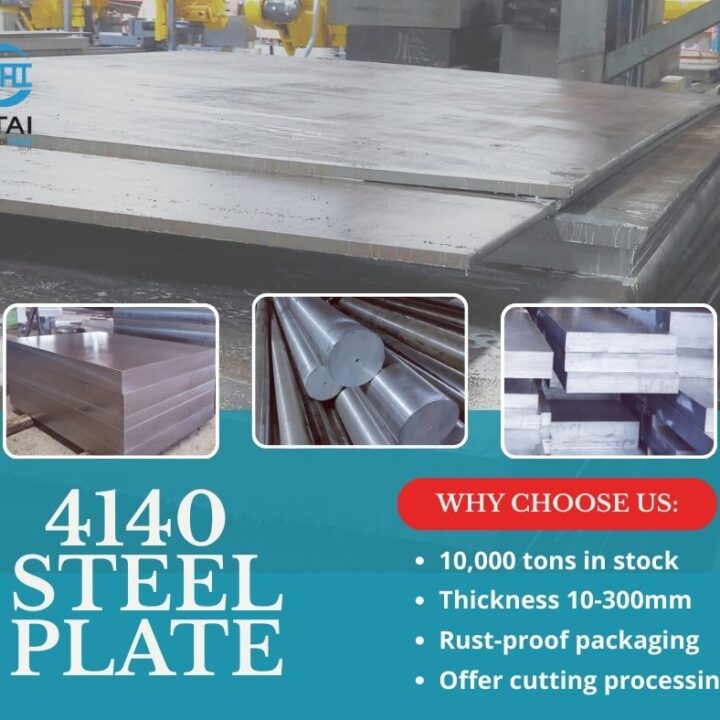
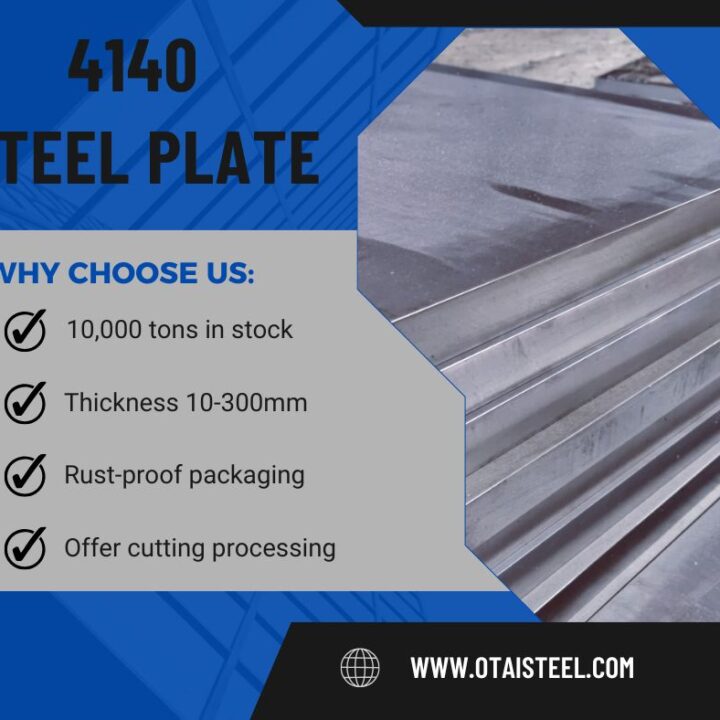
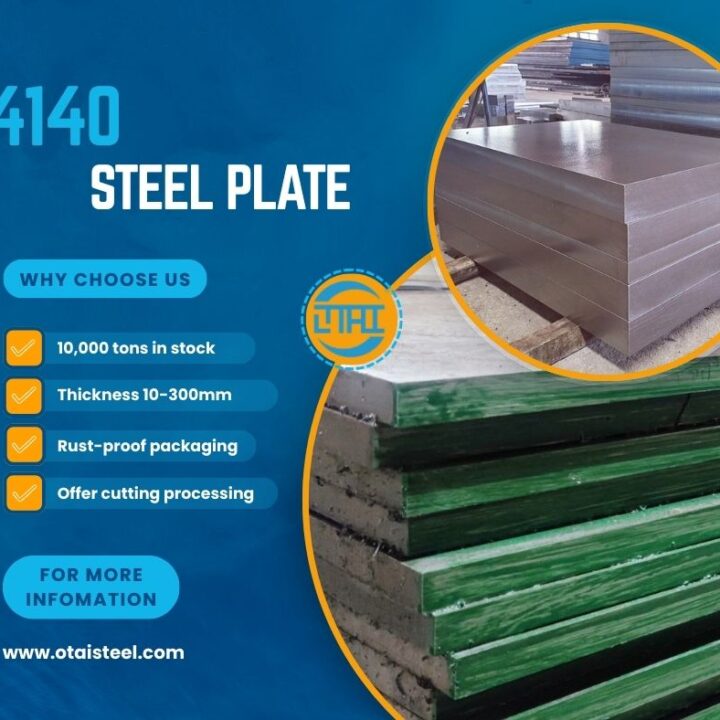
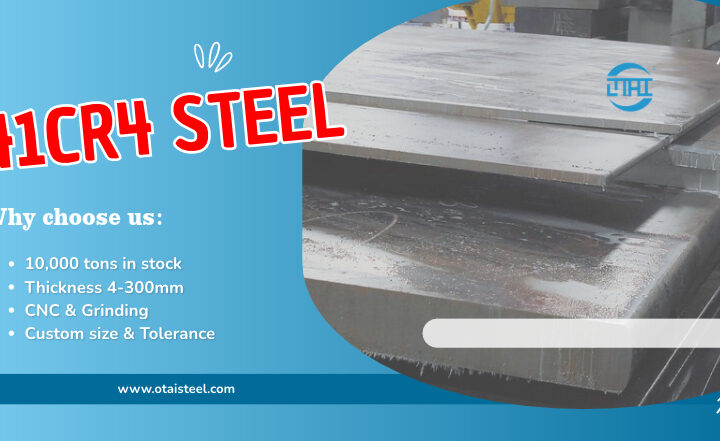
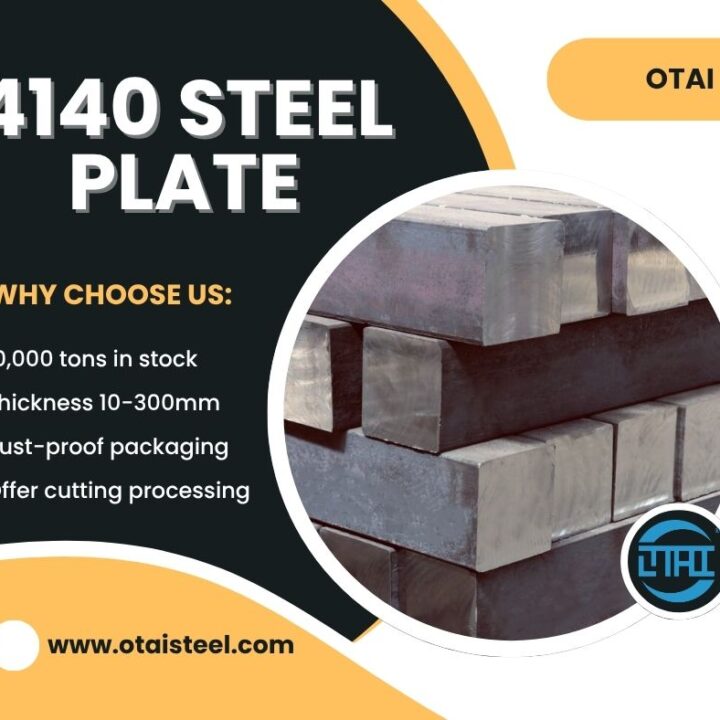
- 4130 steel plate stock: Thickness range of 10–70 mm, subject to current inventory confirmation.
- Large overall inventory: More than 10,000 tons of steel stock across the company’s product range.
- Cutting capacity: 20 saw cutting machines support material cutting and order preparation.
- Machining services: CNC machining and grinding are available to support customer-specific size and tolerance requirements.
- One-stop service: Material supply, cutting, machining coordination, inspection support, and export packaging.
- Quality support: Material testing, ultrasonic testing where required, and third-party inspection coordination.
- Export experience: Supplying international customers in more than 54 countries since 1999.
- Export packaging: Anti-rust protection, strapping, bundling, and wooden-case packaging according to order requirements.
For buyers sourcing 4130 steel plate for machining, OTAI can support material selection, size confirmation, cutting, and related processing requirements. Visit the 4130 steel product page to review the product information and discuss your required dimensions and delivery condition.
Because inventory and processing requirements can change, buyers should confirm the current stock, material condition, and available services before placing an order.
❓ FAQ
1. Is annealed 4130 steel easy to machine?
Yes. Annealed 4130 is generally easier to machine than harder normalized or quenched and tempered conditions. Its relatively low hardness makes turning, milling, drilling, and other conventional machining operations more manageable. Actual performance still depends on material hardness, tooling, machine rigidity, and cutting parameters.
2. What is the difference between annealed and normalized 4130 steel?
Annealed 4130 is generally softer and offers better machinability for substantial material removal. Normalized 4130 has undergone heating followed by air cooling, producing a different microstructure and mechanical-property balance. The appropriate condition depends on the component’s machining needs and final performance requirements.
3. Can 4130 steel be machined after quenching and tempering?
Yes, but machining becomes more demanding as hardness increases. Manufacturers may need suitable carbide tooling, adjusted cutting parameters, and stronger workholding. For close tolerances or demanding surface finishes, grinding may be more appropriate for final finishing.
4. Should 4130 steel be machined before or after heat treatment?
For many components, manufacturers perform rough machining before heat treatment and leave suitable machining allowance on critical surfaces. After quenching and tempering, they complete final machining or grinding to achieve the required dimensions. The exact sequence depends on component geometry, hardness, and tolerance requirements.
5. What should buyers check when ordering 4130 steel for machining?
Buyers should confirm the grade, applicable standard, delivery condition, dimensions, hardness requirements, MTC, and inspection criteria. They should also tell the supplier whether the component will undergo further heat treatment and provide any cutting or machining requirements. These details help ensure that the supplied material matches the planned manufacturing process.