4130 Steel Flat Bar: What Buyers Should Confirm Before Ordering
📑 Table of Contents
- 🔍 1. What Should You Confirm When Buying 4130 Steel Flat Bar?
- 🧪 2. Is 4130 the Right Grade for Your Flat Bar Requirement?
- 📋 3. 4130 Chemical Composition: What Should Appear on the MTC?
- ⚙️ 4. Which 4130 Mechanical Properties Should You Specify?
- 🔥 5. Do You Need Annealed, Normalized or QT 4130?
- 📏 6. 4130 Flat Bar Dimensions: Stock Size vs Your Required Size
- ✂️ 7. Can 4130 Plate Be Cut into Flat Bar?
- 🔄 8. 4130 vs 4140 Flat Bar: Which Should You Specify?
- 📦 9. What Should You Include in a 4130 Flat Bar RFQ?
- 🏢 10. 4130 Steel Supply and Processing from Otai Special Steel
- ❓ Frequently Asked Questions About 4130 Steel Flat Bar
🔍 1. What Should You Confirm When Buying 4130 Steel Flat Bar?
If you are sourcing 4130 steel flat bar, the grade name is only the starting point. A supplier can quote 4130 material, yet the product may still differ in dimensions, delivery condition, hardness, mechanical properties, tolerance, surface condition and certification.
That difference matters because your purchasing decision does not end when the material arrives. The flat bar still has to fit your machining process, welding procedure, heat-treatment plan and final component requirements. A lower material price may therefore lose its advantage if the supplied section requires substantial additional processing.
Start with five purchasing questions
| Question | Why it matters to the buyer |
|---|---|
| Is the grade and standard correct? | A grade name alone may not define every chemical and mechanical requirement. |
| What size do I actually need? | Stock dimensions, cut dimensions and final machined dimensions can be different. |
| What material condition do I need? | Annealed, normalized and quenched-and-tempered material can have very different properties. |
| Which documents are required? | MTCs, traceability and inspection reports may be essential for quality control. |
| Can the supplier provide the required form? | A supplier may hold suitable 4130 plate even when the exact flat-bar dimension is not a standard stock item. |
Therefore, a good RFQ should describe the material you need rather than simply repeat the keyword “4130 steel flat bar.” The more precisely you define the requirement, the easier it becomes to compare quotations from different suppliers.
For most industrial purchases, the key is to specify the final requirement before comparing price. Otherwise, two quotations that appear similar may actually cover different material conditions or processing levels.
🧪 2. Is 4130 the Right Grade for Your Flat Bar Requirement?
Before asking a supplier for a 4130 steel flat bar price, first confirm why your engineering team selected 4130. This grade is a chromium-molybdenum alloy steel that offers a useful combination of strength, toughness, hardenability and weldability.
Its relatively moderate carbon content also distinguishes it from higher-carbon alloy steels such as 4140. That difference can become important when your component requires welding or when the final hardness has a specific target.
When 4130 can make sense
- When the component needs more strength than ordinary carbon steel can provide.
- When the design benefits from a good strength-to-weight ratio.
- When the part may require subsequent heat treatment.
- When welding remains part of the manufacturing process.
- When the buyer needs a chromium-molybdenum alloy steel with established industrial use.
When you should reconsider the grade
If your drawing specifies a particular hardness, tensile strength or fatigue requirement, do not substitute 4130 simply because another supplier has it available. Likewise, if the application needs substantially higher hardenability or hardness, a different alloy grade may provide a more suitable starting point.
For example, 4140 contains more carbon than 4130 and generally offers greater hardness potential after suitable heat treatment. However, that does not make 4140 automatically preferable. The right choice depends on the component’s actual requirements.
When you are purchasing for a replacement or new project, give the supplier the original material grade, application, dimensions and required properties. This allows the supplier to discuss alternatives based on engineering requirements instead of simply matching a product name.
What this means for your RFQ
Do not write only “4130 flat bar, please quote.” Instead, state the intended application and required condition when possible. For example, if the part will be welded before machining, tell the supplier. If you will harden and temper the material after machining, state that as well.
This information helps the supplier determine whether the available material condition fits your production route and whether additional processing should be included in the quotation.
📋 3. 4130 Chemical Composition: What Should Appear on the MTC?
When purchasing 4130 steel flat bar for industrial use, chemical composition is not just a technical reference. It is part of your material verification process.
Common AISI/SAE 4130 specifications control carbon, manganese, silicon, chromium and molybdenum, together with limits for elements such as phosphorus and sulfur. However, the exact limits depend on the applicable standard and product specification.
| Element | Common 4130 specified range/limit* | Procurement relevance |
|---|---|---|
| C | 0.28–0.33% | Influences strength, hardness and welding considerations. |
| Mn | 0.40–0.60% | Contributes to strength and hardenability. |
| Si | 0.15–0.35% | Supports deoxidation and contributes to strength. |
| Cr | 0.80–1.10% | Improves hardenability and contributes to strength. |
| Mo | 0.15–0.25% | Supports hardenability and high-temperature performance. |
| P / S | Controlled maximum limits | Important for specification compliance and material quality. |
*These figures represent commonly referenced AISI/SAE 4130 chemistry. The exact purchasing specification and applicable standard should take precedence.
Do not confuse standard chemistry with actual MTC chemistry
This is an important point when comparing suppliers. A standard defines the permitted chemical range or limits. A steel mill may publish a Typical Analysis based on its normal production. Neither should replace the actual heat analysis shown on the MTC for your order.
If your customer requires material traceability, ask the supplier whether the quotation includes an MTC and whether the certificate identifies the heat number. For regulated or quality-sensitive projects, you may also need additional inspection documentation.
Why the carbon level matters to a buyer
The carbon content helps explain why 4130 behaves differently from 4140. A lower carbon level generally supports a different balance between hardenability, hardness and weldability.
Therefore, if your component will undergo welding, do not compare 4130 and 4140 solely by tensile strength. Ask the supplier to confirm the actual chemistry, delivery condition and intended processing route.
⚙️ 4. Which 4130 Mechanical Properties Should You Specify?
Many buyers ask for “high-strength 4130 flat bar” without defining what high strength means. That wording may work for an initial inquiry, but it is not sufficient for a controlled purchase.
Instead, identify the mechanical property that matters to the component. Depending on the application and applicable standard, this may include yield strength, tensile strength, elongation, impact properties or hardness.
Hardness is not the whole specification
Hardness provides a convenient way to check the material condition, but it does not replace every mechanical requirement. Two materials with similar hardness can still differ in other mechanical properties because of heat treatment, microstructure and section size.
If your drawing specifies a hardness range, give that range to the supplier. If the drawing specifies tensile and yield strength instead, use those values as the primary purchasing criteria.
| Requirement | What to tell the supplier | Why |
|---|---|---|
| Hardness | Required HRC, HB or other specified scale. | Helps define the supply or heat-treatment condition. |
| Tensile strength | Minimum or specified range. | Directly relates to load-bearing requirements. |
| Yield strength | Required minimum value. | Important where permanent deformation must remain controlled. |
| Elongation | Required minimum percentage where specified. | Helps assess ductility requirements. |
If the end user has a material specification, send that document or the exact acceptance criteria to the supplier. It reduces the risk of receiving material that matches the grade but does not meet the customer’s actual mechanical requirements.
🔥 5. Do You Need Annealed, Normalized or QT 4130?
The delivery condition can affect both the purchase price and what happens after the material reaches your factory. Therefore, decide whether you need annealed, normalized or quenched-and-tempered 4130 before requesting a final quotation.
Annealed 4130
Annealing generally reduces hardness and improves machinability. If your production route involves substantial machining before final heat treatment, an annealed starting condition may simplify the process.
Ask the supplier for the specified hardness or actual certificate results rather than assuming that every annealed 4130 product has the same hardness.
Normalized 4130
Normalizing can produce a refined and more uniform microstructure. It may serve as a delivery condition or as an intermediate treatment before further processing.
If you plan to harden the material yourself, discuss the starting condition with the supplier. The heat-treatment route should match your component thickness and final property requirements.
Quenched and tempered 4130
Quenching and tempering can provide higher strength and controlled hardness. The actual result depends on austenitizing temperature, section size, quenching method and tempering cycle.
For procurement, “QT 4130” alone may still be insufficient. State the required hardness or mechanical properties and ask the supplier to provide the actual test results.
| Condition | Typical purchasing purpose | What to confirm |
|---|---|---|
| Annealed | Machining and subsequent processing. | Hardness and machinability requirements. |
| Normalized | Controlled starting structure and general fabrication. | Applicable standard and mechanical properties. |
| Quenched & tempered | Applications requiring higher strength or defined hardness. | Hardness, tensile/yield strength and heat-treatment records. |
Do not select the most highly treated condition simply because it sounds stronger. If your factory still needs extensive machining or welding, the wrong delivery condition can increase processing difficulty and cost.
📏 6. 4130 Flat Bar Dimensions: Stock Size vs Your Required Size
Dimensions often create the biggest difference between a simple steel quotation and a useful industrial quotation. When you ask for 4130 steel flat bar, define the section as clearly as possible: thickness × width × length.
Do you need a standard flat bar or a cut piece?
Suppose your drawing requires 20 × 80 × 500 mm pieces. A supplier may have 4130 material available in plate form but not hold 20 × 80 mm flat bar as a standard stock item.
That does not necessarily mean the material cannot be supplied. The supplier may evaluate cutting from suitable 4130 plate or another available product form. However, the cutting route can affect tolerance, surface condition, yield and processing cost.
Therefore, when requesting a quotation, ask:
- Is the requested size available directly?
- Does the supplier need to cut it from larger 4130 material?
- What cutting tolerance can the supplier achieve?
- Will the supplied dimensions leave machining allowance?
- Is grinding or CNC machining required after cutting?
Do not confuse cutting tolerance with final machining tolerance
A saw-cut piece may satisfy a cutting tolerance while still requiring machining to reach the final drawing dimension. If your production line expects near-finished pieces, communicate the final tolerance clearly.
For example, a procurement department should distinguish between “cut to 80 mm width” and “final width 80.00 mm after precision machining.” These requirements can lead to very different quotations.
Before placing the order, also confirm straightness, thickness tolerance, surface condition and length tolerance if they affect your manufacturing process.
✂️ 7. Can 4130 Plate Be Cut into Flat Bar?
Yes, 4130 plate can be cut into rectangular pieces when the required dimensions and production route allow it. For a buyer, this option can be useful when the market does not offer the exact 4130 flat-bar size as a readily available stock product.
However, “can be cut” does not mean “all dimensions are equivalent.” The starting plate thickness, cutting method, width, length, tolerance and final machining requirements all need confirmation.
Why this matters when comparing suppliers
Imagine two suppliers quote the same 4130 grade and the same nominal dimensions. Supplier A may offer a ready-made section, while Supplier B may cut the required pieces from plate. The two offers can have different lead times, cutting allowances, surface conditions and prices.
Therefore, compare the delivered specification, not just the price per kilogram.
| Procurement point | Question to ask |
|---|---|
| Starting material | What product form will you use to produce the requested section? |
| Cutting method | What cutting process will you use? |
| Tolerance | What dimensional tolerance will the cut pieces have? |
| Machining | Can you provide grinding or CNC machining if tighter tolerances are required? |
| Certification | Will the cut pieces remain traceable to the original heat and MTC? |
For your purchase decision
If the required 4130 flat bar dimensions fall within a supplier’s practical cutting capability, cutting from available plate may provide a useful procurement route. The supplier should still confirm whether the resulting dimensions and material properties meet your specification.
This is especially relevant when you need multiple custom sizes. A supplier with stock material plus cutting capability can sometimes consolidate the order instead of requiring separate sourcing for every dimension.
🔄 8. 4130 vs 4140 Flat Bar: Which Should You Specify?
Buyers often compare 4130 and 4140 because both belong to the chromium-molybdenum alloy-steel family. However, their different carbon levels create different performance and processing considerations.
| Factor | 4130 | 4140 |
|---|---|---|
| Carbon level | Lower than 4140. | Higher than 4130. |
| Hardening potential | Good for its carbon level. | Generally higher hardness potential after heat treatment. |
| Welding considerations | Often attractive where weldability matters, with proper procedure control. | Requires greater attention to welding procedure because of higher carbon content. |
| Typical buyer priority | Balance of strength, toughness and processing requirements. | Higher strength and hardness after suitable treatment. |
This comparison should support your specification rather than determine it automatically. If your drawing calls for 4140, do not change to 4130 simply because the latter has a lower purchase price. Conversely, if your component requires welding and does not need the higher hardness potential of 4140, 4130 may deserve evaluation.
When a customer asks whether 4130 can replace 4140, the useful question is not “Which grade is better?” Instead, ask which grade meets the required strength, hardness, weldability, heat-treatment route and service conditions.
📦 9. What Should You Include in a 4130 Flat Bar RFQ?
A detailed RFQ helps suppliers give you comparable quotations. It also reduces the number of follow-up emails required to clarify technical requirements.
A practical 4130 purchasing checklist
- Grade: AISI/SAE 4130.
- Standard: Specify the required ASTM, SAE, AMS or customer specification.
- Product form: 4130 steel flat bar or cut rectangular section.
- Dimensions: Thickness × width × length.
- Quantity: Total weight and/or number of pieces.
- Condition: Annealed, normalized, quenched and tempered, or another specified condition.
- Mechanical requirements: Hardness, tensile strength, yield strength or other specified values.
- Tolerance: Thickness, width, length, straightness and any final machining tolerance.
- Surface: As-rolled, machined, ground or another required finish.
- Certification: MTC, heat number and traceability requirements.
- Inspection: UT or third-party inspection when required.
- Packaging: Export packaging and anti-rust protection requirements.
- Destination: Country and delivery location for freight calculation.
Why the destination belongs in the RFQ
For international procurement, the material price is only one part of the delivered cost. Cutting, machining, packaging, inspection and freight can all influence the final purchase cost.
Therefore, when comparing suppliers, ask for the quotation on the same basis. If one supplier quotes full-length material and another quotes cut pieces, their prices may not be directly comparable.
Ask for the MTC before final approval when traceability matters
For quality-sensitive projects, request the material certificate and verify the heat number, chemistry and mechanical results against your specification. If your customer requires independent verification, confirm third-party inspection before production or shipment.
A precise RFQ gives you a better basis for comparing suppliers than a simple price-per-kilogram request.
🏢 10. 4130 Steel Supply and Processing from Otai Special Steel
For buyers sourcing 4130 steel internationally, Otai Special Steel can support the material supply and processing stages around the purchase. The important point is to match the service to the actual product requirement rather than assume that every 4130 form has the same stock availability.
Current 4130 stock information
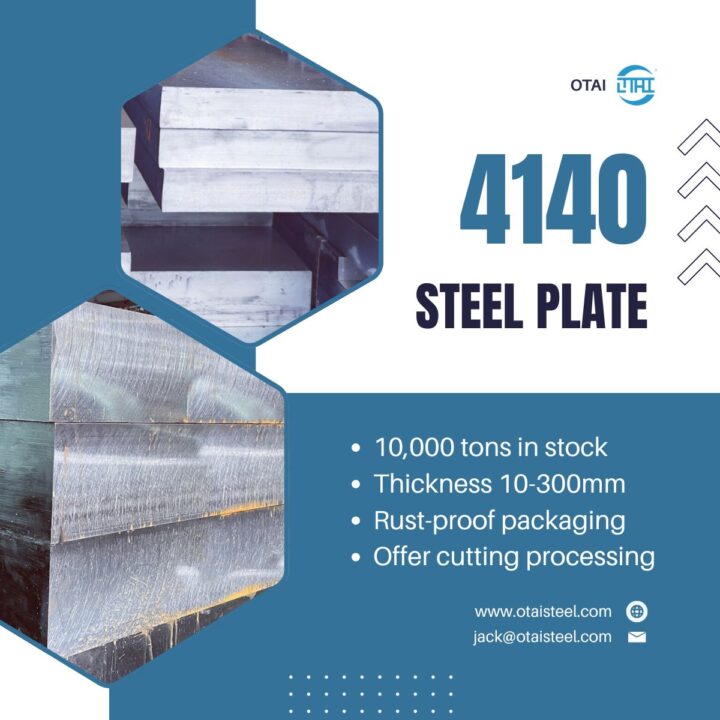
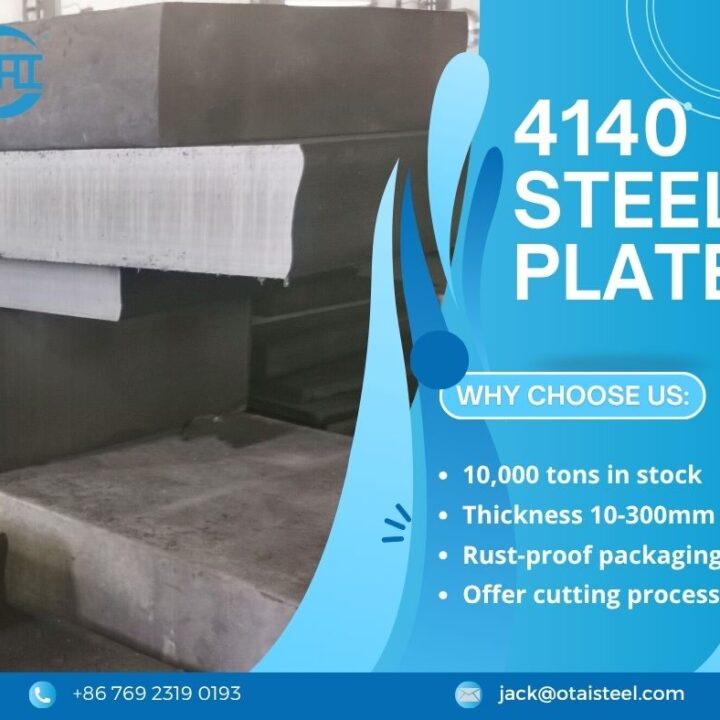
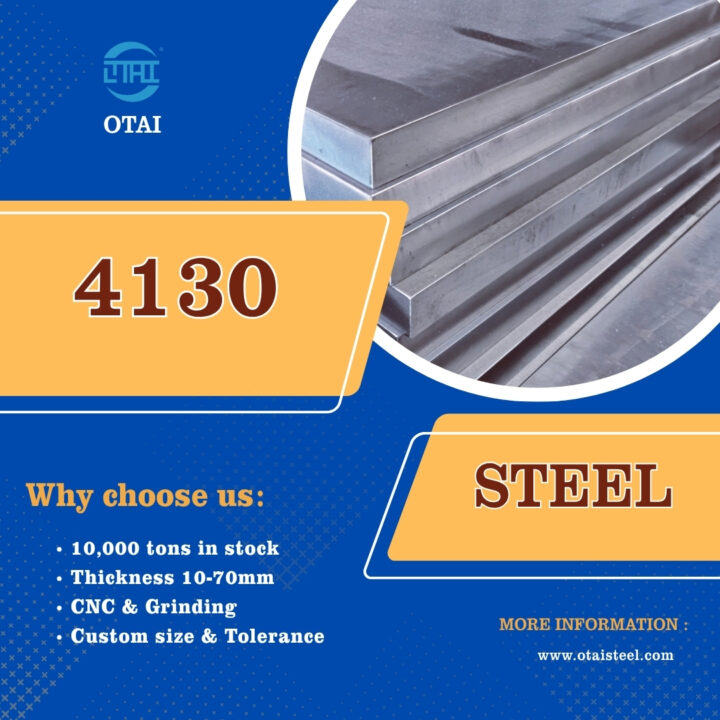
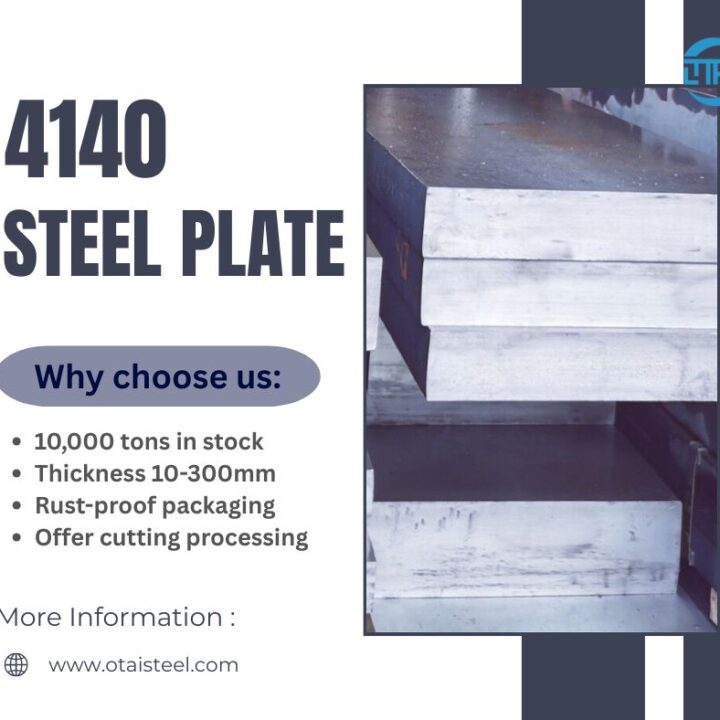
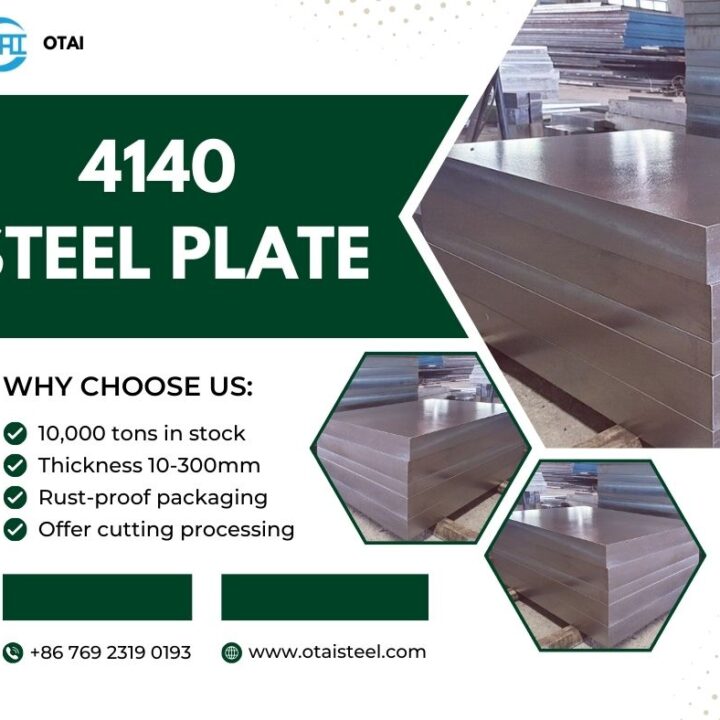
Otai currently has 4130 steel plate in 10–70 mm thicknesses in stock. This is the confirmed 4130 inventory range and should not be interpreted as a separate 4130 flat-bar stock range.
If your requirement is specifically 4130 steel flat bar, provide the exact thickness, width and length. Otai can then evaluate whether the required section can be supplied through an appropriate cutting or processing route based on available material and your dimensional requirements.
Why processing capability matters during sourcing
Otai operates 20 saw-cutting machines and provides CNC machining and grinding. For buyers ordering customized dimensions, this means the purchasing discussion can cover more than the raw material itself.
For example, if your production team needs rectangular pieces prepared for subsequent machining, discuss the required cutting tolerance and machining allowance during the quotation stage. This can help avoid receiving oversized or incorrectly prepared material.
Inspection and documentation
Otai can support ultrasonic testing and third-party inspection for projects that require additional quality verification. Buyers should specify these requirements before order confirmation so the inspection scope can become part of the purchasing arrangement.
Export and packaging support
Otai has supplied steel to international customers since 1999 and exports to more than 54 countries. Export orders can include strapped or bundled packaging, wooden cases and anti-rust protection according to project requirements.
For overseas buyers, this one-stop approach can reduce the need to coordinate separate suppliers for material, cutting, machining and packaging.
Otai advantages for industrial buyers
- 10,000+ tons of steel stock for different industrial material requirements.
- 4130 steel plate: 10–70 mm in stock.
- 20 saw-cutting machines for customized cutting requirements.
- CNC and grinding services for customized dimensions and tolerances.
- One-stop service covering cutting, machining, heat treatment, inspection and packaging according to project requirements.
- Ultrasonic testing and third-party inspection support for quality-sensitive orders.
- International export experience since 1999 with customers in more than 54 countries.
- Export packaging including strapped bundles, wooden cases and anti-rust protection.
If you are requesting a quotation for 4130 steel flat bar, send the complete specification rather than only the grade name. With the required dimensions, condition, tolerance, quantity and inspection requirements, the supplier can evaluate the most suitable supply route and give you a more meaningful quotation.
❓ Frequently Asked Questions About 4130 Steel Flat Bar
1. What should I specify when buying 4130 steel flat bar?
Specify the 4130 grade and applicable standard, thickness, width, length, quantity, delivery condition, mechanical requirements, dimensional tolerance, surface condition and certification requirements. If the material will undergo welding, machining or heat treatment, include that information in the RFQ.
2. Does Otai have 4130 steel flat bar in stock?
Otai confirms 4130 steel plate in 10–70 mm thicknesses in stock. A separate 4130 flat-bar stock range has not been confirmed. If you need a specific flat-bar dimension, provide the thickness, width and length so the appropriate cutting or processing route can be evaluated.
3. Can 4130 steel plate be cut into flat bar?
Depending on the required dimensions and specification, 4130 plate can be cut into rectangular sections. Before ordering, confirm the starting plate thickness, cutting tolerance, final dimensions, surface requirements and whether additional grinding or machining is necessary.
4. Is 4130 flat bar easier to weld than 4140?
4130 has a lower carbon content than 4140 and generally offers more favorable welding characteristics, but proper welding procedure control remains important. Preheating, heat input, thickness and post-weld requirements should match the specific application and welding procedure.
5. Should I buy 4130 or 4140 flat bar?
The answer depends on the required properties rather than a general grade ranking. Compare the required hardness, tensile strength, yield strength, welding requirements, heat-treatment route and service conditions. If you provide these requirements to the supplier, the material selection can focus on the actual engineering specification.