 16MnCr5 Standard – EN 10084 Requirements and International Equivalents
Engineers and manufacturers rely on the 16MnCr5 Standard as one of the most widely used carburizing steels in mechanical transmission systems. This steel grade delivers a unique combination of a hardened wear-resistant surface and a tough ductile core after proper heat treatment. Because of this dual performance, industries such as automotive engineering, heavy machinery production, and power transmission system design continue to select the 16MnCr5 Standard for critical components.
Unlike general carbon steels, the 16MnCr5 Standard provides controlled hardenability due to its manganese and chromium content. These alloying elements allow engineers to achieve predictable carburized case depth and stable mechanical performance. Procurement teams also prefer this grade because it provides a cost-efficient alternative to higher-alloy carburizing steels while still maintaining reliable fatigue resistance and wear performance under cyclic loading conditions.
In modern manufacturing environments, the 16MnCr5 Standard plays an important role in reducing production cost while maintaining mechanical integrity. It supports mass production of gears and shafts where dimensional stability and long service life are required.
🔵 What is 16MnCr5 Standard?
The 16MnCr5 Standard belongs to the group of low-carbon alloy steels designed specifically for carburizing and case hardening processes. EN 10084 defines this steel grade and classifies it under case hardening steels used in mechanical engineering applications.
Engineers design the 16MnCr5 Standard to allow carbon diffusion into the surface layer during carburizing while preserving a low-carbon core. This structure ensures that the outer layer becomes extremely hard after quenching, while the inner core retains toughness and impact resistance.
The balance between hardness and toughness makes this steel suitable for dynamic mechanical environments. Gear systems, for example, require surfaces that resist wear but also absorb shock loads without cracking. The 16MnCr5 Standard fulfills this requirement efficiently.
🟢 Chemical Composition of 16MnCr5 Standard
| Element | Content (%) |
|---|---|
| Carbon (C) | 0.14 – 0.19 |
| Manganese (Mn) | 1.00 – 1.30 |
| Chromium (Cr) | 0.80 – 1.10 |
| Silicon (Si) | ≤ 0.40 |
| Phosphorus (P) | ≤ 0.035 |
The chemical composition of the 16MnCr5 Standard directly influences its carburizing behavior. Manganese improves hardenability and ensures deeper case penetration during heat treatment. Chromium enhances wear resistance and improves the stability of the hardened layer. Silicon contributes to strength and oxidation resistance during processing.
This controlled alloy system allows manufacturers to achieve consistent case depth and mechanical properties across different production batches, which is essential in large-scale industrial manufacturing.
🟠 Mechanical Properties of 16MnCr5 Standard
| Property | Value |
|---|---|
| Tensile Strength | 600 – 850 MPa |
| Yield Strength | ≈ 360 MPa |
| Elongation | 10 – 12% |
| Core Hardness | 28 – 40 HRC |
| Surface Hardness | 58 – 62 HRC |
Mechanical engineers evaluate the 16MnCr5 Standard based on its ability to maintain strength under repeated loading conditions. After carburizing and quenching, the surface layer resists abrasion while the core absorbs mechanical stress.
This combination significantly reduces failure risk in rotating components such as gears and shafts. In automotive systems, this performance directly improves transmission efficiency and service life.
🟣 Heat Treatment Process of 16MnCr5 Standard
🧪 Carburizing, Quenching & Tempering Process
Manufacturers process the 16MnCr5 Standard through carburizing at 880–950°C. During this stage, carbon atoms diffuse into the surface layer and form a carbon-enriched zone. The depth of this layer depends on temperature, time, and carbon potential in the furnace atmosphere.
After carburizing, engineers apply quenching to rapidly cool the material. This step transforms the surface into martensite, which significantly increases hardness. However, quenching also introduces internal stress, so tempering becomes necessary to improve toughness and reduce brittleness.
This heat treatment route allows the 16MnCr5 Standard to achieve a surface hardness of up to 62 HRC while maintaining a ductile core structure. The result is a material that performs reliably under both impact and friction conditions.
Compared with untreated steels, the 16MnCr5 Standard shows improved fatigue strength and longer operational life. Manufacturers also benefit from reduced distortion during heat treatment, which improves dimensional accuracy in precision components.
🔷 Industrial Applications of 16MnCr5 Standard
Industries apply the 16MnCr5 Standard in multiple mechanical systems where wear resistance and toughness are essential. Automotive engineers use it extensively in drivetrain components because it handles continuous torque and rotational stress effectively.
- Automotive transmission gears 🚗
- Drive shafts and pinions ⚙️
- Industrial gearboxes 🏭
- Mechanical coupling systems 🛠️
- Agricultural machinery components 🚜
In gear manufacturing, engineers select the 16MnCr5 Standard because it reduces surface wear and extends service life under high-cycle operation. In heavy machinery, it helps maintain stable performance under shock loading and vibration conditions.
The increasing demand for efficient mechanical systems continues to drive global usage of this steel grade, especially in automotive electrification and high-efficiency gearbox design.
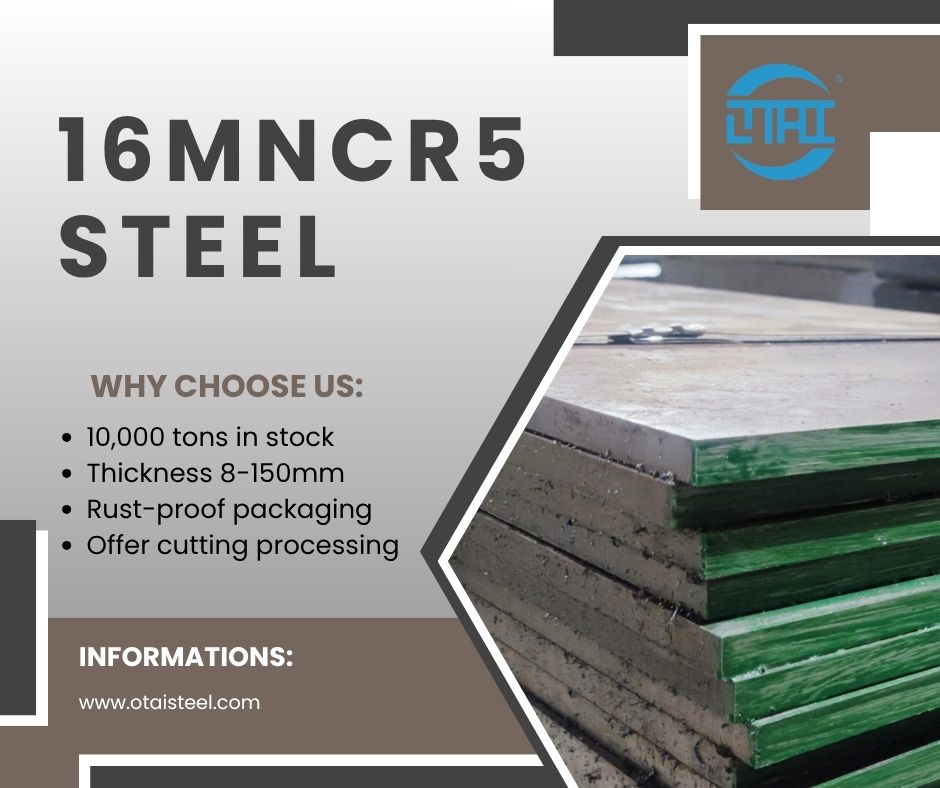
🏭 Company Advantages – Otai Special Steel
- 📦 Over 10,000+ tons of steel inventory available
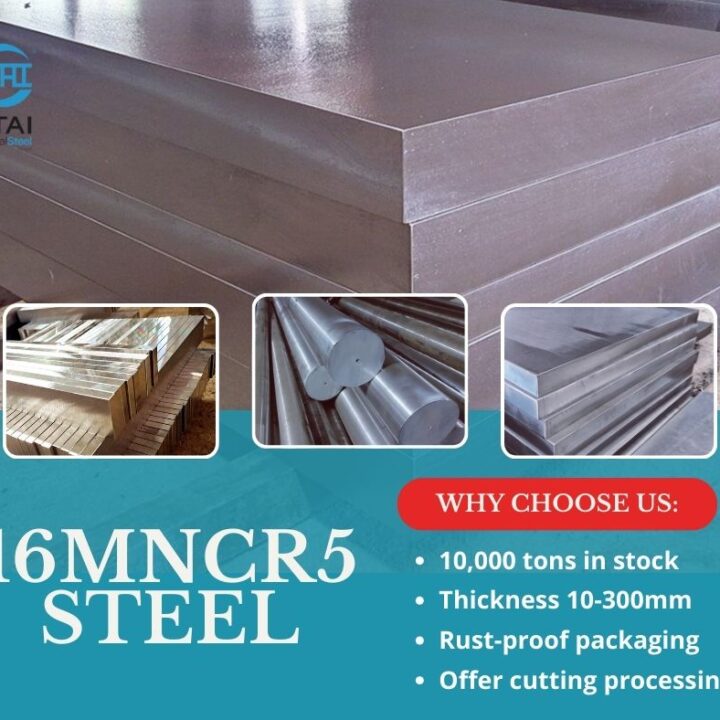
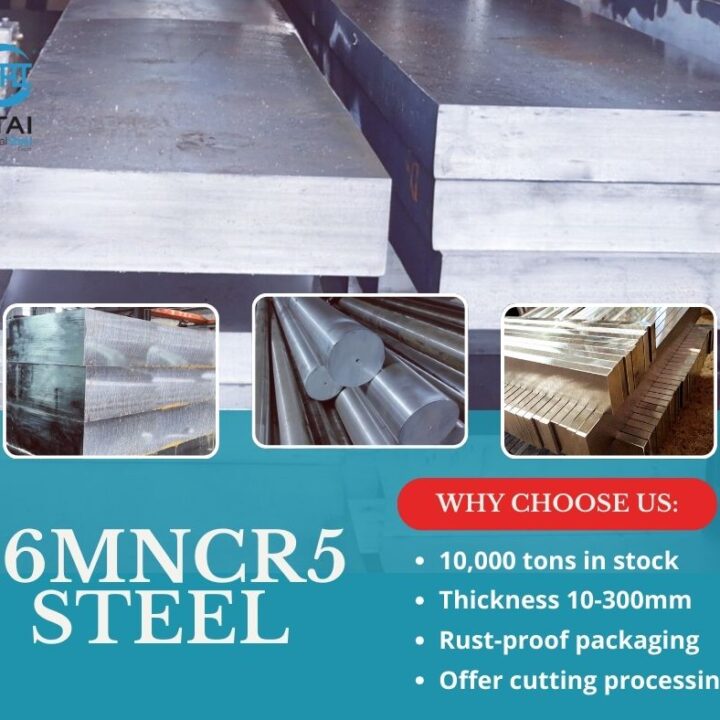
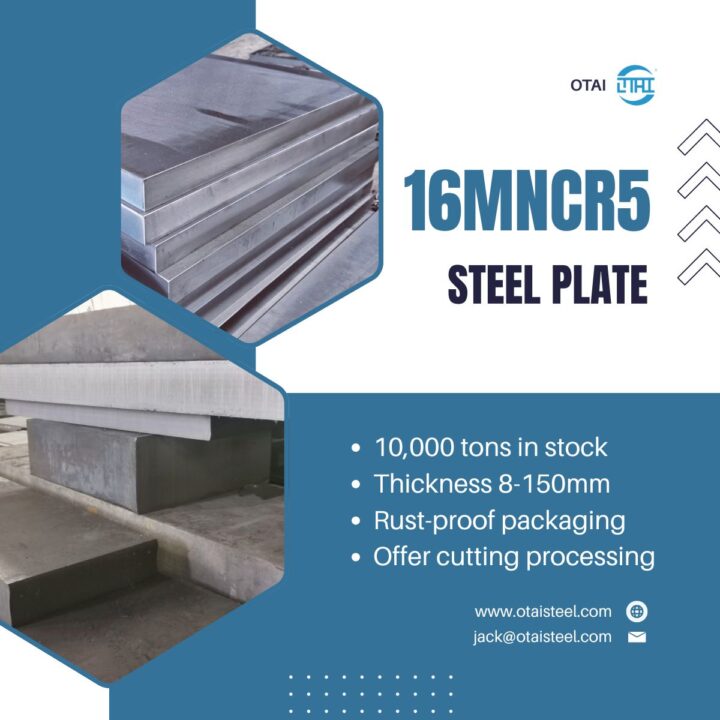
- 📏 16MnCr5 Standard thickness range: 8–150mm in stock
- ✂️ Cutting, machining, and heat treatment services
- 🔬 Ultrasonic testing (UT) and chemical composition analysis
- 🌍 Supply experience in automotive and industrial sectors
Otai Special Steel supplies the 16MnCr5 Standard with strict quality control systems. Each production batch undergoes ultrasonic testing and chemical verification to ensure compliance with EN standards. The company also supports customized processing to reduce customer lead time and improve production efficiency.
❓ FAQ – 16MnCr5 Standard
Q1: What applications use 16MnCr5 Standard?
Engineers use it in gears, shafts, and transmission systems that require wear resistance and core toughness.
Q2: How is 16MnCr5 heat treated?
Manufacturers carburize, quench, and temper the steel to achieve a hardened surface and tough core structure.
Q3: What hardness can it reach?
The surface hardness can reach up to 62 HRC after carburizing and quenching.
Q4: Why do industries prefer 16MnCr5?
Industries prefer it because it balances cost, machinability, and mechanical performance effectively.
Q5: What makes it suitable for gears?
Its carburized surface resists wear while the core absorbs impact loads, making it ideal for gear systems.
The 16MnCr5 Standard remains a critical engineering steel in modern manufacturing. Its optimized chemical composition, reliable heat treatment response, and balanced mechanical properties make it a preferred choice for high-performance mechanical systems across global industries.