 16MnCr5 Material Heat Treatment – Optimizing Wear Resistance Through Proper Processing
16MnCr5 material heat treatment plays a crucial role in achieving the performance characteristics that make this alloy steel one of the most widely used case-hardening grades in the automotive, machinery, and power transmission industries. While 16MnCr5 possesses good machinability and formability in its untreated condition, its true potential emerges after a carefully controlled heat treatment process.
As a low-carbon chromium alloy steel, 16MnCr5 specifically serves carburizing applications. Through carburizing, quenching, and tempering, manufacturers can produce components with an extremely hard wear-resistant surface while maintaining a tough and ductile core. This unique combination of properties makes the steel ideal for gears, shafts, sprockets, pinions, bushings, and other heavily loaded mechanical components.
This article explains the complete 16MnCr5 heat treatment process, including normalizing, carburizing, quenching, tempering, hardness development, and the resulting mechanical properties.
📊 Overview of 16MnCr5 Steel
16MnCr5 is a low-carbon alloy steel standardized under EN 10084. The combination of manganese and chromium provides excellent hardenability and makes the material highly suitable for case-hardening applications.
| Property | Value |
|---|---|
| Steel Grade | 16MnCr5 |
| Material Number | 1.7131 |
| Steel Type | Case Hardening Steel |
| Carbon Content | 0.14–0.19% |
| Chromium Content | 0.80–1.10% |
| Main Applications | Gears, shafts, pinions, bushings |
The relatively low carbon content allows excellent toughness in the core, while carburizing enriches the surface with carbon for maximum hardness.
🔥 Why Heat Treatment Is Important for 16MnCr5
Unlike through-hardening steels such as 4140, 16MnCr5 achieves different properties between the surface and the core. The purpose of 16MnCr5 material heat treatment is to create a hardened outer layer capable of resisting wear and fatigue while preserving a tough core that absorbs shock loads.
This property combination is especially valuable in gears and rotating components where surface wear resistance and core toughness are equally important.
| Requirement | Heat Treatment Benefit |
|---|---|
| Wear Resistance | Hard carburized surface |
| Fatigue Strength | Improved surface integrity |
| Impact Resistance | Tough low-carbon core |
| Service Life | Reduced wear and deformation |
⚙️ 16MnCr5 Heat Treatment Chart
The following 16MnCr5 heat treatment chart summarizes the most commonly used industrial heat treatment parameters.
| Process | Temperature (°C) | Cooling Method |
|---|---|---|
| Normalizing | 880–920 | Air Cooling |
| Carburizing | 880–950 | Controlled Atmosphere |
| Quenching | 820–860 | Oil |
| Tempering | 150–200 | Air Cooling |
The exact parameters depend on component size, required case depth, and final hardness specifications.
🔥 Carburizing Treatment
The most important stage of the 16MnCr5 carburizing treatment is the diffusion of carbon into the surface layer.
During carburizing, components are heated in a carbon-rich atmosphere. Carbon atoms penetrate the steel surface, increasing the carbon content from approximately 0.16% to as high as 0.8–1.0% in the case layer.
| Parameter | Typical Value |
|---|---|
| Carburizing Temperature | 880–950°C |
| Case Depth | 0.5–2.0 mm |
| Surface Carbon Content | 0.8–1.0% |
| Atmosphere | Endogas or controlled carbon atmosphere |
The resulting carburized layer provides the foundation for exceptional wear resistance after quenching.
💪 Quenching and Hardening Process
After carburizing, the next stage in the 16MnCr5 case hardening process is quenching. You reheat the carburized component to the appropriate austenitizing temperature and then rapidly cool it, usually in oil.
The purpose of quenching is to transform the high-carbon surface layer into martensite. Martensite is an extremely hard microstructure that gives the steel its outstanding wear resistance and fatigue performance.
| Parameter | Typical Value |
|---|---|
| Austenitizing Temperature | 820–860°C |
| Holding Time | 30–60 minutes |
| Quenching Medium | Oil |
| Resulting Structure | Martensitic Case |
The recommended 16MnCr5 quenching temperature ensures adequate hardening while minimizing distortion and cracking risks.
🔧 Tempering After Quenching
Although quenching produces maximum hardness, it also introduces internal stresses. Tempering is therefore essential to improve toughness and dimensional stability.
During 16MnCr5 hardening and tempering, the steel is reheated to a relatively low temperature and then cooled in air. This process reduces brittleness without significantly lowering surface hardness.
| Tempering Parameter | Typical Value |
|---|---|
| Tempering Temperature | 150–200°C |
| Holding Time | 1–2 hours |
| Cooling Method | Air Cooling |
| Purpose | Stress Relief |
The selected 16MnCr5 tempering temperature depends on the balance required between hardness and toughness.
📊 Hardness After Heat Treatment
The final 16MnCr5 hardness after heat treatment varies according to carburizing depth, quenching conditions, and tempering parameters.
| Condition | Typical Hardness |
|---|---|
| Annealed | 160–220 HB |
| Normalized | 170–240 HB |
| Core Hardness After Heat Treatment | 28–40 HRC |
| Surface Hardness After Carburizing | 58–62 HRC |
The typical 16MnCr5 carburized hardness of 58–62 HRC makes the material highly resistant to abrasive wear, pitting, and rolling contact fatigue.
⚙️ Mechanical Properties After Heat Treatment
The primary objective of heat treatment is not simply increasing hardness. It is also used to optimize the overall performance of the component.
| Property | Typical Result |
|---|---|
| Surface Hardness | 58–62 HRC |
| Core Toughness | Excellent |
| Wear Resistance | Very High |
| Fatigue Strength | Excellent |
| Impact Resistance | High |
These 16MnCr5 mechanical properties after heat treatment explain why the steel is widely used in high-performance transmission systems.
🚗 Applications Requiring Heat-Treated 16MnCr5
Properly heat-treated 16MnCr5 components are found in numerous industrial sectors where wear resistance and fatigue strength are critical.
| Component | Benefit of Heat Treatment |
|---|---|
| Automotive Gears | High surface durability |
| Gear Shafts | Excellent fatigue resistance |
| Pinions | Reduced wear |
| Bushings | Longer service life |
| Industrial Transmissions | Improved reliability |
For these applications, 16MnCr5 gear steel heat treatment is often specified to ensure consistent performance under cyclic loading conditions.
🏭 Company Advantages
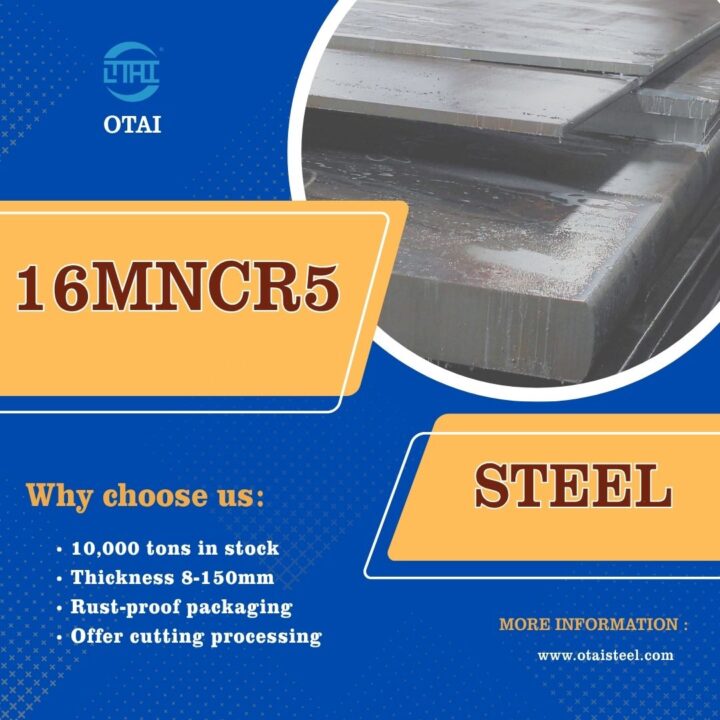
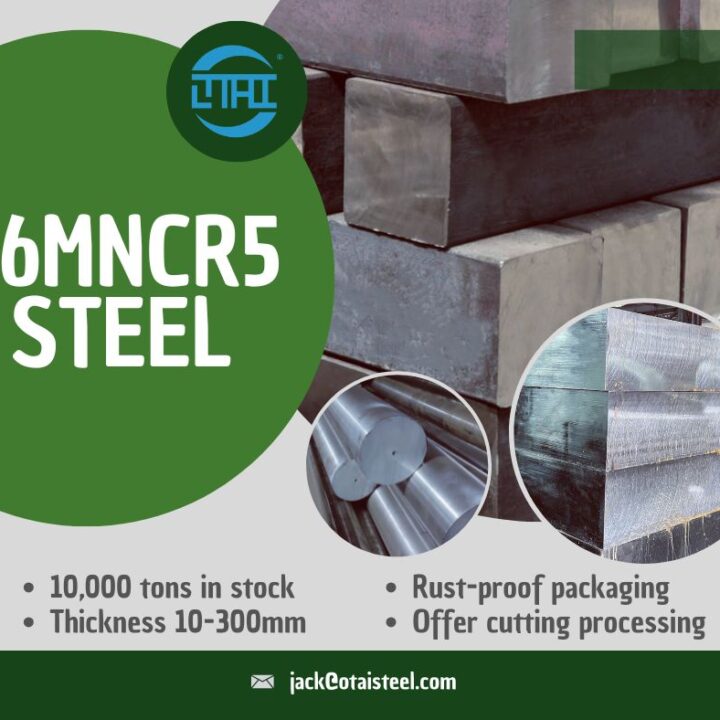
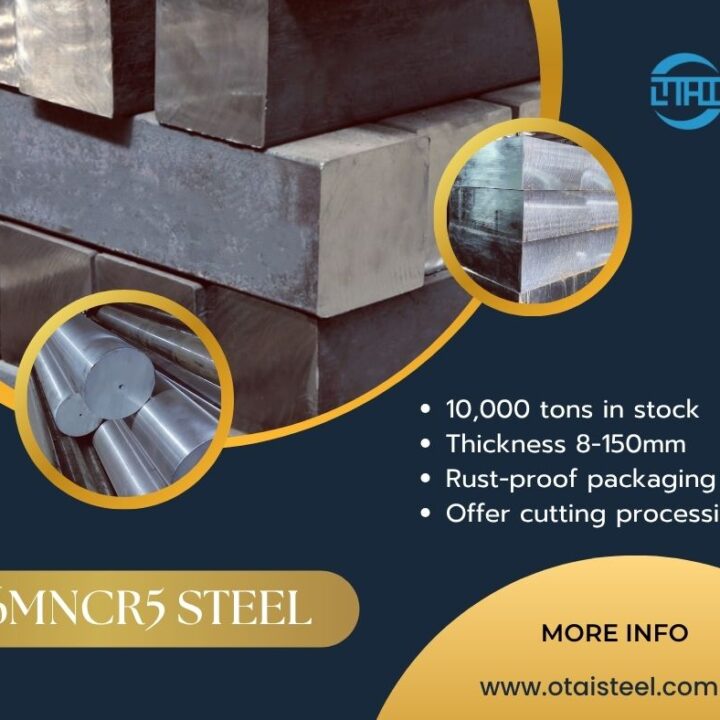
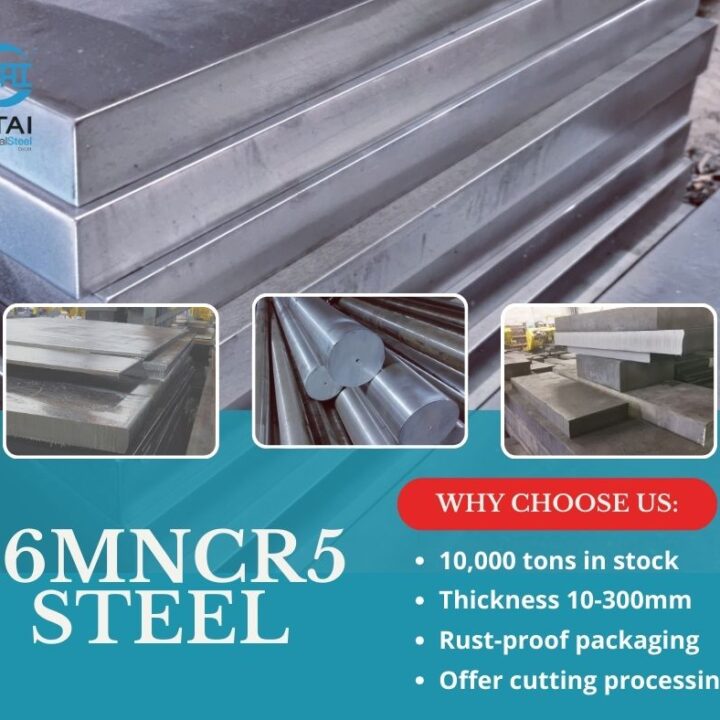
Otai Special Steel supplies premium-quality 16MnCr5 steel products to customers worldwide and provides comprehensive material solutions for engineering and manufacturing industries.
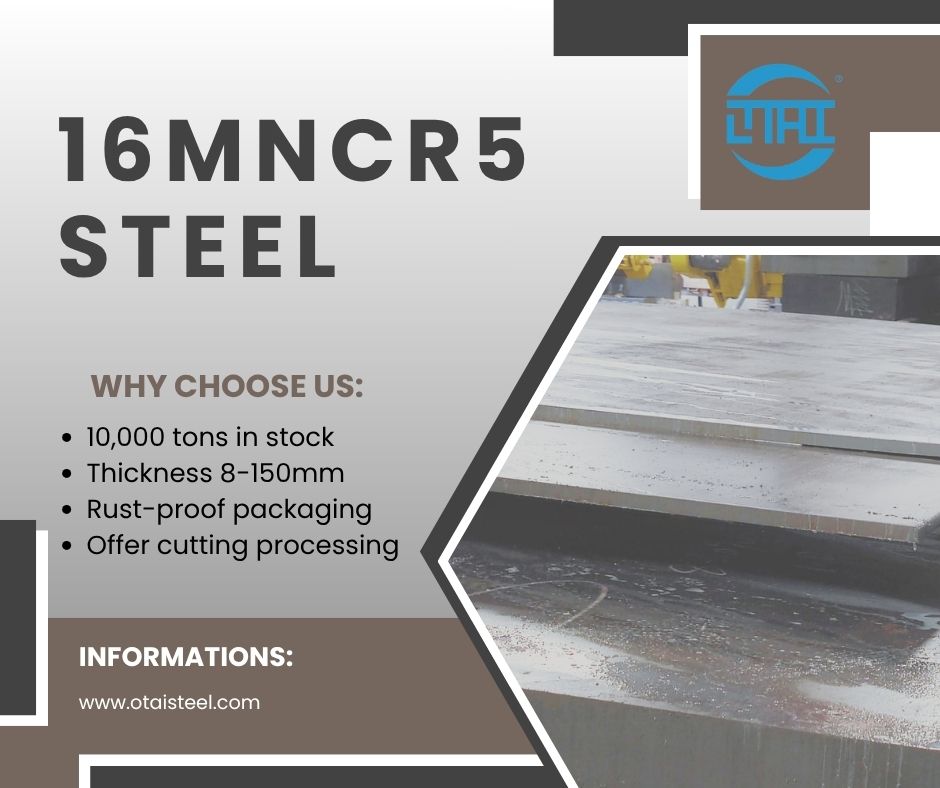
- More than 10,000 tons of steel inventory available year-round
- 8–150mm thickness 16MnCr5 steel plates available in stock
- Round bars, forged blocks, flat bars, and steel plates available
- Custom cutting according to customer drawings
- Professional heat treatment support
- Ultrasonic testing (UT) available
- Chemical composition verification and mechanical testing
- Third-party inspection services including SGS
- Export-standard packaging for global shipment
- Extensive experience serving international engineering customers
✅ Conclusion
16MnCr5 material heat treatment is the key to unlocking the steel’s full performance potential. Through carburizing, quenching, and tempering, manufacturers can achieve a hard wear-resistant surface of 58–62 HRC while maintaining a tough and durable core.
This unique combination of properties makes 16MnCr5 one of the most trusted case-hardening steels for gears, shafts, pinions, and other transmission components. By carefully controlling heat treatment parameters, manufacturers can maximize service life, improve reliability, and reduce maintenance costs.
❓ FAQ
Q1: What is the primary purpose of heat treatment for 16MnCr5?
A1: The purpose is to create a hard wear-resistant surface while maintaining a tough core structure.
Q2: What is the typical carburizing temperature for 16MnCr5?
A2: Carburizing is typically performed between 880°C and 950°C.
Q3: What is the recommended quenching temperature?
A3: The typical 16MnCr5 quenching temperature ranges from 820°C to 860°C.
Q4: What hardness can be achieved after carburizing?
A4: Typical surface hardness ranges from 58 to 62 HRC.
Q5: Why is tempering necessary after quenching?
A5: Tempering relieves internal stresses and improves toughness while retaining high surface hardness.
Q6: What industries commonly use heat-treated 16MnCr5?
A6: Automotive, industrial machinery, mining equipment, agricultural machinery, and power transmission industries.