 16MnCr5 AISI Equivalent – Material Specifications, Mechanical Properties, and Applications
Understanding the 16MnCr5 AISI equivalent is essential for engineers, material suppliers, and manufacturers who need reliable low-carbon alloy steel for components requiring surface hardening and durable cores. 16MnCr5 is a chromium-manganese steel widely used in automotive, industrial, and machinery applications. Its combination of surface hardness, core toughness, and machinability makes it ideal for shafts, gears, and other high-wear components. Identifying international equivalents such as SAE 5115 ensures consistent material performance and compatibility in global engineering projects.
🔍 Overview of 16MnCr5
16MnCr5 is a low-carbon case-hardening steel with manganese and chromium. Its key characteristics include:
- Surface hardenability for wear resistance
- Ductile core to withstand bending and torsion
- Good machinability in the annealed state
- Reliable fatigue resistance after heat treatment
This steel is commonly used in components such as:
- Automotive pinions, gears, and axles
- Industrial spindles, rollers, and couplings
- Agricultural machinery components
- Construction and heavy machinery shafts
By combining low carbon content with alloying elements, 16MnCr5 achieves high strength, toughness, and dimensional stability after carburizing and tempering.
Chemical Composition
| Element | Content (%) |
|---|---|
| Carbon (C) | 0.14 – 0.19 |
| Silicon (Si) | 0.17 – 0.37 |
| Manganese (Mn) | 1.00 – 1.30 |
| Chromium (Cr) | 0.80 – 1.10 |
| Phosphorus (P) | ≤ 0.025 |
| Sulfur (S) | ≤ 0.035 |
Insight: The combination of manganese and chromium increases hardenability and wear resistance, while low carbon ensures a ductile core suitable for components subjected to high fatigue loads.
🌐 AISI / SAE Equivalents
The most common AISI equivalent of 16MnCr5 is SAE 5115, widely recognized in North America. Other comparable international standards include:
| Standard | Equivalent | Notes |
|---|---|---|
| EN / Germany | 16MnCr5 | Original European standard |
| AISI / SAE | SAE 5115 | US equivalent for carburized components |
| JIS / Japan | SCM420 | Japanese low-alloy steel with similar properties |
| GB / China | 20CrMnTi | Chinese equivalent with minor differences |
Tip: Even when using equivalents, engineers should verify mechanical properties and heat treatment requirements to ensure performance meets design specifications.
📊 Mechanical Properties
16MnCr5 and its equivalents are engineered for high surface hardness and ductile cores. Mechanical properties vary depending on heat treatment:
| Property | Annealed | Carburized & Tempered | Units |
|---|---|---|---|
| Tensile Strength | 550 – 800 | 800 – 1200 | MPa |
| Yield Strength | 300 – 500 | 550 – 850 | MPa |
| Surface Hardness | 180 HB | 58 – 62 HRC | – |
| Core Toughness | Excellent | Excellent | – |
| Elongation | 20 – 25 | 12 – 16 | % |
🔹 Engineering Considerations
- Fatigue resistance: The ductile core resists cyclic loading, making the steel ideal for gears and shafts.
- Surface wear: Carburized layer ensures high hardness, reducing friction and wear in high-load applications.
- Machinability: Annealed 16MnCr5 allows easy machining, reducing tool wear and production time.
🔥 Heat Treatment Recommendations
Proper heat treatment is crucial to achieve the desired surface hardness and core ductility:
| Process | Temperature | Effect |
|---|---|---|
| Normalizing | 870 – 900°C | Refines grain, improves toughness |
| Carburizing | 880 – 980°C | Increases surface carbon, enhancing hardness |
| Quenching | 820 – 860°C | Raises surface hardness |
| Tempering | 150 – 200°C | Reduces brittleness, stabilizes core toughness |
Practical Tip: For automotive pinions or small gears, tempering at 180–200°C after carburizing balances surface hardness and core ductility, ensuring optimal fatigue performance.
⚙️ Applications
| Industry | Components | Notes |
|---|---|---|
| Automotive | Shafts, pinions, gears, axles | High fatigue resistance and wear performance |
| Industrial Machinery | Spindles, rollers, couplings | Handles cyclic loads efficiently |
| Heavy Equipment | Drive shafts, gear reducers | Resists torsion and bending |
| Agricultural Machinery | Rotors, gearboxes | High wear resistance under moderate loads |
Case Study: In an automotive gearbox, using 16MnCr5 or SAE 5115 shafts ensures surface hardness ≥60 HRC after carburizing while maintaining core toughness ≥550 MPa, resulting in longer service life and fewer failures under torque.
🏭 Company Advantages
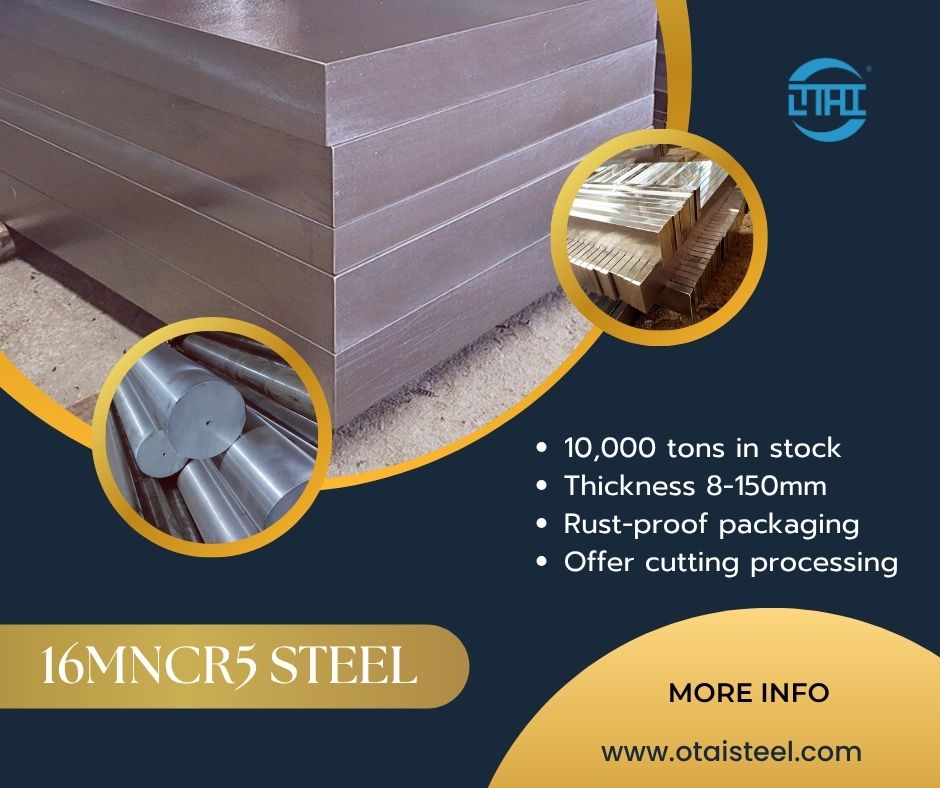
Otai Special Steel supplies 16MnCr5 and equivalent materials with consistent quality for critical engineering applications:
- Large inventory and stable supply
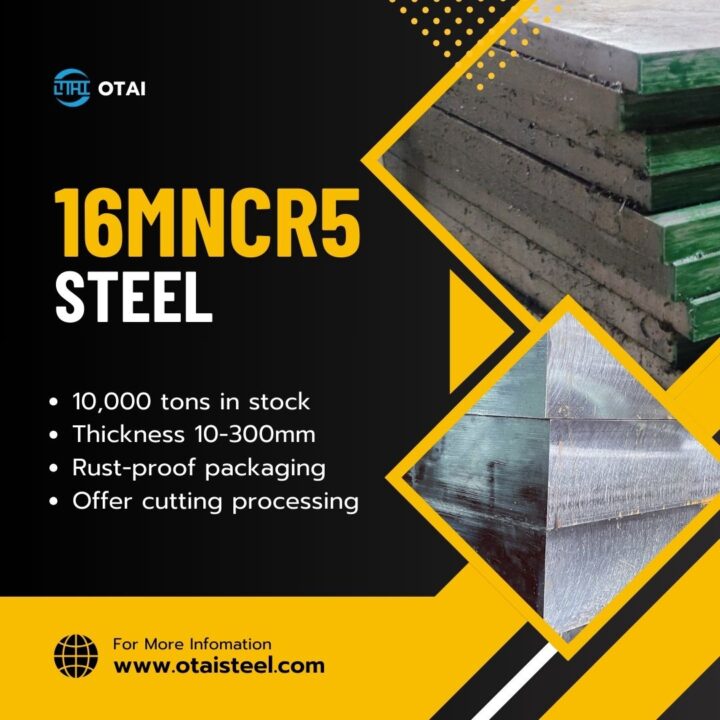
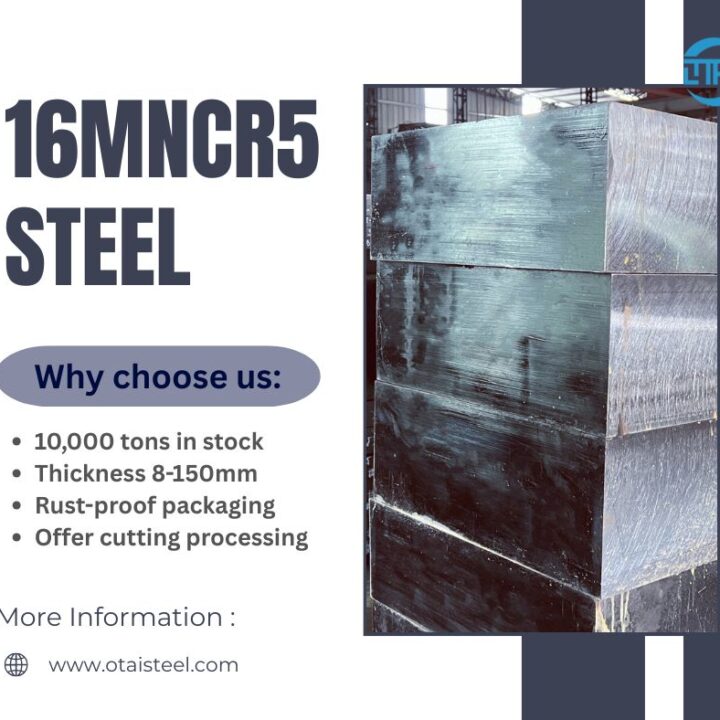
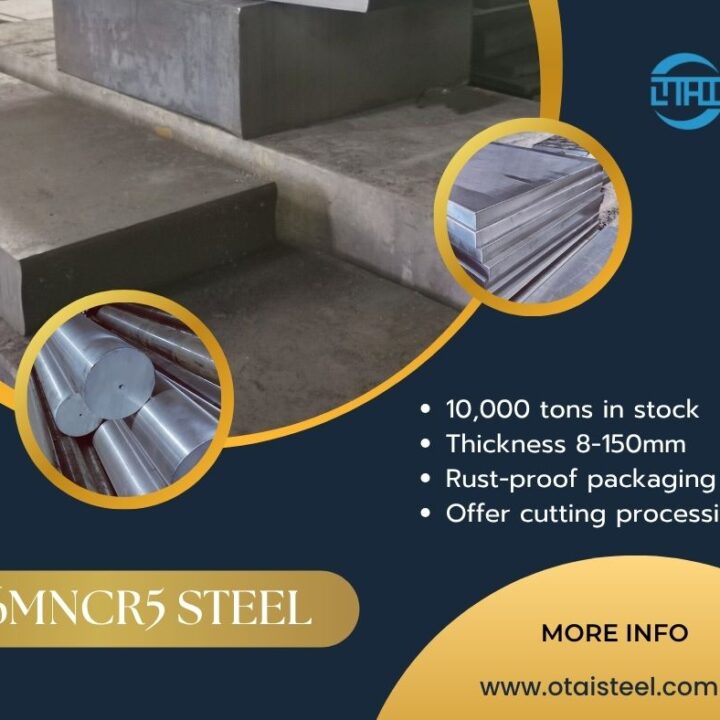
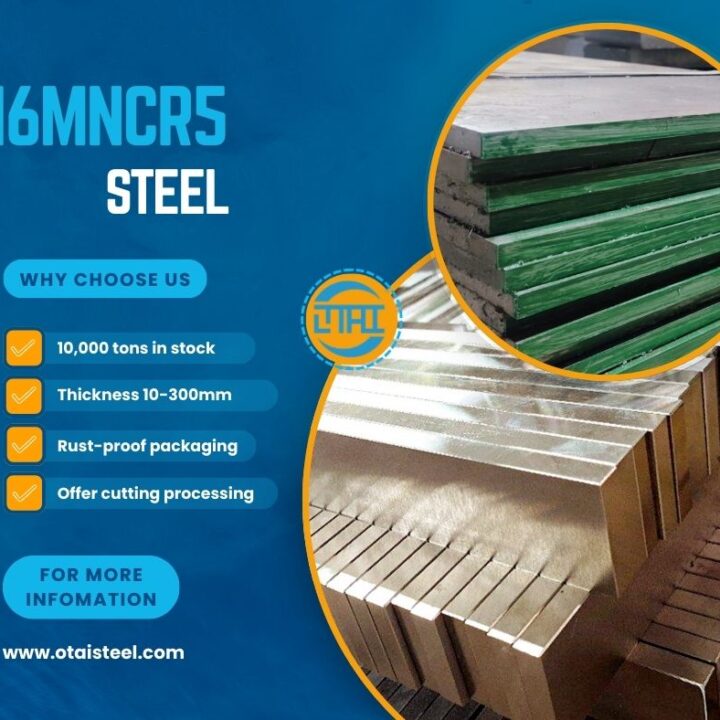
- 8–150mm thickness plates available in stock
- Custom cutting, heat treatment, and surface finishing
- Ultrasonic testing (UT) and chemical composition verification
- Third-party inspection support (SGS)
- Professional export packaging
We serve automotive, industrial machinery, heavy equipment, and precision engineering sectors, ensuring reliable supply and technical support.
❓ FAQ
Q1: What is the AISI equivalent of 16MnCr5?
A1: SAE 5115 is the most common AISI/SAE equivalent, closely matching chemical composition and mechanical performance.
Q2: Can SAE 5115 fully replace 16MnCr5?
A2: Yes, but verify heat treatment and mechanical property requirements for critical components.
Q3: What applications suit 16MnCr5 equivalents?
A3: Automotive gears, shafts, pinions, industrial spindles, heavy machinery, and agricultural equipment.
Q4: Does the AISI equivalent respond the same in heat treatment?
A4: Generally yes; SAE 5115 behaves similarly in carburizing, quenching, and tempering, achieving high surface hardness and ductile cores.
Q5: What should engineers check when using equivalents?
A5: Confirm mechanical properties, alloy composition, hardenability, and dimensional tolerances to ensure compatibility with design specifications.