 Weldability of 4140 Steel: Welding Process, Heat Treatment and Practical Tips
📑 Table of Contents
🔍 1. What Is the Weldability of 4140 Steel?
⚙️ 2. Why Is 4140 Steel Challenging to Weld?
🧪 3. Chemical Composition Effect on 4140 Welding Performance
🔥 4. 4140 Steel Welding Process and Recommended Methods
🌡️ 5. Preheating and Post Weld Heat Treatment
📊 6. Welding Parameters and Mechanical Performance
🏢 Otai Special Steel Advantages
❓ FAQ About Weldability of 4140 Steel
🔍 1. What Is the Weldability of 4140 Steel?
When engineers search for weldability of 4140 steel, they usually want to understand whether AISI 4140 alloy steel can be welded safely and what procedures are required to avoid cracking or strength reduction.
4140 steel is a chromium-molybdenum alloy steel known for its high strength, excellent toughness, and good fatigue resistance. However, compared with low-carbon steels, 4140 requires more careful welding control because of its higher hardenability.
So, is 4140 steel weldable? The answer is yes. 4140 steel can be welded successfully when proper procedures are followed, including preheating, suitable filler selection, controlled cooling, and post weld heat treatment when necessary.
The main challenge during welding is preventing the formation of hard and brittle structures in the heat-affected zone (HAZ). Incorrect welding conditions may cause hydrogen cracking, reduced toughness, or residual stress.
Therefore, understanding the material condition and selecting the correct 4140 steel welding process are essential for achieving reliable welded joints.
Basic Information About 4140 Steel Welding
| Item | Description |
|---|---|
| Steel Grade | AISI 4140 |
| Steel Type | Chromium-molybdenum alloy steel |
| Carbon Content | Approximately 0.38–0.43% |
| Main Alloy Elements | Chromium (Cr), Molybdenum (Mo), Manganese (Mn) |
| Weldability Level | Moderate with proper welding procedure |
| Main Welding Concern | Heat-affected zone cracking |
Factors Affecting 4140 Steel Weldability
| Factor | Effect on Welding |
|---|---|
| Carbon Content | Higher carbon increases hardening tendency |
| Material Thickness | Thicker sections require more heat control |
| Steel Condition | Heat-treated steel needs additional attention |
| Cooling Rate | Fast cooling increases cracking risk |
| Hydrogen Control | Low hydrogen methods reduce weld defects |
In practical applications, the weldability of 4140 steel depends not only on the chemical composition but also on welding method, heat input, and final service requirements.
⚙️ 2. Why Is 4140 Steel Challenging to Weld?
Although 4140 steel can be welded, it is more difficult than mild steel because of its alloy design and higher carbon equivalent value.
The addition of chromium and molybdenum improves strength and hardenability. However, these same elements increase the possibility of forming hard microstructures during rapid cooling.
Main Welding Challenges of 4140 Steel
| Challenge | Reason | Solution |
|---|---|---|
| Cold cracking | Formation of hard martensite and hydrogen exposure | Preheating and low hydrogen electrodes |
| Residual stress | Uneven heating and cooling | Controlled heat input |
| Hard HAZ | Rapid cooling after welding | Post weld heat treatment |
| Loss of mechanical properties | Improper welding temperature | Use qualified welding procedures |
Can 4140 Steel Be Welded Without Preheating?
For small components with low service requirements, welding without preheating may sometimes be possible. However, for structural parts, thick plates, or highly stressed components, preheating is strongly recommended.
The correct 4140 preheat temperature for welding depends on material thickness, carbon equivalent, welding method, and the required mechanical performance.
| Material Condition | Recommended Approach |
|---|---|
| Thin 4140 components | Carefully controlled welding with moderate preheat |
| Medium thickness plates | Preheating and slow cooling recommended |
| Heavy sections | Preheat + post weld heat treatment required |
Proper preparation significantly improves welding reliability and helps maintain the original strength characteristics of 4140 steel.
🧪 3. Chemical Composition Effect on 4140 Welding Performance
The chemical composition of 4140 steel directly influences its welding behavior. The combination of carbon, chromium, and molybdenum provides excellent mechanical performance but requires controlled welding procedures.
Typical Chemical Composition of AISI 4140 Steel
| Element | Typical Range | Influence on Welding |
|---|---|---|
| Carbon (C) | 0.38–0.43% | Increases strength but raises hardening tendency |
| Chromium (Cr) | 0.80–1.10% | Improves hardenability and wear resistance |
| Molybdenum (Mo) | 0.15–0.25% | Improves strength at high temperatures |
| Manganese (Mn) | 0.75–1.00% | Improves strength and toughness |
| Silicon (Si) | 0.15–0.35% | Improves deoxidation and strength |
Why Alloy Elements Matter During Welding
- Carbon: Higher carbon content increases the possibility of hard martensite formation in the HAZ.
- Chromium: Improves wear resistance but increases hardenability.
- Molybdenum: Improves strength and reduces tempering sensitivity.
- Manganese: Supports toughness but contributes to hardening behavior.
Because of these alloying elements, engineers must carefully control welding heat input and cooling speed when working with 4140 steel.
🔥 4. 4140 Steel Welding Process and Recommended Methods
Choosing the correct welding method is essential for achieving reliable joints when working with 4140 alloy steel. Because of its high strength and hardening ability, 4140 requires controlled welding procedures rather than ordinary welding practices used for mild steel.
The most suitable welding method depends on component thickness, service requirements, material condition, and production environment. In many industrial applications, shielded metal arc welding (SMAW), gas metal arc welding (GMAW/MIG), and gas tungsten arc welding (GTAW/TIG) are commonly used.
When selecting the best welding method for 4140 steel, engineers usually consider weld quality, heat input, productivity, and the final mechanical requirements of the component.
Common Welding Methods for 4140 Steel
| Welding Method | Advantages | Typical Applications |
|---|---|---|
| SMAW (Stick Welding) | Flexible and suitable for repair work | Heavy equipment parts, maintenance welding |
| GMAW (MIG Welding) | High efficiency and good productivity | Industrial manufacturing |
| GTAW (TIG Welding) | Excellent weld quality and precision control | Critical components requiring high accuracy |
| Submerged Arc Welding | High deposition rate | Large welded structures |
Recommended Welding Procedure for 4140 Steel
| Step | Recommended Action |
|---|---|
| 1. Surface Preparation | Remove oil, rust, moisture, and contaminants before welding |
| 2. Electrode Selection | Use compatible low-hydrogen filler materials |
| 3. Preheating | Heat material before welding to reduce cracking risk |
| 4. Controlled Welding | Maintain proper heat input and interpass temperature |
| 5. Cooling Control | Avoid rapid cooling after welding |
| 6. Heat Treatment | Apply stress relief or tempering when required |
Following a proper welding procedure helps maintain the strength and toughness that make 4140 steel popular in demanding applications.
🌡️ 5. Preheating and Post Weld Heat Treatment of 4140 Steel
Preheating is one of the most important steps when welding 4140 steel. It reduces the cooling rate, lowers thermal stress, and helps prevent the formation of brittle martensite in the heat-affected zone.
The required temperature depends on plate thickness, welding process, carbon equivalent, and material condition. Therefore, there is no single preheat value suitable for every application.
In general, thicker sections and higher-strength conditions require higher preheating temperatures.
Typical 4140 Steel Preheating Temperature
| Material Thickness | Recommended Preheat Range | Purpose |
|---|---|---|
| Thin sections | 150–200°C | Reduce cooling stress |
| Medium thickness plates | 200–300°C | Control HAZ hardness |
| Heavy sections | 300°C or higher | Prevent cracking in high-restraint areas |
The actual 4140 steel welding temperature should always be determined according to the welding procedure specification (WPS) and engineering requirements.
Post Weld Heat Treatment (PWHT) of 4140 Steel
After welding, residual stresses may remain inside the material. For critical components, post weld heat treatment can improve weld reliability and restore toughness.
| Heat Treatment | Purpose |
|---|---|
| Stress Relieving | Reduce residual welding stress |
| Tempering | Improve toughness and reduce hardness |
| Annealing | Improve machinability for further processing |
For high-strength applications, 4140 steel post weld heat treatment is often recommended to ensure stable mechanical performance.
📊 6. Welding Parameters and Mechanical Performance
The welding parameters directly influence the final quality of 4140 steel joints. Incorrect heat input, excessive cooling speed, or improper filler selection may reduce mechanical performance.
A controlled welding process helps preserve strength, toughness, and fatigue resistance after fabrication.
Important Welding Parameters for 4140 Steel
| Parameter | Recommended Consideration | Effect |
|---|---|---|
| Heat Input | Controlled welding energy | Prevents excessive grain growth |
| Interpass Temperature | Maintain suitable temperature range | Improves weld consistency |
| Cooling Rate | Slow and controlled cooling | Reduces cracking risk |
| Filler Material | Compatible strength level | Maintains weld performance |
| Hydrogen Control | Dry electrodes and clean surfaces | Prevents hydrogen cracking |
Effect of Welding Condition on 4140 Performance
| Welding Condition | Possible Result |
|---|---|
| Proper preheat and cooling | Strong and reliable welded joint |
| Fast cooling | Hard brittle HAZ formation |
| Excessive heat input | Reduced toughness and grain growth |
| Incorrect filler selection | Lower weld strength |
For manufacturers working with 4140 alloy steel, controlling every welding parameter is essential to achieve safe and durable components.
🏭 7. Applications Requiring Welded 4140 Steel Components
4140 steel is widely used in industries that require high strength, toughness, and fatigue resistance. Although many 4140 components are produced through machining and heat treatment, welding is also used for fabrication, repair, and component assembly.
The excellent mechanical properties of 4140 make it suitable for applications where ordinary carbon steel cannot provide enough strength. However, successful welding requires proper preparation and controlled procedures.
Industries using welded 4140 components usually focus on maintaining the original strength of the alloy steel after fabrication.
Common Applications of Welded 4140 Steel
| Industry | Welded Components | Why Use 4140 Steel |
|---|---|---|
| Oil and Gas Equipment | High-strength shafts, tools, structural parts | Excellent toughness and fatigue resistance |
| Construction Machinery | Heavy-duty machine components | High strength under impact loads |
| Automotive Industry | Performance shafts and mechanical parts | Good wear resistance and durability |
| Agricultural Machinery | Drive components and rotating parts | Reliable service under repeated stress |
| Industrial Equipment | Gears, shafts, supports, and welded assemblies | Strong mechanical performance |
Why Engineers Select 4140 for Welded Components
| Requirement | 4140 Steel Advantage |
|---|---|
| High load capacity | High tensile and yield strength |
| Impact resistance | Excellent toughness after proper treatment |
| Wear resistance | Chromium alloying improves surface performance |
| Long service life | Good fatigue strength |
| Repair capability | Can be welded with controlled procedures |
⚠️ 8. Common Problems During 4140 Steel Welding
Understanding potential welding problems helps manufacturers avoid defects and improve product reliability.
The main risks associated with 4140 welding include cracking, excessive hardness, and reduced toughness in the heat-affected zone.
Common 4140 Welding Problems and Solutions
| Problem | Cause | Solution |
|---|---|---|
| Hydrogen cracking | Hydrogen exposure combined with hard HAZ structure | Use low-hydrogen electrodes and proper drying procedures |
| Cold cracking | Fast cooling and high residual stress | Apply preheating and controlled cooling |
| Hard heat-affected zone | Rapid transformation during cooling | Use proper heat treatment |
| Reduced toughness | Incorrect welding temperature | Control heat input and PWHT |
| Distortion | Uneven thermal expansion | Optimize welding sequence |
Practical Tips for Better 4140 Welding Results
- Always clean the welding area: Remove oil, rust, moisture, and surface contamination before welding.
- Control preheating temperature: Proper preheating reduces cracking risk.
- Select suitable filler materials: Match filler strength with base metal requirements.
- Avoid rapid cooling: Slow cooling helps prevent brittle structures.
- Consider post weld treatment: Critical parts may require stress relieving or tempering.
Following these practices improves the overall reliability of welded 4140 steel components.
🏢 Otai Special Steel Advantages
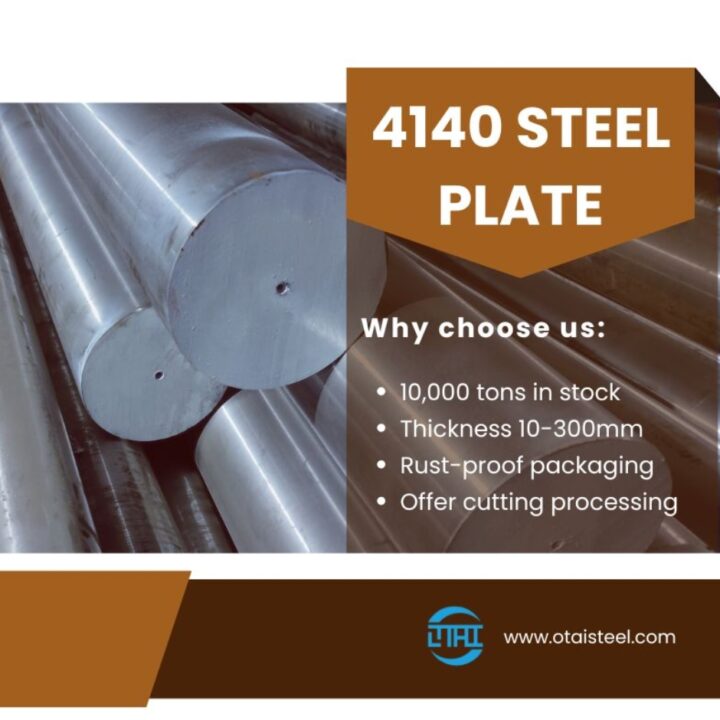
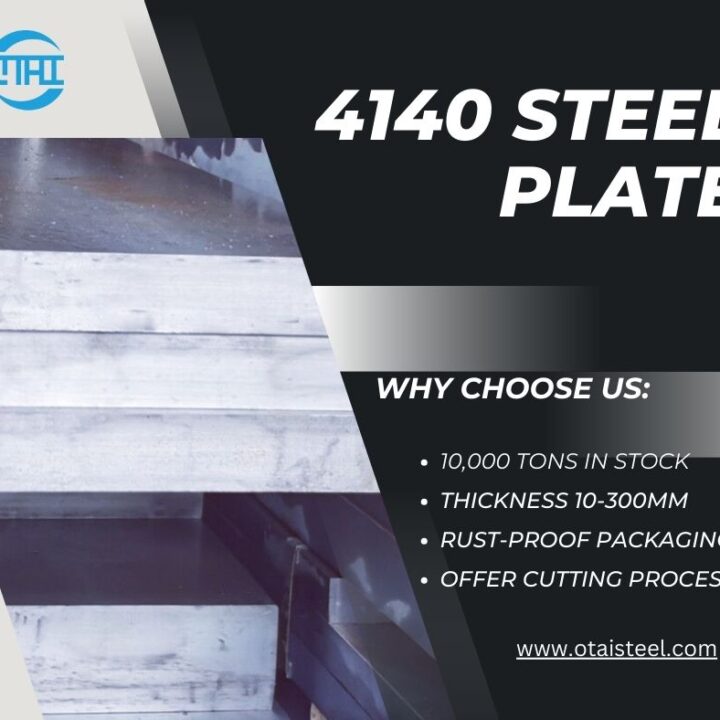
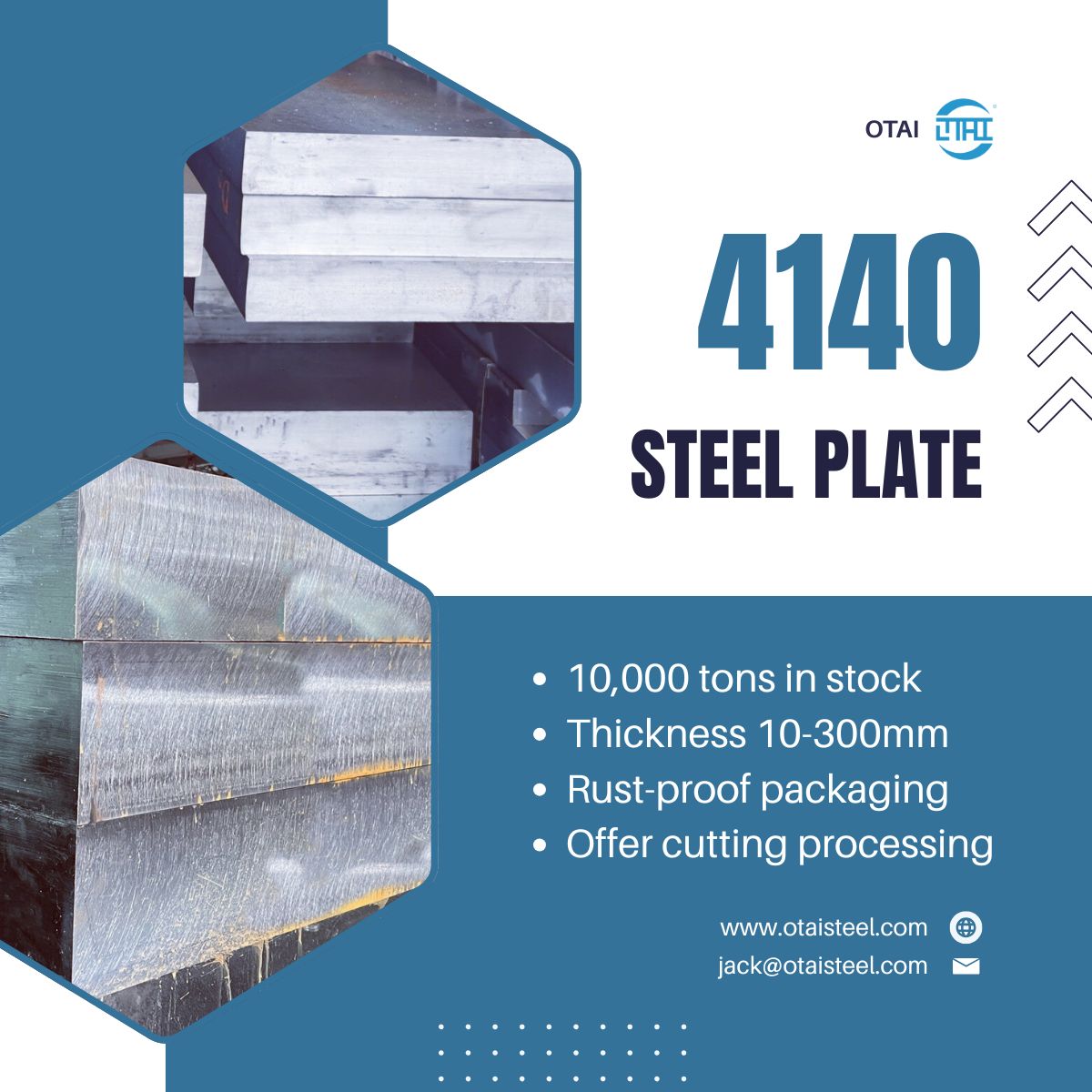
Otai Special Steel supplies AISI 4140 alloy steel plates and provides professional material solutions for customers requiring high-performance alloy steel.
- Large inventory: Otai maintains approximately 10,000 tons of alloy steel inventory and provides different sizes of 4140 steel plates in stock for fast delivery.
- Wide size availability: Different thicknesses and dimensions of 4140 steel plates are available to meet various machining and fabrication requirements.
- Processing service: Cutting, machining, and customized processing services help customers reduce production preparation time.
- Heat treatment support: Normalizing, quenching, tempering, and other heat treatment solutions can be arranged according to project requirements.
- Quality inspection: Ultrasonic testing and third-party inspection services are available for customers requiring strict quality control.
- Professional export experience: Otai has supplied alloy steel materials to international customers with demanding technical standards.
- Safe packaging: Anti-rust protection, steel strapping, and wooden box packaging ensure safe transportation.
With strong inventory capability and technical support, Otai provides reliable 4140 steel solutions for welding, machining, and industrial applications.
❓ FAQ About Weldability of 4140 Steel
Q1: Is 4140 steel weldable?
Yes. 4140 steel can be welded successfully when proper procedures are used, including preheating, suitable filler materials, controlled cooling, and heat treatment when required.
Q2: What is the best welding method for 4140 steel?
Common methods include SMAW, MIG/GMAW, TIG/GTAW, and submerged arc welding. The best method depends on thickness, production requirements, and application conditions.
Q3: Does 4140 steel require preheating before welding?
In most industrial applications, preheating is recommended because it reduces cooling speed and lowers the risk of cracking in the heat-affected zone.
Q4: Why does 4140 steel crack during welding?
Cracking usually occurs because of high hardenability, hydrogen exposure, rapid cooling, or excessive residual stress. Proper welding control can reduce these risks.
Q5: Can Otai supply 4140 steel plates for welding applications?
Yes. Otai supplies 4140 alloy steel plates with large inventory, different sizes available in stock, cutting service, heat treatment support, and ultrasonic testing options.