Skip to Content

Blog Archives

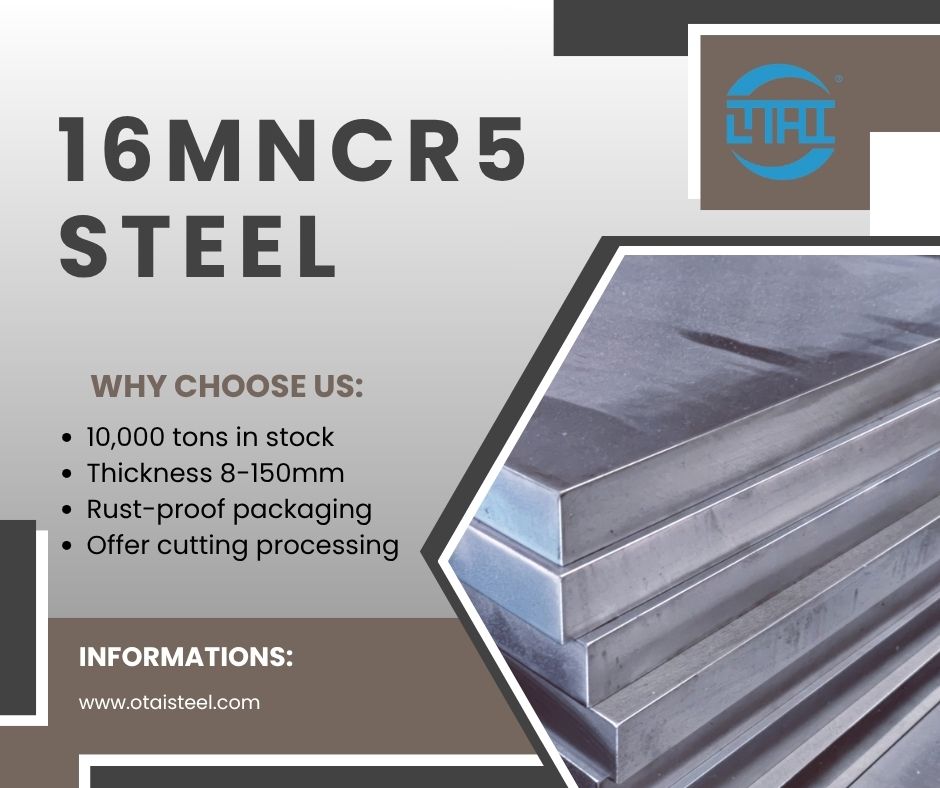
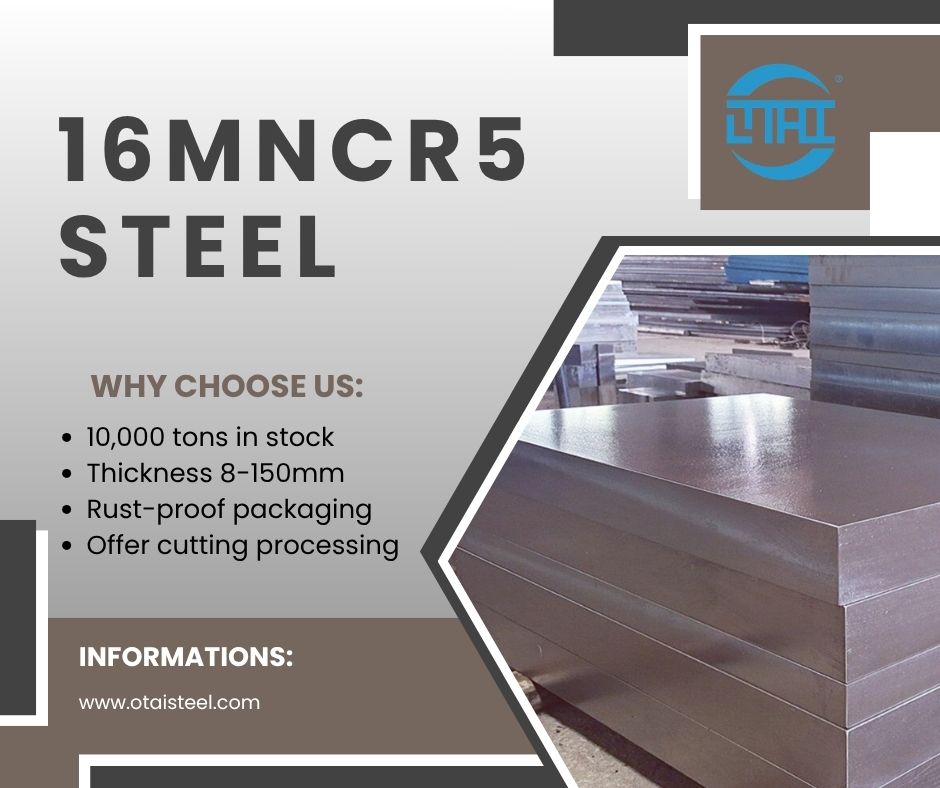
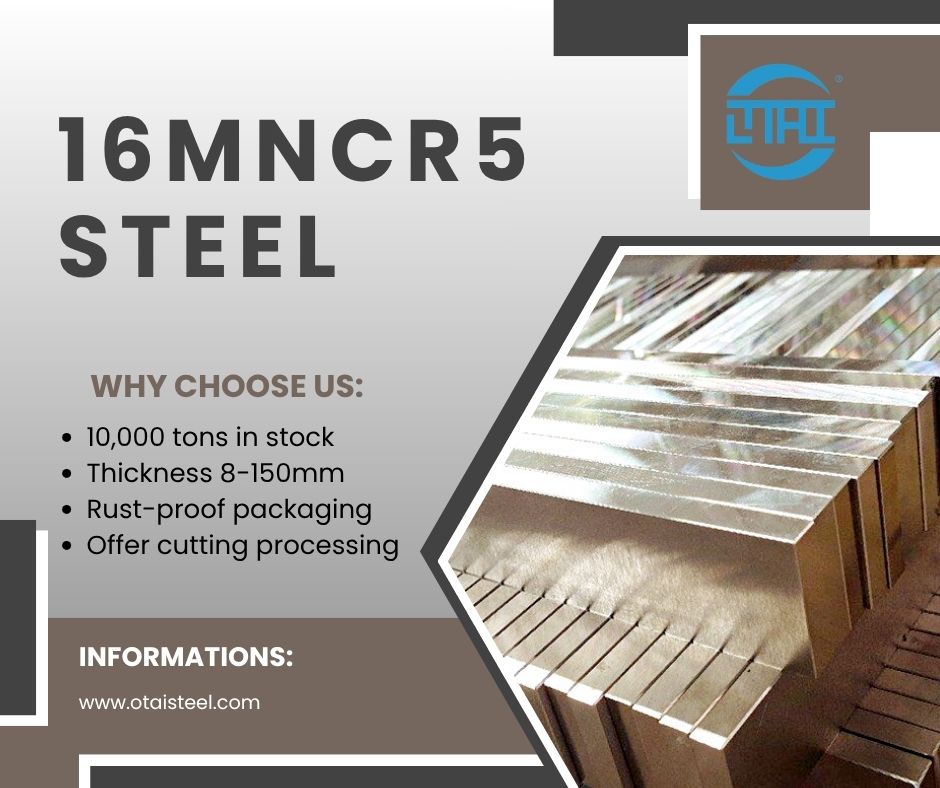
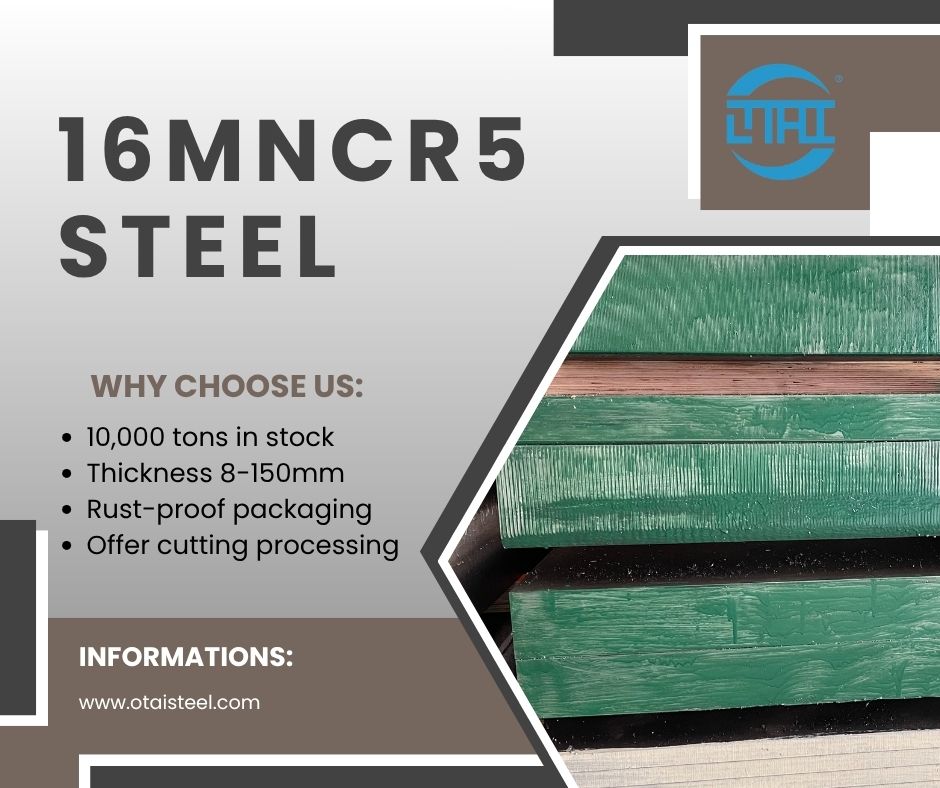
16MnCr5 Suppliers – How to Choose a Reliable Source for High-Quality Carburizing Steel

16MnCr5 Suppliers – How to Choose a Reliable Source for High-Quality Carburizing Steel16MnCr5 Suppliers – How to Choose a Reliable Source for High-Quality Carburizing Steel

When searching for reliable 16MnCr5 suppliers, buyers often face challenges such as inconsistent material quality, long lead times, limited inventory, and insufficient technical support. Since 16MnCr5 is one of the most widely used case-hardening steels in automotive, industrial gearbox, mining, and machinery manufacturing industries, selecting the right supplier is critical for ensuring product performance and supply chain stability.

16MnCr5 is a low-carbon chromium alloy steel designed primarily for carburizing applications. After carburizing, quenching, and tempering, it develops a hard wear-resistant surface while maintaining a tough and ductile core. This unique combination makes it ideal for gears, shafts, pinions, bushings, sprockets, and other transmission components subjected to repeated loading and wear.

Choosing experienced 16MnCr5 steel suppliers can help manufacturers reduce procurement risks, improve production efficiency, and maintain consistent product quality.

📊 What Is 16MnCr5 Steel?

16MnCr5 is a European standard carburizing steel grade identified as material number 1.7131 according to EN standards. The alloy contains chromium and manganese, which enhance hardenability, strength, and wear resistance.

Property Value
Steel Grade 16MnCr5
Material Number 1.7131
Steel Type Carburizing Alloy Steel
Heat Treatment Carburizing, Quenching, Tempering
Typical Hardness After Carburizing 58–62 HRC
Primary Applications Gears, Shafts, Pinions, Bushings

The material’s excellent response to heat treatment explains why many manufacturers specifically seek experienced 16MnCr5 material suppliers rather than purchasing from general steel distributors.

⚙️ Why Supplier Selection Matters

Not all suppliers offer the same level of quality assurance, inventory availability, or processing capabilities.

A professional 16MnCr5 alloy steel supplier should provide:

  • Verified chemical composition
  • Stable mechanical properties
  • Complete mill test certificates
  • Ultrasonic testing capability
  • Precision cutting services
  • Heat treatment support
  • International shipping experience
  • Technical material consultation

Poor-quality materials can lead to premature gear failure, excessive wear, dimensional instability, and costly production delays.

For industries producing critical drivetrain components, supplier reliability often has a greater impact than material cost alone.

🔬 Key Quality Indicators to Evaluate

Before selecting a 16MnCr5 steel stockist, buyers should evaluate several important quality factors.

Evaluation Item Importance Benefit
Chemical Analysis Very High Consistent heat treatment performance
UT Inspection Very High Internal defect detection
Mill Certificate High Material traceability
Inventory Availability High Reduced lead time
Processing Service Medium Lower machining costs
Export Experience High Reliable global delivery

📦 Available Product Forms

Leading 16MnCr5 steel distributors typically offer multiple product forms to satisfy different manufacturing requirements.

Product Form Typical Use
Round Bars Shafts, gears, pinions
Steel Plates Machined components
Forged Blocks Heavy machinery parts
Flat Bars Custom engineering components
Cut-to-Size Material Production efficiency

🌍 Global Demand for 16MnCr5 Steel

Demand for 16MnCr5 carburizing steel supplier services continues to grow because modern industries require stronger and more wear-resistant drivetrain components.

  • Automotive transmission manufacturing
  • Wind power equipment
  • Industrial gearbox production
  • Agricultural machinery
  • Mining equipment
  • Construction machinery
  • Heavy engineering systems

💰 Factors Affecting 16MnCr5 Steel Pricing

Factor Impact on Price
Raw Material Cost Direct influence on market price
Product Size Large dimensions may increase cost
Quantity Ordered Bulk orders often receive discounts
Heat Treatment Requirements Additional processing increases cost
Testing Requirements UT and third-party inspection add value
International Shipping Freight costs vary by destination

🏆 How to Identify a Reliable 16MnCr5 Supplier

Not every supplier has the capability to support demanding industrial projects. The best suppliers provide more than just steel products.

Supplier Capability Customer Benefit
Large Inventory Fast delivery
Technical Support Material selection assistance
Quality Testing Reduced production risk
Custom Cutting Lower machining waste
Export Experience Reliable international shipping
After-Sales Service Long-term cooperation support

A dependable supplier should act as a technical partner rather than simply a material vendor.

🏭 Company Advantages

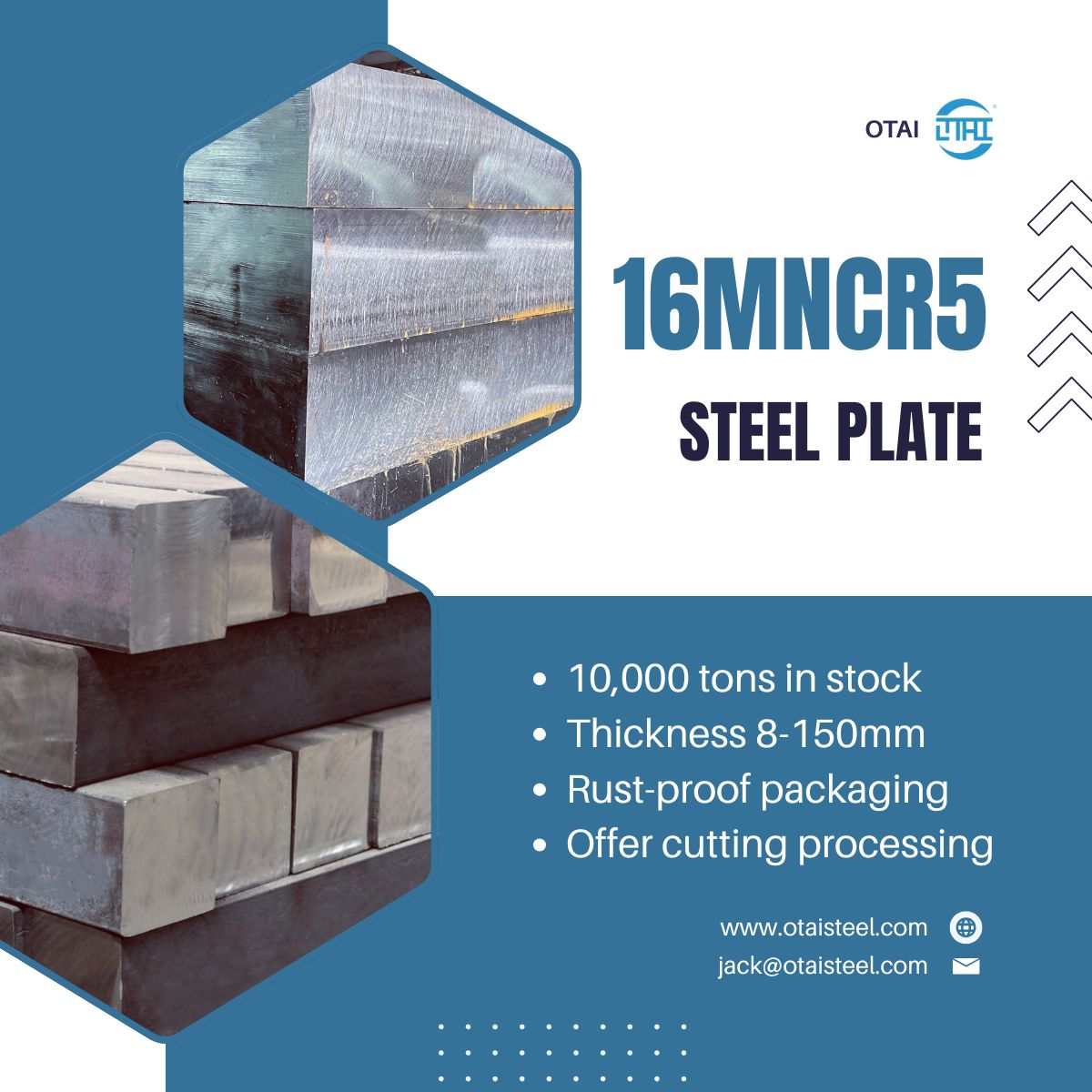
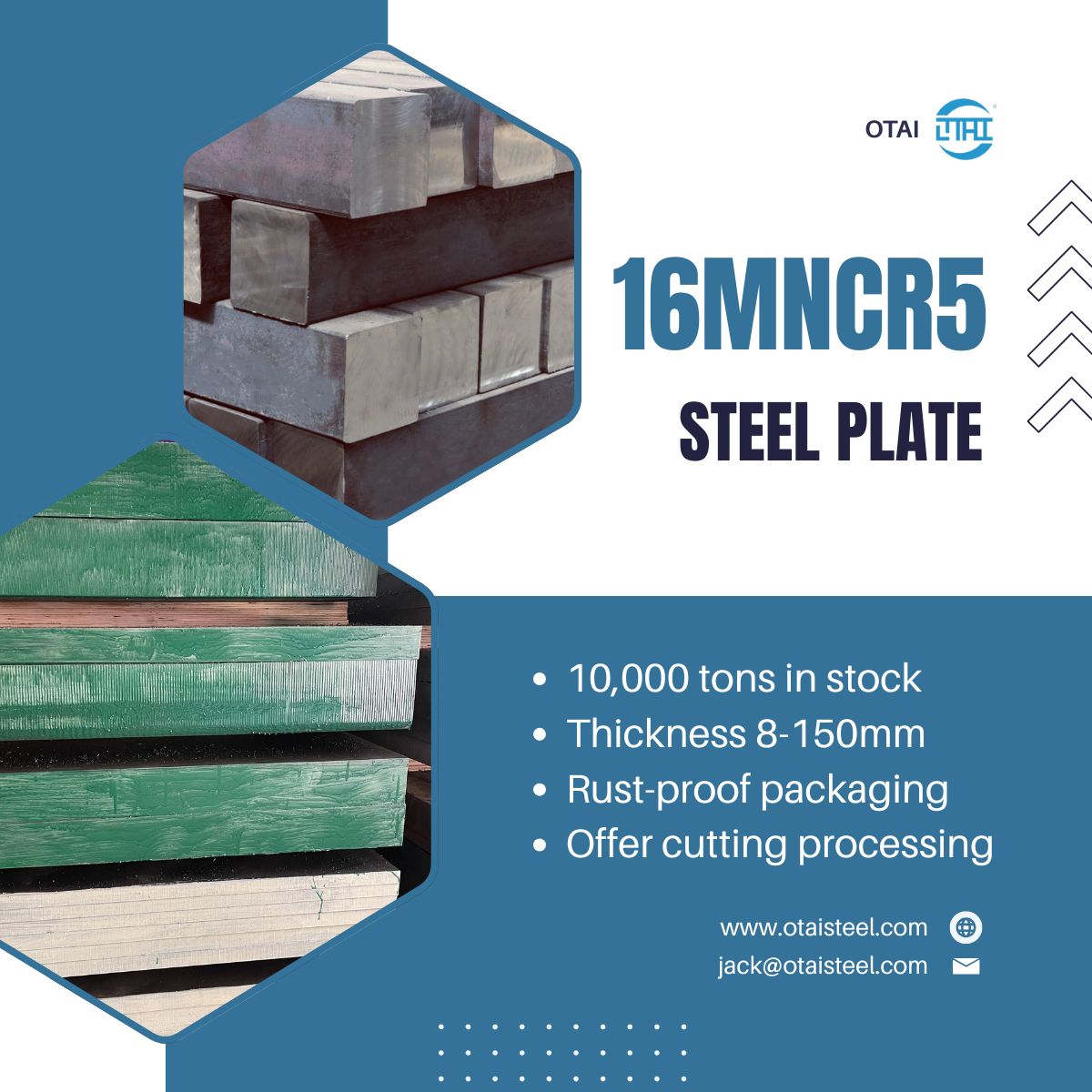
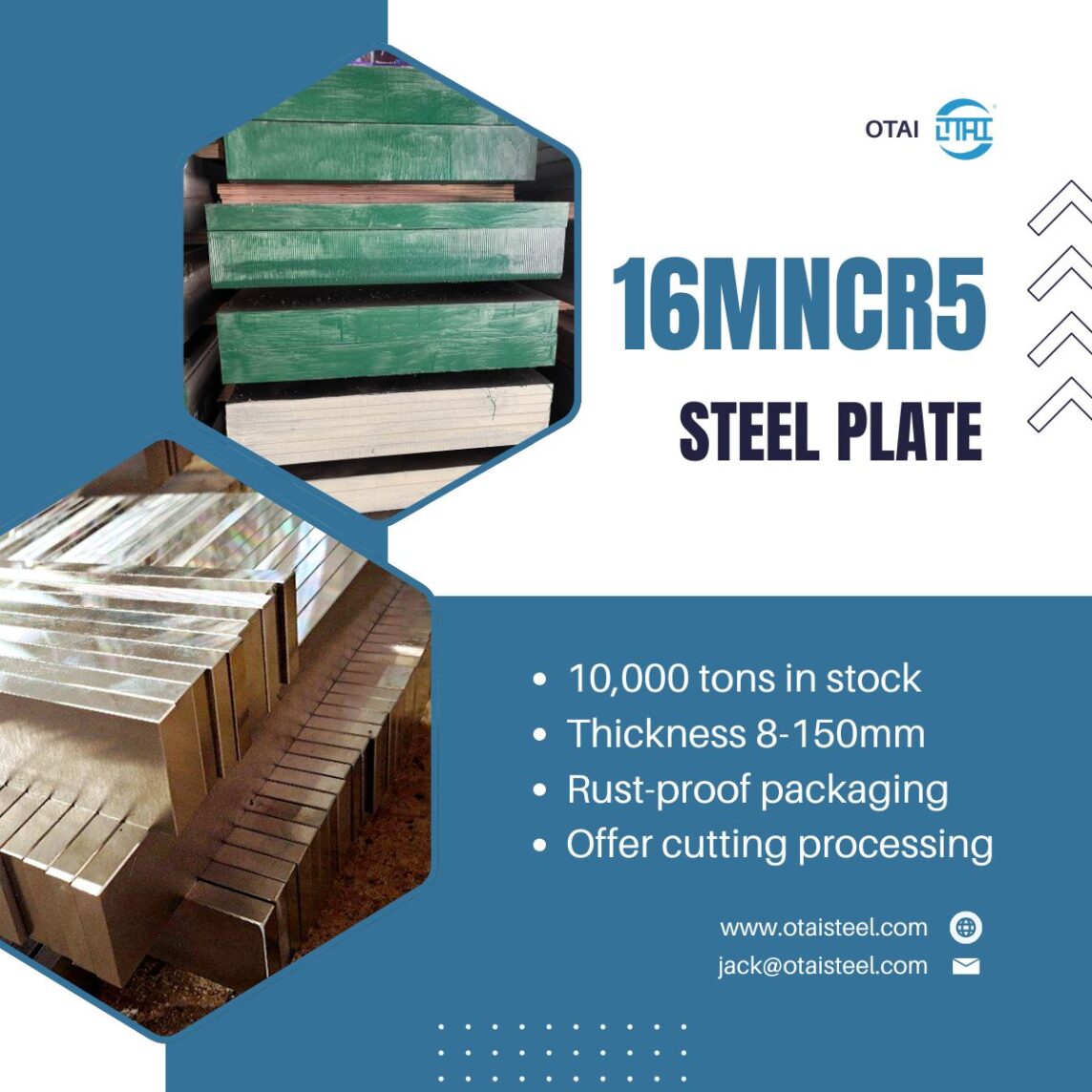
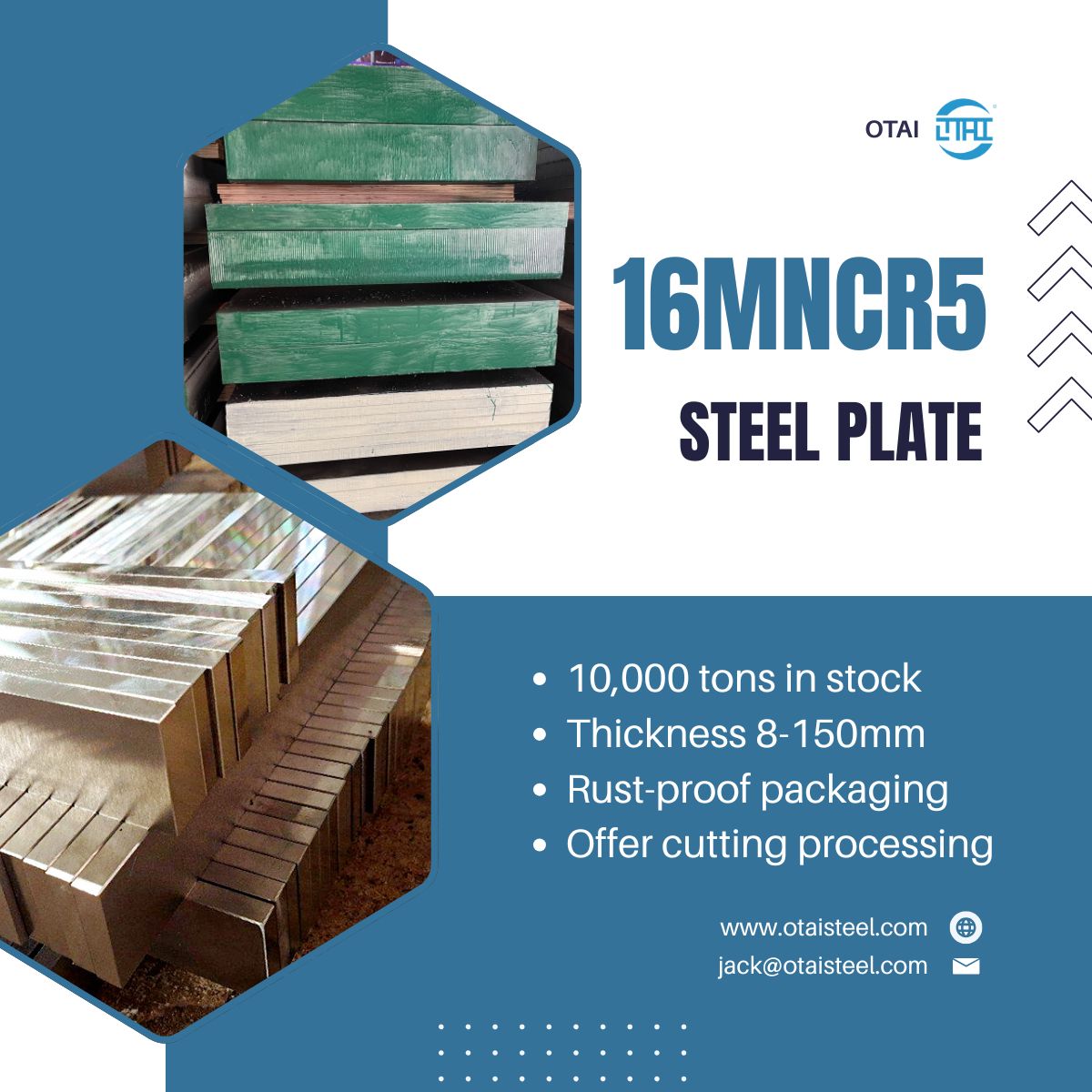
Otai Special Steel is a trusted supplier of 16MnCr5 alloy steel products for customers worldwide.

  • More than 10,000 tons of steel inventory available year-round
  • 8–150mm thickness plates available in stock
  • Round bars, forged blocks, steel plates, and flat bars available
  • Custom cutting according to customer drawings
  • Professional heat treatment support
  • Ultrasonic testing (UT) available
  • Chemical composition verification
  • Third-party inspection services including SGS
  • Professional export packaging and worldwide delivery
  • Extensive experience serving international engineering companies

Our goal is to help customers reduce procurement risks while ensuring stable quality and reliable supply.

❓ FAQ

Q1: What products do 16MnCr5 suppliers usually provide?

A1: Most suppliers offer round bars, steel plates, forged blocks, flat bars, and customized cut-to-size materials.

Q2: Why is 16MnCr5 widely used for gears?

A2: After carburizing, it achieves a hard wear-resistant surface while maintaining a tough core, making it ideal for gear applications.

Q3: What hardness can 16MnCr5 achieve after carburizing?

A3: The surface hardness typically reaches 58–62 HRC.

Q4: What certifications should a supplier provide?

A4: Mill test certificates, chemical composition reports, mechanical property reports, and inspection documentation are commonly required.

Q5: Can 16MnCr5 suppliers provide machining services?

A5: Yes. Many professional suppliers offer cutting, rough machining, heat treatment, and testing services.

0 0 Continue Reading →

16MnCr5 Chemical Properties: Composition and Alloy Characteristics

16MnCr5 Chemical Properties: Composition and Alloy Characteristics16MnCr5 Chemical Properties: Composition and Alloy Characteristics

The 16MnCr5 chemical properties play a critical role in determining the steel’s hardenability, wear resistance, toughness, and carburizing performance. 16MnCr5 is a low-carbon chromium alloy steel widely used in gears, shafts, transmission systems, and high-wear mechanical components.

This alloy steel is especially valued for:

  • Excellent carburizing capability
  • High surface hardness after heat treatment
  • Strong core toughness
  • Good fatigue resistance
  • Reliable dimensional stability
  • Excellent machinability before hardening

Because of these advantages, 16MnCr5 is widely used in automotive, industrial machinery, mining equipment, agricultural systems, and heavy engineering industries.

📊 Chemical Composition of 16MnCr5 Steel

The chemical composition of 16MnCr5 is carefully balanced to provide excellent carburizing and mechanical performance.

Element Composition (%) Primary Function
Carbon (C) 0.14 – 0.19 Supports surface hardening
Manganese (Mn) 1.00 – 1.30 Improves hardenability and strength
Chromium (Cr) 0.80 – 1.10 Enhances wear resistance
Silicon (Si) 0.17 – 0.37 Improves strength and stability
Phosphorus (P) ≤ 0.035 Controls brittleness
Sulfur (S) ≤ 0.035 Improves machinability

The combination of chromium and manganese gives 16MnCr5 excellent hardening depth and mechanical reliability after carburizing.

⚙️ Role of Each Alloying Element

Each alloying element contributes to the overall performance of 16MnCr5 steel.

Element Effect on Steel Performance
Carbon Increases hardness after carburizing
Manganese Improves tensile strength and toughness
Chromium Enhances wear resistance and hardenability
Silicon Strengthens ferrite structure
Sulfur Supports machining performance

The balanced alloy structure allows 16MnCr5 to achieve high surface hardness while maintaining a strong and ductile core.

🔥 Chemical Properties and Heat Treatment Performance

The chemical properties of 16MnCr5 make it highly suitable for carburizing and case hardening processes.

Heat Treatment Process Typical Temperature Purpose
Annealing 650 – 700°C Improve machinability
Normalizing 850 – 880°C Refine grain structure
Carburizing 880 – 930°C Increase surface carbon content
Quenching 780 – 820°C Create martensitic structure
Tempering 150 – 200°C Improve toughness

After carburizing and quenching, 16MnCr5 can achieve surface hardness levels of 58–62 HRC with excellent wear resistance.

🔬 Microstructure and Chemical Stability

The chemical properties of 16MnCr5 directly influence its microstructure development during heat treatment and carburizing operations.

Microstructure Condition Performance Advantage
Ferrite + Pearlite Annealed State Good machinability
Refined Pearlite Normalized State Improved mechanical strength
Martensite Quenched Surface Very high hardness
Tempered Martensite Tempered Structure Improved toughness and fatigue resistance

The chromium and manganese content stabilize the hardened structure and improve wear resistance under continuous mechanical loading.

⚙️ Mechanical Benefits Created by Chemical Properties

The balanced chemical composition of 16MnCr5 produces excellent mechanical performance after proper heat treatment.

Mechanical Property Typical Performance Industrial Benefit
Surface Hardness 58 – 62 HRC Excellent wear resistance
Core Toughness High Reduced cracking risk
Fatigue Resistance Excellent Longer service life
Wear Resistance Very High Reduced maintenance cost
Dimensional Stability Good Precision component reliability

These properties make 16MnCr5 one of the most popular carburizing steels for high-load transmission systems.

🏭 Industrial Applications Based on Chemical Properties

The chemical characteristics of 16MnCr5 make it suitable for many high-performance engineering applications.

Industry Typical Components Required Performance
Automotive Transmission gears Fatigue resistance
Industrial Gearboxes Gear wheels and shafts Wear resistance
Mining Equipment Drive systems Impact toughness
Agricultural Machinery Rotating components Long-term durability
Heavy Engineering Mechanical couplings High load capacity

The carburizing capability and mechanical reliability of 16MnCr5 make it highly effective for dynamic load applications.

🌍 International Equivalent Grades

Standard Equivalent Grade
DIN / EN 16MnCr5 / 1.7131
AFNOR 16MC5
UNI 16MnCr5
JIS Equivalent carburizing alloy steel grades

These equivalent standards provide similar chemical balance, hardenability, and engineering performance.

🏭 Company Advantages

Otai Special Steel supplies premium-quality 16MnCr5 alloy steel for carburizing, machining, forging, and heavy-duty industrial applications worldwide.

  • Large inventory with stable year-round supply
  • 8–150mm thickness plates available in stock
  • Round bars, forged blocks, flat bars, and steel plates available
  • Custom cutting and precision machining services
  • Professional carburizing and heat treatment support
  • Ultrasonic testing (UT) available
  • Chemical composition verification
  • Third-party inspection support including SGS
  • Professional export packaging and worldwide shipping

We provide reliable quality, competitive pricing, fast delivery, and customized alloy steel solutions for automotive, mining, gearbox, and industrial machinery industries.

❓ FAQ

Q1: What are the main chemical elements in 16MnCr5 steel?

A1: The primary alloying elements are carbon, manganese, chromium, silicon, phosphorus, and sulfur.

Q2: Why is chromium important in 16MnCr5?

A2: Chromium improves wear resistance, hardenability, and surface hardness after carburizing.

Q3: What hardness can 16MnCr5 achieve after heat treatment?

A3: The carburized surface hardness typically reaches 58–62 HRC.

Q4: What industries commonly use 16MnCr5 steel?

A4: Automotive, mining, agricultural machinery, industrial gearbox, and heavy engineering industries widely use this material.

Q5: Why is 16MnCr5 suitable for gears?

A5: It provides excellent wear resistance, fatigue strength, and a tough core structure after carburizing.

0 0 Continue Reading →

16MnCr5 Casting: Properties and Heat Treatment

16MnCr5 Casting: Properties and Heat Treatment16MnCr5 Casting: Properties and Heat Treatment

The 16MnCr5 casting process is widely used for manufacturing wear-resistant and high-strength mechanical components in automotive, industrial machinery, mining, and transmission industries. 16MnCr5 is a low-carbon chromium alloy steel known for its excellent carburizing capability, good toughness, and high surface hardness after heat treatment.

Although 16MnCr5 is commonly supplied as forged or rolled steel, cast components made from similar chemical compositions are also used in specialized engineering applications requiring:

  • High wear resistance
  • Good fatigue strength
  • Strong core toughness
  • Excellent carburizing performance
  • Reliable dimensional stability
  • Long service life under heavy loads

Typical cast components include:

  • Gear blanks
  • Transmission housings
  • Industrial pinions
  • Heavy-duty couplings
  • Mining machinery parts
  • Mechanical drive components

📊 Chemical Composition of 16MnCr5 Casting Steel

The alloy composition of 16MnCr5 provides a good balance between hardenability, toughness, and machinability.

Element Typical Content (%) Function
Carbon (C) 0.14 – 0.19 Supports carburized hardness
Manganese (Mn) 1.00 – 1.30 Improves hardenability
Chromium (Cr) 0.80 – 1.10 Enhances wear resistance
Silicon (Si) 0.17 – 0.37 Improves structural stability
Phosphorus (P) ≤ 0.035 Controls brittleness
Sulfur (S) ≤ 0.035 Improves machinability

The chromium-manganese alloy system provides excellent mechanical performance after carburizing and heat treatment.

⚙️ Mechanical Properties of 16MnCr5 Cast Components

The mechanical properties of cast 16MnCr5 components depend heavily on casting quality, heat treatment, and carburizing depth.

Property Typical Value Industrial Benefit
Surface Hardness 58 – 62 HRC Excellent wear resistance
Core Hardness 30 – 45 HRC Good impact toughness
Tensile Strength 800 – 1200 MPa Supports heavy loads
Fatigue Resistance Excellent Long service life
Wear Resistance Very High Reduced maintenance

After carburizing and quenching, the steel develops a hard martensitic surface while maintaining a tough core structure.

🔥 Heat Treatment for 16MnCr5 Castings

Heat treatment is essential for improving the final performance of 16MnCr5 cast components.

Heat Treatment Process Typical Temperature Purpose
Annealing 650 – 700°C Improve machinability
Normalizing 850 – 880°C Refine grain structure
Carburizing 880 – 930°C Increase surface hardness
Quenching 780 – 820°C Form martensitic structure
Tempering 150 – 200°C Improve toughness

Proper heat treatment significantly improves fatigue life, hardness uniformity, and dimensional stability.

🔬 Casting Microstructure and Performance

The microstructure of 16MnCr5 cast steel strongly influences its final mechanical properties, wear resistance, and fatigue life. Proper casting control and heat treatment help refine the grain structure and reduce internal defects.

Microstructure Condition Performance Benefit
Ferrite + Pearlite Annealed Casting Good machinability
Refined Pearlite Normalized Casting Improved strength
Martensite Carburized & Quenched Very high surface hardness
Tempered Martensite Tempered Structure Better fatigue resistance

The carburized martensitic layer gives cast components excellent durability under rolling contact and heavy cyclic loading.

⚙️ Advantages of 16MnCr5 Casting Components

16MnCr5 cast steel components offer several advantages for industrial power transmission systems and wear-resistant machinery.

Advantage Industrial Benefit
Excellent Wear Resistance Longer component life
High Surface Hardness Reduced friction damage
Strong Core Toughness Improved shock resistance
Good Machinability Efficient manufacturing
Excellent Fatigue Strength Reliable long-term performance

These properties make 16MnCr5 casting suitable for components exposed to continuous stress, vibration, and mechanical friction.

🏭 Industrial Applications of 16MnCr5 Castings

16MnCr5 cast steel components are commonly used in industries requiring wear-resistant and fatigue-resistant mechanical parts.

Industry Typical Components Required Performance
Automotive Gear blanks and pinions Fatigue resistance
Industrial Gearboxes Transmission parts Wear resistance
Mining Machinery Heavy-duty drive parts Impact toughness
Agricultural Equipment Rotating mechanical parts Long service life
Heavy Engineering Mechanical couplings High load capacity

The combination of wear resistance and core toughness makes 16MnCr5 cast steel highly reliable in severe industrial environments.

🌍 International Equivalent Grades

Standard Equivalent Grade
DIN / EN 16MnCr5 / 1.7131
AFNOR 16MC5
UNI 16MnCr5
JIS Equivalent carburizing alloy steel grades

These equivalent grades provide similar carburizing performance, hardenability, and mechanical reliability for industrial casting applications.

🏭 Company Advantages

Otai Special Steel supplies high-quality 16MnCr5 alloy steel for casting, forging, machining, carburizing, and heavy-duty industrial applications worldwide.

  • Large inventory with stable year-round supply
  • 8–150mm thickness plates available in stock
  • Round bars, forged blocks, steel plates, and flat bars available
  • Custom cutting and machining services
  • Professional carburizing and heat treatment support
  • Ultrasonic testing (UT) available
  • Chemical composition verification
  • Third-party inspection support including SGS
  • Professional export packaging and global shipping

We provide reliable quality, competitive pricing, fast delivery, and customized alloy steel solutions for automotive, mining, gearbox, and heavy engineering industries.

❓ FAQ

Q1: Is 16MnCr5 suitable for casting applications?

A1: Yes. 16MnCr5 casting components are widely used for gears, transmission parts, and wear-resistant mechanical systems requiring carburizing performance.

Q2: What hardness can 16MnCr5 castings achieve after carburizing?

A2: The surface hardness typically reaches 58–62 HRC after carburizing and quenching.

Q3: What industries use 16MnCr5 cast steel?

A3: Automotive, mining, industrial gearbox, agricultural machinery, and heavy engineering industries commonly use this material.

Q4: Why is heat treatment important for 16MnCr5 castings?

A4: Heat treatment improves hardness, fatigue resistance, wear resistance, and overall mechanical performance.

Q5: What are the advantages of 16MnCr5 cast components?

A5: They offer excellent wear resistance, strong core toughness, high fatigue strength, and long service life.

0 0 Continue Reading →

16MnCr5 Case Hardening Process: Heat Treatment Steps

16MnCr5 Case Hardening Process: Heat Treatment Steps16MnCr5 Case Hardening Process: Heat Treatment Steps

The 16MnCr5 case hardening process is widely used to improve the surface hardness, wear resistance, and fatigue strength of mechanical components while maintaining a tough and ductile core. 16MnCr5 is a low-carbon chromium alloy steel specifically designed for carburizing and case hardening applications.

After proper heat treatment, the steel develops:

  • A hard martensitic surface layer
  • Excellent wear resistance
  • High contact fatigue strength
  • Strong core toughness
  • Long service life under heavy loads

Because of these advantages, 16MnCr5 steel is commonly used for:

  • Transmission gears
  • Pinions
  • Shafts
  • Gear rings
  • Industrial gearbox components
  • Automotive drive systems

📊 What Is the 16MnCr5 Case Hardening Process?

Case hardening is a heat treatment method that increases carbon content on the steel surface while keeping the core relatively low in carbon. This process creates a hard outer layer with a strong and impact-resistant inner structure.

The complete 16MnCr5 case hardening process usually includes:

  1. Preheating
  2. Carburizing
  3. Diffusion treatment
  4. Quenching
  5. Tempering

These steps significantly improve surface durability and mechanical performance.

⚙️ Typical Case Hardening Process Parameters

The exact process parameters depend on required hardness depth, component size, and final application requirements.

Process Step Typical Temperature Purpose
Preheating 600 – 650°C Reduce thermal stress
Carburizing 880 – 930°C Increase surface carbon content
Diffusion 840 – 860°C Equalize carbon distribution
Quenching 780 – 820°C Form martensitic structure
Tempering 150 – 200°C Improve toughness

Careful temperature control is essential for achieving stable hardness and dimensional accuracy.

🧪 Hardness After Case Hardening

The case hardening process dramatically increases the surface hardness of 16MnCr5 steel.

Property Typical Value Benefit
Surface Hardness 58 – 62 HRC Excellent wear resistance
Core Hardness 30 – 45 HRC High impact toughness
Case Depth 0.5 – 2.0 mm Longer service life
Fatigue Resistance Excellent Supports repeated loading

The hard surface layer protects the component from friction, wear, and surface fatigue during long-term operation.

🔬 Microstructure After Case Hardening

The microstructure developed during the 16MnCr5 case hardening process directly affects hardness, fatigue strength, and wear resistance.

Microstructure Location Performance Advantage
Martensite Surface Layer High hardness and wear resistance
Tempered Martensite Subsurface Area Improved fatigue resistance
Ferrite + Pearlite Core Structure Excellent toughness and ductility

This combination of a hard surface and ductile core gives 16MnCr5 outstanding performance under repeated loading and impact conditions.

⚙️ Advantages of the 16MnCr5 Case Hardening Process

The carburizing and case hardening process significantly improves the engineering performance of 16MnCr5 steel.

Advantage Industrial Benefit
High Surface Hardness Improves wear resistance
Strong Core Toughness Reduces cracking risk
Excellent Fatigue Strength Longer service life
Good Dimensional Stability Supports precision components
Improved Contact Strength Ideal for gears and shafts

These advantages make 16MnCr5 one of the most commonly used carburizing steels in the mechanical transmission industry.

🏭 Industrial Applications After Case Hardening

Case-hardened 16MnCr5 steel is widely used in industries requiring high durability and reliable mechanical performance.

Industry Typical Components Required Performance
Automotive Transmission gears Fatigue resistance
Industrial Gearboxes Gear wheels and pinions Wear resistance
Mining Equipment Drive shafts Impact toughness
Agricultural Machinery Transmission systems Long-term durability
Heavy Engineering Rotating components High load capacity

The excellent balance between hardness and toughness allows the material to operate reliably in demanding environments.

🌍 International Equivalent Grades

16MnCr5 steel is recognized globally under several equivalent standards.

Standard Equivalent Grade
DIN / EN 16MnCr5 / 1.7131
AFNOR 16MC5
UNI 16MnCr5
JIS Equivalent carburizing alloy steel grades

These international grades provide similar carburizing performance, hardenability, and mechanical reliability.

🏭 Company Advantages

Otai Special Steel supplies premium-quality 16MnCr5 alloy steel for gears, shafts, transmission systems, and heavy-duty engineering applications worldwide.

  • Large inventory with stable year-round supply
  • 8–150mm thickness plates available in stock
  • Round bars, steel plates, forged blocks, and flat bars available
  • Custom cutting and precision machining services
  • Professional carburizing and heat treatment support
  • Ultrasonic testing (UT) available
  • Chemical composition verification
  • Third-party inspection support including SGS
  • Professional export packaging and global shipping

We provide reliable quality, competitive pricing, fast delivery, and customized alloy steel solutions for customers in automotive, mining, industrial machinery, and heavy engineering industries.

❓ FAQ

Q1: What is the 16MnCr5 case hardening process?

A1: It is a carburizing heat treatment process that creates a hard wear-resistant surface while maintaining a tough core structure.

Q2: What hardness can 16MnCr5 achieve after case hardening?

A2: The surface hardness typically reaches 58–62 HRC after carburizing and quenching.

Q3: Why is 16MnCr5 suitable for gears?

A3: The steel provides excellent wear resistance, fatigue strength, and impact toughness, making it ideal for transmission components.

Q4: What is the typical carburizing temperature for 16MnCr5?

A4: The carburizing temperature is generally between 880–930°C.

Q5: Which industries commonly use case-hardened 16MnCr5 steel?

A5: Automotive, mining, industrial gearbox, agricultural machinery, and heavy engineering industries commonly use this material.

0 0 Continue Reading →

16MnCr5 Material Mechanical Properties: Industrial Performance

16MnCr5 Material Mechanical Properties: Industrial Performance16MnCr5 Material Mechanical Properties: Industrial Performance

The 16MnCr5 material mechanical properties make this alloy steel one of the most widely used carburizing steels for gears, shafts, pinions, and transmission components. 16MnCr5 is a low-carbon chromium alloy steel designed to provide a hard wear-resistant surface combined with a strong and tough core structure.

After carburizing and heat treatment, 16MnCr5 steel delivers excellent:

  • Surface hardness
  • Fatigue resistance
  • Wear resistance
  • Impact toughness
  • Core strength
  • Dimensional stability

Because of these properties, the material is commonly used in:

  • Automotive transmissions
  • Industrial gearboxes
  • Mining machinery
  • Agricultural equipment
  • Heavy engineering systems
  • Mechanical power transmission components

📊 Mechanical Properties of 16MnCr5 Steel

The mechanical properties of 16MnCr5 vary depending on heat treatment condition, carburizing depth, and final hardness.

Property Typical Value Industrial Benefit
Surface Hardness 58 – 62 HRC Excellent wear resistance
Core Hardness 30 – 45 HRC High impact toughness
Tensile Strength 900 – 1200 MPa Supports heavy loads
Yield Strength 650 – 850 MPa Improves structural reliability
Elongation 10 – 14% Provides ductility
Impact Toughness High Reduces crack risk

The combination of hard surface and tough core gives 16MnCr5 excellent fatigue life in demanding applications.

🧪 Chemical Composition and Mechanical Performance

The balanced alloy composition of 16MnCr5 directly affects its mechanical behavior and hardenability.

Element Typical Content (%) Influence on Mechanical Properties
Carbon (C) 0.14 – 0.19 Improves hardness and wear resistance
Manganese (Mn) 1.00 – 1.30 Increases hardenability and strength
Chromium (Cr) 0.80 – 1.10 Improves wear resistance and fatigue strength
Silicon (Si) 0.17 – 0.37 Improves structural stability

The chromium-manganese alloy system gives 16MnCr5 excellent carburizing capability and mechanical reliability.

🔥 Heat Treatment and Property Enhancement

The mechanical properties of 16MnCr5 steel improve significantly after carburizing and heat treatment.

Heat Treatment Process Typical Temperature Result
Annealing 650 – 700°C Improves machinability
Normalizing 850 – 880°C Refines grain structure
Carburizing 880 – 930°C Creates hard surface layer
Quenching 780 – 820°C Increases hardness and strength
Tempering 150 – 200°C Improves toughness and fatigue resistance

Proper heat treatment produces a wear-resistant martensitic surface layer while maintaining a ductile and shock-resistant core.

🔬 Microstructure and Mechanical Behavior

The microstructure of 16MnCr5 steel directly affects its mechanical properties and long-term service performance. Different heat treatment conditions produce different microstructures that influence hardness, toughness, and fatigue resistance.

Microstructure Typical Condition Mechanical Characteristics
Ferrite + Pearlite Annealed Good machinability and ductility
Refined Pearlite Normalized Improved strength and toughness
Martensite Carburized & Quenched Very high hardness and wear resistance
Tempered Martensite Tempered Excellent fatigue resistance and impact strength

The carburized martensitic surface is especially important for gears and rotating components exposed to repeated stress and friction.

📈 Fatigue Resistance and Wear Performance

One of the major advantages of 16MnCr5 steel is its excellent fatigue strength after carburizing and heat treatment.

Performance Area 16MnCr5 Performance Industrial Benefit
Contact Fatigue Resistance Excellent Long gear service life
Wear Resistance Very High Reduced maintenance cost
Impact Resistance High Reduced fracture risk
Core Toughness Excellent Supports heavy dynamic loads
Dimensional Stability Good Improves precision performance

These properties make 16MnCr5 highly suitable for heavy-duty transmission systems and rotating mechanical equipment.

🏭 Industrial Applications of 16MnCr5 Steel

The excellent mechanical properties of 16MnCr5 make it one of the preferred alloy steels for industrial power transmission systems.

Industry Typical Components Required Property
Automotive Transmission gears Fatigue resistance
Mining Equipment Drive systems Wear resistance
Industrial Machinery Pinions and shafts High load capacity
Agricultural Equipment Gear systems Impact resistance
Heavy Engineering Rotating components Long-term durability

The combination of high surface hardness and strong core toughness allows the material to operate reliably under severe working conditions.

🌍 International Equivalent Grades

16MnCr5 steel is internationally recognized under several equivalent standards and material designations.

Standard Equivalent Grade
DIN / EN 16MnCr5 / 1.7131
AFNOR 16MC5
UNI 16MnCr5
JIS Equivalent carburizing alloy steel grades

These international standards provide similar mechanical properties, carburizing capability, and industrial performance.

🏭 Company Advantages

Otai Special Steel supplies premium-quality 16MnCr5 alloy steel for gears, shafts, transmission systems, and heavy-duty engineering applications worldwide.

  • Large inventory with stable year-round supply
  • 8–150mm thickness plates available in stock
  • Round bars, steel plates, forged blocks, and flat bars available
  • Custom cutting and precision machining services
  • Professional carburizing and heat treatment support
  • Ultrasonic testing (UT) available
  • Chemical composition verification
  • Third-party inspection support including SGS
  • Professional export packaging and worldwide shipping

We provide reliable quality, competitive pricing, fast delivery, and customized alloy steel solutions for customers in automotive, mining, industrial machinery, and heavy engineering industries.

❓ FAQ

Q1: What are the main mechanical properties of 16MnCr5 steel?

A1: The main properties include high surface hardness, excellent wear resistance, strong fatigue resistance, and a tough core structure.

Q2: What hardness can 16MnCr5 achieve after carburizing?

A2: The carburized surface hardness typically reaches 58–62 HRC.

Q3: Why is 16MnCr5 suitable for gears?

A3: The steel provides a hard wear-resistant surface combined with excellent core toughness, making it ideal for transmission systems.

Q4: What is the tensile strength of 16MnCr5 steel?

A4: The tensile strength after heat treatment is typically between 900–1200 MPa.

Q5: Which industries commonly use 16MnCr5 steel?

A5: Automotive, mining, industrial machinery, agricultural equipment, and heavy engineering industries commonly use this material.

0 0 Continue Reading →

16MnCr5 Material Specification: Chemical Composition and Heat Treatment Standards

16MnCr5 Material Specification: Chemical Composition and Heat Treatment Standards16MnCr5 Material Specification: Chemical Composition and Heat Treatment Standards

The 16MnCr5 material specification defines the chemical composition, mechanical properties, heat treatment performance, and industrial applications of one of the most widely used carburizing alloy steels in the engineering industry. 16MnCr5 is a low-carbon chromium alloy steel that engineers design for case hardening applications. These applications require high surface hardness combined with a tough and durable core.

Manufacturers commonly use the material in automotive transmissions, industrial gears, shafts, pinions, mining equipment, and heavy mechanical systems operating under repeated stress and wear conditions.

16MnCr5 steel is highly valued because it provides:

  • Excellent carburizing performance
  • High wear resistance
  • Strong fatigue resistance
  • Good machinability before heat treatment
  • Excellent dimensional stability
  • Reliable toughness after quenching and tempering

The steel is generally supplied in several conditions:

  • Hot rolled
  • Forged
  • Annealed
  • Normalized
  • Carburized and quenched

📊 16MnCr5 Material Chemical Specification

The chemical composition of 16MnCr5 is carefully controlled to achieve excellent hardenability and wear resistance.

Element Typical Content (%) Main Function
Carbon (C) 0.14 – 0.19 Supports carburized hardness
Manganese (Mn) 1.00 – 1.30 Improves hardenability and strength
Chromium (Cr) 0.80 – 1.10 Enhances wear resistance
Silicon (Si) 0.17 – 0.37 Improves structural stability
Phosphorus (P) ≤ 0.025 Controls brittleness
Sulfur (S) ≤ 0.035 Improves machinability

The balanced chromium-manganese alloy system gives 16MnCr5 excellent case hardening capability and long-term durability.

⚙️ Mechanical Property Specification

The mechanical properties of 16MnCr5 vary depending on the heat treatment condition and final hardness level.

Property Typical Value Industrial Benefit
Surface Hardness 58 – 62 HRC Excellent wear resistance
Core Hardness 30 – 45 HRC High toughness
Tensile Strength 900 – 1200 MPa Supports heavy loads
Yield Strength High after heat treatment Improves structural reliability
Fatigue Resistance Excellent Long service life

The material is widely used in applications requiring a hard wear-resistant surface and a shock-resistant core.

🔥 Heat Treatment Specification

16MnCr5 steel is specifically designed for carburizing and case hardening operations.

Heat Treatment Process Typical Temperature Purpose
Annealing 650 – 700°C Improve machinability
Normalizing 850 – 880°C Refine grain structure
Carburizing 880 – 930°C Increase surface carbon content
Quenching 780 – 820°C Increase hardness
Tempering 150 – 200°C Improve toughness

Proper heat treatment produces a martensitic surface layer with excellent wear resistance and fatigue performance.

🔬 Microstructure and Material Performance

The specification of 16MnCr5 steel includes excellent microstructural characteristics after carburizing and heat treatment. These structures directly influence hardness, toughness, wear resistance, and fatigue strength.

Microstructure Typical Condition Performance Benefit
Ferrite + Pearlite Annealed Good machinability and ductility
Refined Pearlite Normalized Improved strength and stability
Martensite Carburized & Quenched High surface hardness and wear resistance
Tempered Martensite Tempered Excellent toughness and fatigue resistance

The carburized martensitic layer is especially important for gear teeth and transmission components operating under repeated loading conditions.

📦 Available Product Forms and Supply Range

16MnCr5 steel is supplied in various forms according to industrial processing requirements.

Product Form Typical Supply Condition Main Applications
Round Bar Annealed / Forged Shafts and gears
Steel Plate Hot Rolled Machinery components
Forged Block Pre-machined Heavy engineering parts
Flat Bar Normalized Structural applications

Custom cutting and machining services are commonly provided for customer-specific engineering projects.

🏭 Industrial Applications of 16MnCr5 Steel

The excellent specification of 16MnCr5 steel makes it suitable for demanding industrial environments requiring high surface durability and mechanical reliability.

Industry Typical Components Required Performance
Automotive Transmission gears Fatigue resistance
Mining Equipment Drive systems Wear resistance
Industrial Machinery Pinions and shafts High load capacity
Agricultural Equipment Gear systems Impact resistance
Heavy Engineering Rotating components Long service life

Its combination of hard surface and ductile core makes 16MnCr5 one of the most reliable carburizing steels for industrial transmission systems.

🌍 International Equivalent Standards

Several international standards recognize 16MnCr5 material specifications.

Standard Equivalent Grade
DIN / EN 16MnCr5 / 1.7131
AFNOR 16MC5
UNI 16MnCr5
JIS Equivalent carburizing steel grades

These international standards ensure consistent mechanical properties, heat treatment performance, and industrial reliability.

🏭 Company Advantages

Otai Special Steel supplies high-quality 16MnCr5 alloy steel for gears, shafts, transmission systems, and heavy-duty engineering applications worldwide.

  • Large inventory with stable year-round supply
  • 8–150mm thickness plates available in stock
  • Round bars, plates, forged blocks, and flat bars available
  • Custom cutting and precision machining services
  • Professional carburizing and heat treatment support
  • Ultrasonic testing (UT) available
  • Chemical composition verification
  • Third-party inspection support including SGS
  • Professional export packaging and global shipping

We provide reliable quality, competitive pricing, fast delivery, and customized alloy steel solutions for customers in automotive, mining, industrial machinery, and heavy engineering industries.

❓ FAQ

Q1: What type of steel is 16MnCr5?

A1: 16MnCr5 is a low-carbon chromium alloy steel mainly used for carburizing and case hardening applications.

Q2: What is the standard designation of 16MnCr5?

A2: The EN/DIN designation is 16MnCr5 with material number 1.7131.

Q3: What hardness can 16MnCr5 achieve after carburizing?

A3: The carburized surface hardness typically reaches 58–62 HRC.

Q4: What industries commonly use 16MnCr5 steel?

A4: Automotive, mining, agricultural machinery, industrial gearbox, and heavy engineering industries commonly use the material.

Q5: Why is 16MnCr5 suitable for gears?

A5: The steel provides a hard wear-resistant surface together with a tough core structure, which improves fatigue resistance and service life.

0 0 Continue Reading →

16MnCr5 Material Chemical Composition: Properties and Industrial Applications

16MnCr5 Material Chemical Composition: Properties and Industrial Applications16MnCr5 Material Chemical Composition: Properties and Industrial Applications

The 16MnCr5 material chemical composition is specifically designed to provide excellent carburizing performance, surface hardness, wear resistance, and core toughness. 16MnCr5 is a low-carbon chromium alloy steel widely used for gears, shafts, pinions, transmission parts, and heavy-duty mechanical components.

The balanced chemical composition of 16MnCr5 allows the material to achieve a hard wear-resistant surface after carburizing while maintaining a tough and ductile core. This unique combination makes the steel highly suitable for components operating under repeated stress and heavy loading conditions.

Compared with standard carbon steels, 16MnCr5 offers:

  • Better hardenability
  • Improved fatigue resistance
  • Excellent wear resistance
  • High surface hardness after carburizing
  • Good machinability before heat treatment
  • Strong dimensional stability

The steel is widely used in:

  • Automotive transmission systems
  • Industrial gearboxes
  • Mining equipment
  • Agricultural machinery
  • Heavy mechanical engineering

📊 16MnCr5 Material Chemical Composition

The alloying elements in 16MnCr5 steel directly influence hardness, strength, hardenability, and wear resistance.

Element Typical Content (%) Main Function
Carbon (C) 0.14 – 0.19 Supports carburized hardness
Manganese (Mn) 1.00 – 1.30 Improves hardenability and strength
Chromium (Cr) 0.80 – 1.10 Enhances wear resistance and toughness
Silicon (Si) 0.17 – 0.37 Improves structural stability
Phosphorus (P) ≤ 0.025 Controlled to reduce brittleness
Sulfur (S) ≤ 0.035 Improves machinability in small amounts

The chromium-manganese alloy system provides excellent carburizing capability and mechanical reliability.

⚙️ Effect of Each Alloying Element

Each element in 16MnCr5 steel plays an important role in achieving the desired mechanical and heat treatment performance.

Element Influence on Material Properties
Carbon Increases hardness and surface wear resistance
Manganese Improves tensile strength and hardenability
Chromium Enhances fatigue strength and wear resistance
Silicon Improves structural consistency
Sulfur Helps improve machinability

The optimized composition allows the material to perform reliably under dynamic loading conditions.

🔥 Heat Treatment Performance

The chemical composition of 16MnCr5 is specially designed for carburizing and case hardening processes.

Heat Treatment Process Typical Temperature Result
Annealing 650 – 700°C Improves machinability
Normalizing 850 – 880°C Refines grain structure
Carburizing 880 – 930°C Increases surface carbon content
Quenching 780 – 820°C Forms martensitic surface
Tempering 150 – 200°C Improves toughness

After carburizing and quenching, the surface hardness typically reaches 58–62 HRC while maintaining a tough core structure.

🔬 Microstructure and Mechanical Performance

The chemical composition of 16MnCr5 steel directly affects its final microstructure after heat treatment. These microstructural changes determine hardness, fatigue resistance, toughness, and wear performance.

Microstructure Typical Condition Performance Characteristics
Ferrite + Pearlite Annealed Good machinability and ductility
Refined Pearlite Normalized Improved strength and toughness
Martensite Carburized & Quenched High surface hardness and wear resistance
Tempered Martensite Tempered Excellent fatigue strength and toughness

The carburized martensitic surface layer provides excellent contact fatigue resistance for gears and transmission systems.

📈 Mechanical Properties of 16MnCr5 Steel

The optimized alloy composition helps 16MnCr5 steel achieve excellent mechanical properties after heat treatment.

Property Typical Value Industrial Benefit
Surface Hardness 58 – 62 HRC Excellent wear resistance
Core Hardness 30 – 45 HRC High impact toughness
Tensile Strength 900 – 1200 MPa High load-bearing capacity
Fatigue Resistance Excellent Long service life
Wear Resistance Very High Reduced maintenance cost

The combination of high surface hardness and tough core structure makes the material ideal for dynamic mechanical systems.

🏭 Industrial Applications of 16MnCr5 Steel

Because of its excellent chemical composition and carburizing performance, 16MnCr5 steel is widely used in heavy-duty industrial applications.

Industry Typical Components Required Performance
Automotive Transmission gears Fatigue resistance
Mining Equipment Drive systems Wear resistance
Industrial Machinery Pinions and shafts High load capacity
Agricultural Equipment Gear systems Shock resistance
Heavy Engineering Rotating components Long service life

The steel performs reliably under heavy loads, repeated stress, and harsh working environments.

🌍 International Equivalent Grades

16MnCr5 steel has several internationally recognized equivalent grades.

Standard Equivalent Grade
DIN / EN 16MnCr5 / 1.7131
AFNOR 16MC5
UNI 16MnCr5
JIS Equivalent carburizing steel grades

These international grades provide similar hardenability, mechanical performance, and carburizing capability.

🏭 Company Advantages

Otai Special Steel supplies premium-quality 16MnCr5 alloy steel for gears, shafts, pinions, transmission systems, and heavy-duty mechanical components.

  • Large inventory with stable year-round supply
  • 8–150mm thickness plates available in stock
  • Custom cutting and precision machining services
  • Professional carburizing and heat treatment support
  • Ultrasonic testing (UT) available
  • Chemical composition verification
  • Third-party inspection services including SGS
  • Professional export packaging and worldwide shipping

We provide reliable quality, competitive pricing, fast delivery, and customized alloy steel solutions for global industrial customers.

❓ FAQ

Q1: What is the carbon content of 16MnCr5 steel?

A1: The typical carbon content ranges from 0.14% to 0.19%.

Q2: Why does 16MnCr5 contain chromium?

A2: Chromium improves wear resistance, hardenability, and fatigue strength.

Q3: What is the main purpose of manganese in 16MnCr5?

A3: Manganese improves tensile strength and hardenability during heat treatment.

Q4: Is 16MnCr5 suitable for carburizing?

A4: Yes. The steel is specifically designed for carburizing and case hardening applications.

Q5: What hardness can 16MnCr5 achieve after carburizing?

A5: The carburized surface hardness typically reaches 58–62 HRC.

0 0 Continue Reading →

16MnCr5 Hardness in HRC: Heat Treatment and Industrial Performance

16MnCr5 Hardness in HRC: Heat Treatment and Industrial Performance16MnCr5 Hardness in HRC: Heat Treatment and Industrial Performance

The 16MnCr5 hardness in HRC is one of the most important technical parameters for engineers and manufacturers selecting carburizing steel for gears, shafts, pinions, and wear-resistant mechanical components. 16MnCr5 is a low-carbon chromium alloy steel designed specifically for case hardening applications requiring a hard surface and a tough core.

After carburizing, quenching, and tempering, 16MnCr5 steel can achieve very high surface hardness while maintaining excellent core toughness and fatigue resistance. This combination makes the material highly suitable for heavy-duty transmission systems and industrial machinery.

The final hardness of 16MnCr5 steel depends on several factors:

  • Carburizing depth
  • Quenching process
  • Tempering temperature
  • Cooling rate
  • Section thickness
  • Surface carbon content

Typical applications requiring high hardness include:

  • Automotive gears
  • Gear shafts
  • Pinions
  • Industrial gearboxes
  • Mining transmission systems
  • Heavy-duty rotating components

🧪 Chemical Composition Affecting Hardness

The alloy composition of 16MnCr5 plays a major role in its hardenability and achievable hardness after heat treatment.

Element Typical Content (%) Effect on Hardness
Carbon (C) 0.14 – 0.19 Supports carburized hardness
Manganese (Mn) 1.00 – 1.30 Improves hardenability
Chromium (Cr) 0.80 – 1.10 Enhances wear resistance
Silicon (Si) 0.17 – 0.37 Improves structural stability

The chromium-manganese alloy combination provides excellent surface hardening capability after carburizing.

📊 Typical 16MnCr5 Hardness in HRC

The hardness of 16MnCr5 steel varies significantly depending on material condition and heat treatment.

Condition Typical Hardness Main Characteristics
Annealed 160 – 190 HB Good machinability
Normalized 190 – 240 HB Improved strength
Carburized & Hardened 58 – 62 HRC Excellent wear resistance
Core Hardness 30 – 45 HRC High toughness

The high surface hardness provides excellent resistance against wear, pitting, and surface fatigue.

🔥 Heat Treatment and Hardness Development

Heat treatment is the key process controlling hardness development in 16MnCr5 steel.

Heat Treatment Process Typical Temperature Effect on Hardness
Annealing 650 – 700°C Softens material
Normalizing 850 – 880°C Improves grain structure
Carburizing 880 – 930°C Increases surface carbon
Quenching 780 – 820°C Forms martensite
Tempering 150 – 200°C Balances hardness and toughness

Proper heat treatment helps achieve consistent hardness distribution and improved component reliability.

🔬 Microstructure and HRC Hardness Relationship

The microstructure of 16MnCr5 steel directly influences its hardness, wear resistance, and fatigue performance.

After carburizing and quenching, the surface transforms into hard martensite while the core remains relatively tough and ductile.

Microstructure Typical Location Effect on Hardness
Martensite Surface Layer Produces 58–62 HRC hardness
Tempered Martensite Transition Zone Improves toughness and fatigue life
Ferrite + Pearlite Core Structure Maintains impact resistance

The hardened martensitic surface provides excellent resistance to abrasive wear and contact fatigue.

⚙️ Surface Hardness vs Core Hardness

One of the key advantages of 16MnCr5 steel is the difference between surface hardness and core hardness after carburizing.

Region Typical Hardness Main Function
Carburized Surface 58 – 62 HRC Wear resistance
Transition Zone 45 – 55 HRC Stress distribution
Core Structure 30 – 45 HRC Impact toughness

This hardness gradient helps prevent brittle fracture while maintaining high surface durability.

🚗 Industrial Applications Requiring High HRC Hardness

Many industrial components require high surface hardness to resist wear, contact stress, and repeated cyclic loading.

Industry Typical Components Required Hardness Benefit
Automotive Transmission gears Surface fatigue resistance
Mining Equipment Gear drives Abrasion resistance
Industrial Machinery Pinions and shafts Long service life
Agricultural Machinery Drive components Shock load resistance

The excellent combination of hardness and toughness makes 16MnCr5 ideal for demanding mechanical systems.

⚠️ Factors Affecting Final HRC Hardness

Several manufacturing variables influence the final hardness achieved after heat treatment.

Factor Influence on Hardness
Carburizing Depth Controls surface hardness layer
Quenching Speed Affects martensite formation
Tempering Temperature Balances hardness and toughness
Section Thickness Influences cooling uniformity
Surface Carbon Content Determines achievable HRC level

Precise heat treatment control helps ensure stable hardness and long-term operational reliability.

🌍 International Equivalent Grades

16MnCr5 steel has several internationally recognized equivalent grades.

Standard Equivalent Grade
DIN / EN 16MnCr5 / 1.7131
AFNOR 16MC5
UNI 16MnCr5
JIS Equivalent carburizing steel grades

These equivalent grades provide similar hardness capability, wear resistance, and heat treatment performance.

🏭 Company Advantages

Otai Special Steel supplies premium-quality 16MnCr5 carburizing steel for gears, shafts, pinions, industrial transmission systems, and heavy-duty wear-resistant components.

  • Large inventory with stable year-round supply
  • 8–150mm thickness plates available in stock
  • Custom cutting and precision machining services
  • Professional carburizing and heat treatment support
  • Ultrasonic testing (UT) support
  • Chemical composition verification
  • Third-party inspection support including SGS
  • Professional export packaging and worldwide delivery

We provide reliable quality, competitive pricing, fast delivery, and customized alloy steel solutions for global industrial customers.

❓ FAQ

Q1: What is the typical 16MnCr5 hardness in HRC after carburizing?

A1: The surface hardness typically reaches 58–62 HRC after carburizing, quenching, and tempering.

Q2: Why does 16MnCr5 have high surface hardness?

A2: Carburizing increases the surface carbon content, allowing hard martensitic structures to form after quenching.

Q3: What is the core hardness of 16MnCr5?

A3: The core hardness usually ranges between 30–45 HRC, providing excellent toughness and impact resistance.

Q4: Is 16MnCr5 suitable for gears and transmission systems?

A4: Yes. The material is widely used for gears, pinions, shafts, and heavy-duty transmission components because of its excellent wear resistance and fatigue strength.

Q5: What heat treatment is commonly used for 16MnCr5?

A5: Carburizing, quenching, and low-temperature tempering are the most common heat treatment processes.

0 0 Continue Reading →

16MnCr5 Gear Material: Properties and Industrial Gear Applications

16MnCr5 Gear Material: Properties and Industrial Gear Applications16MnCr5 Gear Material: Properties and Industrial Gear Applications

The 16MnCr5 gear material is one of the most widely used case-hardening alloy steels for manufacturing high-performance gears, pinions, shafts, and transmission components. This low-carbon chromium alloy steel offers an outstanding combination of surface hardness, core toughness, fatigue resistance, and wear resistance after carburizing and heat treatment.

16MnCr5 steel is especially popular in automotive, industrial machinery, mining equipment, and heavy engineering industries where gears must operate under high contact stress and repeated cyclic loading conditions.

The material develops a very hard wear-resistant outer layer after carburizing while maintaining a tough and shock-resistant core. This structure helps prevent gear tooth failure, surface wear, and fatigue cracking during long-term operation.

Typical gear applications include:

  • Automotive transmission gears
  • Spur gears and helical gears
  • Gear shafts and pinions
  • Industrial gearbox components
  • Mining transmission systems
  • Agricultural machinery gears
  • Heavy-duty drive components

🧪 Chemical Composition of 16MnCr5 Gear Steel

The alloy composition of 16MnCr5 provides excellent hardenability and mechanical strength for gear manufacturing.

Element Typical Content (%) Function in Gear Performance
Carbon (C) 0.14 – 0.19 Improves carburized hardness
Manganese (Mn) 1.00 – 1.30 Enhances hardenability and strength
Chromium (Cr) 0.80 – 1.10 Improves wear resistance
Silicon (Si) 0.17 – 0.37 Improves structural stability

The chromium-manganese alloy system gives 16MnCr5 excellent fatigue resistance and contact strength for demanding gear applications.

📊 Mechanical Properties of 16MnCr5 Gear Material

The mechanical performance of 16MnCr5 changes significantly after carburizing and heat treatment.

Property Annealed Condition Carburized & Hardened
Tensile Strength 580 – 780 MPa 800 – 1200 MPa
Yield Strength 350 – 550 MPa High after quenching
Surface Hardness 160 – 190 HB 58 – 62 HRC
Core Toughness Good Excellent

The hardened surface improves wear resistance, while the tough core helps absorb shock loads and vibration.

🔥 Heat Treatment Process for 16MnCr5 Gears

Heat treatment is critical for achieving optimal gear performance and durability.

Heat Treatment Stage Typical Temperature Purpose
Annealing 650 – 700°C Improve machinability
Normalizing 850 – 880°C Refine grain structure
Carburizing 880 – 930°C Increase surface carbon content
Quenching 780 – 820°C Develop martensitic hardness
Tempering 150 – 200°C Reduce brittleness

Proper carburizing depth and quenching control are essential for preventing premature gear wear and tooth failure.

🔬 Microstructure of 16MnCr5 Gear Steel

The microstructure of 16MnCr5 gear material changes significantly after carburizing and heat treatment.

A properly heat-treated gear develops a hard martensitic surface layer and a tough low-carbon core structure.

Microstructure Typical Location Main Performance Benefit
Martensite Gear Tooth Surface High wear resistance
Tempered Martensite Transition Zone Improved fatigue strength
Ferrite + Pearlite Core Structure Excellent toughness

This dual-structure design helps gears resist surface pitting, tooth cracking, and impact damage during long-term service.

⚙️ Why 16MnCr5 Is Ideal for Gear Manufacturing

16MnCr5 steel is one of the most preferred materials for gears because it combines high surface durability with strong core support.

Performance Requirement 16MnCr5 Advantage
Wear Resistance Excellent after carburizing
Fatigue Strength High resistance to cyclic loading
Impact Toughness Strong low-carbon core
Machinability Good before heat treatment
Dimensional Stability Reliable after tempering

These advantages make 16MnCr5 suitable for both small precision gears and large industrial transmission systems.

🚗 Common Gear Applications of 16MnCr5 Steel

16MnCr5 gear material is widely used across multiple industries requiring reliable transmission performance.

Industry Typical Gear Components Main Performance Requirement
Automotive Transmission gears High fatigue resistance
Mining Equipment Heavy-duty gear drives Wear resistance
Industrial Machinery Gearboxes and pinions Long service life
Agricultural Machinery Drive gears Shock load resistance
Construction Equipment Power transmission gears Heavy load capacity

Its excellent balance between hardness and toughness makes 16MnCr5 one of the most reliable gear steels in industrial manufacturing.

⚠️ Common Gear Failure Problems and Prevention

Proper material selection and heat treatment help prevent common gear failures.

Failure Type Possible Cause Recommended Solution
Surface Pitting Insufficient hardness Optimize carburizing depth
Tooth Cracking Poor toughness Improve tempering process
Excessive Wear Improper lubrication Use suitable lubricants
Distortion Uneven quenching Control cooling process

Careful heat treatment and machining control greatly improve gear reliability and operational lifespan.

🌍 International Equivalent Grades

16MnCr5 gear steel has several equivalent grades used globally.

Standard Equivalent Grade
DIN / EN 16MnCr5 / 1.7131
AFNOR 16MC5
UNI 16MnCr5
JIS Equivalent carburizing steel grades

These equivalent grades provide similar wear resistance, hardenability, and mechanical performance for gear manufacturing.

🏭 Company Advantages

Otai Special Steel supplies premium-quality 16MnCr5 gear steel for automotive transmissions, industrial gearboxes, mining machinery, and heavy-duty power transmission systems.

  • Large inventory with stable year-round supply
  • 8–150mm thickness plates available in stock
  • Custom cutting, forging, and precision machining services
  • Professional carburizing and heat treatment support
  • Ultrasonic testing (UT) support
  • Chemical composition verification
  • Third-party inspection support including SGS
  • Professional export packaging and global shipping support

We provide reliable quality, competitive pricing, fast delivery, and customized alloy steel solutions for global industrial customers.

❓ FAQ

Q1: Why is 16MnCr5 commonly used for gears?

A1: 16MnCr5 offers excellent wear resistance, fatigue strength, surface hardness, and core toughness after carburizing and heat treatment.

Q2: What hardness can 16MnCr5 gears achieve?

A2: After carburizing and quenching, the surface hardness typically reaches 58–62 HRC.

Q3: Is 16MnCr5 suitable for heavy-duty gears?

A3: Yes. Its excellent combination of surface durability and core toughness makes it suitable for heavy-load transmission systems.

Q4: Can 16MnCr5 gears resist fatigue failure?

A4: Yes. Proper carburizing and tempering significantly improve fatigue resistance and gear tooth durability.

Q5: What industries commonly use 16MnCr5 gear steel?

A5: Automotive, mining, agricultural machinery, industrial transmission, and heavy equipment industries widely use this material.

0 0 Continue Reading →

16MnCr5 Tensile Strength: Mechanical Performance and Industrial Applications

16MnCr5 Tensile Strength: Mechanical Performance and Industrial Applications16MnCr5 Tensile Strength: Mechanical Performance and Industrial Applications

The 16MnCr5 tensile strength is one of the most important mechanical properties for engineers and manufacturers selecting alloy steel for gears, shafts, pinions, and high-load transmission components. 16MnCr5 is a low-carbon chromium alloy carburizing steel known for its excellent combination of surface hardness, core toughness, fatigue resistance, and wear resistance after heat treatment.

This steel grade is widely used in automotive, heavy machinery, mining equipment, and industrial transmission systems because it provides outstanding mechanical performance under repeated loading conditions.

The tensile strength of 16MnCr5 varies depending on the material condition, heat treatment process, carburizing depth, and section size.

Typical applications include:

  • Automotive gears
  • Transmission shafts
  • Gear wheels and pinions
  • Industrial couplings
  • Heavy-duty rotating components
  • Mechanical power transmission systems

🧪 Chemical Composition Affecting Tensile Strength

The chemical composition of 16MnCr5 steel directly influences its tensile strength, hardenability, and fatigue resistance.

Element Typical Content (%) Effect on Strength
Carbon (C) 0.14 – 0.19 Improves hardness after carburizing
Manganese (Mn) 1.00 – 1.30 Increases tensile strength and hardenability
Chromium (Cr) 0.80 – 1.10 Enhances wear resistance and toughness
Silicon (Si) 0.17 – 0.37 Improves structural stability

The combination of chromium and manganese gives 16MnCr5 excellent hardenability and mechanical reliability after heat treatment.

📊 Typical Tensile Strength of 16MnCr5 Steel

The tensile strength of 16MnCr5 depends heavily on the heat treatment condition and carburizing process.

Material Condition Typical Tensile Strength Main Characteristics
Annealed 580 – 780 MPa Good machinability
Normalized 700 – 900 MPa Balanced strength and toughness
Carburized and Hardened 800 – 1200 MPa High fatigue and wear resistance

After carburizing and quenching, the material develops a hard wear-resistant surface while maintaining a tough core structure.

🔥 Heat Treatment and Tensile Performance

Heat treatment significantly influences the tensile strength and overall mechanical properties of 16MnCr5 steel.

Heat Treatment Process Typical Temperature Effect on Tensile Strength
Annealing 650 – 700°C Improves machinability
Normalizing 850 – 880°C Refines grain structure
Carburizing 880 – 930°C Increases surface hardness
Quenching 780 – 820°C Develops martensitic strength
Tempering 150 – 200°C Improves toughness

Proper heat treatment control helps maximize tensile strength, wear resistance, and fatigue life.

🔬 Microstructure and Tensile Strength Relationship

The microstructure of 16MnCr5 steel plays a major role in determining tensile strength and fatigue resistance.

After carburizing and quenching, the material forms a hard martensitic surface layer with a relatively ductile core.

Microstructure Typical Location Effect on Mechanical Properties
Martensite Surface Layer High hardness and wear resistance
Tempered Martensite Transition Zone Improved toughness and fatigue resistance
Ferrite + Pearlite Core Structure Good ductility and impact resistance

This combination of hard surface and tough core allows 16MnCr5 steel to handle high cyclic loading and repeated contact stress.

⚙️ Tensile Strength vs Hardness

Tensile strength and hardness are closely related in 16MnCr5 steel.

As hardness increases after carburizing and quenching, tensile strength and wear resistance also improve.

Condition Surface Hardness Tensile Strength
Annealed 160 – 190 HB 580 – 780 MPa
Normalized 190 – 240 HB 700 – 900 MPa
Carburized and Hardened 58 – 62 HRC 800 – 1200 MPa

The carburized surface provides excellent resistance against abrasive wear and surface fatigue failure.

🚗 Industrial Applications Requiring High Tensile Strength

The high tensile strength of 16MnCr5 makes it ideal for demanding industrial applications involving heavy loads and continuous stress cycles.

Industry Typical Components Required Performance
Automotive Transmission gears High fatigue strength
Heavy Machinery Drive shafts Impact resistance
Mining Equipment Rotating wear parts Wear resistance
Industrial Transmission Gear wheels and pinions Surface durability

These applications require a balance between tensile strength, toughness, and dimensional stability.

⚠️ Factors Influencing Tensile Strength

Several manufacturing and heat treatment factors affect the final tensile strength of 16MnCr5 steel.

Factor Influence on Tensile Strength
Carburizing Depth Affects surface load capacity
Quenching Speed Controls martensite formation
Tempering Temperature Balances strength and toughness
Section Thickness Influences cooling uniformity
Surface Finish Affects fatigue crack initiation

Careful process control helps maintain stable tensile strength and long-term operational reliability.

🌍 International Equivalent Grades

16MnCr5 steel has several equivalent grades used internationally.

Standard Equivalent Grade
DIN / EN 16MnCr5 / 1.7131
AFNOR 16MC5
UNI 16MnCr5
JIS Equivalent carburizing steel grades

These equivalent grades provide similar tensile strength and heat treatment performance for industrial applications.

🏭 Company Advantages

Otai Special Steel supplies premium-quality 16MnCr5 alloy steel for automotive, industrial machinery, mining equipment, and power transmission applications.

  • Large inventory and stable year-round supply
  • 8–150mm thickness plates available in stock
  • Custom cutting and precision machining services
  • Professional heat treatment support including carburizing and quenching
  • Ultrasonic testing (UT) support
  • Chemical composition verification
  • Third-party inspection support including SGS
  • Professional export packaging and global logistics support

We provide reliable quality, competitive pricing, fast delivery, and customized steel solutions for customers worldwide.

❓ FAQ

Q1: What is the typical tensile strength of 16MnCr5 steel?

A1: Depending on heat treatment condition, the tensile strength typically ranges from 580 MPa to 1200 MPa.

Q2: Does carburizing increase tensile strength?

A2: Yes. Carburizing and quenching significantly improve surface hardness, wear resistance, and tensile performance.

Q3: Why is 16MnCr5 widely used for gears?

A3: The material provides an excellent combination of tensile strength, fatigue resistance, surface hardness, and core toughness.

Q4: Can 16MnCr5 maintain toughness after hardening?

A4: Yes. The low-carbon core structure helps maintain good impact resistance and toughness after carburizing.

Q5: What heat treatment is commonly used for 16MnCr5?

A5: The most common process includes carburizing, quenching, and low-temperature tempering.

0 0 Continue Reading →