4130 Steel Heat Treatment: What Values Should Manufacturers Use?
📑 Table of Contents
- 🔍 Why Is Heat Treatment Important for 4130 Steel?
- 🌡️ What Are the Typical 4130 Steel Heat Treatment Temperatures?
- 🔥 How Should Manufacturers Anneal 4130 Steel?
- 💨 What Normalizing Temperature Should Be Used for 4130 Steel?
- 💧 What Are the Quenching Requirements for 4130 Steel?
- ⚙️ How Should Manufacturers Temper 4130 Steel?
- 📊 How Does Heat Treatment Affect 4130 Steel Properties?
- 🛒 What Should Buyers and Manufacturers Verify?
- 🏢 Why Source 4130 Steel from OTAI?
- ❓ Frequently Asked Questions
4130 steel heat treatment plays an important role in determining the material’s hardness, strength, toughness, and machinability. Manufacturers use this chromium-molybdenum alloy steel for components that need a balance of mechanical performance and processing flexibility. However, the final properties depend heavily on the selected heat treatment route.
So, what values should manufacturers use when annealing, normalizing, quenching, and tempering 4130 steel? The answer depends on the material condition, section thickness, component geometry, cooling method, and required mechanical properties.
This article explains commonly used temperature ranges and practical process considerations. It also helps buyers understand which heat treatment details they should specify when purchasing 4130 steel.
🔍 Why Is Heat Treatment Important for 4130 Steel?
4130 is a medium-carbon chromium-molybdenum alloy steel. Its typical chemical composition includes approximately 0.28–0.33% carbon, 0.80–1.10% chromium, and 0.15–0.25% molybdenum. These alloying elements contribute to hardenability, strength, and toughness.
However, the chemical composition alone does not determine the final mechanical properties. Heat treatment changes the steel’s microstructure, allowing manufacturers to obtain different combinations of hardness, tensile strength, yield strength, and impact toughness.
Different heat treatments serve different purposes
- Annealing: Reduces hardness, improves machinability, and helps produce a more uniform structure.
- Normalizing: Refines the grain structure and helps improve structural uniformity.
- Quenching: Produces a harder microstructure by rapidly cooling the steel from its austenitizing temperature.
- Tempering: Reduces excessive brittleness after hardening and adjusts the balance between strength and toughness.
Why do manufacturers need to select the correct process?
Consider two components made from the same 4130 steel grade. One may require easy machining before final assembly, while the other may need high strength and fatigue resistance in service. These components will not necessarily use the same heat treatment condition.
For example, an annealed condition may suit a component that requires extensive machining. By contrast, a quenched-and-tempered condition may suit a finished mechanical part that needs a specified combination of strength and toughness.
Manufacturers should therefore begin with the component’s engineering requirements rather than choosing a heat treatment temperature simply because it appears in a general reference table.
🌡️ What Are the Typical 4130 Steel Heat Treatment Temperatures?
Different technical references provide slightly different heat treatment temperatures for 4130 steel. These differences reflect variations in product form, chemical composition, section size, furnace conditions, and required properties. Manufacturers should treat published temperatures as starting points for process development, not universal production instructions.
Common reference temperature ranges
The following table summarizes commonly reported industrial ranges for conventional wrought 4130 steel. The exact values should be checked against the applicable product specification and heat treatment procedure.
| Heat Treatment Process | Typical Temperature Range | Cooling Method | Main Purpose |
|---|---|---|---|
| Annealing | 830–855°C | Slow furnace cooling | Reduce hardness and improve machinability |
| Normalizing | 870–930°C | Still-air cooling | Refine grain structure and improve uniformity |
| Austenitizing for hardening | 815–870°C | Followed by a suitable quench | Prepare the steel for hardening |
| Tempering | 400–570°C as one commonly referenced range | Usually air cooling after holding | Adjust hardness, strength, and toughness |
Important: These values are general reference ranges. Some technical sources specify different limits or process conditions. For example, a particular plate-processing recommendation may use a narrower tempering range and advise against tempering between 250°C and 375°C because of its effect on impact properties. Manufacturers must follow the applicable specification and validate the process for the actual product.
Why can two manufacturers recommend different temperatures?
Several factors explain the differences. A small-diameter bar and a thick plate do not heat or cool at the same rate. In addition, the chemical composition within the permitted range can influence hardenability and transformation behavior.
Furnace accuracy, loading arrangements, quenching equipment, and transfer time also affect the final result. Therefore, a temperature that works for one production batch may not produce identical properties in another batch with different dimensions or processing conditions.
Use a process window, not an isolated number
A reliable heat treatment procedure should define the heating temperature, holding time, cooling conditions, and final acceptance requirements. It should also identify how the manufacturer will verify the result through hardness testing and, where required, tensile or impact testing.
🔥 How Should Manufacturers Anneal 4130 Steel?
Annealing is commonly used when manufacturers need softer 4130 steel for machining or further processing. The treatment reduces hardness and helps produce a more machinable structure. It can also reduce some residual stresses, depending on the starting condition and the selected procedure.
Typical annealing temperature
Commonly referenced annealing temperatures for 4130 are approximately 830–855°C. After the steel reaches the required temperature and receives sufficient holding time, manufacturers cool it slowly in the furnace.
Some procedures use a controlled furnace cooling stage before allowing the material to cool in air. The objective is to avoid excessively rapid cooling that could produce unwanted hardness or uneven properties.
How long should 4130 steel be held?
Holding time depends on the maximum section thickness, furnace loading, heating uniformity, and the initial material condition. Manufacturers should allow the entire section to reach the required temperature before starting the effective soaking period.
A fixed holding time cannot reliably cover every plate thickness and bar diameter. For this reason, the heat treatment procedure should define the time according to the actual component dimensions and furnace capability.
When is annealing the right choice?
Annealing is useful when the next manufacturing operation involves significant machining. Softer material generally reduces cutting-tool load and makes material removal easier. It may also help manufacturers achieve more consistent machining behavior across a production batch.
However, annealed 4130 may not meet the strength requirements of a finished component. If the design requires higher strength, the manufacturer may need a later hardening and tempering operation.
Buyers should confirm whether the supplier is providing annealed material for machining or a finished heat-treated product. These are different purchasing requirements and should not be confused.
💨 What Normalizing Temperature Should Be Used for 4130 Steel?
Normalizing refines the steel’s grain structure and can improve structural uniformity after hot working or other manufacturing operations. Manufacturers heat 4130 above its critical transformation temperature, hold it for sufficient time, and then allow it to cool in still air.
Typical normalizing temperature
Common reference values for normalizing 4130 fall around 870–930°C. Some procedures use approximately 900°C as a nominal value, while others select a temperature within a broader range according to the component and production sequence.
The choice depends on whether normalizing is the final treatment or an intermediate step before another heat treatment. When manufacturers plan to harden and temper the steel later, they may select a different normalizing condition from one intended to produce the final normalized structure.
Why is air cooling important?
After the steel reaches the required normalizing temperature, manufacturers remove it from the furnace and allow it to cool in still air. This cooling method generally produces a finer structure than slow furnace cooling.
However, cooling rates vary with section thickness and component geometry. A thin component loses heat more quickly than a thick one. Consequently, manufacturers should not assume that every section will develop identical properties under the same nominal air-cooling conditions.
When should manufacturers normalize 4130?
Normalizing can be useful after forging or other hot-working operations, particularly when the component needs a more uniform starting structure for subsequent processing. It may also serve as a final treatment when the resulting mechanical properties meet the design requirements.
For precision manufacturing, the manufacturer should check the final hardness and mechanical properties rather than relying on the process name alone. If the component requires a specific strength level, additional quenching and tempering may be necessary.
💧 What Are the Quenching Requirements for 4130 Steel?
Quenching is a key stage in hardening 4130 steel. Manufacturers heat the material to its austenitizing temperature, hold it until the required transformation occurs, and then cool it rapidly using a suitable medium. This process can produce a hard microstructure, but it also introduces thermal stresses and a risk of distortion or cracking.
Typical austenitizing temperature
Commonly referenced austenitizing temperatures for 4130 are approximately 815–870°C. Some technical references use narrower ranges depending on the product form and quenching method.
The steel must reach a suitable temperature throughout the relevant section. Insufficient heating or uneven temperature distribution can produce inconsistent hardness. Excessive heating may also cause grain growth and reduce the desired combination of strength and toughness.
Oil quenching or water quenching?
Oil and water are both referenced in 4130 hardening procedures, but they do not produce the same cooling rate. Water generally cools more aggressively, while oil offers a slower and often more controlled cooling process.
For many 4130 components, oil quenching is a common option because it can reduce the risk of excessive thermal stress compared with more severe quenching. However, the correct medium depends on section size, geometry, required hardness, hardenability, and the applicable procedure.
| Quenching Medium | Cooling Characteristics | Potential Advantage | Main Consideration |
|---|---|---|---|
| Oil | Generally slower than water | Can reduce quenching stress and distortion risk | May not provide sufficient cooling for every section or target hardness |
| Water | Generally faster and more severe | Can provide a higher cooling rate | Greater risk of distortion, cracking, and residual stress |
| Polymer solution | Adjustable according to concentration and temperature | Can provide controlled cooling between oil and water systems | Requires control of solution concentration and process conditions |
Why does section thickness matter?
Thick plates and large-diameter bars cool differently from thin sections. The surface may cool quickly while the core remains hot. This temperature difference can create variations in microstructure and hardness across the section.
Manufacturers should therefore consider the maximum section thickness, component shape, and required through-hardening depth. For demanding applications, hardness testing at multiple locations may provide a better assessment than a single surface reading.
Temper the steel promptly after quenching
Quenched 4130 can be hard but brittle and may contain significant residual stress. Manufacturers should not treat the as-quenched condition as the final condition unless the engineering specification explicitly permits it. A suitable tempering process is normally required to achieve the intended balance of mechanical properties.
⚙️ How Should Manufacturers Temper 4130 Steel?
Tempering follows quenching and helps reduce brittleness while adjusting the final hardness and strength. The selected tempering temperature has a major influence on the mechanical properties of 4130 steel. In general, lower tempering temperatures retain more hardness and strength, while higher temperatures usually improve ductility and toughness at the expense of some strength.
Typical tempering temperature range
A commonly referenced tempering range for 4130 is approximately 400–570°C. Some industrial references use wider ranges, such as approximately 400–650°C, depending on the required properties and product specification.
These ranges should not be combined into one universal instruction. Certain processing recommendations specifically advise avoiding the 250–375°C range because it can reduce impact properties under the conditions covered by that recommendation. Manufacturers should check the relevant tempering curve, material specification, and impact requirements before selecting a temperature.
How does tempering temperature change performance?
The following table explains the general trend. It does not represent guaranteed hardness or tensile-strength values for every 4130 product.
| Tempering Condition | General Property Trend | Potential Application Requirement |
|---|---|---|
| Lower tempering temperature | Higher retained hardness and strength; lower toughness may remain a concern | Components prioritizing hardness and strength, subject to impact requirements |
| Intermediate tempering temperature | Balances strength, hardness, and toughness | General mechanical components requiring a balanced property profile |
| Higher tempering temperature | Lower hardness and strength, with improved ductility and toughness in many conditions | Components prioritizing toughness and reduced brittleness |
How long should 4130 steel be tempered?
Holding time depends on the section thickness and the heat treatment specification. One industrial plate-processing recommendation uses approximately two hours per 25 mm of section thickness within its stated process. However, this should not be applied automatically to every 4130 component.
Manufacturers must confirm that the entire section reaches the tempering temperature and receives the required holding time. Furnace uniformity, component loading, and the starting microstructure can all influence the result.
Why should manufacturers avoid choosing temperature by hardness alone?
A high hardness reading does not automatically mean that a component will perform well. If the part experiences impact, vibration, or cyclic loading, toughness and fatigue performance may be equally important.
Manufacturers should use tempering curves and test results to select the appropriate condition. For critical components, hardness, tensile strength, elongation, and impact toughness should be evaluated against the applicable design requirements.
📊 How Does Heat Treatment Affect 4130 Steel Properties?
Heat treatment changes the microstructure of 4130, which directly affects its mechanical performance. Manufacturers should understand these relationships before selecting a process for a particular component.
Hardness and tensile strength
Quenching can significantly increase hardness by producing a harder microstructure. Tempering then adjusts the final hardness and strength. A lower tempering temperature generally retains more hardness, while a higher temperature usually reduces hardness and tensile strength.
However, the actual values depend on the steel’s chemical composition, section size, quenching rate, and tempering conditions. A thin specimen may achieve a different hardness from the core of a thick component treated in the same furnace batch.
Toughness and ductility
Quenched steel can have high hardness but insufficient toughness for some applications. Tempering helps reduce brittleness and improves the material’s ability to tolerate impact and deformation.
Manufacturers should pay particular attention to impact requirements when selecting the tempering temperature. This is important for components exposed to shock loading, vibration, or changing service conditions.
Machinability and dimensional stability
Annealed 4130 is generally easier to machine than a high-hardness quenched-and-tempered condition. For this reason, manufacturers may complete rough machining before final hardening and tempering. They should leave sufficient machining allowance to account for possible distortion and dimensional changes during heat treatment.
For precision components, the manufacturing sequence may include rough machining, stress relief where appropriate, heat treatment, and finish machining. The exact sequence depends on the drawing, tolerances, and required surface condition.
Which properties should manufacturers test?
- Hardness: Confirms whether the material meets the specified hardness range.
- Tensile strength: Evaluates resistance to tensile loading.
- Yield strength: Indicates the stress level at which permanent deformation begins.
- Elongation: Helps assess ductility.
- Impact toughness: Evaluates resistance to fracture under impact loading when required.
- Microstructure: Helps verify the heat treatment result in critical applications.
Not every order requires every test. Buyers should identify the tests that matter for their application and specify the acceptance criteria before production. This approach makes the final inspection more meaningful and avoids relying on hardness as the only indicator of material quality.
🛒 What Should Buyers and Manufacturers Verify?
When purchasing 4130 steel, buyers should confirm the delivery condition and intended heat treatment route before placing an order. A material supplied in an annealed condition may be suitable for machining, while a quenched-and-tempered product may already meet specified mechanical requirements.
Confirm the material specification
Start by identifying the required grade, applicable standard, and product form. AISI 4130 is also associated with UNS G41300. Other grade designations may be used in different national standards, but buyers should verify the exact chemical and mechanical requirements rather than assume that every equivalent designation is interchangeable.
Specify the delivery condition
State whether the material should be supplied annealed, normalized, or quenched and tempered. If the steel will receive further heat treatment after machining, explain the intended process so the supplier can recommend a suitable starting condition.
For quenched-and-tempered material, specify the required hardness or mechanical properties. Do not assume that every product sold as 4130 QT has the same strength level.
Check the MTC and inspection requirements
The mill test certificate should identify the material grade, heat number, chemical composition, and relevant test results. Buyers should confirm that the reported values meet the purchase specification.
For demanding applications, additional requirements may include ultrasonic testing, impact testing, dimensional inspection, or third-party inspection. These requirements should be agreed before production or shipment.
Confirm processing and dimensional requirements
Plate thickness, width, length, cutting tolerance, and machining allowance can affect both production cost and final component quality. Buyers should provide drawings or detailed dimensions whenever possible.
For thick sections, the heat treatment procedure should account for the difference between surface and core cooling rates. If the component requires uniform through-section properties, the manufacturer should confirm whether the proposed material size and process can achieve the required results.
Practical purchasing checklist
- Confirm AISI 4130 grade and the applicable material specification.
- Identify the required product form and dimensions.
- Specify annealed, normalized, or quenched-and-tempered delivery condition.
- Define target hardness and mechanical-property requirements.
- Confirm the required MTC and inspection documents.
- Specify any additional ultrasonic, impact, or third-party inspection requirements.
- Confirm cutting, machining, and dimensional tolerance requirements.
- Agree on the final heat treatment procedure and acceptance criteria.
These checks help buyers avoid a common sourcing problem: receiving steel that meets the grade designation but does not match the required manufacturing condition. Clear specifications also help suppliers select suitable stock and processing arrangements.
🏢 Why Source 4130 Steel from OTAI?
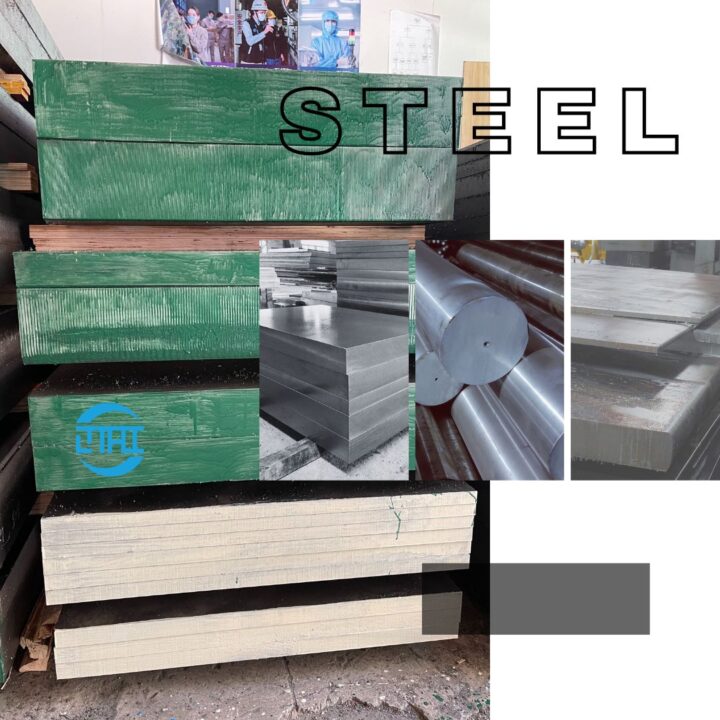
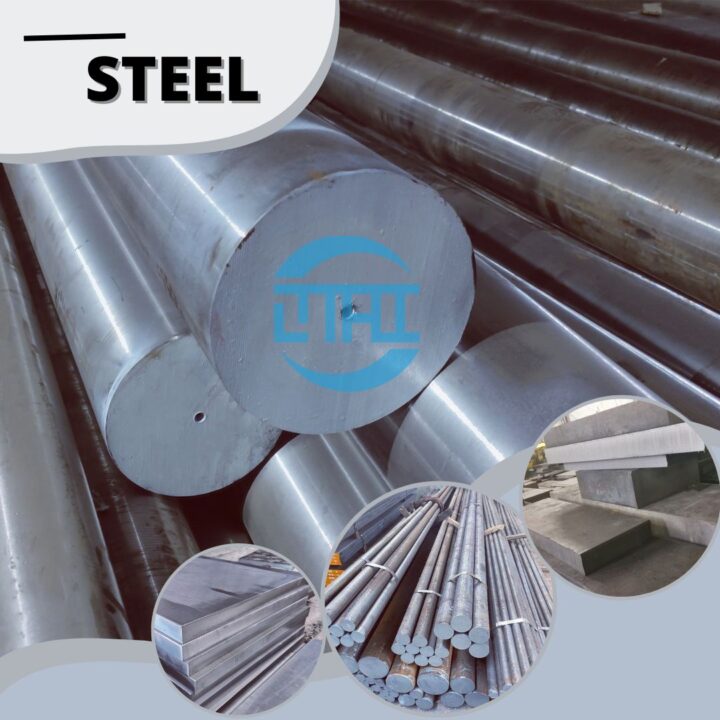
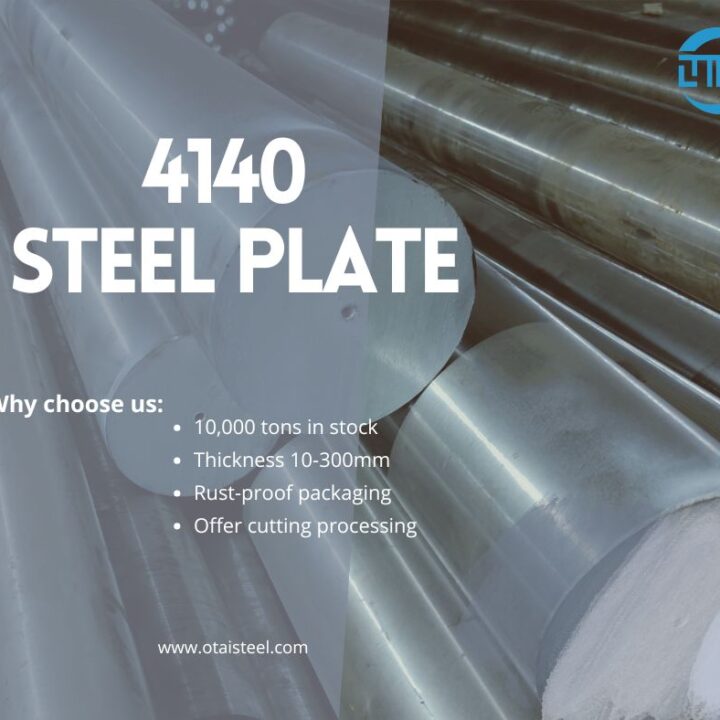
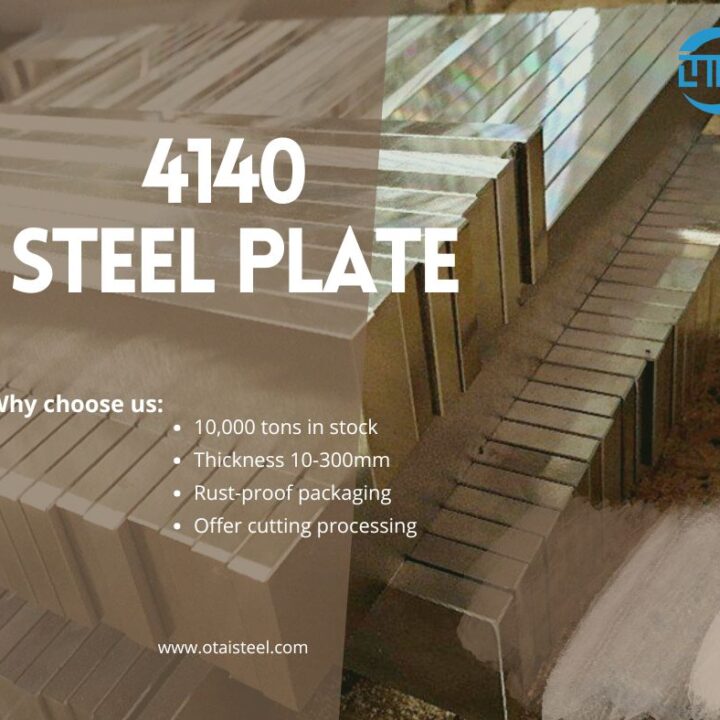
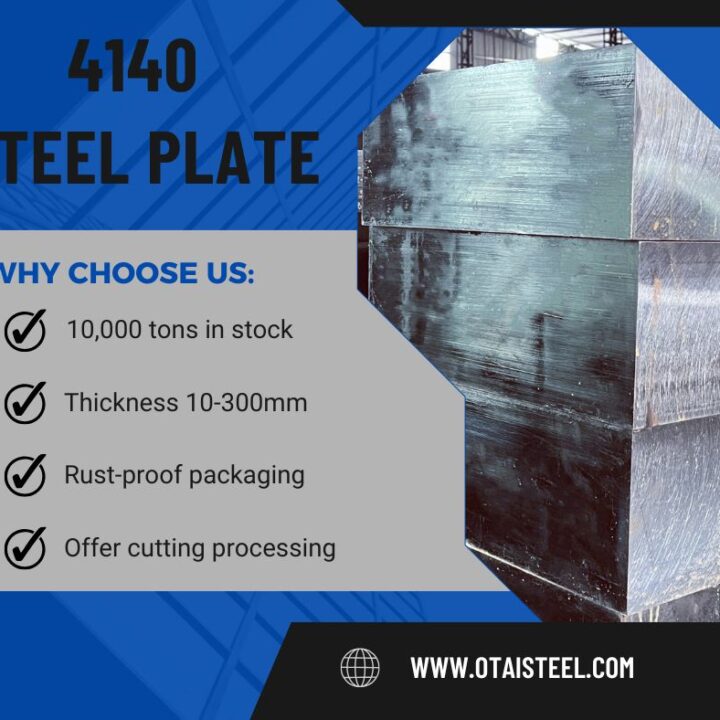
For manufacturers purchasing 4130 steel, material consistency, accurate dimensions, processing capability, and inspection support all influence production efficiency. OTAI Special Steel supplies alloy steel and tool steel to international customers, with services designed to support different industrial sourcing requirements.
- Extensive inventory: More than 10,000 tons of steel stock supports different industrial purchasing requirements.
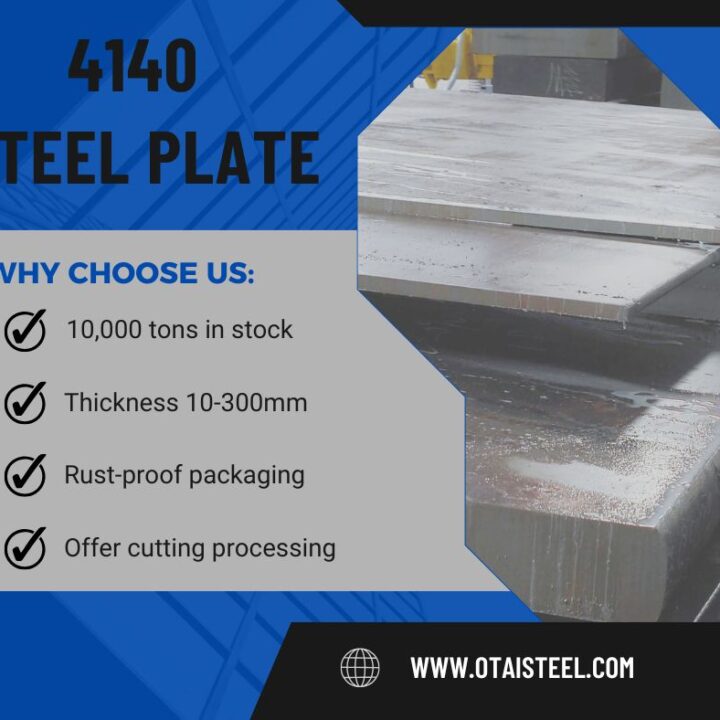
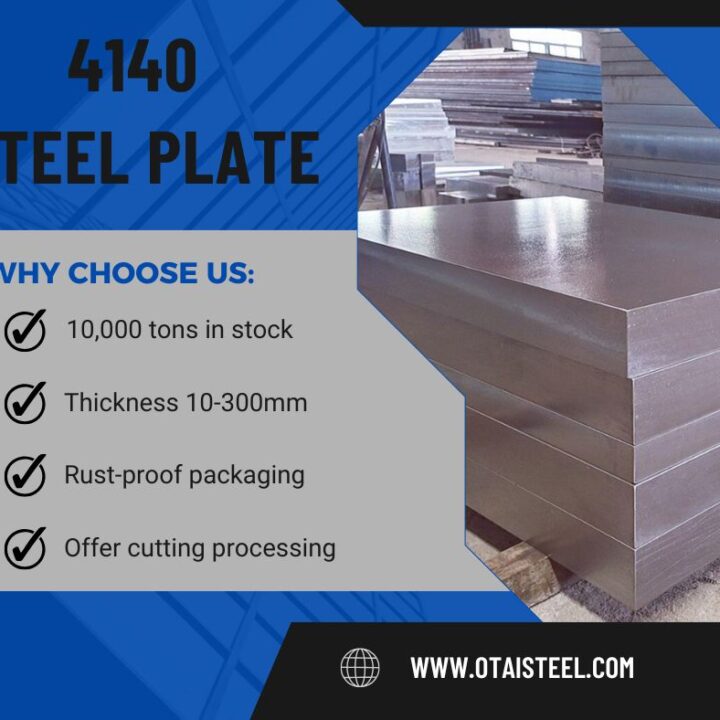
- 4130 steel plate: Available thickness range of 10–70 mm.
- Cutting capacity: 20 saw-cutting machines support customized plate dimensions.
- Machining and grinding: CNC machining and grinding services help meet specified dimensions and tolerances.
- Quality support: Material testing, ultrasonic testing, and third-party inspection support can be arranged according to project requirements.
- Processing coordination: Cutting and machining services help customers prepare material for subsequent manufacturing operations.
- Export experience: Supplying international customers since 1999, with exports to more than 54 countries.
- Export packaging: Strapping, bundling, anti-rust protection, and wooden-case packaging options support international transportation.
- One-stop service: Stock selection, cutting, machining, inspection coordination, and packaging simplify the purchasing process.
For product details and available specifications, visit our official 4130 steel product page.
If your project requires 4130 steel plate with specific dimensions, delivery conditions, or inspection requirements, send us your material specification, size, quantity, and intended application. Our team can help check suitable stock and discuss the required processing and quality documentation.
❓ Frequently Asked Questions
1. What is the heat treatment temperature for 4130 steel?
The temperature depends on the process. Common reference ranges include approximately 830–855°C for annealing, 870–930°C for normalizing, and 815–870°C for austenitizing before hardening. Tempering temperatures vary according to the required mechanical properties and applicable specification.
2. Should 4130 steel be oil quenched or water quenched?
Both methods appear in 4130 heat treatment references. Oil quenching is commonly considered when manufacturers want to reduce quenching severity, while water provides faster cooling but increases the risk of distortion and cracking. The correct medium depends on section thickness, geometry, hardenability, and required properties.
3. What is the best tempering temperature for 4130 steel?
There is no single best temperature for every application. A commonly referenced range is approximately 400–570°C, although some procedures use wider ranges. Manufacturers should select the temperature according to the required hardness, strength, toughness, and impact performance.
4. Can 4130 steel be heat treated after machining?
Yes. Manufacturers often rough-machine 4130 before final hardening and tempering. However, heat treatment can cause distortion and dimensional changes. The machining sequence should therefore include suitable allowances, process controls, and final dimensional inspection.
5. Does heat treatment make 4130 steel harder?
Quenching can significantly increase the hardness of 4130 steel. Tempering then adjusts the final hardness and improves toughness. The final result depends on the austenitizing temperature, quenching conditions, tempering temperature, section size, and material composition.