How to Verify 5140 Steel Standard Before Purchasing Alloy Steel Plate
📑 Table of Contents
- 🔍 Why 5140 Steel Standard Verification Matters
- 📘 Identify the Applicable 5140 Grade Standard
- 🌍 Compare 5140 with International Equivalent Grades
- 🧪 Check Chemical Composition Against the Correct Standard
- ⚙️ Verify Mechanical Properties and Heat Treatment
- 📏 Confirm Product Form, Dimensions, and Delivery Requirements
- 📄 Review the MTC and Inspection Documents
- 🛒 Questions to Ask a 5140 Steel Plate Supplier
- 🏭 Company Advantages
- ❓ Frequently Asked Questions
When purchasing 5140 alloy steel plate, checking the grade name alone is not enough. Buyers also need to confirm the applicable material standard, product specification, chemical composition, delivery condition, mechanical properties, and inspection documents. A supplier may describe a material as 5140 or list a similar international grade, but that description does not automatically prove full compliance with the buyer’s technical requirements.
This verification becomes especially important when sourcing steel across different countries. AISI/SAE, ASTM, EN, JIS, and GB standards use different designation systems and may define different requirements for chemical composition, product form, testing, and delivery. This article explains how procurement teams can verify 5140 steel standards before placing an order for alloy steel plate.
🔍 Why 5140 Steel Standard Verification Matters
5140 is a chromium alloy steel grade commonly selected for components that require a combination of strength, toughness, and wear resistance after suitable heat treatment. Industrial applications may include shafts, gears, mechanical parts, fasteners, and other components subject to repeated loads. However, the performance of a finished component depends on more than the nominal steel grade.
Two suppliers can both offer material described as 5140 while providing different product forms, delivery conditions, or inspection arrangements. One quotation may refer to an annealed plate, while another may describe quenched and tempered material. Their prices and mechanical properties may therefore differ even when both products carry the same grade designation.
Grade identity and product compliance are different checks
A material grade standard identifies the steel and defines its chemical composition or other grade-related requirements. A product specification can add requirements for dimensions, tolerances, testing, heat treatment, surface condition, and delivery. These documents do not always serve the same purpose.
For example, a buyer may specify SAE 5140 as the material grade but still need to define the required plate dimensions, delivery condition, hardness, inspection level, and documentation. If the purchase order only says “5140 steel plate,” the supplier may interpret several important details differently.
What can go wrong without verification?
- Incorrect grade: A similar chromium steel may be supplied without meeting the requested 5140 requirements.
- Unclear delivery condition: Annealed, normalized, and quenched and tempered materials have different properties and processing requirements.
- Unsuitable dimensions: The supplied thickness or dimensional tolerance may not match the machining allowance or finished-part design.
- Incomplete documentation: A quotation may mention a standard without providing an MTC that connects the delivered material to the relevant heat number.
- Unexpected processing costs: Additional heat treatment, machining, testing, or corrective work may increase the total purchasing cost.
For this reason, standard verification should take place before the buyer approves the quotation, not only after the material arrives.
📘 Identify the Applicable 5140 Grade Standard
The first step is to identify exactly which standard the buyer expects the supplier to follow. The designation 5140 is commonly associated with the AISI/SAE alloy steel naming system. However, buyers should not assume that every document mentioning 5140 defines all requirements for a finished steel plate.
Understand the role of AISI and SAE designations
AISI and SAE grade designations are widely used in the steel industry to identify alloy steel compositions. In purchasing documents, 5140 may appear as SAE 5140 or AISI 5140. These names identify the intended grade family, but the buyer should still request the applicable specification and its edition.
SAE J404 is a relevant reference for the chemical composition of SAE alloy steels. It helps identify the composition requirements associated with the grade. Nevertheless, a chemical composition reference alone does not necessarily cover every requirement for a particular plate order.
Check the product specification separately
Product specifications address requirements beyond the grade designation. Depending on the product form and supply route, the buyer may need to refer to a standard covering steel bars, plates, general delivery requirements, or testing. ASTM A29/A29M, for example, is associated with general requirements for carbon and alloy steel bars. It should not be treated as a universal plate specification simply because the material is an alloy steel.
For 5140 plate, the buyer should ask the supplier to identify the actual product standard used for the supplied material. If the supplier proposes a mill-specific specification or another national standard, request the document reference and confirm that it satisfies the purchase order.
| Reference | Main purpose | Buyer verification point |
|---|---|---|
| AISI/SAE 5140 | Grade designation | Confirm that 5140 is the specified material grade. |
| SAE J404 | Alloy steel chemical composition requirements | Check the applicable edition and grade limits. |
| ASTM product specification | Product-specific requirements where applicable | Confirm that the specification actually covers the ordered product form. |
| EN, JIS, or GB specification | National or regional grade and product requirements | Verify the exact grade, edition, product form, and acceptance criteria. |
Record the standard edition in the purchase order
Standards can be revised. A quotation that simply states “according to the latest standard” may not provide enough detail for a controlled procurement process. Buyers should identify the standard number and edition or year where the project requires a specific revision.
If the supplier cannot identify the standard used for its material, ask for clarification before confirming the order. A clear specification reduces the risk of disputes over composition, testing, and acceptance after delivery.
🌍 Compare 5140 with International Equivalent Grades
International buyers often compare 5140 with grades such as 41Cr4, 40Cr, and SCr440. These materials belong to related chromium alloy steel families and may have overlapping applications. However, a similar designation or chemical composition does not make two grades automatically interchangeable.
| Grade designation | Common system or country | Verification consideration |
|---|---|---|
| 5140 | AISI/SAE | Confirm the applicable SAE grade requirements and product specification. |
| 41Cr4 / 1.7035 | EN / European system | Check the relevant EN specification, edition, and product form. |
| 40Cr | GB / Chinese system | Compare the specified GB requirements rather than relying on the name alone. |
| SCr440 | JIS / Japanese system | Confirm the JIS grade and relevant product specification. |
Why equivalent-grade lists need careful interpretation
Cross-reference tables are useful during the initial material selection stage. They help buyers identify grades that may serve similar engineering purposes. However, such tables usually provide a starting point rather than a complete approval for substitution.
Differences may exist in carbon and chromium limits, permitted residual elements, hardenability, mechanical properties, and testing requirements. Product form also matters. A comparison based on steel bar requirements may not directly apply to a thick alloy steel plate.
Use a technical comparison before accepting a substitute
If a supplier proposes 41Cr4, 40Cr, or SCr440 instead of 5140, request a side-by-side comparison based on the standards stated in the quotation. The comparison should include chemical composition limits, delivery condition, hardness or mechanical properties, heat-treatment requirements, and inspection documents.
For critical components, the engineering team or end customer should approve the substitution in writing. Procurement staff should not approve an alternative solely because a supplier labels it an equivalent grade.
Buyers sourcing from China should also distinguish between a Chinese grade offered as an alternative and material certified to the original AISI/SAE 5140 specification. The supplier should state clearly which standard governs the delivered steel.
🧪 Check Chemical Composition Against the Correct Standard
Chemical composition is one of the most important checks when verifying 5140 steel. Chromium contributes to hardenability and wear-related performance, while carbon content influences hardness and strength after heat treatment. Other alloying and residual elements also affect the final material characteristics.
However, buyers should not use an online chemistry table as the only acceptance reference. The correct comparison requires the applicable standard, its edition, and the actual heat analysis recorded for the supplied material.
Separate standard limits, Typical Analysis, and MTC results
These three types of chemical data serve different purposes:
- Standard composition limits: The permitted ranges or maximum limits defined by the applicable material standard. These are the formal reference values for checking compliance.
- Typical Analysis: Representative values published by a steel mill or supplier. They describe a typical production result but do not replace the standard’s permitted limits.
- Actual heat analysis: The chemical composition measured for a specific steelmaking heat and reported on the material test certificate. Buyers use this information to check the supplied batch.
A typical analysis from one producer should never be treated as a universal chemical composition for every 5140 product. Actual values can vary within the permitted limits, and the applicable standard remains the primary reference.
Elements buyers should review
| Element | Why it matters | What to verify |
|---|---|---|
| Carbon (C) | Influences hardness, strength, and heat-treatment response. | Check the specified range and actual heat result. |
| Chromium (Cr) | Supports hardenability and contributes to wear-related performance. | Confirm compliance with the selected grade standard. |
| Manganese (Mn) | Contributes to strength and hardenability. | Review the permitted range and actual result. |
| Silicon (Si) | Acts as a deoxidizing element and affects strength. | Check the applicable specification limits. |
| Phosphorus (P) and Sulfur (S) | Excessive levels can affect toughness, ductility, and machinability. | Compare actual results with the specified maximum limits. |
Check the actual heat number
Each MTC should identify the relevant heat or batch number. The buyer should compare the certificate’s heat number with the markings, labels, or traceability records supplied with the steel. This connection helps establish that the test results belong to the delivered material.
If the purchase specification requires additional limits for residual elements or other alloying elements, list them in the purchase order. Do not assume that every standard edition or supplier applies identical supplementary requirements.
⚙️ Verify Mechanical Properties and Heat Treatment
5140 steel can be supplied in different delivery and heat-treatment conditions. Its hardness and mechanical properties depend on the production route, section size, heat-treatment process, and testing conditions. Consequently, a buyer should not expect one universal hardness or tensile-strength value for every 5140 plate.
Specify the required delivery condition
Common supply conditions may include annealed or otherwise softened material for machining, normalized material where specified, and quenched and tempered material for applications requiring defined strength and hardness. The exact availability depends on the supplier and product specification.
Before requesting a quotation, determine whether the material will undergo machining, hardening, tempering, or another process after delivery. This decision helps the supplier recommend a suitable supply condition and prevents misunderstandings about the condition in which the plate will arrive.
Do not compare hardness values without checking the test condition
Hardness results are meaningful only when the test method, delivery condition, and sampling location are understood. A hardness value measured on annealed steel cannot be compared directly with one measured on quenched and tempered steel as though both represented the same material condition.
Where the project requires a specific hardness range, the purchase order should identify the scale and acceptance range, such as HBW or HRC where appropriate. It should also state whether the requirement applies to the supplied condition or to the finished component after heat treatment.
Confirm mechanical testing requirements
For applications that require tensile properties, specify the required tensile strength, yield strength, elongation, and test conditions. The relevant values may depend on product dimensions and the governing standard. Avoid copying mechanical-property figures from a generic online table without checking whether they apply to the ordered plate thickness and delivery condition.
For thick sections, the buyer may also need to define sampling location, test direction, and any additional inspection requirements. These details should be agreed before production or stock allocation.
Discuss heat-treatment records when necessary
If the supplier delivers quenched and tempered material, ask whether the MTC or supporting records identify the delivery condition and relevant test results. If the buyer plans to heat-treat the plate after machining, the supplier should provide technical information suitable for the intended process. The final heat-treatment procedure should follow an approved technical specification rather than an assumed temperature copied from an unrelated application.
📏 Confirm Product Form, Dimensions, and Delivery Requirements
A grade designation does not define every dimensional or delivery detail. Buyers purchasing 5140 alloy steel plate should state the required thickness, width, length, quantity, and dimensional tolerances. They should also confirm whether the quotation covers hot-rolled plate, cut plate, or another agreed product form.
Check thickness and machining allowance
Thickness is particularly important for alloy steel plate because machining and heat treatment can affect the final dimensions. If the component requires substantial material removal, the buyer should calculate the necessary machining allowance before placing the order.
Ask the supplier to confirm whether the quoted dimensions are nominal or actual cut dimensions. Clarify the acceptable tolerance and whether the supplier can provide the requested dimensions directly or needs to cut from a larger stock plate.
Confirm surface and edge condition
Surface condition affects inspection, handling, and subsequent processing. Buyers should identify whether they require a standard hot-rolled surface, a machined surface, a ground surface, or another specified finish. Edge condition should also be clear, particularly when the supplier will cut the plate to size.
For precision components, discuss flatness, thickness variation, surface defects, and any additional machining requirements. A supplier should not be expected to provide precision-ground dimensions unless the quotation or purchase order includes that service.
Define inspection and packaging before dispatch
Depending on the application, buyers may require visual inspection, dimensional inspection, ultrasonic testing, or third-party inspection. These requirements should be agreed in advance because they can affect lead time and cost.
International shipments also need suitable packaging. Confirm rust prevention, bundling, lifting arrangements, labels, and export packing requirements. For long-distance transport, wooden cases or other protective packaging may be appropriate depending on the size and weight of the order.
| Purchase detail | Information to specify |
|---|---|
| Material grade | 5140 and the governing grade standard. |
| Product form | Alloy steel plate and the required supply route. |
| Dimensions | Thickness, width, length, quantity, and tolerances. |
| Delivery condition | Annealed, normalized, quenched and tempered, or another agreed condition. |
| Inspection | MTC, dimensional checks, hardness, ultrasonic testing, or third-party inspection as required. |
| Packaging | Rust prevention, bundling, labels, and export packaging. |
📄 Review the MTC and Inspection Documents
The Material Test Certificate (MTC) is a key document for verifying the material supplied against the purchase requirements. It should provide traceable information about the product and its test results. Buyers should review the certificate rather than relying only on a supplier’s product description or quotation.
Information to look for on the certificate
- Manufacturer or issuing organization: Identify the organization responsible for the certificate.
- Material grade: Check that the stated grade matches the purchase order.
- Applicable standard: Review the standard number and edition where stated.
- Heat or batch number: Confirm traceability to the supplied material.
- Chemical analysis: Compare the actual results with the applicable composition limits.
- Mechanical test results: Check the reported properties against the agreed delivery condition and requirements.
- Product dimensions: Verify that the certificate or associated documents identify the supplied size.
- Inspection and authorization: Review the inspection details and certificate approval information.
Match the MTC to the physical material
A certificate is useful only when the buyer can connect it to the actual shipment. Check the heat number on the MTC against the material labels, packing list, and traceability markings. If the shipment contains several heats, request a clear breakdown showing which plates belong to each heat.
When the supplier provides a certificate from an upstream mill, confirm how the distributor maintains traceability during storage, cutting, and repacking. Cutting a large plate into smaller pieces should not remove the ability to identify the original heat or batch.
Understand the inspection level
Not every order requires the same inspection scope. A standard MTC may be sufficient for general engineering applications, while critical components may require additional testing or independent verification. Buyers should specify any required inspection standard, test method, sampling frequency, and acceptance criteria in the purchase documents.
Ultrasonic testing, for example, should be ordered with an agreed testing standard and acceptance level. Simply stating “UT required” may leave uncertainty about the method and acceptance criteria. Third-party inspection should also be arranged before dispatch if the buyer needs an independent inspection report.
If a certificate contains missing information, inconsistent grade names, or heat numbers that do not match the shipment, request clarification before accepting the material. Do not treat an incomplete document as proof of full compliance.
🛒 Questions to Ask a 5140 Steel Plate Supplier
A supplier’s ability to explain its material standards is an important part of the purchasing assessment. Buyers do not need to request every technical document for every order, but they should obtain enough information to confirm that the quoted material meets the project specification.
Questions for the quotation stage
- Which standard and edition does the supplied 5140 steel follow? Ask the supplier to identify the grade standard and the product specification separately.
- Is the material supplied as 5140 or as an alternative grade? If it is an alternative, request a technical comparison and written confirmation of the proposed substitution.
- What is the delivery condition? Confirm whether the plate is annealed, normalized, quenched and tempered, or supplied in another condition.
- Can you provide the MTC before shipment? Confirm that the certificate includes chemical analysis, relevant test results, and heat traceability.
- Can you meet the required dimensions and tolerances? Check available stock, cutting capability, and any additional machining requirements.
- Can you arrange additional inspection? Discuss ultrasonic testing, third-party inspection, or other project-specific requirements.
Compare the total supply offer, not only the price per ton
When comparing quotations, buyers should consider material compliance, stock availability, cutting accuracy, documentation, inspection, packaging, and delivery time. A lower unit price may not represent a lower total cost if the buyer later needs additional machining, testing, or corrective work.
For international procurement, also confirm the shipping terms, packing method, documentation, and expected dispatch schedule. Clear communication at the quotation stage can reduce delays and prevent disputes after delivery.
Use a written technical checklist
Before issuing the purchase order, compare the supplier’s quotation with the final technical specification. Record any approved deviations and make sure both parties agree on them in writing. This approach is especially useful when purchasing from overseas suppliers or when the material will be used in a project with strict customer approval procedures.
Buyers can also review the supplier’s 5140 alloy steel product information to understand the available supply option and discuss the required plate dimensions and delivery condition directly.
🏭 Company Advantages
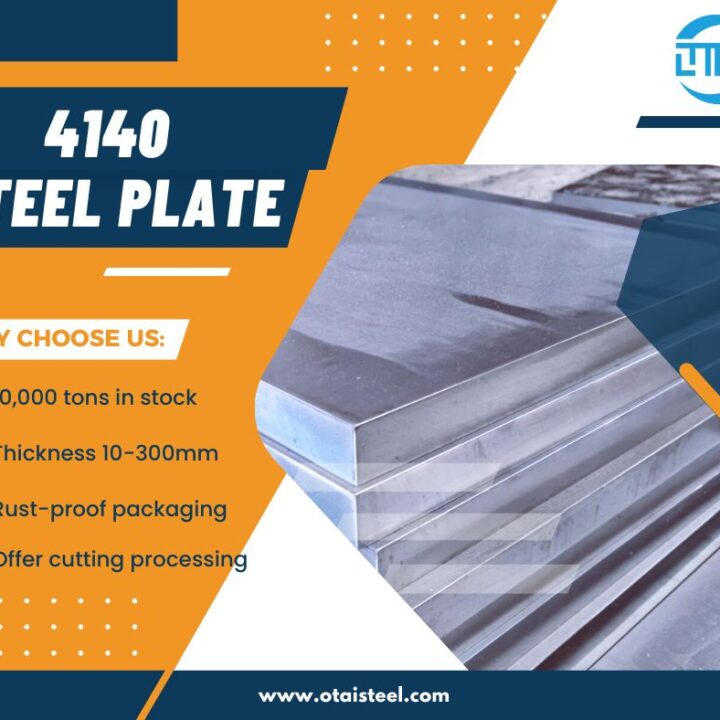
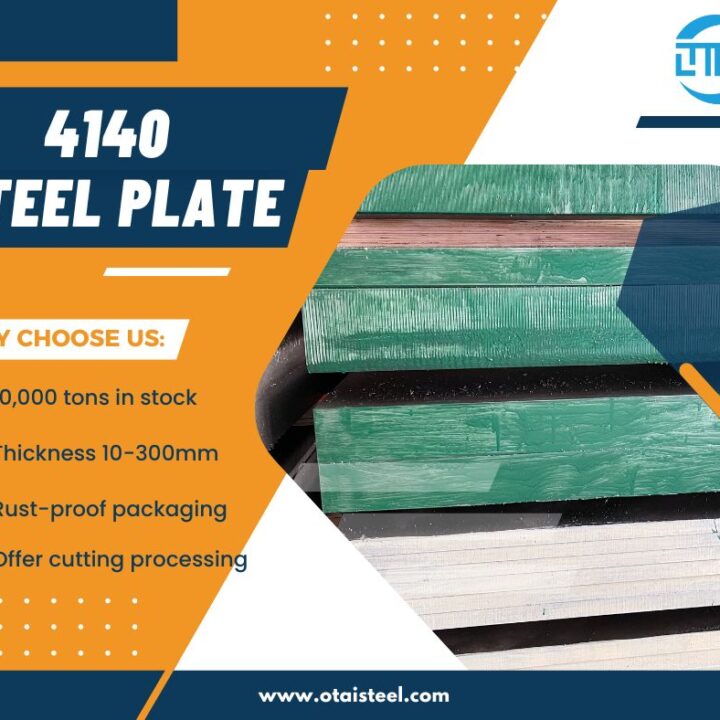
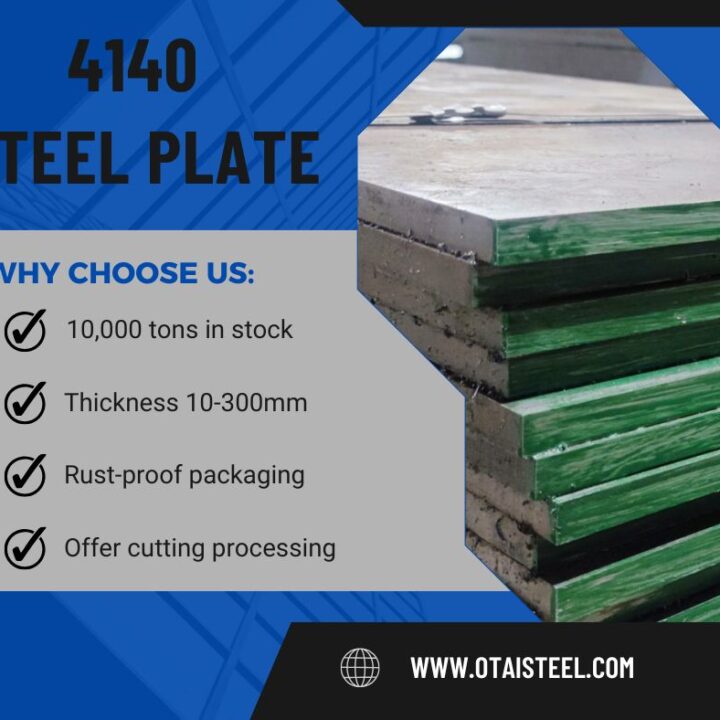
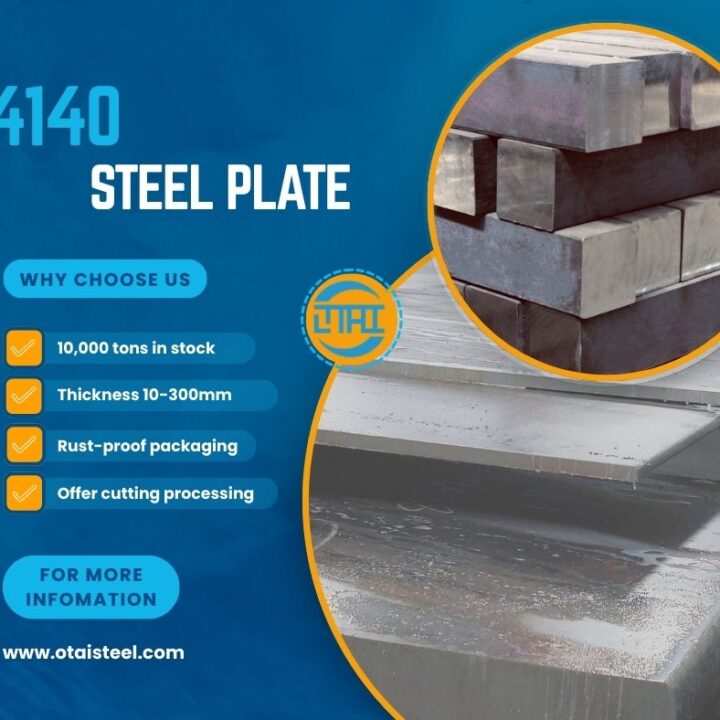
- 5140 steel plate stock: Plate thickness from 4–300 mm is available for purchasing inquiries, subject to current stock confirmation.
- Large inventory: More than 10,000 tons of steel stock supports a range of alloy steel and tool steel requirements.
- Cutting capacity: 20 saw-cutting machines support plate cutting and customized dimensions.
- Machining services: CNC machining and grinding help buyers coordinate additional processing requirements.
- Custom supply: The team can discuss requested dimensions, tolerances, and processing arrangements according to project specifications.
- Quality documentation: Material test certificates and traceability information can be discussed during order confirmation.
- Additional inspection: Ultrasonic testing and third-party inspection can be arranged when required and agreed for the order.
- Export experience: Otai has supplied international customers in more than 54 countries since 1999.
- Export packaging: Rust prevention, bundling, and wooden-case packaging can be arranged according to shipment requirements.
- One-stop service: Buyers can coordinate material supply, cutting, machining, inspection, and packaging through one supplier.
For 5140 steel plate inquiries, provide the required thickness, width, length, quantity, delivery condition, and applicable standard. This information helps the sales team check stock and confirm whether the available material can meet the project’s technical requirements.
❓ Frequently Asked Questions
1. What standard does 5140 steel follow?
5140 is an AISI/SAE alloy steel grade designation. SAE J404 is a relevant reference for alloy steel chemical composition. However, buyers should also identify the product specification that governs the supplied plate, including delivery, testing, and dimensional requirements.
2. Is 5140 the same as 41Cr4?
5140 and 41Cr4 are commonly listed as related or comparable chromium alloy steel grades. However, they belong to different standard systems. Buyers should compare the applicable chemical composition limits, product specifications, delivery conditions, and mechanical requirements before accepting one as a substitute for the other.
3. Can 40Cr or SCr440 replace 5140 steel?
40Cr and SCr440 may be considered as alternatives in some applications, but they are not automatically identical to 5140. The engineering team should review the relevant standard requirements and approve any substitution in writing before the buyer places the order.
4. What documents should I request when buying 5140 steel plate?
At minimum, request a Material Test Certificate with the material grade, applicable standard, heat number, chemical analysis, and relevant test results. Depending on the project, you may also need dimensional inspection records, ultrasonic testing reports, or third-party inspection documents.
5. What thickness of 5140 steel plate can I buy from Otai?
Otai’s stated 5140 steel plate stock range is 4–300 mm. Actual availability depends on the required dimensions, quantity, and delivery condition. Buyers should confirm current stock and provide the technical specification before placing an order.