4130 Steel Composition: How to Verify Chemistry for Industrial Applications
📑 Table of Contents
- 🧪 What Is 4130 Steel Composition?
- 📊 AISI 4130 Chemical Composition Table
- ⚙️ How Each Element Affects Steel Performance
- 📋 Standard Limits vs. Typical Analysis vs. MTC Results
- 🔍 How to Verify 4130 Steel Chemistry
- ⚖️ 4130 Steel Composition vs. 4140 and Similar Grades
- 🏭 Why Chemical Composition Matters in Industrial Applications
- 🛒 Purchasing 4130 Steel: A Buyer’s Checklist
- 🏢 Company Advantages
- ❓ Frequently Asked Questions
The chemical composition of 4130 steel directly influences its hardenability, strength, toughness, and weldability. For industrial buyers, checking the grade name alone is not enough. The material must comply with the applicable specification, and the actual chemistry must match the requirements stated in the purchase order.
4130 steel composition is commonly associated with a low-alloy chromium-molybdenum steel containing approximately 0.30% carbon. However, standard limits, a supplier’s typical analysis, and the actual mill test certificate (MTC) results serve different purposes. Understanding these differences helps buyers assess material compliance, compare suppliers, and reduce the risk of purchasing an unsuitable grade.
🧪 What Is 4130 Steel Composition?
AISI/SAE 4130 is a low-alloy steel in the chromium-molybdenum family. Its principal alloying elements include chromium and molybdenum, while its carbon content is lower than that of many medium-carbon alloy steels. This composition provides a balance of strength, toughness, hardenability, and potential weldability when the material is processed correctly.
The designation 4130 identifies a recognized steel grade, but it does not independently establish every requirement for a particular order. The applicable standard, product form, delivery condition, and customer specification determine which chemical limits and additional requirements apply.
Why chromium and molybdenum matter
Chromium contributes to hardenability, helping the steel develop useful properties during suitable heat treatment. Molybdenum also supports hardenability and helps the material retain strength during tempering. Carbon influences the achievable hardness and strength, while manganese and silicon contribute to the steel’s processing and mechanical characteristics.
These elements work together. A buyer should not judge the material by a single element or assume that higher alloy content always means better performance. The correct balance depends on the component’s design, manufacturing process, and operating conditions.
Composition is only one part of material acceptance
Two batches may comply with the same chemical composition limits but show different mechanical properties because of differences in heat treatment, section size, or manufacturing history. Therefore, chemical analysis should be checked alongside hardness, tensile properties, delivery condition, and any other tests required by the purchase specification.
For procurement, the most useful approach is to establish the governing specification first, then verify that the supplier’s certificate and the delivered material meet it.
📊 AISI 4130 Chemical Composition Table
The table below summarizes commonly published chemical composition limits for AISI/SAE 4130 under relevant ASTM/SAE specifications. Use these figures as a technical reference, not as a substitute for the specific standard and revision governing your order.
| Element | Commonly Published Range or Limit (wt.%) | Main Role |
|---|---|---|
| Carbon (C) | 0.28–0.33 | Influences hardness, strength, and weldability. |
| Manganese (Mn) | 0.40–0.60 | Contributes to strength and hardenability. |
| Silicon (Si) | 0.15–0.35 | Acts as a deoxidizer and contributes to strength. |
| Chromium (Cr) | 0.80–1.10 | Improves hardenability and heat-treatment response. |
| Molybdenum (Mo) | 0.15–0.25 | Supports hardenability and tempering performance. |
| Phosphorus (P) | Commonly ≤0.035 | Controlled residual element; lower limits may apply. |
| Sulfur (S) | Commonly ≤0.040 | Controlled because it can affect inclusions and material performance. |
How to interpret the table correctly
The percentages represent mass fractions of the elements in the steel. For example, a carbon range of 0.28–0.33% means that the carbon content must fall within the permitted limits when those limits apply to the specified product and standard.
Phosphorus and sulfur are generally controlled by maximum limits rather than a required minimum-to-maximum alloying range. Some aerospace, pressure-service, or customer-specific specifications may impose tighter limits or additional requirements. Buyers should therefore avoid using a general-purpose chemistry table to approve material for a more demanding specification.
Also confirm whether the governing document is a material standard, a product-form specification, or an industry-specific specification. AISI/SAE grade identification alone may not describe every acceptance criterion required for the finished application.
What about 4130 plate?
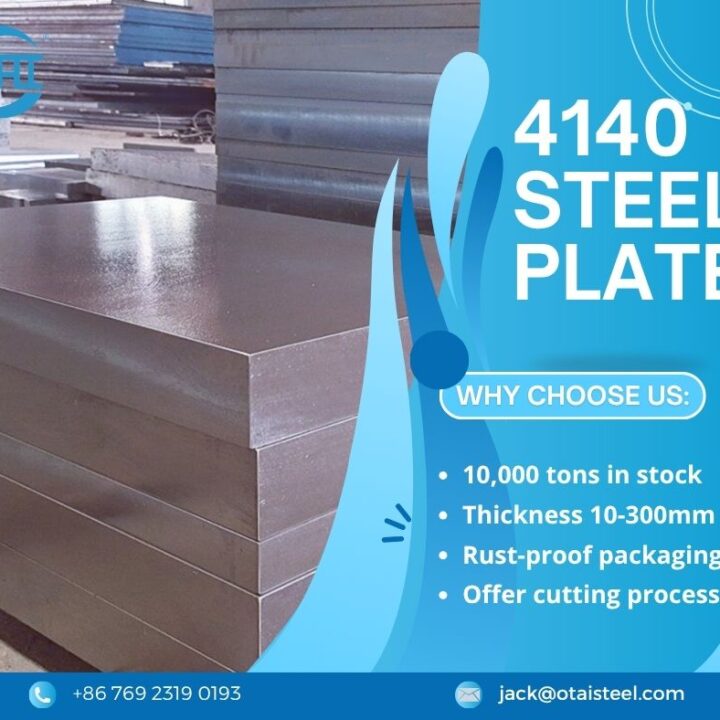
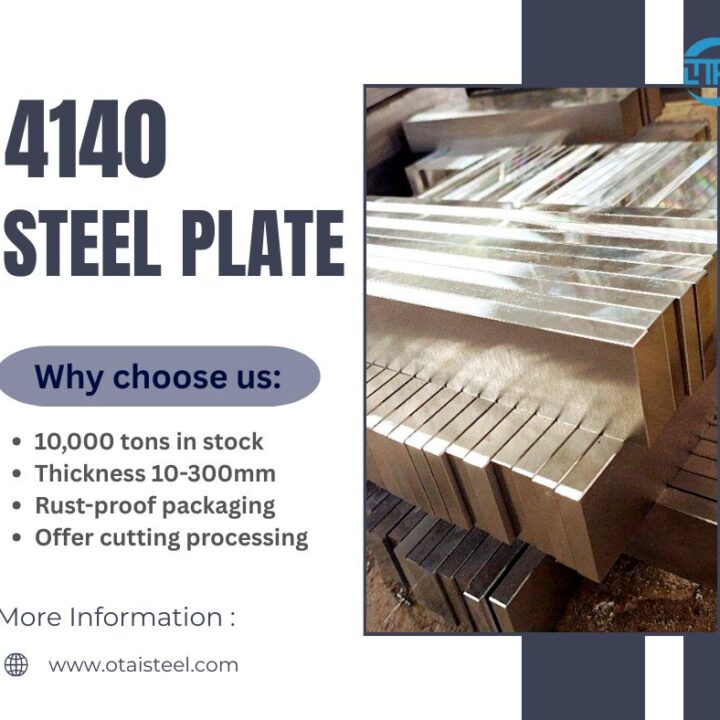
The chemical grade designation does not change simply because the material is supplied as plate. However, product-form standards, dimensional requirements, testing rules, and delivery conditions can affect the applicable acceptance criteria. For plate procurement, the purchase order should identify the required grade and standard, thickness, dimensions, delivery condition, and inspection requirements.
Review the official Otai 4130 steel product page for product information, then confirm the exact specification and current availability for your order.
⚙️ How Each Element Affects Steel Performance
Each element in 4130 steel contributes to the material’s overall behavior. Understanding these roles helps buyers interpret a mill certificate and understand why chemistry affects manufacturing decisions. However, an element’s contribution cannot be evaluated in isolation because performance also depends on processing and component design.
Carbon: hardness, strength, and weldability
Carbon is a key factor in the hardness and strength that steel can achieve through heat treatment. The relatively moderate carbon range in 4130 helps balance strength with weldability compared with some higher-carbon alloy steels. Nevertheless, welding can still create a hard heat-affected zone and introduce cracking risks if the procedure does not suit the material thickness, restraint, and service requirements.
For welded components, confirm the welding procedure, preheat requirements, interpass controls, and any post-weld heat treatment requirements with a qualified welding engineer. Do not treat the carbon percentage alone as proof that a component can be welded without special controls.
Chromium: hardenability and heat-treatment response
Chromium helps the steel develop hardness deeper into a section during appropriate heat treatment compared with many plain carbon steels. The achievable result depends on the part’s size, quenching method, and treatment parameters. Chromium in 4130 does not make the material stainless steel; corrosion protection may still be necessary in wet, chemical, or outdoor environments.
Molybdenum: hardenability and tempering performance
Molybdenum contributes to hardenability and supports the steel’s response to tempering. Its presence is one reason 4130 belongs to the chromium-molybdenum steel family. Actual mechanical properties, however, must be established through the required testing rather than inferred from molybdenum content alone.
Manganese and silicon: processing and strength
Manganese contributes to strength and hardenability, while silicon acts as a deoxidizer during steelmaking and contributes to strength. Their specified ranges help maintain the intended balance of properties and manufacturing behavior.
Phosphorus and sulfur: controlled residual elements
Phosphorus and sulfur are typically limited because excessive levels or unfavorable inclusion characteristics can affect toughness, ductility, and processing performance. Sulfur can improve machinability in some steelmaking approaches, but the trade-offs depend on the grade and application. Buyers should not assume that a lower or higher residual-element value is automatically better without checking the specification and the component requirements.
When evaluating a heat certificate, review all reported elements together. A compliant chemistry result is an essential acceptance check, but it does not replace mechanical testing, dimensional inspection, or verification of the supplied condition.
📋 Standard Limits vs. Typical Analysis vs. MTC Results
One of the most important checks in steel procurement is distinguishing the three common types of chemical composition data. They may look similar in a table, but they answer different questions. Confusing them can lead to incorrect acceptance decisions or unnecessary disputes with a supplier.
| Data Type | What It Means | How Buyers Should Use It |
|---|---|---|
| Standard composition limits | Permitted ranges or maximum values defined by the applicable specification. | Use these limits to assess compliance with the specified grade and standard. |
| Typical analysis | Representative values published by a mill or supplier for reference. | Use for general understanding, not as a guaranteed result for every heat. |
| Actual MTC chemistry | Measured chemical results associated with the supplied heat or batch. | Compare against the applicable limits and purchase requirements. |
Why typical analysis is not a universal specification
A supplier may publish a typical analysis to illustrate the composition of a grade. Those values may sit near the middle of the permitted ranges, but the actual chemistry of another compliant heat can differ. Unless a purchase agreement explicitly establishes additional chemistry requirements, a typical analysis should not be treated as a mandatory target for every delivery.
For example, if a reference table lists carbon at 0.30%, a compliant heat may contain another value within the applicable permitted range. The important question is whether the actual result meets the governing specification and any agreed customer limits—not whether it exactly matches the typical figure.
What an MTC should help you verify
A material test certificate should identify the material and provide the test results required by the applicable standard and order. Depending on the specification and supply arrangement, the document may include chemical analysis, mechanical test results, heat number, delivery condition, and other inspection information.
Check the certificate against the purchase order and ensure that the heat or batch identification matches the supplied material. If the order requires independent inspection, ultrasonic testing, or additional chemical limits, verify that these requirements are documented and completed as agreed.
🔍 How to Verify 4130 Steel Chemistry
A practical chemistry-verification process begins before the purchase order is issued. Buyers should identify the governing specification, define any additional requirements, and agree on the documents needed to demonstrate compliance. This approach is more reliable than checking a generic online table after the material has arrived.
Step 1: Identify the exact standard
Confirm the designation shown on the drawing or engineering specification. If the order calls for AISI/SAE 4130 under a particular ASTM or SAE specification, state that requirement explicitly. If the customer permits an alternative standard, obtain approval before ordering and compare the applicable chemical and mechanical requirements.
Step 2: Check the purchase specification
Review the required chemistry limits, product form, delivery condition, dimensional tolerance, mechanical properties, and additional inspection requirements. Projects involving aerospace, pressure equipment, oil and gas service, or safety-critical components may have requirements beyond those of a general-purpose material specification.
Step 3: Match the MTC to the delivered material
Verify the grade, heat number, and other identification details on the certificate. Check that the reported chemical values comply with the correct standard and that any extra customer limits are satisfied. If the material is supplied in multiple pieces or batches, establish the traceability method required by the order.
Step 4: Resolve discrepancies before acceptance
If the certificate is missing, incomplete, or inconsistent with the order, request clarification from the supplier before approving the material. Do not assume that a product label or invoice alone proves compliance. Where the project requires independent verification, agree on the sampling method, test laboratory, acceptance criteria, and reporting format.
Step 5: Confirm that chemistry matches the intended application
Even a chemically compliant heat may require additional checks before it can be used in production. Confirm hardness, tensile properties, impact requirements, or other tests where the design or standard requires them. For welded components, also review the approved welding procedure and any relevant heat-treatment controls.
- Confirm the grade designation and governing standard.
- Check that the chemistry table corresponds to the correct specification.
- Review actual MTC results rather than relying only on typical analysis.
- Match heat or batch identification to the supplied material.
- Verify mechanical properties and delivery condition separately.
- Resolve deviations and obtain approval before using the material.
⚖️ 4130 Steel Composition vs. 4140 and Similar Grades
Grade comparisons are useful when an engineer or buyer is assessing a substitute. However, similar alloying systems do not automatically make two grades interchangeable. The relevant chemistry limits, product specifications, mechanical requirements, and treatment conditions must all be considered.
| Grade | General Chemistry Profile | Key Selection Consideration |
|---|---|---|
| 4130 | Low-alloy chromium-molybdenum steel with approximately 0.30% carbon. | Useful balance of strength, hardenability, and weldability when correctly processed. |
| 4140 | Chromium-molybdenum steel with higher carbon content than 4130. | Often considered where higher achievable hardness and strength are required. |
| 25CrMo4 / 1.7218 | European chromium-molybdenum grade with its own specified composition limits. | Check the governing EN specification and product requirements before substitution. |
| SCM430 | Japanese chromium-molybdenum grade specified under relevant JIS standards. | Compare the applicable JIS chemistry and mechanical requirements with the original specification. |
4130 vs. 4140 chemical composition
The most notable difference is carbon content. Commonly published AISI/SAE 4130 limits specify approximately 0.28–0.33% carbon, while 4140 commonly specifies approximately 0.38–0.43%. Both grades contain chromium and molybdenum, but their different carbon ranges influence achievable hardness, strength, and welding considerations.
4140 is often selected for components requiring higher strength after suitable heat treatment. Meanwhile, 4130 may be attractive where its balance of mechanical properties and weldability suits the design. Neither grade is automatically the better choice for every application.
For the 4140 product, see Otai 4140 alloy steel. Compare the actual requirements and delivery condition rather than relying only on general grade descriptions.
Are similar international grades equivalent?
Grades such as 25CrMo4 and SCM430 are sometimes listed alongside 4130 in cross-reference tables. Such references can be useful for initial research, but they do not prove complete equivalence for every application. Their chemical ranges, product standards, and mechanical requirements may differ.
Before approving a substitute, compare the full specification and confirm that the proposed material meets the design requirements. For critical components, obtain engineering approval and perform any validation testing required by the project.
🏭 Why Chemical Composition Matters in Industrial Applications
The value of verifying 4130 steel chemistry becomes clearer when considering how the material will be manufactured and used. Chemical composition influences the response to heat treatment and welding, but the correct acceptance decision also depends on component design and process control.
Machined components
For shafts, fittings, and other machined parts, chemistry helps confirm that the material is the specified grade. The delivery condition then determines how easily the material can be machined and what processing steps may follow. Buyers should confirm hardness and dimensional allowances instead of assuming that every 4130 supply condition behaves the same way.
Welded structures and assemblies
4130 is often considered for welded applications because its carbon content is lower than that of many higher-carbon alloy steels. Nevertheless, its alloying elements and heat-affected-zone behavior still require appropriate welding controls. Component thickness, joint restraint, hydrogen control, preheat, and post-weld treatment can all affect cracking risk and final performance.
When purchasing material for a welded assembly, make sure the design specification and approved welding procedure are compatible with the supplied grade and condition. A chemistry certificate alone cannot demonstrate that the finished weld will meet its requirements.
Heat-treated components
For components that require hardening and tempering, chemistry helps establish whether the material belongs to the intended grade. The final result depends on the heat-treatment cycle, section size, quenching method, and tempering conditions. Confirm the required hardness and mechanical properties using the appropriate tests.
Oil and gas and other demanding services
Some 4130 applications in oil and gas equipment or other demanding environments may be governed by industry-specific requirements. Those requirements can include tighter chemistry limits, additional testing, special processing, or traceability. A general 4130 designation should not be treated as proof that material automatically complies with a project-specific or regulated specification.
The practical rule is simple: use chemistry to verify grade identity, then use the full material specification and required tests to verify application suitability.
🛒 Purchasing 4130 Steel: A Buyer’s Checklist
When sourcing 4130 steel, a clear inquiry helps suppliers quote the right material and helps buyers compare offers on an equivalent basis. If the request only states “4130 steel,” the resulting quotations may differ in product form, dimensions, standard, delivery condition, or documentation.
Define the material requirements
State the grade and governing standard, along with the required product form. For plate, specify thickness, width, length, quantity, and dimensional tolerance. Include the delivery condition and any mechanical-property requirements that apply to the finished component or incoming material.
Specify documentation and inspection
Identify whether the order requires an MTC, heat traceability, additional mechanical tests, ultrasonic testing, or third-party inspection. These requirements should be agreed before order confirmation so that the supplier can confirm availability, cost, and lead time.
Compare total delivered cost
Material price is only one part of procurement cost. Cutting, machining, inspection, packaging, freight, and production delays can affect the final cost of using the steel. A complete quotation should clarify the processing scope and delivery terms so that offers can be compared fairly.
| Purchase Item | What to Confirm |
|---|---|
| Grade and standard | Exact designation and applicable specification. |
| Chemical composition | Applicable limits and actual MTC results. |
| Dimensions | Thickness, width, length, tolerance, and cutting allowance. |
| Delivery condition | Annealed, normalized, quenched and tempered, or another specified condition. |
| Inspection | Required tests, traceability, and third-party inspection if applicable. |
| Commercial terms | Price basis, processing costs, packaging, lead time, and delivery terms. |
For product information, buyers can visit the official Otai 4130 steel product page. Confirm the applicable specification, current stock, and required condition directly for each inquiry.
🏢 Company Advantages
- 4130 steel plate thickness range: 10–70 mm in the stated stock range; confirm current availability, dimensions, quantity, and delivery condition before ordering.
- 10,000+ tons of steel inventory: stock resources across multiple alloy steel and tool steel grades to support industrial sourcing needs.
- 20 saw-cutting machines: cutting services for agreed dimensions and order quantities.
- Custom sizing and processing: CNC machining, grinding, and precision cutting can be discussed according to drawing and tolerance requirements.
- One-stop service: support for material sourcing, cutting, processing coordination, documentation, and export preparation.
- International supply experience: exports to more than 54 countries since 1999.
- Material documentation: material certificates and traceability support according to the agreed order requirements.
- Inspection options: ultrasonic testing and third-party inspection can be arranged when required and agreed.
- Export packaging: bundled, anti-rust, and wooden-crate packaging options can be discussed for international shipments.
- Procurement-focused support: assistance with reviewing specifications, processing scope, inspection requirements, and delivery arrangements to help buyers compare total cost.
❓ Frequently Asked Questions
1. What is the chemical composition of AISI 4130 steel?
Commonly published AISI/SAE 4130 composition limits include carbon at 0.28–0.33%, manganese at 0.40–0.60%, silicon at 0.15–0.35%, chromium at 0.80–1.10%, and molybdenum at 0.15–0.25%. Phosphorus and sulfur are typically limited to maximum values of 0.035% and 0.040%, respectively. Always verify the limits in the applicable standard and purchase specification.
2. Why does 4130 steel contain chromium and molybdenum?
Chromium and molybdenum improve hardenability and contribute to the steel’s response to heat treatment. Their effects work together with carbon, manganese, silicon, and the processing route. Actual mechanical performance must still be confirmed through the required testing.
3. Is typical 4130 steel composition the same as actual MTC chemistry?
No. Typical analysis is representative information published for reference, while the MTC reports the measured chemistry of the supplied heat or batch. Buyers should compare the actual results with the applicable standard limits and any additional purchase requirements.
4. Is 4130 steel composition the same as 4140?
No. Both are chromium-molybdenum alloy steels, but their composition limits differ, particularly in carbon content. Commonly published 4140 carbon limits are higher than those for 4130. This affects material selection and processing considerations, so the grades should not be substituted without checking the full specification.
5. What should buyers check when purchasing 4130 steel plate?
Confirm the exact grade and standard, plate dimensions, delivery condition, required mechanical properties, MTC results, and any inspection requirements. Otai’s stated 4130 steel plate thickness range is 10–70 mm, subject to confirmation of current stock and order details.