A2 Steel Stock: How to Check Availability, Size and Delivery for Your Project
📑 Table of Contents
- 🔍 1. What Does A2 Steel Stock Actually Mean?
- 🧪 2. A2 Steel Grade and Specification to Confirm
- 📐 3. A2 Steel Stock Sizes: Match Thickness, Width and Length
- ⚙️ 4. Delivery Condition and Hardness Matter to Your Purchase
- 🛠️ 5. When A2 Steel Stock Is Suitable for Your Application
- ✂️ 6. Cut-to-Size A2 Steel and Processing Requirements
- 📋 7. MTC, Inspection and Quality Checks for A2 Steel Stock
- 🚚 8. A2 Steel Delivery: What A Buyer Should Confirm
- 💰 9. How Stock Availability Affects Your Purchasing Cost
- 🏢 Otai Special Steel: A2 Steel Stock and Processing Support
- ❓ A2 Steel Stock FAQ
🔍 1. What Does A2 Steel Stock Actually Mean?
When an industrial buyer searches for A2 steel stock, the main concern is usually simple: can the supplier provide the required A2 material now, in the required size, condition and quantity?
However, “in stock” does not automatically mean that every A2 specification is ready to ship. A supplier may hold the grade but still need to confirm the exact thickness, width, length, quantity, surface condition, delivery condition and inspection documents.
For that reason, buyers should separate three questions during the purchasing process:
| Stock Question | What to Confirm | Why It Matters |
|---|---|---|
| Is the grade available? | A2 and applicable standard | Prevents a quotation based on the wrong specification |
| Is the required size available? | Thickness, width, length and quantity | Determines whether the supplier can fulfill the order from current inventory |
| Can it ship on your schedule? | Cutting, inspection, packaging and delivery lead time | Affects your production schedule |
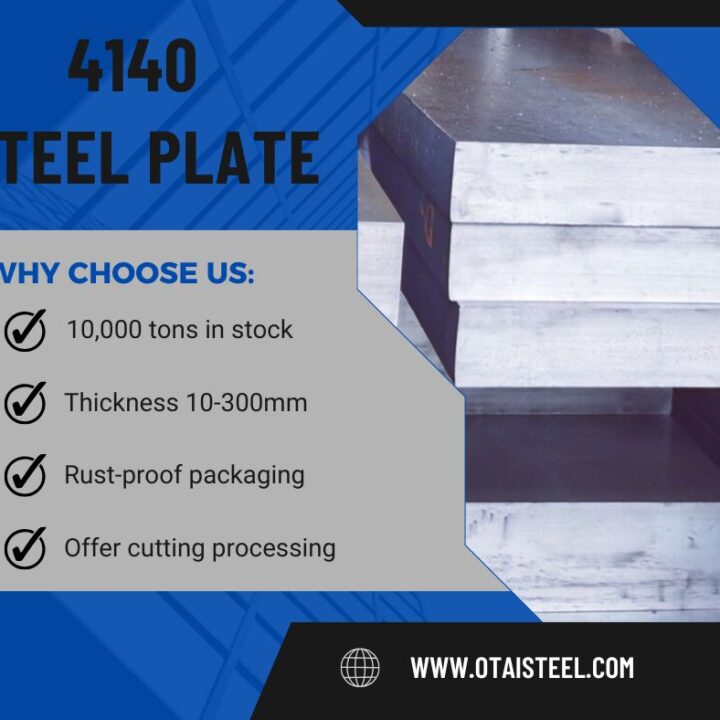
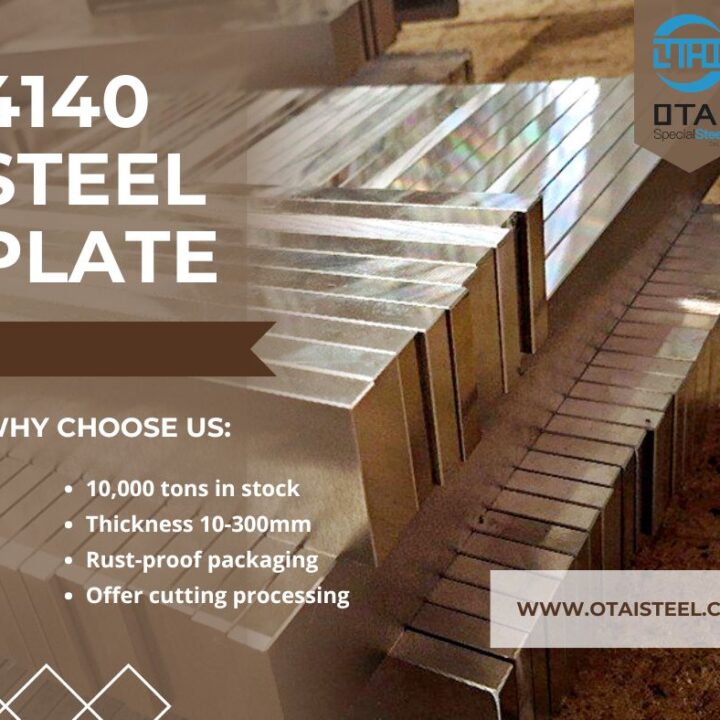
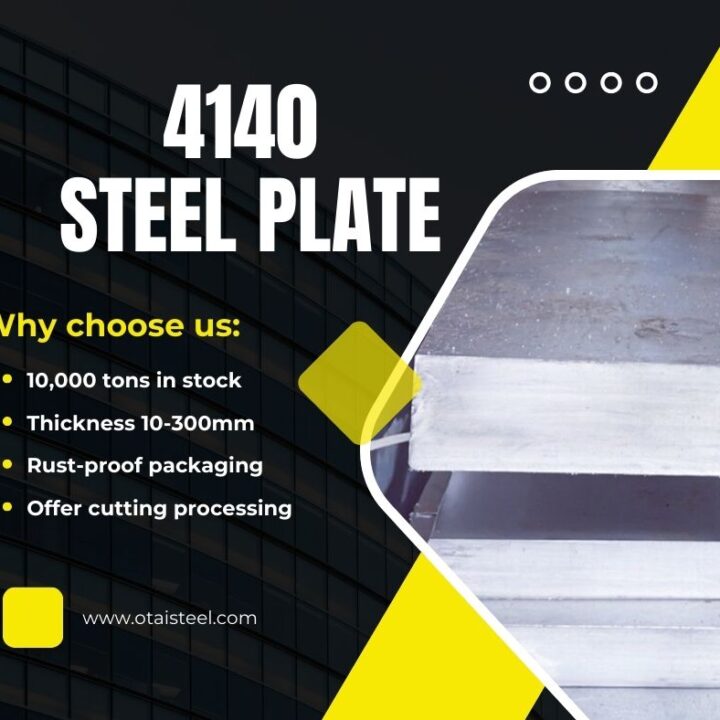
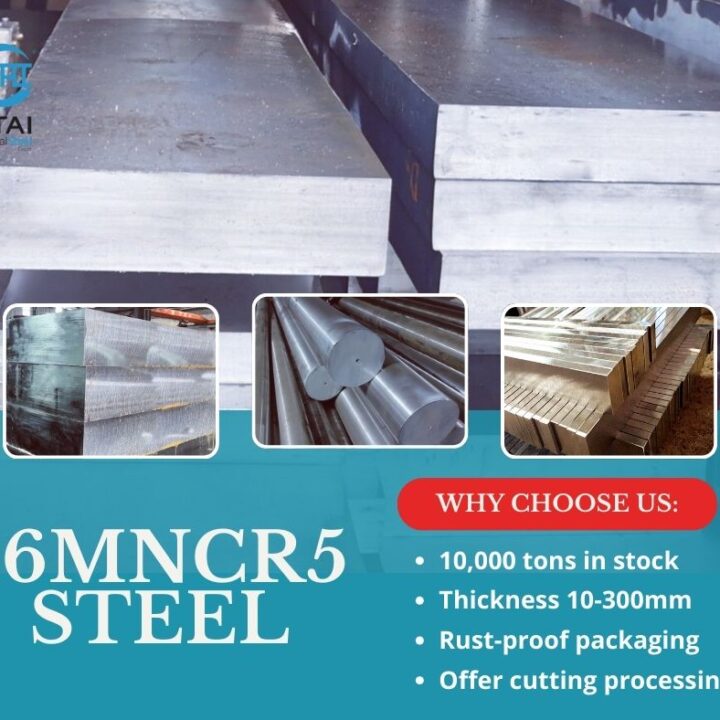
For current Otai inventory, A2 steel plate is confirmed in stock in 8–200 mm thicknesses. This is the current inventory information for purchasing purposes, not a historical website supply-range figure.
If you require A2 plate for a production order, therefore, do not stop at “A2 available.” Send the exact dimensions and quantity so the supplier can check the physical stock that matches your requirement.
🧪 2. A2 Steel Grade and Specification to Confirm
A2 is an air-hardening cold-work tool steel. The grade contains chromium, molybdenum and vanadium, giving it a useful combination of wear resistance, hardenability, toughness and dimensional stability.
International projects can use different designation systems. A2 commonly appears alongside designations such as 1.2363, X100CrMoV5-1 and SKD12. Buyers should still confirm the applicable standard rather than assuming that every designation represents an automatically interchangeable specification.
| Identification | Common Reference | Procurement Check |
|---|---|---|
| AISI grade | A2 | Confirm the specified tool-steel standard |
| ASTM reference | ASTM A681 | Check the applicable edition and grade requirements |
| European designation | 1.2363 / X100CrMoV5-1 | Confirm the exact EN/DIN specification required by the project |
| Japanese designation | SKD12 | Verify the required JIS specification if applicable |
For an ASTM A681 A2 purchase, the commonly referenced chemistry includes approximately 0.95–1.05% carbon, 4.75–5.50% chromium, 0.90–1.40% molybdenum and 0.15–0.50% vanadium. The applicable standard controls the actual specification.
That distinction matters when reviewing an MTC. A published reference composition does not replace the actual heat analysis on your material certificate. The MTC should show the chemistry of the supplied heat and the applicable specification.
Before requesting a quotation, provide the standard used by your drawing, purchase specification or engineering department. This gives the supplier a clear technical basis for checking available stock.
📐 3. A2 Steel Stock Sizes: Match Thickness, Width and Length
Size is one of the most important factors when buying A2 steel from stock. Having the correct grade in the warehouse does not help if the available plate thickness cannot meet your finished component requirements.
For current Otai stock, A2 steel plate is available in 8–200 mm thicknesses. Buyers should then confirm the available width, length, quantity and condition for the specific stock item.
| Dimension | What the Buyer Should Provide | Supplier Confirmation |
|---|---|---|
| Thickness | Required finished or stock thickness | Available stock thickness and machining allowance |
| Width | Required plate width | Actual warehouse dimensions |
| Length | Required plate or blank length | Available length or cutting plan |
| Tolerance | Required dimensional tolerance | Standard or customized tolerance capability |
| Quantity | Pieces, weight or total tonnage | Available quantity and allocation |
A common purchasing mistake is to compare suppliers using only the nominal thickness. A2 plate at the same thickness may still differ in width, length, surface condition and machining allowance.
For example, if your finished tooling block requires a specific thickness after grinding, buying the closest standard plate without discussing the allowance can create unnecessary machining work. Conversely, a stock plate that provides sufficient allowance may allow the supplier to cut the blanks directly from warehouse material.
The supplier’s historical “supply range” should also not be confused with today’s stock. A website may show a broad range of sizes that the supplier can supply through normal production, while the warehouse may currently hold only selected sizes. For an urgent project, always ask for current physical stock matching your dimensions.
⚙️ 4. Delivery Condition and Hardness Matter to Your Purchase
Stock availability alone does not define whether A2 steel suits your purchasing requirement. The delivery condition affects machining, heat treatment and the next production stage.
Most tooling projects require a clear distinction between annealed material and hardened-and-tempered material. Annealed A2 generally provides a machinable starting condition, while hardened and tempered material may suit components that need final or near-final mechanical properties.
| Delivery Condition | Typical Purchasing Purpose | Confirm Before Buying |
|---|---|---|
| Annealed | Machining before final heat treatment | Annealed hardness and condition |
| Hardened and tempered | Tooling requiring controlled hardness | Target HRC and test location |
| Ground or precision processed | Tight dimensional or surface requirements | Final size, tolerance and surface finish |
A2 is an air-hardening tool steel, and appropriate heat treatment can produce high hardness. Depending on the selected cycle and application, A2 commonly reaches the high-50s to low-60s HRC range after hardening and tempering.
However, buyers should not specify “A2, 62 HRC” without considering the complete heat-treatment requirement. Section thickness, furnace equipment, cooling method, tempering temperature and the required dimensional stability all influence the result.
If the supplier will also perform heat treatment, include the target hardness and test requirements in the RFQ. This allows the supplier to quote the material and processing as one technical package instead of treating heat treatment as an afterthought.
🛠️ 5. When A2 Steel Stock Is Suitable for Your Application
A2 steel earns its place in industrial tooling because it balances several properties rather than maximizing only one performance characteristic. Its air-hardening behavior, alloy content and dimensional stability make it suitable for many cold-work applications.
| Application | Why A2 Can Be Suitable | Buyer Focus |
|---|---|---|
| Blanking dies | Wear resistance and hardness | Edge retention and heat treatment |
| Punches | Combination of hardness and toughness | Impact loading and required HRC |
| Forming dies | Wear resistance and dimensional stability | Geometry and working load |
| Shear blades | High hardness and wear resistance | Cutting conditions and edge finish |
| Gauges and precision tooling | Dimensional stability after heat treatment | Tolerance and grinding requirements |
When comparing A2 with another cold-work tool steel, buyers should look beyond the grade name. A different tool steel may provide higher wear resistance, greater toughness or a different machining and heat-treatment response.
Therefore, the correct question is not simply “Is A2 good steel?” Instead, ask whether A2 provides the required combination of wear resistance, toughness, dimensional stability, hardness and processing performance for your tooling.
This approach also helps purchasing teams avoid unnecessary grade substitution. If the engineering specification calls for A2, a supplier should confirm any proposed alternative with the buyer rather than silently replacing the material.
✂️ 6. Cut-to-Size A2 Steel and Processing Requirements
Current A2 plate stock can become more useful when the supplier can cut it to the dimensions required by the project. This is particularly valuable when the finished component uses smaller rectangular blanks rather than an entire stock plate.
Before cutting, provide the finished blank dimensions, quantity and tolerance. The supplier can then determine whether the blanks can come from available stock and whether sufficient machining allowance remains.
| Processing Requirement | Information to Provide |
|---|---|
| Saw cutting | Finished blank size, quantity and cutting tolerance |
| CNC machining | Drawing, dimensions and required tolerance |
| Grinding | Final dimensions, flatness and surface finish |
| Heat treatment | Target hardness and required process condition |
Cut-to-size purchasing can reduce waste and simplify downstream processing. More importantly, it can shorten the purchasing chain when the same supplier can coordinate material, cutting, machining, inspection and export packaging.
Still, buyers should not assume that every requested blank can come directly from current stock. The supplier needs to compare the blank dimensions with the actual plate dimensions available at the time of quotation.
For precision tooling, specify whether the dimensions represent raw stock size or finished dimensions. That single detail can prevent a significant quotation error.
📋 7. MTC, Inspection and Quality Checks for A2 Steel Stock
For industrial A2 steel purchases, material certification should form part of the purchasing specification rather than something checked only after delivery.
The MTC provides traceability between the material supplied and the applicable specification. Buyers should review the grade, heat number, chemical analysis, delivery condition and mechanical or hardness information required by the purchase order.
| Document or Check | What It Confirms |
|---|---|
| Mill Test Certificate | Material identification and actual heat chemistry |
| Hardness report | Hardness under the specified delivery or heat-treatment condition |
| Ultrasonic testing | Internal quality assessment where specified |
| Dimensional inspection | Thickness, width, length and tolerance |
| Third-party inspection | Independent verification when required by the project |
Chemical composition deserves particular attention. Published A2 chemistry tables describe standard requirements or reference values; they do not represent the actual chemistry of every heat. The MTC should provide the actual analysis for the material assigned to your order.
If your customer requires ultrasonic testing, third-party inspection or specific documentation, state this before receiving the quotation. The supplier can then include the inspection arrangement and related cost in the offer.
For international procurement, also check whether the MTC needs to include heat numbers that match the markings on the supplied material. This makes receiving inspection and traceability easier once the shipment reaches your facility.
🚚 8. A2 Steel Delivery: What A Buyer Should Confirm
For overseas purchasing, delivery time depends on more than whether the A2 grade exists in the warehouse. Cutting, machining, inspection, packaging and transportation can all affect the final schedule.
A useful RFQ should therefore distinguish between material availability and ready-to-ship availability.
| Delivery Factor | Buyer Should Confirm |
|---|---|
| Physical stock | Exact size and quantity currently available |
| Cutting | Cutting schedule and tolerance |
| Inspection | MTC, UT or third-party inspection timing |
| Packaging | Anti-rust protection, bundling or wooden cases |
| Shipment | Destination, shipping method and estimated dispatch schedule |
A supplier may have the correct A2 plate today but still require several working days to cut, inspect and package it. Therefore, ask for the estimated dispatch date rather than assuming that warehouse stock means immediate shipment.
Packaging also deserves attention when the material travels internationally. Steel can encounter moisture and condensation during transportation, so anti-rust protection and suitable export packaging can help protect the surface during the journey.
If your project has a fixed production deadline, give the supplier the required arrival date as well as the destination. This allows the sales team to evaluate the complete delivery schedule instead of quoting only the material availability.
💰 9. How Stock Availability Affects Your Purchasing Cost
When comparing A2 steel suppliers, the lowest price per kilogram does not necessarily produce the lowest total purchasing cost.
Current stock can create a commercial advantage when it matches your required size. You may avoid new-production lead time, minimum production quantities or additional processing associated with sourcing a non-stock dimension.
At the same time, oversized stock can increase cutting waste and freight weight. A buyer should therefore compare quotations using the complete purchasing specification.
| Cost Factor | Potential Impact |
|---|---|
| Material grade | Base steel price |
| Stock size | Can affect yield and material waste |
| Cutting | Adds processing cost but may reduce buyer-side work |
| Machining or grinding | Adds value when tighter dimensions are required |
| Inspection | Additional testing may affect the quotation |
| Packaging and freight | Can materially affect landed cost for international shipments |
For example, a supplier with A2 plate already in the required thickness may offer a more practical solution than a lower-priced supplier that needs to produce the material from scratch. The difference becomes even more important when your production schedule is tight.
When comparing quotations, request the same grade, standard, dimensions, quantity, delivery condition, inspection level and processing scope from each supplier. This creates a meaningful price comparison instead of comparing different specifications.
For a current-stock purchase, also ask whether the quoted material is physically available now and how long the supplier needs for cutting, inspection and export preparation.
🏢 Otai Special Steel: A2 Steel Stock and Processing Support
For industrial buyers looking for A2 steel stock, Otai Special Steel combines warehouse supply with cutting and downstream processing support. The current confirmed A2 inventory is 8–200 mm A2 steel plate in stock.
- Current A2 stock: 8–200 mm thickness A2 steel plate
- 10,000+ tons: Overall steel inventory across relevant product categories
- 20 saw cutting machines: Support for cut-to-size requirements
- CNC and grinding: Additional dimensional and surface processing
- Custom size and tolerance: Requirements can be discussed before processing
- Inspection support: Ultrasonic testing and third-party inspection can be arranged according to project requirements
- Export packaging: Anti-rust protection, strapping/bundling and wooden-box packaging options
- One-stop service: Material supply, cutting, machining, heat treatment, inspection and delivery coordination
- International experience: Steel exported to 54+ countries since 1999
For detailed grade information, buyers can also review the official A2 tool steel product page.
When requesting a quotation, provide the A2 standard, thickness, width, length, quantity, delivery condition, tolerance, processing requirements, inspection requirements and destination. Otai can then check the current physical stock against your specification instead of quoting from a general historical size range.
❓ FAQ
1. What A2 steel stock does Otai currently have?
Otai currently has A2 steel plate in 8–200 mm thicknesses in stock. Buyers should confirm the exact width, length, quantity, condition and availability for the specific order.
2. Is A2 steel the same as 1.2363?
A2 and EN/DIN 1.2363 are commonly associated with closely related cold-work tool-steel specifications. However, buyers should confirm the exact standard and chemical requirements rather than assuming that the designations are automatically interchangeable.
3. What hardness can A2 steel reach?
Properly hardened and tempered A2 commonly reaches the high-50s to low-60s HRC range. The actual result depends on section size, heat-treatment conditions, tempering and the required specification.
4. Can A2 steel stock be cut to a custom size?
Yes. When the required material can be taken from available stock, A2 plate can be saw-cut into specified blanks. Buyers should provide the finished dimensions, quantity and cutting tolerance so the supplier can confirm the cutting plan.
5. What should I include when asking for an A2 steel stock quotation?
Provide the A2 grade and applicable standard, thickness, width, length, quantity, delivery condition, tolerance, surface requirement, MTC or inspection requirements, processing needs and destination. For cut-to-size material, also provide the finished blank dimensions and required machining allowance.