SCM440 Supplier: Stock, Specifications, Equivalents, Heat Treatment and Buying Guide
📑 Table of Contents
🧪 2. SCM440 Chemical Composition
⚙️ 3. SCM440 Properties and Mechanical Performance
📏 5. SCM440 Hardness and Delivery Conditions
🔩 6. SCM440 Machining, Welding and Surface Hardening
📦 9. How to Choose an SCM440 Supplier
🔍 1. What Is SCM440 Steel?
SCM440 is a chromium-molybdenum alloy structural steel specified under the Japanese Industrial Standards system. Buyers commonly associate it with JIS G4053/G4105 specifications and compare it with AISI 4140 and 42CrMo4 because these grades occupy similar engineering applications.
The material combines medium carbon content with chromium and molybdenum. As a result, it can develop useful strength, toughness, hardenability and wear resistance after appropriate heat treatment. Engineers commonly select it for shafts, gears, bolts, machinery components, dies and other parts that experience significant mechanical loads.
From a purchasing perspective, however, the steel grade alone does not define the complete product. An SCM440 supplier should confirm the governing standard, delivery condition, dimensions, tolerance, hardness and inspection requirements before quotation or production.
| Item | SCM440 Purchasing Consideration |
|---|---|
| Steel type | Cr-Mo alloy structural steel |
| Common standard | JIS SCM440 |
| Common comparisons | AISI 4140, 42CrMo4 |
| Typical delivery conditions | Annealed, normalized or quenched and tempered, according to specification |
| Main purchasing documents | Quotation, specification, MTC and inspection records where required |
🧪 2. SCM440 Chemical Composition
Chemical composition deserves particular attention when you purchase SCM440 from an international supplier. A steel grade has an allowable chemical range; an individual production heat then has its own measured chemistry. Therefore, buyers should not treat one convenient “typical composition” as the exact chemistry of every SCM440 product.
The following table gives a commonly referenced JIS SCM440 composition range. Buyers should confirm the applicable edition and product specification for a formal compliance requirement.
| Element | Commonly Referenced SCM440 Range / Limit | Function in the Steel |
|---|---|---|
| C | 0.38–0.43% | Supports strength and hardening response |
| Si | 0.15–0.35% | Deoxidation and strength contribution |
| Mn | 0.60–0.85% | Strength and hardenability |
| P | ≤0.030% | Controlled residual element |
| S | ≤0.030% | Controlled residual element |
| Cr | 0.90–1.20% | Hardenability and strength |
| Mo | 0.15–0.30% | Hardenability and tempering performance |
For procurement, the MTC should verify the actual heat analysis. That distinction matters when your customer specifies a narrow chemistry range, requires third-party inspection or needs traceability between the supplied material and the production heat.
A supplier may also provide a manufacturer’s typical analysis for reference. Such figures describe a representative production chemistry rather than a universal value for every SCM440 heat. This approach prevents confusion between a standard requirement, a producer’s typical analysis and the actual material certificate.
⚙️ 3. SCM440 Properties and Mechanical Performance
SCM440 provides a useful balance between strength and toughness when the manufacturer and customer select an appropriate delivery and heat-treatment condition. Chromium and molybdenum improve hardenability, while the medium carbon level allows the steel to respond strongly to quenching and tempering.
Mechanical properties vary with section size, heat treatment and product form. Therefore, a supplier should not quote one hardness or tensile-strength value as though it applies to every plate, bar and heat-treated product.
| Property | Typical Engineering Reference | Purchasing Note |
|---|---|---|
| Density | Approximately 7.85 g/cm³ | Useful for weight calculations |
| Elastic modulus | Approximately 205–210 GPa | Reference engineering value |
| Strength response | Strongly affected by Q&T condition | Specify required mechanical properties |
| Hardness | Depends on delivery and treatment | Confirm test method and location |
| Hardenability | Good for a medium-carbon Cr-Mo alloy steel | Important for thick sections |
For large components, section thickness becomes particularly important. The surface and core do not cool at the same rate during quenching, so the final hardness and mechanical properties can vary through the section. A serious SCM440 supplier should therefore discuss thickness, heat-treatment condition and test location rather than quoting only a nominal grade.
🔥 4. SCM440 Heat Treatment
Heat treatment allows SCM440 to reach the strength and hardness required for different engineering components. The exact cycle depends on product thickness, furnace conditions, loading, cooling equipment and the target properties.
| Process | Reference Temperature | Purpose |
|---|---|---|
| Annealing | Around 830–870°C | Reduce hardness and improve machinability |
| Normalizing | Around 830–880°C | Refine structure and establish a suitable starting condition |
| Hardening | Approximately 830–880°C | Austenitize before quenching |
| Tempering | Commonly around 530–650°C | Balance hardness, strength and toughness |
Holding time requires more caution than temperature. A production cycle should account for the actual section thickness and furnace loading instead of applying one fixed time to every size. For that reason, an experienced SCM440 supplier should confirm the required heat-treatment condition with the buyer before processing thick plate or large sections.
Quenching can use oil or another specified cooling medium depending on the required properties and production procedure. After hardening, tempering should follow promptly to reduce excessive brittleness and establish the required mechanical balance.
For purchasing SCM440 QT material, specify the target hardness or mechanical properties rather than simply asking for “heat treated SCM440.” That wording gives the supplier a measurable requirement and makes inspection easier.
📏 5. SCM440 Hardness and Delivery Conditions
SCM440 hardness depends heavily on its delivery condition. Annealed material supports machining, while quenched-and-tempered material provides a stronger starting condition for finished components. Consequently, buyers should always state the required condition when requesting an SCM440 quotation.
| Condition | General Characteristic | Typical Purchasing Purpose |
|---|---|---|
| Annealed | Lower hardness and improved machinability | Machining before customer heat treatment |
| Normalized | Refined microstructure with moderate strength | General fabrication and further treatment |
| Quenched & tempered | Higher strength and controlled hardness | Ready-to-machine or engineering components |
Hardness measurements also require a defined test method and location. A thick SCM440 plate may show different values between the surface and core, especially after quenching. Therefore, the inspection plan should state whether the buyer requires HB, HRC or another hardness scale and where the measurement should occur.
When you purchase SCM440 for critical machinery, ask the supplier to connect the hardness result to the heat number on the MTC. This traceability makes the inspection record more useful during incoming quality control.
🔩 6. SCM440 Machining, Welding and Surface Hardening
SCM440 machines more easily in an annealed condition than after hardening and tempering. Buyers who plan CNC machining should therefore consider whether they need annealed stock for workshop processing or pre-hardened material for a shorter production route.
Cutting strategy also matters for thick plate. Saw cutting can produce manageable blanks before CNC machining, while grinding can improve dimensional accuracy and surface condition where the application requires it.
Welding needs greater attention because SCM440 contains enough carbon and alloying elements to develop a hardened heat-affected zone. Preheating, controlled interpass temperature, suitable welding consumables and post-weld heat treatment may become necessary depending on thickness and service requirements.
For critical welded structures, do not select a welding procedure from the steel name alone. The supplier and welding engineer should consider carbon equivalent, thickness, restraint, joint design and required mechanical performance.
SCM440 can also support induction surface hardening. This process can create a hard surface while retaining a tougher core, making it useful for shafts, gears and wear-prone mechanical components. The final surface hardness and effective hardened depth should form part of the technical specification.
For induction-hardened SCM440, specify surface hardness, effective case depth, test location and acceptance criteria before production.
🏭 7. SCM440 Applications
SCM440 serves many industrial applications because its Cr-Mo alloy system responds well to heat treatment. The grade often appears in components that require a combination of strength, toughness and resistance to mechanical wear.
| Application | Why SCM440 Is Considered |
|---|---|
| Shafts | Strength, toughness and heat-treatment response |
| Gears | Suitable balance of core strength and surface-hardening capability |
| Bolts and fasteners | High-strength heat-treated applications |
| Machine components | Good combination of strength and machinability |
| Dies and tooling components | Hardness and wear resistance after suitable treatment |
| Oil and gas machinery | Strength and toughness for demanding mechanical service |
Nevertheless, application suitability depends on design conditions. A component requiring carburized wear surfaces, for example, may call for a dedicated case-hardening steel rather than SCM440. Material selection should therefore follow the actual failure mode, load, surface requirement and manufacturing process.
🌍 8. SCM440 Equivalent Grades
International buyers frequently search for SCM440 equivalent grades because different markets use different standards. AISI 4140 and 42CrMo4 are the two comparisons that appear most often in industrial purchasing.
| Grade | Standard / System | Relationship to SCM440 |
|---|---|---|
| SCM440 | JIS | Reference grade |
| AISI 4140 | SAE/AISI | Very close Cr-Mo alloy comparison |
| 42CrMo4 | EN / European | Common international comparison |
| 1.7225 | Werkstoff designation | Associated with 42CrMo4 |
These grades should not automatically be treated as interchangeable in every project. Their standards can define different chemistry limits, mechanical-property requirements, product dimensions and testing conditions. Therefore, when a customer asks an SCM440 supplier to offer 4140 or 42CrMo4 as an alternative, the supplier should compare the complete specification.
For international procurement, confirm the standard and MTC before approving an equivalent grade. That simple step can prevent problems when the customer’s drawing or inspection standard requires a specific material designation.
📦 9. How to Choose an SCM440 Supplier
Choosing an SCM440 supplier involves more than comparing the quoted price per ton. For overseas buyers, stock availability, product condition, processing capability, inspection documentation and export experience can all affect the actual purchasing result.
Start with the specification. State the grade, standard, product form, thickness or diameter, width, length, quantity and delivery condition. If your drawing gives finished dimensions, provide them as well so the supplier can recommend a suitable raw-material size.
Next, confirm the material certificate. The MTC should identify the heat and provide the applicable chemical analysis and test results. For critical orders, buyers can also request ultrasonic testing, hardness testing or third-party inspection.
| What to Confirm | Why It Matters |
|---|---|
| Grade and standard | Prevents confusion between similar international grades |
| Stock size | Influences material waste and lead time |
| Delivery condition | Controls hardness and machinability |
| Tolerance | Determines whether additional processing is necessary |
| MTC | Verifies the actual production heat and test results |
| Inspection | Supports quality control for critical applications |
| Processing | Can reduce machining and preparation work after delivery |
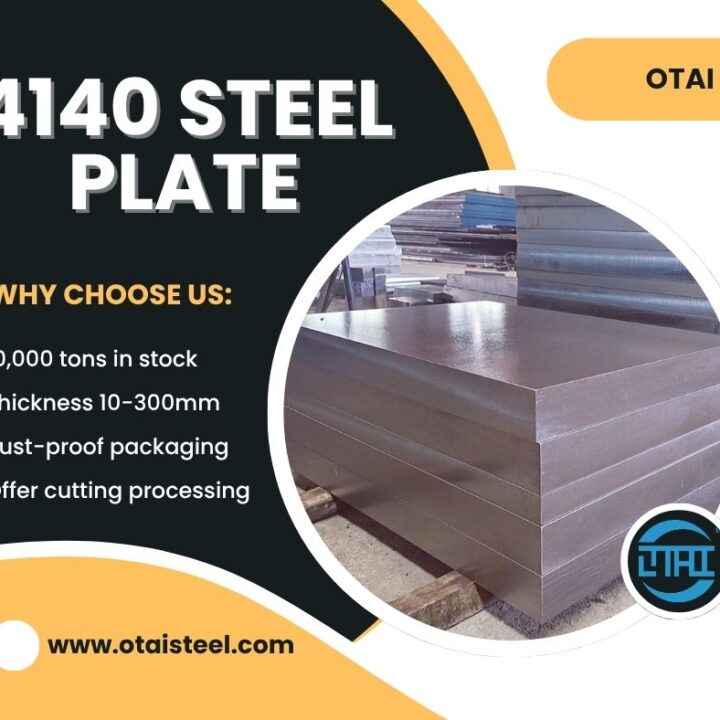
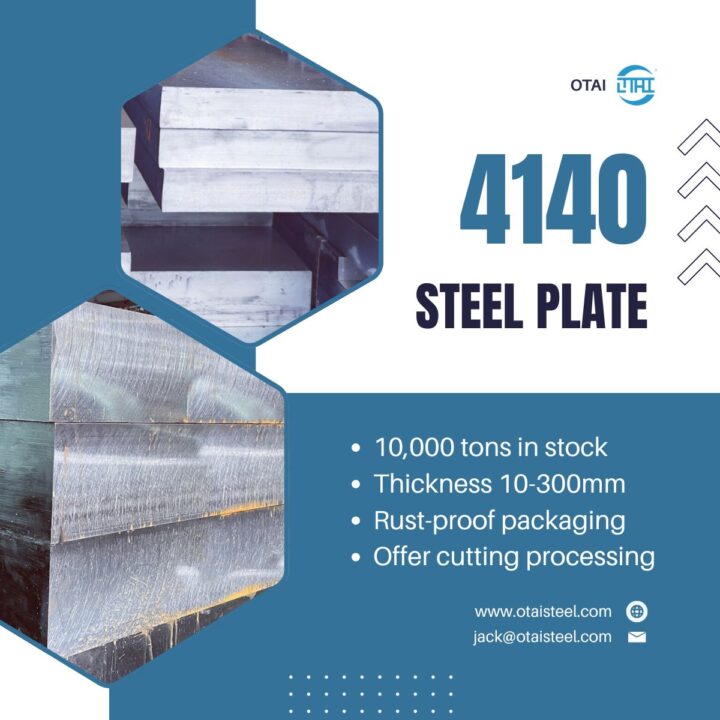
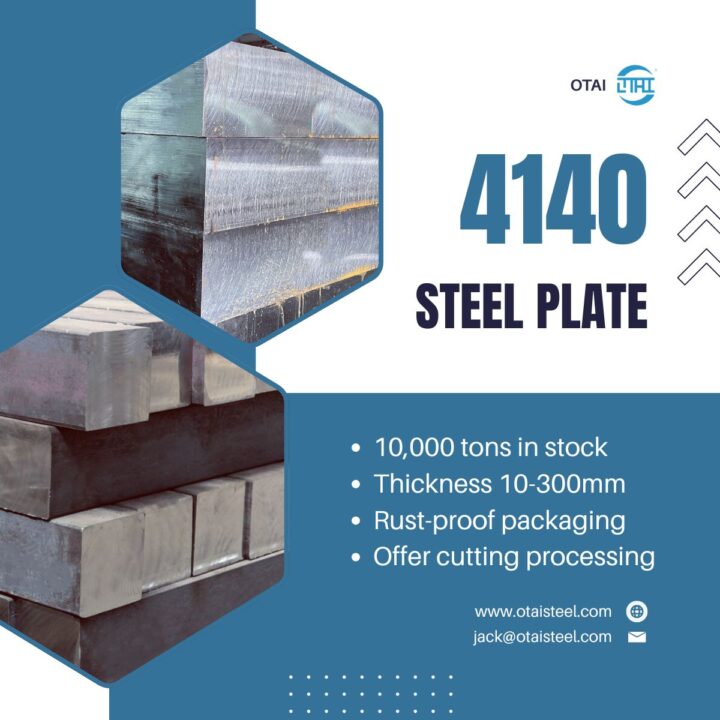
Stock is another major factor. Otai currently lists SCM440 steel plate in thicknesses from 4–380 mm, SCM440 quenched-and-tempered plate from 13–200 mm, and SCM440 round bar from Ø14–500 mm. This range allows buyers to compare available stock with the raw dimensions required for their project.
Finally, consider whether the supplier can coordinate cutting, machining, grinding, inspection and packaging. A one-stop supply arrangement can simplify communication when the customer needs material prepared close to production dimensions.
🏢 10. Why Choose Otai as Your SCM440 Supplier?
- SCM440 steel plate stock: 4–380 mm thickness available for international purchasing requirements.
- SCM440 QT plate: 13–200 mm thickness available in quenched-and-tempered condition.
- SCM440 round bar: Diameter 14–500 mm available according to current stock information.
- 10,000+ tons of total steel stock: Supports regular industrial purchasing and project orders.
- 20 saw cutting machines: Supports different plate sizes, cutting requirements and order quantities.
- CNC & grinding: Processing can bring material closer to the customer’s production dimensions.
- Custom size and tolerance: Cutting and machining can follow customer drawings and technical requirements.
- One-stop service: Cutting, machining, heat-treatment support, inspection and export packaging can be coordinated through one supplier.
- Quality documentation: MTC, quality testing, ultrasonic testing and third-party inspection can be arranged according to project requirements.
- Global export experience: Otai has exported steel to 54+ countries since 1999.
For an overseas buyer, working with an SCM440 supplier means more than finding a matching grade. The supplier should understand the relationship between the steel specification, stock size, delivery condition, processing route and inspection requirements.
Otai can discuss the complete purchasing specification before shipment, including SCM440 grade, applicable standard, dimensions, tolerance, heat-treatment condition, inspection requirements and packaging. This approach helps buyers reduce unnecessary processing and clarify technical requirements before placing the order.
❓ FAQ About SCM440 Suppliers
1. What should I ask an SCM440 supplier before ordering?
Confirm the SCM440 standard, product form, dimensions, delivery condition, tolerance, quantity, MTC requirements and inspection requirements. For critical applications, also specify hardness, mechanical properties, ultrasonic testing or third-party inspection if necessary.
2. Is SCM440 the same as AISI 4140?
SCM440 and AISI 4140 are very close Cr-Mo alloy steel grades and often serve similar engineering applications. However, they belong to different standards, so buyers should compare the applicable chemical composition and mechanical-property requirements before approving substitution.
3. What is the chemical composition of SCM440?
Commonly referenced JIS SCM440 chemistry includes C 0.38–0.43%, Si 0.15–0.35%, Mn 0.60–0.85%, Cr 0.90–1.20% and Mo 0.15–0.30%, with P and S controlled to specified maximum limits. The actual supplied heat should always be verified through the MTC.
4. What SCM440 sizes does Otai keep in stock?
Otai currently lists SCM440 steel plate in 4–380 mm thickness, SCM440 QT plate in 13–200 mm thickness, and SCM440 round bar in Ø14–500 mm diameter. Custom cutting and additional processing can also be discussed according to the project requirements.
5. Can an SCM440 supplier provide cut-to-size material?
Yes. Otai provides saw cutting and can coordinate CNC machining and grinding. Buyers can provide the required finished dimensions and tolerance so the supplier can evaluate a suitable stock size and machining allowance before shipment.