42CrMo4 Supplier: Stock Availability, Machining Service & Material Solutions
📑 Table of Contents
🏭 2. How to Choose a Reliable 42CrMo4 Supplier?
🧪 3. 42CrMo4 Chemical Composition and Material Characteristics
🔥 4. 42CrMo4 Heat Treatment and Mechanical Properties
📏 5. 42CrMo4 Hardness and Strength Range
⚙️ 6. 42CrMo4 Product Forms and Processing Services
🌍 7. 42CrMo4 Equivalent Grades Worldwide
📦 8. Applications of 42CrMo4 Steel
💰 9. What Should Buyers Confirm Before Ordering 42CrMo4?
🔍 1. What Is 42CrMo4 Steel?
42CrMo4 steel is a chromium-molybdenum alloy steel widely used for high-strength mechanical components. It belongs to the EN steel standard system and is commonly identified by material number 1.7225. The grade is designed for applications that require a balance of strength, toughness, fatigue resistance, and hardenability.
For international buyers, 42CrMo4 is often compared with AISI 4140 and JIS SCM440. These grades have similar alloy concepts, but they follow different standards and acceptance requirements. A professional supplier should confirm chemical composition, mechanical properties, heat treatment condition, and inspection requirements before shipment. :contentReference[oaicite:0]{index=0}
The main advantage of 42CrMo4 comes from its chromium and molybdenum content. Chromium improves hardenability and wear resistance, while molybdenum helps maintain strength after heat treatment.
Compared with ordinary carbon steels such as C45, 42CrMo4 provides better performance when components experience repeated loads, impact forces, or high torque. Therefore, many manufacturers select this material for shafts, gears, bolts, hydraulic parts, and heavy machinery components.
When purchasing from a 42CrMo4 supplier, buyers usually focus on more than the steel grade itself. Stock availability, certification, cutting service, dimensional tolerance, and delivery capability also influence the final purchasing decision.
🏭 2. How to Choose a Reliable 42CrMo4 Supplier?
Selecting a suitable 42CrMo4 supplier requires evaluating technical capability and supply stability together. A supplier with only basic trading experience may provide material, but industrial customers usually need consistent quality control and processing support.
A reliable supplier should provide clear information about material origin, steel condition, inspection documents, and available sizes. For example, EN 10204 3.1 material certificates are commonly requested for industrial applications where traceability is important. :contentReference[oaicite:1]{index=1}
| Supplier Capability | Why Buyers Need It |
|---|---|
| Real stock availability | Reduces waiting time for urgent projects |
| Material certificate | Confirms chemical composition and traceability |
| Cutting service | Helps customers receive ready-to-use sizes |
| Machining capability | Supports customized production requirements |
| Export experience | Improves international delivery communication |
Another important factor is whether the supplier understands application requirements. A buyer ordering 42CrMo4 for a transmission shaft may need different mechanical properties compared with a customer producing bolts or hydraulic components.
Therefore, the best purchasing process starts with complete technical information, including size, quantity, delivery condition, hardness requirement, inspection standard, and final application.
🧪 3. 42CrMo4 Chemical Composition and Material Characteristics
The performance of 42CrMo4 depends strongly on its alloy composition. However, buyers should understand that steel composition is normally controlled within a range rather than one fixed number.
The following values represent common reference ranges for 42CrMo4. The actual chemical analysis depends on the steel mill heat and should be confirmed through the material certificate.
| Element | Typical Range | Function |
|---|---|---|
| Carbon (C) | 0.38–0.45% | Improves strength and hardness capability |
| Silicon (Si) | ≤0.40% | Supports deoxidation and strength |
| Manganese (Mn) | 0.60–0.90% | Improves toughness and hardenability |
| Chromium (Cr) | 0.90–1.20% | Enhances wear resistance and hardenability |
| Molybdenum (Mo) | 0.15–0.30% | Improves strength after tempering |
Unlike simple carbon steel, 42CrMo4 maintains better mechanical properties after heat treatment because alloying elements delay transformation during cooling. This characteristic allows larger sections to achieve useful hardness levels.
For international purchasing, the material certificate is the final reference for chemical composition. Published datasheets provide guidance, while the delivered steel must match the agreed specification.
🔥 4. 42CrMo4 Heat Treatment and Mechanical Properties
Heat treatment plays an important role in improving the mechanical performance of 42CrMo4 steel. A suitable heat treatment process can adjust hardness, tensile strength, yield strength, and toughness according to different industrial applications.
For most engineering applications, 42CrMo4 is commonly supplied in quenched and tempered (Q+T) condition. This process provides a good balance between high strength and impact resistance, making the material suitable for shafts, gears, bolts, and heavy-duty machine components.
| Heat Treatment Process | Typical Temperature | Purpose |
|---|---|---|
| Annealing | Approximately 680–720°C | Reduces hardness and improves machinability |
| Normalizing | Approximately 840–880°C | Refines grain structure and improves uniformity |
| Quenching | Approximately 820–860°C | Creates hardened martensitic structure |
| Tempering | Usually 540–680°C depending on target properties | Balances hardness and toughness |
The holding time depends mainly on material thickness, furnace conditions, and production requirements. As a general industrial reference, many heat treatment processes use a holding period based on section size after the material reaches the required temperature.
For example, a small diameter bar may require a shorter soaking time, while a large diameter 42CrMo4 bar needs additional time to ensure the core reaches the treatment temperature evenly.
After quenching and tempering, 42CrMo4 can achieve significantly improved strength compared with its untreated condition. However, the final properties depend on several factors, including diameter, cooling method, tempering temperature, and inspection requirements.
A professional 42CrMo4 supplier should confirm the heat treatment condition before quotation because “42CrMo4” alone does not define the final mechanical performance.
📏 5. 42CrMo4 Hardness and Strength Range
Hardness is one of the most common questions from buyers searching for 42CrMo4 steel. However, the hardness value depends on the supply condition. A normalized bar, annealed bar, and quenched and tempered bar will show different results.
| Supply Condition | Typical Hardness | Application Benefit |
|---|---|---|
| Annealed | Approx. 200–240 HB | Better machinability before processing |
| Normalized | Approx. 220–280 HB | Improved strength and structure uniformity |
| Quenched and Tempered | Approx. 28–45 HRC | High strength mechanical applications |
The exact hardness requirement should be specified during purchasing. For example, a customer producing hydraulic shafts may request a different hardness range from a manufacturer producing high-strength bolts.
Besides hardness, buyers should also consider tensile strength and impact toughness. A material with extremely high hardness may not always provide the best service performance because excessive hardness can reduce toughness.
For large 42CrMo4 sections, hardness testing location is also important. Surface hardness and core hardness may differ because cooling speed changes from the outside area to the center of the material.
The correct 42CrMo4 hardness depends on the working condition, not simply on achieving the highest possible hardness value.
⚙️ 6. 42CrMo4 Product Forms and Processing Services
A professional 42CrMo4 supplier should provide different product forms and processing options according to customer requirements. Different industries may need plates, round bars, or customized cut pieces depending on the final component design.
For mechanical manufacturing, round bar is one of the most common forms because many components require turning, drilling, milling, or grinding operations.
| Product Form | Typical Usage |
|---|---|
| 42CrMo4 Steel Plate | Machine parts, structural components, customized fabrication |
| 42CrMo4 Round Bar | Shafts, pins, gears, bolts, rotating components |
| Cut-to-size Material | Reduces machining preparation time |
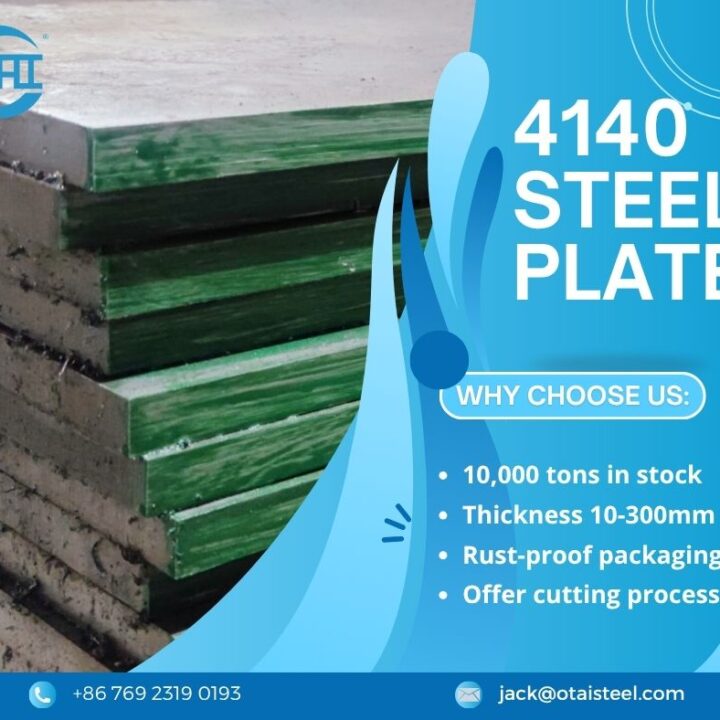
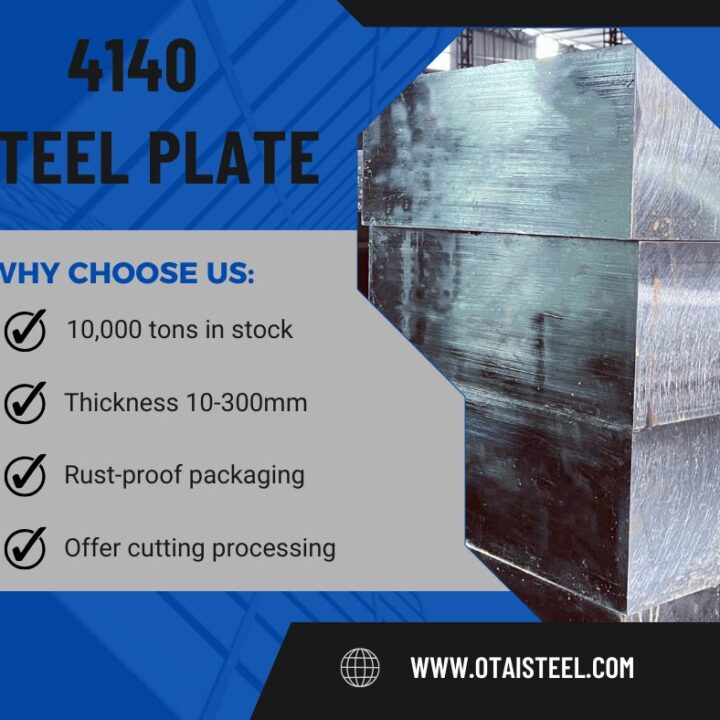
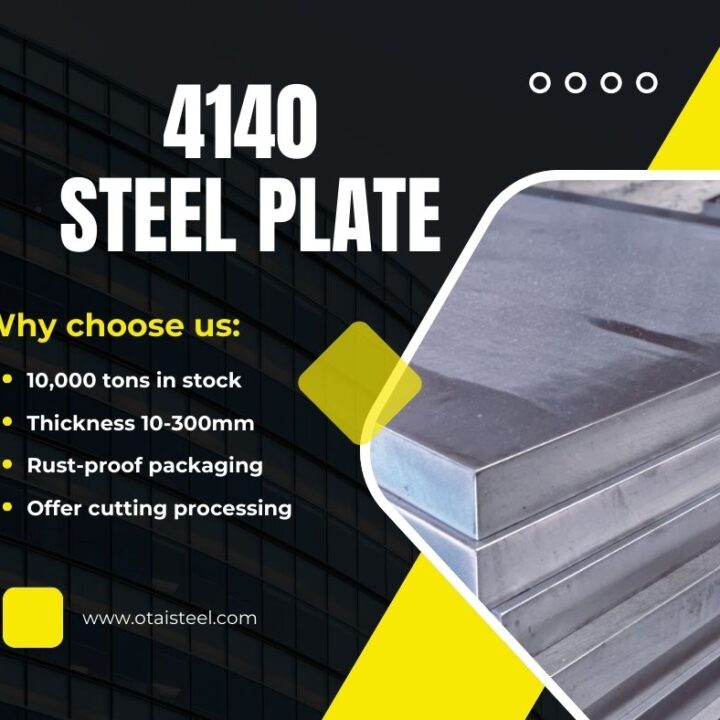
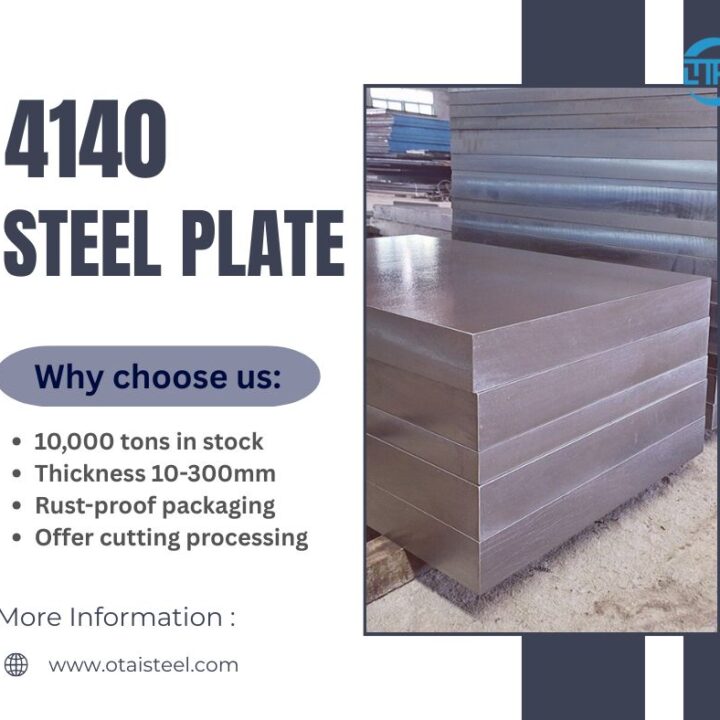
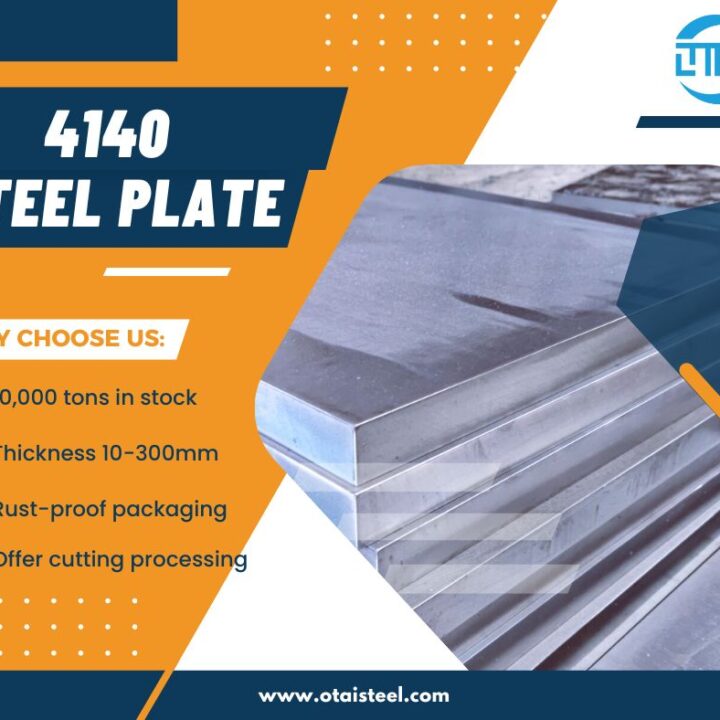
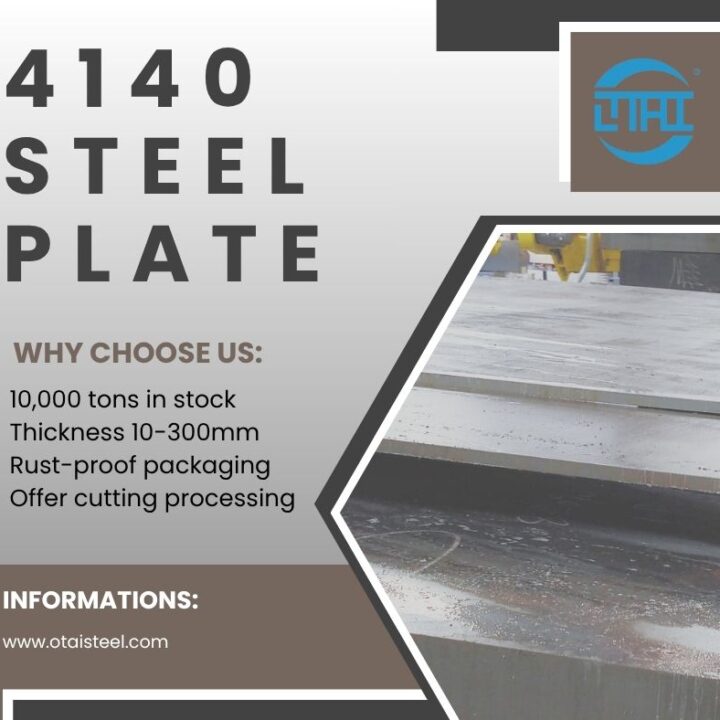
Otai supplies 42CrMo4 / 4140 / SCM440 related products according to industrial purchasing requirements. Available inventory includes steel plate thickness from 4–380mm, 4140 QT plate from 13–200mm, and round bar diameter from 14–500mm.
In addition to stock availability, processing capability can make the purchasing process more efficient. Services such as saw cutting, CNC machining, and grinding help customers reduce preparation work after receiving the material.
When requesting a quotation, buyers should provide the required size, tolerance, quantity, heat treatment condition, and inspection requirements. This information allows the supplier to recommend the correct material condition.
🌍 7. 42CrMo4 Equivalent Grades Worldwide
International buyers often search for 42CrMo4 equivalent because different countries use different steel designation systems. During global procurement, understanding these comparisons helps buyers communicate with suppliers more efficiently.
The most common comparisons include AISI 4140 from the United States and SCM440 from Japan. Although these grades share similar alloy concepts, they are not always identical in every specification. The final substitution decision should consider chemical composition, mechanical properties, product standard, and application requirements.
| Grade | Standard System | Relationship with 42CrMo4 |
|---|---|---|
| 42CrMo4 | EN / European Standard | Reference grade in EN system |
| 1.7225 | Werkstoff Number | Material number commonly associated with 42CrMo4 |
| AISI 4140 | SAE / AISI | Widely used Cr-Mo alloy steel with similar applications |
| SCM440 | JIS | Common Japanese equivalent comparison |
For example, a buyer in the United States may request AISI 4140, while a European customer may specify 42CrMo4. A supplier with international experience should understand these naming differences and provide the correct technical documentation.
However, buyers should avoid selecting materials only by name. The safest method is to compare the actual certificate, chemical composition, mechanical properties, and delivery condition before confirming an equivalent grade.
📦 8. Applications of 42CrMo4 Steel
42CrMo4 is widely used in industries where components need high strength, good toughness, and reliable fatigue resistance. Its performance after heat treatment makes it suitable for demanding mechanical applications.
| Application | Why 42CrMo4 Is Selected |
|---|---|
| Transmission Shafts | Provides high torsional strength and fatigue resistance |
| Gears and Gear Components | Supports wear resistance after suitable treatment |
| Hydraulic Components | Offers strength and dimensional stability |
| High-strength Bolts | Provides good strength after quenching and tempering |
| Heavy Machinery Parts | Suitable for impact and repeated loading conditions |
Many manufacturers choose 42CrMo4 because it offers a practical balance between performance and cost. Compared with higher alloy steels, it provides sufficient strength for many applications without requiring excessive alloy content.
Nevertheless, material selection should always follow the actual service environment. Factors such as operating temperature, impact load, corrosion exposure, surface wear, and required service life can influence the final steel choice.
For this reason, a professional supplier should understand the customer’s application instead of simply offering a standard material quotation.
💰 9. What Should Buyers Confirm Before Ordering 42CrMo4?
Before purchasing from a 42CrMo4 supplier, buyers should prepare complete technical information. Clear specifications reduce communication problems and help suppliers provide accurate quotations.
| Item to Confirm | Recommended Information |
|---|---|
| Steel Grade | 42CrMo4 / 1.7225 and required standard |
| Product Size | Thickness, diameter, length, and tolerance |
| Heat Treatment | Annealed, normalized, or quenched and tempered |
| Mechanical Requirements | Hardness, tensile strength, yield strength, impact requirements |
| Inspection Documents | MTC, ultrasonic testing, third-party inspection if required |
| Processing Requirements | Cutting, CNC machining, grinding, or customized tolerance |
Delivery condition is another important factor. For example, a customer requiring immediate machining may prefer annealed material, while another customer producing high-load components may request quenched and tempered 42CrMo4.
Packaging should also receive attention during international transportation. Proper anti-rust protection, bundling, and export packing help maintain material quality before production.
A complete purchase specification helps both the buyer and supplier avoid misunderstandings and improves delivery efficiency.
🏢 10. Why Choose Otai as Your 42CrMo4 Supplier?
- 42CrMo4 / 4140 / SCM440 steel plate stock: thickness range 4–380mm available according to current inventory.
- 4140 QT plate: thickness range 13–200mm available for customers requiring quenched and tempered condition.
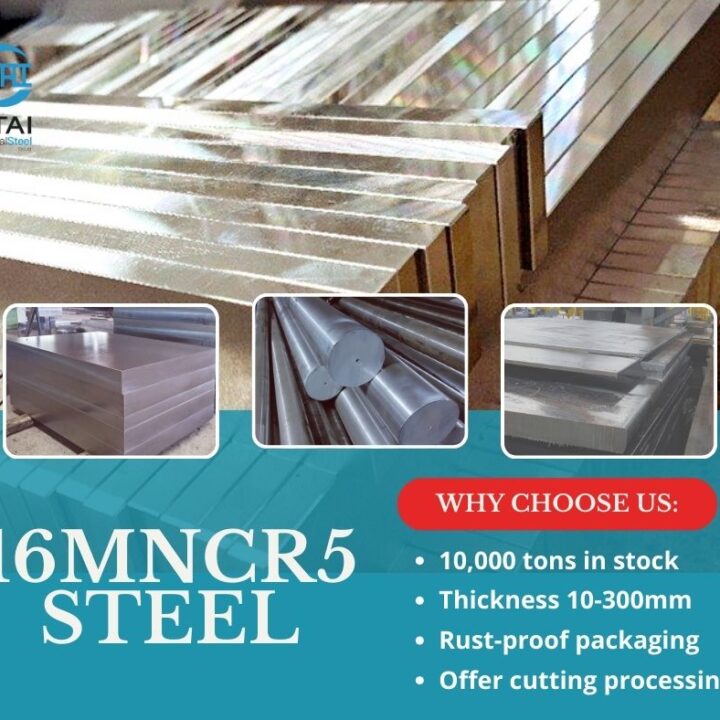
- 42CrMo4 related round bar stock: diameter range 14–500mm available according to inventory.
- 10,000+ tons stock: supports regular industrial purchasing and urgent requirements.
- 20 saw cutting machines: provide efficient cutting solutions for different dimensions.
- CNC machining and grinding: help customers obtain closer-to-final dimensions.
- Custom size and tolerance: support different engineering requirements.
- One-stop service: integrates material supply, cutting, processing, inspection, and export preparation.
- Quality support: provides material certificates, ultrasonic testing, and third-party inspection support when required.
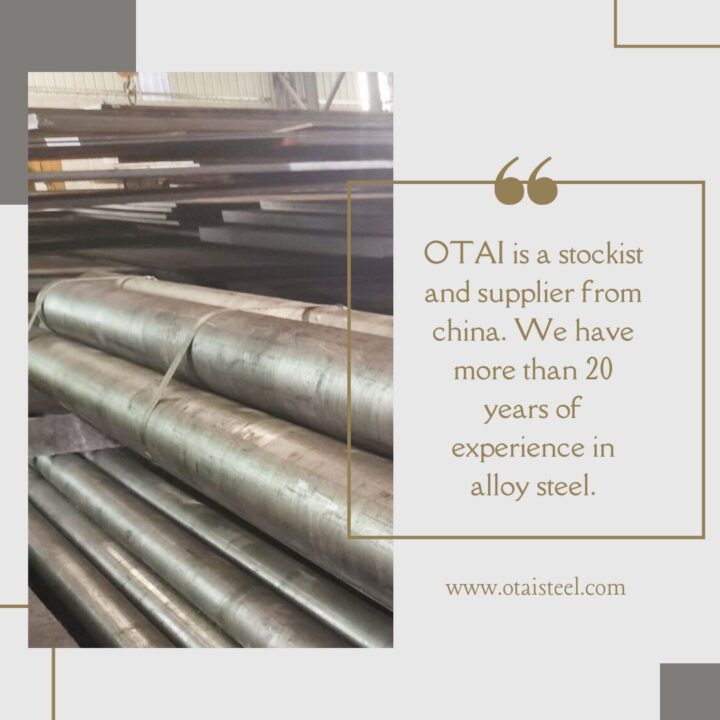
- Export experience: Otai has exported steel products to more than 54 countries since 1999.
For international buyers, choosing a 42CrMo4 supplier means evaluating more than the material price. Stable stock, technical communication, processing capability, and documentation support all influence the total purchasing experience.
Otai works with customers to confirm specifications before production or shipment, including steel grade, dimensions, tolerance, heat treatment condition, inspection requirements, and packaging needs.
❓ FAQ About 42CrMo4 Supplier
1. What is 42CrMo4 steel commonly used for?
42CrMo4 steel is commonly used for high-strength mechanical components that require good toughness, fatigue resistance, and wear performance. Typical applications include shafts, gears, hydraulic parts, high-strength bolts, and heavy machinery components.
The main reason engineers select 42CrMo4 is its ability to achieve a good balance between strength and toughness after proper heat treatment. It performs well in applications where ordinary carbon steel cannot provide sufficient mechanical performance.
2. Is 42CrMo4 the same as AISI 4140?
42CrMo4 and AISI 4140 are very similar chromium-molybdenum alloy steels and are often compared in international purchasing. However, they belong to different standard systems, so they should not be treated as completely identical without verification.
Before replacing one grade with another, buyers should compare the chemical composition range, mechanical properties, heat treatment condition, and required certification.
3. What hardness can 42CrMo4 achieve?
The hardness of 42CrMo4 depends on the supply condition and heat treatment process. Annealed material usually has a hardness around 200–240 HB, while quenched and tempered 42CrMo4 commonly reaches approximately 28–45 HRC depending on the required mechanical properties.
For special applications, surface hardening processes may further increase surface hardness while maintaining a tougher core structure.
4. What information should I provide when requesting a quotation from a 42CrMo4 supplier?
To receive an accurate quotation, buyers should provide the steel grade, product form, size, quantity, delivery condition, hardness requirement, inspection requirements, and final application.
For example, a request including “42CrMo4 round bar” is not enough for a professional quotation. The supplier also needs the diameter, length, tolerance, heat treatment condition, and certification requirements.
5. Does Otai have 42CrMo4 in stock?
Yes. Otai supplies 42CrMo4 related products including 4140 / SCM440 / 42CrMo4 steel plate, 4140 QT plate, and round bar according to current inventory.
Available stock includes steel plate thickness from 4–380mm, 4140 QT plate from 13–200mm, and round bar diameter from 14–500mm. Customers can also request cutting, CNC machining, grinding, customized sizes, and tolerance requirements according to their project needs.