SCM440 Steel Plate: Properties, Chemical Composition, Heat Treatment and Buying Guide
📑 Table of Contents
🔩 1. What Is SCM440 Steel Plate?
🧪 2. SCM440 Steel Chemical Composition
⚙️ 3. SCM440 Steel Plate Properties
📊 5. SCM440 Hardness and Mechanical Properties
🛠️ 6. Machining, Welding and Cutting
🏭 7. SCM440 Steel Plate Applications
🌎 8. SCM440 Equivalent Grades and Comparisons
📐 9. SCM440 Steel Plate Sizes and Purchasing Specifications
💼 10. How to Buy SCM440 Steel Plate
🔩 1. What Is SCM440 Steel Plate?
SCM440 is a medium-carbon chromium-molybdenum alloy structural steel specified under the Japanese JIS system. It is widely used for components that require a combination of strength, toughness, hardenability and wear resistance. In international purchasing, buyers may also encounter SCM440 alongside AISI 4140, 42CrMo4 and related Cr-Mo alloy steels.
The key point for procurement is that these designations should not automatically be treated as chemically identical materials. Each grade belongs to its own material standard, and the applicable specification should appear clearly on the purchase order and material certificate.
For plate applications, SCM440 provides a useful material option for heavy machinery, shafts, structural machine components, tooling bases and other parts exposed to substantial mechanical loading. Depending on the application, the plate can be supplied in hot-rolled, annealed or quenched-and-tempered conditions.
SCM440 contains chromium and molybdenum rather than relying only on carbon to obtain strength. As a result, heat treatment can significantly increase its hardness and mechanical performance while maintaining useful toughness when the process is properly controlled.
🧪 2. SCM440 Steel Chemical Composition
When discussing SCM440 chemical composition, it is important to distinguish a standard composition range from a steelmaker’s typical analysis. The table below presents commonly referenced JIS G4053 composition requirements for SCM440 rather than one manufacturer’s single heat analysis.
| Element | SCM440 JIS G4053, wt.% | Function in the Steel |
|---|---|---|
| C | 0.38–0.43 | Contributes to strength and hardenability |
| Si | 0.15–0.35 | Deoxidation and solid-solution strengthening |
| Mn | 0.60–0.90 | Strength, hardenability and deoxidation |
| P | ≤0.030 | Controlled residual element |
| S | ≤0.030 | Controlled residual element |
| Cr | 0.90–1.20 | Hardenability and strength |
| Mo | 0.15–0.30 | Hardenability and tempering resistance |
The chromium and molybdenum combination is particularly important. Chromium improves hardenability and contributes to strength, while molybdenum helps maintain mechanical performance during tempering and reduces the risk of certain forms of temper embrittlement.
For purchasing, the actual heat chemistry should always be checked against the material certificate. A supplier may provide a specific heat analysis such as C 0.40%, Cr 1.00% or Mo 0.20%, but those figures represent the tested heat rather than a universal fixed SCM440 composition.
In other words: use the standard range to define the grade, and use the MTC to verify the actual delivered heat.
⚙️ 3. SCM440 Steel Plate Properties
SCM440 steel plate combines medium carbon content with chromium and molybdenum alloying. This chemistry gives the material stronger hardening response than ordinary carbon structural steels and makes it suitable for components that need a higher strength level after heat treatment.
One of its main advantages is hardenability. A properly designed SCM440 heat-treatment process can produce useful hardness through a relatively substantial section, although the final hardness still depends strongly on plate thickness, quenching conditions, furnace loading and subsequent tempering.
The material also offers good toughness compared with many higher-carbon tool steels. That balance explains why SCM440 appears frequently in machinery components rather than only in cutting or forming tools.
| Property | Practical Significance |
|---|---|
| Hardenability | Supports through-hardening of suitably sized components |
| Strength | Suitable for heavily loaded mechanical components |
| Toughness | Useful where impact and cyclic loading matter |
| Wear resistance | Improves significantly after suitable hardening and tempering |
| Machinability | Generally favorable in annealed or softer delivery conditions |
| Dimensional response | Requires controlled heat treatment for precision components |
Because SCM440 can reach substantially different hardness levels depending on condition, buyers should avoid specifying only the grade. The purchase specification should also identify delivery condition, thickness, hardness requirement, inspection standard and any machining allowance.
🔥 4. SCM440 Heat Treatment
Heat treatment is one of the most important factors controlling SCM440 steel plate performance. The same chemical grade can show very different hardness and mechanical properties depending on whether the material remains annealed, becomes normalized, or receives quenching and tempering.
Common reference temperatures for SCM440 include approximately 830–880°C for normalizing, while hardening commonly uses an austenitizing range around 830–880°C followed by oil or another specified quenching method. Tempering commonly falls around 530–630°C, depending on the required property combination.
| Process | Reference Temperature | Typical Cooling | Purpose |
|---|---|---|---|
| Normalizing | 830–880°C | Air cooling | Refine structure and improve uniformity |
| Annealing | Around 830°C | Furnace cooling | Reduce hardness and improve machinability |
| Hardening | 830–880°C | Oil or specified quench | Increase hardness and strength |
| Tempering | 530–630°C | Controlled cooling | Balance strength, hardness and toughness |
These temperatures should be treated as reference ranges rather than universal production instructions. Holding time depends on section thickness, furnace design, loading, starting temperature and the supplier’s heat-treatment procedure. For large SCM440 plates, thermal gradients also become important, so a qualified heat-treatment process should determine the actual cycle.
For precision components, double tempering may also be specified after hardening. The exact cycle should follow the customer’s technical specification or the steelmaker’s validated procedure.
📊 5. SCM440 Hardness and Mechanical Properties
SCM440 hardness depends heavily on delivery condition. A buyer ordering annealed plate for machining should not expect the same hardness as quenched-and-tempered material.
As a commonly referenced JIS data point, SCM440 in a quenched-and-tempered condition can achieve tensile strength around 930 MPa or higher and hardness around 269–321 HB in applicable test conditions. Actual mechanical properties vary with section size and heat-treatment condition.
| Delivery / Treatment Condition | Typical Purpose | Hardness / Strength Consideration |
|---|---|---|
| Annealed | Machining and further heat treatment | Lower hardness for easier machining |
| Normalized | Structure refinement and general fabrication | Moderate strength and hardness |
| Quenched & Tempered | High-strength mechanical components | Higher hardness and strength; actual values depend on tempering |
When comparing an SCM440 steel plate quotation, ask the supplier whether the quoted hardness refers to the delivery condition or the expected hardness after final heat treatment. These are two different purchasing questions.
For example, if a customer needs to machine a large plate before final hardening, annealed material may be more practical. If the plate must go directly into a structural or mechanical assembly, a quenched-and-tempered specification may be more appropriate.
🛠️ 6. Machining, Welding and Cutting
SCM440 steel plate machines more easily in annealed or normalized conditions than after high-hardness quenching and tempering. Therefore, buyers who need CNC machining should consider whether the supplier should deliver the material before or after final heat treatment.
For large plate blanks, saw cutting can reduce the amount of material that must be removed in the customer’s workshop. The buyer should provide the finished dimensions and machining allowance so the supplier can recommend a suitable raw plate size.
Welding requires more attention because SCM440 contains approximately 0.4% carbon together with chromium and molybdenum. These alloying elements increase hardenability and can increase the risk of cracking in unsuitable welding conditions.
For welded fabrication, preheating, controlled interpass temperature, suitable consumables and post-weld heat treatment may be required depending on thickness, restraint and service requirements. A qualified welding procedure should determine the exact parameters rather than applying one universal temperature to every SCM440 plate.
After machining or welding, dimensional inspection becomes particularly important for large components. Buyers can request dimensional tolerances, ultrasonic testing, hardness testing and third-party inspection when the project specification requires them.
🏭 7. SCM440 Steel Plate Applications
SCM440 steel plate is mainly selected for mechanical applications where strength, toughness and hardenability matter more than corrosion resistance. It is particularly useful when the finished component will undergo machining followed by heat treatment.
- Heavy machinery components
- Machine bases and structural mechanical parts
- Gears and gear-related components
- Shafts and shaft blanks
- Connecting components
- High-strength machine parts
- Jigs, fixtures and industrial tooling components
- Oil and gas equipment components where the specified condition is suitable
For gear applications, engineers should consider contact stress, core toughness, surface hardness and manufacturing method together. SCM440 can support through-hardening or selected surface-hardening routes, but it is not automatically the correct choice for every gear design.
Likewise, SCM440 should not be selected simply because a previous machine used it successfully. Load, section thickness, operating temperature, fatigue conditions, wear mechanism and required heat-treatment condition should all enter the material-selection decision.
🌎 8. SCM440 Equivalent Grades and Comparisons
SCM440 is frequently compared with AISI 4140 and EN/DIN 42CrMo4. These grades have similar alloying concepts and are often used for comparable engineering applications, but their standards do not specify exactly the same chemistry and requirements.
| Grade / Designation | Standard System | Relationship to SCM440 |
|---|---|---|
| SCM440 | JIS | Original Japanese designation |
| AISI 4140 | AISI / SAE / ASTM-related specifications | Commonly compared Cr-Mo alloy steel |
| 42CrMo4 / 1.7225 | EN / DIN | Common European comparison grade |
| 4140 / 42CrMo4 family | International purchasing | Check chemistry, standard and MTC before substitution |
For example, 42CrMo4 commonly uses a carbon range of approximately 0.38–0.45%, while SCM440 is commonly specified around 0.38–0.43%. Their manganese and silicon requirements also differ. Therefore, a procurement document should state the exact grade and governing standard instead of simply writing “equivalent 4140/42CrMo4.”
For international purchasing, the safest approach is to confirm the exact standard, chemical composition, delivery condition and mechanical requirements before approving an equivalent grade.
📐 9. SCM440 Steel Plate Sizes and Purchasing Specifications
For buyers, thickness availability can be just as important as the material grade. A technically suitable SCM440 plate that requires long production lead time may create more project risk than an available plate that meets the required specification.
Otai currently lists SCM440 steel plate in thicknesses from 4–380 mm. The company also lists SCM440 quenched-and-tempered plate from 13–200 mm. Custom cutting and processing can be arranged according to the customer’s required dimensions.
| Product | Stock Thickness / Size | Processing |
|---|---|---|
| SCM440 Steel Plate | 4–380 mm | Saw cutting, CNC, grinding and customized sizing |
| SCM440 QT Plate | 13–200 mm | Cutting and customized processing |
| Custom Plate Blank | According to project requirement | Cutting, machining and inspection options |
When requesting a quotation, provide at least the steel grade, governing standard, thickness, width, length, delivery condition, quantity and inspection requirements. If machining follows delivery, include the finished dimensions and required tolerance as well.
For critical applications, buyers can also specify ultrasonic testing, third-party inspection, hardness testing and a complete MTC. These requirements should be confirmed before production or shipment rather than added after the material has already been processed.
💼 10. How to Buy SCM440 Steel Plate
Buying SCM440 steel plate involves more than comparing the price per ton. For an overseas industrial buyer, the material specification, stock condition, processing capability and documentation can all affect the actual purchasing result.
First, define the exact material specification. State SCM440 together with the applicable JIS standard or the alternative standard required by the project. If an equivalent grade is acceptable, identify the approved alternatives in writing.
Second, confirm the delivery condition. Annealed, normalized and quenched-and-tempered SCM440 plates have different hardness and machining characteristics. The supplier should quote the condition that matches the production route.
Third, confirm dimensions and tolerance. A standard plate may require additional cutting before it reaches the customer’s workshop. Providing finished dimensions allows the supplier to calculate a sensible machining allowance and reduce material waste.
Fourth, request the MTC. The material certificate should allow the buyer to verify the actual heat chemistry and applicable test results. This is especially important because a standard defines an acceptable composition range, while the MTC identifies the actual tested heat.
Finally, evaluate the complete supply service. Cutting, CNC machining, grinding, heat treatment, inspection, packaging and export handling can all influence the final procurement cost and lead time.
🏢 11. Why Choose Otai for SCM440 Steel Plate?
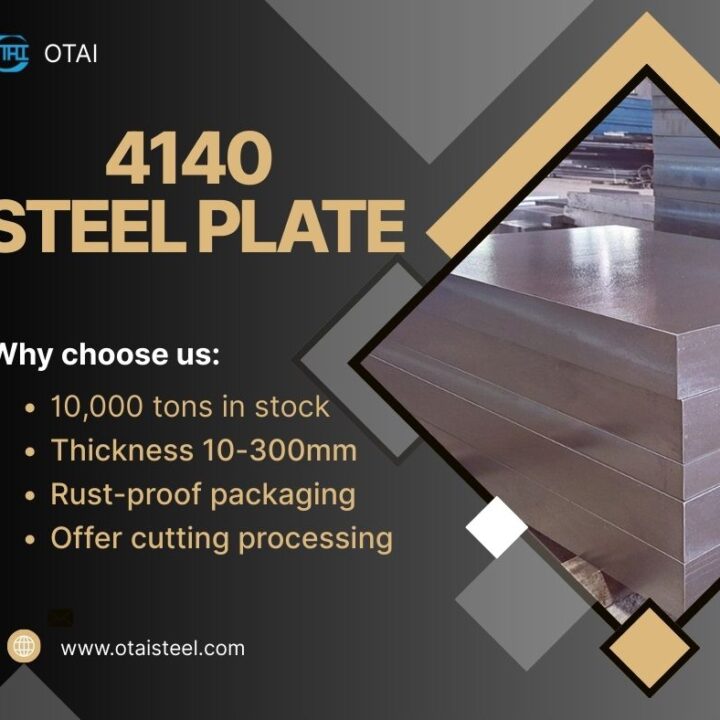
- SCM440 steel plate stock: 4–380 mm thickness available for purchasing requirements.
- SCM440 QT plate: 13–200 mm thickness available in quenched-and-tempered condition.
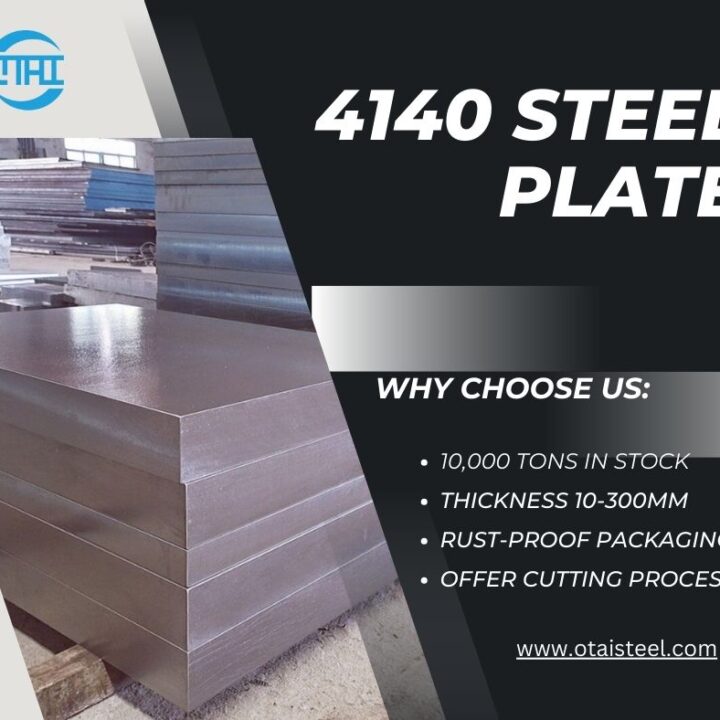
- 10,000+ tons of total steel stock: Large inventory supports regular industrial purchasing and project orders.
- 20 saw cutting machines: Multiple cutting machines support different plate sizes and order quantities.
- CNC & grinding: Additional processing can bring SCM440 plate closer to the customer’s production dimensions.
- Custom size and tolerance: Cutting and machining can follow customer drawings and technical requirements.
- One-stop service: Cutting, machining, heat treatment, inspection and export packaging can be coordinated through one supplier.
- Inspection support: MTC, quality testing, ultrasonic testing and third-party inspection can be arranged according to project requirements.
- Global export experience: Otai has exported steel to 54+ countries since 1999.
- International purchasing support: Buyers can discuss grade, standard, condition, dimensions, tolerance, inspection and packaging before shipment.
For international buyers, the advantage of working with a specialized SCM440 supplier is not only stock availability. A supplier that can coordinate cutting, machining, inspection and documentation can reduce communication between multiple subcontractors and simplify the purchasing process.
❓ 12. FAQ
1. What is SCM440 steel plate?
SCM440 steel plate is a medium-carbon chromium-molybdenum alloy structural steel under the JIS system. It offers a useful combination of strength, toughness, hardenability and wear resistance, particularly after suitable heat treatment.
2. What is the chemical composition of SCM440?
Commonly referenced JIS G4053 values include C 0.38–0.43%, Si 0.15–0.35%, Mn 0.60–0.90%, Cr 0.90–1.20% and Mo 0.15–0.30%, with P and S each controlled to ≤0.030%. The actual delivered heat should be verified against the MTC.
3. Is SCM440 the same as 4140 or 42CrMo4?
SCM440, AISI 4140 and 42CrMo4 are commonly compared because they are Cr-Mo alloy steels used for similar engineering applications. However, they belong to different standards and their chemistry and mechanical requirements are not identical. Confirm the exact standard before approving a substitution.
4. What is the heat treatment temperature for SCM440?
Reference heat-treatment ranges commonly include approximately 830–880°C for normalizing or hardening and around 530–630°C for tempering. The exact cycle, holding time and cooling method depend on plate thickness, equipment, loading and the required final properties.
5. What SCM440 steel plate thicknesses are available from Otai?
Otai currently lists SCM440 steel plate in 4–380 mm thickness and SCM440 quenched-and-tempered plate in 13–200 mm thickness. Custom cutting and processing can also be arranged according to the buyer’s required dimensions and tolerance.