Stick Welding 4140 Steel: SMAW Electrodes, Preheating, Welding Procedure and Risks
📑 Table of Contents
🔍 1. Can You Stick Weld 4140 Steel?
🧪 2. Why 4140 Steel Needs Special Welding Control
📊 3. Electrode Selection for Stick Welding 4140
🔥 4. Preheating 4140 Steel Before Stick Welding
⚙️ 5. Stick Welding Procedure for 4140 Steel
🛠️ 6. Post-Weld Heat Treatment and Cooling
🏭 7. Common Welding Problems and How to Prevent Them
💡 8. When Is Stick Welding 4140 Steel a Good Choice?
🔍 1. Can You Stick Weld 4140 Steel?
Yes, you can stick weld 4140 steel, but the process requires more control than welding ordinary mild steel. 4140 is a medium-carbon chromium-molybdenum alloy steel, so its carbon content and hardenability can increase the risk of cracking in the weld and heat-affected zone.
Stick welding, also called Shielded Metal Arc Welding (SMAW), can work well for repair welding, fabrication, maintenance, and certain heavy-duty components when the welding procedure matches the material condition.
The most important factors include electrode selection, preheating, interpass temperature, heat input, joint preparation, cooling rate, and post-weld heat treatment. The condition of the 4140 also matters. Welding annealed or normalized material is generally easier to manage than welding a highly hardened component.
For this reason, manufacturers should not treat 4140 like standard low-carbon structural steel. A controlled welding procedure helps reduce the formation of hard, brittle areas that could later develop cracks during cooling or service.
| Welding Factor | Importance for 4140 |
|---|---|
| Electrode selection | Important for weld strength and crack resistance |
| Preheating | Highly important, especially for thicker sections |
| Interpass temperature | Needs controlled monitoring |
| Cooling rate | Important for reducing hard, brittle zones |
| Post-weld treatment | May be required depending on application and material condition |
In practical terms, stick welding is possible, but the welding procedure should reflect the alloy’s heat-treatment condition and the importance of the finished component.
🧪 2. Why 4140 Steel Needs Special Welding Control
The welding behavior of 4140 comes directly from its chemical composition. Compared with low-carbon steels, its higher carbon level and alloying elements increase hardenability.
When welding heats the base metal above critical transformation temperatures, the heat-affected zone can cool rapidly enough to form hard martensitic structures. If the joint contains hydrogen or significant residual stress, cracking can become more likely.
This is why 4140 steel weldability depends strongly on welding conditions rather than simply on whether an arc can produce a sound-looking bead.
Carbon and hardenability
The carbon content of 4140 allows the steel to achieve high hardness after suitable heat treatment. However, the same characteristic requires attention during welding because rapid cooling can create a hard heat-affected zone.
Chromium and molybdenum also improve hardenability. These elements help 4140 develop desirable mechanical properties during heat treatment, but they also mean that welding needs better thermal control.
Hydrogen cracking risk
Hydrogen-assisted cracking represents one of the main concerns when welding medium-carbon alloy steels. Moisture in electrodes, contamination on the joint, and unsuitable welding practices can introduce hydrogen into the weld area.
Using properly stored low-hydrogen electrodes and keeping the joint clean can reduce this risk. Preheating also slows the cooling rate and gives hydrogen more time to diffuse from the weld area.
| Potential Risk | Why It Happens | Control Method |
|---|---|---|
| Cold cracking | Hard microstructure, hydrogen and residual stress | Preheating, dry electrodes and controlled cooling |
| Heat-affected-zone hardening | Rapid cooling after welding | Control preheat and heat input |
| Distortion | Uneven thermal expansion and contraction | Balanced welding sequence and controlled heat input |
| Loss of properties | Unsuitable thermal cycle | Use an appropriate welding and heat-treatment procedure |
Therefore, a successful 4140 welding job requires both welding knowledge and an understanding of the steel’s metallurgical response.
📊 3. Electrode Selection for Stick Welding 4140
Electrode selection is one of the first decisions when planning stick welding 4140 steel. Low-hydrogen electrodes are generally preferred for demanding joints because they help reduce hydrogen-related cracking.
Common SMAW electrode choices can include E7018-type low-hydrogen electrodes for suitable repair and fabrication work, while higher-strength or alloy-matched electrodes may be selected when the joint must meet specific mechanical requirements.
The correct electrode should come from the qualified welding procedure rather than from the base-metal grade alone. Engineers need to consider joint strength, service temperature, component geometry, material condition, and post-weld treatment.
E7018-type electrodes
E7018-type electrodes are widely used low-hydrogen consumables. They can provide a practical option for many 4140 welding repairs when the required weld properties are compatible with the application.
However, an electrode that works for a non-critical repair may not be suitable for a highly loaded component. For critical applications, the filler metal should meet the required mechanical and metallurgical specifications.
Electrode storage
Moisture control matters. Low-hydrogen electrodes need proper storage and handling because absorbed moisture can increase the amount of diffusible hydrogen introduced into the weld.
The manufacturer’s storage and rebaking instructions should be followed. Clean, dry electrodes help provide more consistent welding performance.
| Electrode Consideration | Recommended Practice |
|---|---|
| Hydrogen control | Prefer suitable low-hydrogen consumables |
| Electrode storage | Keep electrodes dry according to manufacturer instructions |
| Joint cleanliness | Remove oil, rust, moisture and contaminants |
| Strength requirement | Select filler metal according to the qualified procedure |
| Critical components | Verify consumable and procedure requirements before welding |
The goal is not simply to choose the strongest electrode. A compatible filler metal, controlled thermal cycle, and suitable welding procedure provide a more reliable result.
🔥 4. Preheating 4140 Steel Before Stick Welding
Preheating is one of the most important controls when welding 4140. It reduces the temperature difference between the weld area and the surrounding base metal, which slows the cooling rate after the arc passes.
A slower cooling rate can reduce the formation of excessively hard structures in the heat-affected zone. It can also help hydrogen diffuse from the weld area and reduce thermal stresses.
Typical preheat approach
For many 4140 welding applications, preheat temperatures are commonly selected in a broad range around 200–400°C, but the exact temperature should not be treated as a universal value.
The required preheat depends on carbon equivalent, section thickness, restraint, welding process, consumable, initial material condition, and the applicable welding standard or qualified procedure.
Thicker sections and highly restrained joints generally require more careful thermal control. Thin, lightly restrained components may need a different approach.
| Condition | Effect on Welding |
|---|---|
| Thin section | Usually cools faster and may require careful preheat control |
| Thick section | Higher heat extraction and greater restraint can increase cracking concerns |
| High restraint | Raises residual stress and cracking risk |
| Low-hydrogen electrode | Helps reduce hydrogen-assisted cracking risk |
| Controlled preheat | Slows cooling and supports a more suitable thermal cycle |
Interpass temperature
The material should remain within the specified temperature range between weld passes. Letting the joint become too cold can increase the cooling rate, while excessive heat can create other metallurgical problems.
Use temperature-indicating crayons, contact thermometers, infrared equipment, or another suitable measurement method to monitor the joint according to the welding procedure.
Good temperature control is especially important when 4140 stick welding involves thick plates, forged components, shafts, or heavily restrained joints.
⚙️ 5. Stick Welding Procedure for 4140 Steel
A controlled procedure makes welding 4140 steel with stick electrodes much more predictable. The exact parameters should follow the applicable welding code, engineering specification, and qualified procedure.
1. Prepare the joint
Remove oil, grease, paint, rust, moisture, and other contaminants from the joint. Proper bevel geometry and root preparation also help the electrode establish adequate fusion.
2. Bring the material to the required preheat
Heat the surrounding base metal uniformly rather than concentrating heat in one small location. Check the temperature before starting and continue monitoring it during welding.
3. Use a suitable low-hydrogen electrode
Select an electrode that matches the required weld properties. Keep the consumable dry and follow the manufacturer’s storage instructions.
4. Control arc length and heat input
A stable arc helps produce consistent penetration and bead quality. Excessive heat input can increase distortion and affect the heat-affected zone, while insufficient heat can cause poor fusion.
5. Build the weld progressively
For thicker components, multiple controlled passes may provide better results than attempting to deposit a large amount of weld metal in one pass.
| Procedure Stage | Key Point |
|---|---|
| Surface preparation | Clean the joint thoroughly |
| Joint preparation | Use suitable bevel and root geometry |
| Preheating | Reach the specified temperature uniformly |
| Electrode selection | Use a compatible low-hydrogen consumable where appropriate |
| Welding passes | Maintain controlled heat input and interpass temperature |
| Cooling | Use the cooling procedure specified for the component |
| Inspection | Check for cracks and other weld defects |
For a critical 4140 component, weld qualification and inspection should match the service requirements. Visual inspection alone may not detect every important defect, so additional nondestructive testing may be appropriate.
🛠️ 6. Post-Weld Heat Treatment and Cooling
Post-weld treatment can be important when welding 4140, especially for thick, highly restrained, or highly loaded components. The correct treatment depends on the original heat-treatment condition and the required final properties.
Controlled cooling
Rapid cooling after welding can increase the risk of hard microstructures and cracking. Controlled cooling helps reduce the thermal gradient and gives the material a more gradual transition from the welding temperature to ambient conditions.
For some applications, insulating the component after welding can help slow the cooling rate. The exact practice should follow the qualified procedure rather than an improvised cooling method.
Stress relief and tempering
A suitable post-weld heat treatment may reduce residual stresses and temper hard structures in the heat-affected zone. However, the treatment can also change hardness and mechanical properties, so engineers must consider the entire component.
If the 4140 was previously quenched and tempered, welding can locally alter the original microstructure. In critical applications, the engineering procedure should define whether local or complete heat treatment is necessary after welding.
| Post-Weld Consideration | Purpose |
|---|---|
| Controlled cooling | Reduce rapid cooling and thermal stress |
| Stress relief | Reduce residual stresses where specified |
| Tempering | Temper hard microstructures and adjust properties |
| Final inspection | Confirm weld integrity and required properties |
The correct post-weld procedure should consider the component’s dimensions, material condition, joint restraint, service loads, and applicable standard. There is no single heat-treatment schedule that fits every 4140 weld.
🏭 7. Common Welding Problems and How to Prevent Them
The main welding problems with 4140 relate to cracking, hardness changes, residual stress, and distortion. Understanding the cause helps welders select the appropriate preventive measures.
Cold cracking
Cold cracking may appear after the weld has cooled rather than immediately after deposition. Hydrogen, hard microstructures, and tensile residual stress can combine to create this problem.
Proper preheating, low-hydrogen electrodes, clean joint surfaces, suitable heat input, and controlled cooling can reduce the risk.
Heat-affected-zone hardness
Rapid cooling can create a hard heat-affected zone. Although high hardness may sound beneficial, excessive hardness can reduce toughness and increase cracking susceptibility.
The objective is not to maximize hardness around the weld. Instead, the goal is to achieve a weld and heat-affected zone with properties appropriate for the component.
Distortion and residual stress
Uneven heating and cooling can change dimensions and introduce residual stresses. Welding sequence, joint design, clamping, and heat input all influence the final result.
| Problem | Possible Cause | Prevention |
|---|---|---|
| Cracking | Hydrogen, hard HAZ and residual stress | Preheat, dry electrodes and controlled cooling |
| Porosity | Moisture or contamination | Clean joint and properly stored electrodes |
| Poor fusion | Incorrect current or travel technique | Use qualified welding parameters |
| Excessive distortion | Uneven heat input | Control welding sequence and heat input |
| Excessive HAZ hardness | Rapid cooling | Use suitable preheat and thermal control |
When a 4140 component is safety-critical, inspection should match the consequences of failure. Depending on the specification, visual inspection may be supplemented by magnetic particle, ultrasonic, or other nondestructive testing methods.
💡 8. When Is Stick Welding 4140 Steel a Good Choice?
Stick welding remains useful when equipment simplicity, portability, and field repair capability matter. SMAW does not require the same type of shielding-gas setup as many other arc-welding processes, which makes it practical for maintenance and repair work.
For 4140 components, however, convenience should not replace metallurgical control. The material’s final condition and the consequences of weld failure should determine the welding method and procedure.
| Application Situation | Stick Welding Suitability |
|---|---|
| Field repair | Good when a qualified procedure is available |
| Maintenance welding | Suitable for selected components |
| Heavy machinery repair | Practical with proper preheat and consumables |
| Thin precision components | Process selection requires careful consideration |
| Highly hardened 4140 | Requires special metallurgical control |
| Safety-critical components | Use a qualified welding procedure and appropriate inspection |
When to consider another welding process
SMAW is not automatically the best process for every 4140 project. TIG welding can provide excellent control for certain repair and precision applications, while MIG or other automated processes may offer higher productivity for suitable production environments.
The choice should consider joint thickness, production volume, access, required weld quality, heat input, operator skill, and available equipment.
For a repair involving a hardened shaft or other critical component, it is particularly important to understand how welding will affect the original heat treatment. The welding operation can create a localized region with properties different from the surrounding material.
Therefore, stick welding 4140 steel is best viewed as a workable process rather than a one-size-fits-all solution. A qualified procedure provides the safest route for demanding applications.
📦 9. Otai Special Steel Advantages
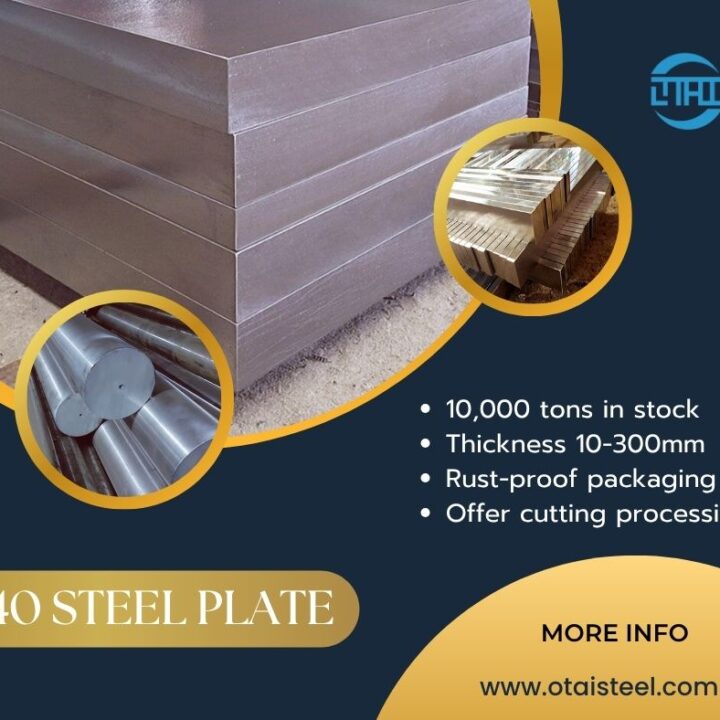
- 4140 steel round bar stock: Otai Special Steel provides 4140 steel round bars with diameters of 14–500mm available in stock for machining, forging, and industrial component manufacturing.
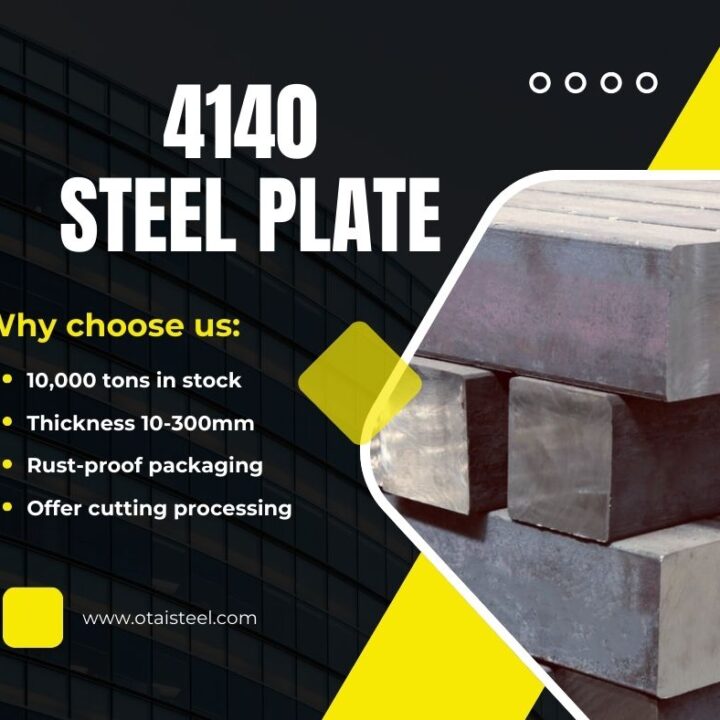
- 4140 steel plate stock: We supply 4140 steel plates with thicknesses of 13–200mm available in stock to meet different fabrication and heavy-duty application requirements.
- Cutting service: We can arrange precision cutting according to customer drawings, dimensions, and project requirements.
- Machining service: Machining can be arranged when customers require steel prepared for subsequent manufacturing operations.
- Heat treatment: Annealing, normalizing, quenching, tempering, and other heat-treatment services can be arranged according to application requirements.
- Quality inspection: Ultrasonic testing and third-party inspection support are available for orders with specific quality requirements.
- Export packaging: Steel strapping, wooden cases, and anti-rust packaging help protect steel products during international transportation.
- International supply experience: Otai Special Steel serves international industrial customers with demanding technical and delivery requirements, including Fortune Global 500 companies.
If you need 4140 steel for welding, provide the product dimensions, material condition, welding requirements, quantity, and application. Otai Special Steel can help confirm suitable 4140 material and available processing options.
❓ 10. Frequently Asked Questions
1. Can you stick weld 4140 steel?
Yes. 4140 can be welded using SMAW, but the procedure should control preheat, interpass temperature, electrode condition, heat input, cooling rate, and cracking risk.
2. What electrode should I use for welding 4140?
A suitable low-hydrogen SMAW electrode, such as an E7018-type electrode, may work for certain applications. Critical joints may require a different filler selected according to the qualified welding procedure.
3. Does 4140 need preheating before stick welding?
Preheating is commonly important when welding 4140, particularly for thicker or highly restrained components. A broad working range around 200–400°C is often considered, but the actual requirement should come from the qualified welding procedure and applicable standard.
4. Why does 4140 crack after welding?
Cracking can result from a combination of hydrogen, rapid cooling, hard heat-affected-zone microstructures, and residual stress. Proper preheating, low-hydrogen electrodes, clean joints, and controlled cooling can reduce the risk.
5. Can hardened 4140 be stick welded?
It can be welded in some circumstances, but hardened 4140 requires much greater care because welding can alter the original heat-treated microstructure. For critical components, a qualified welding and post-weld heat-treatment procedure should be established before repair.