 16MnCr5 Material Rate: What Affects the Cost of This Case-Hardening Steel?
📑 Table of Contents
🔍 1. What Does 16MnCr5 Material Rate Actually Mean?
📋 2. 16MnCr5 Material Rate and Chemical Composition
⚙️ 3. Which Material Properties Influence 16MnCr5 Cost?
📊 4. How Size and Thickness Affect 16MnCr5 Material Rate
🔥 5. Heat Treatment and Its Impact on Material Cost
🛠️ 6. Processing, Cutting and Inspection Costs
🏭 7. 16MnCr5 Material Rate for Different Applications
🔄 8. How to Get a More Accurate 16MnCr5 Material Rate
🔍 1. What Does 16MnCr5 Material Rate Actually Mean?
When buyers search for 16MnCr5 material rate, they may be looking for the current price, material cost per kilogram, cost per ton, or the overall procurement cost of a finished steel product. These are not always the same figure.
For alloy steel procurement, the final material rate depends on several factors. Grade, product form, dimensions, quantity, heat treatment, surface condition, inspection requirements, and processing services can all affect the final quotation.
16MnCr5 is a case-hardening alloy steel commonly used for gears, shafts, transmission components, and other parts that need a hard wear-resistant surface with a tough core. Its performance comes from a carefully balanced low-carbon alloy composition.
Therefore, buyers should not compare 16MnCr5 only by a single price number. A lower initial rate may not represent the lower total procurement cost if the material requires additional processing or has limited availability.
| Cost Factor | Why It Matters |
|---|---|
| Steel grade | Different alloy compositions have different production costs. |
| Product form | Plate, round bar, flat bar, and other forms require different production processes. |
| Dimensions | Thickness, width, diameter, and length influence manufacturing and cutting requirements. |
| Order quantity | Larger orders can improve production and logistics efficiency. |
| Heat treatment | Additional thermal processing increases the total processing cost. |
| Inspection | Ultrasonic or third-party testing adds service costs but provides additional quality assurance. |
| Cutting and processing | Custom dimensions require additional machining or cutting operations. |
This is why a professional 16MnCr5 material rate calculation should consider the complete supply specification rather than only the basic steel grade.
For international buyers, freight, packaging, export documentation, and delivery terms can also affect the final landed cost. These factors should remain separate from the basic material rate when comparing suppliers.
📋 2. 16MnCr5 Material Rate and Chemical Composition
Chemical composition is one of the basic factors behind the manufacturing cost and performance of 16MnCr5. The steel contains carbon, manganese, and chromium, with controlled levels of other elements.
Its relatively low carbon content allows manufacturers to machine the material before carburizing. During carburizing, the surface absorbs additional carbon and develops a high-hardness case.
The typical composition below helps explain why 16MnCr5 belongs to the case-hardening steel family.
| Element | Typical 16MnCr5 Range (%) | Main Function |
|---|---|---|
| Carbon (C) | 0.14–0.19 | Supports case hardening while keeping the core tough. |
| Silicon (Si) | ≤0.40 | Contributes to strength and deoxidation. |
| Manganese (Mn) | 1.00–1.30 | Improves strength and hardenability. |
| Chromium (Cr) | 0.80–1.10 | Improves hardenability and wear resistance. |
| Phosphorus (P) | ≤0.025 | Controlled to maintain material quality. |
| Sulfur (S) | ≤0.035 | Controlled for steel cleanliness and machinability. |
Why Alloy Content Matters
Chromium and manganese increase the performance of 16MnCr5 during hardening. However, alloy additions also influence raw material and steelmaking costs.
The objective is not to maximize alloy content. Instead, 16MnCr5 uses a balanced composition designed for carburizing applications.
This balance gives manufacturers a useful combination of machinability before treatment, hard surface performance after carburizing, and core toughness during service.
When comparing the 16MnCr5 material rate between suppliers, buyers should confirm that the chemical composition meets the required standard. Two quotations are not directly comparable if their material specifications differ.
A material certificate is especially important for industrial orders. It allows buyers to verify the actual heat composition and confirm that the supplied material matches the purchase specification.
⚙️ 3. Which Material Properties Influence 16MnCr5 Cost?
The value of 16MnCr5 does not come only from its chemical composition. Its mechanical performance and case-hardening capability also determine where manufacturers choose this material.
16MnCr5 provides a useful combination of machinability, hardenability, surface hardness, and core toughness. This makes it particularly valuable for components that experience wear and repeated mechanical loads.
| Property | Typical Performance | Effect on Material Selection |
|---|---|---|
| Carbon content | Low before carburizing | Supports good pre-treatment machinability. |
| Hardenability | Good | Helps develop the required hardened case. |
| Surface hardness | Can reach about 58–62 HRC after suitable carburizing and hardening | Provides strong wear resistance. |
| Core toughness | Good after appropriate treatment | Helps components withstand impact and dynamic loads. |
| Wear resistance | High after case hardening | Suitable for gears and transmission parts. |
| Machinability | Good before carburizing | Supports efficient component manufacturing. |
Surface Hardness vs Core Toughness
One major advantage of 16MnCr5 is its ability to combine a hard surface with a tougher internal structure. This property is particularly useful for gears.
Gear teeth need a hard surface to resist contact wear. At the same time, the internal section needs sufficient toughness to absorb shock loads.
This combination gives 16MnCr5 a different value proposition from ordinary carbon steels. It can reduce the need to compromise between surface wear resistance and core toughness.
Why Performance Can Affect the Overall Rate
A material with suitable performance can reduce additional manufacturing requirements. For example, a steel designed specifically for carburizing can simplify the material selection process for gear production.
However, buyers should evaluate the complete production route. The cost of 16MnCr5 material is only one part of the final component cost. Cutting, machining, carburizing, grinding, inspection, and transportation may account for a significant portion of the total expense.
For this reason, the best purchasing decision focuses on the required final performance rather than choosing the lowest material rate alone.
📊 4. How Size and Thickness Affect 16MnCr5 Material Rate
Product dimensions have a direct effect on the final 16MnCr5 material rate. Buyers may purchase the same steel grade in different forms, such as plate, round bar, flat bar, or cut-to-size material. Each form involves different production and processing requirements.
Thickness also matters when purchasing 16MnCr5 steel plate. Thicker sections require suitable production equipment, controlled processing, and careful inspection. Therefore, the price per ton may differ between different thickness ranges.
| Specification Factor | Possible Cost Impact | Why It Matters |
|---|---|---|
| Steel thickness | Higher or lower | Different thicknesses require different production and processing conditions. |
| Plate width | Higher or lower | Width affects cutting, handling, and material utilization. |
| Plate length | Higher or lower | Longer dimensions can influence transportation and cutting requirements. |
| Round bar diameter | Higher or lower | Large diameters may require different production routes. |
| Cut-to-size service | Additional cost | Custom cutting requires additional processing. |
| Small order quantity | Potentially higher unit cost | Processing and handling costs are distributed over fewer kilograms. |
| Large order quantity | Potentially lower unit cost | Production and logistics can become more efficient. |
Why Stock Availability Matters
Stock availability can have a major influence on procurement efficiency. If the required specification is already available, the buyer may avoid unnecessary production waiting time and additional manufacturing arrangements.
For example, customers looking for 16MnCr5 steel plate in stock should provide the required thickness, width, length, quantity, and delivery destination. A supplier can then determine the most suitable available material.
For industrial purchasing, availability can sometimes be more important than a small difference in the basic material rate. A delayed material delivery can affect machining schedules, heat treatment, assembly, and final shipment.
🔥 5. Heat Treatment and Its Impact on Material Cost
Heat treatment can significantly influence the total cost of a 16MnCr5 component. Unlike ordinary structural steel, 16MnCr5 often serves as a case-hardening material. The final component may require carburizing, quenching, tempering, and sometimes grinding.
These processes add cost beyond the basic steel material. However, they also create the surface and core properties required for gears, shafts, and transmission components.
| Process | Main Purpose | Potential Cost Impact |
|---|---|---|
| Annealing | Improve machinability and reduce internal stress | Additional processing cost |
| Normalizing | Refine structure and improve uniformity | Additional thermal processing |
| Carburizing | Increase surface carbon content | Significant additional processing |
| Quenching | Harden the carburized surface | Additional heat treatment cost |
| Tempering | Reduce brittleness and stabilize properties | Additional thermal processing |
| Grinding | Achieve precise final dimensions and surface finish | Depends on tolerance requirements |
Why Carburizing Is Important
The low carbon content of 16MnCr5 makes it suitable for case hardening. During carburizing, carbon enters the surface layer. Subsequent hardening creates a wear-resistant case while the core retains useful toughness.
This treatment route explains why customers should not compare the 16MnCr5 material rate with the purchase price of ordinary low-carbon steel on a simple per-kilogram basis.
The final component cost includes both the steel and the processing needed to achieve the required performance.
Does Every 16MnCr5 Order Need Heat Treatment?
No. The required condition depends on the customer’s manufacturing process. Some buyers purchase material in an annealed or machinable condition and perform carburizing in their own facility.
Other customers may require additional processing from the steel supplier. Therefore, the quotation should clearly specify whether the material includes heat treatment or only the supplied steel condition.
🛠️ 6. Processing, Cutting and Inspection Costs
The basic steel rate is only one part of the total purchasing cost. Processing services can change the final quotation, especially when customers require non-standard dimensions or additional quality inspection.
For example, a buyer may need a 16MnCr5 plate cut into several specific sizes. The supplier must consider cutting time, material utilization, handling, and packaging.
| Service | Typical Purpose | Effect on Final Cost |
|---|---|---|
| Cutting | Produce required dimensions | Additional processing charge |
| Surface processing | Improve surface condition | Depends on required finish |
| Ultrasonic testing | Check internal discontinuities | Additional inspection cost |
| Third-party inspection | Independent quality verification | Additional inspection cost |
| Anti-rust packaging | Protect steel during transportation | Additional packaging cost |
| Wooden box packaging | Provide additional transport protection | Additional packaging cost |
Inspection and Material Certification
Industrial customers often require material certificates to verify chemical composition and mechanical properties. Additional testing may also become necessary when the project has strict quality requirements.
Ultrasonic testing can help identify internal discontinuities in steel products. Third-party inspection provides an independent assessment when customers require additional verification.
These services increase the procurement cost, but they can reduce quality risks for critical applications.
Why the Cheapest Quotation Is Not Always the Best
A supplier may offer a low basic rate but exclude cutting, inspection, packaging, or other services. Another supplier may quote a higher figure but include more services.
For this reason, buyers should compare quotations using the same specification and service scope. This approach gives a more meaningful 16MnCr5 material rate comparison.
🏭 7. 16MnCr5 Material Rate for Different Applications
The application also affects how buyers evaluate the value of 16MnCr5. The material is commonly selected for components that require a wear-resistant hardened surface and a relatively tough core.
| Application | Why 16MnCr5 Is Used | Typical Manufacturing Route |
|---|---|---|
| Automotive gears | High surface wear resistance | Machining + carburizing + hardening |
| Transmission components | Good fatigue and wear performance | Machining + case hardening |
| Shafts | Hard surface with tough core | Machining + carburizing |
| Pinions | Good resistance to contact wear | Machining + case hardening |
| Mechanical parts | Balanced performance | Depends on component design |
16MnCr5 for Gear Manufacturing
Gears represent one of the most important applications for 16MnCr5. Gear teeth experience repeated contact stress and sliding friction, so the surface must resist wear and deformation.
At the same time, excessive brittleness throughout the entire component could increase the risk of cracking. Case hardening addresses this challenge by creating a hard surface while maintaining a tougher core.
Therefore, when calculating the 16MnCr5 material rate for gears, manufacturers should consider the complete production route rather than only the raw steel cost.
16MnCr5 for Automotive Components
Automotive transmission components require consistent dimensions, reliable fatigue performance, and good surface durability. 16MnCr5 can meet these requirements when manufacturers apply the appropriate machining and heat treatment process.
The material can therefore provide strong value when its properties match the actual component requirements.
🔄 8. How to Get a More Accurate 16MnCr5 Material Rate
The most accurate quotation starts with a complete material specification. Simply asking for the rate of 16MnCr5 without providing dimensions and quantity may lead to an incomplete quotation.
| Information to Provide | Example |
|---|---|
| Steel grade | 16MnCr5 / EN 10084 |
| Product form | Steel plate, round bar, or flat bar |
| Thickness or diameter | Example: 20mm plate |
| Width | Example: 1500mm |
| Length | Example: 3000mm |
| Quantity | Required weight or number of pieces |
| Material condition | Annealed, normalized, or other specified condition |
| Inspection requirements | Mill certificate, UT, or third-party inspection |
| Delivery destination | Port or final delivery location |
A complete specification allows suppliers to calculate the material weight, check stock availability, determine processing requirements, and prepare a more accurate quotation.
For customers searching for 16MnCr5 material rate per kg or 16MnCr5 price per ton, it is important to understand that the final quotation can change with market conditions, order quantity, dimensions, and service requirements.
Therefore, a professional quotation should clearly separate the basic material cost from processing, inspection, packaging, and logistics charges.
This approach makes supplier comparisons easier and helps buyers understand the actual landed cost of the material.
📦 9. Otai Special Steel Advantages
Otai Special Steel supplies 16MnCr5 steel for international customers in automotive, gear manufacturing, machinery, and industrial engineering. We focus on stable material quality, practical stock availability, and flexible processing services.
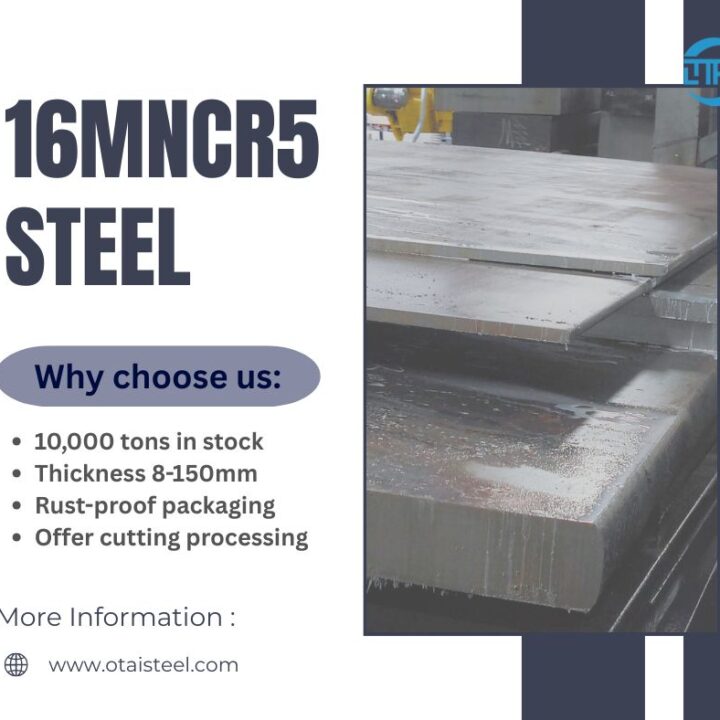
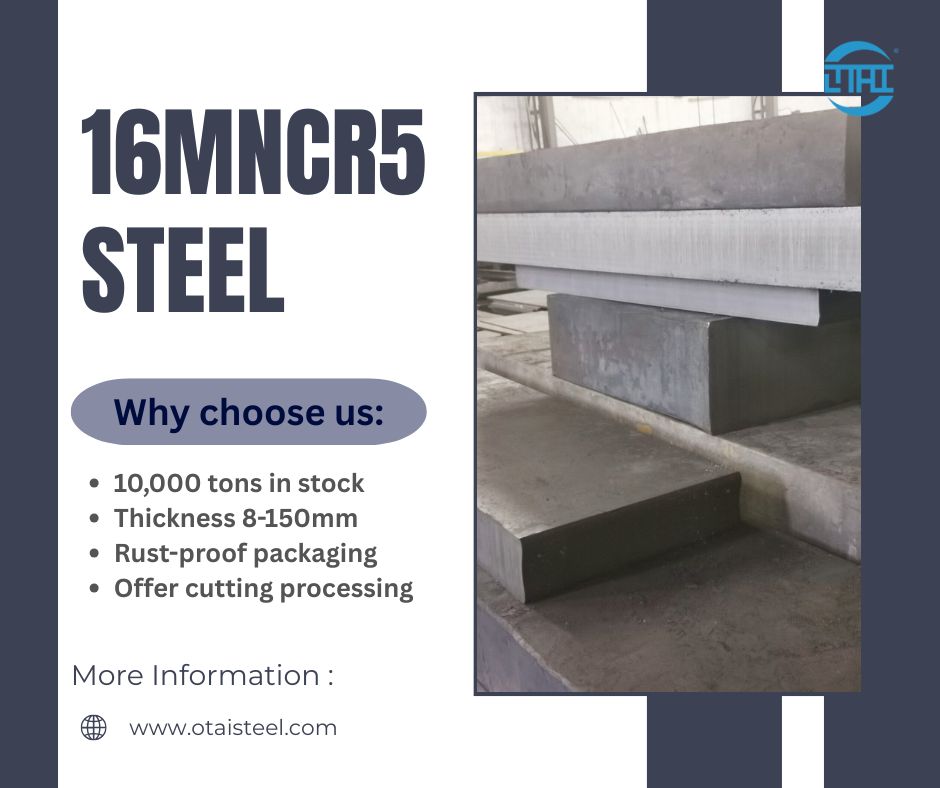
- 16MnCr5 steel plate in stock: We keep 16MnCr5 steel plates with thicknesses of 8–150mm available in stock, helping customers reduce waiting time for regular production requirements.
- Custom cutting: We can cut 16MnCr5 plates according to customer drawings and required dimensions.
- Heat treatment support: We provide technical support for annealing, normalizing, carburizing, quenching, and tempering requirements.
- Quality inspection: Material certificates, ultrasonic testing, and third-party inspection services are available according to project requirements.
- Export packaging: We provide anti-rust protection, steel strapping, and wooden box packaging for international transportation.
- Technical support: Our team can help customers select the appropriate material condition, dimensions, and processing route according to the final application.
For buyers evaluating the 16MnCr5 material rate, stock availability can also influence the total procurement cost. Ready stock may help reduce production delays and avoid unnecessary waiting for a new manufacturing cycle.
❓ 10. FAQ About 16MnCr5 Material Rate
1. What does 16MnCr5 material rate mean?
16MnCr5 material rate can refer to the material price per kilogram, per ton, or the basic steel cost used in a complete procurement quotation. The actual rate depends on grade, product form, dimensions, quantity, material condition, processing, inspection, packaging, and delivery requirements.
2. What factors affect the cost of 16MnCr5 steel?
Several factors can affect the final cost. These include raw material conditions, alloy composition, product dimensions, order quantity, heat treatment, cutting, inspection, packaging, and transportation. Therefore, buyers should compare quotations based on the same specification and service scope.
3. Is 16MnCr5 expensive compared with ordinary carbon steel?
16MnCr5 is an alloy case-hardening steel designed for applications that require a hard wear-resistant surface and a tougher core. Its value comes from its performance and suitability for applications such as gears and transmission components. A direct comparison with ordinary carbon steel should consider the final component requirements rather than material cost alone.
4. Does thickness affect the 16MnCr5 material rate?
Yes. Thickness can influence production, cutting, handling, inspection, and material utilization. For this reason, buyers should provide the exact thickness, width, length, quantity, and required material condition when requesting a quotation.
5. Does Otai Special Steel have 16MnCr5 steel plate in stock?
Yes. Otai Special Steel has 16MnCr5 steel plates with thicknesses of 8–150mm available in stock. We also provide cutting, heat treatment support, ultrasonic testing, third-party inspection, and export packaging services according to customer requirements.