 5/8 4140 Steel Plate: Thickness, Properties, Applications and Availability
📑 Table of Contents
🔍 1. What Is 5/8 4140 Steel Plate?
🧪 2. 4140 Steel Plate Composition
📊 3. Properties of 5/8 4140 Steel Plate
🔥 4. Heat Treatment and Hardness
⚙️ 5. Machining and Fabrication
🏭 6. Applications of 5/8 4140 Steel Plate
🌎 7. 5/8 4140 Plate vs Other Thicknesses
🔍 1. What Is 5/8 4140 Steel Plate?
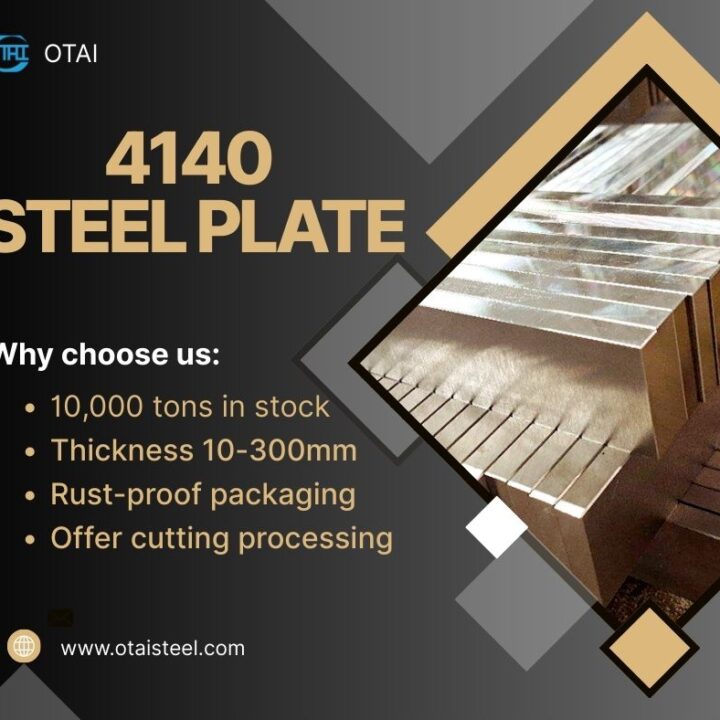
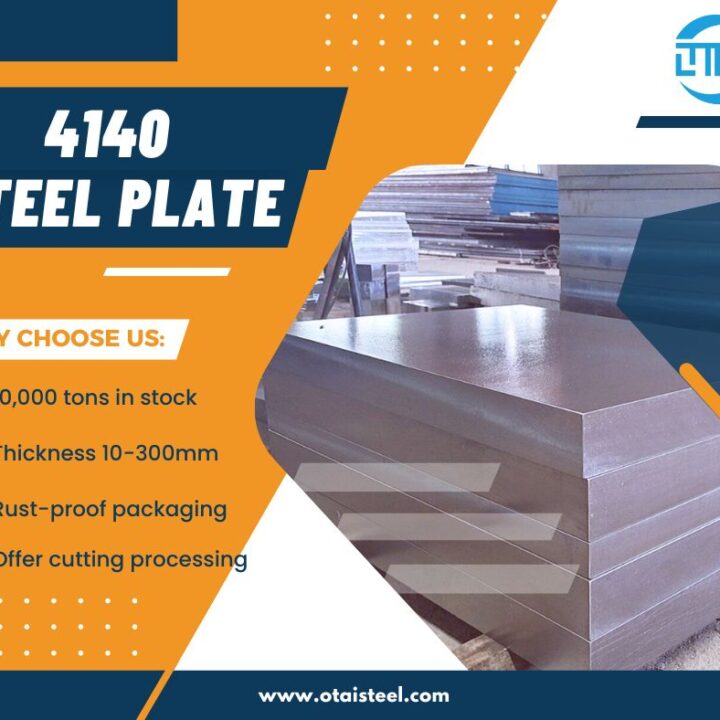
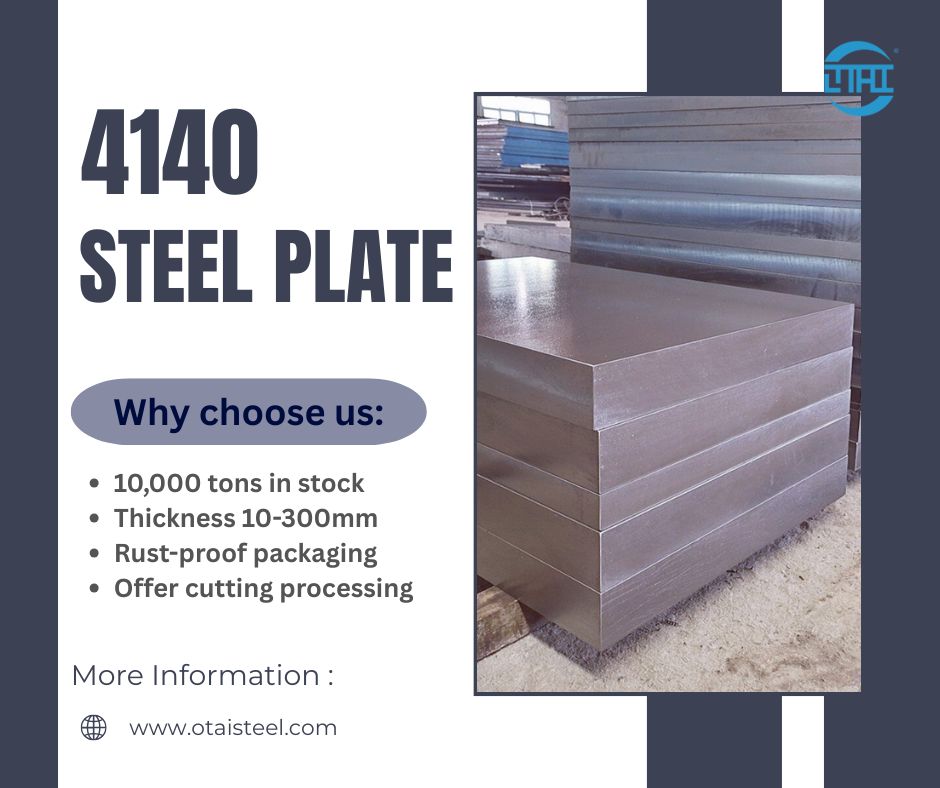
5/8 4140 steel plate refers to 4140 alloy steel plate with a nominal thickness of 5/8 inch. Since one inch equals 25.4 mm, 5/8 inch corresponds to approximately 15.875 mm.
In practical steel purchasing, suppliers may describe this product as 5/8 inch 4140 plate, 15.875 mm 4140 plate, or simply 16 mm 4140 steel plate when the application allows a rounded metric dimension.
The grade itself belongs to the chromium-molybdenum alloy steel family. Its combination of carbon, chromium, manganese, and molybdenum gives it a useful balance of strength, toughness, hardenability, and wear resistance.
This thickness is particularly practical for components that need more structural support than a thin sheet can provide. At the same time, it remains manageable for cutting, milling, drilling, and other fabrication operations.
Is 5/8 inch the same as 16 mm?
Not exactly. The precise conversion of 5/8 inch is 15.875 mm. A 16 mm plate is therefore slightly thicker by 0.125 mm.
For many general fabrication projects, customers may accept a nominal 16 mm metric plate. However, applications with strict dimensional requirements should specify the exact thickness and tolerance rather than treating the two dimensions as automatically identical.
| Thickness Description | Metric Conversion | Practical Note |
|---|---|---|
| 5/8 inch | 15.875 mm | Exact inch-to-metric conversion |
| Approx. 16 mm | 16.000 mm | Common metric reference |
| Difference | 0.125 mm | Check tolerance for precision applications |
When ordering 5/8 inch 4140 steel plate, buyers should provide the required thickness, width, length, standard, supply condition, and mechanical requirements. This information helps the supplier select the correct material instead of relying only on a commercial size name.
🧪 2. 4140 Steel Plate Composition
The performance of 4140 comes from its chromium-molybdenum alloy design. Carbon provides the basic hardening response, while chromium and molybdenum improve hardenability and help the steel maintain useful strength after heat treatment.
| Element | Typical 4140 Range | Main Function |
|---|---|---|
| Carbon (C) | Approx. 0.38–0.43% | Hardness and strength |
| Silicon (Si) | Approx. 0.15–0.35% | Strength and deoxidation |
| Manganese (Mn) | Approx. 0.75–1.00% | Strength and hardenability |
| Chromium (Cr) | Approx. 0.80–1.10% | Hardenability and wear resistance |
| Molybdenum (Mo) | Approx. 0.15–0.25% | Hardenability and tempering resistance |
Exact limits can vary according to the applicable specification and product form. Therefore, buyers should use the material certificate as the final reference for the supplied plate.
Why chromium matters
Chromium improves hardenability, allowing a 4140 plate to develop useful mechanical properties deeper into the section than a plain carbon steel with a similar carbon level.
This characteristic becomes important when a component has a moderate or large cross-section. The material needs more than surface hardness; it also needs a strong supporting structure below the surface.
Why molybdenum matters
Molybdenum improves hardenability and helps reduce the loss of strength during tempering. It also contributes to the reliable performance of 4140 in applications involving heavy mechanical loads.
Together, chromium and molybdenum make 4140 a versatile engineering steel rather than simply a higher-carbon structural steel.
📊 3. Properties of 5/8 4140 Steel Plate
The properties of 5/8 4140 steel plate depend strongly on its supply condition. A plate supplied in an annealed condition will behave differently from one that has already received quenching and tempering.
| Property | 4140 Characteristics | Practical Benefit |
|---|---|---|
| Strength | High after suitable heat treatment | Handles heavy mechanical loads |
| Toughness | Good | Supports impact and cyclic loading |
| Hardenability | Good | Suitable for medium-section components |
| Wear resistance | Good after hardening | Useful for moving and contacting parts |
| Fatigue performance | Good with proper design and treatment | Suitable for cyclic loads |
| Machinability | Good in annealed condition | Convenient for fabrication before hardening |
Strength
One of the main reasons customers choose 4140 is its ability to achieve high strength after quenching and tempering. This makes the grade suitable for components that must withstand substantial tensile, bending, and torsional loads.
The final strength depends on the selected heat-treatment parameters. Therefore, buyers should not compare 4140 properties without identifying the material condition.
Toughness
4140 provides a useful balance between strength and toughness. This balance makes it more versatile than many very hard steels that sacrifice impact resistance for maximum hardness.
Wear resistance
4140 is not a dedicated tool steel, but it can provide good wear resistance when properly hardened. For components exposed to moderate friction and mechanical loads, this combination can offer an effective solution.
Applications with extreme abrasion may require a dedicated wear-resistant steel instead.
Fatigue resistance
The fatigue performance of 4140 depends on more than its chemical composition. Surface finish, stress concentration, heat treatment, residual stress, inclusions, and component geometry all influence service life.
For this reason, a properly designed and finished 4140 component can perform much better than a component made from the same grade with poor surface quality or unsuitable heat treatment.
🔥 4. Heat Treatment and Hardness
Heat treatment can significantly change the performance of 4140. For this reason, the purchasing specification should clearly state whether the plate needs to be annealed, normalized, hardened, or quenched and tempered.
Annealed 4140
Annealed 4140 is relatively soft compared with hardened material. This condition improves machinability and makes the plate easier to cut, mill, drill, and shape.
Many manufacturers prefer to machine 4140 in a soft condition before carrying out the final heat treatment.
Quenching and tempering
Quenching produces a hard microstructure, while tempering adjusts the final balance between hardness, strength, and toughness.
A lower tempering temperature generally maintains higher hardness. A higher tempering temperature generally reduces hardness while improving toughness.
| Condition | Relative Hardness | Machinability | Typical Purpose |
|---|---|---|---|
| Annealed | Low to moderate | Good | Machining and fabrication |
| Normalized | Moderate | Moderate | Microstructure refinement |
| Quenched | High | Low | Developing high hardness |
| Quenched and tempered | Controlled | Lower than annealed | Engineering components |
Does 5/8 inch thickness affect heat treatment?
Yes. Section thickness influences heating, cooling, and the resulting microstructure. A 15.875 mm plate is not treated in exactly the same way as a very thick 4140 block.
The relatively moderate thickness of 5/8 inch can make it easier to achieve uniform treatment than much thicker sections. However, the actual process still depends on furnace equipment, quenching conditions, plate dimensions, and the required mechanical properties.
Customers requiring certified mechanical properties should specify the applicable standard and treatment condition rather than relying on thickness alone.
⚙️ 5. Machining and Fabrication
5/8 4140 steel plate offers a useful combination of thickness and machinability for many manufacturing operations. At approximately 15.875 mm, the plate provides enough section thickness for substantial components while remaining practical for CNC cutting and milling.
Cutting
4140 can be cut using suitable saw cutting, flame cutting, or other industrial methods depending on the equipment and material condition.
For precision parts, the supplier should consider the required dimensional tolerance and cutting allowance. Customers can reduce downstream machining time by ordering cut-to-size pieces when appropriate.
Milling
The 5/8 inch thickness works well for components that require milled surfaces, slots, holes, pockets, or other machined features.
Annealed material normally provides better machining performance than hardened plate. If the finished component requires high strength, manufacturers can rough-machine the plate first and complete heat treatment before final finishing.
Drilling
Drilling performance depends on hardness, cutting speed, feed rate, tool geometry, coolant, and machine rigidity. Softer 4140 generally provides easier drilling than quenched and tempered material.
Welding considerations
4140 has higher hardenability than ordinary mild steel. Welding therefore requires greater process control, particularly when the component has strict mechanical requirements.
Preheating, controlled cooling, suitable filler selection, and post-weld heat treatment may become necessary depending on the application and specification.
For critical welded structures, engineers should approve the welding procedure before production instead of treating 4140 like a conventional low-carbon plate.
🏭 6. Applications of 5/8 4140 Steel Plate
The combination of moderate thickness, high strength potential, and good machinability makes 5/8 inch 4140 plate useful for many engineering components.
| Application | Why 4140 Is Suitable |
|---|---|
| Machine components | Good strength and toughness |
| Brackets and mounting plates | Strong alloy steel structure |
| Gears and gear components | Good hardenability and wear performance |
| Fixtures and tooling components | Good machinability before hardening |
| Hydraulic components | Suitable strength after heat treatment |
| Automotive components | Good combination of strength and fatigue resistance |
| Industrial machinery | Versatile mechanical performance |
Machine parts
Manufacturers can use 4140 plate to produce brackets, mounting components, support parts, machine bases, and other mechanical components that require higher strength than ordinary carbon steel.
Hydraulic and mechanical equipment
4140 is widely used in hydraulic and mechanical equipment because it can combine strength with good toughness. The appropriate heat-treatment condition depends on the working load and component design.
Automotive and transmission components
The grade can also serve automotive and transmission applications where fatigue resistance, strength, and dimensional stability matter.
For applications requiring surface wear resistance together with a tough core, engineers may compare 4140 with case-hardening grades such as 16MnCr5. The better option depends on whether the component needs through-hardening or case hardening.
When should you choose another steel?
4140 may not be the ideal choice when corrosion resistance dominates the design. Stainless steel can provide a better solution in corrosive environments.
Similarly, extreme abrasion may require a dedicated wear plate or tool steel. Material selection should always follow the actual service conditions.
🌎 7. 5/8 4140 Plate vs Other Thicknesses
Thickness selection affects weight, machining allowance, component stiffness, and overall material efficiency. Therefore, buyers should compare 5/8 inch 4140 with nearby metric and imperial sizes before placing an order.
| Nominal Thickness | Metric Equivalent | Typical Consideration |
|---|---|---|
| 1/2 inch | 12.70 mm | Suitable for lighter sections |
| 5/8 inch | 15.875 mm | Useful medium-thickness engineering plate |
| 3/4 inch | 19.05 mm | Provides additional section thickness |
| 1 inch | 25.40 mm | Suitable for heavier components |
5/8 4140 vs 1/2 inch 4140
A 5/8 inch plate provides more material thickness and therefore greater section depth than a 1/2 inch plate. This can benefit components that require additional stiffness or machining allowance.
5/8 4140 vs 3/4 inch 4140
A 3/4 inch plate is thicker and heavier. It may offer more machining allowance or structural depth, but it also increases material consumption and weight.
If the design only requires approximately 16 mm, selecting 5/8 inch can avoid unnecessary material. However, the final decision should follow the engineering drawing and dimensional tolerance.
What should you specify when ordering?
- 4140 steel grade.
- 5/8 inch or 15.875 mm nominal thickness.
- Required width and length.
- Applicable ASTM, AISI, SAE, or project specification.
- Annealed or heat-treated condition.
- Mechanical property requirements.
- Ultrasonic testing requirements, if applicable.
- Surface and dimensional requirements.
- Cutting requirements.
- Inspection and certification requirements.
Providing these details helps the supplier confirm whether an existing stock plate can meet the application without unnecessary processing.
📦 8. Otai Special Steel Advantages
- 4140 steel plate stock: Otai Special Steel has 4140 steel plate in 13–200 mm thickness available in stock, covering the 5/8 inch requirement of approximately 15.875 mm.
- 4140 steel round bar stock: We also keep 4140 steel round bar in diameters from 14–500 mm for customers who need both plate and round bar products.
- Different dimensions in stock: Our inventory covers multiple thicknesses, widths, lengths, and diameters to support different engineering requirements.
- Cutting service: We can arrange cutting according to customer drawings and required dimensions, helping reduce material preparation work.
- Heat treatment support: We can arrange annealing, normalizing, quenching, tempering, and other heat-treatment services according to project requirements.
- Quality control: Ultrasonic testing and third-party inspection can be arranged for orders with specific quality requirements.
- Export packaging: Steel strapping, wooden cases, and anti-rust packaging help protect steel products during international transportation.
- International supply experience: Otai Special Steel has supplied steel to customers with demanding technical requirements, including Fortune Global 500 companies.
If you are sourcing 5/8 4140 steel plate, provide the required width, length, standard, supply condition, and quantity. Otai Special Steel can help confirm suitable stock and processing options.
❓ 9. Frequently Asked Questions
1. What thickness is 5/8 4140 steel plate?
5/8 inch equals approximately 15.875 mm. Some suppliers may refer to a nearby 16 mm metric plate, but the exact dimensional requirement should be confirmed before ordering.
2. Is 5/8 inch 4140 the same as 16 mm 4140?
Not exactly. 5/8 inch is 15.875 mm, while 16 mm is 16.000 mm. The difference is only 0.125 mm, but buyers should check the required tolerance for precision applications.
3. Is 4140 steel plate available in 5/8 inch thickness?
Yes. Otai Special Steel keeps 4140 steel plate in 13–200 mm thickness in stock, which covers the approximately 15.875 mm thickness represented by 5/8 inch. Actual availability depends on width, length, and quantity.
4. Is 4140 suitable for machining?
Yes. 4140 generally offers good machinability in an annealed or suitable soft condition. Manufacturers often perform rough machining before quenching and tempering when the final component requires high strength.
5. What other 4140 products does Otai keep in stock?
In addition to 4140 steel plate, Otai Special Steel keeps 4140 steel round bar with diameters from 14–500 mm in stock. This allows customers to source different product forms from one supplier.