 4140 Steel Type: Grades, Properties and Industrial Applications
📑 Table of Contents
⚙️ 2. Chemical Composition of 4140 Steel
📊 3. Different Types of 4140 Steel Grades and Conditions
🔥 4. Heat Treatment Types of 4140 Steel
💪 5. Mechanical Properties of Different 4140 Steel Types
⚖️ 6. 4140 Steel Type vs Other Alloy Steels
🏭 7. Applications of 4140 Steel Types
📦 8. Otai Special Steel Advantages
❓ 9. FAQ About 4140 Steel Type
🔍 1. What Is 4140 Steel Type?
4140 steel type refers to a chromium-molybdenum alloy steel grade widely used in mechanical engineering, automotive manufacturing, oil and gas equipment, and heavy-duty machinery.
4140 belongs to the AISI/SAE 4000 series alloy steel family. It is commonly recognized for its excellent combination of strength, toughness, wear resistance and fatigue performance.
Unlike plain carbon steels, AISI 4140 steel type contains chromium and molybdenum alloying elements. These elements improve hardenability, allowing the steel to achieve reliable mechanical properties after heat treatment.
The performance of 4140 steel depends heavily on its supply condition and heat treatment process. The same chemical grade can provide different properties in annealed, normalized, quenched and tempered conditions.
For this reason, engineers often specify not only the grade name but also the required condition, such as 4140 QT steel, 4140 annealed steel or hardened 4140 steel.
Basic Information of 4140 Steel
| Item | Description |
|---|---|
| Steel Grade | 4140 |
| Standard | AISI / SAE 4140 |
| Material Type | Chromium-molybdenum alloy steel |
| Equivalent Grades | 42CrMo4, EN19, SCM440 |
| Main Alloy Elements | Chromium (Cr) and Molybdenum (Mo) |
| Main Characteristics | High strength, toughness and hardenability |
Why Is 4140 Steel Widely Used?
The popularity of 4140 alloy steel type comes from its balanced performance. It offers higher strength than many carbon steels while maintaining good machinability and toughness.
- High strength: Suitable for heavy-load mechanical components.
- Excellent toughness: Performs well under impact and dynamic loading.
- Good fatigue resistance: Suitable for rotating and cyclic stress applications.
- Good hardenability: Allows deeper hardening after heat treatment.
- Versatile processing: Can be forged, machined and heat treated.
Because of these advantages, 4140 steel material type has become one of the most common alloy steels in industrial manufacturing.
⚙️ 2. Chemical Composition of 4140 Steel
The chemical composition determines the performance characteristics of every 4140 steel type. The chromium-molybdenum alloy system provides a strong balance between hardness, strength and toughness.
Carbon increases hardness and strength, chromium improves wear resistance and hardenability, while molybdenum enhances high-temperature strength and reduces the risk of brittleness.
Chemical Composition of AISI 4140 Steel
| Element | Typical Content (%) |
|---|---|
| Carbon (C) | 0.38–0.43 |
| Silicon (Si) | 0.15–0.35 |
| Manganese (Mn) | 0.75–1.00 |
| Chromium (Cr) | 0.80–1.10 |
| Molybdenum (Mo) | 0.15–0.25 |
| Phosphorus (P) | ≤0.035 |
| Sulfur (S) | ≤0.040 |
Role of Alloy Elements in 4140 Steel
| Element | Function |
|---|---|
| Carbon | Improves hardness and tensile strength |
| Chromium | Improves wear resistance and hardenability |
| Molybdenum | Improves toughness and high-temperature performance |
| Manganese | Improves strength and machinability |
| Silicon | Acts as a deoxidizer and improves strength |
The controlled chemistry makes 4140 steel type suitable for applications requiring dependable performance under stress.
Compared with ordinary carbon steel, 4140 provides deeper hardening capability and better resistance against fatigue failure.
📊 3. Different Types of 4140 Steel Grades and Conditions
Although the chemical grade remains 4140, different processing conditions create different 4140 steel types for specific applications.
When purchasing 4140 steel, customers should pay attention to the delivery condition because it directly affects hardness, machinability and final performance.
Main Types of 4140 Steel Conditions
| 4140 Type | Description | Main Feature |
|---|---|---|
| 4140 Annealed | Softened condition after annealing | Excellent machinability |
| 4140 Normalized | Heat treated above critical temperature and air cooled | Improved structure and strength |
| 4140 QT | Quenched and tempered condition | High strength and toughness |
| 4140 Hardened | High hardness condition | High wear resistance |
| 4140 Pre-Hardened | Supplied with controlled hardness | Ready for machining applications |
4140 Annealed Steel
4140 annealed steel is heated and slowly cooled to reduce internal stress and improve machinability.
This condition is commonly selected when manufacturers need extensive machining before final heat treatment.
4140 QT Steel
4140 QT steel is one of the most popular forms of 4140. Quenching creates a hard martensitic structure, while tempering improves toughness and reduces brittleness.
This condition provides an excellent balance between strength and toughness, making it suitable for shafts, gears, bolts and heavy machinery parts.
4140 Pre-Hardened Steel
Pre-hardened 4140 steel type is supplied at a controlled hardness level, reducing the need for additional heat treatment after machining.
It is commonly used for molds, tooling components and engineering parts requiring stable dimensions.
🔥 4. Heat Treatment Types of 4140 Steel
The performance of every 4140 steel type depends greatly on its heat treatment process. Although the chemical composition remains the same, different thermal treatments can significantly change hardness, strength, toughness and machinability.
The most common heat treatment methods for 4140 include annealing, normalizing, quenching and tempering. Among them, 4140 quenched and tempered steel is the most widely used condition for high-performance mechanical components.
Common Heat Treatment Processes of 4140 Steel
| Heat Treatment | Typical Temperature | Main Purpose |
|---|---|---|
| Annealing | Approx. 800–850°C | Reduce hardness and improve machinability |
| Normalizing | Approx. 870–900°C | Refine grain structure and improve consistency |
| Quenching | Approx. 830–870°C | Create high hardness martensitic structure |
| Tempering | Approx. 400–650°C | Improve toughness and reduce brittleness |
4140 Quenched and Tempered Steel (4140 QT)
4140 QT steel type is one of the most important industrial forms of 4140 alloy steel. The quenching process increases hardness by forming martensite, while tempering adjusts the final mechanical balance.
This process gives 4140 QT excellent strength without losing too much toughness. Therefore, manufacturers often select it for components that experience repeated loading, impact forces or high mechanical stress.
| 4140 QT Feature | Benefit |
|---|---|
| High tensile strength | Handles heavy mechanical loads |
| Good toughness | Resists cracking under impact |
| Deep hardenability | Suitable for larger sections |
| Good fatigue resistance | Suitable for rotating components |
Surface Hardening Options for 4140 Steel
Although 4140 is usually used as a through-hardening alloy steel, some applications require additional surface hardness. In these cases, surface treatments can improve wear resistance.
| Surface Treatment | Purpose |
|---|---|
| Induction Hardening | Increase surface hardness for wear resistance |
| Nitriding | Improve surface hardness and fatigue resistance |
| Carburizing (special applications) | Create a hardened surface layer |
Choosing the correct 4140 steel heat treatment type allows manufacturers to optimize performance according to the actual working environment.
For example, a hydraulic shaft may require a strong and tough QT condition, while a wear component may benefit from additional surface hardening.
💪 5. Mechanical Properties of Different 4140 Steel Types
The mechanical properties of 4140 steel type vary according to the delivery condition. Annealed 4140 offers better machinability, while quenched and tempered 4140 provides much higher strength.
Therefore, engineers should always confirm the required condition before selecting 4140 material for production.
Mechanical Properties Comparison of 4140 Steel Conditions
| Condition | Tensile Strength | Yield Strength | Hardness |
|---|---|---|---|
| 4140 Annealed | Approx. 655 MPa | Approx. 415 MPa | 197 HB max |
| 4140 Normalized | Approx. 850 MPa | Approx. 650 MPa | 250 HB |
| 4140 QT | 900–1100 MPa | 700–950 MPa | 28–36 HRC |
| 4140 Hardened | Up to 1200 MPa+ | High | 40–50 HRC |
4140 Steel Hardness Range
| 4140 Steel Type | Typical Hardness | Application Advantage |
|---|---|---|
| Annealed 4140 | 170–220 HB | Easy machining |
| Normalized 4140 | 220–280 HB | Improved strength |
| 4140 QT | 28–36 HRC | Strength and toughness balance |
| Hardened 4140 | 40–50 HRC | Higher wear resistance |
4140 Steel Type Performance Comparison
| Performance | Annealed 4140 | 4140 QT | Hardened 4140 |
|---|---|---|---|
| Machinability | Excellent | Good | Lower |
| Strength | Medium | High | Very High |
| Toughness | Good | Excellent | Moderate |
| Wear Resistance | Moderate | Good | Excellent |
| Typical Use | Machining blanks | Shafts and heavy parts | Wear components |
Why 4140 QT Is the Most Popular Type
Among all types of 4140 steel, the quenched and tempered condition provides the best overall balance for engineering applications.
It offers enough hardness for strength, enough toughness for safety, and enough machinability for manufacturing efficiency.
This balanced performance explains why 4140 QT alloy steel is widely used in automotive parts, machinery components, oilfield tools and industrial equipment.
⚖️ 6. 4140 Steel Type vs Other Alloy Steels
Understanding how 4140 steel type compares with other alloy steels helps engineers select the most suitable material for different applications.
4140 is often compared with 4130, 4340 and 42CrMo4 because these grades share similar alloy steel characteristics.
4140 vs Other Alloy Steel Comparison
| Material | Main Difference | Typical Application |
|---|---|---|
| 4140 Steel | Balanced Cr-Mo alloy steel | Shafts, gears, machinery parts |
| 4130 Steel | Lower carbon content and easier welding | Aircraft frames, tubing |
| 4340 Steel | Higher nickel content and higher toughness | Heavy-duty aerospace and military parts |
| 42CrMo4 | European equivalent grade | Engineering components |
Compared with 4130, 4140 alloy steel type provides higher strength because of its higher carbon content.
4140 vs 4340, 4140 generally offers lower cost and sufficient performance for most industrial applications.
Compared with 42CrMo4, 4140 has very similar performance because they belong to the same chromium-molybdenum alloy steel family.
🏭 7. Applications of 4140 Steel Types
The wide range of 4140 steel types makes this material suitable for many industries. By selecting different delivery conditions and heat treatments, manufacturers can adjust the steel performance for specific working environments.
From automotive components to oilfield equipment, AISI 4140 steel type provides a reliable combination of strength, toughness and fatigue resistance.
Common Industrial Applications of 4140 Steel
| Industry | Typical Components | Recommended 4140 Condition |
|---|---|---|
| Automotive Industry | Drive shafts, axles, connecting components, gears | 4140 QT |
| Oil and Gas Industry | Drill collars, tool joints, downhole tools | 4140 QT / Hardened 4140 |
| Heavy Machinery | Shafts, pins, hydraulic components | 4140 QT |
| Manufacturing Equipment | Machine parts, rollers, fixtures | 4140 Pre-hardened |
| Tooling Industry | Mold bases, tooling plates and supports | 4140 PH |
| Agricultural Machinery | Transmission parts and structural components | 4140 QT |
Typical Components Made from 4140 Steel
| Component | Why 4140 Is Selected |
|---|---|
| Shafts | Requires high strength and fatigue resistance |
| Gears | Needs toughness and wear resistance |
| Bolts and Studs | Requires high tensile strength |
| Hydraulic Parts | Needs impact resistance and durability |
| Machine Frames | Requires stable mechanical performance |
| Oilfield Tools | Requires deep hardenability and toughness |
Why Different 4140 Steel Types Are Used in Different Industries
Different applications require different material conditions. A soft annealed condition may be ideal for machining, while a QT condition is preferred for components exposed to heavy loads.
| Application Requirement | Recommended 4140 Type |
|---|---|
| Easy machining before manufacturing | 4140 Annealed |
| High strength mechanical parts | 4140 QT |
| Higher surface wear resistance | Hardened 4140 |
| Reduced heat treatment after machining | 4140 Pre-Hardened |
The flexibility of 4140 steel material type is one reason why it remains one of the most commonly specified alloy steels worldwide.
Engineers can select the correct condition based on load requirements, manufacturing process, cost control and expected service life.
📦 8. Otai Special Steel Advantages
Otai Special Steel supplies 4140 alloy steel types and other engineering steels for customers requiring reliable material quality and stable supply.
With years of experience in international steel supply, Otai supports customers from material selection to processing and export delivery.
Why Choose Otai Special Steel?
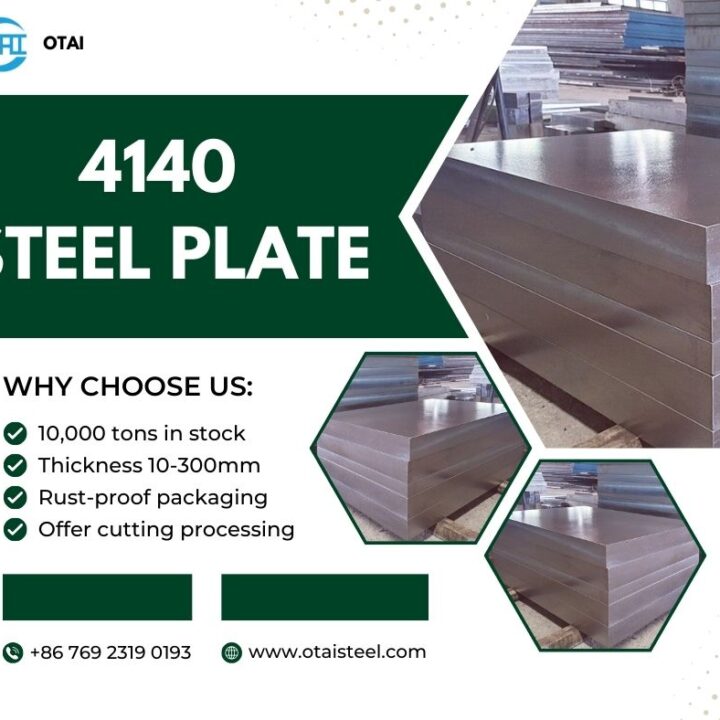
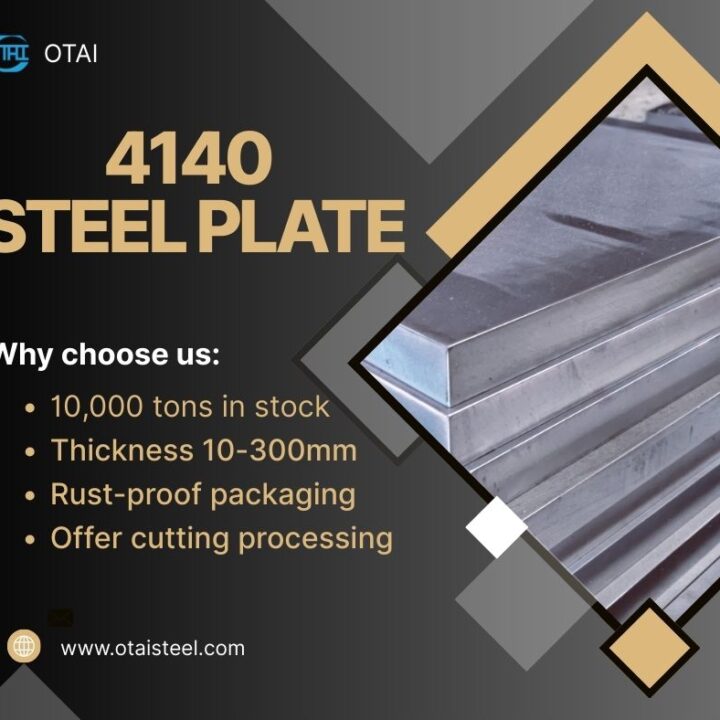
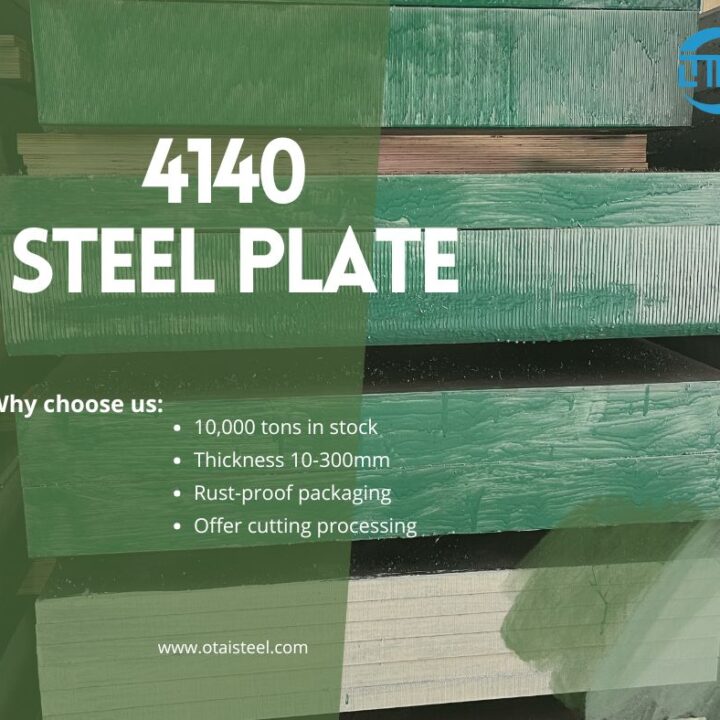
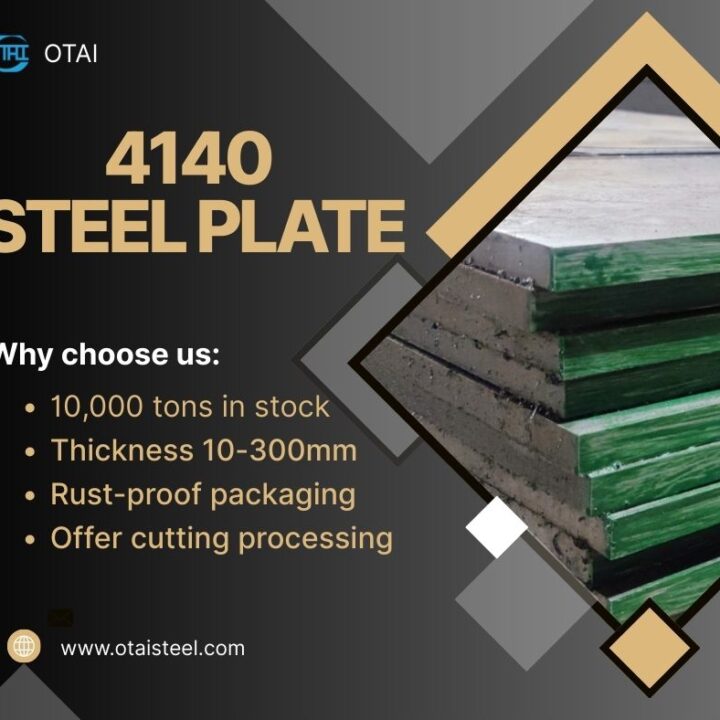
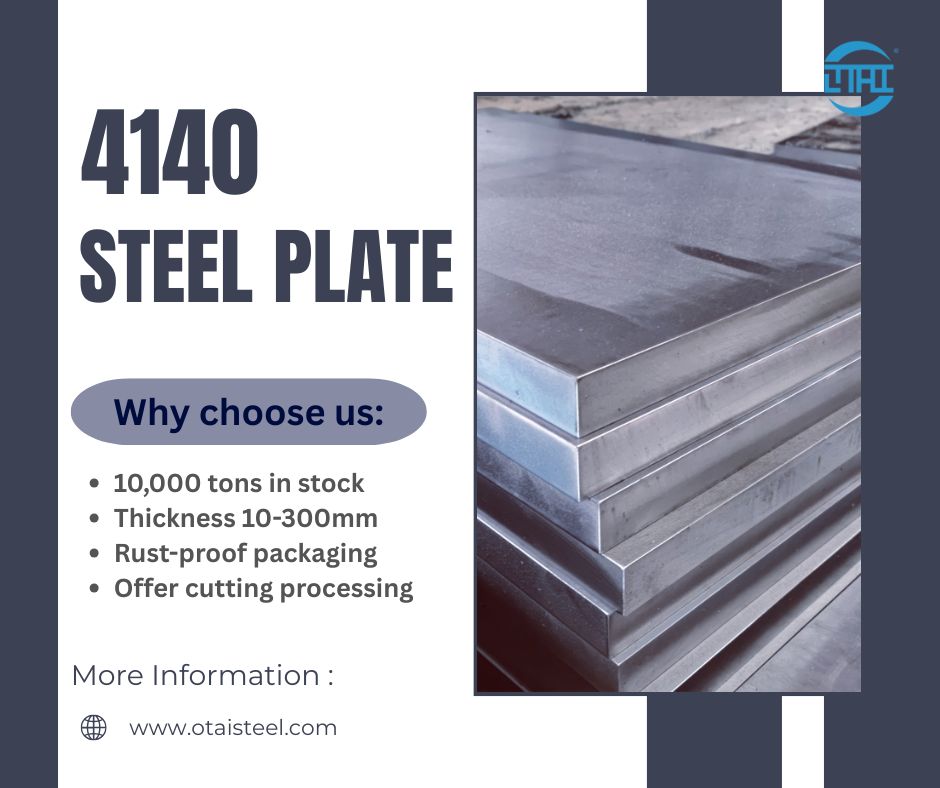
- Large inventory: Otai maintains approximately 10,000 tons of steel stock with different sizes of 4140 steel available in stock.
- Wide product range: Supply of 4140 steel plates, round bars and customized alloy steel products.
- Processing services: Cutting, machining and customized sizing according to customer requirements.
- Heat treatment support: Support for quenching, tempering, annealing and other heat treatment processes.
- Quality inspection: Ultrasonic testing and third-party inspection services are available.
- International supply experience: Experience serving customers with strict technical requirements.
- Export packaging: Anti-rust protection, steel strapping and wooden box packaging available.
For customers searching for reliable 4140 steel type suppliers, Otai provides material solutions based on application requirements, mechanical properties and production needs.
❓ FAQ
1. What type of steel is 4140?
4140 is a chromium-molybdenum alloy steel containing chromium and molybdenum as the main alloying elements. It is known for high strength, toughness and hardenability.
2. What are the main types of 4140 steel?
The main types include annealed 4140, normalized 4140, quenched and tempered 4140, hardened 4140 and pre-hardened 4140 steel.
3. What is the most common 4140 steel type?
4140 QT (quenched and tempered 4140) is one of the most commonly used conditions because it provides an excellent balance of strength, toughness and fatigue resistance.
4. Is 4140 steel the same as 42CrMo4?
4140 and 42CrMo4 are very similar chromium-molybdenum alloy steels. They have comparable properties, although standards and chemical specifications may differ slightly.
5. Does Otai supply different types of 4140 steel?
Yes. Otai supplies different 4140 steel conditions, including QT, annealed and customized processed materials with cutting, inspection and export services.