 16MnCr5 1.7131 Equivalent – International Steel Grade Comparison
When engineers search for 16MnCr5 1.7131 equivalent, they are usually trying to identify alternative steel grades available in different countries or standards.
In international steel purchasing, the same engineering requirement may have different material names depending on the standard system. A German DIN/EN grade may have a different designation in ASTM, SAE, GB, or JIS standards.
Understanding equivalent grades helps manufacturers avoid material selection problems when importing steel or working with global suppliers.
📑 Table of Contents
🔍 1. What Does 16MnCr5 1.7131 Equivalent Mean?
🧪 2. Chemical Composition of 16MnCr5 (1.7131 Steel)
⚙️ 3. Mechanical Properties and Heat Treatment Performance
🌍 4. 16MnCr5 1.7131 Equivalent Grades Around the World
📊 16MnCr5 vs 20MnCr5 vs 8620 vs 5120 Comparison
🏭 6. Industrial Applications of 16MnCr5 Equivalent Steel
📌 7. How to Choose the Right 16MnCr5 Equivalent Material
🔧 8. Machining, Carburizing and Supply Considerations
🏭 Otai Special Steel Advantages
❓ FAQ – 16MnCr5 1.7131 Equivalent
🔍 1. What Does 16MnCr5 1.7131 Equivalent Mean?
The term 16MnCr5 1.7131 equivalent combines two important concepts: steel grade identification and international material substitution.
16MnCr5 belongs to the family of case-hardening steels. These materials are designed to create a high-hardness surface layer through carburizing while maintaining a strong and impact-resistant core.
The designation can be explained as follows:
| Part of Grade Name | Explanation |
|---|---|
| 16 | Approximate carbon content indication (0.16%) |
| Mn | Manganese alloy element |
| Cr | Chromium alloy element |
| 5 | Approximate chromium content level |
The material number system provides another way to identify the same steel:
- 1 = Steel material group
- 71 = Specific steel designation series
- 31 = Assigned number for 16MnCr5
Therefore:
EN 16MnCr5 = DIN 16MnCr5 = Material Number 1.7131
When customers search for DIN 16MnCr5 equivalent, they usually want to know which international materials can replace this grade.
Common reasons include:
- Local availability differences
- Import requirements
- Different national standards
- Cost optimization
- Supply chain flexibility
For example, a European gear manufacturer may specify 16MnCr5, while an American supplier may suggest a similar SAE carburizing steel.
However, engineers should verify technical compatibility before substitution because different grades may have differences in:
- Case depth after carburizing
- Core strength
- Fatigue resistance
- Heat treatment response
A professional material comparison should focus on performance rather than simply matching names.
🧪 2. Chemical Composition of 16MnCr5 (1.7131 Steel)
The excellent performance of 16MnCr5 carburizing steel comes from its carefully balanced chemical composition.
Unlike high-carbon steels, 16MnCr5 contains relatively low carbon content. This allows the material to maintain toughness inside the component after carburizing.
| Element | Typical Content | Function |
|---|---|---|
| Carbon (C) | 0.14–0.19% | Provides carburizing capability |
| Silicon (Si) | ≤0.40% | Supports deoxidation and strength |
| Manganese (Mn) | 1.00–1.30% | Improves hardenability and toughness |
| Chromium (Cr) | 0.80–1.10% | Improves wear resistance and hardening depth |
| Phosphorus (P) | ≤0.035% | Controlled to maintain toughness |
| Sulfur (S) | ≤0.035% | Improves machinability when controlled |
Carbon is the most important element in determining carburizing behavior.
The low carbon core provides:
- Excellent impact resistance
- Good fatigue performance
- Reduced risk of brittle failure
Chromium improves the ability of the steel to achieve higher hardness after heat treatment.
Manganese increases hardenability and improves the strength of the internal structure.
The combination of chromium and manganese makes 16MnCr5 suitable for components exposed to:
- Repeated loading
- Surface friction
- High contact pressure
- Mechanical impact
Compared with plain carbon steel, 1.7131 steel equivalent material provides much better performance in demanding mechanical applications.
| Chemical Feature | Engineering Benefit |
|---|---|
| Low Carbon Core | Improves toughness |
| Chromium Addition | Improves wear resistance |
| Manganese Addition | Improves hardenability |
| Controlled Impurities | Improves fatigue reliability |
This balanced chemistry explains why 16MnCr5 remains one of the most popular European carburizing steels for gears and transmission components.
⚙️ 3. Mechanical Properties and Heat Treatment Performance
The mechanical performance of 16MnCr5 1.7131 equivalent material depends heavily on heat treatment.
In its original condition, 16MnCr5 provides good machinability. After carburizing and quenching, it develops a hard surface layer suitable for heavy-duty applications.
| Property | Typical Performance |
|---|---|
| Tensile Strength | Approximately 600–900 MPa after treatment |
| Surface Hardness | 58–62 HRC after carburizing |
| Core Toughness | Excellent impact resistance |
| Wear Resistance | High after case hardening |
| Machinability | Good before carburizing |
The typical heat treatment process includes:
| Process | Purpose |
|---|---|
| Carburizing | Increase surface carbon content |
| Quenching | Create hard martensitic surface |
| Tempering | Reduce stress and improve toughness |
This combination gives 16MnCr5 the ideal structure for gears and shafts:
- Hard outer surface
- Strong transition zone
- Tough internal core
For this reason, engineers often select 16MnCr5 when searching for 16MnCr5 equivalent ASTM or other international alternatives for carburized components.
🌍 4. 16MnCr5 1.7131 Equivalent Grades Around the World
When global customers search for 16MnCr5 1.7131 equivalent, they are usually looking for similar materials available under different national standards.
However, steel equivalence requires careful evaluation. A similar grade may have comparable chemical composition but different requirements for mechanical properties, heat treatment, or manufacturing processes.
The most common international alternatives are carburizing steels used for gears, shafts, and transmission components.
| Standard | Equivalent / Similar Grade | Main Characteristics |
|---|---|---|
| EN / DIN | 16MnCr5 (1.7131) | European case-hardening steel with Cr-Mn alloying |
| China GB | 16CrMn | Similar low-carbon carburizing steel |
| USA SAE | 5120 | Chromium carburizing steel with similar applications |
| USA SAE | 5115 | Low-carbon chromium steel for case hardening |
| Japan JIS | SCM415 | Cr-Mo carburizing steel with similar uses |
Among these grades, SAE 5120 and JIS SCM415 are often considered close alternatives because they are also designed for carburizing applications.
16MnCr5 vs SAE 5120
SAE 5120 is one of the frequently mentioned 16MnCr5 equivalent material options.
Both materials are low-carbon alloy steels designed for surface hardening.
| Comparison | 16MnCr5 | SAE 5120 |
|---|---|---|
| Carbon Content | Approx. 0.16% | Approx. 0.20% |
| Main Alloy | Mn + Cr | Cr |
| Application | Gears, shafts, mechanical parts | Gears and transmission parts |
| Heat Treatment | Carburizing | Carburizing |
Although these grades have similar applications, engineers should check chemical composition and customer specifications before direct substitution.
16MnCr5 vs JIS SCM415
JIS SCM415 contains chromium and molybdenum, which provides improved hardenability compared with some Cr-Mn steels.
| Feature | 16MnCr5 | SCM415 |
|---|---|---|
| Steel Type | Cr-Mn carburizing steel | Cr-Mo carburizing steel |
| Hardenability | Good | Very good |
| Typical Use | Automotive gears | Precision transmission parts |
The correct equivalent depends on the final application rather than only the steel name.
For international procurement, buyers should compare:
- Chemical composition requirements
- Heat treatment process
- Mechanical property targets
- Quality certification requirements
A professional steel supplier can help customers select the closest alternative when the original grade is unavailable.
📊 5. 16MnCr5 vs 20MnCr5 vs 8620 vs 5120 Comparison
Understanding the differences between similar carburizing steels helps engineers select the correct material for different working conditions.
Although these grades share similar applications, their alloy composition creates different performance characteristics.
| Grade | Steel Type | Main Alloy Elements | Typical Application |
|---|---|---|---|
| 16MnCr5 | Case-hardening steel | Mn + Cr | Gears, shafts, transmission parts |
| 20MnCr5 | Case-hardening steel | Higher Mn + Cr | Heavy-duty gears and components |
| 8620 | Nickel chromium molybdenum steel | Ni + Cr + Mo | Automotive gears and high-load parts |
| 5120 | Chromium carburizing steel | Cr | Gear components |
16MnCr5 vs 20MnCr5
Both materials are popular European carburizing steels.
| Property | 16MnCr5 | 20MnCr5 |
|---|---|---|
| Carbon Content | 0.14–0.19% | 0.17–0.22% |
| Strength | Good | Slightly higher |
| Core Toughness | Excellent | Very good |
| Application | Medium load gears | Higher load gears |
20MnCr5 contains slightly more carbon, which can provide improved hardness potential after carburizing.
However, 16MnCr5 often provides an excellent balance between:
- Surface hardness
- Core toughness
- Machinability
- Cost efficiency
16MnCr5 vs 8620
8620 is one of the most common American carburizing steels.
| Feature | 16MnCr5 | 8620 |
|---|---|---|
| Alloy System | Cr-Mn | Ni-Cr-Mo |
| Hardening Ability | Good | Excellent |
| Core Strength | Good | Higher |
| Main Market | Europe | USA and global markets |
8620 usually offers better hardenability because of nickel and molybdenum additions.
However, 16MnCr5 equivalent ASTM selection depends on the required performance and availability.
Which Grade Should You Choose?
| Requirement | Recommended Grade |
|---|---|
| General automotive gears | 16MnCr5 |
| Higher load transmission parts | 20MnCr5 or 8620 |
| Excellent hardenability | 8620 / SCM415 |
| European standard requirement | 16MnCr5 (1.7131) |
Selecting the right carburizing steel requires balancing strength, durability, manufacturing process, and availability.
🏭 6. Industrial Applications of 16MnCr5 Equivalent Steel
The popularity of 16MnCr5 steel comes from its excellent performance in components requiring wear resistance and impact strength.
After carburizing treatment, the material develops a hard surface layer while maintaining a tough internal structure.
This makes it ideal for mechanical parts exposed to repeated stress.
| Industry | Typical Components | Reason for Selection |
|---|---|---|
| Automotive | Transmission gears, shafts | High wear resistance and fatigue strength |
| Mechanical Engineering | Gear wheels, bushings | Good machinability and toughness |
| Agricultural Machinery | Drive components | Impact resistance |
| Industrial Equipment | Reduction gears | Long service life |
Common components manufactured from 16MnCr5 equivalent steel include:
- Gears
- Pinions
- Transmission shafts
- Drive parts
- Mechanical connectors
For gear manufacturing, the material must provide:
- High surface hardness
- Good contact fatigue resistance
- Strong core toughness
- Stable heat treatment response
This is why engineers frequently choose 16MnCr5 when designing components that require long-term reliability.
The same principle applies when selecting an equivalent grade from another country. The replacement material must maintain the required performance after processing.
📌 7. How to Choose the Right 16MnCr5 Equivalent Material
Choosing the correct 16MnCr5 1.7131 equivalent is not simply a matter of finding a steel grade with a similar name. Engineers need to evaluate the complete service requirements of the final component.
A suitable equivalent material should provide similar performance in:
- Carburizing response
- Surface hardness
- Core toughness
- Wear resistance
- Fatigue strength
For example, a gear manufacturer replacing 16MnCr5 with another grade should consider whether the alternative steel can achieve the same case depth and hardness after heat treatment.
| Evaluation Item | Why It Matters |
|---|---|
| Chemical Composition | Determines hardenability and heat treatment behavior |
| Carbon Content | Affects carburizing potential |
| Chromium Content | Influences wear resistance and hardening depth |
| Mechanical Properties | Ensures component reliability |
| Steel Standard | Confirms international compatibility |
Consider Application Requirements First
Different applications require different material characteristics.
For example:
| Application | Important Requirement | Suitable Materials |
|---|---|---|
| Automotive Gear | Surface hardness and fatigue resistance | 16MnCr5 / 8620 |
| Heavy Transmission Gear | Higher core strength | 20MnCr5 / 8620 |
| Precision Mechanical Parts | Dimensional stability | 16MnCr5 / SCM415 |
The best equivalent grade should meet both technical requirements and supply availability.
Check Customer Standards
Many international projects specify materials according to company standards rather than only national standards.
Before replacing 16MnCr5, customers should confirm:
- Required steel certification
- Heat treatment condition
- Mechanical testing requirements
- Ultrasonic testing requirements
- Dimensional tolerance
A qualified supplier can help customers select the closest material according to drawings, specifications, and final application.
🔧 8. Machining, Carburizing and Supply Considerations
The performance of 16MnCr5 carburizing steel depends not only on chemical composition but also on correct processing methods.
Before carburizing, 16MnCr5 offers good machinability, making it suitable for manufacturing complex mechanical components.
Machining Performance
Common machining processes include:
- Turning
- Milling
- Drilling
- Grinding
Manufacturers usually complete machining before carburizing because the hardened surface becomes more difficult to machine.
| Process | Purpose |
|---|---|
| Rough Machining | Create basic component shape |
| Carburizing | Increase surface carbon content |
| Quenching | Improve surface hardness |
| Tempering | Reduce internal stress |
| Final Grinding | Achieve precision dimensions |
Carburizing Performance
The main advantage of 16MnCr5 is its ability to create a hard external layer while keeping a tough core.
Typical carburizing results include:
| Property | Typical Result |
|---|---|
| Surface Hardness | Approximately 58–62 HRC |
| Core Structure | Tough martensitic structure |
| Wear Resistance | High |
| Contact Fatigue Resistance | Excellent |
Material Supply Considerations
When purchasing 1.7131 steel equivalent grade, customers should consider more than material availability.
A reliable supplier should provide:
- Correct material identification
- Mill certificates
- Chemical composition reports
- Mechanical testing data
- Processing support
For international buyers, packaging and logistics are also important.
Professional export suppliers usually provide:
- Anti-rust protection
- Steel strapping packaging
- Wooden box packaging
- Customized cutting service
These services help ensure that 16MnCr5 steel arrives in good condition and is ready for production.
🏭 Otai Special Steel Advantages
Otai Special Steel supplies 16MnCr5 steel and other alloy steels for global mechanical manufacturing customers.
For customers searching for reliable 16MnCr5 1.7131 equivalent material, Otai provides stable inventory, processing support, and quality assurance.
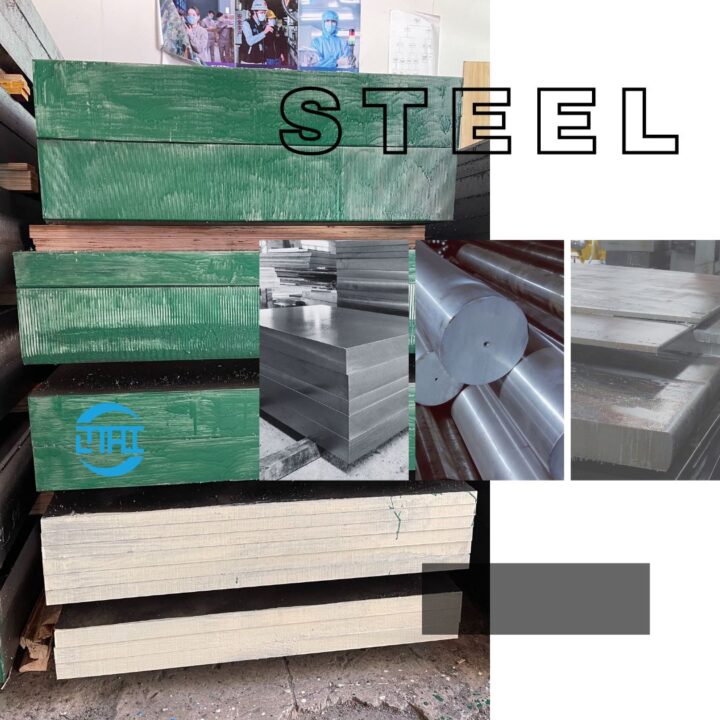
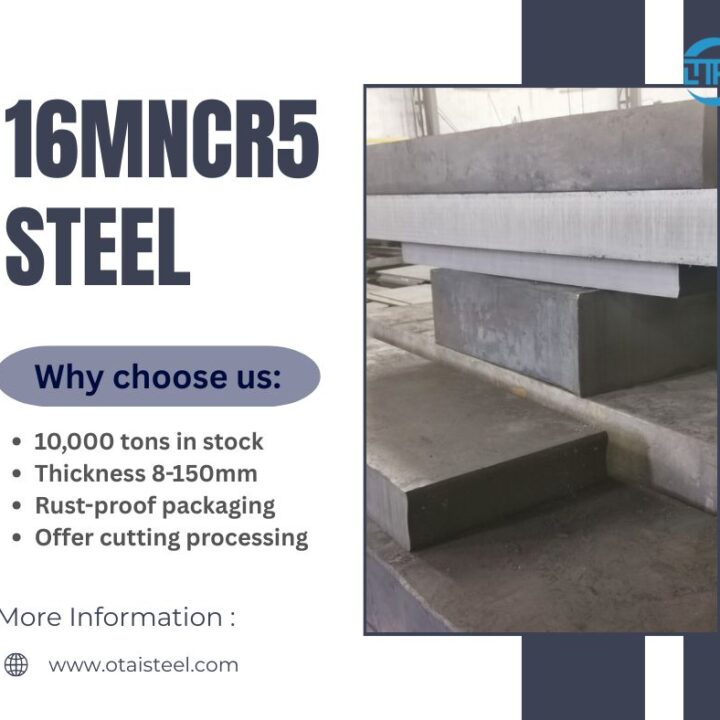
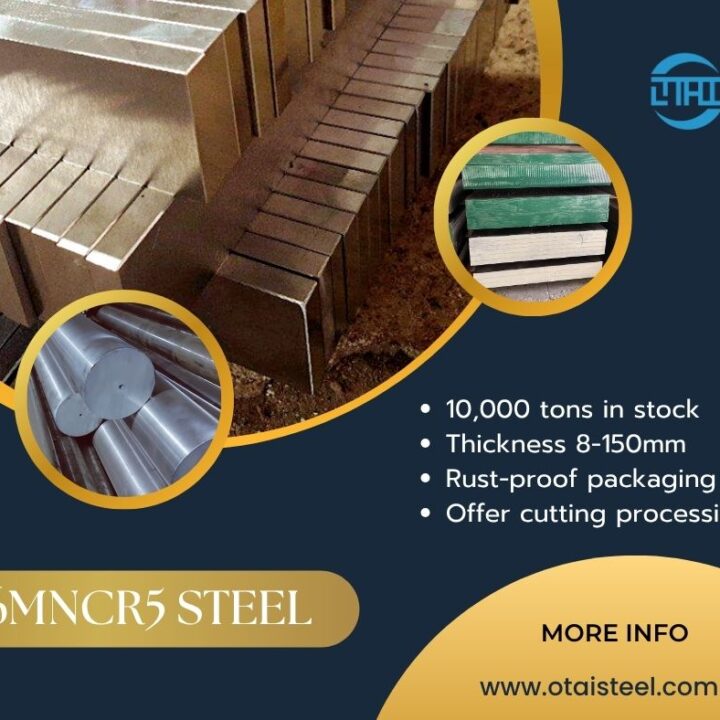
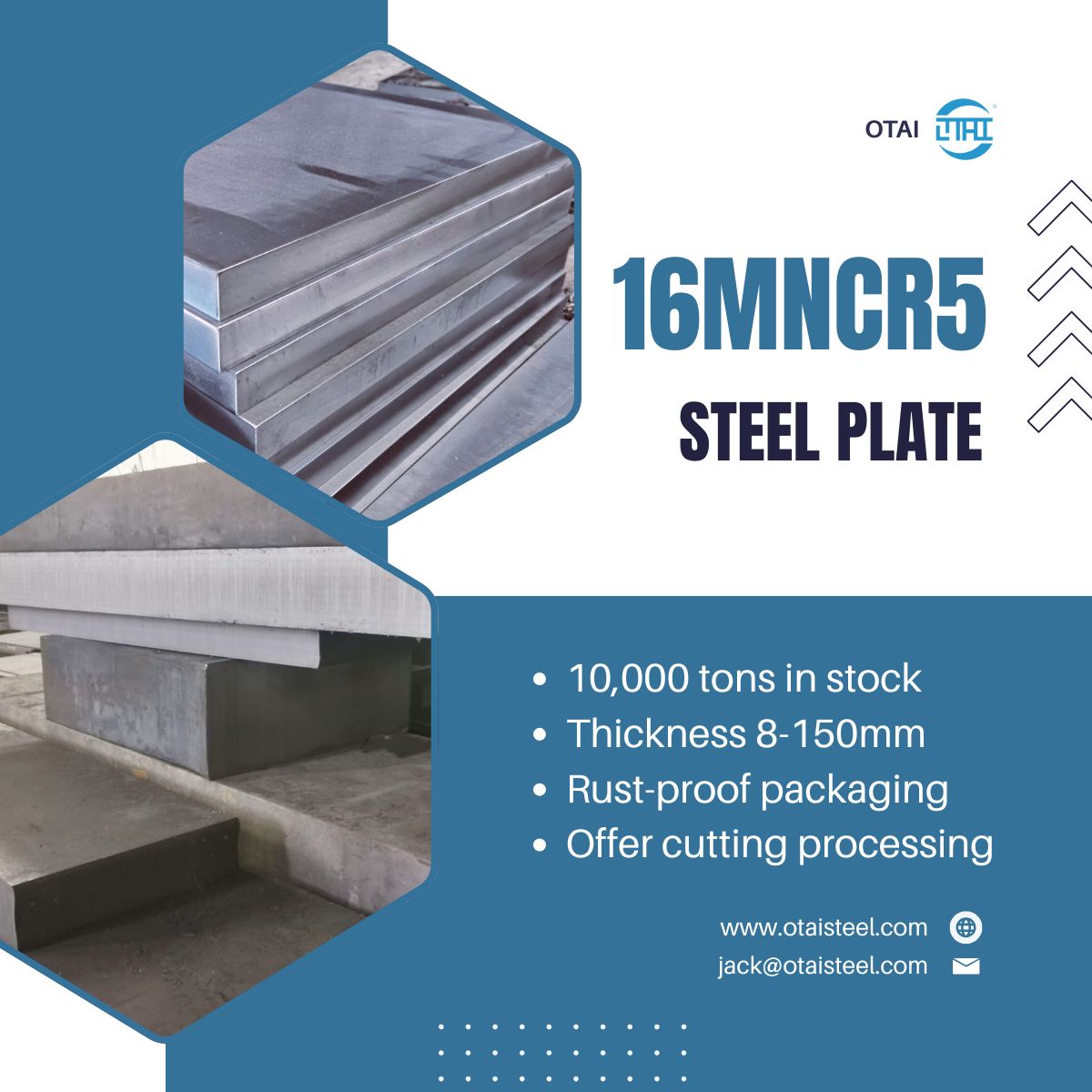
- Stock availability: Otai keeps 8–150mm thickness plates available in stock to support different engineering requirements.
- Professional steel supply experience: Otai has experience supplying steel products to Fortune Global 500 companies and understands strict customer specifications.
- Customized cutting service: Provides cutting according to customer drawings and required dimensions to reduce machining waste.
- Heat treatment support: Supports carburizing-related requirements and other heat treatment processes.
- Quality control: Provides ultrasonic testing and third-party inspection services for customers requiring additional quality verification.
- Export packaging: Offers anti-rust packaging, steel strapping packaging, and wooden box packaging for international transportation.
With technical knowledge of carburizing steels and international grade requirements, Otai helps customers select suitable 16MnCr5 equivalent solutions for gears, shafts, and industrial components.
❓ FAQ – 16MnCr5 1.7131 Equivalent
Q1: Is 16MnCr5 the same as 1.7131?
Yes. 16MnCr5 and 1.7131 refer to the same steel grade. 16MnCr5 is the grade designation, while 1.7131 is the European material number.
Q2: What is the closest equivalent to 16MnCr5?
Common similar grades include SAE 5120, SAE 5115, JIS SCM415, and China 16CrMn. The closest choice depends on application and specification requirements.
Q3: Is 8620 equivalent to 16MnCr5?
8620 is not an identical equivalent, but it is a similar carburizing steel. It contains nickel and molybdenum, which provide higher hardenability.
Q4: What is 16MnCr5 used for?
16MnCr5 is mainly used for gears, shafts, transmission parts, pinions, and other components requiring a hard surface and tough core.
Q5: Can 16MnCr5 be carburized?
Yes. Carburizing is the main heat treatment method for 16MnCr5. It creates a wear-resistant surface while maintaining core toughness.