 What Does 16MnCr5 Mean?
🔍 1. True Engineering Meaning of 16MnCr5
To understand what does 16MnCr5 mean, we must go beyond simple definition. 16MnCr5 is a case-hardening alloy steel designed for components that require a hard wear-resistant surface and a tough core after carburizing treatment.
In engineering practice, what does 16MnCr5 mean is not just a material label. It represents a controlled transformation system where mechanical performance is created during heat treatment rather than in the raw state.
This steel is widely used in gears, shafts, and transmission systems because it can form a high-carbon martensitic surface layer while maintaining a ductile inner core capable of absorbing shock and vibration.
So, what does 16MnCr5 mean in real design terms? It means a predictable carburizing response material optimized for fatigue-loaded mechanical systems.
🧪 2. Decoding the 16MnCr5 Naming Logic and Material System
The designation system behind what does 16MnCr5 mean follows EN steel naming rules. Each part of the code reflects chemical intent and engineering behavior.
- 16: Approx. 0.16% carbon content enabling carburizing capability
- Mn: Manganese improves hardenability and core toughness
- Cr: Chromium enhances wear resistance and case depth stability
- 5: Alloy grouping indicator within EN classification system
This means what does 16MnCr5 mean is directly linked to surface engineering design rather than structural load-bearing bulk strength.
Unlike medium carbon steels, its performance depends heavily on diffusion-based carbon enrichment and phase transformation control.
⚙️ 3. Chemical Composition and Functional Engineering Logic
| Element | Range | Engineering Function |
|---|---|---|
| C | 0.14–0.19% | Controls carburized hardness potential |
| Mn | 0.80–1.10% | Improves toughness and hardenability |
| Cr | 0.80–1.10% | Enhances wear resistance and diffusion stability |
| Si | ≤0.40% | Strength stability and deoxidation |
| P/S | ≤0.035% | Controls brittleness and inclusions |
The chemical balance explains why what does 16MnCr5 mean is strongly connected to carburizing performance. Low carbon ensures safe diffusion during heat treatment, while Mn and Cr stabilize hardened case formation.
If alloy balance is not controlled, case cracking or uneven hardness distribution may occur, reducing fatigue life significantly.
🔥 4. Carburizing Heat Treatment Mechanism and Case Formation
A critical part of what does 16MnCr5 mean is its response to carburizing. This process introduces carbon into the surface layer at high temperature, creating a gradient structure.
The process is not just heating. It is controlled diffusion followed by phase transformation:
- Carbon diffusion into austenite phase at 880–950°C
- Time-controlled case depth formation
- Oil quenching to form martensite on surface
- Tempering to reduce residual stress
This creates a hard outer layer and a tough core. The gradient is what gives 16MnCr5 its fatigue resistance under cyclic loads.
If carburizing depth is too shallow, fatigue cracks initiate early. If too deep, core toughness may be reduced. This balance is central to what does 16MnCr5 mean in real engineering design.
🧬 5. Microstructure Evolution and Fatigue Crack Mechanism
Before heat treatment, 16MnCr5 consists of ferrite and pearlite. After carburizing and quenching, the surface transforms into high-carbon martensite while the core remains low-carbon bainite or ferrite-pearlite.
This structural gradient defines the engineering meaning behind what does 16MnCr5 mean.
Fatigue behavior follows a typical mechanism:
- Crack initiation at surface stress concentration points
- Micro-crack propagation through hardened layer
- Slow crack growth in transition zone
- Final fracture when core can no longer support load
Shot peening or surface polishing can delay crack initiation and significantly improve fatigue life.
🏭 6. Mechanical Performance After Heat Treatment
| Property | Typical Range |
|---|---|
| Tensile Strength | 600–900 MPa |
| Yield Strength | 400–650 MPa |
| Surface Hardness | 58–62 HRC |
| Core Hardness | 30–45 HRC |
| Fatigue Resistance | High (case dependent) |
These values show that what does 16MnCr5 mean cannot be judged without heat treatment condition. Performance is process-driven, not material-fixed.
Engineering selection must always consider case depth, hardness gradient, and loading type.
🚗 7. Industrial Applications and Load Behavior
The practical meaning of what does 16MnCr5 mean becomes clear in rotating and cyclic-loaded systems.
- Automotive gearbox gears under torsional fatigue
- Drive shafts under bending stress cycles
- Pinions with high contact stress
- Industrial reducers with continuous loading
- Agricultural machinery with impact + fatigue combination
These components rely on surface hardness for wear resistance and core toughness for impact absorption. Without both, failure occurs prematurely.
🛠 8. Machinability, Manufacturing Strategy and Process Control
In annealed condition, 16MnCr5 has stable machinability, allowing gear cutting, drilling, and shaping before heat treatment.
Manufacturing sequence is critical:
- Rough machining in soft state
- Carburizing and quenching
- Finish grinding after heat treatment
This workflow ensures dimensional accuracy and surface hardness. It also reflects real industrial interpretation of what does 16MnCr5 mean: a process-engineered material system.
🔄 9. Comparison with Engineering Steels and Selection Logic
| Steel Grade | Strength Type | Main Use |
|---|---|---|
| 16MnCr5 | Case hardening | Gears |
| 20MnCr5 | Higher case depth potential | Heavy-duty gears |
| 8620 | Balanced carburizing steel | Automotive components |
| 4140 | Through-hardening alloy steel | Shafts and structural parts |
This comparison shows that 16MnCr5 is not chosen for maximum strength, but for optimized surface-core performance balance.
🏭 10. Industrial Supply Capability – Otai Special Steel
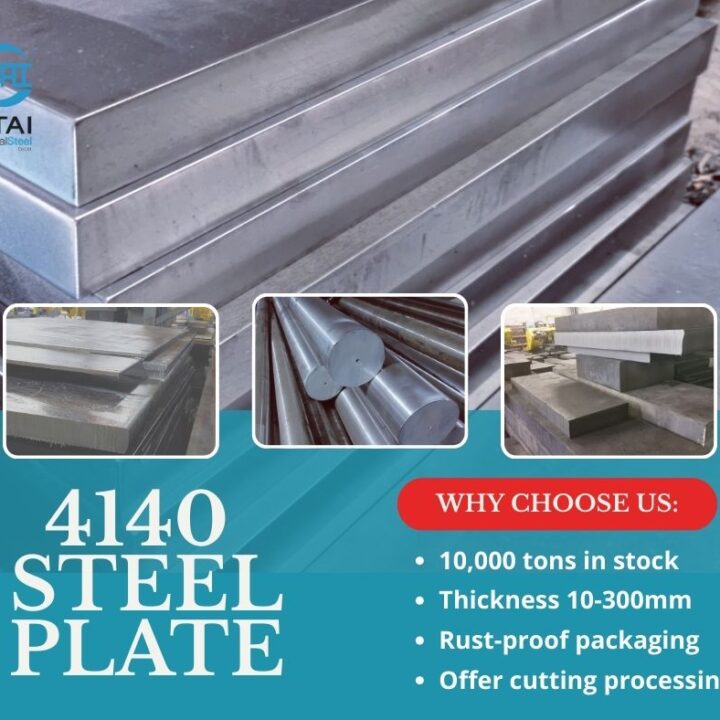
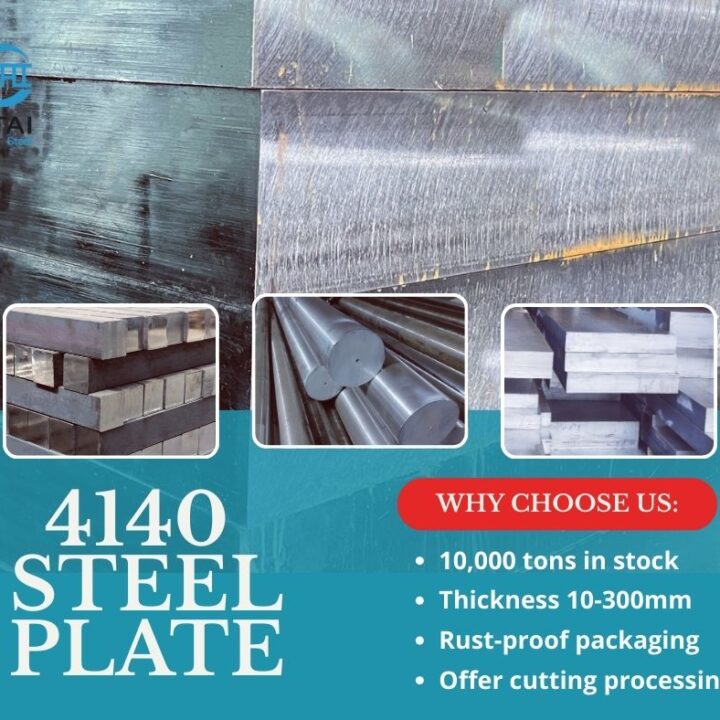
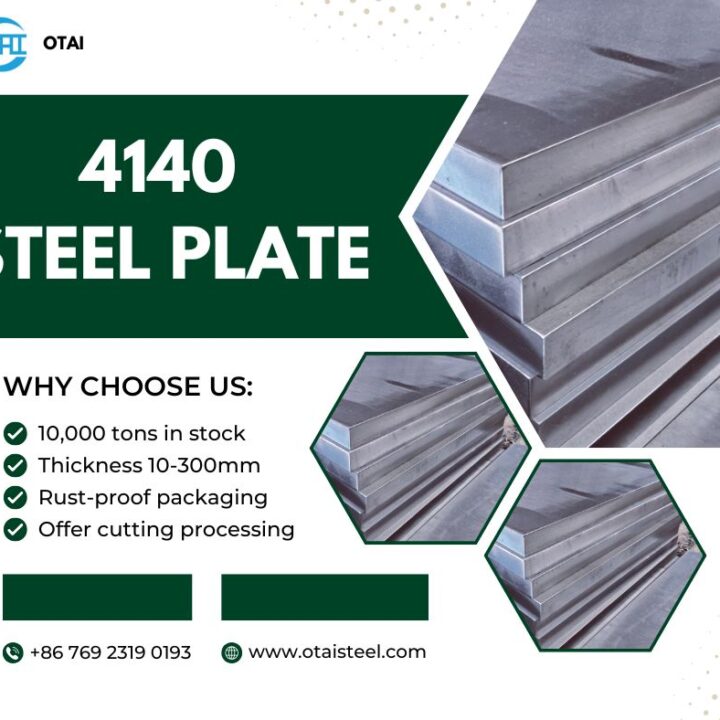
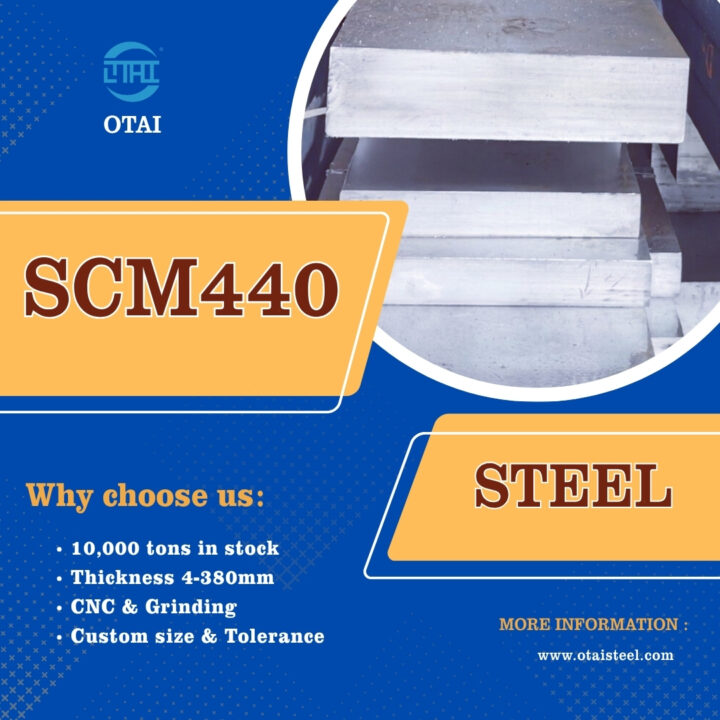
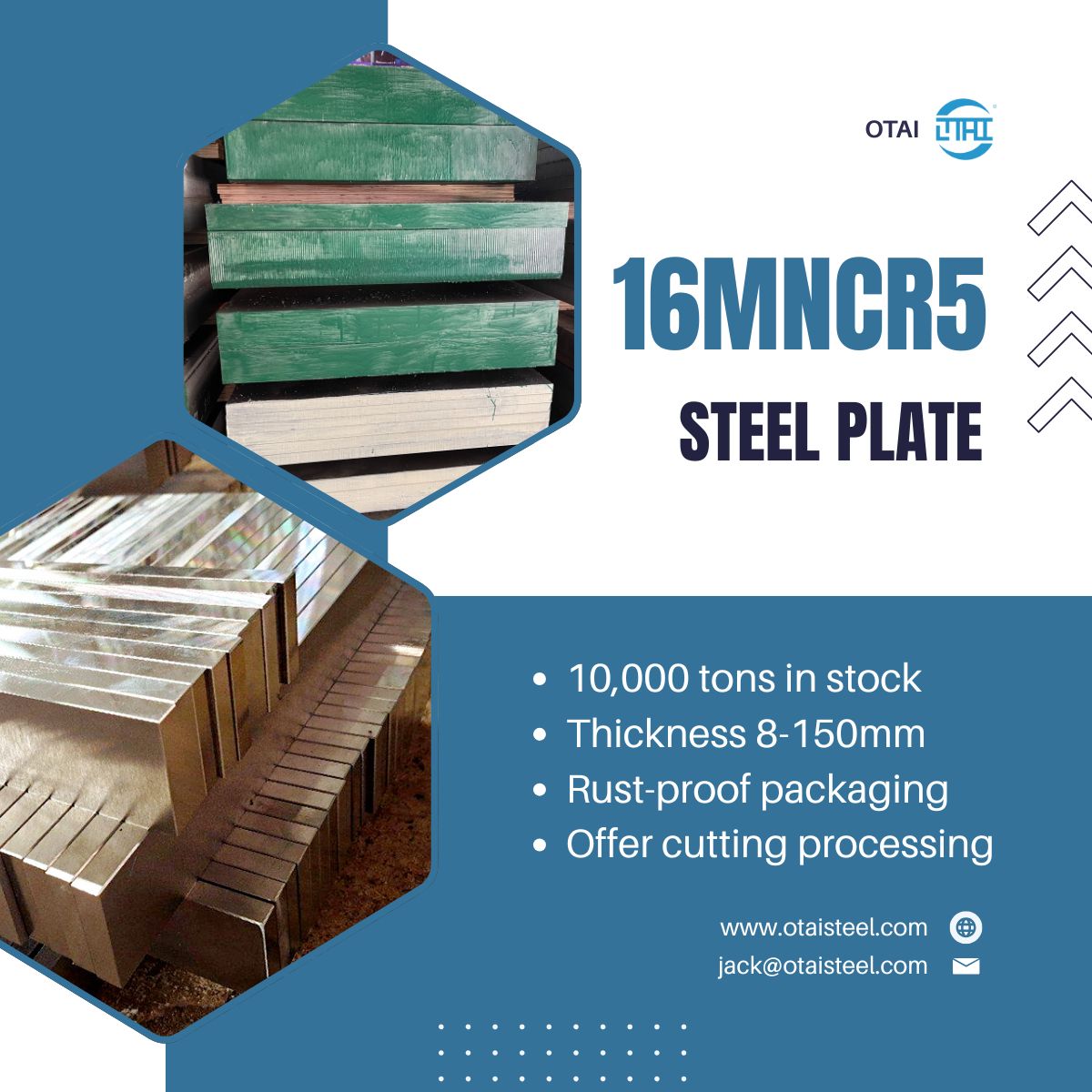
OTAI supplies 16MnCr5 steel with stable inventory, cutting services, and heat treatment support for global customers.
- 8–150mm thickness plates in stock
- Large inventory for fast delivery
- Cutting, heat treatment, machining services
- Ultrasonic testing and third-party inspection
- Global export experience
❓ FAQ – What Does 16MnCr5 Mean
Q1: What does 16MnCr5 mean in engineering?
It is a carburizing steel designed for surface hardening and fatigue-loaded components.
Q2: Why is carburizing important?
It creates a hard surface layer while maintaining a tough core structure.
Q3: Is 16MnCr5 a structural steel?
No, it is a case-hardening steel system.
Q4: What controls its performance most?
Heat treatment and case depth control.
Q5: Where is it mainly used?
In gears, shafts, and transmission systems with cyclic loading.