 16MnCr5 HRC – Understanding Hardness After Heat Treatment
The 16MnCr5 HRC value is one of the most important indicators of the steel’s performance after heat treatment. Engineers use the Rockwell Hardness (HRC) scale to evaluate the surface hardness of carburized components and determine whether the material meets the mechanical requirements of gears, shafts, pinions, and other transmission parts.
As a low-carbon case-hardening steel, 16MnCr5 does not achieve its maximum hardness in the supplied condition. Instead, manufacturers improve its properties through carburizing, quenching, and tempering. After these processes, the surface develops a hard martensitic layer while the core remains tough and resistant to impact loads. This combination explains why 16MnCr5 has become one of the most widely used alloy steels for power transmission applications.
Understanding the relationship between hardness, case depth, heat treatment parameters, and service conditions helps engineers optimize component life while reducing maintenance costs and unexpected failures.
🔵 What Does HRC Mean?
HRC stands for Rockwell Hardness C, a measurement commonly used for hardened steels. The test measures the material’s resistance to indentation and provides a quick way to evaluate heat treatment quality.
For 16MnCr5, HRC values mainly represent the hardness of the carburized surface rather than the softer core. Because gears and transmission components experience continuous contact stress, surface hardness often determines wear resistance and fatigue performance.
| Hardness Scale | Typical Application |
|---|---|
| HRC | Hardened alloy steels |
| HB | Annealed steels |
| HV | Case depth measurement |
| HRB | Soft metals |
🟢 Typical 16MnCr5 HRC Values
The final 16MnCr5 HRC depends on the complete heat treatment process. After proper carburizing and quenching, the surface hardness generally reaches a range suitable for demanding wear-resistant applications. The core remains significantly softer, allowing the component to absorb shock loads without brittle fracture.
This hardness profile provides an excellent balance between durability and toughness, making the material ideal for automotive and industrial transmission systems.
| Condition | Typical Hardness |
|---|---|
| Annealed | 160–220 HB |
| After Carburizing & Quenching | 58–62 HRC |
| Core Hardness | 30–45 HRC |
| After Tempering | Slightly Reduced Surface Hardness |
🟠 Why Surface Hardness Matters
Surface hardness directly influences wear resistance, contact fatigue strength, and service life. Components operating under rolling or sliding contact experience continuous friction, making a hard outer layer essential for reliable performance.
A properly controlled 16MnCr5 HRC level helps reduce pitting, abrasive wear, and surface deformation while extending maintenance intervals. At the same time, the tougher core prevents catastrophic failure under repeated impact loading.
| Higher Surface Hardness Provides | Benefit |
|---|---|
| Improved Wear Resistance | Longer component life |
| Better Contact Fatigue Strength | Reduced pitting |
| Lower Surface Deformation | Improved dimensional stability |
| Higher Load Capacity | Greater reliability |
🟣 Heat Treatment and HRC Development
The final 16MnCr5 HRC value develops through a carefully controlled sequence of carburizing, quenching, and tempering. Carburizing enriches the surface with carbon, quenching transforms the structure into hard martensite, and tempering improves toughness while maintaining excellent hardness.
Each stage contributes to the final performance. Even small changes in temperature or holding time can influence hardness, case depth, and dimensional stability. For this reason, manufacturers monitor every stage of the heat treatment process carefully.
| Heat Treatment Stage | Main Purpose |
|---|---|
| Carburizing | Increase surface carbon |
| Quenching | Form martensite |
| Tempering | Improve toughness |
| Inspection | Verify hardness and quality |
🔷 Factors That Affect 16MnCr5 HRC
Although the target 16MnCr5 HRC range is well established, several manufacturing variables determine the final hardness. Engineers must carefully control each stage of production to achieve consistent results across every batch.
Carburizing temperature and holding time determine how much carbon diffuses into the surface. A longer carburizing cycle generally produces a deeper hardened layer, while insufficient carburizing may reduce surface hardness and wear resistance.
Quenching is equally important. Oil quenching remains the preferred method for most 16MnCr5 components because it provides an excellent balance between hardness development and dimensional stability. Improper cooling can lead to insufficient martensite formation, distortion, or even cracking.
Tempering follows quenching to relieve internal stress while preserving most of the surface hardness. Selecting an appropriate tempering temperature helps maintain an ideal combination of hardness and toughness.
| Factor | Influence on Hardness |
|---|---|
| Carburizing Time | Controls case depth |
| Carburizing Temperature | Affects carbon diffusion |
| Quenching Medium | Determines cooling rate |
| Tempering Temperature | Balances hardness and toughness |
| Material Quality | Ensures consistent heat treatment |
🔴 Surface Hardness vs. Core Hardness
One of the greatest advantages of 16MnCr5 is its ability to develop two distinct hardness zones. The carburized surface becomes extremely hard to resist wear, while the lower-carbon core remains tough enough to absorb heavy impact loads.
This combination is essential for gears, pinions, shafts, and other transmission parts that experience repeated rolling contact. If the entire component were hardened to the same level, it would become brittle and much more susceptible to fracture during operation.
The optimized 16MnCr5 HRC profile therefore delivers both durability and reliability. The hard outer case minimizes abrasive wear and pitting, while the tougher core supports the surface layer under heavy mechanical loads.
| Region | Typical Hardness | Main Function |
|---|---|---|
| Surface Case | 58–62 HRC | Wear resistance |
| Transition Zone | 45–55 HRC | Load transfer |
| Core | 30–45 HRC | Impact toughness |
⚙️ Typical Applications Requiring High HRC
A properly controlled 16MnCr5 HRC value is particularly important in applications where components operate under continuous friction or cyclic loading. Automotive gears, industrial gearboxes, agricultural machinery, construction equipment, and mining machinery all rely on hardened surfaces to achieve long service life.
For example, transmission gears experience thousands of rolling contact cycles every minute. High surface hardness significantly reduces adhesive wear, surface fatigue, and micro-pitting, allowing the gearbox to operate efficiently over extended periods.
Similarly, sprockets, cam components, and drive shafts benefit from a carburized case because the hardened surface protects against repeated contact while the tough core absorbs vibration and shock loads.
| Component | Reason for High Hardness |
|---|---|
| Automotive Gears | Wear resistance |
| Pinions | Rolling contact fatigue |
| Drive Shafts | Surface durability |
| Sprockets | Abrasion resistance |
| Industrial Gearboxes | Long service life |
📊 How Is 16MnCr5 Hardness Tested?
Quality control is an essential part of every heat treatment process. Manufacturers verify the final 16MnCr5 HRC using standardized hardness testing equipment to ensure that each batch meets customer specifications.
The Rockwell Hardness C test is the most common method for finished components because it provides fast and repeatable results. In addition, many laboratories use Vickers hardness testing when evaluating case depth or hardness gradients across the carburized layer.
For critical applications, hardness testing is often combined with metallographic examination to confirm the formation of a uniform martensitic microstructure and the required effective case depth.
| Testing Method | Main Purpose |
|---|---|
| Rockwell HRC | Surface hardness measurement |
| Vickers HV | Case depth evaluation |
| Brinell HB | Annealed material inspection |
| Metallography | Microstructure verification |
🏭 Company Advantages – Otai Special Steel
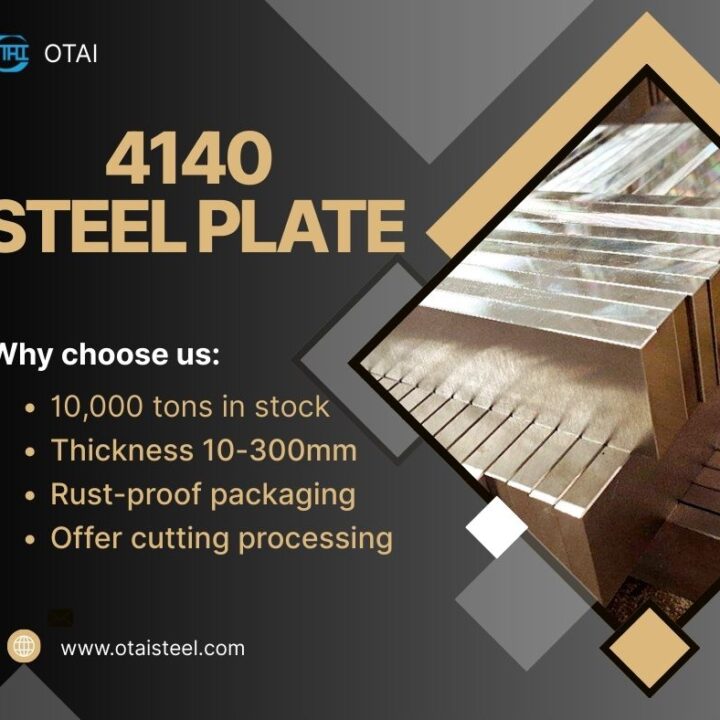
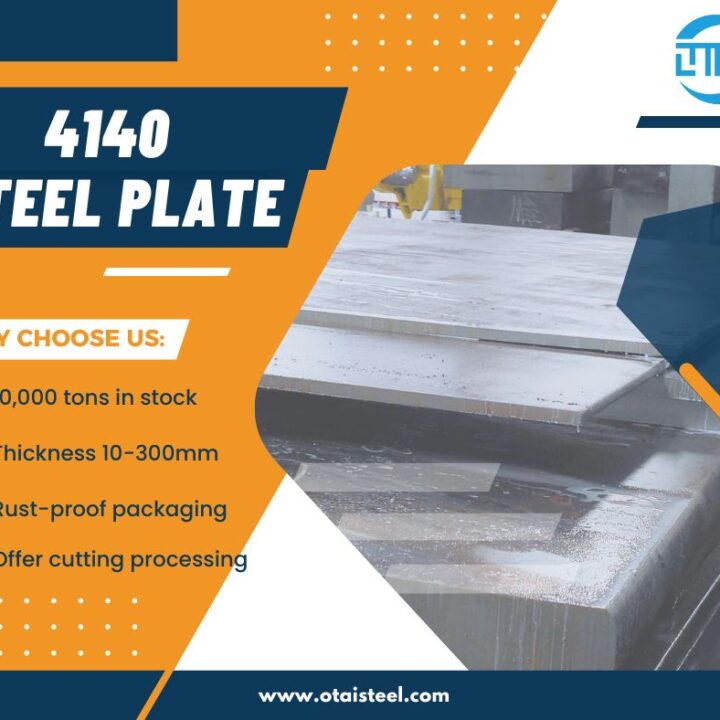
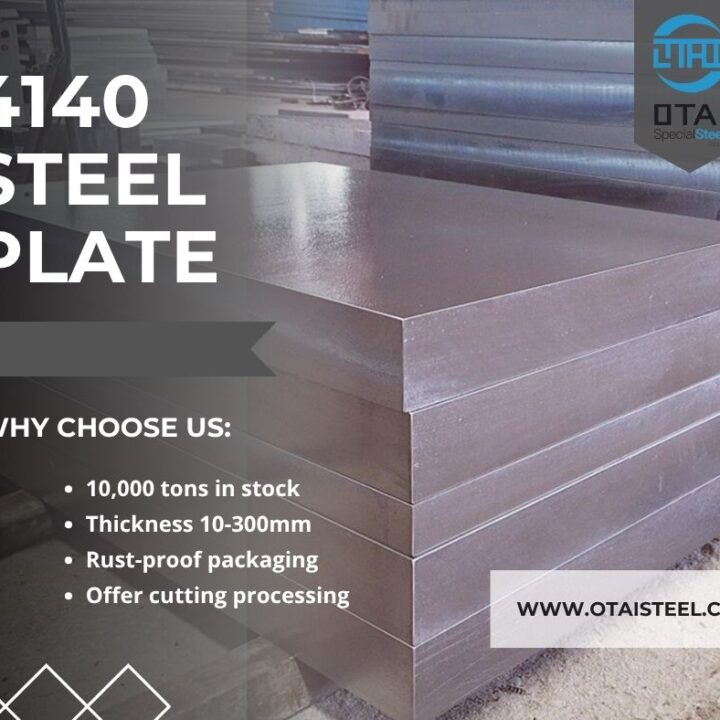
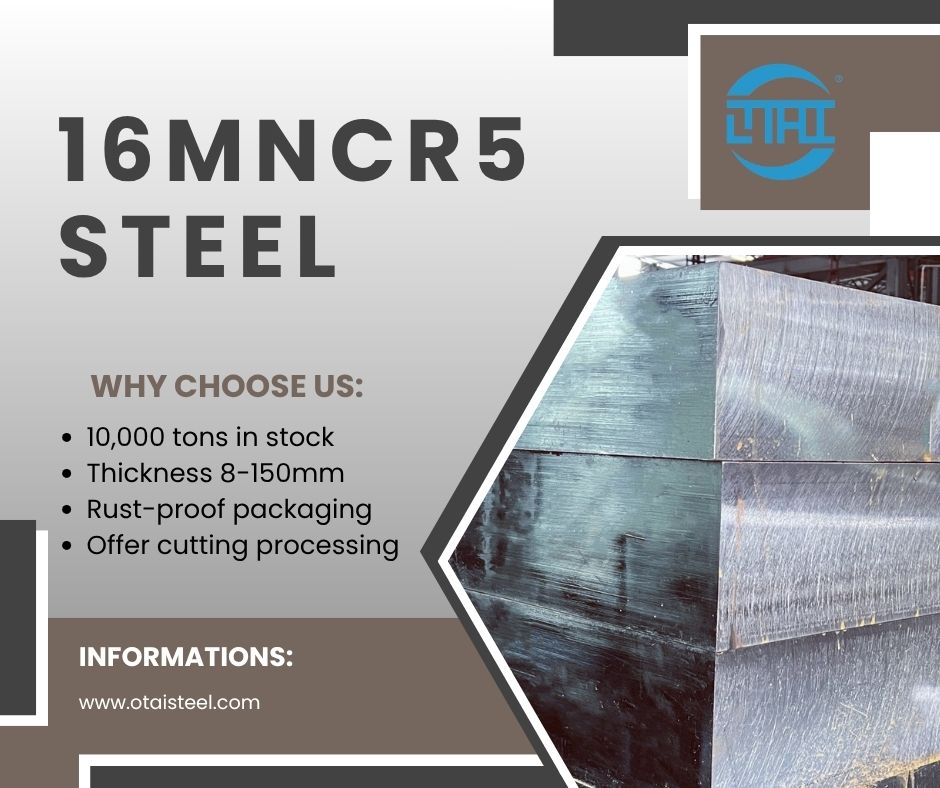
- 📏 16MnCr5 steel plate thickness range: 8–150mm in stock
- 📦 Large inventory for fast global delivery.
- ✂️ Precision cutting, machining, and heat treatment services.
- 🔬 Ultrasonic testing and third-party inspection available.
- 📦 Export-standard anti-rust packaging, steel strapping, and wooden cases.
- 🌍 Extensive experience supplying industrial manufacturers and Fortune Global 500 companies.
❓ FAQ – 16MnCr5 HRC
1. What is the typical 16MnCr5 HRC after heat treatment?
After proper carburizing, quenching, and tempering, the surface hardness typically reaches 58–62 HRC, while the core remains much tougher.
2. Why isn’t the entire component hardened to 60 HRC?
A fully hardened component would become brittle. A tough core helps absorb impact loads and prevents sudden fracture during operation.
3. Does deeper carburizing always produce higher HRC?
Not necessarily. Deeper carburizing increases case depth, but the final hardness also depends on quenching, tempering, and process control.
4. Which hardness test is most commonly used for 16MnCr5?
The Rockwell Hardness C (HRC) test is the standard method for measuring the surface hardness of carburized 16MnCr5 components.
5. Which industries commonly require high 16MnCr5 HRC values?
Automotive manufacturing, industrial gear production, mining equipment, agricultural machinery, and construction equipment all rely on hardened 16MnCr5 components.
🏁 Conclusion
The 16MnCr5 HRC value is a key indicator of the steel’s performance after heat treatment. By combining carburizing, quenching, and tempering, manufacturers create a hard, wear-resistant surface while preserving a tough and durable core. This balance allows 16MnCr5 to perform reliably in demanding applications that involve heavy loads, repeated contact stress, and long operating hours.
Selecting high-quality raw material and applying precise heat treatment controls are equally important for achieving consistent hardness and long service life. When these factors are carefully managed, 16MnCr5 remains one of the most dependable case-hardening steels for modern industrial engineering.