 4140 Steel Heat Treatment Chart – Process Guide for Optimal Performance
The 4140 steel heat treatment chart is an essential reference for engineers, heat treatment specialists, and manufacturers who need to achieve specific mechanical properties in alloy steel components. AISI 4140 is a chromium-molybdenum alloy steel known for its excellent strength, toughness, wear resistance, and hardenability.
By applying proper heat treatment processes, manufacturers can significantly modify the hardness, tensile strength, ductility, and fatigue resistance of 4140 steel. Whether producing shafts, gears, oilfield components, molds, or heavy machinery parts, understanding the correct heat treatment parameters is critical for achieving optimal performance.
This article provides a comprehensive 4140 steel heat treatment guide, including annealing, normalizing, hardening, quenching, tempering temperatures, and hardness charts.
📊 Overview of 4140 Alloy Steel
Engineers widely use AISI 4140, a medium-carbon chromium-molybdenum alloy steel, in engineering applications that require a combination of high strength and toughness.
| Property | Value |
|---|---|
| Steel Grade | AISI 4140 |
| Steel Type | Cr-Mo Alloy Steel |
| Carbon Content | 0.38–0.43% |
| Chromium Content | 0.80–1.10% |
| Molybdenum Content | 0.15–0.25% |
| Main Applications | Gears, shafts, bolts, oilfield tools |
The addition of chromium and molybdenum improves hardenability, making 4140 an excellent candidate for various heat treatment processes.
🔥 4140 Steel Heat Treatment Chart
The following 4140 steel heat treatment chart summarizes the most common heat treatment processes and their temperature ranges.
| Process | Temperature (°C) | Cooling Method |
|---|---|---|
| Annealing | 815–870 | Furnace Cool |
| Normalizing | 870–925 | Air Cool |
| Hardening (Austenitizing) | 830–870 | Oil Quench |
| Tempering | 200–700 | Air Cool |
Each process produces a unique combination of hardness and toughness depending on the desired application.
⚙️ Annealing Process for 4140 Steel
The 4140 steel annealing temperature is typically between 815°C and 870°C. Annealing softens the steel, improves machinability, and relieves internal stresses generated during forging or machining.
| Parameter | Typical Value |
|---|---|
| Heating Temperature | 815–870°C |
| Holding Time | 1 hour per 25 mm thickness |
| Cooling Method | Furnace cooling |
| Resulting Hardness | Approximately 197 HB max |
Annealed 4140 steel offers improved machinability and is often supplied in this condition before final heat treatment.
🔧 Normalizing Process
The 4140 steel normalizing process refines grain structure and improves mechanical uniformity.
| Parameter | Typical Value |
|---|---|
| Normalizing Temperature | 870–925°C |
| Holding Time | 1 hour per 25 mm thickness |
| Cooling Method | Air cooling |
| Typical Hardness | 200–250 HB |
Normalizing is often performed after forging to prepare the material for machining or subsequent hardening operations.
💪 4140 Steel Hardening Process
The 4140 steel hardening process involves heating the steel into the austenitizing range followed by rapid cooling.
| Parameter | Typical Value |
|---|---|
| Austenitizing Temperature | 830–870°C |
| Holding Time | 30–60 minutes |
| Quenching Medium | Oil |
| As-Quenched Hardness | 54–60 HRC |
The recommended 4140 steel quenching temperature ensures transformation to martensite, producing maximum hardness before tempering.
📈 4140 Steel Tempering Chart
After hardening, tempering is necessary to reduce brittleness and achieve the desired balance between hardness and toughness. The relationship between tempering temperature and hardness is one of the most important sections of any 4140 steel tempering chart.
| Tempering Temperature (°C) | Approximate Hardness (HRC) | Typical Application |
|---|---|---|
| 205 | 54–56 | Wear-resistant tools |
| 315 | 50–52 | High-strength components |
| 425 | 44–48 | Gears and shafts |
| 540 | 35–40 | Heavy machinery parts |
| 650 | 28–32 | High-toughness applications |
This 4140 steel tempering temperature vs hardness relationship allows engineers to select the ideal heat treatment condition based on performance requirements.
📊 4140 Steel Heat Treatment Hardness Chart
The following 4140 steel heat treatment hardness chart summarizes typical hardness values achieved after various processing conditions.
| Condition | Hardness |
|---|---|
| Annealed | 170–197 HB |
| Normalized | 200–250 HB |
| As Quenched | 54–60 HRC |
| Quenched & Tempered (High Strength) | 45–52 HRC |
| Quenched & Tempered (General Engineering) | 28–40 HRC |
The final 4140 steel hardness after heat treatment depends on section size, quenching efficiency, tempering temperature, and holding time.
⚙️ Mechanical Properties After Heat Treatment
Proper heat treatment significantly improves the performance of 4140 steel. The resulting mechanical properties vary according to hardness level and tempering temperature.
| Property | Typical Range |
|---|---|
| Tensile Strength | 850–1500 MPa |
| Yield Strength | 650–1300 MPa |
| Hardness | 28–60 HRC |
| Impact Toughness | Excellent |
| Fatigue Resistance | Very High |
These 4140 steel mechanical properties after heat treatment make the material suitable for demanding engineering environments where strength and reliability are critical.
🏭 Common Industrial Applications
The versatility of 4140 steel allows it to be used in a wide variety of industries. Different heat treatment conditions are selected depending on the application.
| Application | Typical Hardness |
|---|---|
| Transmission Gears | 40–50 HRC |
| Drive Shafts | 32–42 HRC |
| Oilfield Tools | 35–45 HRC |
| High-Strength Bolts | 30–40 HRC |
| Molds and Dies | 45–55 HRC |
By using the correct 4140 alloy steel heat treatment process, manufacturers can tailor performance characteristics to meet specific service requirements.
🏭 Company Advantages
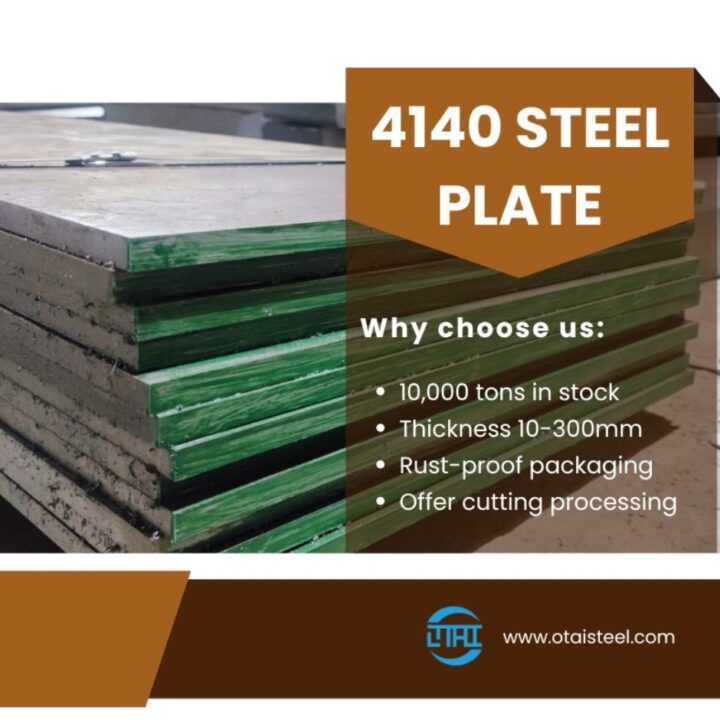
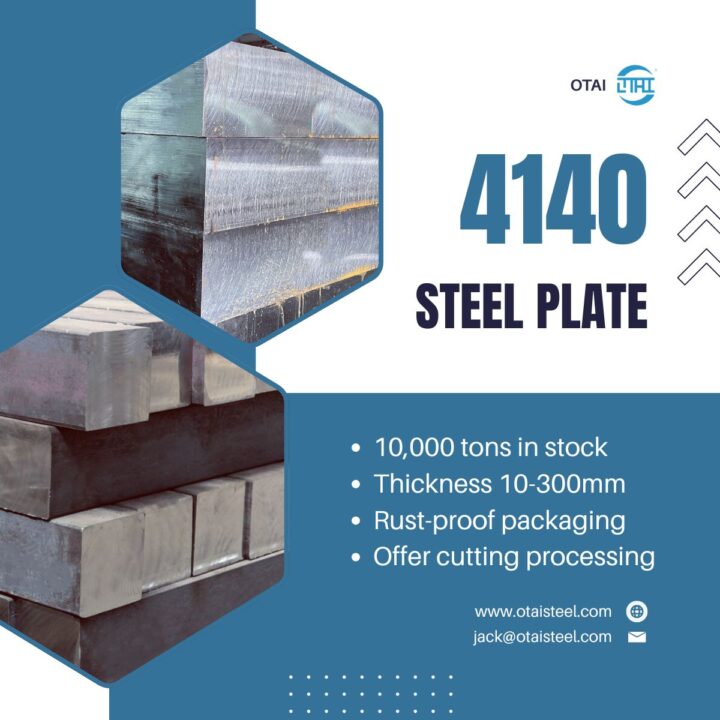
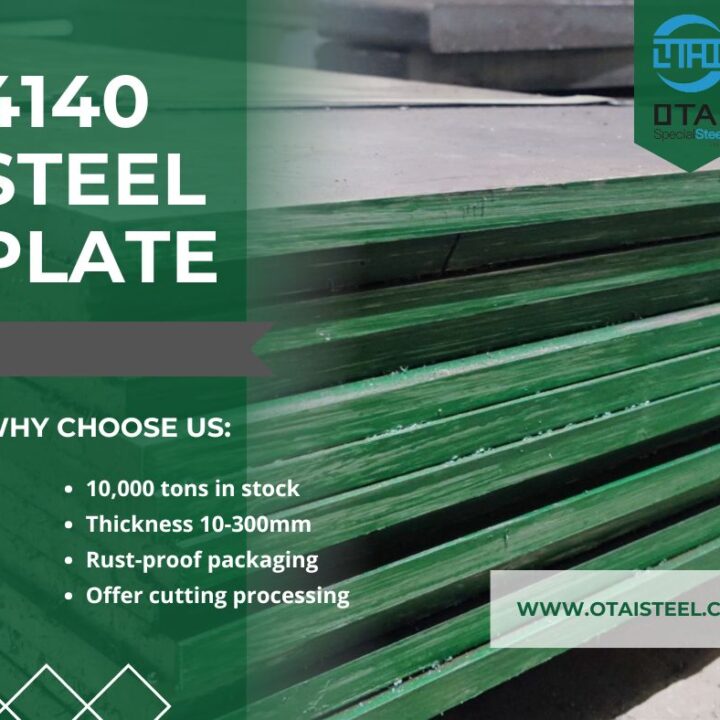
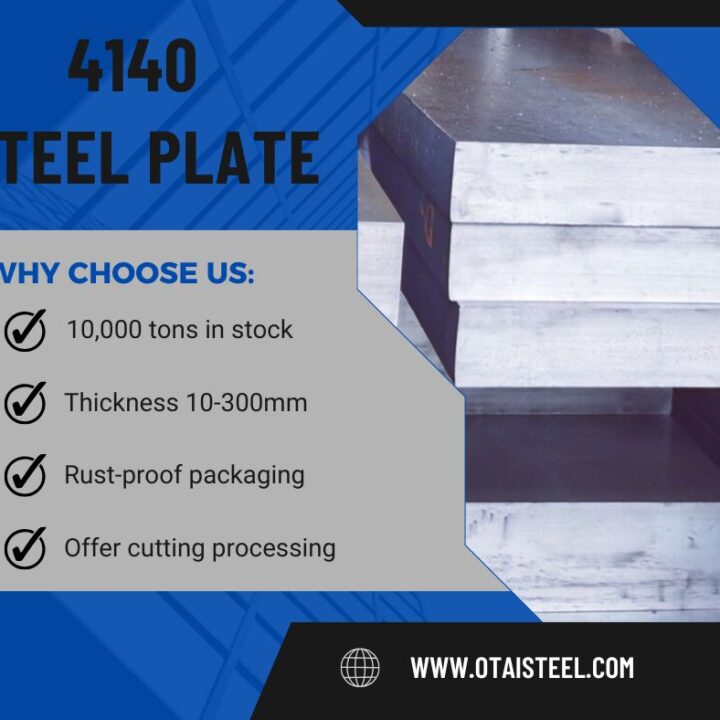
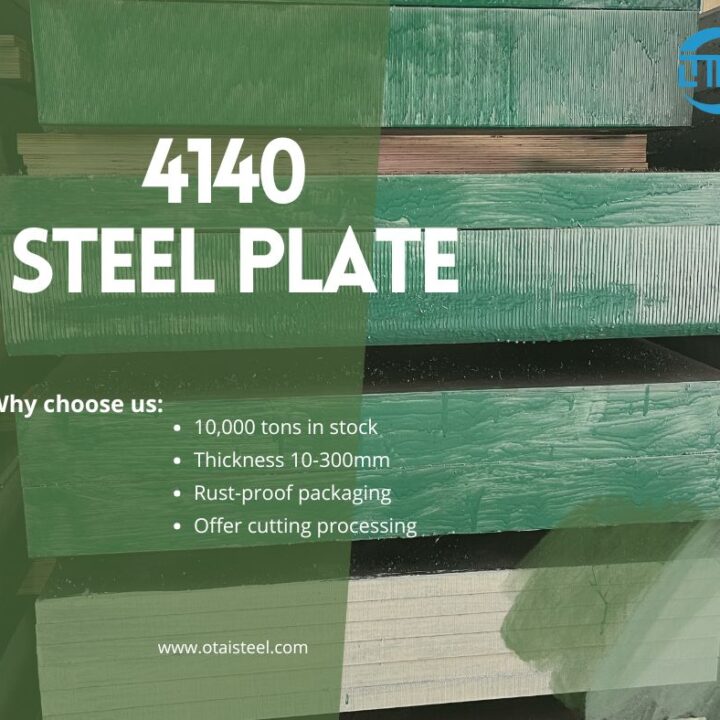
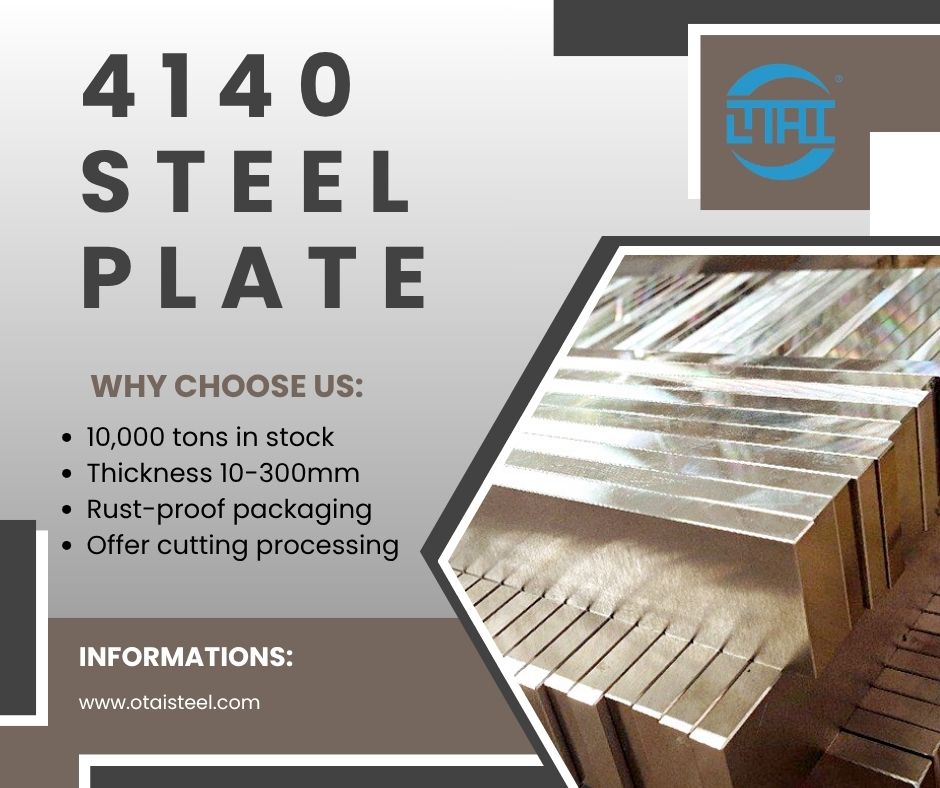
- More than 10,000 tons of alloy steel inventory available year-round
- Large stock of 4140 steel plates, round bars, and forged blocks
- Thickness range from 6 mm to 300 mm available
- Custom cutting according to drawings and specifications
- Professional heat treatment support
- Ultrasonic testing (UT) available
- Chemical composition and mechanical property verification
- Third-party inspection services including SGS
- Export-standard packaging for global shipment
- Extensive experience supplying international engineering companies
✅ Conclusion
A comprehensive 4140 steel heat treatment chart is essential for achieving the desired balance of hardness, strength, and toughness. Through annealing, normalizing, hardening, quenching, and tempering, manufacturers can customize the performance of 4140 steel for a wide range of industrial applications.
The most critical factor in heat treatment is selecting the appropriate tempering temperature after quenching. This determines the final hardness and mechanical properties of the material. Whether the goal is maximum wear resistance or enhanced toughness, the proper heat treatment cycle ensures reliable performance and long service life.
For gears, shafts, oilfield components, heavy machinery parts, and structural applications, 4140 steel continues to be one of the most versatile and trusted alloy steels available.
❓ FAQ
Q1: What is the recommended hardening temperature for 4140 steel?
A1: The recommended austenitizing temperature is typically 830–870°C before oil quenching.
Q2: What hardness can 4140 steel achieve after quenching?
A2: The as-quenched hardness is typically between 54 and 60 HRC.
Q3: What is the annealing temperature for 4140 steel?
A3: The recommended annealing range is 815–870°C followed by furnace cooling.
Q4: Why is tempering necessary after quenching?
A4: Tempering reduces brittleness, relieves internal stresses, and improves toughness while maintaining adequate hardness.
Q5: How does tempering temperature affect hardness?
A5: Higher tempering temperatures generally reduce hardness while increasing toughness and ductility.