 16MnCr5 Chemical Composition Equivalent – Global Grade Comparison
Understanding 16MnCr5 chemical composition equivalent grades is essential for engineers, purchasing managers, and manufacturers involved in international sourcing. Since steel standards vary across countries and regions, it is common to encounter situations where a direct 16MnCr5 designation is unavailable. In such cases, selecting an appropriate equivalent material ensures consistent mechanical properties, heat treatment performance, and component reliability.
16MnCr5 is one of the most widely used carburizing steels in Europe. It offers excellent hardenability, wear resistance, and fatigue strength after carburizing and heat treatment. Because of these characteristics, manufacturers extensively use it for gears, shafts, pinions, sprockets, bushings, and transmission components.
This article explains the 16MnCr5 chemical composition, compares international equivalents, and discusses how to choose suitable substitute grades for industrial applications.
📊 What Is 16MnCr5 Steel?
16MnCr5 is a low-carbon chromium alloy carburizing steel standardized under EN 10084. Engineers specifically design the material to develop a hard wear-resistant surface while maintaining a tough and ductile core after carburizing and quenching.
| Property | Value |
|---|---|
| Steel Grade | 16MnCr5 |
| Material Number | 1.7131 |
| Steel Type | Carburizing Alloy Steel |
| Standard | EN 10084 |
| Primary Applications | Gears, shafts, pinions, bushings |
Its excellent response to heat treatment makes it one of the most commonly specified steels in automotive and industrial transmission systems.
🧪 16MnCr5 Chemical Composition
The performance of 16MnCr5 is primarily determined by its balanced alloy composition.
| Element | Content (%) |
|---|---|
| Carbon (C) | 0.14 – 0.19 |
| Silicon (Si) | ≤ 0.40 |
| Manganese (Mn) | 1.00 – 1.30 |
| Chromium (Cr) | 0.80 – 1.10 |
| Phosphorus (P) | ≤ 0.025 |
| Sulfur (S) | ≤ 0.035 |
This 16MnCr5 alloy steel composition provides an ideal balance between hardenability, toughness, and machinability.
🌍 International Equivalent Grades of 16MnCr5
One of the most common questions among buyers is identifying the correct 16MnCr5 equivalent grade when sourcing steel from different countries.
| Country/Standard | Equivalent Grade |
|---|---|
| Europe (EN) | 16MnCr5 (1.7131) |
| Germany (DIN) | 16MnCr5 |
| USA (AISI/SAE) | 5115 / 5120 (approximate) |
| Japan (JIS) | SCr420 |
| China (GB) | 20CrMnTi (similar application) |
| France (AFNOR) | 16MC5 |
| Italy (UNI) | 16MC5 |
These materials are often considered 16MnCr5 international equivalents, although slight differences in chemistry and mechanical properties may exist.
⚖️ Comparison of 16MnCr5 and Equivalent Materials
Although several international grades can be used as substitutes, engineers should understand the differences before replacing one material with another. Chemical composition, hardenability, and heat treatment behavior may vary slightly depending on the standard.
| Grade | Carbon (%) | Chromium (%) | Typical Use |
|---|---|---|---|
| 16MnCr5 | 0.14–0.19 | 0.80–1.10 | Gears, shafts, pinions |
| AISI 5115 | 0.13–0.18 | 0.70–0.90 | Automotive gears |
| AISI 5120 | 0.18–0.23 | 0.70–0.90 | Transmission parts |
| SCr420 | 0.18–0.23 | 0.90–1.20 | Automotive components |
| 20CrMnTi | 0.17–0.24 | 1.00–1.30 | Heavy-duty gears |
When evaluating a 16MnCr5 material equivalent comparison, it is important to compare not only the chemical composition but also the required mechanical performance after heat treatment.
🔥 Heat Treatment Characteristics of Equivalent Grades
One reason why 16MnCr5 remains popular worldwide is its excellent response to carburizing and quenching. Most equivalent grades are selected because they can achieve similar case hardness and core toughness.
| Property | 16MnCr5 | Typical Equivalent Grades |
|---|---|---|
| Carburizing Temperature | 880–950°C | Similar |
| Quenching Method | Oil | Oil |
| Surface Hardness | 58–62 HRC | 58–62 HRC |
| Core Toughness | Excellent | Very Good to Excellent |
Because of these characteristics, many engineers use these grades as a 16MnCr5 carburizing steel equivalent when sourcing globally.
🏭 Common Applications of 16MnCr5 and Equivalent Grades
The popularity of 16MnCr5 and its equivalents comes from their ability to withstand repeated loading, friction, and fatigue in power transmission systems.
| Application | Reason for Selection |
|---|---|
| Automotive Gears | High wear resistance |
| Gear Shafts | Excellent fatigue strength |
| Pinions | Hard surface and tough core |
| Bushings | Improved wear life |
| Industrial Gearboxes | Long service life |
| Agricultural Machinery | Impact resistance |
Whether engineers designate the material as 16MnCr5, SCr420, or AISI 5120, the objective remains the same: achieving a durable wear-resistant surface combined with a tough load-bearing core.
🔍 How to Choose the Right Equivalent Grade
Selecting the best 16MnCr5 steel equivalent material requires evaluating several technical factors.
- Required surface hardness after carburizing
- Core strength requirements
- Operating load conditions
- Heat treatment capability
- Availability in local markets
- Customer specification requirements
- Compliance with regional standards
Engineers should avoid selecting substitutes solely based on chemistry. Mechanical properties, heat treatment response, and manufacturing requirements must also be considered.
📈 Advantages of Using 16MnCr5 Steel
The widespread use of 16MnCr5 is not only due to its availability but also because of its excellent combination of mechanical performance and manufacturing flexibility. Compared with many conventional carbon steels, 16MnCr5 offers superior hardenability and wear resistance after carburizing.
| Advantage | Benefit |
|---|---|
| Excellent Hardenability | Improved heat treatment response |
| High Surface Hardness | Better wear resistance |
| Tough Core Structure | Enhanced impact resistance |
| Good Machinability | Efficient manufacturing |
| Cost-Effective Performance | Lower production costs |
| Global Availability | Easy sourcing worldwide |
These advantages explain why 16MnCr5 remains one of the most popular carburizing steels in automotive and industrial transmission manufacturing.
🏭 Company Advantages
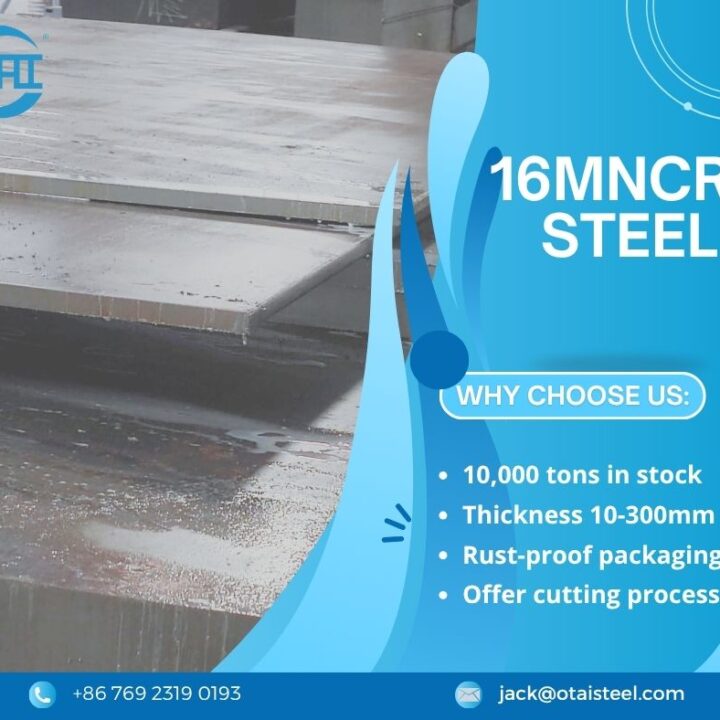
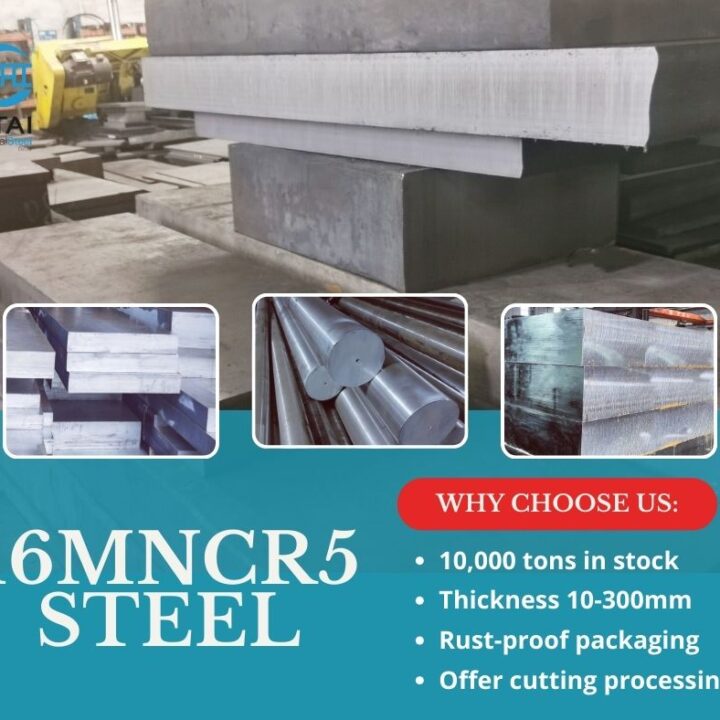
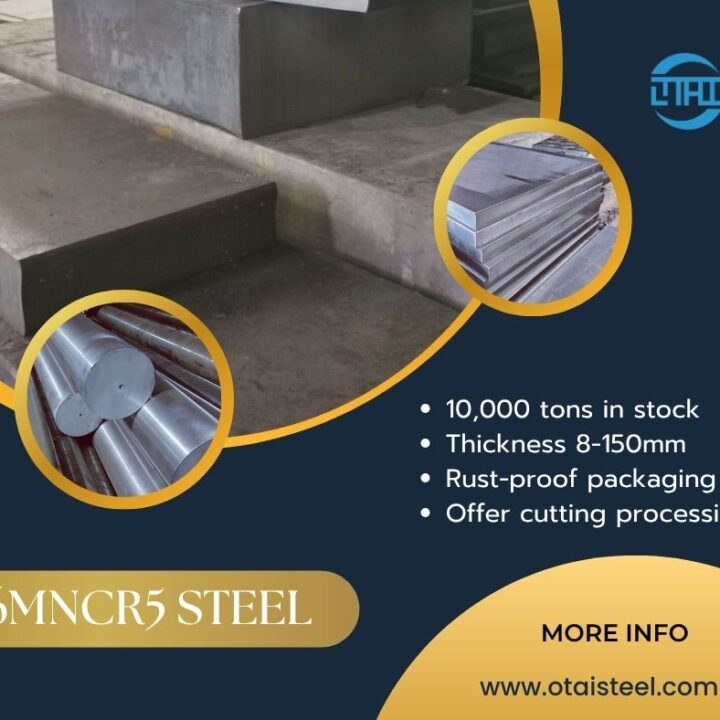
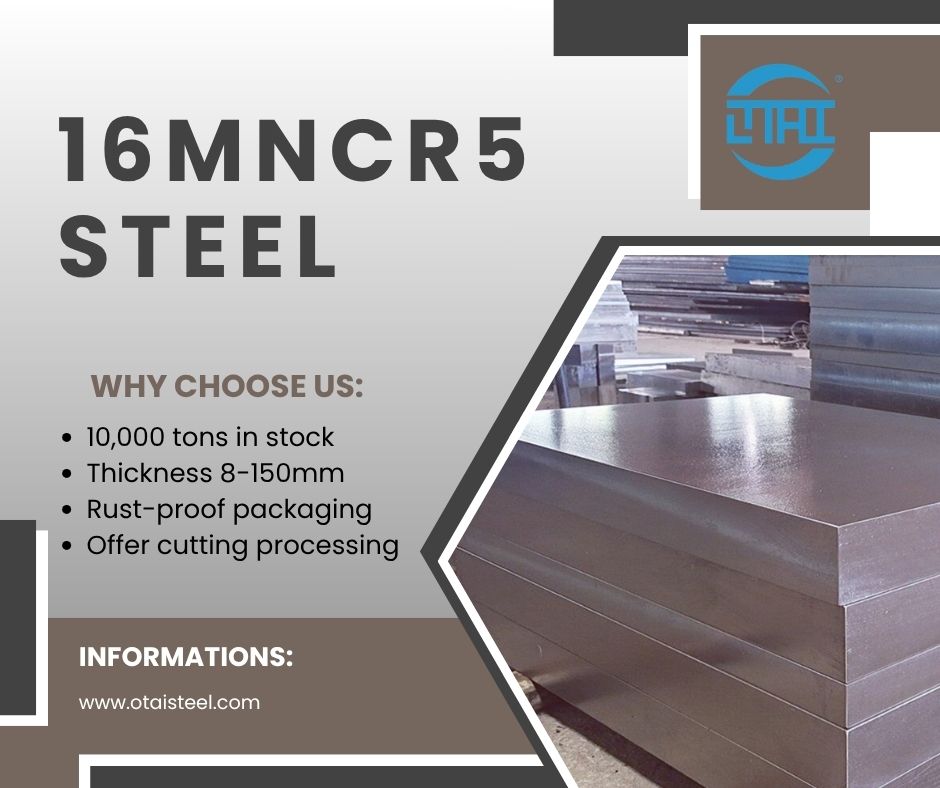
Otai Special Steel supplies high-quality 16MnCr5 steel products to customers worldwide. We provide reliable material solutions for manufacturers, engineering companies, and steel distributors.
- More than 10,000 tons of steel inventory available year-round
- 8–150mm thickness 16MnCr5 steel plates available in stock
- Round bars, forged blocks, flat bars, and steel plates available
- Custom cutting services according to customer drawings
- Professional heat treatment support
- Ultrasonic testing (UT) available for quality assurance
- Chemical composition verification and mechanical testing
- Third-party inspection services including SGS
- Export-standard packaging and logistics solutions
- Extensive experience supplying global industrial customers
Our technical team can help customers identify the most suitable 16MnCr5 alternative grade or equivalent material based on specific project requirements.
✅ Conclusion
Understanding 16MnCr5 chemical composition equivalent grades is essential for global sourcing and engineering projects. While 16MnCr5 remains the standard European carburizing steel, engineers can often use several international equivalents—such as AISI 5115, AISI 5120, SCr420, and 20CrMnTi—as substitutes when they properly evaluate them.
The key to successful material substitution is comparing not only the 16MnCr5 chemical composition but also heat treatment characteristics, mechanical properties, and application requirements. By carefully reviewing the available data, engineers can select equivalent grades that deliver reliable performance, long service life, and cost-effective production.
For gears, shafts, pinions, and other transmission components, 16MnCr5 and its international equivalents continue to provide an excellent balance of hardness, toughness, and wear resistance.
❓ FAQ
Q1: What is the closest USA equivalent to 16MnCr5?
A1: AISI 5115 and AISI 5120 are commonly considered the closest U.S. equivalents, although minor chemical differences may exist.
Q2: What is the Japanese equivalent of 16MnCr5?
A2: SCr420 is generally regarded as the closest JIS equivalent for carburizing applications.
Q3: Is 20CrMnTi equivalent to 16MnCr5?
A3: Manufacturers often use 20CrMnTi as a functional substitute because it offers similar carburizing and mechanical performance, though the chemical composition is not identical.
Q4: What is the material number of 16MnCr5?
A4: The European material number for 16MnCr5 is 1.7131.
Q5: What hardness can 16MnCr5 achieve after carburizing?
A5: Typical surface hardness after carburizing and quenching ranges from 58 to 62 HRC.