 Tapping 4140 Steel: Best Practices for Machining Strong Alloy Threads
Tapping 4140 steel requires careful control of cutting speed, tool selection, lubrication, and heat treatment condition because this chromium-molybdenum alloy steel offers high strength and toughness. Although 4140 steel machines relatively well in the annealed state, tapping becomes much more difficult after hardening due to increased hardness and cutting resistance.
Manufacturers commonly tap 4140 steel when producing:
- Hydraulic components
- Oil & gas fittings
- Aerospace fasteners
- Machine shafts
- Tool holders
- Industrial flanges
- Automotive performance parts
To achieve clean and accurate internal threads, machinists must optimize:
- Tap geometry
- Drill size
- Cutting speed
- Lubrication
- Chip evacuation
- Workpiece hardness
Proper tapping techniques help reduce:
- Broken taps
- Poor thread quality
- Excessive tool wear
- Surface tearing
- Dimensional inaccuracies
🔍 Why 4140 Steel Can Be Difficult to Tap
4140 steel contains chromium and molybdenum, which significantly improve strength and hardenability. These alloying elements also increase cutting resistance during machining operations.
Typical Chemical Composition of 4140 Steel
| Element | Content (%) | Main Function |
|---|---|---|
| Carbon (C) | 0.38 – 0.43 | Increases hardness and strength |
| Chromium (Cr) | 0.80 – 1.10 | Improves wear resistance |
| Molybdenum (Mo) | 0.15 – 0.25 | Enhances toughness |
| Manganese (Mn) | 0.75 – 1.00 | Improves hardenability |
| Silicon (Si) | 0.15 – 0.35 | Adds strength |
These alloying elements create a steel with excellent mechanical properties, but they also increase friction and cutting load during tapping.
⚙️ Machinability of 4140 Steel
The machinability of 4140 steel depends heavily on hardness condition.
| Condition | Typical Hardness | Tapping Difficulty |
|---|---|---|
| Annealed | 10 – 20 HRC | Easy |
| Pre-Hardened | 28 – 32 HRC | Moderate |
| Hardened | 40 – 50 HRC | Difficult |
| Fully Hardened | Above 50 HRC | Very Difficult |
Most machinists prefer tapping 4140 steel before final heat treatment whenever possible.
Engineering Insight: Once hardness exceeds approximately 35 HRC, tap wear increases rapidly and thread quality becomes harder to maintain.
🔩 Choosing the Right Tap for 4140 Steel
Tool selection strongly affects thread quality and tool life.
Recommended Tap Materials
| Tap Material | Performance |
|---|---|
| High-Speed Steel (HSS) | Suitable for softer 4140 |
| Cobalt HSS | Better heat resistance |
| Powder Metal Tap | Excellent wear resistance |
| Carbide Tap | Best for hardened steel |
Cobalt and powder metal taps are popular choices because they handle heat and cutting pressure more effectively than standard HSS taps.
⚙️ Tap Geometry Recommendations
Different tap geometries improve chip evacuation and cutting stability.
| Tap Type | Best Application |
|---|---|
| Spiral Point Tap | Through holes |
| Spiral Flute Tap | Blind holes |
| Form Tap | Ductile materials and stronger threads |
🔹 Spiral Point Taps
Spiral point taps push chips forward, reducing chip clogging in through-hole operations.
🔹 Spiral Flute Taps
Spiral flute taps pull chips upward, making them ideal for blind-hole tapping in 4140 steel.
📏 Recommended Tapping Speeds for 4140 Steel
Cutting speed significantly influences tool life and thread finish.
| Material Condition | Recommended Speed |
|---|---|
| Annealed 4140 | 10 – 20 SFM |
| Pre-Hardened 4140 | 5 – 12 SFM |
| Hardened 4140 | 2 – 6 SFM |
Lower cutting speeds help reduce:
- Excessive heat generation
- Tap breakage
- Tool wear
- Thread galling
Practical Tip: Slower speeds combined with high-quality cutting oil often produce cleaner threads and longer tap life in alloy steels.
🧴 Importance of Lubrication During Tapping
Lubrication is extremely important when tapping 4140 steel because alloy steels generate high cutting friction.
Recommended Cutting Fluids
| Lubricant Type | Main Benefit |
|---|---|
| Sulfurized Cutting Oil | Excellent anti-galling performance |
| High-Pressure Tapping Fluid | Better heat reduction |
| Synthetic Coolant | Cleaner operation for CNC systems |
Good lubrication helps:
- Improve thread finish
- Reduce cutting temperature
- Extend tool life
- Prevent chip welding
🔥 Heat Treatment Effects on Tapping
Heat treatment dramatically changes machining behavior.
⚙️ Annealed 4140 Steel
Annealed material offers:
- Better machinability
- Lower cutting forces
- Easier chip formation
- Longer tap life
Typical Annealing Parameters
| Process | Temperature |
|---|---|
| Annealing | 815 – 870°C |
| Cooling Method | Furnace cooling |
Annealed 4140 is usually the preferred condition for extensive threading operations.
⚙️ Tapping Hardened 4140 Steel
Tapping hardened 4140 becomes increasingly difficult as hardness rises.
Common Problems
| Problem | Cause |
|---|---|
| Broken taps | Excessive cutting load |
| Rough threads | Tool wear |
| Work hardening | High friction |
| Poor dimensional accuracy | Tool deflection |
Machinists often use carbide taps and rigid CNC setups for hardened materials.
🔧 Thread Quality Considerations
High-quality internal threads require precise process control.
Important Factors
| Factor | Influence |
|---|---|
| Proper drill size | Correct thread percentage |
| Rigid setup | Reduces vibration |
| Controlled feed | Improves thread accuracy |
| Chip evacuation | Prevents tap breakage |
Using the correct tap drill size is especially important because excessive thread engagement increases cutting torque dramatically.
📊 Recommended Drill Sizes and Thread Engagement
Many machinists reduce thread engagement slightly to lower tapping force.
| Thread Engagement | Machining Difficulty |
|---|---|
| 50 – 60% | Easier tapping |
| 65 – 75% | Balanced performance |
| Above 80% | High tapping torque |
Reducing thread percentage often improves productivity without significantly reducing thread strength.
🚗 Industrial Applications Requiring Tapped 4140 Components
4140 steel is commonly threaded for high-strength industrial assemblies.
| Industry | Components |
|---|---|
| Oil & Gas | Valve bodies, drill components |
| Aerospace | Structural fasteners |
| Automotive | Performance engine parts |
| Industrial Machinery | Hydraulic systems |
| Tooling | Precision holders and adapters |
🔹 Hydraulic Component Example
Hydraulic cylinders and fittings often use tapped 4140 steel because the material provides:
- Excellent pressure resistance
- Strong thread integrity
- Good fatigue performance
- Reliable dimensional stability
These properties help prevent thread failure under cyclic pressure loading.
⚖️ Tapping 4140 vs Mild Steel
Compared with mild steel, 4140 requires more careful machining practices.
| Property | 4140 Steel | Mild Steel |
|---|---|---|
| Strength | Much Higher | Lower |
| Tapping Difficulty | Higher | Easier |
| Tool Wear | Greater | Lower |
| Heat Generation | Higher | Lower |
| Thread Strength | Excellent | Moderate |
Although tapping 4140 is more demanding, the resulting threaded components provide far superior mechanical performance.
🏭 Company Advantages
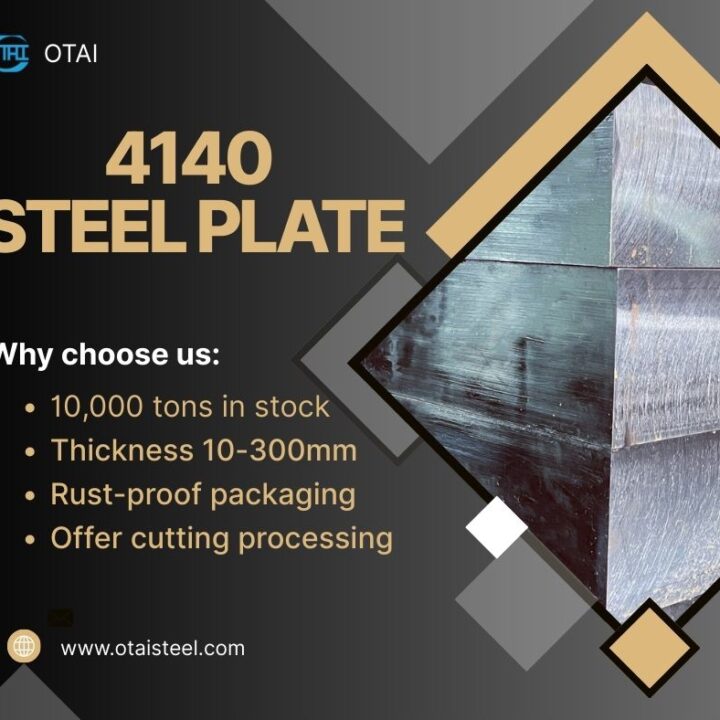
Otai Special Steel supplies premium-quality 4140 alloy steel for demanding machining and engineering applications.
- Large inventory and stable supply
- Custom cutting and heat treatment services
- Ultrasonic testing (UT) and chemical composition verification
- Third-party inspection support (SGS)
- Professional export packaging and logistics support
We support customers in oil & gas, aerospace, industrial machinery, automotive, and precision engineering industries with reliable material quality and technical assistance.
❓ FAQ
Q1: Is 4140 steel difficult to tap?
A1: Yes. Its high strength and hardenability increase cutting resistance, especially after heat treatment.
Q2: What tap works best for 4140 steel?
A2: Cobalt HSS, powder metal, and carbide taps usually provide the best performance.
Q3: Can hardened 4140 steel be tapped?
A3: Yes, but machining becomes much more difficult above 35–40 HRC hardness.
Q4: Why is lubrication important when tapping 4140 steel?
A4: Proper lubrication reduces friction, heat generation, tool wear, and thread galling.
Q5: What cutting speed is recommended for tapping annealed 4140 steel?
A5: Many machinists use approximately 10–20 SFM depending on tap size and setup rigidity.