 Difference Between 16MnCr5 and 20MnCr5 – Detailed Specifications, Applications, and Practical Selection
Understanding the difference between 16MnCr5 and 20MnCr5 is essential for engineers, manufacturers, and material buyers working in automotive, industrial, and heavy machinery sectors. Both are low-carbon chromium-manganese alloy steels commonly used for case hardening and carburizing, but subtle differences in chemical composition, mechanical properties, and performance determine the best grade for specific applications. Choosing the right steel can influence component life, fatigue resistance, machining efficiency, and cost-effectiveness.
🔍 Overview of 16MnCr5 and 20MnCr5
16MnCr5 and 20MnCr5 belong to the chromium-manganese low-carbon steel family. They share common advantages:
- Excellent surface hardness after carburizing
- Good core toughness
- Strong wear resistance and fatigue performance
However, they differ in carbon content and alloying balance, which affects machinability, hardenability, and core strength.
- 16MnCr5: Lower carbon content, better machinability, higher core toughness, suitable for precision components like automotive pinions and shafts.
- 20MnCr5: Higher carbon content, higher core strength, slightly lower machinability, suitable for heavy-duty components subjected to high loads.
| Grade | Carbon Content (%) | Typical Applications | Industry Use |
|---|---|---|---|
| 16MnCr5 | 0.14 – 0.19 | Shafts, pinions, small gears | Automotive, precision machinery |
| 20MnCr5 | 0.18 – 0.23 | Axles, heavy-duty gears, industrial reducers | Heavy machinery, construction, automotive |
16MnCr5 is preferred for components where precision machining and fatigue resistance are critical, while 20MnCr5 is chosen for parts subjected to higher torsional or bending stresses.
🧪 Chemical Composition Comparison
| Element | 16MnCr5 (%) | 20MnCr5 (%) |
|---|---|---|
| Carbon (C) | 0.14 – 0.19 | 0.18 – 0.23 |
| Silicon (Si) | 0.17 – 0.37 | 0.17 – 0.37 |
| Manganese (Mn) | 1.00 – 1.30 | 1.10 – 1.40 |
| Chromium (Cr) | 0.80 – 1.10 | 0.80 – 1.10 |
| Phosphorus (P) | ≤ 0.025 | ≤ 0.025 |
| Sulfur (S) | ≤ 0.035 | ≤ 0.035 |
Technical implications:
- Carbon: Higher carbon in 20MnCr5 increases core strength after quenching.
- Manganese: Slightly higher in 20MnCr5, improving hardenability and resistance to wear under heavy load.
- Machinability: Lower carbon in 16MnCr5 enhances ease of machining, reducing tool wear and improving surface finish.
📊 Mechanical Properties
Mechanical properties differ based on heat treatment. Both grades achieve high surface hardness after carburizing, but core properties vary:
| Property | 16MnCr5 | 20MnCr5 |
|---|---|---|
| Tensile Strength (MPa) | 800 – 1200 | 850 – 1300 |
| Yield Strength (MPa) | 550 – 850 | 600 – 900 |
| Surface Hardness (HRC) | 58 – 62 | 60 – 63 |
| Core Toughness | Excellent | Good |
| Machinability | Very Good | Good |
🔹 Practical Implications
- 16MnCr5: Ideal for precision shafts, small gears, and components with tight tolerances, where machinability and fatigue life are crucial.
- 20MnCr5: Suited for heavy-load gears, axles, and industrial reducers, where higher core strength ensures longevity under stress.
🔥 Heat Treatment Considerations
Both steels respond well to carburizing, quenching, and tempering, but treatment parameters must match alloy content for optimal results.
| Process | 16MnCr5 | 20MnCr5 |
|---|---|---|
| Normalizing | 870 – 900°C | 880 – 910°C |
| Carburizing | 880 – 980°C | 880 – 1000°C |
| Hardening | 820 – 860°C | 830 – 870°C |
| Tempering | 150 – 200°C | 150 – 220°C |
Engineering tip: Components requiring both high surface hardness and ductile cores benefit from precise control of carburizing time, quenching medium, and tempering temperature. Improper tempering can lead to brittleness or premature failure.
⚙️ Applications and Industry Use
| Industry | 16MnCr5 Applications | 20MnCr5 Applications |
|---|---|---|
| Automotive | Small gears, shafts, pinions, differential components | Heavy-duty gear wheels, drive axles, suspension components |
| Industrial Machinery | Precision spindles, rollers, couplings | Large gear reducers, industrial shafts, mining equipment |
| Heavy Equipment | Light structural components | Structural shafts, heavy-duty connectors |
Application insights:
- 16MnCr5: Preferred for light to medium loads where accuracy and surface finish are critical.
- 20MnCr5: Chosen for high-load, fatigue-prone environments, such as construction machinery, heavy-duty pumps, and large industrial gearboxes.
🔧 Practical Selection Guidelines
- Load and Fatigue Considerations: Use 20MnCr5 for heavily loaded components.
- Machining and Manufacturing: Select 16MnCr5 for complex geometries and precision machining.
- Heat Treatment Constraints: Both allow carburizing; temper carefully to maintain ductility and toughness.
- Cost Efficiency: 16MnCr5 generally reduces machining costs due to lower tool wear and easier shaping.
- Component Life: Consider expected fatigue cycles; 16MnCr5 often extends life in precision automotive applications.
🏭 Company Advantages
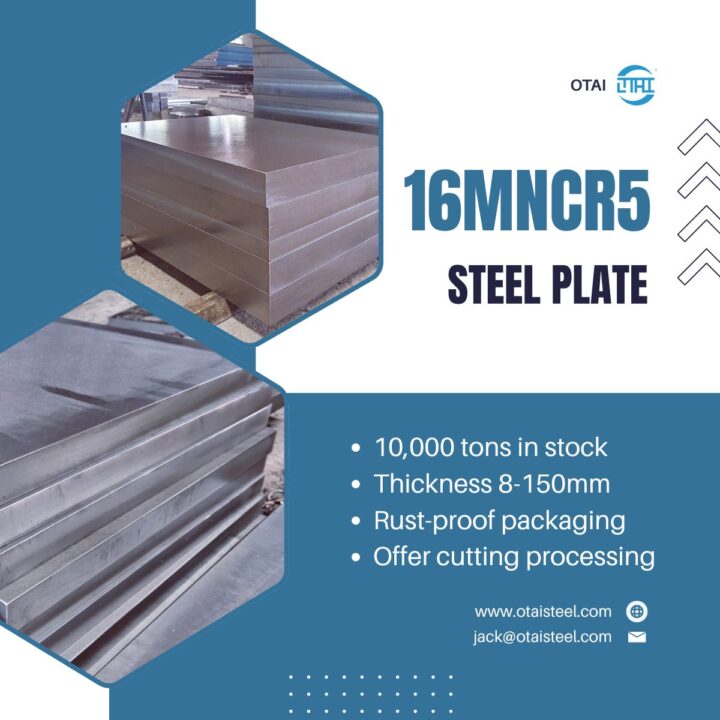
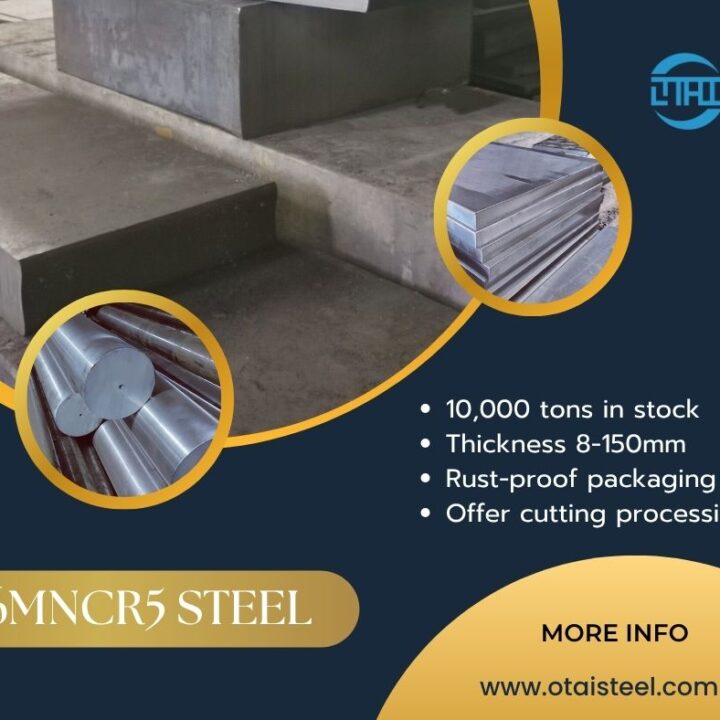
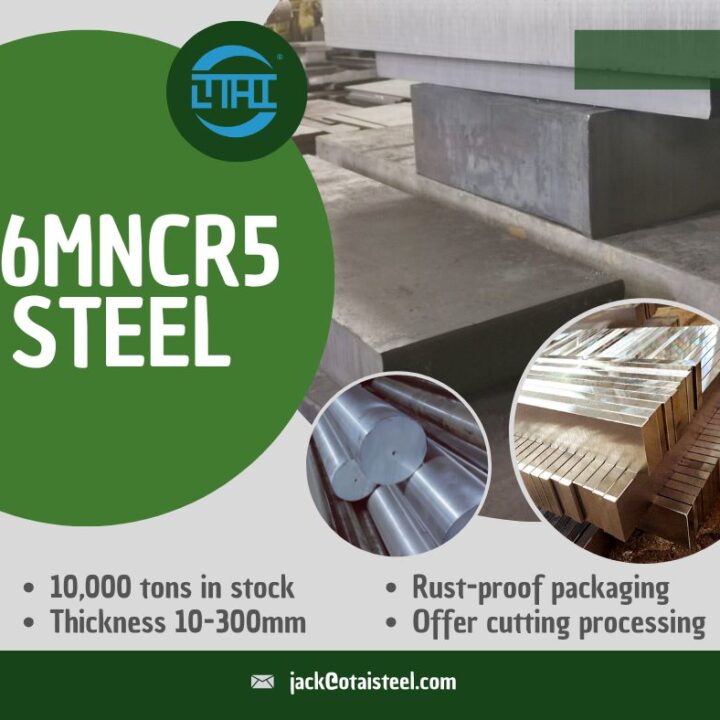
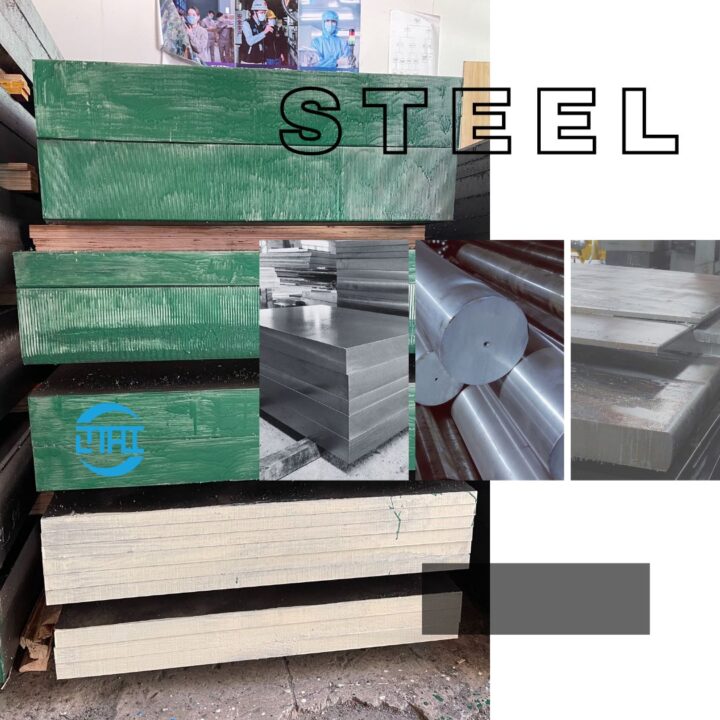
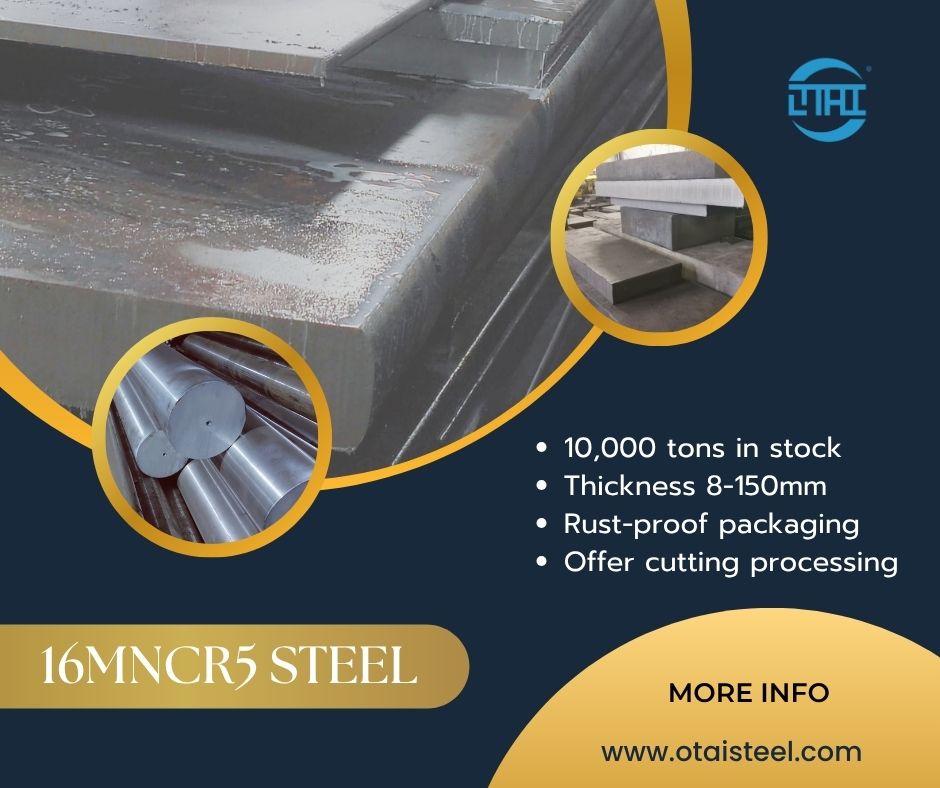
Otai Special Steel supplies high-quality 16MnCr5 and 20MnCr5 plates, bars, and blocks for critical engineering applications.
Advantages include:
- Large inventory year-round
- 8–150mm thickness plates in stock
- Custom cutting, heat treatment, and machining support
- Ultrasonic testing (UT) and chemical verification
- Third-party inspection support (SGS)
- Professional packaging for export and fast delivery
We serve automotive, heavy machinery, industrial equipment, and precision engineering sectors worldwide.
❓ FAQ
Q1: What is the main difference between 16MnCr5 and 20MnCr5?
A1: 16MnCr5 has lower carbon content, better machinability, and higher core toughness. 20MnCr5 has higher carbon and manganese, increasing core strength for heavier loads.
Q2: Can both grades be carburized and hardened?
A2: Yes, both grades respond well to carburizing, quenching, and tempering, achieving a high surface hardness and durable core.
Q3: Which grade is better for precision gears and small shafts?
A3: 16MnCr5 is preferred for machinability, precision tolerances, and fatigue resistance.
Q4: Which grade is better for heavy-duty industrial machinery?
A4: 20MnCr5 is ideal for high-load shafts, axles, and large gears due to superior core strength.
Q5: Can these grades be interchanged?
A5: They are similar but not identical. Selection should consider load conditions, fatigue requirements, and machining capabilities.