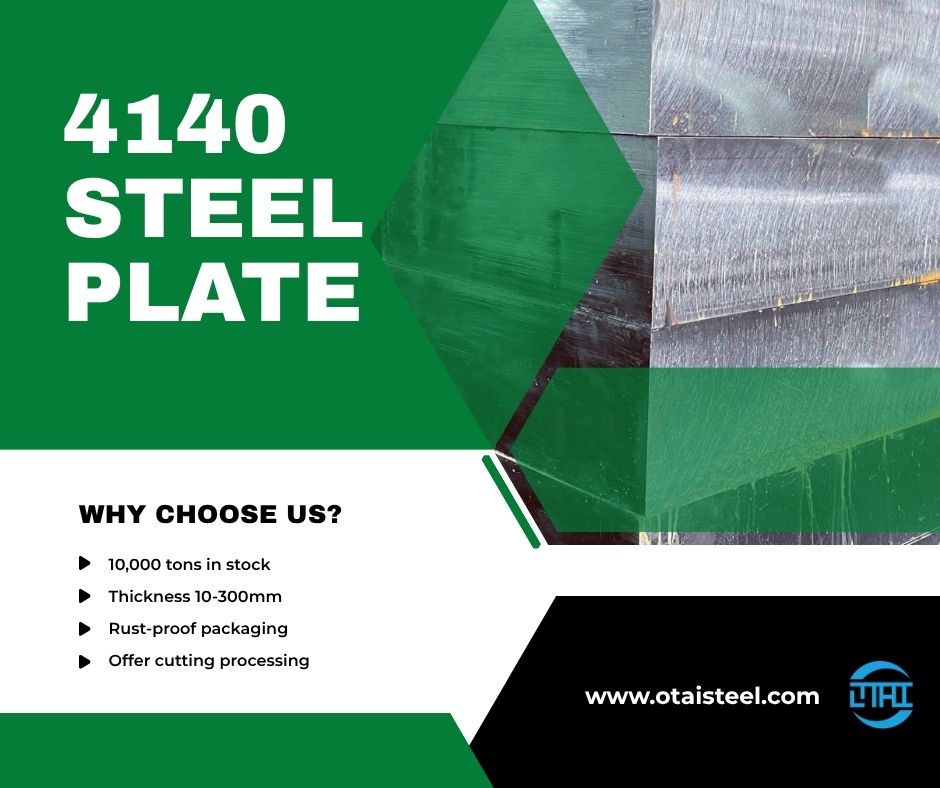
 4140 Steel Equivalent in EN Series: A Comprehensive Guide
🔍 Introduction
4140 steel is a popular alloy steel that is used across a variety of industries due to its excellent strength, toughness, and wear resistance. Commonly used in applications like gears, shafts, crankshafts, and axles, 4140 steel is well-known for its ability to withstand high-stress environments.
However, depending on the region or the material standards, there may be equivalent grades of 4140 steel that meet similar mechanical and chemical properties. In Europe, the EN (European Norm) series provides several steel grades that are equivalent to 4140 steel, making it easier to source the right material when working with European standards.
In this article, we will explore the 4140 steel equivalents in the EN series, discuss their chemical composition, and help you identify the right materials for your needs.
🏷️ What is 4140 Steel?
Before diving into the EN equivalents, let’s first understand 4140 steel. It is a medium-carbon alloy steel containing:
- Chromium (Cr): 0.80–1.10%
- Manganese (Mn): 0.60–0.90%
- Carbon (C): 0.38–0.43%
- Molybdenum (Mo): 0.15–0.25%
These elements provide 4140 steel with a range of excellent mechanical properties, including:
- High tensile strength (typically up to 100 ksi)
- Good wear resistance
- Toughness that allows it to resist shock and impact
- Hardening ability for case-hardening applications
However, when working within different regions or adhering to specific material standards, you may need to use 4140 steel equivalents to match European specifications. Below are some EN series equivalents to 4140 steel.
🔄 EN Series Equivalents of 4140 Steel
The EN series offers several grades that closely align with 4140 steel in terms of mechanical properties and chemical composition. Here are some of the most common EN equivalents to 4140 steel:
1. EN 10083-3: 42CrMo4
- 42CrMo4 is one of the closest European equivalents to 4140 steel. It shares very similar chemical properties, including carbon content and chromium levels, making it a strong contender for applications in automotive and engineering sectors.
Chemical Composition:
- Carbon (C): 0.38–0.45%
- Manganese (Mn): 0.60–0.90%
- Chromium (Cr): 0.90–1.20%
- Molybdenum (Mo): 0.15–0.25%
Applications:
- Automotive components (e.g., gears, axles, crankshafts)
- Machinery parts
- Structural components under high stress
2. EN 10083-3: 34CrNiMo6
Another common European equivalent to 4140 steel is 34CrNiMo6, which offers superior hardenability and toughness, making it ideal for parts that require higher strength and wear resistance.
Chemical Composition:
- Carbon (C): 0.32–0.38%
- Manganese (Mn): 0.60–0.90%
- Chromium (Cr): 0.90–1.20%
- Nickel (Ni): 1.30–1.70%
- Molybdenum (Mo): 0.20–0.35%
Applications:
- High-performance gears
- Engine components
- Aerospace parts
3. EN 10250-3: C45E
C45E is a medium-carbon steel that is equivalent to 4140 steel in many cases, especially when it comes to parts that don’t require the additional alloying elements like chromium and molybdenum. It’s a more basic steel, but it can still perform well in many of the same applications as 4140 steel.
Chemical Composition:
- Carbon (C): 0.42–0.50%
- Manganese (Mn): 0.60–0.90%
- Sulfur (S): ≤ 0.045%
- Phosphorus (P): ≤ 0.045%
Applications:
- General engineering components
- Parts requiring moderate tensile strength
4. EN 10083-3: 30CrNiMo8
30CrNiMo8 is another equivalent of 4140 steel, offering higher toughness and fatigue resistance. It is primarily used in high-stress components that need to withstand wear and impact.
Chemical Composition:
- Carbon (C): 0.28–0.35%
- Manganese (Mn): 0.60–0.90%
- Chromium (Cr): 0.90–1.20%
- Nickel (Ni): 1.30–1.70%
- Molybdenum (Mo): 0.20–0.35%
Applications:
- High-strength gears
- Industrial shafts
- Components exposed to cyclic loading
🏗️ Mechanical Properties Comparison
Let’s compare the mechanical properties of 4140 steel with some of its EN equivalents:
| Material | Tensile Strength | Yield Strength | Hardness (Brinell) | Elongation |
|---|---|---|---|---|
| 4140 Steel | 655 MPa | 415 MPa | 250–300 HB | 15–20% |
| 42CrMo4 | 750 MPa | 600 MPa | 250–290 HB | 15–20% |
| 34CrNiMo6 | 850 MPa | 650 MPa | 250–300 HB | 15–20% |
| C45E | 600 MPa | 400 MPa | 200–250 HB | 16–18% |
| 30CrNiMo8 | 800 MPa | 600 MPa | 250–300 HB | 14–18% |
Key Takeaways:
- 42CrMo4 is the closest European equivalent to 4140 steel, offering slightly higher tensile and yield strength.
- 34CrNiMo6 offers superior toughness and hardenability, making it ideal for more demanding applications.
- C45E is a more economical alternative with lower alloy content, suitable for general engineering tasks.
- 30CrNiMo8 is a high-performance option for parts that require high fatigue resistance.
🏆 Why Choose Otai Special Steel?
At Otai Special Steel, we specialize in providing high-quality 4140 steel and its equivalents, including 42CrMo4, 34CrNiMo6, and others. We offer a variety of value-added services to ensure you get the exact material you need for your applications, including:
- Large Inventory: Over 10,000 tons of 4140 steel and equivalents available year-round.
- Customization: We offer cutting, heat treatment, and machining services tailored to your specifications.
- Global Shipping: We deliver materials worldwide, ensuring timely and reliable service.
- Quality Assurance: All our products undergo rigorous testing, including ultrasonic testing (UT) and chemical composition analysis, to ensure the highest quality standards.
❓ FAQ
1. What is the European equivalent of 4140 steel?
The European equivalent of 4140 steel is typically 42CrMo4, but alternatives like 34CrNiMo6 and 30CrNiMo8 are also commonly used.
2. How does 42CrMo4 compare to 4140 steel?
42CrMo4 has very similar properties to 4140 steel, with slight variations in strength and hardness. It is commonly used in automotive and engineering applications.
3. Can I use C45E as a substitute for 4140 steel?
C45E can be used as a substitute for 4140 steel in applications that don’t require the additional hardness or wear resistance provided by the chromium and molybdenum in 4140 steel.
4. What are the key differences between 34CrNiMo6 and 4140 steel?
34CrNiMo6 offers enhanced toughness and fatigue resistance, making it more suitable for high-stress components that require superior performance.