 16MnCr5 Rod: Properties, Applications, and Best Practices
🔍 Introduction
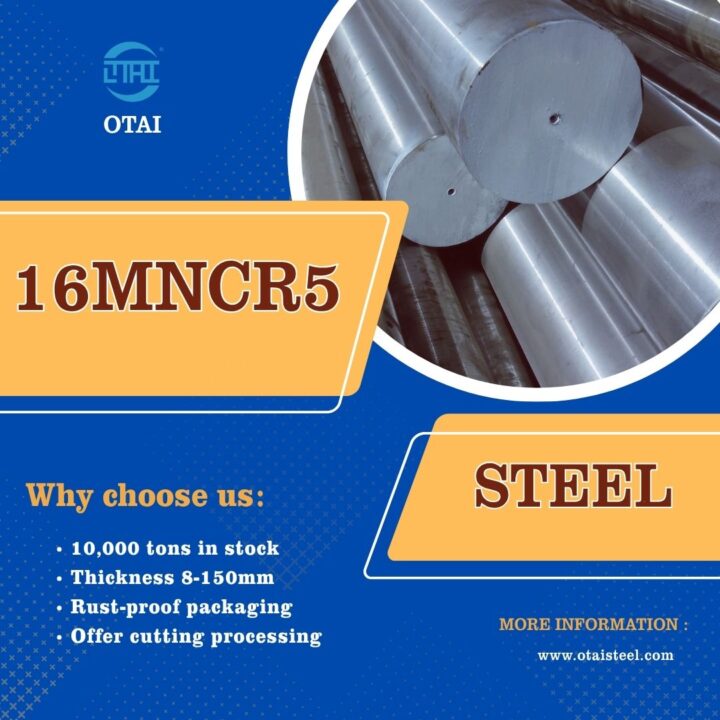
The 16MnCr5 alloy steel is a popular choice for applications that require high strength, excellent wear resistance, and toughness. Many industries, including automotive, mechanical engineering, and construction, rely on 16MnCr5 rods for their durability and performance. These rods are particularly suitable for components that experience high stress and require long-term reliability.
In this article, we will explore the key properties of 16MnCr5 rods, their typical uses, and the best practices for machining them to meet specific needs.
⚙️ Properties of 16MnCr5 Rods
16MnCr5 is a medium-carbon, chromium-manganese alloy steel that performs well in case-hardening applications. This steel balances strength, toughness, and ductility, making it an ideal choice for various industrial applications.
Key Properties of 16MnCr5:
| Property | Value Range |
|---|---|
| Tensile Strength | 800–1000 MPa |
| Yield Strength | 600–850 MPa |
| Hardness | 58–62 HRC (case-hardened) |
| Carbon Content | 0.14–0.19% |
| Manganese Content | 0.50–0.80% |
| Chromium Content | 0.90–1.20% |
The high levels of manganese and chromium give 16MnCr5 excellent strength and wear resistance, making it a reliable material for components that endure high stress and fatigue.
🛠️ Applications of 16MnCr5 Rods
Industries use 16MnCr5 rods for a wide range of applications. Here are some common uses:
1. Automotive Industry
Manufacturers use 16MnCr5 rods to produce gears, shafts, crankshafts, and axles. The rods undergo case-hardening, providing wear resistance while maintaining toughness in the core. These properties make them ideal for automotive components exposed to mechanical stress.
2. Mechanical Engineering
In mechanical engineering, 16MnCr5 rods are essential for creating connecting rods, camshafts, and rollers. These parts need to withstand significant mechanical forces, and 16MnCr5 provides the required durability.
3. Aerospace Industry
Aerospace manufacturers use 16MnCr5 rods for components like landing gear, turbine blades, and compressor rotors. These parts must resist fatigue and wear, and 16MnCr5 delivers the toughness needed for high-performance aerospace applications.
4. Tooling Industry
In the tooling industry, 16MnCr5 rods are used to manufacture dies, molds, and cutting tools. The steel’s ability to undergo case-hardening ensures that these tools remain durable and perform well under high-stress conditions.
🛠️ Machining 16MnCr5 Rods
When machining 16MnCr5 rods, manufacturers must consider the material’s hardness and toughness. Although the rods are easier to machine in their annealed state, heat treatment can make the material more challenging to work with.
Here are some best practices for machining 16MnCr5 rods:
1. Use of Proper Cutting Tools
High-speed steel (HSS) tools or carbide inserts are ideal for machining 16MnCr5 rods. Carbide tools are particularly effective in cutting hardened sections, as they can withstand the high heat generated during the process and maintain sharpness for longer.
2. Control Cutting Speed and Feed Rate
Controlling cutting speed and feed rate helps maintain a smooth finish and minimizes tool wear. Lower cutting speeds are generally recommended for 16MnCr5, particularly when working with hardened sections, as they reduce heat buildup.
3. Use Coolants
Using cutting fluids or coolants helps control the temperature during machining. Coolants reduce heat generation, extend tool life, and improve the surface finish of the rods.
4. Ensure Proper Workpiece Clamping
Proper clamping of the workpiece prevents vibrations and distortions during machining, ensuring precision and better surface quality. Secure clamping helps achieve higher accuracy when working with 16MnCr5 rods.
🔥 Heat Treatment of 16MnCr5 Rods
To improve the hardness and wear resistance, manufacturers often apply heat treatment to 16MnCr5 rods. The heat treatment process, which includes carburizing, quenching, and tempering, enhances the material’s surface hardness while maintaining toughness in the core.
Common Heat Treatment Steps:
| Treatment Type | Process Description |
|---|---|
| Carburizing | The rod is heated to high temperatures (around 900–950°C) in a carbon-rich environment to increase surface carbon content. |
| Quenching | After carburizing, the rod is rapidly cooled in water or oil to harden the surface. |
| Tempering | The rod is heated again to a lower temperature (around 200–650°C) to reduce brittleness while maintaining desired hardness. |
The case-hardened surface provides exceptional wear resistance, while the tough core ensures the rod’s strength under high stress.
🏆 Company Advantages
At Otai Special Steel, we provide high-quality 16MnCr5 rod and tailored services to meet your needs. Here’s why you should choose us:
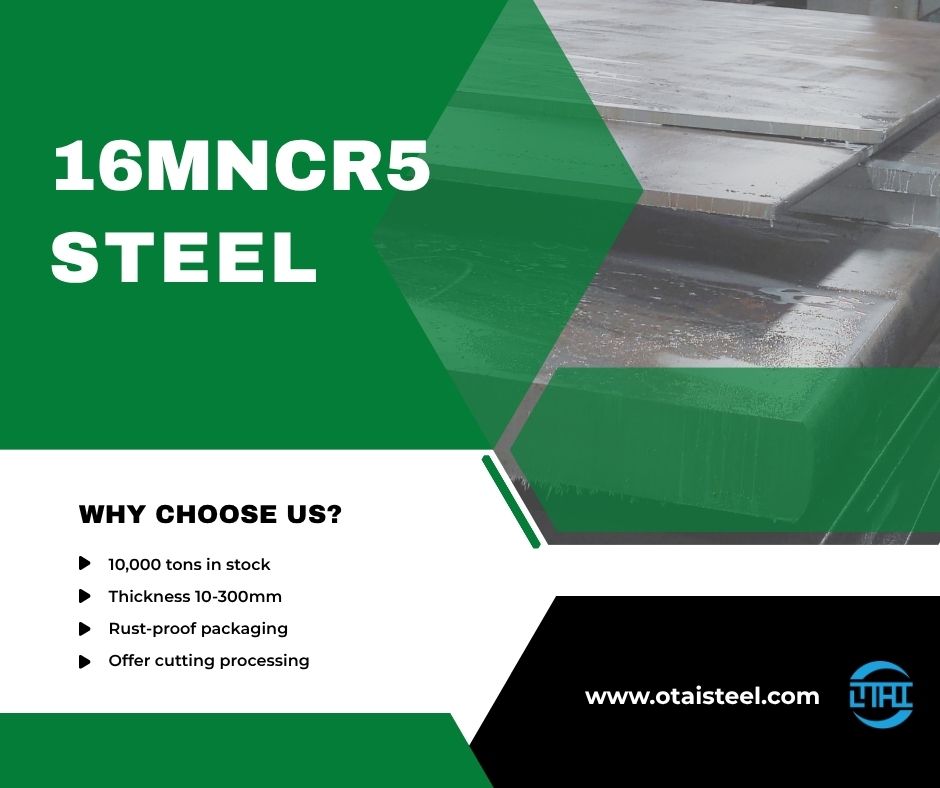
- Large Inventory: We keep over 10,000 tons of 16MnCr5 rods in stock, available year-round for your projects.
- Customized Services: We offer precision cutting, heat treatment, and machining services to meet specific requirements.
- Global Shipping: We deliver 16MnCr5 rods worldwide, ensuring fast and reliable service.
- Quality Assurance: We rigorously test our products, including ultrasonic testing (UT) and chemical composition analysis, to meet the highest quality standards.
❓ FAQ
1. What is 16MnCr5 used for?
16MnCr5 is used in components that require high strength, wear resistance, and toughness, such as gears, shafts, and tool parts.
2. How do I machine 16MnCr5 rods?
Use carbide inserts or HSS tools, control cutting speeds, and ensure proper clamping and coolant usage to prevent tool wear and achieve a smooth finish.
3. What is the hardness range of 16MnCr5 rods?
After case-hardening, 16MnCr5 rods typically reach a surface hardness of 58–62 HRC, providing excellent wear resistance.
4. Where can I buy 16MnCr5 rod?
You can buy 16MnCr5 rods from suppliers like Otai Special Steel, who offer customized services and worldwide shipping.