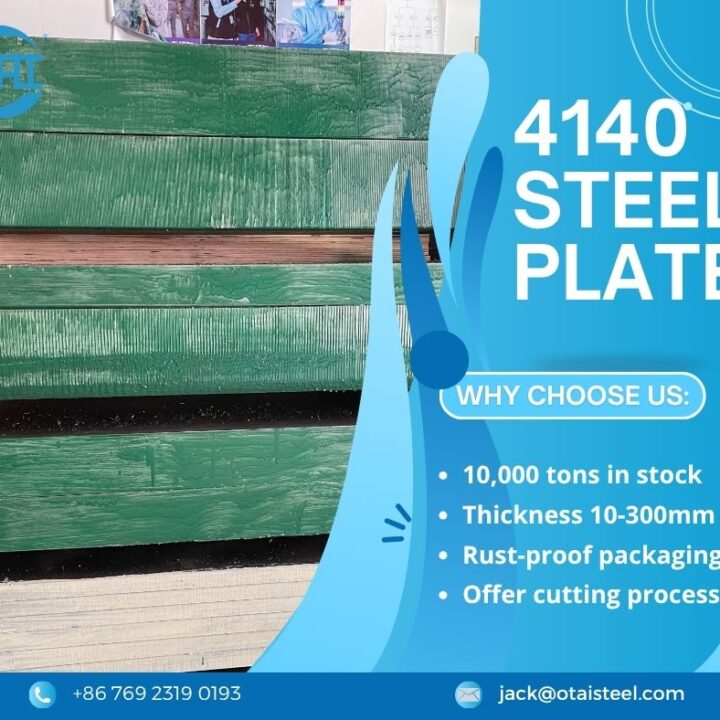
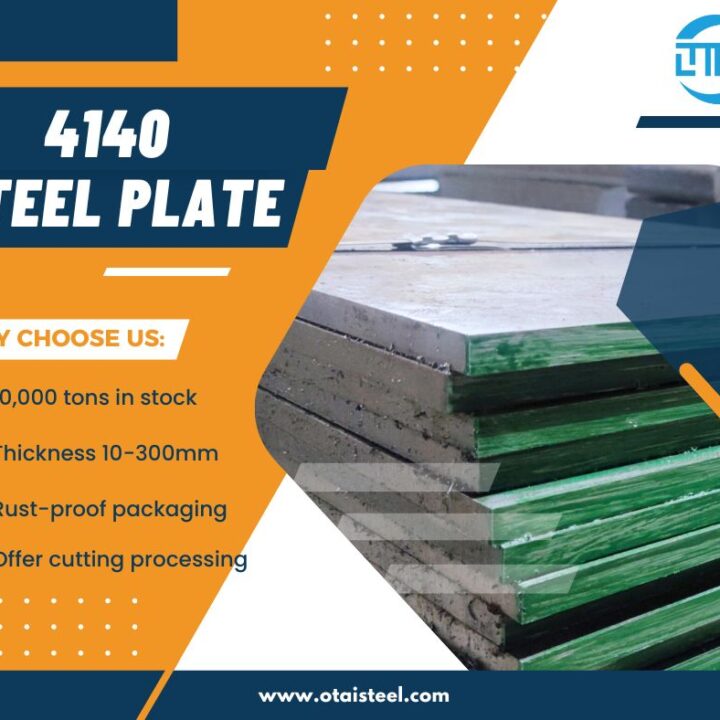
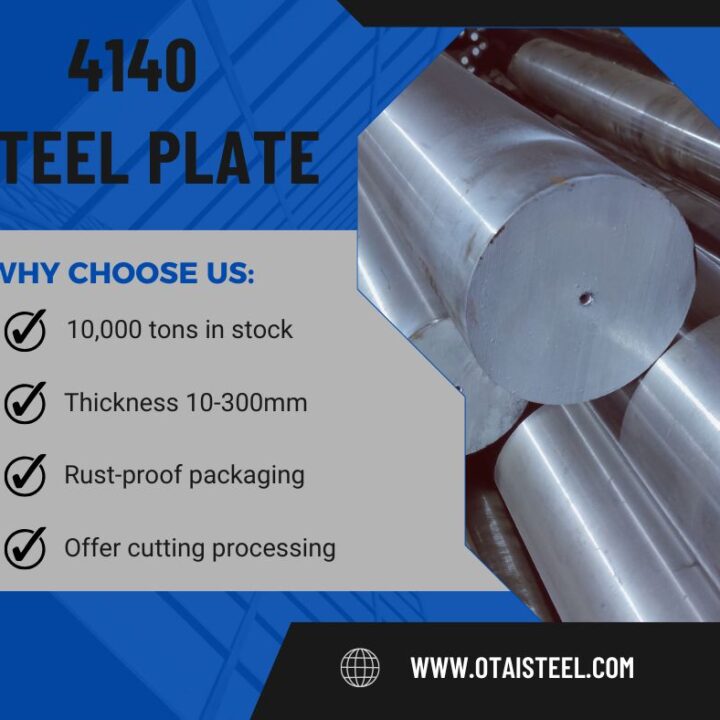
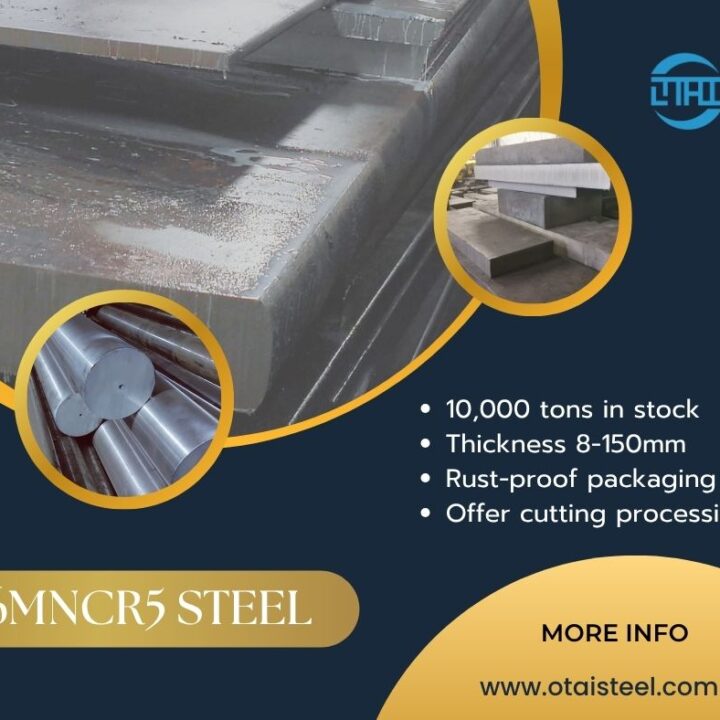
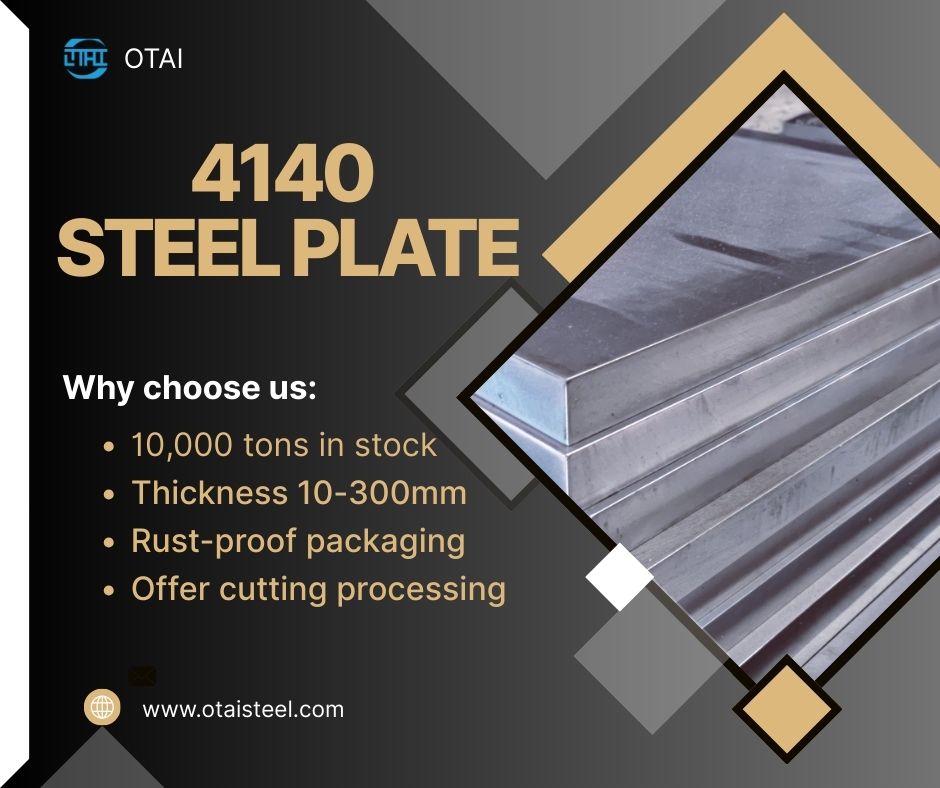
 4140 QT steel (Quenched and Tempered) is a low-alloy steel known for its exceptional strength and durability. With its excellent resistance to wear, fatigue, and high-impact stresses, it’s ideal for heavy-duty applications in industries like automotive, aerospace, and manufacturing.
🌟 What is 4140 QT Steel?
4140 QT steel is a modified version of 4140 steel that undergoes a heat treatment process called quenching and tempering (QT) to enhance its mechanical properties. Here’s how the process works:
-
Quenching: Heating the steel to a high temperature and rapidly cooling it to increase hardness.
-
Tempering: Reheating the quenched steel to a lower temperature to reduce brittleness while maintaining strength.
This process gives its superior strength, toughness, and resistance to wear compared to normalized or annealed 4140 material. The result is a steel that is incredibly strong, yet still tough enough to withstand the kinds of stresses and shocks typical in demanding industrial environments.
🔧 Key Mechanical Properties of 4140 Steel
Below is a table summarizing the mechanical properties of 4140 QT steel and how it compares to other 4140 steel conditions:
| Property | 4140 QT | Normalized 4140 | Annealed 4140 |
|---|---|---|---|
| Tensile Strength (MPa) | 830 – 1000 | 620 – 850 | 415 – 620 |
| Yield Strength (MPa) | 670 – 900 | 450 – 600 | 275 – 450 |
| Hardness (HRC) | 28 – 35 | 22 – 30 | 15 – 20 |
| Impact Toughness (J) | High | Moderate | Moderate |
| Ductility | Moderate | High | High |
-
Tensile Strength: 4140 Quenched and Tempered steel offers a higher tensile strength, making it suitable for high-stress applications. The increase in tensile strength through quenching and tempering makes it perfect for parts that need to resist elongation or pulling forces.
-
Yield Strength: It can withstand higher forces without permanent deformation, making it ideal for structural applications where load-bearing capacity is crucial.
-
Hardness: The quenching and tempering process significantly increases the hardness of 4140 QT alloy, providing excellent resistance to abrasion and wear. This hardness is essential for parts that will come into contact with other materials and experience friction.
-
Impact Toughness: Despite its high strength, 4140 QT material retains excellent resistance to impact forces. It is less likely to fail under shock loading, making it ideal for applications that experience sudden forces or vibrations.
-
Ductility: 4140 steel has moderate ductility, which means it can undergo some plastic deformation before breaking. This is a key factor in its ability to withstand high stresses without cracking, and it makes it easier to machine compared to other high-strength steels.
🏗️ Applications of 4140 Steel
The outstanding properties make it ideal for a variety of industries. Here are some of its key applications:
1. Automotive Industry
-
Gears: 4140 steel is commonly used for gears due to its high strength and wear resistance.
-
Crankshafts: Its ability to withstand torsional and bending stress makes it perfect for crankshafts in high-performance engines.
-
Suspension Components: The material’s impact resistance makes it suitable for parts like suspension arms and control arms.
2. Aerospace Industry
-
Landing Gear: 4140 steel provides the strength and shock resistance needed for aircraft landing gear.
-
Structural Components: It’s used for key structural parts like wing spars, offering both durability and fatigue resistance.
3. Oil and Gas Industry
-
Drill Pipes & Tools: Used for downhole tools and drill pipes, 4140 steel excels in harsh environments, resisting wear and high pressure.
4. Heavy Machinery
-
Machine Frames: Heavy machinery, like bulldozers and cranes, rely on 4140 steel for their frames due to its strength and durability.
-
Gearboxes: The material’s hardness and wear resistance make it ideal for the gears inside heavy machinery.
🛠️ Why 4140 Steel is Preferred for High-Performance Applications
The combination of high tensile strength, excellent wear resistance, impact toughness, and moderate ductility makes 4140 QT steel the material of choice for many high-performance, heavy-duty applications. Below are some reasons why it is preferred:
-
Strength-to-Weight Ratio: 4140 alloy offers superior strength without adding excessive weight, making it ideal for applications where weight is a concern, such as aerospace and automotive components.
-
Customizable Properties: By adjusting the quenching and tempering processes, the properties of 4140 material can be tailored to meet specific requirements, ensuring optimal performance in various conditions.
-
Long-Term Durability: The ability of 4140 Quenched and Tempered to resist wear, corrosion, and fatigue means that components made from it will have a long service life, reducing maintenance costs and downtime.
🏆 Why Choose Otai for 4140 Steel?
At Otai Special Steel, we offer top-quality 4140 material with the following advantages:
-
Large Inventory: We maintain a stock of over 10,000 tons of 4140 alloy year-round.
-
Customization: We provide cutting, heat treatment, and packaging services tailored to your needs.
-
Quality Assurance: All our products undergo rigorous testing, including ultrasonic and chemical composition analysis.
-
Global Service: We supply high-quality 4140 to leading global clients, ensuring reliable and timely delivery.
❓ FAQ
Q1: What makes 4140 QT steel stronger than normalized 4140 steel?
A1: The quenching and tempering process increases the tensile strength and hardness of 4140 QT steel, making it stronger and more wear-resistant than normalized 4140 alloy.
Q2: Can 4140 QT steel be welded?
A2: Yes, 4140 QT steel can be welded, but preheating is recommended to prevent cracking, and post-weld heat treatment may be necessary.
Q3: What is the primary advantage of 4140 QT alloy over annealed 4140 steel?
A3: 4140 QT steel has significantly higher strength and hardness compared to annealed 4140, making it ideal for heavy-duty applications where wear resistance and strength are critical.