 4140 Steel Yield Strength (MPa): Key Values, Heat Treatment Effects, and Engineering Insights
🔍 Introduction
The 4140 steel yield strength MPa is a crucial parameter for engineers designing components that must withstand high loads without permanent deformation. Known for its excellent balance of strength, toughness, and hardenability, 4140 alloy steel is widely used in demanding applications such as shafts, gears, and structural parts.
This article explains what is the yield strength of 4140 steel in MPa, how it varies under different heat treatment conditions, and how engineers can use this data in real-world design.
⚙️ What Is Yield Strength in 4140 Steel?
Yield strength is the stress level at which a material begins to deform plastically. For 4140 steel, this property determines how much load a component can handle before permanent deformation occurs.
Key Insight:
- Below yield strength → elastic behavior (returns to original shape)
- Above yield strength → permanent deformation
This makes yield strength one of the most important mechanical properties in design.
📊 Typical Yield Strength Values in MPa
The typical yield strength range of 4140 steel MPa depends on its condition.
| Condition | Yield Strength (MPa) | Tensile Strength (MPa) |
|---|---|---|
| Annealed | 415–620 MPa | 650–850 MPa |
| Normalized | 500–750 MPa | 700–950 MPa |
| Quenched & Tempered | 650–900 MPa | 850–1100 MPa |
These values form the basis of the 4140 steel mechanical properties table MPa used in engineering calculations.
🔥 Yield Strength After Heat Treatment
The 4140 steel yield strength after heat treatment MPa increases significantly compared to the annealed state.
Observations:
- Annealed → lowest strength, best machinability
- Normalized → moderate strength and toughness
- Quenched & tempered → highest strength and performance
Practical Insight:
Heat treatment allows engineers to tailor material properties for specific applications.
⚖️ Yield Strength vs Tensile Strength
Understanding 4140 steel yield strength vs tensile strength MPa is essential.
| Property | Typical Range |
|---|---|
| Yield Strength | 650–900 MPa |
| Tensile Strength | 850–1100 MPa |
Relationship:
- Yield strength defines safe working limits
- Tensile strength defines maximum load capacity
Designs are typically based on yield strength with safety factors applied.
🔬 Normalized vs Quenched and Tempered Conditions
The normalized 4140 steel yield strength MPa is lower than the quenched and tempered condition.
Comparison:
| Condition | Yield Strength | Characteristics |
|---|---|---|
| Normalized | 500–750 MPa | Balanced properties |
| Quenched & Tempered | 650–900 MPa | High strength and toughness |
Insight:
For high-load applications, quenched and tempered material is preferred.
🧪 Factors Affecting Yield Strength
Several factors affecting 4140 steel yield strength MPa must be considered:
1. Heat Treatment
The most significant factor influencing strength
2. Chemical Composition
Alloying elements improve hardenability
3. Cooling Rate
Faster cooling generally increases strength
4. Grain Size
Finer grains improve yield strength
5. Manufacturing Process
Forging and rolling can enhance properties
🏭 Comparison with Other Steels
The 4140 steel yield strength comparison with other steels provides context.
| Steel Grade | Yield Strength (MPa) | Application |
|---|---|---|
| 4140 | 650–900 | High-strength components |
| 1045 | 350–550 | General engineering |
| 1018 | 300–400 | Low-strength applications |
Conclusion:
4140 steel offers significantly higher strength than plain carbon steels.
🧭 Engineering Applications
The 4140 steel yield strength MPa values in different conditions make it suitable for:
Common Applications:
- Drive shafts
- Gears and crankshafts
- Oil and gas components
- Heavy machinery parts
Its high strength ensures reliability under load.
⚠️ Common Mistakes in Design
- Ignoring heat treatment condition
- Using tensile strength instead of yield strength
- Not applying safety factors
- Overlooking stress concentrations
Avoiding these mistakes improves safety and performance.
🏆 Company Advantages
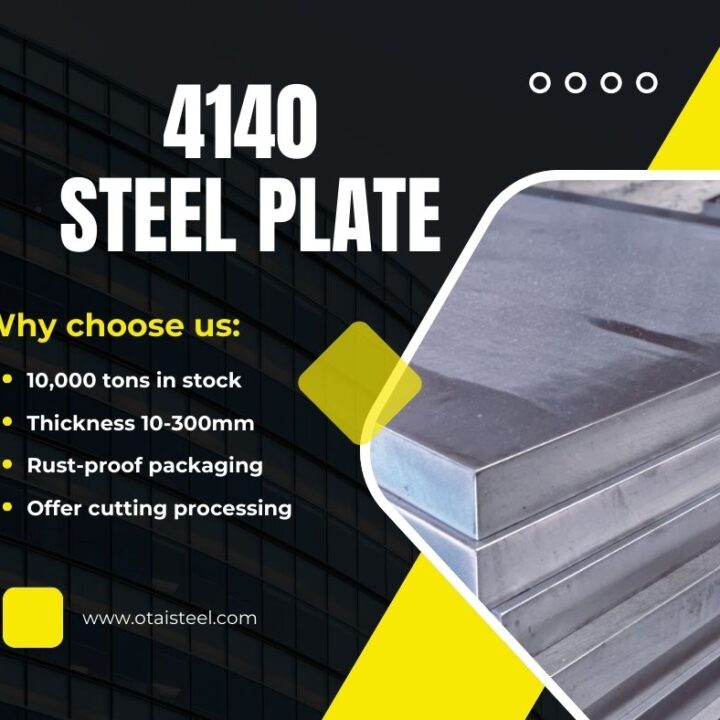
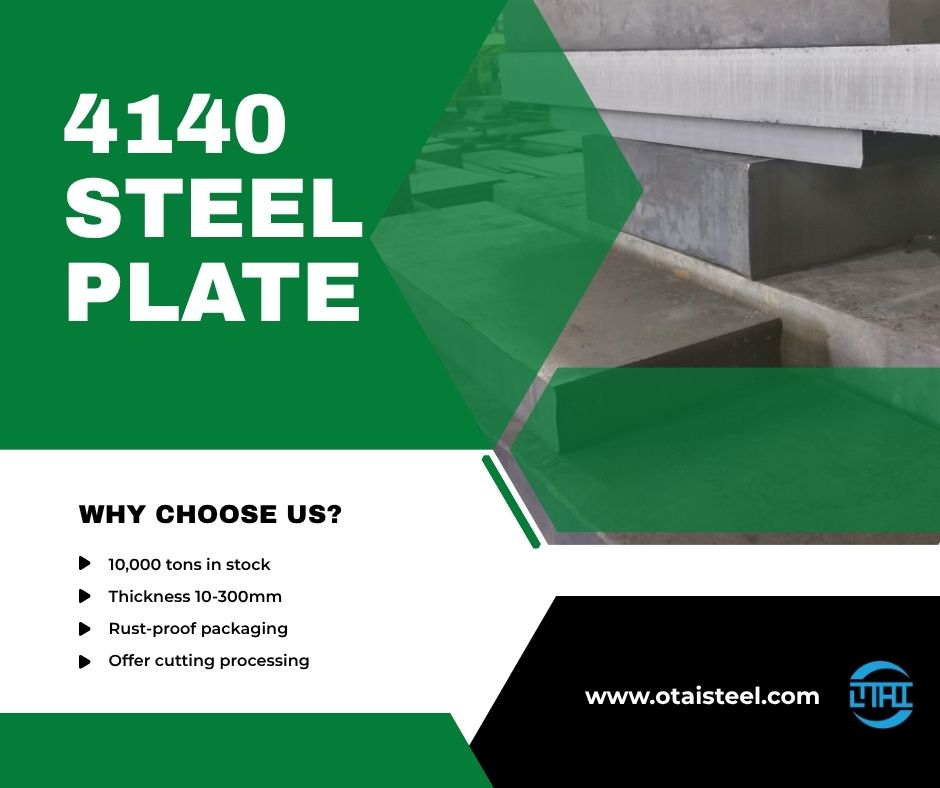
At Otai Special Steel, we supply high-quality 4140 steel with consistent mechanical properties:
- Over 10,000 tons of inventory available year-round
- Full size range from 6mm to 300mm
- Precision cutting and customized heat treatment services
- Strict quality control including ultrasonic testing (UT) and chemical analysis
- Support for third-party inspections such as SGS
- Extensive experience supplying global industrial clients
We help customers achieve reliable performance in critical applications.
❓ FAQ
1. What is the yield strength of 4140 steel in MPa?
Typically between 650 and 900 MPa in quenched and tempered condition.
2. Does heat treatment affect yield strength?
Yes, it significantly increases strength and performance.
3. What is the difference between yield and tensile strength?
Yield strength is the limit before deformation, while tensile strength is the maximum load capacity.
4. Is 4140 stronger than 1018 steel?
Yes, it offers much higher strength and durability.
5. Which condition is best for high strength?
Quenched and tempered condition provides the highest yield strength.