 4140 Steel Induction Hardening: Process, Hardness and Industrial Applications
When engineers search for 4140 steel induction hardening, they are usually looking for a heat treatment solution that improves surface hardness, wear resistance, and service life while maintaining the toughness of the steel core.
📑 Table of Contents
🔥 1. What Is 4140 Steel Induction Hardening?
🧪 2. Why 4140 Steel Is Suitable for Induction Hardening
📊 3. 4140 Steel Chemical Composition and Hardenability
⚙️ 4. AISI 4140 Induction Hardening Process and Parameters
🔥 5. 4140 Steel Hardness After Induction Hardening
🏭 6. Applications of Induction Hardened 4140 Steel
🔍 7. Factors Affecting 4140 Induction Hardening Results
📌 8. 4140 Steel Induction Hardening vs Other Heat Treatments
🏭 Otai Special Steel Advantages
❓ FAQ About 4140 Steel Induction Hardening
🔥 1. What Is 4140 Steel Induction Hardening?
Induction hardening is a surface heat treatment process that uses electromagnetic induction to rapidly heat the surface of steel.
After reaching the required temperature, the heated area is quickly cooled through quenching.
This creates a hard martensitic surface layer while maintaining a softer and tougher core.
| Process Step | Description |
|---|---|
| Induction Heating | Electromagnetic energy rapidly heats the steel surface |
| Austenitizing | Steel structure transforms at high temperature |
| Quenching | Rapid cooling creates martensitic hardness |
| Final Structure | Hard surface with tough core |
Why Use Induction Hardening for 4140 Steel?
4140 steel contains chromium and molybdenum, which improve hardenability.
This allows the material to achieve high hardness after rapid heating and cooling.
Compared with ordinary carbon steel, 4140 provides:
| Property | Benefit |
|---|---|
| High hardenability | Allows deeper hardened layers |
| Good toughness | Reduces cracking risk |
| High fatigue resistance | Suitable for dynamic loads |
| Good strength | Supports heavy-duty applications |
The main goal of 4140 steel induction hardening is not to harden the entire material, but to improve the performance of the working surface.
This makes it especially valuable for components where the surface and core have different requirements.
For example, a transmission shaft needs a wear-resistant outer layer but also requires a tough core to absorb shock loads.
Induction hardened 4140 steel can achieve this balance effectively.
🧪 2. Why 4140 Steel Is Suitable for Induction Hardening
The success of induction hardening depends heavily on the chemical composition of the steel.
4140 steel is particularly suitable because of its alloying elements, especially chromium and molybdenum.
Role of Alloying Elements in 4140 Steel
| Element | Function in Induction Hardening |
|---|---|
| Carbon (C) | Provides hardness after quenching |
| Chromium (Cr) | Improves hardenability and wear resistance |
| Molybdenum (Mo) | Enhances toughness and deep hardening ability |
| Manganese (Mn) | Improves strength and hardening response |
Advantages of Induction Hardened 4140 Steel
| Advantage | Explanation |
|---|---|
| High surface hardness | Improves resistance against wear and abrasion |
| Tough internal core | Handles impact and bending loads |
| Localized treatment | Only required areas are hardened |
| Reduced distortion | Less thermal impact compared with some methods |
| Short processing time | Suitable for production environments |
Another advantage of induction hardening is that it can be precisely controlled.
Manufacturers can adjust:
- Heating frequency
- Power input
- Heating time
- Quenching conditions
These parameters determine the final hardness and depth of the hardened layer.
For this reason, AISI 4140 induction hardening process is widely used in industries requiring high-performance mechanical parts.
📊 3. 4140 Steel Chemical Composition and Hardenability
The chemical composition of 4140 steel directly influences its response during induction hardening.
A balanced alloy design allows the steel to achieve high hardness while maintaining excellent mechanical performance.
4140 Steel Chemical Composition
| Element | Content (%) | Effect |
|---|---|---|
| Carbon (C) | 0.38–0.43 | Provides hardening capability |
| Silicon (Si) | 0.15–0.35 | Improves strength |
| Manganese (Mn) | 0.75–1.00 | Improves hardenability |
| Chromium (Cr) | 0.80–1.10 | Improves wear resistance |
| Molybdenum (Mo) | 0.15–0.25 | Improves toughness and deep hardening |
| Phosphorus (P) | ≤0.035 | Controlled impurity |
| Sulfur (S) | ≤0.040 | Controlled impurity |
4140 Hardenability Advantages
Hardenability describes the ability of steel to develop hardness below the surface.
This is different from simply measuring maximum hardness.
| Steel Characteristic | Effect on Induction Hardening |
|---|---|
| Medium carbon content | Creates strong martensitic structure |
| Chromium addition | Improves hardened depth |
| Molybdenum addition | Improves toughness after treatment |
Because of these characteristics, 4140 steel can achieve excellent results in surface hardening applications.
This explains why it is one of the most common choices for shafts, gears, and heavy-duty machine components.
⚙️ 4. AISI 4140 Induction Hardening Process and Parameters
The AISI 4140 induction hardening process uses electromagnetic energy to heat the surface of the steel rapidly, followed by immediate quenching to form a hardened martensitic layer.
Unlike conventional furnace heat treatment, induction hardening only affects the required surface area.
This localized heating method reduces unnecessary thermal exposure and helps maintain the toughness of the core.
Typical 4140 Induction Hardening Process Steps
| Step | Process Description | Purpose |
|---|---|---|
| 1. Surface Preparation | Clean and prepare the component surface | Ensure uniform heating |
| 2. Induction Heating | Rapid heating through electromagnetic field | Create austenitic structure |
| 3. Quenching | Rapid cooling using water or polymer solution | Form martensite |
| 4. Tempering | Low-temperature stress relief | Improve toughness |
Typical Induction Hardening Parameters for 4140 Steel
The final result depends on several processing parameters.
| Parameter | Typical Range | Influence |
|---|---|---|
| Heating Temperature | Approx. 850–900°C | Controls austenitizing process |
| Frequency | Medium to high frequency depending on depth | Determines heating depth |
| Heating Time | Seconds to minutes | Affects surface temperature |
| Quenching Method | Water or polymer solution | Controls cooling rate |
| Hardening Depth | Approx. 1–6 mm commonly | Depends on application requirements |
Frequency Selection and Hardening Depth
One of the most important factors in 4140 induction hardening depth is the heating frequency.
| Frequency Type | Typical Application |
|---|---|
| High Frequency | Shallow surface hardening |
| Medium Frequency | General shafts and gears |
| Low Frequency | Deeper hardened layers |
For example, a small precision shaft may require only a thin hardened layer, while a large industrial roller may require deeper hardening.
Therefore, induction parameters must match the component size, loading condition, and service requirements.
A properly controlled process allows 4140 alloy steel hardening to achieve excellent wear resistance without sacrificing core strength.
🔥 5. 4140 Steel Hardness After Induction Hardening
Hardness improvement is the main purpose of induction hardening 4140 steel.
After treatment, the surface develops a high-hardness martensitic structure, while the core maintains excellent toughness.
4140 Steel Hardness Before and After Induction Hardening
| Condition | Typical Hardness |
|---|---|
| Annealed 4140 Steel | Approx. 197 HB |
| Normalized 4140 Steel | Approx. 200–250 HB |
| Quenched and Tempered | Approx. 28–45 HRC depending on condition |
| Surface After Induction Hardening | Approx. 55–60 HRC |
Surface Hardness vs Core Toughness
The biggest advantage of induction hardening is creating different properties between the surface and the core.
| Area | Performance Requirement | Result After Treatment |
|---|---|---|
| Surface Layer | Wear resistance and fatigue strength | High hardness martensite |
| Core | Impact resistance and toughness | Tougher structure |
Factors Affecting 4140 Surface Hardness
- Initial material condition
- Carbon content
- Heating temperature
- Cooling speed
- Component size
- Hardening depth requirement
The final result of 4140 steel surface hardness after induction hardening depends on both the steel quality and the heat treatment control.
For demanding applications, hardness testing is usually performed after treatment to verify the final performance.
Common inspection methods include:
- Rockwell hardness testing
- Vickers hardness testing
- Hardness depth profile testing
These tests ensure that the hardened layer meets engineering specifications.
🏭 6. Applications of Induction Hardened 4140 Steel
Induction hardened 4140 steel is widely used in industries requiring high strength, wear resistance, and fatigue performance.
The combination of a hard surface and tough core makes it suitable for components exposed to repeated mechanical stress.
| Industry | Typical Components | Reason for Using Induction Hardened 4140 |
|---|---|---|
| Automotive | Shafts, gears, transmission parts | High fatigue resistance |
| Oil and Gas Equipment | Drill components, couplings | Wear and impact resistance |
| Construction Machinery | Pins, rollers, shafts | Handles heavy loads |
| Agricultural Equipment | Drive shafts, mechanical parts | Long service life |
| Industrial Machinery | Gears, bearings, rotating parts | Improved surface durability |
Common 4140 Components Requiring Induction Hardening
| Component | Main Requirement |
|---|---|
| Shafts | Resistance to bending and surface wear |
| Gears | Contact fatigue resistance |
| Pins | High surface hardness |
| Rollers | Wear resistance |
| Couplings | High strength under repeated loads |
Why Industries Choose 4140 Over Standard Carbon Steel
| Comparison | 4140 Steel | Carbon Steel |
|---|---|---|
| Hardenability | Excellent | Limited |
| Toughness | Higher | Lower |
| Fatigue Resistance | Better | Moderate |
| Heavy-duty Applications | Suitable | Less suitable |
For these reasons, 4140 steel heat treatment combined with induction hardening remains one of the most reliable solutions for demanding mechanical components.
🔍 7. Factors Affecting 4140 Induction Hardening Results
The quality of 4140 steel induction hardening depends on many factors, including material condition, heating parameters, cooling speed, and component design.
Even with the same steel grade, different processing conditions can create different hardness levels and hardened depths.
1. Initial Material Condition
Before induction hardening, 4140 steel is usually supplied in annealed, normalized, or quenched and tempered conditions.
The initial microstructure affects the final hardening response.
| Initial Condition | Influence on Induction Hardening |
|---|---|
| Annealed 4140 | Good machinability before treatment |
| Normalized 4140 | Balanced strength and processing performance |
| Quenched and Tempered 4140 | Higher initial strength |
2. Heating Temperature Control
The heating temperature must be carefully controlled during the induction process.
Insufficient heating may result in incomplete hardening, while excessive heating may cause grain growth or distortion.
| Heating Condition | Possible Result |
|---|---|
| Too Low Temperature | Insufficient martensite formation |
| Correct Temperature | Maximum hardness and reliable performance |
| Too High Temperature | Possible grain growth and distortion |
3. Quenching Method
Rapid cooling is essential because it transforms the heated austenite into martensite.
| Quenching Method | Characteristic |
|---|---|
| Water Quenching | Fast cooling, higher hardness |
| Polymer Quenching | Controlled cooling, reduced cracking risk |
| Oil Quenching | Gentler cooling performance |
4. Component Geometry
The shape and size of the component also influence induction hardening results.
Complex shapes may require customized coils and different heating strategies.
| Component Factor | Effect |
|---|---|
| Diameter | Affects heating depth |
| Sharp Corners | May cause uneven heating |
| Large Sections | Require deeper hardening control |
5. Material Quality
High-quality 4140 steel provides more consistent induction hardening results.
Important quality factors include:
- Accurate chemical composition
- Uniform microstructure
- Low internal defects
- Reliable ultrasonic inspection
Therefore, selecting a reliable steel supplier is an important step before applying 4140 alloy steel hardening.
📌 8. 4140 Steel Induction Hardening vs Other Heat Treatment Methods
4140 steel can be treated through several heat treatment methods.
The best method depends on the required performance, production volume, and component working conditions.
Comparison of Different 4140 Steel Heat Treatment Methods
| Treatment Method | Main Purpose | Result |
|---|---|---|
| Annealing | Improve machinability | Softer structure |
| Normalizing | Refine grain structure | Improved strength balance |
| Quenching and Tempering | Increase overall strength | High strength throughout section |
| Induction Hardening | Improve surface performance | Hard surface with tough core |
| Carburizing | Increase surface carbon | Very hard surface layer |
Induction Hardening vs Quenching and Tempering
| Feature | Induction Hardening | Quenching and Tempering |
|---|---|---|
| Hardening Area | Surface only | Entire component |
| Surface Hardness | Very high | Uniform hardness |
| Core Toughness | Excellent | Depends on tempering |
| Production Speed | Fast | Longer process |
| Wear Resistance | Excellent | Good |
Why Choose Induction Hardening for 4140 Steel?
- When only the surface needs high hardness
- When wear resistance is critical
- When the component requires a tough core
- When production efficiency is important
For many industrial applications, 4140 steel induction hardening provides a better performance balance than traditional full-section hardening methods.
🏭 Otai Special Steel Advantages
Otai Special Steel is a professional supplier of alloy steel and special steel products, providing reliable material solutions for customers worldwide.
- Large inventory capability: Otai maintains around 10,000 tons of steel stock and supplies different sizes to support urgent production requirements.
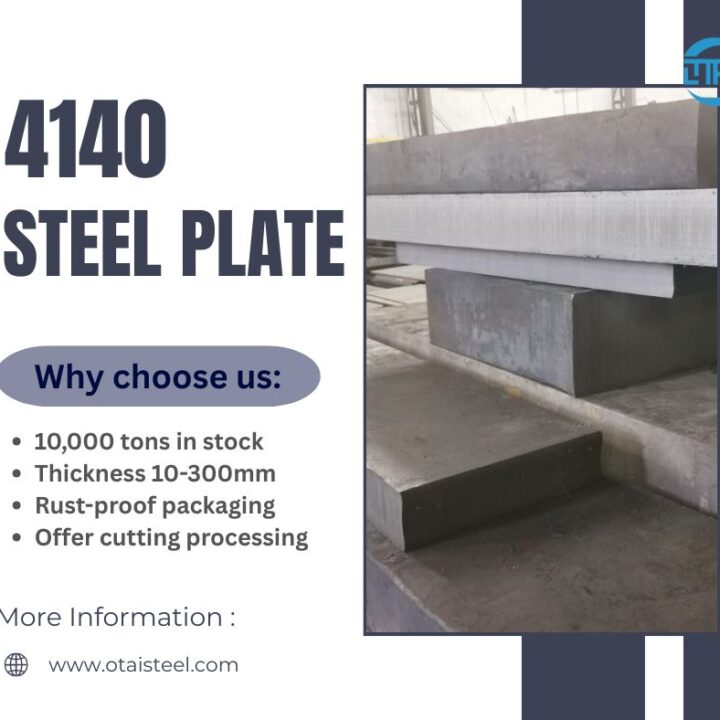
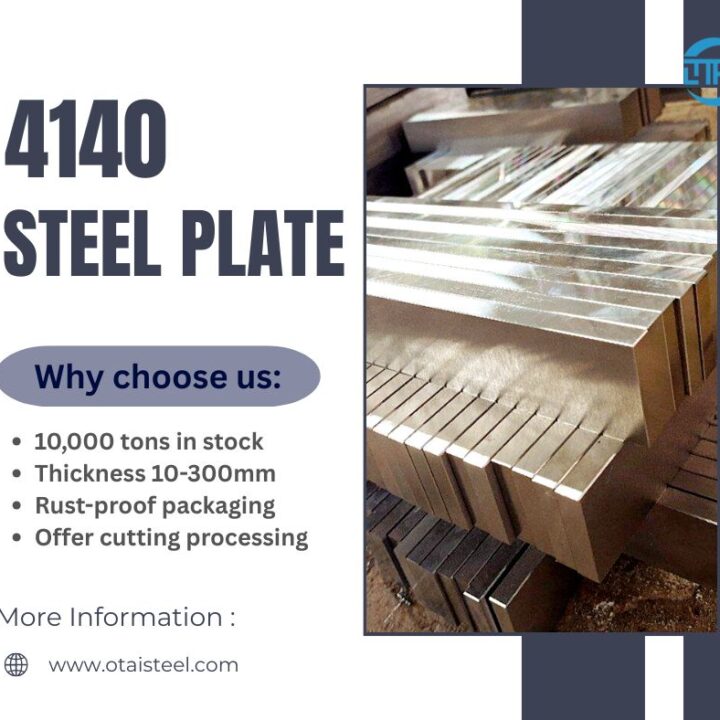
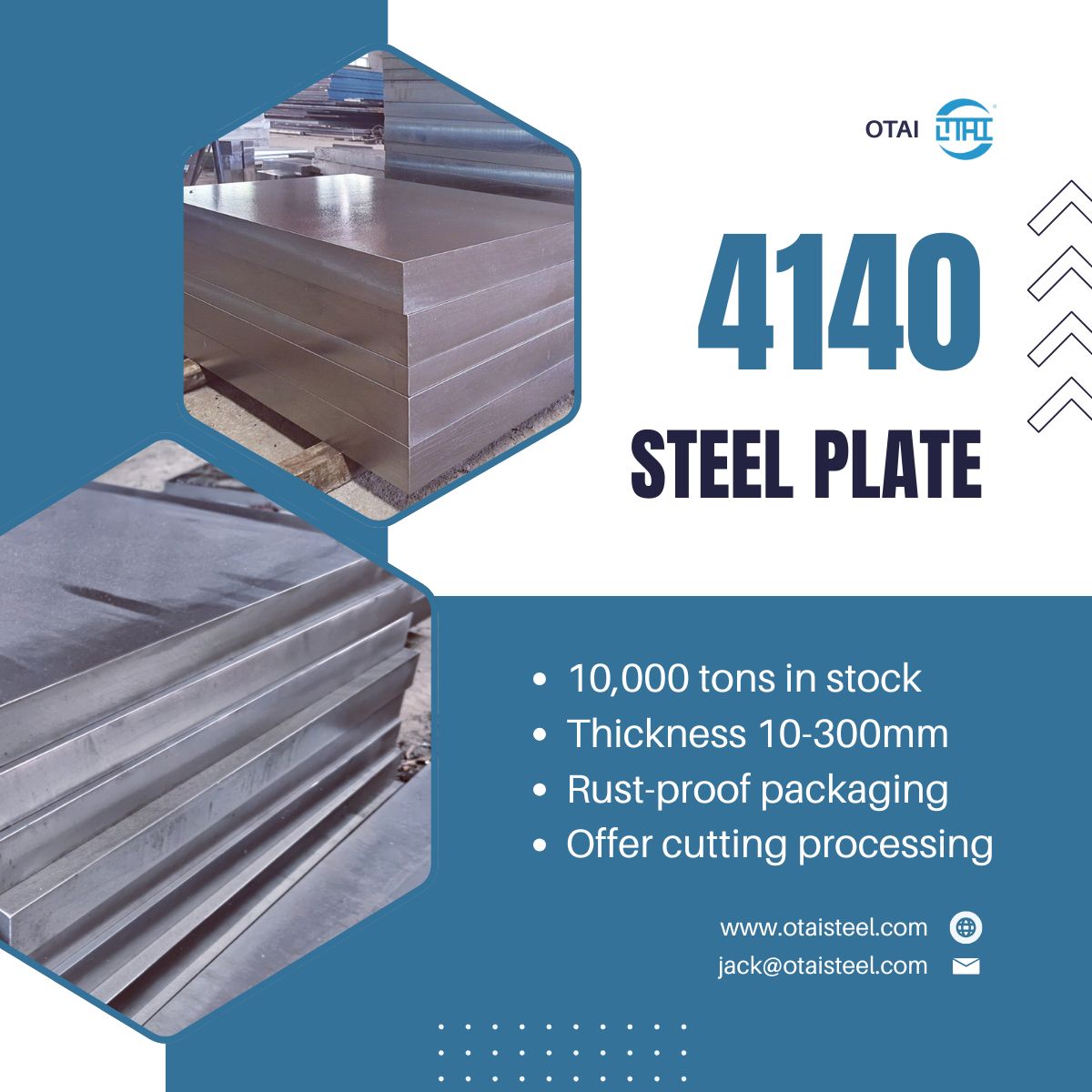
- 4140 alloy steel stock: Various dimensions of 4140 steel plates and bars are available for different engineering applications.
- Professional processing services: Cutting, machining, heat treatment, and customized processing services are available according to customer requirements.
- Quality inspection: Ultrasonic testing and third-party inspection services can be provided to ensure material reliability.
- Global supply experience: Otai has supplied steel materials to Fortune Global 500 companies and meets strict technical requirements.
- Export packaging service: Anti-rust packaging, steel strapping, and wooden box packaging ensure safe international transportation.
Whether customers need 4140 steel heat treatment, induction hardening support, or high-quality alloy steel materials, Otai provides professional solutions from stock supply to processing.
❓ FAQ About 4140 Steel Induction Hardening
Q1: What is 4140 steel induction hardening?
4140 steel induction hardening is a surface heat treatment process that rapidly heats the steel surface using electromagnetic energy and then quenches it to create a hard martensitic layer.
Q2: How hard does 4140 steel become after induction hardening?
The surface hardness of 4140 steel after induction hardening can typically reach around 55–60 HRC depending on processing conditions.
Q3: What is the typical induction hardening depth of 4140 steel?
The hardened depth depends on frequency and application requirements. Common depths range from about 1 mm to 6 mm.
Q4: Why is 4140 steel suitable for induction hardening?
4140 contains chromium and molybdenum, which improve hardenability, toughness, and wear resistance after heat treatment.
Q5: Can induction hardening improve 4140 steel wear resistance?
Yes. The hardened martensitic surface significantly improves resistance against wear, friction, and repeated contact stress.