 Difference Between 4340 and 4140 Steel: Composition and Applications
The difference between 4340 and 4140 steel is an important topic in engineering, manufacturing, and heavy industry because both materials are widely used high-strength alloy steels. Although they share similar chromium-molybdenum alloy systems, 4340 steel contains additional nickel, which significantly improves toughness, fatigue strength, and hardenability.
Both steels are commonly used in:
- Automotive components
- Aerospace parts
- Oil and gas equipment
- Industrial machinery
- Mining systems
- Heavy engineering applications
However, the selection between 4340 and 4140 steel depends on:
- Required strength level
- Toughness requirements
- Impact resistance
- Heat treatment depth
- Cost considerations
- Machining performance
📊 Chemical Composition Comparison
The primary difference between the two steels comes from the nickel content found in 4340 steel.
| Element | 4140 Steel (%) | 4340 Steel (%) |
|---|---|---|
| Carbon (C) | 0.38 – 0.43 | 0.38 – 0.43 |
| Chromium (Cr) | 0.80 – 1.10 | 0.70 – 0.90 |
| Molybdenum (Mo) | 0.15 – 0.25 | 0.20 – 0.30 |
| Nickel (Ni) | Typically none | 1.65 – 2.00 |
| Manganese (Mn) | 0.75 – 1.00 | 0.60 – 0.80 |
The nickel addition in 4340 steel significantly improves toughness and deep hardening capability.
⚙️ Mechanical Properties Comparison
4340 steel generally provides higher strength and toughness compared to 4140 steel, especially after heat treatment.
| Property | 4140 Steel | 4340 Steel |
|---|---|---|
| Tensile Strength | 655 – 1080 MPa | 745 – 1860 MPa |
| Yield Strength | 415 – 930 MPa | 470 – 1500 MPa |
| Hardness | 28 – 57 HRC | 30 – 60 HRC |
| Toughness | Good | Excellent |
| Fatigue Resistance | High | Very High |
4340 steel performs better in applications requiring extremely high strength and impact resistance.
🔥 Heat Treatment Capability
Both steels respond well to heat treatment, but 4340 steel achieves deeper hardening and higher toughness due to its nickel content.
| Heat Treatment Feature | 4140 Steel | 4340 Steel |
|---|---|---|
| Hardenability | Good | Excellent |
| Through Hardening | Moderate Sections | Large Sections |
| Tempering Resistance | Good | Very Good |
| Distortion Control | Good | Better in thick sections |
For large forged components and aerospace-grade applications, 4340 steel is often preferred.
🔬 Machinability and Weldability Comparison
Both 4140 and 4340 steels offer good machinability in annealed condition, but their welding behavior and machining difficulty differ after heat treatment.
| Feature | 4140 Steel | 4340 Steel |
|---|---|---|
| Machinability | Good | Moderate |
| Cutting Performance | Easier to machine | Higher cutting resistance |
| Weldability | Better | More difficult |
| Preheating Requirement | Recommended | Strongly recommended |
| Post-Weld Heat Treatment | Often required | Usually required |
4140 steel is often selected when easier machining and lower manufacturing costs are important.
🏭 Industrial Applications Comparison
The application choice between 4140 and 4340 steel depends on required strength, toughness, fatigue resistance, and operating conditions.
| Industry | 4140 Steel Applications | 4340 Steel Applications |
|---|---|---|
| Automotive | Axles and shafts | High-performance gears |
| Oil & Gas | Drill components | High-pressure equipment |
| Aerospace | Limited applications | Landing gear and structural parts |
| Mining | Heavy-duty shafts | Extreme load components |
| Industrial Machinery | General engineering parts | Critical high-strength parts |
4140 steel is widely used for general heavy engineering, while 4340 steel is preferred for highly stressed critical components.
💰 Cost and Material Selection
Cost is another major difference between 4140 and 4340 steel.
| Selection Factor | 4140 Steel | 4340 Steel |
|---|---|---|
| Material Cost | Lower | Higher |
| Heat Treatment Cost | Moderate | Higher |
| Machining Cost | Lower | Higher |
| Performance Level | High | Very High |
| Best Use | General heavy-duty applications | Critical high-stress applications |
For cost-effective strength and toughness, 4140 steel is an excellent option. For maximum fatigue resistance and impact performance, 4340 steel is usually the better choice.
🌍 International Equivalent Grades
| Steel Grade | DIN / EN Equivalent | JIS Equivalent |
|---|---|---|
| 4140 Steel | 42CrMo4 / 1.7225 | SCM440 |
| 4340 Steel | 34CrNiMo6 / 1.6582 | SNCM439 |
These equivalent grades are widely used across global engineering and manufacturing industries.
🏭 Company Advantages
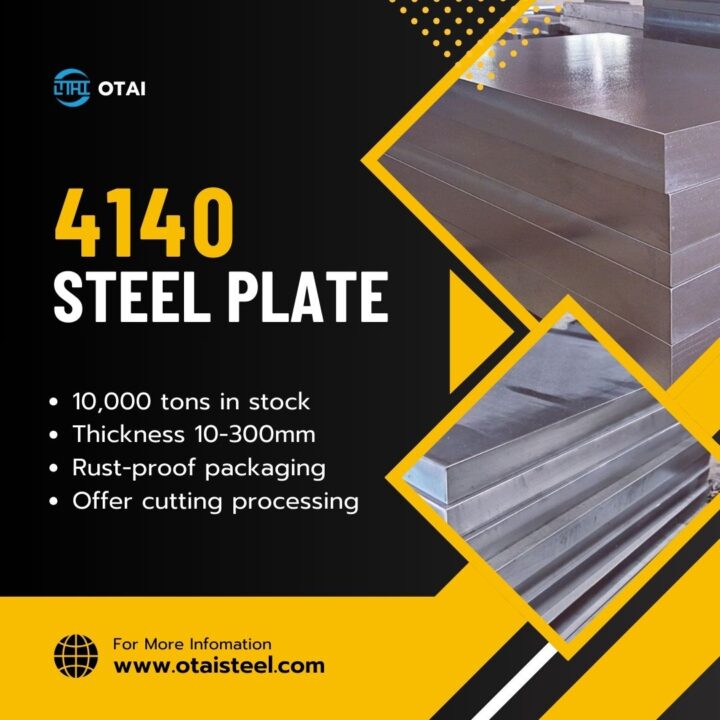
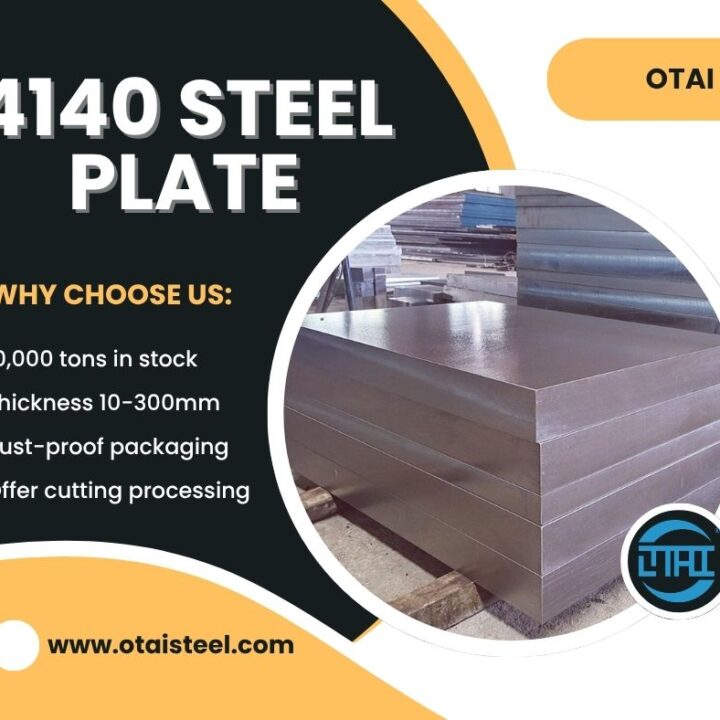
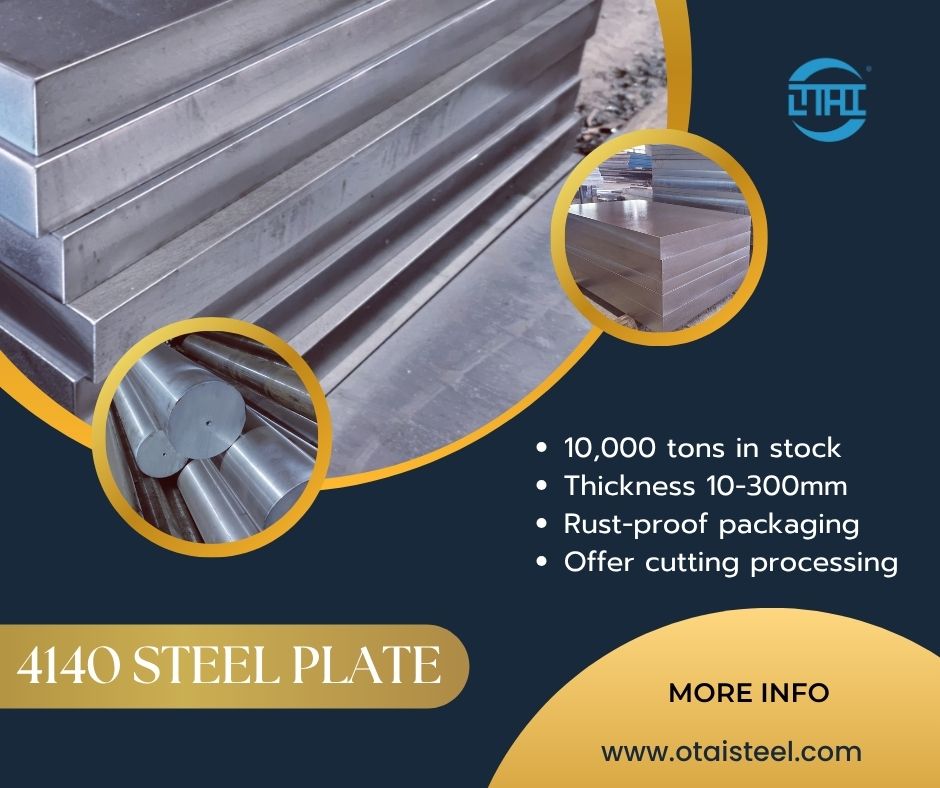
Otai Special Steel supplies premium-quality 4140 steel and 4340 alloy steel for automotive, aerospace, oil and gas, mining, industrial machinery, and heavy engineering industries worldwide.
- Large inventory with stable year-round supply
- Round bars, steel plates, forged blocks, and flat bars available
- Thickness range from 6mm to 300mm available
- Custom cutting and precision machining services
- Professional heat treatment support
- Ultrasonic testing (UT) available
- Chemical composition verification
- Third-party inspection support including SGS
- Professional export packaging and global shipping
We provide reliable quality, competitive pricing, fast delivery, and customized alloy steel solutions for demanding industrial applications.
❓ FAQ
Q1: What is the main difference between 4140 and 4340 steel?
A1: The major difference is that 4340 steel contains nickel, which gives it higher toughness, deeper hardenability, and better fatigue resistance.
Q2: Which steel is stronger, 4140 or 4340?
A2: 4340 steel is generally stronger and tougher after heat treatment.
Q3: Which steel is easier to machine?
A3: 4140 steel is usually easier to machine and more cost-effective for general engineering applications.
Q4: Is 4340 steel more expensive than 4140 steel?
A4: Yes. The nickel content and higher performance level make 4340 steel more expensive.
Q5: Which industries commonly use 4340 steel?
A5: Aerospace, oil and gas, mining, racing, and high-performance mechanical industries commonly use 4340 steel.