🔍 Introduction
The 16MnCr5 yield strength is a key parameter for engineers selecting materials for load-bearing components. As a case hardening steel, 16MnCr5 offers a unique combination of a hard surface and a tough core, making its yield strength highly dependent on heat treatment and operating conditions.
In this article, we explore what is the yield strength of 16mncr5 steel, including its values in different conditions, the influence of carburizing, and how it compares with other mechanical properties.
⚙️ What Is Yield Strength in 16MnCr5 Steel?
Yield strength refers to the stress at which a material begins to deform plastically. For 16mncr5 steel strength properties explained, this value primarily reflects the behavior of the core rather than the hardened surface.
Key Insight:
- Surface → high hardness (wear resistance)
- Core → determines yield strength and load capacity
Understanding this distinction is critical for design.
📊 16MnCr5 Mechanical Properties Yield Strength Table
| Condition | Yield Strength (MPa) | Tensile Strength (MPa) |
|---|---|---|
| Annealed | 300–450 MPa | 500–700 MPa |
| Normalized | 400–600 MPa | 700–900 MPa |
| Quenched & Tempered (core) | 500–800 MPa | 800–1100 MPa |
| Carburized (core) | 600–900 MPa | 900–1200 MPa |
Conclusion:
The 16mncr5 yield strength in different conditions can vary significantly.
🔥 16MnCr5 Yield Strength After Heat Treatment
After heat treatment improves substantially.
Effects of Heat Treatment:
- Increases core strength
- Enhances fatigue resistance
- Improves load-bearing capacity
Typical Values:
- After quenching & tempering: 500–800 MPa
- After carburizing: up to 900 MPa (core)
Proper processing is essential to achieve optimal results.
🧪 16MnCr5 Yield Strength After Carburizing
The 16mncr5 yield strength after carburizing must be understood carefully.
Important Note:
Carburizing mainly affects the surface hardness, not the yield strength directly.
Structure:
- Surface hardness: 58–62 HRC
- Core yield strength: 600–900 MPa
Insight:
The surface resists wear, while the core resists deformation.
⚖️ 16MnCr5 Yield Strength vs Tensile Strength
Understanding 16mncr5 yield strength vs tensile strength helps in material selection.
| Property | Typical Range |
|---|---|
| Yield Strength | 500–900 MPa |
| Tensile Strength | 800–1200 MPa |
Relationship:
- Yield strength defines elastic limit
- Tensile strength defines maximum load
Both are critical for engineering design.
🧱 Core Strength vs Surface Hardness
The 16mncr5 core strength vs surface hardness is what makes this steel unique.
Characteristics:
- Hard surface → wear resistance
- Tough core → impact resistance
Practical Example:
In gears:
- Surface handles friction
- Core absorbs shock loads
This dual structure improves durability.
🔬 Factors Affecting 16MnCr5 Yield Strength
Several factors affecting 16mncr5 yield strength must be considered:
1. Heat Treatment
- Most significant factor
2. Chemical Composition
- Alloying elements improve strength
3. Cooling Rate
- Faster cooling → higher strength
4. Grain Structure
- Fine grains improve yield strength
5. Manufacturing Process
- Forging and rolling influence properties
🏭 Comparison with Other Steels
The 16mncr5 yield strength comparison with other steels provides useful insights.
| Steel Grade | Yield Strength (MPa) | Application |
|---|---|---|
| 16MnCr5 | 500–900 | Case hardening parts |
| 4140 | 650–900 | High-strength components |
| 1018 | 300–400 | General-purpose use |
Conclusion:
16MnCr5 offers a balance between strength and wear resistance.
🧭 Engineering Considerations
When using 16mncr5 yield strength in different conditions, consider:
- Load type (static vs dynamic)
- Required surface hardness
- Heat treatment process
- Safety factors
Practical Tip:
Always design based on core properties, not surface hardness.
⚠️ Common Mistakes in Using 16MnCr5
- Assuming surface hardness equals yield strength
- Ignoring heat treatment effects
- Not considering core properties
- Using incorrect safety factors
Avoiding these ensures better performance.
🏆 Company Advantages
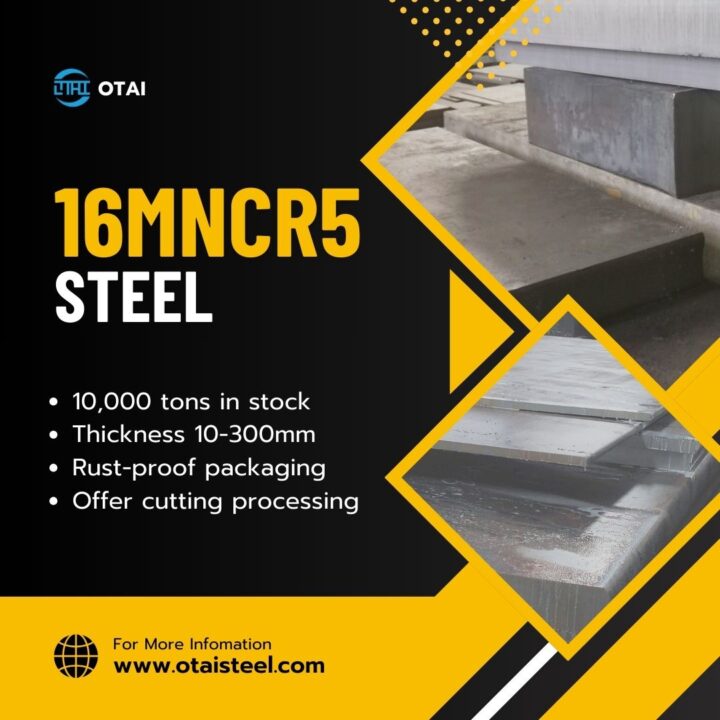
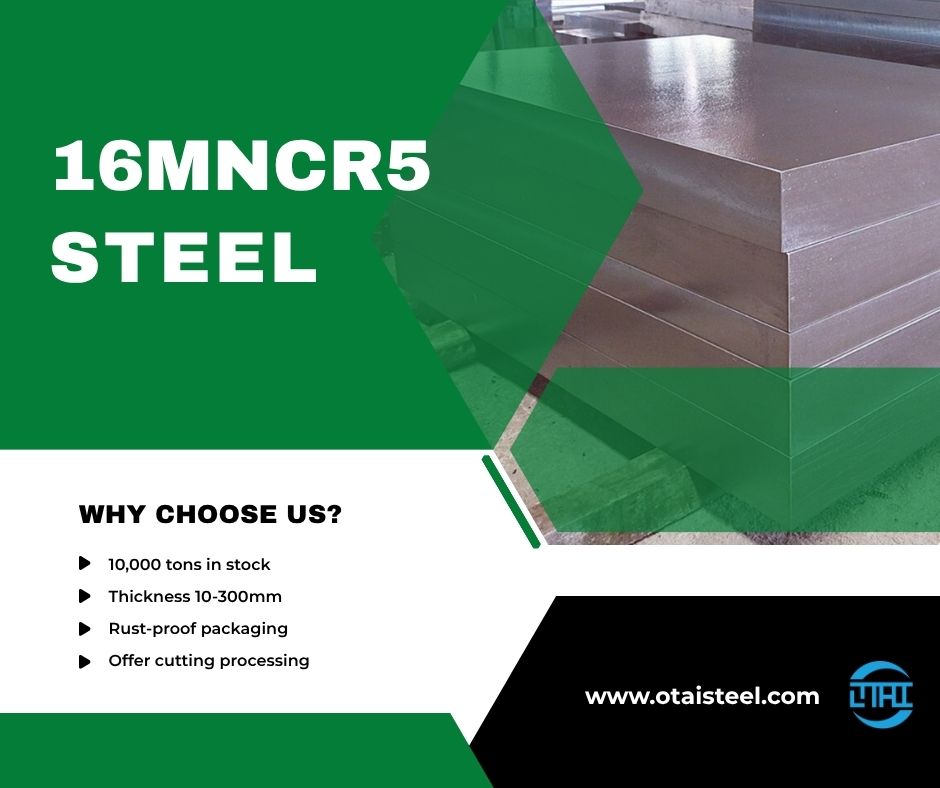
At Otai Special Steel, we supply high-quality 16MnCr5 with controlled mechanical properties:
- Over 10,000 tons of inventory available year-round
- Full size range from 6mm to 300mm
- Precision cutting and customized heat treatment services
- Strict quality control including ultrasonic testing (UT) and chemical analysis
- Support for third-party inspections such as SGS
- Extensive experience supplying global industrial clients
We help customers achieve optimal strength and performance.
❓ FAQ
1. What is the yield strength of 16MnCr5 steel?
Typically between 500 and 900 MPa depending on condition.
2. Does carburizing increase yield strength?
Not directly; it mainly increases surface hardness.
3. What affects yield strength the most?
Heat treatment and microstructure.
4. Is 16MnCr5 stronger than 1018 steel?
Yes, especially after heat treatment.
5. Should design be based on surface or core properties?
Always based on core yield strength.