 16MnCr5 Microstructure: How Heat Treatment Shapes Strength and Wear Resistance
The 16MnCr5 microstructure plays a critical role in determining the steel’s mechanical performance, wear resistance, fatigue strength, and service life. Engineers widely use 16MnCr5 steel in gears, shafts, pinions, and transmission components because its microstructure can achieve an outstanding balance between surface hardness and core toughness after carburizing and heat treatment.
As a low-carbon chromium alloy carburizing steel, 16MnCr5 develops different microstructural phases depending on the heat treatment process. These phases directly affect hardness, toughness, dimensional stability, and fatigue behavior.
Manufacturers select this steel for demanding mechanical systems because it provides:
- Excellent carburizing response
- High surface hardness
- Strong core toughness
- Outstanding wear resistance
- Reliable fatigue performance
Understanding the microstructure helps engineers optimize heat treatment parameters and improve component reliability in industrial applications.
🧪 Chemical Composition and Microstructural Behavior
The alloy chemistry of 16MnCr5 strongly influences phase transformation and hardenability during heat treatment.
| Element | Content (%) | Effect on Microstructure |
|---|---|---|
| Carbon (C) | 0.14 – 0.19 | Supports martensite formation |
| Manganese (Mn) | 1.00 – 1.30 | Improves hardenability |
| Chromium (Cr) | 0.80 – 1.10 | Enhances wear resistance |
| Silicon (Si) | 0.17 – 0.37 | Strengthens ferrite structure |
Chromium and manganese improve hardenability and help form a stable martensitic surface after quenching. The relatively low carbon content keeps the core ductile and resistant to brittle fracture.
🏗️ Microstructure in the Annealed Condition
In the annealed condition, 16MnCr5 steel usually contains a ferrite-pearlite microstructure. This condition provides lower hardness and better machinability before carburizing and final heat treatment.
The annealed microstructure offers several manufacturing advantages:
- Improved machinability
- Reduced internal stress
- Better dimensional stability
- Easier forming and machining
| Microstructural Phase | Main Characteristic |
|---|---|
| Ferrite | Soft and ductile |
| Pearlite | Moderate strength and hardness |
Manufacturers often machine gears and shafts in this condition before applying carburizing treatment.
🔥 Carburized and Quenched Microstructure
After carburizing and quenching, the microstructure changes dramatically. Carbon diffuses into the surface layer during carburizing, increasing the carbon concentration near the surface.
Quenching then transforms the carburized layer into hard martensite.
The final structure usually contains:
- Martensitic surface layer
- Tough low-carbon core
- Small amounts of retained austenite
- Possible bainitic regions depending on cooling rate
| Region | Typical Microstructure | Main Benefit |
|---|---|---|
| Surface Layer | Martensite | Extreme hardness and wear resistance |
| Transition Zone | Mixed martensite/bainite | Improved stress distribution |
| Core | Ferrite and bainite | Shock resistance and toughness |
This dual-property microstructure explains why 16MnCr5 performs exceptionally well in transmission gears and rotating mechanical systems.
⚙️ Effect of Tempering on Microstructure
Tempering reduces brittleness and stabilizes the martensitic structure after quenching. During tempering, some residual stresses relax, improving toughness without significantly reducing surface hardness.
Proper tempering helps:
- Reduce cracking risk
- Improve dimensional stability
- Increase impact toughness
- Enhance fatigue resistance
- Stabilize retained austenite
Most manufacturers temper 16MnCr5 at relatively low temperatures to preserve carburized surface hardness while improving mechanical reliability.
📊 Relationship Between Microstructure and Mechanical Properties
The microstructure directly determines the final mechanical properties of 16MnCr5 steel. Different phase distributions influence hardness, fatigue strength, wear resistance, and impact toughness.
A properly controlled carburizing and quenching process creates an optimized balance between a hard surface and a ductile core.
| Microstructural Feature | Mechanical Effect |
|---|---|
| Martensitic Surface | Improves wear resistance |
| Tough Core | Absorbs impact energy |
| Fine Grain Structure | Enhances fatigue strength |
| Retained Austenite | Improves crack resistance |
The steel’s excellent fatigue performance makes it highly suitable for gears, shafts, and power transmission systems operating under repeated cyclic stress.
🔬 Microscopic Analysis of 16MnCr5 Steel
Metallurgical laboratories often examine 16MnCr5 microstructures using optical microscopy and scanning electron microscopy (SEM). These analyses help verify carburizing depth, phase distribution, and heat treatment quality.
Typical microscopic observations include:
- Fine martensitic needles near the surface
- Transition zones between carburized and core regions
- Ferrite-bainite structures in the core
- Grain boundary conditions
- Distribution of retained austenite
Engineers use these observations to optimize heat treatment processes and improve component performance.
| Analysis Method | Purpose |
|---|---|
| Optical Microscopy | General phase observation |
| SEM Analysis | Detailed phase examination |
| Hardness Testing | Verifies carburized layer performance |
🚗 Why Microstructure Matters in Gear Applications
Gear systems operate under continuous rolling contact stress and repeated mechanical loading. Poor microstructural control can lead to premature wear, tooth cracking, or fatigue failure.
The optimized 16MnCr5 microstructure provides:
- High contact fatigue resistance
- Reduced surface wear
- Improved crack resistance
- Better shock absorption
- Longer operational service life
Because of these advantages, automotive manufacturers widely use 16MnCr5 for transmission gears, differential gears, and pinion systems.
| Gear Requirement | Microstructural Benefit |
|---|---|
| Wear Resistance | Martensitic surface layer |
| Impact Resistance | Ductile core structure |
| Fatigue Strength | Fine grain distribution |
🌍 International Equivalent Grades
Several international carburizing steels offer microstructural behavior similar to 16MnCr5.
| Standard | Equivalent Grade |
|---|---|
| AISI / SAE | SAE 5115 |
| JIS | SCM420 |
| GB | 20CrMnTi |
| ISO | 18CrMo4 |
Although these steels share similar carburizing behavior, slight alloy differences may influence grain refinement, hardenability, and retained austenite formation.
🏭 Company Advantages
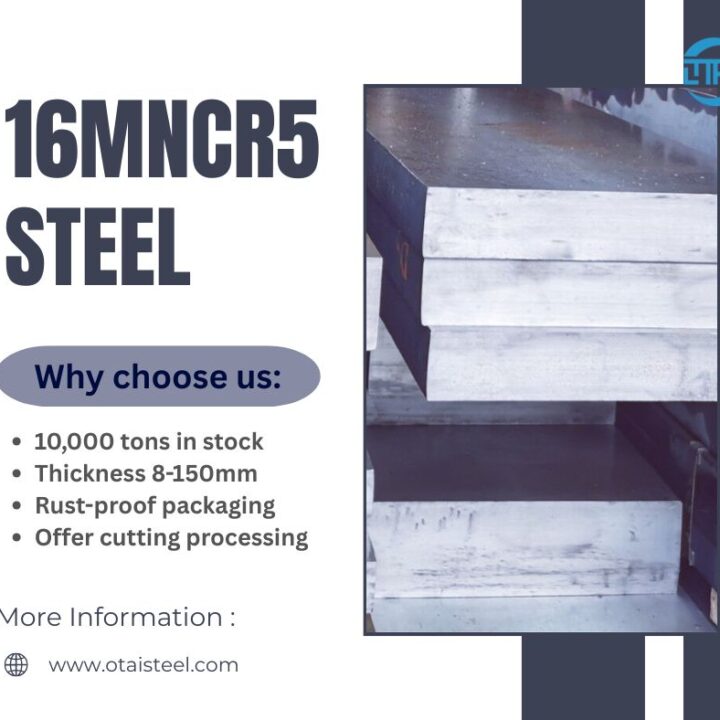
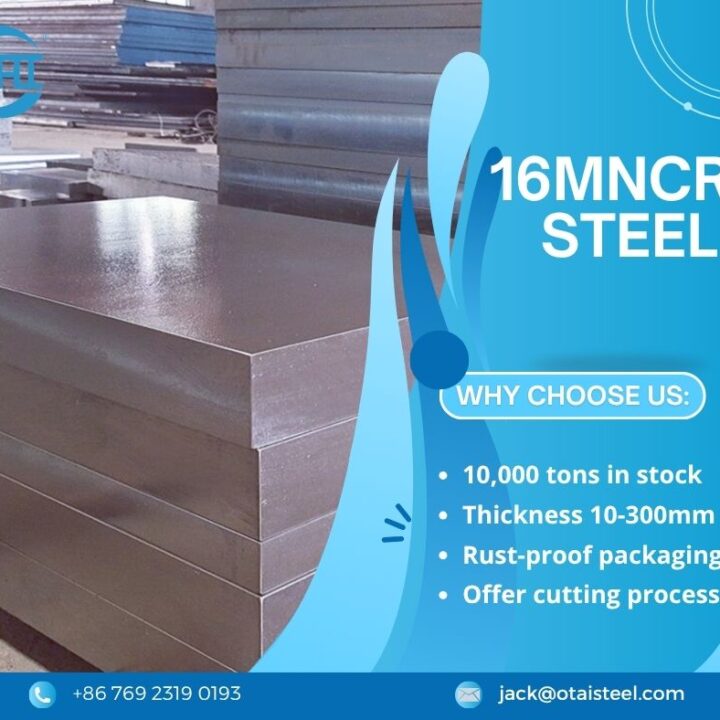
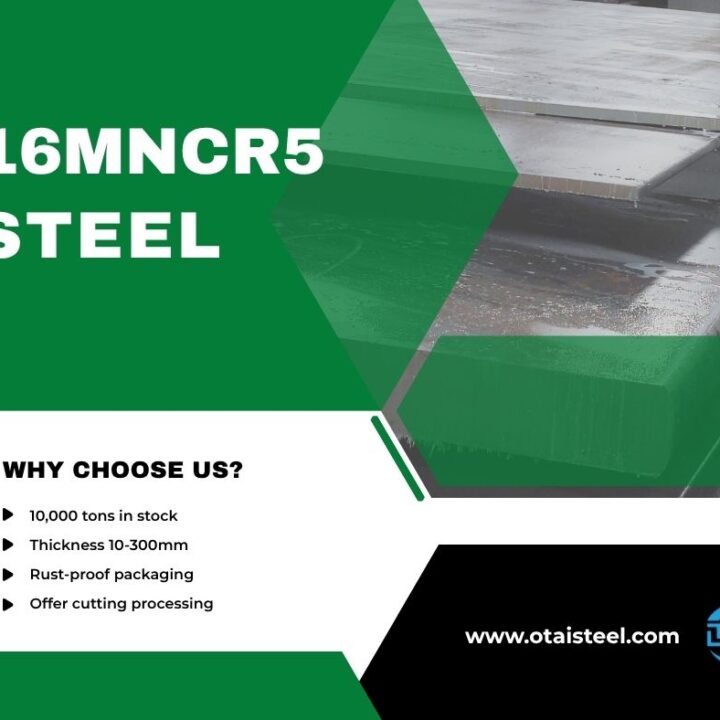
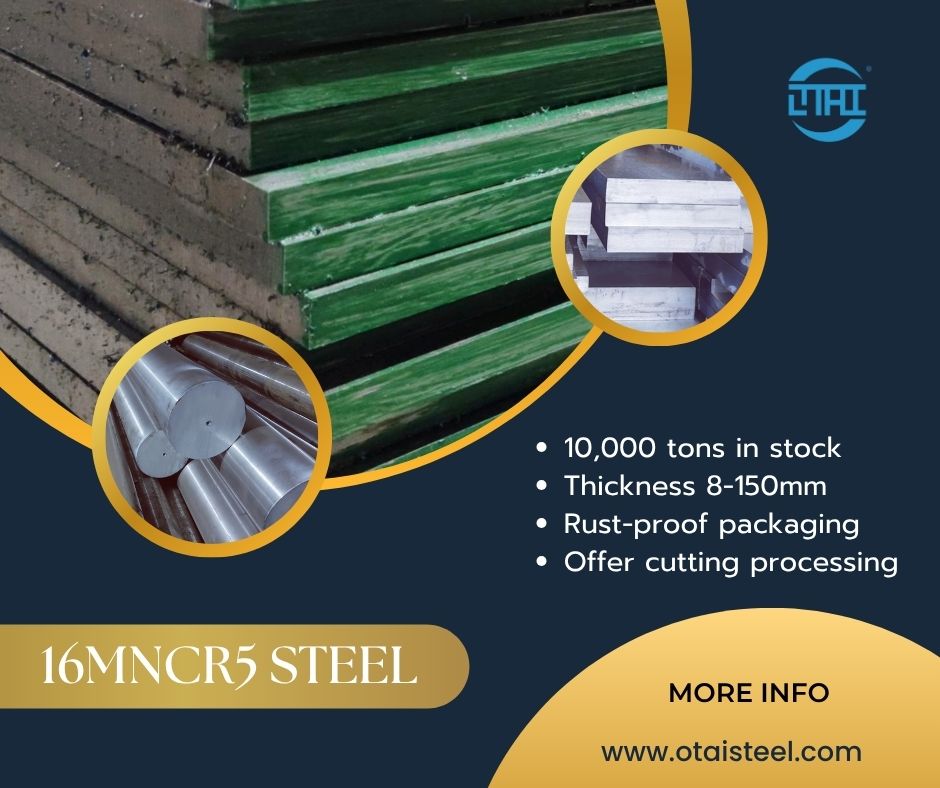
Otai Special Steel supplies high-quality 16MnCr5 steel materials for gears, shafts, transmission systems, and heavy engineering applications.
- Large inventory and stable year-round supply
- 8–150mm thickness plates available in stock
- Custom cutting and heat treatment services
- Ultrasonic testing (UT) support
- Chemical composition verification
- Third-party inspection support including SGS
- Professional export packaging and logistics services
- Technical support for heat treatment and material selection
We support customers worldwide with reliable material quality and fast delivery for demanding industrial projects.
❓ FAQ
Q1: What is the main microstructure of carburized 16MnCr5 steel?
A1: The carburized surface mainly contains martensite, while the core usually contains ferrite and bainitic structures for toughness.
Q2: Why is martensite important in 16MnCr5 steel?
A2: Martensite provides very high surface hardness and excellent wear resistance after quenching.
Q3: Does tempering affect the microstructure?
A3: Yes. Tempering reduces brittleness, stabilizes the structure, and improves toughness and fatigue resistance.
Q4: Why does 16MnCr5 perform well in gears?
A4: The steel combines a hard wear-resistant surface with a strong and ductile core, making it ideal for cyclic loading conditions.
Q5: Which industries commonly use 16MnCr5 steel?
A5: Automotive, industrial machinery, agricultural equipment, and heavy engineering industries widely use this material.