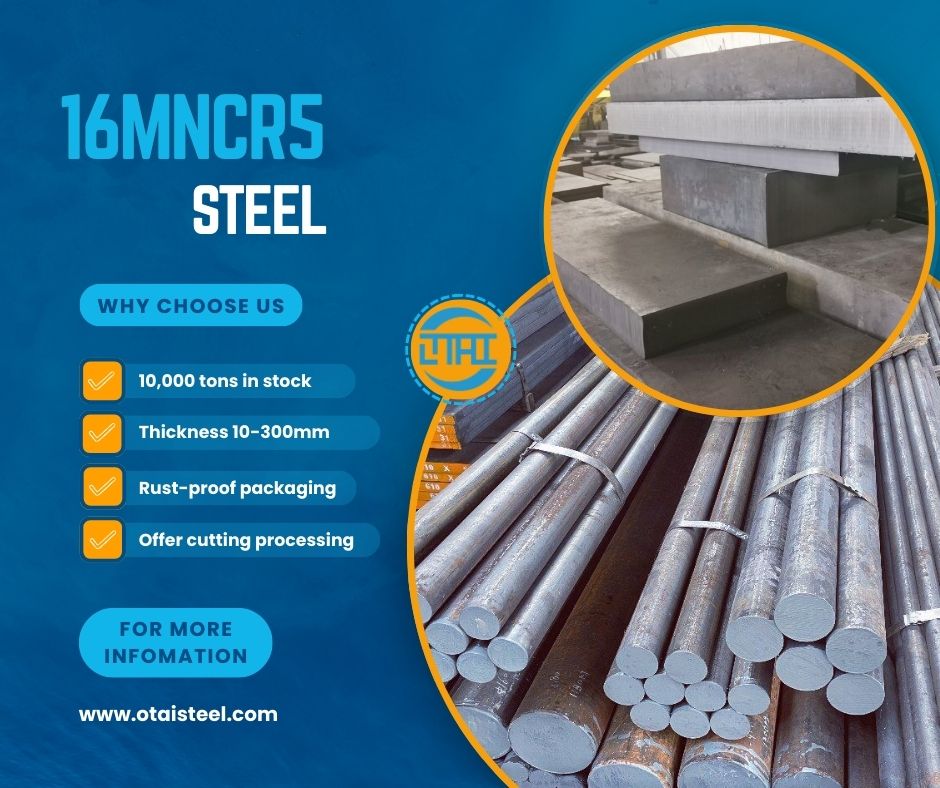
 Steel 16MnCr5 Specifications: Standards, Properties, and Technical Data
In modern manufacturing and mechanical engineering, selecting the correct material requires a clear understanding of its technical specifications. Many engineers and procurement professionals search for steel 16mncr5 specifications to ensure the material meets performance and quality requirements.
16MnCr5 is a low-carbon chromium alloy steel widely used for case-hardening applications. It offers an excellent combination of surface hardness and core toughness after carburizing and heat treatment. These characteristics make it ideal for gears, shafts, and high-load mechanical components.
Understanding the 16MnCr5 steel specifications EN standard helps ensure consistency in material performance across different industries.
🔍 Overview of 16MnCr5 Steel
16MnCr5 is defined under the European standard EN 10084, which covers case-hardening steels. The material is specifically designed to undergo carburizing, followed by quenching and tempering.
The 16MnCr5 steel standard EN 10084 specifications define requirements for:
- Chemical composition
- Mechanical properties
- Heat treatment conditions
- Inspection and testing
This standard ensures that manufacturers achieve reliable performance in demanding engineering environments.
⚙️ Chemical Specifications
The 16MnCr5 chemical and mechanical specifications begin with strict control of chemical composition.
| Element | Content (%) |
|---|---|
| Carbon (C) | 0.14 – 0.19 |
| Manganese (Mn) | 1.00 – 1.30 |
| Chromium (Cr) | 0.80 – 1.10 |
| Silicon (Si) | ≤0.40 |
| Phosphorus (P) | ≤0.025 |
| Sulfur (S) | ≤0.035 |
These elements define the 16MnCr5 case hardening steel specifications, enabling effective carburizing and improved wear resistance.
📊 Mechanical Specifications
The 16MnCr5 material specifications and properties vary depending on heat treatment conditions, especially after carburizing.
| Property | Typical Value |
|---|---|
| Tensile Strength | 800 – 1000 MPa |
| Yield Strength | 500 – 700 MPa |
| Elongation | 10 – 15 % |
| Core Hardness | 200 – 300 HB |
| Surface Hardness (carburized) | 58 – 62 HRC |
These values reflect the ability of the material to provide a hard surface with a tough and ductile core.
🔥 Heat Treatment Specifications
Heat treatment plays a critical role in achieving the required performance defined in the 16MnCr5 technical data sheet specifications.
| Process | Temperature Range |
|---|---|
| Carburizing | 880 – 940 °C |
| Quenching | 780 – 850 °C |
| Tempering | 150 – 200 °C |
Carburizing increases the carbon content at the surface, while quenching and tempering optimize hardness and toughness.
These processes are essential to meet the 16MnCr5 case hardening steel specifications.
📐 Physical Properties
In addition to mechanical performance, the 16MnCr5 material specifications and properties include key physical characteristics.
| Property | Typical Value |
|---|---|
| Density | 7.85 g/cm³ |
| Thermal Conductivity | 42 – 46 W/m·K |
| Specific Heat Capacity | ~460 J/kg·K |
| Thermal Expansion Coefficient | 11.5 – 13.0 µm/m·K |
These properties are important for applications involving temperature variation and thermal stress.
🔁 Equivalent Material Specifications
Global projects often require identifying the 16MnCr5 steel equivalent specifications across different standards.
| Standard | Equivalent Grade |
|---|---|
| EN | 16MnCr5 |
| DIN | 1.7131 |
| AISI / SAE | 5120 |
| JIS | SCM420 |
| GB | 20CrMnTi |
These equivalents have similar chemical compositions and mechanical properties, making them interchangeable in many applications.
🏭 Typical Applications
Due to its excellent balance of hardness and toughness, 16MnCr5 is widely used in industrial applications.
Common uses include:
- Automotive gears
- Transmission shafts
- Camshafts
- Worm gears
- Industrial gearbox components
- Heavy machinery parts
These applications rely on the 16MnCr5 steel specifications EN standard to ensure consistent quality and performance.
🌟 Company Advantages
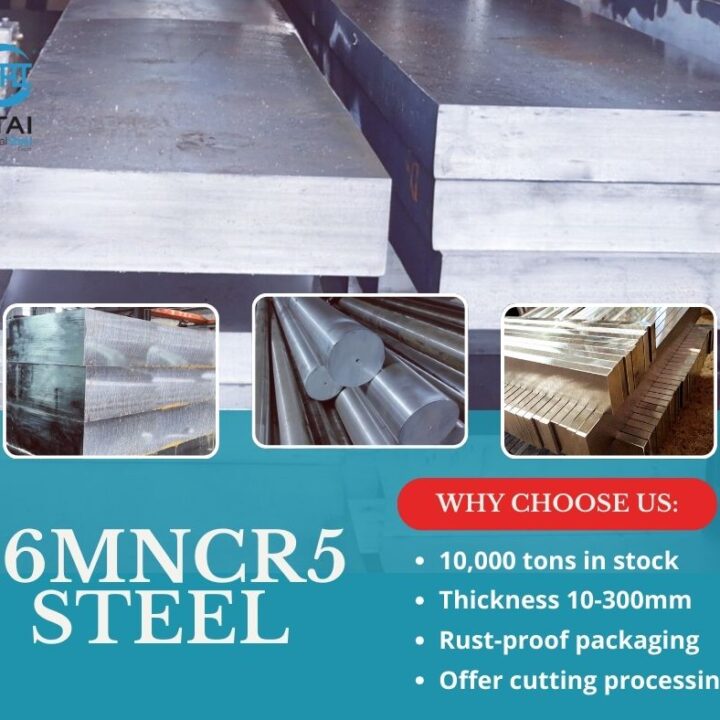
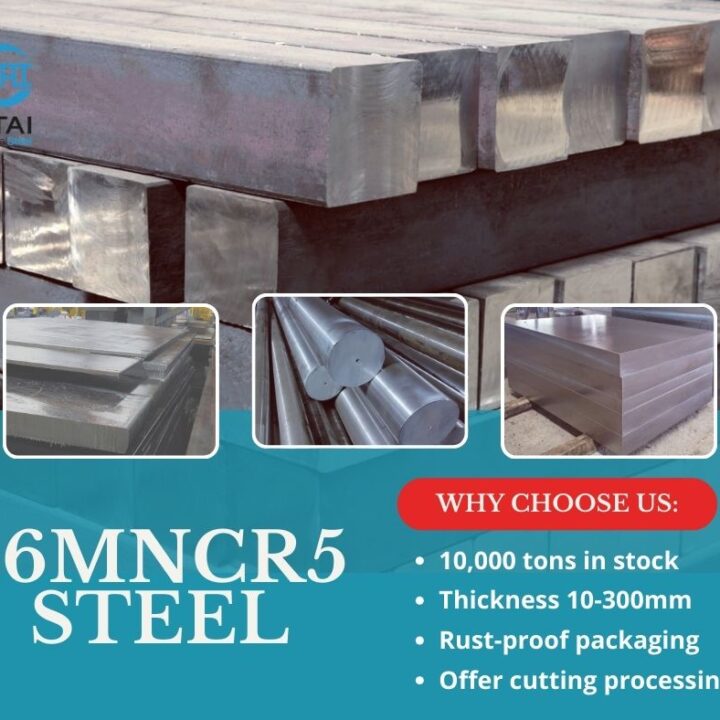
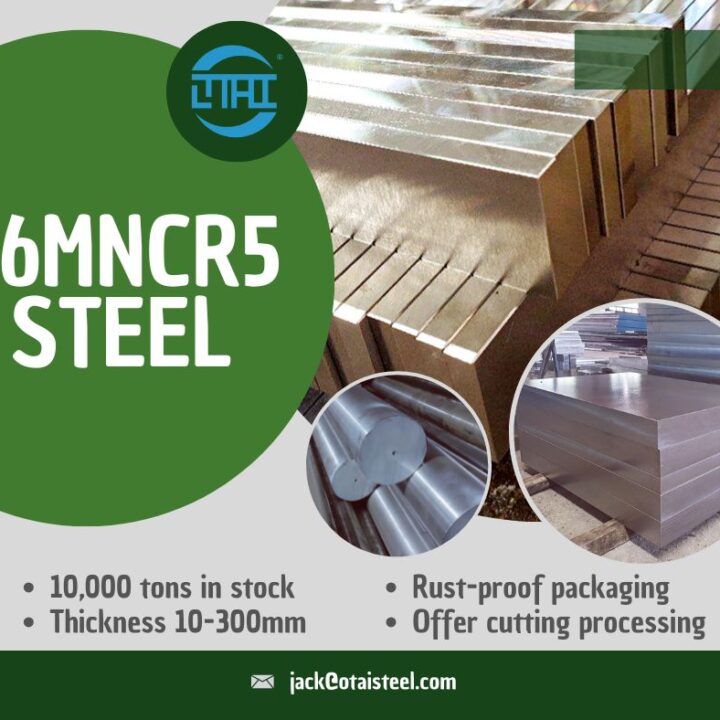
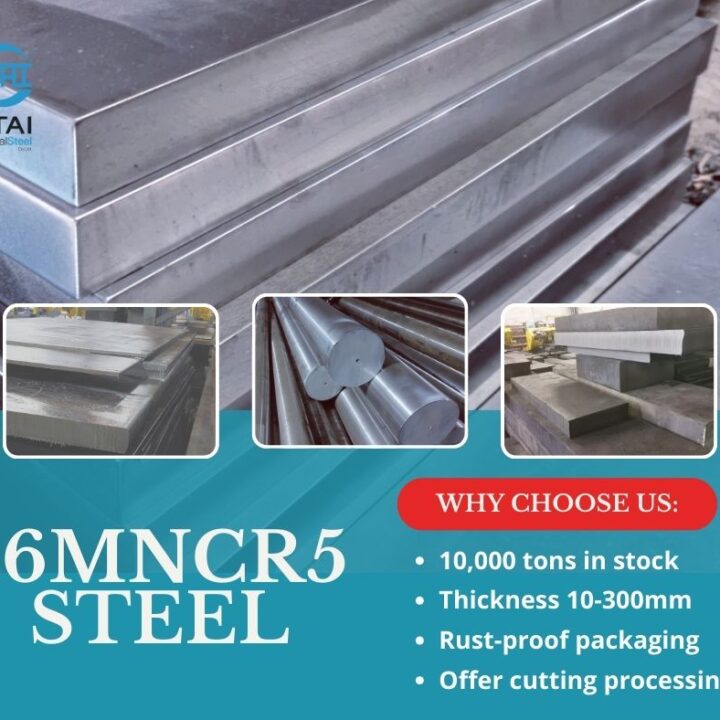
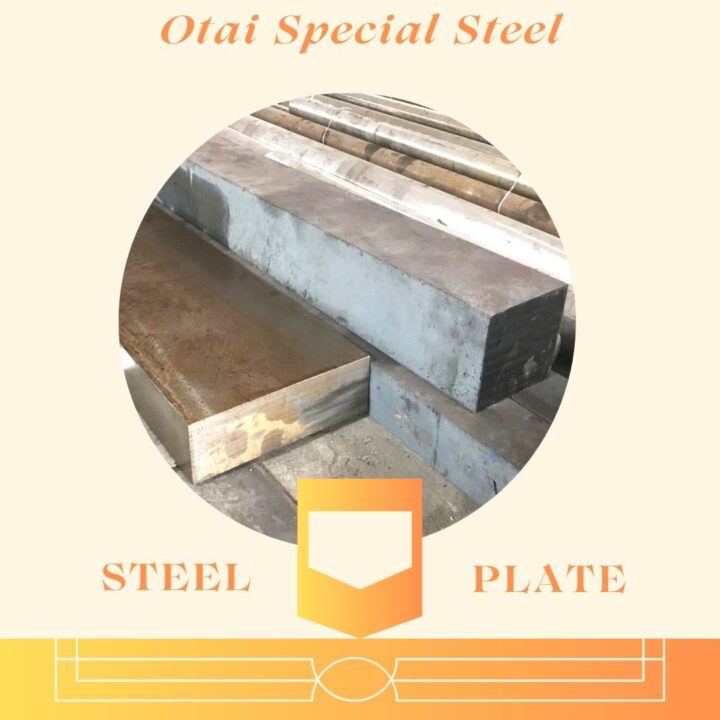
At Otai Special Steel, we provide high-quality 16MnCr5 alloy steel that meets strict international specifications.
Our advantages include:
- Over 10,000 tons of steel inventory available year-round
- Plate thickness range from 6 mm to 300 mm
- Professional custom cutting and processing services
- Strict ultrasonic testing (UT) quality control
- Complete chemical composition inspection
- Long-term cooperation with international companies such as Thyssenkrupp, Borealis, and Schlumberger
We ensure stable supply and reliable material performance for global customers.
❓ FAQ
1. What standard defines 16MnCr5 steel specifications?
The primary standard is EN 10084, which defines case-hardening steels.
2. What are the key properties of 16MnCr5 steel?
It offers high surface hardness after carburizing and a tough core, making it ideal for wear-resistant components.
3. What hardness can 16MnCr5 achieve?
Surface hardness typically reaches 58–62 HRC after carburizing and quenching.
4. What are the common equivalents of 16MnCr5?
Common equivalents include DIN 1.7131, AISI 5120, and JIS SCM420.