Skip to Content

Category Archives: Blog

18crnimo7-6 Steel: Unveiling the Marvel of Modern Metallurgy

18crnimo7-6 Steel: Unveiling the Marvel of Modern Metallurgy

18crnimo7-6 steel combines chromium, nickel, molybdenum and other elements to form a strong and durable alloy. Due to its high tensile strength and excellent toughness, it is the first choice for critical applications.

Applications of 18crnimo7-6 steel:

From aerospace to manufacturing, 18crnimo7-6 has a place in a range of industries. Its ability to withstand extreme conditions and resist wear makes it indispensable in applications that demand reliability and performance.

18crnimo7-6 and other steel alloys:

Comparison of 18crnimo7-6 steel with other alloys reveals its unique advantages. The alloy outperforms competitors in strength, corrosion resistance and heat resistance, making it the first choice for demanding environments.

Manufacturing process:

The journey from raw materials to final product involves a meticulous manufacturing process. The alloy’s unique properties are honed through precise steps, ensuring consistency and quality from batch to batch.

Quality Standards and Certifications:

Maintaining strict quality standards is vital to the steel industry. 18crnimo7-6 adheres to stringent certifications ensuring it meets the highest industry benchmarks for performance and reliability.

Benefits and Advantages:

The advantages of 18crnimo7-6 extend beyond its mechanical properties. Its cost-effectiveness, ease of fabrication, and adaptability to a variety of processes make it the first choice of engineers and designers.

Example study:

Real-world success stories illustrate the practical applications of 18crnimo7-6 steel. From improving mechanical properties to enabling innovative designs, the alloy has left an indelible mark on different industries.

prospect:

As technology advances, so does the potential of 18crnimo7-6. Innovations in manufacturing techniques and alloy compositions are opening new doors and exciting possibilities for their applications in emerging technologies.

Sustainability and environmental impact:

Responsible consumers seek environmentally friendly solutions. 18crnimo7-6 steel addresses this need by offering a sustainable option in metallurgy, in line with global efforts committed to environmentally friendly practices.

Challenges and limitations:

While 18crnimo7-6 has excellent properties, it is critical to address any limitations. Understanding potential challenges allows for proactive solutions and continuous improvement of alloy performance.

Maintenance and care tips:

Maintaining the longevity and functionality of 18crnimo7-6 requires proper maintenance. Simple yet effective maintenance tips ensure the alloy retains its properties over time, helping to extend its service life.

Industry advice:

Experts in relevant fields provided valuable insights into optimizing the use of 18Crnimo7-6 steel. Their recommendations provide guidance for industries looking for best practices in adopting this special alloy.
0 0 Continue Reading →

EN24 vs. Stainless Steel: Unveiling Distinctions and Advantages

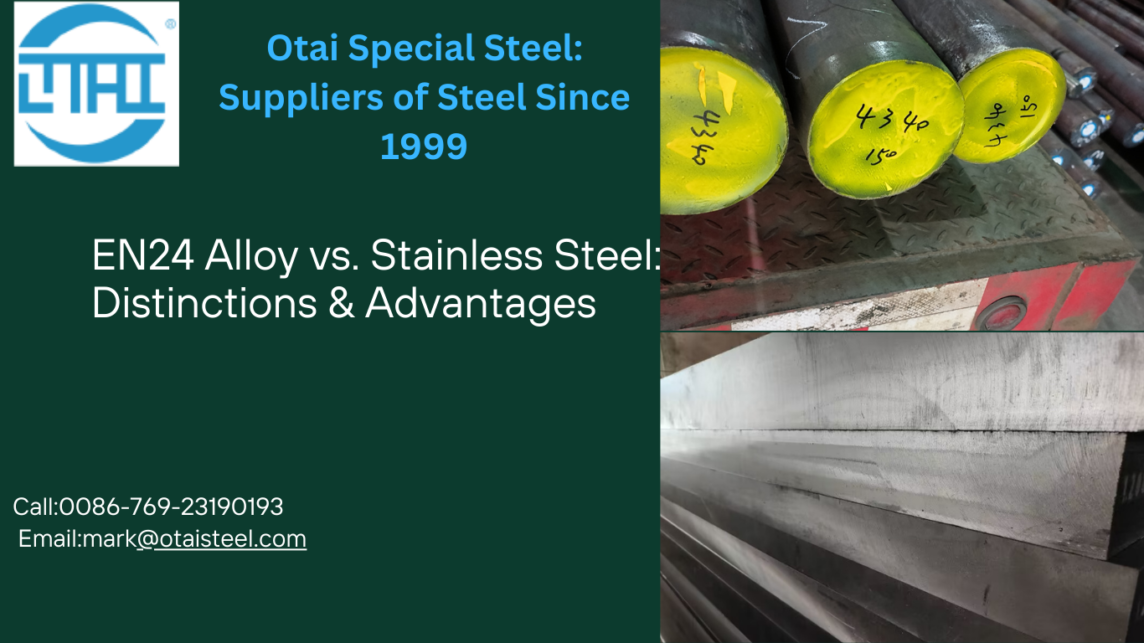
Embarking on a journey into alloys, let’s unravel the unique characteristics of EN24 compared to stainless steel. Clearing the air, EN24 is not a stainless steel. Explore the differences and discover the distinct advantages each brings to the table.

<yoastmark class=

Understanding EN24 Alloy: Not Your Ordinary Stainless Steel

While often associated with stainless steel, EN24 stands apart as a distinct alloy. It’s crucial to clarify that they are two different steel; rather, they fall into the category of high-tensile alloy steels. The composition, mechanical properties, and applications diverge significantly from conventional stainless steels.

EN24 vs. Stainless Steel: Unveiling Differences and Advantages

Now, let’s delve into the core comparison. Understanding the disparities between these two steel is key to informed decision-making. Here’s a brief breakdown of the differences:

  1. Composition:

    • EN24 Alloy: Primarily composed of Chromium, Nickel, Manganese, and Carbon for high-tensile strength.
    • Stainless Steel: Mainly consists of Chromium, Nickel, and other elements for corrosion resistance.
  2. Mechanical Properties:

    • EN24 Alloy: Known for exceptional tensile strength, impact toughness, and fatigue resistance.
    • Stainless Steel: Favored for its corrosion resistance, ductility, and aesthetic appeal.
  3. Applications:

    • EN24 Alloy: Thrives in applications demanding high strength, such as gears, axles, and crankshafts.
    • Stainless Steel: Excels in environments requiring corrosion resistance, like kitchen appliances and architectural structures.

Defining Stainless Steel and EN24’s Distinction

Stainless steel, by definition, is an alloy recognized for its corrosion resistance, a result of its chromium content forming a protective oxide layer. On the contrary, EN24, although alloyed with chromium, is not classified as stainless due to its primary focus on high-tensile strength rather than corrosion resistance.

The Advantages of EN24 Alloy

  1. Exceptional Strength: EN24, surpasses stainless steel in terms of tensile strength, making it ideal for heavy-duty applications.
  2. Versatility in High-Stress Environments: EN24 excels in environments requiring resistance to extreme stress and fatigue.
  3. Wide Range of Applications: From manufacturing to aerospace, EN24 finds its niche in various industries.

Conclusion: Navigating the Alloy Landscape

In conclusion, it’s paramount to recognize that EN24 is not a stainless steel; instead, it emerges as a robust high-tensile alloy with distinctive advantages. By understanding the differences, you empower yourself to choose the right material for the intended application.

Should you have further questions or seek clarification, we invite you to engage in a constructive dialogue. As you navigate the alloy landscape, let EN24 be your beacon of strength and reliability.

Best Regards,

Mark Dongguan OTAI Special Steel Team

0 0 Continue Reading →

Tips for Working with 18CrNiMo7-6 Steel

Tips for Working with 18CrNiMo7-6 SteelTips for Working with 18CrNiMo7-6 Steel

Navigating the intricacies of working with 18CrNiMo7-6 steel requires a blend of knowledge, skill, and a deep understanding of this exceptional alloy. As we embark on this journey, let’s unravel valuable tips that will empower you to handle 18CrNiMo7-6 steel effectively, ensuring successful outcomes in your industrial endeavors.

Understanding the Essence of 18CrNiMo7-6 Steel

Before delving into the tips for working with 18CrNiMo7-6 steel, it’s crucial to grasp the essence of this alloy. Composed of chromium, nickel, and molybdenum, 18CrNiMo7-6 steel is celebrated for its versatility, exceptional strength, and resilience. This foundational knowledge sets the stage for effective utilization in various applications.

1. Selecting the Right Tools: Precision Matters

When working with 18CrNiMo7-6 steel, precision is paramount. Choosing the right tools ensures that you can cut, shape, and manipulate the material with accuracy. High-speed steel or carbide tools are recommended for machining, and they should be sharp and in optimal condition to maintain the integrity of the alloy.

2. Machining Techniques: Slow and Steady Wins the Race

The nature of 18CrNiMo7-6 steel demands a thoughtful approach to machining. Employing slower cutting speeds and a steady feed rate minimizes the risk of overheating, ensuring that the material retains its hardness and durability. Additionally, using coolants during machining helps dissipate heat and prolongs tool life.

3. Heat Treatment: Precision is Key

Harnessing the full potential of 18CrNiMo7-6 steel often involves heat treatment. Whether it’s through quenching and tempering or other heat-treatment processes, maintaining precise temperature controls is crucial. This ensures that the alloy achieves the desired hardness and mechanical properties without compromising its integrity.

4. Welding Wisdom: Exercise Caution

Welding 18CrNiMo7-6 steel requires a delicate touch. Preheating the material before welding helps prevent cracking, and post-weld heat treatment contributes to the overall integrity of the weld. Choosing the right welding electrodes and exercising caution during the process are key to achieving strong and durable welds.

5. Corrosion Prevention: Shielding Against the Elements

Despite its corrosion-resistant properties, 18CrNiMo7-6 steel benefits from additional protective measures, especially in corrosive environments. Applying suitable coatings or using stainless steel fasteners can provide an extra layer of defense, ensuring the longevity of components exposed to challenging conditions.

6. Lubrication: A Recipe for Success

In machining and other processes involving 18CrNiMo7-6 steel, proper lubrication is akin to a secret sauce. Using high-quality lubricants minimizes friction, reduces wear on tools, and contributes to a smoother machining process. This simple yet effective step enhances the overall efficiency of working with the alloy.

7. Storage and Handling: Handle with Care

Preserving the quality of 18CrNiMo7-6 steel begins with proper storage and handling. The alloy should be stored in a dry environment to prevent corrosion. When handling, gloves should be worn to avoid introducing contaminants that could compromise the material’s integrity. Handling with care ensures that the steel performs at its best when called into action.

8. Testing and Quality Assurance: Ensuring Excellence

Before integrating components made from 18CrNiMo7-6 steel into larger systems, rigorous testing and quality assurance protocols should be in place. Non-destructive testing methods, such as ultrasonic or magnetic particle testing, can identify potential flaws, ensuring that the final product meets the highest standards of quality and safety.

Conclusion: Empowering Success with 18CrNiMo7-6 Steel

Working with 18CrNiMo7-6 steel is a journey that demands a nuanced understanding and a commitment to precision. Armed with the right tools, techniques, and a respect for the alloy’s unique properties, you can unlock its full potential across diverse applications. From machining to welding and beyond, the tips shared here serve as a guide to empower success in your endeavors with 18CrNiMo7-6 steel.

0 0 Continue Reading →

Why 18CrNiMo7-6 Steel Stands Out in Materials Selection

Why 18CrNiMo7-6 Steel Stands Out in Materials Selection

In the realm of materials selection, where strength, durability, and versatility reign supreme, 18CrNiMo7-6 steel emerges as a standout choice. This alloy, with its unique composition and remarkable properties, has earned its place as a go-to material in various industries. Let’s embark on a journey to understand why 18CrNiMo7-6 steel stands out in the crowded landscape of materials selection.

The Alchemy of Composition

At the heart of 18CrNiMo7-6 steel’s exceptional performance lies its well-balanced composition. Comprising chromium, nickel, and molybdenum, this alloy achieves a harmonious blend of toughness, hardenability, and corrosion resistance. The synergy of these elements results in a material that can withstand the most demanding conditions across diverse applications.

1. Versatility Redefined

One of the defining features that set 18CrNiMo7-6 steel apart is its unparalleled versatility. From aerospace engineering to marine applications, this alloy seamlessly adapts to a myriad of industrial needs. Its adaptability is akin to a chameleon, effortlessly integrating into different environments and fulfilling diverse roles across sectors.

2. Exceptional Strength for Rigorous Demands

In the world of materials, strength is not just a desirable trait; it’s often non-negotiable. 18CrNiMo7-6 steel boasts exceptional tensile strength and toughness, making it the material of choice for applications subjected to high stress and heavy loads. It’s the backbone of machinery and components that endure the relentless demands of industrial operations.

3. Hardenability: Where Toughness Meets Endurance

The ability of a material to withstand wear and tear is a critical factor in its suitability for industrial use. 18CrNiMo7-6 steel, with its excellent hardenability, ensures that components retain their structural integrity even under the most challenging conditions. This feature is akin to giving the material an armor that guards against fatigue and extends its service life.

4. Corrosion Resistance: Defying the Elements

Corrosion can be the silent nemesis of many materials, silently eroding their strength and integrity. 18CrNiMo7-6 steel, however, defies the elements with its commendable corrosion resistance. Whether exposed to the corrosive forces of seawater in marine applications or the harsh chemicals in industrial settings, this alloy remains resilient, standing the test of time.

5. Aerospace Excellence

The aerospace industry demands precision, reliability, and materials that can withstand extreme conditions. 18CrNiMo7-6 steel, with its exceptional properties, finds itself at home in the construction of critical aircraft components. From landing gear to transmission systems, this alloy ensures that the skies remain a domain of safety and precision.

6. Oil and Gas Endurance

In the unforgiving landscapes of oil and gas exploration, equipment faces challenges that demand unwavering endurance. 18CrNiMo7-6 steel, with its robust nature, becomes an invaluable asset in the construction of drilling tools. Its capacity to withstand the pressures of deep-sea exploration and harsh terrains cements its role in the energy sector.

7. Automotive Resilience

The automotive industry, a hub of constant motion and varying temperatures, relies on materials that can keep pace with its demands. 18CrNiMo7-6 steel contributes significantly to the manufacturing of engine components, gears, and drive shafts. Its ability to endure the rigors of the road ensures that vehicles powered by this alloy go the extra mile.

8. Powering the Future: Energy Generation

Power generation facilities, be they conventional or renewable, require materials that can endure the heat of transformation. 18CrNiMo7-6 steel, with its heat resistance, becomes an integral part of turbines and other components critical to energy generation. It’s the backbone that powers the future with reliability and efficiency.

Conclusion: Elevating Industries, One Alloy at a Time

In the grand tapestry of materials, 18CrNiMo7-6 steel emerges as a thread of resilience, strength, and adaptability. Its unique composition and exceptional properties make it a material beyond compare, elevating industries and setting new benchmarks in performance. As we witness the ongoing evolution of technology and industry, the role of 18CrNiMo7-6 steel stands tall, a testament to the ingenuity of materials science.


0 0 Continue Reading →

Applications of 18CrNiMo7-6 in Industrial Settings

Applications of 18CrNiMo7-6 in Industrial Settings

In the dynamic landscape of industrial engineering, the choice of materials plays a pivotal role in determining the success of a project. One such material that has gained prominence is 18CrNiMo7-6, a versatile alloy celebrated for its robust properties and diverse applications across various industries. Let’s delve into the fascinating world of 18CrNiMo7-6 and explore its myriad uses in industrial settings.

Understanding 18CrNiMo7-6

18CrNiMo7-6 is a chromium-nickel-molybdenum alloy steel renowned for its exceptional strength and durability. The alloy’s composition provides a harmonious blend of toughness and wear resistance. Making it a preferred choice for demanding industrial applications.

1. Machinery Components and Gearing Systems

At the heart of many industrial processes lie intricate machinery and gearing systems. 18CrNiMo7-6, with its excellent hardenability and fatigue resistance, finds its niche in the production of gears, shafts, and other critical components. Its capacity to withstand high loads and stress positions it as a reliable option for the robust machinery that drives various sectors.

2. Aerospace Engineering

In the aerospace industry, where precision and reliability are paramount, 18CrNiMo7-6 shines. This alloy is a preferred material for manufacturing aircraft components, such as landing gear and transmission systems. Its ability to endure extreme conditions and maintain structural integrity under high pressures makes it an indispensable asset in the skies.

3. Oil and Gas Exploration

In the challenging realm of oil and gas exploration, equipment must endure harsh environmental conditions. 18CrNiMo7-6’s corrosion resistance and high tensile strength make it an ideal candidate for the construction of drilling tools, ensuring longevity and reliability in offshore and onshore operations.

4. Automotive Industry

Automobiles are a testament to human innovation, and 18CrNiMo7-6 plays a crucial role in their evolution. This alloy contributes to the manufacturing of engine components, gears, and drive shafts. Its ability to withstand the stresses of constant movement and varying temperatures makes it a go-to material for automotive engineers.

5. Power Generation

Power plants, be they nuclear, thermal, or renewable, demand materials that can withstand the test of time and extreme conditions. 18CrNiMo7-6’s heat resistance and high fatigue strength make it a staple in the construction of turbines, shafts, and other components critical to power generation.

6. Marine Engineering

The marine industry navigates through some of the harshest conditions, from saltwater exposure to constant movement. 18CrNiMo7-6’s corrosion resistance and exceptional durability make it a preferred choice for manufacturing marine propulsion systems, ensuring smooth sailing even in the roughest waters.

7. Railway Infrastructure

In the world of transportation, railways are the lifeline connecting nations. 18CrNiMo7-6 finds its place in the railway industry, contributing to the construction of durable and reliable components such as axles and gears. Its ability to withstand heavy loads and repeated stress ensures the safety and efficiency of rail transport.

8. Construction and Heavy Equipment

From towering skyscrapers to heavy-duty construction equipment, 18CrNiMo7-6 is a key player in shaping the modern landscape. Its high tensile strength and toughness make it an ideal material for constructing critical components like crankshafts, ensuring the stability and longevity of structures.

Conclusion

As we unravel the applications of 18CrNiMo7-6 in industrial settings, it becomes evident that this alloy stands as a testament to the ingenuity of material science. Its versatility, strength, and resilience make it a cornerstone in the creation of robust and reliable machinery across diverse sectors. From aerospace engineering to construction and beyond, 18CrNiMo7-6 continues to leave an indelible mark on the industrial landscape, propelling progress and innovation.

0 0 Continue Reading →

Corrosion Resistance in 18CrNiMo7-6 Steel
Corrosion Resistance in 18CrNiMo7-6 SteelCorrosion Resistance in 18CrNiMo7-6 Steel

Corrosion – the silent foe that can weaken, degrade, and ultimately compromise the structural integrity of metals. In the realm of steel alloys, 18CrNiMo7-6 stands tall as a champion against this relentless adversary. Join us on an exploration of the corrosion resistance exhibited by this remarkable steel, understanding how it becomes a fortress in the face of environmental challenges.

Understanding Corrosion: A Brief Prelude

Before we delve into the specifics of 18CrNiMo7-6’s corrosion resistance, let’s grasp the basics of corrosion. It’s a natural process where metals react with the environment, leading to their deterioration. Moisture, oxygen, and various chemicals can trigger corrosion, posing a threat to the longevity and performance of metallic structures.

The Shield of Chromium: A Key Player in Corrosion Resistance

In the world of corrosion-resistant steel, chromium takes center stage, and 18CrNiMo7-6 is no exception. The chromium content in this alloy forms a protective layer on the surface, commonly known as chromium oxide. This layer acts as a shield, preventing the underlying steel from direct exposure to corrosive elements, effectively thwarting the onset of corrosion.

Nickel’s Role: Enhancing Corrosion Resistance

Beyond chromium, nickel adds another layer of defense. The nickel content in 18CrNiMo7-6 contributes to the alloy’s resistance against various forms of corrosion, including pitting and crevice corrosion. This dual-action of chromium and nickel makes the steel particularly resilient in challenging environments, such as those with high humidity or chemical exposure.

Versatility in Environments: From Mild to Aggressive

One of the standout features of 18CrNiMo7-6 steel is its adaptability to different environmental conditions. Whether subjected to mild atmospheric exposure or harsh chemical surroundings, this alloy remains steadfast. The robust corrosion resistance makes it a reliable choice for applications ranging from outdoor components to industrial machinery that faces diverse challenges.

Wear and Tear: Corrosion’s Silent Partner

Corrosion and wear often go hand in hand, especially in components that experience friction or constant contact. 18CrNiMo7-6’s corrosion-resistant properties not only protect against environmental factors but also contribute to the alloy’s ability to withstand wear. Gears, shafts, and other moving parts benefit from both wear resistance and corrosion protection, ensuring a longer operational life.

Testing the Limits: Corrosion Resistance in Extreme Conditions

To truly appreciate the prowess of 18CrNiMo7-6 steel, consider its performance in extreme conditions. Whether it’s offshore structures exposed to saltwater or industrial machinery facing aggressive chemicals, the alloy holds its ground. This ability to endure in challenging scenarios underscores its reliability in critical applications where corrosion could spell disaster.

Maintenance Advantage: Long-Term Durability

Corrosion-resistant materials often translate to lower maintenance costs. 18CrNiMo7-6’s ability to resist corrosion means less frequent inspections, repairs, and replacements. This not only saves time and resources but also ensures that the components made from this alloy maintain their functionality over an extended period.

Cost-Effective Protection: Investing in Longevity

While corrosion-resistant alloys may have a slightly higher upfront cost, the long-term benefits outweigh the initial investment. 18CrNiMo7-6 steel, with its robust resistance to corrosion, becomes a cost-effective choice for projects and applications where durability and longevity are paramount. It’s an investment in protection against the gradual but persistent impact of corrosion.

Conclusion

In the battle against corrosion, 18CrNiMo7-6 steel emerges as a stalwart defender, equipped with chromium and nickel as its formidable weapons. The alloy’s ability to resist corrosion across diverse environments, coupled with its durability and wear resistance, positions it as a reliable choice for critical applications. As we navigate the challenges of corrosion in the industrial landscape, 18CrNiMo7-6 stands tall, proving that longevity and performance can go hand in hand.

0 0 Continue Reading →

Exploring the Properties of 18CrNiMo7-6 Steel

Exploring the Properties of 18CrNiMo7-6 Steel

When it comes to robust materials in the world of metallurgy, 18CrNiMo7-6 steel takes center stage. This alloy, renowned for its exceptional properties, has become a cornerstone in various industrial applications. Let’s embark on a journey to uncover the diverse and impressive characteristics that make 18CrNiMo7-6 a standout performer.

The Foundation: Composition of 18CrNiMo7-6 Steel

At the heart of understanding any steel alloy lies its composition. In the case of 18CrNiMo7-6, we’re dealing with a low-carbon, nickel-chromium-molybdenum case-hardening steel. The combination of these elements results in a material that boasts high core strength and outstanding toughness, setting the stage for its widespread use across industries.

Exceptional Strength: Core Characteristics

One of the standout features of 18CrNiMo7-6 steel is its exceptional strength. The alloy’s composition contributes to a robust internal structure, making it an ideal choice for applications where durability is non-negotiable. Whether it’s heavy-duty machinery components or automotive gears, this steel stands up to the challenge.

Toughness Unleashed: Balancing Act of 18CrNiMo7-6

Strength is not the sole defining factor; toughness plays an equally critical role. 18CrNiMo7-6 excels in finding the delicate balance between hardness and resilience. This attribute makes the alloy adaptable to dynamic conditions, ensuring it can withstand shocks, impacts, and varying loads without compromising its structural integrity.

Wear Resistance: A Shield Against Abrasion

In applications subject to wear and tear, 18CrNiMo7-6 steel proves its mettle. The alloy’s inherent resistance to abrasion makes it a preferred choice for components facing friction and constant contact. Gears, shafts, and other moving parts benefit from the wear-resistant shield this steel provides, ensuring prolonged operational life.

Corrosion Resilience: A Longevity Guarantee

No exploration of steel properties is complete without addressing corrosion resistance. 18CrNiMo7-6, with its strategic composition, showcases notable resilience against corrosion. This makes it an excellent candidate for outdoor or harsh environments, where exposure to elements could compromise the integrity of lesser materials.

Versatility Personified: Wide Range of Applications

The versatility of 18CrNiMo7-6 steel knows no bounds. From the automotive industry to heavy machinery manufacturing, this alloy finds itself at home in diverse applications. Its adaptability stems from a combination of properties, making it a reliable choice for engineers and designers seeking a material that can meet multifaceted demands.

Machinability Matters: Working with Ease

In the practical world of manufacturing, machinability is a key consideration. 18CrNiMo7-6 steel doesn’t just offer strength and toughness; it also boasts excellent machinability. This characteristic makes it easier to work with during the manufacturing process, translating to efficiency and precision in shaping the final product.

Temperature Tolerance: Performing under Heat Stress

Industries often operate in extreme conditions, and 18CrNiMo7-6 steel rises to the occasion. Its ability to withstand high temperatures without compromising its structural integrity makes it a reliable choice for applications where heat is a constant factor.

Conclusion:Exploring the Properties of 18CrNiMo7-6 Steel

In the realm of metallurgy, 18CrNiMo7-6 steel emerges as a star performer, blending strength, toughness, wear resistance, and corrosion resilience. Its versatile nature allows it to shine in various industries, providing a reliable foundation for critical components. As we continue to explore and push the boundaries of engineering, 18CrNiMo7-6 remains a steadfast companion, ready to meet the challenges of the modern industrial landscape.

0 0 Continue Reading →

The Heat Treatment of 18CrNiMo7-6 Alloy

The Heat Treatment of 18CrNiMo7-6 Alloy

When it comes to enhancing the mechanical properties of steel, heat treatment stands out as a crucial process, and the 18CrNiMo7-6 alloy is no exception. This alloy, known for its exceptional strength and durability, undergoes a series of heat treatments to optimize its performance in various applications.

Understanding the Composition

Before delving into the heat treatment process, let’s take a moment to grasp the composition of 18CrNiMo7-6. This alloy is a low-carbon nickel-chromium-molybdenum case-hardening steel, designed to provide high core strength and excellent toughness. Its unique blend of elements contributes to its remarkable properties, making it a preferred choice in industries demanding robust materials.

The Annealing Stage: Setting the Foundation

The journey of heat treatment often begins with annealing, a process aimed at reducing hardness and enhancing machinability. In the case of 18CrNiMo7-6, annealing involves heating the steel to a specific temperature and allowing it to cool slowly. This controlled cooling refines the microstructure, preparing the alloy for subsequent hardening stages.

Quenching: Introducing Strength through Rapid Cooling

Following annealing, the steel enters the quenching phase. This step involves rapidly cooling the material, typically using oil or water, to achieve a hardened state. The quick cooling prevents the formation of undesirable structures and promotes the creation of a robust, crystalline matrix within the steel.

Tempering: Balancing Hardness and Toughness

While hardness is desirable, achieving a balance with toughness is equally crucial. Tempering, the third stage of heat treatment, addresses this by reheating the hardened steel to a specific temperature. This controlled heating allows for the adjustment of hardness, ensuring that the 18CrNiMo7-6 alloy remains tough and resilient, even in challenging conditions.

Case Hardening: Elevating Surface Hardness

In applications requiring a hard surface layer for wear resistance, case hardening becomes instrumental. The 18CrNiMo7-6 alloy, with its carbon content, readily responds to case hardening methods like carburizing. This process introduces carbon into the surface layer, enhancing hardness while maintaining the alloy’s core strength.

Nitriding: Enhancing Surface Properties

For applications demanding superior surface properties without compromising the core strength, nitriding comes into play. This process involves introducing nitrogen into the steel’s surface, forming nitrides that significantly improve wear resistance and fatigue strength. Nitriding is a valuable addition to the heat treatment arsenal for 18CrNiMo7-6 steel.

Cryogenic Treatment: Strengthening to the Core

To further enhance the steel’s internal structure, cryogenic treatment is employed. This involves subjecting the alloy to extremely low temperatures, typically below -100 degrees Celsius. The process refines the microstructure, reducing residual stresses and increasing the overall strength and stability of the 18CrNiMo7-6 alloy.

Applications and Considerations

The versatility of 18CrNiMo7-6 steel, heightened by its comprehensive heat treatment regimen, finds applications in various industries. From gears and shafts in automotive engineering to heavy-duty machinery components, the alloy’s strength and durability make it a reliable choice. However, it’s essential to tailor the heat treatment process based on specific application requirements to optimize performance.

Conclusion

In the realm of metallurgy, the heat treatment of 18CrNiMo7-6 alloy emerges as a transformative process, unlocking its full potential. From the foundational annealing to the precision of nitriding, each step plays a crucial role in shaping the alloy’s properties. The careful balance of hardness and toughness, coupled with surface enhancements, positions 18CrNiMo7-6 as a material of choice for demanding applications. Understanding and mastering the intricacies of its heat treatment is key to harnessing the full strength and resilience this alloy offers.

0 0 Continue Reading →

Manufacturing Challenges with 34CrNiMo6

Manufacturing Challenges with 34CrNiMo6Manufacturing Challenges with 34CrNiMo6

Manufacturing with 34CrNiMo6 steel is a journey marked by strength, resilience, and precision. However, this alloy, known for its robust qualities, presents unique challenges that demand careful consideration and expertise throughout the production process. In this exploration, we’ll navigate the intricacies of manufacturing challenges associated with 34CrNiMo6, shedding light on the hurdles and solutions in creating components that stand the test of time.

Material Complexity: Navigating the Alloy’s Composition

At the heart of manufacturing challenges with 34CrNiMo6 lies the complexity of its composition. The alloy’s recipe, comprising elements like chromium, nickel, and molybdenum, demands precision in handling. Manufacturers must carefully control the melting and alloying processes to ensure a uniform blend of these elements, setting the stage for the material’s exceptional properties.

Machining Finesse: Precision Work for Optimal Results

As the saying goes, “cutting steel like butter” doesn’t quite apply to 34CrNiMo6. The alloy’s robust nature calls for machining finesse. Tool wear and heat generation during the machining process pose challenges that demand skilled craftsmanship. Manufacturers must strike a delicate balance to achieve optimal results without compromising the integrity of the final product.

Heat Treatment: Striking the Perfect Balance

The journey of 34CrNiMo6 doesn’t end with its composition; heat treatment is a critical chapter. Achieving the perfect balance between hardness and ductility through tempering requires meticulous control of temperatures and cooling rates. This process, while enhancing the alloy’s mechanical properties, poses a challenge in maintaining uniformity across large-scale production.

Forging Challenges: Shaping Strength with Precision

Forging, a fundamental step in the manufacturing process, presents its own set of challenges with 34CrNiMo6. The alloy’s resistance to deformation demands controlled forging temperatures and pressures. Ensuring consistency in shaping the material while avoiding defects requires a deep understanding of the alloy’s behavior under varying conditions.

Quality Control: Navigating the Fine Line

In the world of manufacturing, quality is non-negotiable. 34CrNiMo6’s stringent quality standards add a layer of complexity. Manufacturers must implement robust quality control measures to detect any deviations from specifications. Ensuring the material’s integrity throughout the production chain is crucial to delivering components that meet or exceed industry expectations.

Welding Dilemmas: Overcoming Challenges Seamlessly

Welding 34CrNiMo6 poses its own set of dilemmas. While the alloy is weldable, the process requires careful consideration of preheating and post-weld heat treatment to prevent issues like cracking. Welding parameters must be fine-tuned to achieve strong, durable joints without compromising the alloy’s inherent qualities.

Surface Finish Struggles: Tackling Roughness with Precision

The desire for a flawless surface finish adds another layer to the manufacturing challenges with 34CrNiMo6. Achieving the desired smoothness without compromising dimensional accuracy requires attention to detail in machining and finishing processes. Manufacturers must navigate the fine line between aesthetics and functionality.

Scaling Up: Challenges in Mass Production

Scaling up production introduces its own set of challenges. Maintaining consistency in material properties, meeting tight tolerances, and minimizing production lead times become paramount. Manufacturers must implement efficient processes and advanced technologies to ensure that the quality of 34CrNiMo6 components remains uncompromised in large-scale production.

Conclusion

In the realm of manufacturing challenges with 34CrNiMo6, each hurdle is a testament to the alloy’s exceptional qualities. Navigating the complexity of its composition, machining finesse, heat treatment precision, forging challenges, quality control, welding dilemmas, surface finish struggles, and the intricacies of mass production requires a blend of expertise, innovation, and commitment to quality.

0 0 Continue Reading →

Analyzing the Strength and Toughness of 34CrNiMo6 Steel

Analyzing the Strength and Toughness of 34CrNiMo6 Steel

Steel, a cornerstone in construction and manufacturing, comes in various forms, each with unique properties. 34CrNiMo6 steel, renowned for its exceptional strength and toughness, stands out in the world of alloys. In this exploration, we’ll dissect the intricacies of its strength and toughness, unraveling the secrets that make it a preferred choice in demanding applications.

The Foundation: Understanding the Composition of 34CrNiMo6 Steel

Before diving into its strength and toughness, let’s start at the core—its composition. 34CrNiMo6 is a carefully crafted alloy, blending elements like chromium, nickel, and molybdenum. This unique combination not only contributes to its robustness but also lays the groundwork for the remarkable mechanical properties we’ll explore.

The Power Duo: Unraveling Strength and Toughness

When it comes to 34CrNiMo6, it’s all about the power duo of strength and toughness. The alloy’s high tensile strength, derived from its robust composition, makes it a go-to material for applications requiring resistance to external forces. Whether in heavy machinery or critical components, 34CrNiMo6 holds its ground, showcasing unparalleled strength.

Yet, strength alone isn’t the end of the story. What sets this alloy apart is its exceptional toughness. In the face of dynamic loads, shocks, and varying temperatures, 34CrNiMo6 remains resilient. Its ability to absorb energy without compromising its structural integrity makes it an ideal choice in scenarios where toughness is non-negotiable.

Behind the Scenes: The Role of Heat Treatment

To truly appreciate the strength and toughness of 34CrNiMo6, we must peek behind the curtain at the role of heat treatment. Tempering, a controlled heating and cooling process, refines the steel’s microstructure. This not only enhances its mechanical properties but also fine-tunes the delicate balance between strength and toughness. The result is a material that stands tall against the rigors of real-world applications.

Applications in Action: Where Strength Meets Toughness

Picture a construction site where heavy machinery roars to life. In this dynamic environment, the strength of 34CrNiMo6 shines, ensuring the structural integrity of components under immense pressure. Simultaneously, its toughness comes into play, absorbing shocks and preventing catastrophic failures.

In automotive applications, where components face continuous stress and varying temperatures, 34CrNiMo6 proves its mettle. The alloy’s ability to maintain strength and toughness under challenging conditions contributes to the reliability and longevity of critical automotive parts.

The Dance of Metallurgy: Balancing Act of 34CrNiMo6

Metallurgy, akin to a delicate dance, plays a pivotal role in achieving the perfect balance of strength and toughness in 34CrNiMo6. Engineers and metallurgists orchestrate this dance, ensuring that the alloy meets and exceeds industry standards. It’s this meticulous craftsmanship that transforms raw materials into a material that can withstand the harshest environments.

Quality Assurance: Meeting Industry Standards

When it comes to strength and toughness, 34CrNiMo6 doesn’t just meet expectations; it exceeds them. The alloy undergoes rigorous quality assurance processes to ensure it adheres to industry standards. This commitment to quality makes it a reliable choice in critical applications where failure is not an option.

Looking Forward: Future Innovations and Advancements

As technology evolves, so does the demand for materials that push the boundaries of what’s possible. 34CrNiMo6, with its winning combination of strength and toughness, is poised to play a crucial role in future innovations. From advancements in manufacturing techniques to novel applications, the journey of this remarkable alloy is far from over.

Conclusion

In conclusion, the strength and toughness of 34CrNiMo6 steel paint a compelling picture of a material that goes beyond the ordinary. Its robust composition, coupled with meticulous heat treatment, results in an alloy that stands strong under pressure while maintaining resilience in the face of challenges. As industries continue to seek materials that can withstand the test of time, 34CrNiMo6 emerges as a frontrunner, offering a perfect harmony of strength and toughness.

0 0 Continue Reading →